(episodes from) The Field Bazaar

(episodes from) The Field Bazaar

In the early 1970’s, so the story goes a group of young up and coming Portuguese script writers recruited from adverts in trade magazines and on university noticeboards were locked in a room together with a projector, an endless supply of coffee and cigarettes and a pile of books. The books were mainly short story collections of the weird and esoteric fiction variety whilst the projector showed episodes of American sci-fi/supernatural TV show The Twilight Zone in continuous rotation.

This inexperienced collective were charged with producing the first six episodes of what was hoped to be Portugal’s response to a current trend for surreal storytelling and macabre tales. Given the work that Spanish filmmaker Amando de Ossorio and Italians Jess Franco and Dario Argento were currently involved with it is easy to see why television executives thought there was an opening in the market for Portugal’s take on the genre. The dream was to create a weekly TV show much like The Twilight Zone but with European art house sensibilities that showed leanings towards the current trend for the more grisly macabre work of those three directors.

This claustrophobic setting and the darkly intense atmosphere of the continuously flickering projector led this band of writers to emerge almost two days later with the now fabled ‘O Campo Bazar’.
Full of hope for this exciting project, filming began with alarming speed – but with scripts still being finished on set and the technical equipment in the hands of an equally inexperienced and amateurish crew the project seemed to be dying before it had even been fully born. The resulting pilot episode was critically panned and although it is cited to be Alfred Molina’s screen debut he now strongly refutes the fact claiming no involvement whatsoever in the doomed project

Critics were relentless in their damning of everything to do with this project from the sets and stories to the acting and directing. There was however one factor that caused such embarrassment that it is often cited as the last nail in the not very convincing coffin.

To affiliate this fledgling series to an already established genre and gain credibility, Vince Price had been employed to provide the voiceover introduction. It transpired that a staggeringly significant percentage of the overall budget had been spent on securing Price’s services – money that everyone agreed should have been spent on the program itself. What made this so embarrassing however was the fact that Vince Price’s pronunciation and overall delivery of the Portuguese introduction was so cringingly bad as to sound like a mocking stereotype. With no money left to find another actor of Price’s stature to rerecord the part, and with newspapers and radio programs daily mocking this particular aspect of the show, the station programmers decided to cut their losses and pull the plug.

‘O Campo Bazar’ would have disappeared without a trace – as was the TV Company’s wishes – had it not been for the release of the` (episodios de) O Campo Bazar’ e.p. Indeed there are no known surviving prints of the six episodes – of which only four ever saw the light of day – but the existence of this e.p. has ensured that the legacy of this doomed project is not forgotten. ` (episodios de) O Campo Bazar’ was a promotional gimmick marketed as `a sampler of instrumental works created especially for the programme’ and has since become an ultra-rare curio hiding out with the national collection of Hen’s Teeth.

Cover of the 1973 release `O Campo Bazar’

The original press release states that `the stunning full colour sleeve features O Campo Bazar in horrifically realistic costumes’. This is the only reference ever given to the performers who were – and still are – a mystery. Released in Portugal in 1973 on the Gravacoes Freeworld label this collection of sinister synth led soundscapes is long overdue a rerelease.

Several years later the cult status and mythos of the group/artist brought about the release of `The Bane Tree’– again on the Gravacoes Freeworld label. This vinyl version of `The Bane Tree’ is the only UK release for `O Campo Bazar’ there has been the. The artist(s) name had been translated into English – The Field Bazaar – and the` (episodes from)’, which was a clear indication of its TV series roots, had also been translated and kept. The name itself – `The Field Bazaar’ – comes from a short story by Sir Arthur Conan Doyle and was seemingly chosen to represent the writers own take on `The Twilight Zone’…..a mysterious place where the weird and wonderful coexist with the horrifying and the macabre.

The Bane Tree has the feel of being demos and unused tracks from the original recordings although the music is more acoustic and pastoral sounding with greater use having been made of sound effects. The performers remained unknown.

Front cover of the UK release `The Bane Tree’
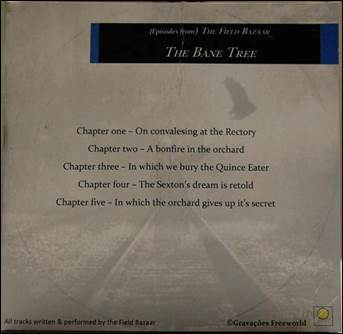
Back cover. Note the full name translation for the title whereas credits list the group as just `the Field Bazaar’

Recently artwork for a previously unreleased and assumed lost (episodes from) The Field Bazaar album `A Tale of Witches, Woodland and half-remember melodies…’ was discovered in a box of old picture frames at a church jumble sale in Long Crendon, Buckinghamshire. In 2012 a ¼ inch tape also surfaced at a bankruptcy sale for a small recording studio in Bloomsbury which had been known for soundtrack and sound effect recordings. This acetate contained what is now believed to be tracks from the recording sessions for this lost album. So far a tweaked and updated `The Musgrave Ritual’ is the only track to have materialized from this lost album. The title again references Sir Arthur Conan Doyle and includes a reading of the ancient ritual from the Sherlock Holmes story of the same name.

Artwork for the recently discovered `lost’ album

Also found alongside what is assumed to be the final approved artwork for the lost `A tale of Witches, Woodland and half-remembered melodies….’ was a scribbled early sketch for the album cover – possibly drawn up by one of the unknown, almost mythical members of the band/collective/composer who made up (episodes from) The Field Bazaar. A more recognizable sketch of the final composition shows the removal of the witch’s young companion for the image –possibly considered too sinister in its implications – and also the crucifix from the front of the building.
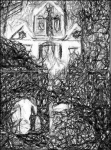
The Long Crendon sketches – Note the inclusion of the child and crucifix in the first sketch which has been omitted in the second more familiar image.

Unfortunately there are no signatures or notes on the reverse of either piece to hint at who the artist may have been or even who was operating in the studio under The Field Bazaar moniker at the time.

Several tracks recorded by (episodes from) The Field Bazaar have been rereleased in recent years thanks to the work of a small group of geekish fans who hunt down the original studio versions, strip them down, clean them up and remix them to form even the briefest of tunes into a coherent track. Their curation and conservation of the (episodes from) The Field Bazaar’s music is not only helping to save a forgotten gem but also to bring it to a wider audience.
(https://soundcloud.com/thefieldbazaar-1)
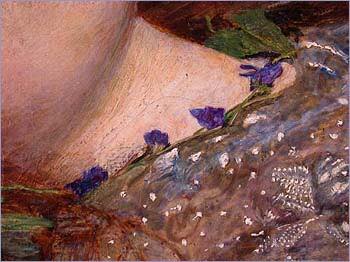
Death is woven in with the violets…

Bury the dead deeply, water its grave with streaming eyes, and in spring-tide pluck a withered violet or some other sweet-scented blossom from the green sod” – ‘The Writings of Althea Swarthmore’ (Collected in ‘A Night On The Moor, and other tales of Dread‘), by R Murray Gilchrist.

I was inspired to write this post by Gilchrist’s line, which made me think how a symbolic knowledge adds depth and nuance to even simple statements. Gilchrist can be almost as dense in his writing as the fogs that settle on the Peak District settings of his horror fiction but a little knowledge of the symbols and thoughts he employs will help us navigate both his work and the work of many other artists.

I would give you some violets, but they withered all when my father died
(Hamlet: IV.v.181-183)

12961478_10153453247605334_9028032243175809371_n
Detail of a violet garland around the neck of Ophelia; taken from ‘Ophelia‘ by Sir John Everett Millais (1852).

Violets are a symbol of constancy and faithfulness, but equally of untimely death in the young and melancholy. This leads the flower to be identified not only as a reminder of the natural cycle of life, death and rebirth but as a catalyst to transition; from maiden to wife, innocence to knowledge, life to death…

At_the_First_Touch_of_Winter_Summer_Fades_Away_by_Valentine_Cameron_Prinsep
‘At The First Touch Of Winter, Summer Fades Away’, by Valentine Cameron Prinsep (1897).

Persephone was gathering violets when Pluto rose from the underworld, enamoured with the maiden, and drew her down into his shadowy domain. Her abduction caused great despair in her mother, Demeter, who neglected her duties as harvest goddess while searching vainly for her daughter (using, interestingly, the twin torches of Hecate to cast light into dark places). This neglect led to fruits withering on the branch, crops rotting in the field and starvation in the people of the Earth. Zeus, petitioned by the starving, commanded Pluto to release Persephone to her mother for two-thirds of the year, the summer-time of sowing and harvest. She would then return to assist her husband in judging the dead for the remaining third of the year, the winter-time of sorrow.

Many of the Persephone myths show her as an unwilling victim, abducted and forced into a relationship that takes on something of the Stockholm Syndrome. A handful, however, show Persephone as willingly taking on her role as arbiter of both Life and Death; she tempers her husband’s stern views but is also fully aware that the hope she gives the living is ultimately doomed.

Violet! Sweet violet! Thine eyes are full of tears; Are they wet, even yet, with the thought of other years?James Russell Lowell

(The title of this post is taken from ‘The Waves’, by Virginia Woolf, almost herself a modern Ophelia. Valentine Cameron Prinsep was Virginia Woolf’s maternal great-uncle).

Daniel Pietersen, 18/04/16

Corpse Roads Final Reminder

The Corpse Roads draw closer …
Could the poets / photographers whom have had work accepted in the book and wish to have their biography and web-links included but have not already sent, please email the details to folkhorrorrevival@gmail.com no later than 5th April 2016 pleas. After this date it will no longer be possible to include in the book Thanks smile emoticon

Image © Carole Tyrrell

edited by Andy Paciorek

Unearthing Forgotten Horrors Radio Show 21-03-16

Unearthing Forgotten Horrors’ is an hour-long delve into the darker recesses of the musical underworld. A chance to immerse yourself in obscure horror soundtracks, dark drones, weird electronica, freaky folk, crazed kosmiche and some of the most abhorrent and twisted psychedelia ever committed to vinyl, CD or cassette.

This week’s Unearthing Forgotten Horrors Radio Show goes out at 7pm UK time this evening Monday 21st March on (a1radio.co.uk) and features music from Belladonna and Bouquet, The Heartwood Institute, Gonga, Moss, Mark Koven, Black Mountain Transmitter, Broadcast and the Focus Group and The Rattles.

Wyrd Harvest Press – FB Page

For the Revivalists who follow us on Facebook, as the Group there gets so much traffic daily, sometimes it can be easy to lose track of or miss news and updates on Folk Horror Revival and Wyrd Harvest Press projects on there.
So we have created a Page specifically to post information that can be quickly and easily found about our book productions and other creative ventures at – www.facebook.com/folkhorrorrevival/
We will of course also continue to post the information here on our website *:) happy

Septimus Keen – the forgotten village

Where English folk music had Cecil Sharpe and American roots music had Alan Lomax the outer reaches of the sonic spectrum has its own audio relic hunter. A shadowy enigma who set off in search of lost melodies and forgotten horrors more years ago now than anyone cares to remember. He surfaces every few months with a knapsack full of dusty reel-to-reel tapes and curious field recordings. Never aging – never speaking, this denizen of the field bazaar is known only as Melmoth (The Wanderer).

It was Melmoth who first revealed to the world the truth behind the lost village and has subsequently become something of a curator of its creative output. Rumours soon sprung up as to Melmoth`s connection to this mysterious location– and it is even suggested that his shadowy origins and personae of anonymity stem from his time as a resident of this strangest of places.

There is a small, almost forgotten village in the county of Lancashire, not far from the shadow of Pendle Hill, which bears the unusual name of Septimus Keen. However it wasn’t always this way…

Traditionally the village had been a small but thriving example of Blake’s green and pleasant land until the rise of the dark, satanic mills stripped it of its workforce, its pride and its identity.

The village – by this point almost abandoned – was saved from eradication by well-known philanthropist and local eccentric Mr Septimus Mordecai Keen.

He purchased the village and then proceeded to invite many of the day’s greatest minds and artists to join him. What he had planned for the village was to set up what was initially a psychological experiment under the guise of a very unusual artist community. His first move was to rename the village after himself; then he went on to insist that absolutely everybody who came to live in the village would also be required to change their name as well – also to Septimus Keen. His dream was that a community

would grow where all sense of class or hierarchy would be rendered unnecessary because every man, woman or child would be made equal by their shared name. Without a name to identify someone when they weren’t present he believed would lead to gossip and criticism becoming a redundant concept. It was in this idyllic environment that Septimus Mordecai Keen envisaged a utopian, creative hive that would change and lead the world. This theory did seem to work for a while until the issue of the naming of babies born to community members became a reality and people started to leave in protest to his hard-line dogma. The small group who remained (a mere 14 people compared to the original 103) carried on this eccentric way of life long after their founder’s death. It was often said that the village of Septimus Keen was the only place in Europe not effected by the Great War – a fact that may have sown the final seed of resentment and suspicion which eventually lead to the abandonment of the village in 1922.

The most interesting outcome of this experiment relates to this last pocket of believers. After 20 years the name `Septimus Keen’ now no longer referred to a specific individual in any way and the name had become meaningless. What remained was a village where there were so many `Septimus Keens’ that in fact no one was Septimus Keen anymore. Labelling individual identity had become redundant.

Because of this all of the writings and the music, artwork and theatre, science and electronics that came out of the village at a prolific rate in those last 5 years are credited solely to `Septimus Keen’. There is no way of knowing the age, gender or ethnicity of any of the creators. We don’t even know how many different

people were involved in this last body of work nor if they were original invited villages, children of the commune or strangers who had found refuge there.

When Warhol commented that he wanted to distance the artist from the art and leave just the impression of the piece he was referencing the earlier achievements of this artistic community. The Sci-Fi-Delic sounds you hear were indeed written, arranged and performed by Septimus Keen – we just don’t know which one.

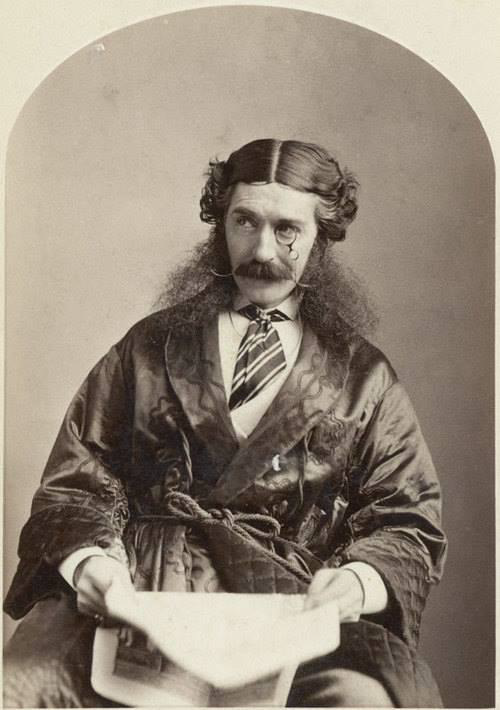
One of the earliest known photographs of a resident of Septimus Keen. It can be dated due to the fact it quite clearly predates the village’s newspaper ban – which came into force 18 months after Septimus started recruiting the great and the good to join him in his privately owned village.

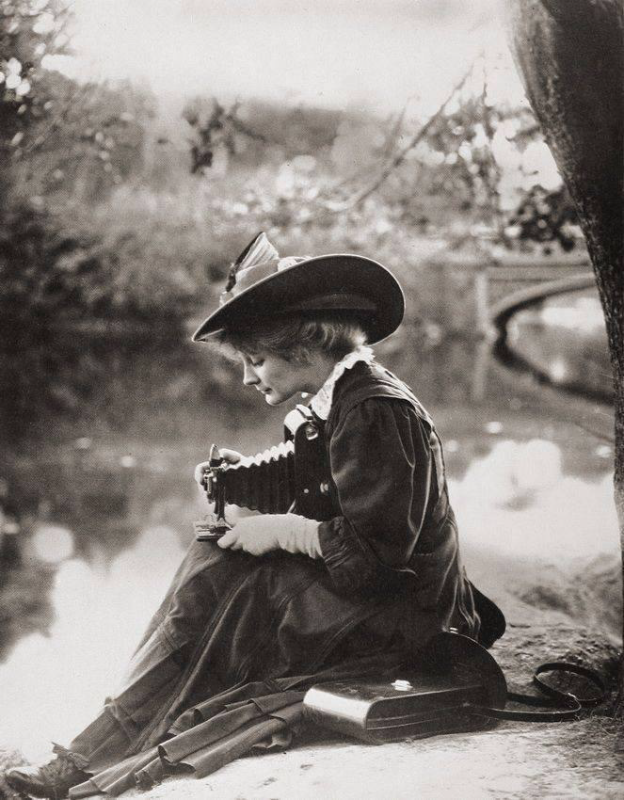
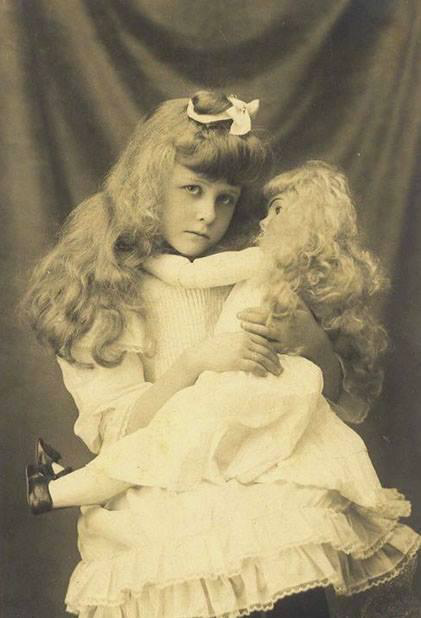
Resident photographer and feminist trail blazer Septimus Keen not only recorded life in the village but was also instrumental in the breakdown of this artistic Utopia. The birth of her daughter Septimus (seen here in one of her own portraits) prompted a discussion about the anonymity of the shared name and it’s suitability for children born to the commune. It was this questioning of Village founder Septimus Mordecai Keen’s vision that signalled the start of the end for many folk.

Recently recovered from a box of junk thrown out during a house clearance these plates record the very first spring the inhabitants enjoyed at Septimus Keen. The sense of playful excitement and experimentation that were hallmarks of the early years is evident in these charming images.

Experimentation with Eastern religions and beliefs and those of a more esoteric nature very much informed the outlook and attitudes of the early residents.

Later to become a regular destination for village outings this plate shows Septimus Keen recording the recently discovered `Dark Hole’ which lay just outside the village.

After Marcus Swift chose the village of Septimus Keen to recover from his near fatal crash on the Bexhill Seafront there was a brief craze among younger residents for assembling a convoy of sidecars and heading off into the countryside for picnics. This was brought to an end when a collision with the gates of Stonyhurst School drew attention to the unconventional commune and Septimus Mordecai Keen was forced to
ban all petrol driven vehicles from his village just as he had done newspapers a few years earlier. This heavy handed approach to maintaining the village’s integrity and survival was certainly one of the factors in the beginning of the end for the village of Septimus Keen.

Resident photographer Septimus Keen provides the evidence for much of what is known about the strange and secretive daily life in the village of Septimus Keen. Her images and radical feminist views make her possibly the most significant resident after that of founder Septimus Mordecai Keen himself. Here is a self-portrait of Septimus with another of the village’s more well-known residents who before being invited to join the commune had performed for Princess Alexandra at Windsor Castle with a young Charlie Chaplin and The Eight Lancashire Lads


The Strigenforme Sisters from Hanover where, at Septimus Keen’s invitation, the first residents from overseas to arrive at the village but their unwillingness to adopt the communal name unfortunately meant their stay was a very short one.
It is believed that it was their ability to mimic birdsongs that amused and intrigued the village’s founder and lead to him paying for their journey from Prussi…a to Lancashire. It is even rumoured that they were able to reproduce a full dawn chorus using just their combined vocal mimicry
As with so many former residents it is not know what happened to them when they left the village…..but it is said that if you listen carefully as the sun comes up on a still summers morning they can still be heard in the countryside around the deserted village

A day trip to `the dark hole’ for the villagers of Septimus Keen.


A couple of photos showing the leisure activities of village members. From cricket matches on the green which would involve everyone in the village either playing, catering or simply sitting back and enjoy the sound of leather on willow.
The children were encouraged to express their artistic side and would often put on impromptu plays based on folk legends, heroic poems and tales of high adventure that would occasionally make their way into the village from the outside world.
These images have recently come to light from scrapbooks found in the vicarage of St. Mary’s and All Saints in the nearby village of Whalley. Research continues

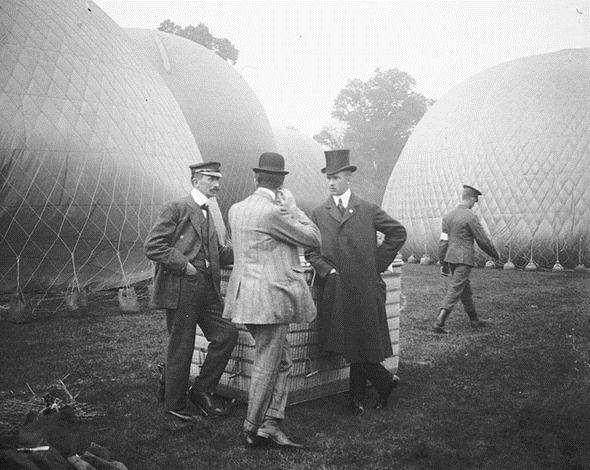
There is still no explanation for the curious spheres that appeared buried on the outskirts of Septimus Keen. Many of the day’s top scientists and psychics gathered to examine them and exchange theories. Inevitably comparisons were drawn with the famous `Land Spheres’ of Yorkshire’s Black Meadow despite the lack of luminosity from those at the village of Septimus Keen. A series of leylines and old bridle paths that run through both villages are rumoured to intersect at Hobbs Lane in East London.

Another example of the experimental work being carried out by the scientific minds of Septimus Keen. Frustratingly nothing remains of their pioneering work other than a handful of photographs – so we unfortunately have no idea of what became of either one of these two.

Some of the nation’s greatest minds were lost/absorbed into the ranks of Septimus Keens. It is a testament to their belief in Septimus Mordecai Keen’s visionary experiment that they accepted the anonymity of becoming a village member. Of course the very fact they could hide away in such a liberal and anonymous community also allowed them to experiment on the very edges of what scociety considered acceptable – and beyond.

One of the more eccentric Septimus’ and his `Time Travel Device’ – no one knows what happened to him or his machine but they were both noted as absent when the village was finally closed down.


The village of Septimus Keen is considered by some as the birthplace of EVP research – recent analysis of the recordings made inside the electric pentacle have revealed an almost constant drone of voices and unexplained sounds that has left one of our researchers a gibbering wreck and seen the cylinders locked up in the basements of Cox & Co for everyone’s safety and sanity

FHR Facebook

Folk Horror Revival maintains a Facebook group, which is where most of our discussion takes place, here. This is the only official Facebook group and the only one which supports our charity fundraising.

Folk Horror Revival maintains a Facebook group, which is where most of our discussion takes place. This is the only official Facebook group and the only one which supports our charity fundraising.

There are other groups which use the Folk Horror title, including some that copy our Folk Horror Revival name but they are not linked to our work.

12705724_10156474613515484_1299533609324065036_n

Andy Paciorek – Books

Andy Paciorek is a graphic artist, drawn mainly to the worlds of myth, folklore, symbolism, decadence, curiosa, anomaly, dark romanticism and otherworldly experience. He is fascinated both by the beautiful and the grotesque and the twilight threshold consciousness where these boundaries blur. The mist-gates, edges and liminal zones where nature borders supernature and daydreams and nightmares cross paths are of great inspiration.


Books currently available from the Andy Paciorek Blurb bookstore

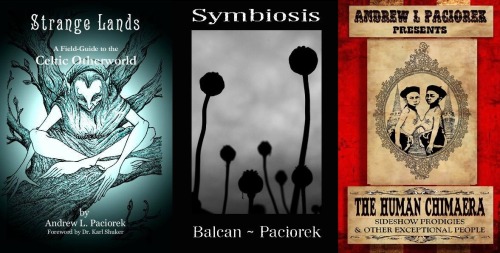
https://i0.wp.com/www.blurb.co.uk/images/uploads/catalog/30/2110730/2122542-7a8837b0799df6c6bbfce5591a52d18a.jpgStrange Lands is a deeply researched and richly illustrated information guide to the entities and beasts of Celtic myth & legend and to the many strange beings that have entered the lore of the land through the influence of other cultures and technological evolution.At nearly 400 pages and featuring over 170 original illustrations, Strange Lands is an essential accompaniment for both the novice and seasoned walkers between worlds.

The following text from the foreword to Strange Lands by Dr Karl Shuker ~

“Right from a child, I have always been fascinated by mythology and folklore, especially the rich corpus originating in the British Isles, and I have read very extensively on the subject. However, I can say in all honesty that Strange Lands is one of the most comprehensive single volumes on British mythological entities that I have ever encountered. Even Dr Katharine M. Briggs’s essential tome, A Dictionary of Fairies, universally acclaimed as the standard work on such beings, now has a rival in terms of the sheer diversity of examples documented. And where Strange Lands effortlessly outpoints even that classic work is of course in its illustrations, which are truly breathtaking in their beauty, intricacy, and vibrancy”

https://i0.wp.com/www.blurb.co.uk/images/uploads2/catalog/002/110/730/5995293-9aaea9dacc43af40f7ee518e55b1e319.jpg
Containing over 100 original pen & ink portraits alongside biographic text, The Human Chimaera is an indispensable guide to the greatest stars of the circus sideshows and dime museums. Includes a foreword by John Robinson of Sideshow World.

https://i0.wp.com/www.blurb.com/images/uploads/catalog/30/2110730/2862909-21a6d0bfa065364319ff29bd3f31c905.jpg

Imagery drawn by Andrew L. Paciorek from the mind of Andreea V. Balcan.

80 pages illustrated throughout, Symbiosis brings together the Balcan~Paciorek experimental projects exploring language, emotions and alchemy – ‘Pandemonium Vaudeville’, ‘The Anomalous Lexicon’ and ‘Conjunctio Oppositorum’.

Available in a choice of 3 cover formats and also as an e-book for iPad / iPhone.

https://40.media.tumblr.com/fb1f9de9c6408ebd4486cc758d5fa9d3/tumblr_nc478xh8eO1s754dbo1_500.jpg
http://www.blurb.com/user/store/andypaciorek

Coming soon-ish …

Black Earth: A Field Guide to the Slavic Otherworld …

Andy Paciorek is also the creator of Folk Horror Revival
http://pbs.twimg.com/media/CYl-XdCWEAALOQ4.jpg:thumb

In addition to the books mentioned above, Andy has also produced work for other books including some of Harper Collin’s Element Encyclopedia & Art For mindfulness titles and the charity book project Cumbrian Cthulhu.

Follow The Art of Andy Paciorek on Facebook here
Andy Paciorek's profile photo