Myth and Masks: Artwork by Paul Watson 2013 -2015
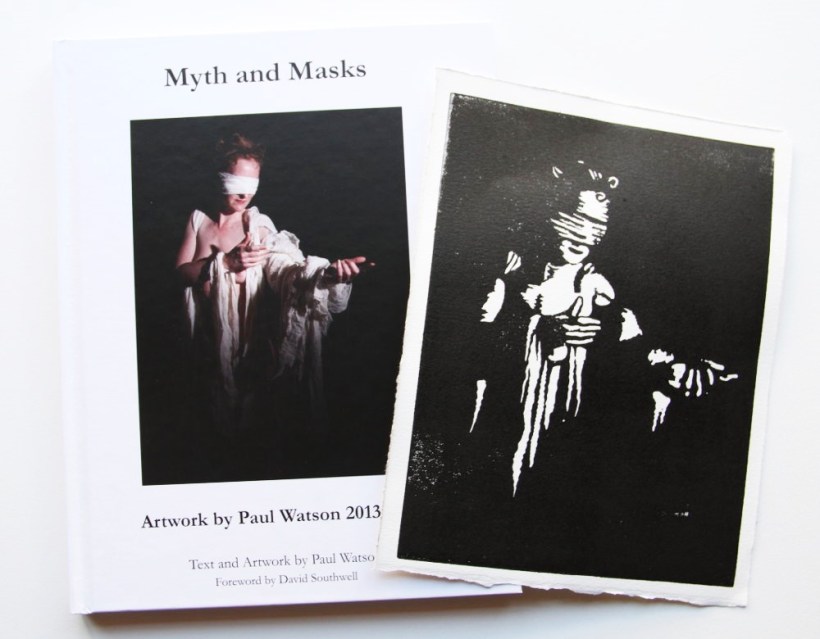
Myth and Masks by Paul Watson is an evocative work; described as ‘Shamanic’ in the foreword by David Southwell – a word he does not use lightly but it is a word that accurately describes this book. Myth and Masks is a transformative journey, a gateway into an Otherworld.
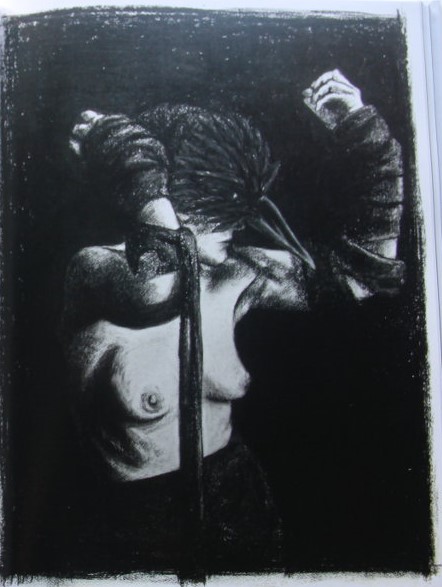
Within its pages are mainly photographs but also included are drawings and prints as well as writings by the artist about the inspiration, history and creative process of his work and subject matter. Intriguingly Watson questions whether the masks he creates, which feature so prominently in his work, are part of the art. He states seeing them more perhaps as preperation or costumes for his photography. For me looking inward at his work, the masks are both elements and subject matter of a larger work but I consider them also beautifully strange artworks in themselves.
In creating the masks, Watson was inspired to investigate the role, history and nature of masks more deeply. Gazing upon his masks, his photos and graphics, they tantalise the viewers’ eyes and impregnate their mind with questions – what do these masks represent? What do they reveal and what do they conceal?

They are not mere costume – they are ritual, mythical, mystical. There is a theatrical narrative suggested in the still images. Stories dying to be told.
Dying … an apt word, for within these book pages we find the Badb Catha, the Death Mask and the Crow. The imagery of the crow goddess as rendered by Watson is reminiscent of the Plague Doctor masks of medieval times; but it is not confined to an isolated historical pestilence but is an eternal archetype. The Crow – devourer of carrion, a memento mori ~ a reflection of death in life.

By placing the masks upon models, Watson puts life into death; the empty sockets of the mask are given a glint of life in some images but in others they eyes remain hidden, hinting at greater mysteries.

Life and death are intertwined as revealed in the Ivy Mask. Ivy is an evergreen plant, a reminder that life continues through the greatest adversities but it also reminds us of its presence in tumbledown graveyards or clinging to the crumbling ruins of abandoned weather-beaten buildings. It speaks of life beyond death.
There is perhaps an element of sex that buds beneath the surface in some images also. The nudity is not overtly erotic in the imagery. It is not the bodies perhaps here that draws the carnal aspect of the mind in but the masks. There can be something enthralling, oddly sinister but alluring, something fetishistic too about masks. Sex and Death frequently go hand in hand. In the realm of folk horror, death has been portrayed several times as an act of fertility and therefore rebirth or new or transformed life.

We look at the masks and they gaze back at us with whispers of life, death, rebirth and of change. The element of change is of course integral to masks; they change the appearance of the wearer and as such change our perceptions of them. Another chapter in Watson’s book deals with that archetypal mythic character – the Shapeshifter.
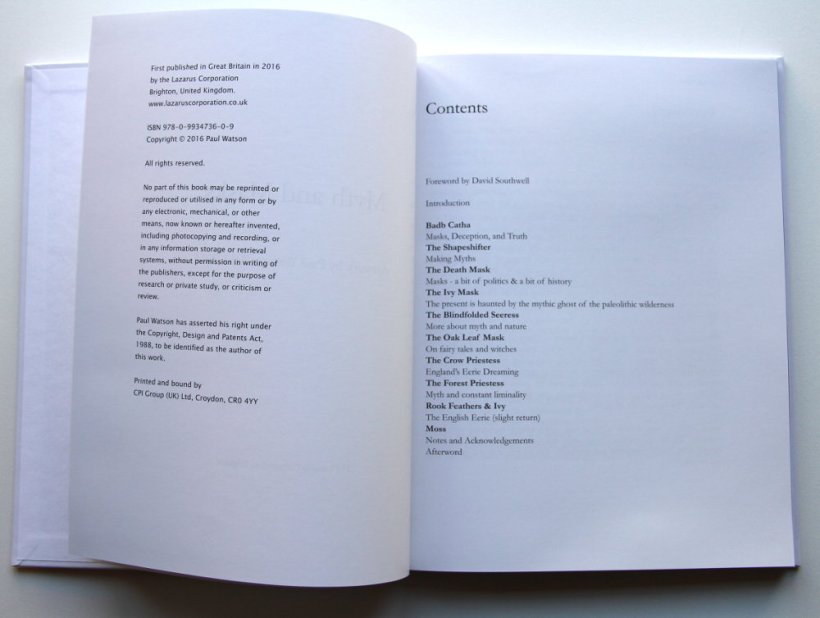
Within his writings that accompany the imagery, Watson seamlessly draws in considerations of sources such as ancient myth, fairy tales, witchcraft, folk customs, hauntology and the ‘English Eerie’. Literary luminaries such as Robert Macfarlane, Marina Warner, Warren Ellis, Martin Shaw, Robert Holdstock and others take their place.
Visually and textually, Myth and Masks is an intriguing, evocative work and one that I recommend a place on the bookshelves of Folk Horror Revivalists.
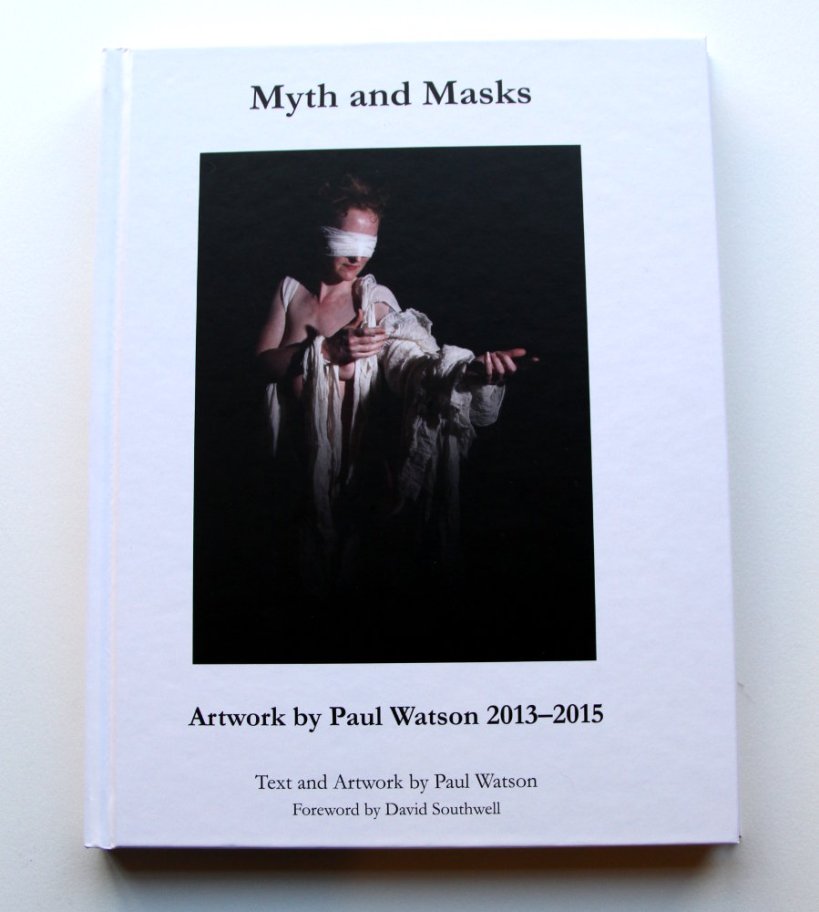
- ISBN : 978-0-9934736-0-9
- Pages: 128
- Format: Hardback, high-quality litho-printed, sewn binding
- Price: £24.99 exc. shipping – ONLY AVAILABLE FROM http://www.lazaruscorporation.co.uk/shop/38
- Size: 252mm × 196mm (approx. 9.9ʺ × 7.7ʺ)
- 28 colour plates, 3 b&w plates
- Foreword by David Southwell (of Hookland Guide)
- Each copy of this initial print-run of Myth and Masks comes with a free, hand-printed linoprint by Paul Watson of the Blindfolded Seeress, exclusive to this book.
Myth and Masks: Artwork by Paul Watson 2013–2015 is a volume of Paul Watson’s artwork from 2013 to 2015, focusing mainly on photography but also including drawing and printmaking. The stark and dramatic images are complemented by an edited selection of his writings on myths, masks, and the “English Eerie”, previously published on his Artist’s Notebook blog during the course of creating these pieces of artwork.
These selected pieces of Paul Watson’s artwork show his development of an intertwined host of primal characters, drawn from his imagination, but strongly influenced by the English landscape and the myths and legends that are embedded deeply within that landscape.
The accompanying written pieces show the artist’s exploration of, and research into, the wider subject matter of what has become known as “the English Eerie” that runs in parallel with the creative process.
What others have said:
“The book takes the reader on a journey through the last two years of his work, touching on subjects as eclectic as the English eerie, folk-horror and psychogeography, with every stop in between. In addition to the beautiful colour plates of Paul’s work, the book includes several essays focusing on the inspiration behind his work along with ideas of myth and folklore, creating together an engrossing volume that will lead you to another world.”
– Willow Winsham, FolkloreThursday website, 2016.
“Highly recommended: a treat for the eyes and the imagination!”
– Jane Talbot, author of The Faerie Thorn & Other Stories








 Folk Horror Revival & Urban Wyrd Project ⨘