Wyrd Harvest Press – FB Page

For the Revivalists who follow us on Facebook, as the Group there gets so much traffic daily, sometimes it can be easy to lose track of or miss news and updates on Folk Horror Revival and Wyrd Harvest Press projects on there.
So we have created a Page specifically to post information that can be quickly and easily found about our book productions and other creative ventures at – www.facebook.com/folkhorrorrevival/
We will of course also continue to post the information here on our website *:) happy

Septimus Keen – the forgotten village

Where English folk music had Cecil Sharpe and American roots music had Alan Lomax the outer reaches of the sonic spectrum has its own audio relic hunter. A shadowy enigma who set off in search of lost melodies and forgotten horrors more years ago now than anyone cares to remember. He surfaces every few months with a knapsack full of dusty reel-to-reel tapes and curious field recordings. Never aging – never speaking, this denizen of the field bazaar is known only as Melmoth (The Wanderer).

It was Melmoth who first revealed to the world the truth behind the lost village and has subsequently become something of a curator of its creative output. Rumours soon sprung up as to Melmoth`s connection to this mysterious location– and it is even suggested that his shadowy origins and personae of anonymity stem from his time as a resident of this strangest of places.

There is a small, almost forgotten village in the county of Lancashire, not far from the shadow of Pendle Hill, which bears the unusual name of Septimus Keen. However it wasn’t always this way…

Traditionally the village had been a small but thriving example of Blake’s green and pleasant land until the rise of the dark, satanic mills stripped it of its workforce, its pride and its identity.

The village – by this point almost abandoned – was saved from eradication by well-known philanthropist and local eccentric Mr Septimus Mordecai Keen.

He purchased the village and then proceeded to invite many of the day’s greatest minds and artists to join him. What he had planned for the village was to set up what was initially a psychological experiment under the guise of a very unusual artist community. His first move was to rename the village after himself; then he went on to insist that absolutely everybody who came to live in the village would also be required to change their name as well – also to Septimus Keen. His dream was that a community

would grow where all sense of class or hierarchy would be rendered unnecessary because every man, woman or child would be made equal by their shared name. Without a name to identify someone when they weren’t present he believed would lead to gossip and criticism becoming a redundant concept. It was in this idyllic environment that Septimus Mordecai Keen envisaged a utopian, creative hive that would change and lead the world. This theory did seem to work for a while until the issue of the naming of babies born to community members became a reality and people started to leave in protest to his hard-line dogma. The small group who remained (a mere 14 people compared to the original 103) carried on this eccentric way of life long after their founder’s death. It was often said that the village of Septimus Keen was the only place in Europe not effected by the Great War – a fact that may have sown the final seed of resentment and suspicion which eventually lead to the abandonment of the village in 1922.

The most interesting outcome of this experiment relates to this last pocket of believers. After 20 years the name `Septimus Keen’ now no longer referred to a specific individual in any way and the name had become meaningless. What remained was a village where there were so many `Septimus Keens’ that in fact no one was Septimus Keen anymore. Labelling individual identity had become redundant.

Because of this all of the writings and the music, artwork and theatre, science and electronics that came out of the village at a prolific rate in those last 5 years are credited solely to `Septimus Keen’. There is no way of knowing the age, gender or ethnicity of any of the creators. We don’t even know how many different

people were involved in this last body of work nor if they were original invited villages, children of the commune or strangers who had found refuge there.

When Warhol commented that he wanted to distance the artist from the art and leave just the impression of the piece he was referencing the earlier achievements of this artistic community. The Sci-Fi-Delic sounds you hear were indeed written, arranged and performed by Septimus Keen – we just don’t know which one.

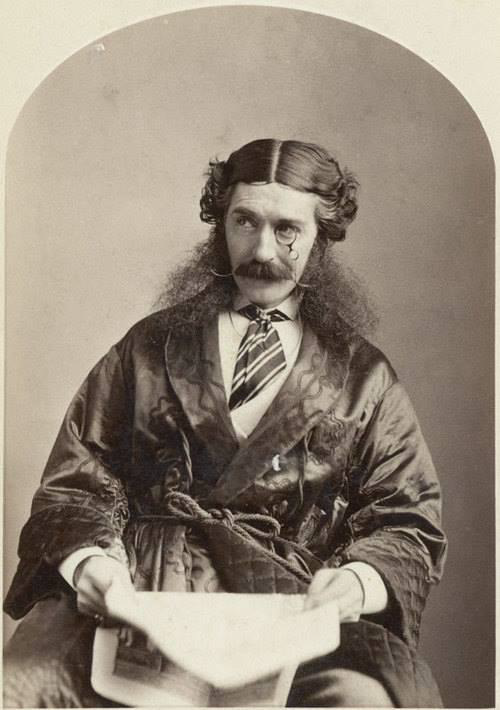
One of the earliest known photographs of a resident of Septimus Keen. It can be dated due to the fact it quite clearly predates the village’s newspaper ban – which came into force 18 months after Septimus started recruiting the great and the good to join him in his privately owned village.

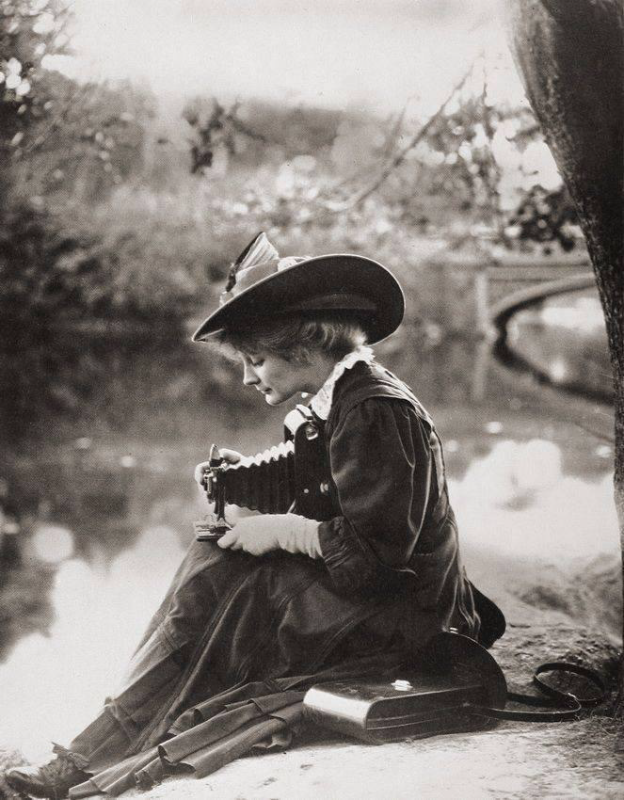
Resident photographer and feminist trail blazer Septimus Keen not only recorded life in the village but was also instrumental in the breakdown of this artistic Utopia. The birth of her daughter Septimus (seen here in one of her own portraits) prompted a discussion about the anonymity of the shared name and it’s suitability for children born to the commune. It was this questioning of Village founder Septimus Mordecai Keen’s vision that signalled the start of the end for many folk.
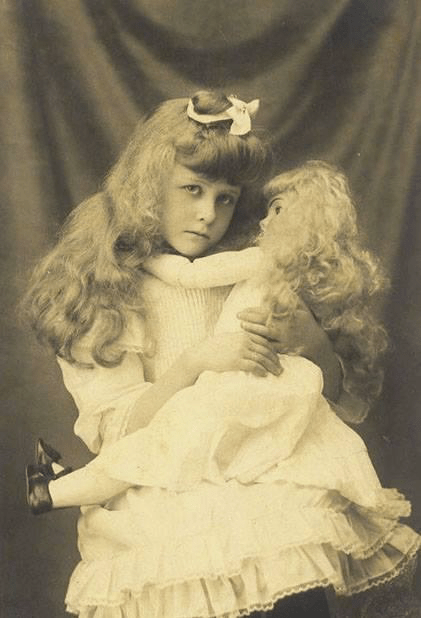
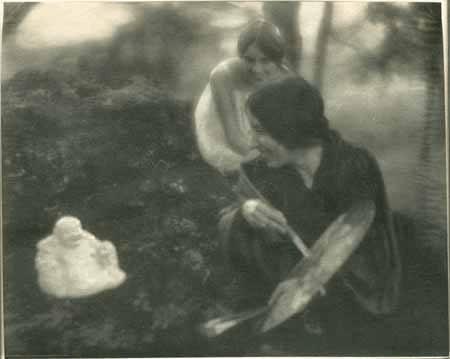
Recently recovered from a box of junk thrown out during a house clearance these plates record the very first spring the inhabitants enjoyed at Septimus Keen. The sense of playful excitement and experimentation that were hallmarks of the early years is evident in these charming images.

Experimentation with Eastern religions and beliefs and those of a more esoteric nature very much informed the outlook and attitudes of the early residents.
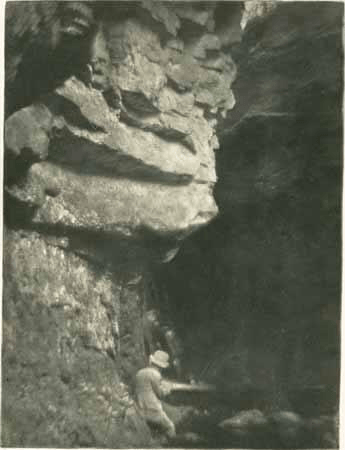
Later to become a regular destination for village outings this plate shows Septimus Keen recording the recently discovered `Dark Hole’ which lay just outside the village.
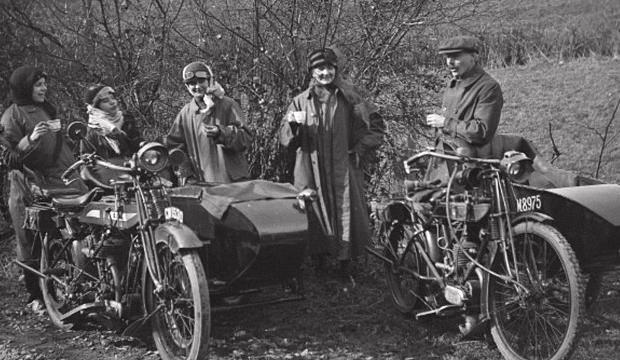
After Marcus Swift chose the village of Septimus Keen to recover from his near fatal crash on the Bexhill Seafront there was a brief craze among younger residents for assembling a convoy of sidecars and heading off into the countryside for picnics. This was brought to an end when a collision with the gates of Stonyhurst School drew attention to the unconventional commune and Septimus Mordecai Keen was forced to
ban all petrol driven vehicles from his village just as he had done newspapers a few years earlier. This heavy handed approach to maintaining the village’s integrity and survival was certainly one of the factors in the beginning of the end for the village of Septimus Keen.

Resident photographer Septimus Keen provides the evidence for much of what is known about the strange and secretive daily life in the village of Septimus Keen. Her images and radical feminist views make her possibly the most significant resident after that of founder Septimus Mordecai Keen himself. Here is a self-portrait of Septimus with another of the village’s more well-known residents who before being invited to join the commune had performed for Princess Alexandra at Windsor Castle with a young Charlie Chaplin and The Eight Lancashire Lads


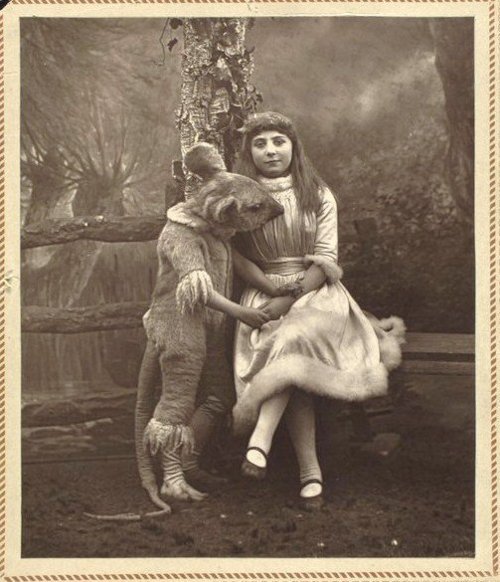
The Strigenforme Sisters from Hanover where, at Septimus Keen’s invitation, the first residents from overseas to arrive at the village but their unwillingness to adopt the communal name unfortunately meant their stay was a very short one.
It is believed that it was their ability to mimic birdsongs that amused and intrigued the village’s founder and lead to him paying for their journey from Prussi…a to Lancashire. It is even rumoured that they were able to reproduce a full dawn chorus using just their combined vocal mimicry
As with so many former residents it is not know what happened to them when they left the village…..but it is said that if you listen carefully as the sun comes up on a still summers morning they can still be heard in the countryside around the deserted village
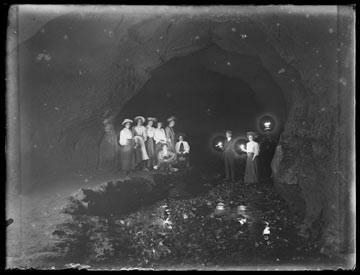
A day trip to `the dark hole’ for the villagers of Septimus Keen.


A couple of photos showing the leisure activities of village members. From cricket matches on the green which would involve everyone in the village either playing, catering or simply sitting back and enjoy the sound of leather on willow.
The children were encouraged to express their artistic side and would often put on impromptu plays based on folk legends, heroic poems and tales of high adventure that would occasionally make their way into the village from the outside world.
These images have recently come to light from scrapbooks found in the vicarage of St. Mary’s and All Saints in the nearby village of Whalley. Research continues
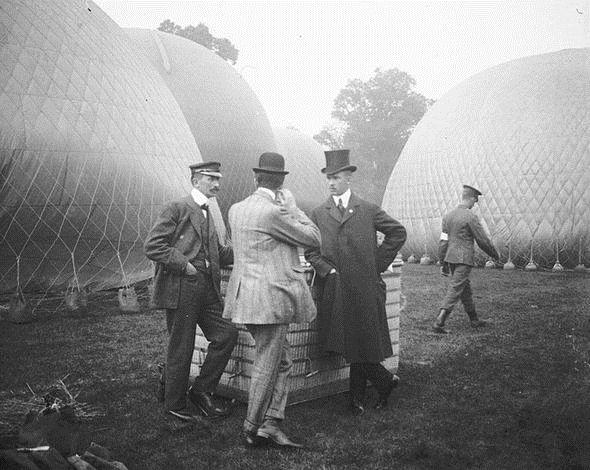
There is still no explanation for the curious spheres that appeared buried on the outskirts of Septimus Keen. Many of the day’s top scientists and psychics gathered to examine them and exchange theories. Inevitably comparisons were drawn with the famous `Land Spheres’ of Yorkshire’s Black Meadow despite the lack of luminosity from those at the village of Septimus Keen. A series of leylines and old bridle paths that run through both villages are rumoured to intersect at Hobbs Lane in East London.

Another example of the experimental work being carried out by the scientific minds of Septimus Keen. Frustratingly nothing remains of their pioneering work other than a handful of photographs – so we unfortunately have no idea of what became of either one of these two.
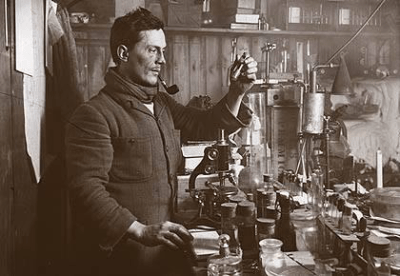
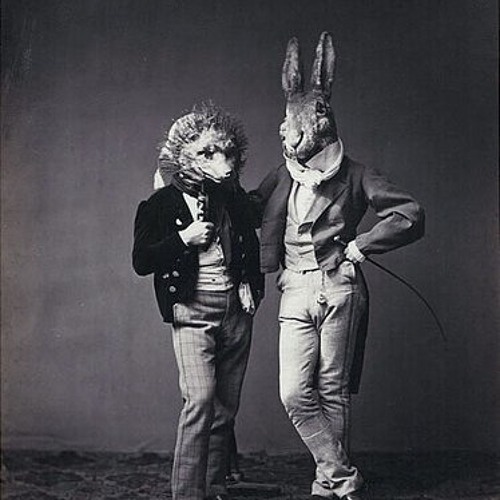
Some of the nation’s greatest minds were lost/absorbed into the ranks of Septimus Keens. It is a testament to their belief in Septimus Mordecai Keen’s visionary experiment that they accepted the anonymity of becoming a village member. Of course the very fact they could hide away in such a liberal and anonymous community also allowed them to experiment on the very edges of what scociety considered acceptable – and beyond.

One of the more eccentric Septimus’ and his `Time Travel Device’ – no one knows what happened to him or his machine but they were both noted as absent when the village was finally closed down.


The village of Septimus Keen is considered by some as the birthplace of EVP research – recent analysis of the recordings made inside the electric pentacle have revealed an almost constant drone of voices and unexplained sounds that has left one of our researchers a gibbering wreck and seen the cylinders locked up in the basements of Cox & Co for everyone’s safety and sanity

FHR Facebook

Folk Horror Revival maintains a Facebook group, which is where most of our discussion takes place, here. This is the only official Facebook group and the only one which supports our charity fundraising.

Folk Horror Revival maintains a Facebook group, which is where most of our discussion takes place. This is the only official Facebook group and the only one which supports our charity fundraising.

There are other groups which use the Folk Horror title, including some that copy our Folk Horror Revival name but they are not linked to our work.

12705724_10156474613515484_1299533609324065036_n

Andy Paciorek – Books

Andy Paciorek is a graphic artist, drawn mainly to the worlds of myth, folklore, symbolism, decadence, curiosa, anomaly, dark romanticism and otherworldly experience. He is fascinated both by the beautiful and the grotesque and the twilight threshold consciousness where these boundaries blur. The mist-gates, edges and liminal zones where nature borders supernature and daydreams and nightmares cross paths are of great inspiration.


Books currently available from the Andy Paciorek Blurb bookstore

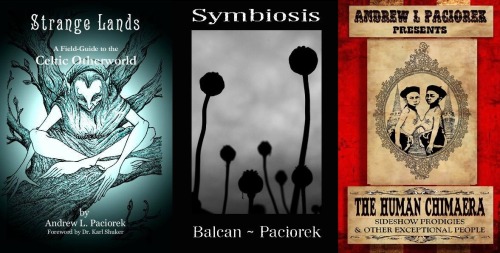
https://i0.wp.com/www.blurb.co.uk/images/uploads/catalog/30/2110730/2122542-7a8837b0799df6c6bbfce5591a52d18a.jpgStrange Lands is a deeply researched and richly illustrated information guide to the entities and beasts of Celtic myth & legend and to the many strange beings that have entered the lore of the land through the influence of other cultures and technological evolution.At nearly 400 pages and featuring over 170 original illustrations, Strange Lands is an essential accompaniment for both the novice and seasoned walkers between worlds.

The following text from the foreword to Strange Lands by Dr Karl Shuker ~

“Right from a child, I have always been fascinated by mythology and folklore, especially the rich corpus originating in the British Isles, and I have read very extensively on the subject. However, I can say in all honesty that Strange Lands is one of the most comprehensive single volumes on British mythological entities that I have ever encountered. Even Dr Katharine M. Briggs’s essential tome, A Dictionary of Fairies, universally acclaimed as the standard work on such beings, now has a rival in terms of the sheer diversity of examples documented. And where Strange Lands effortlessly outpoints even that classic work is of course in its illustrations, which are truly breathtaking in their beauty, intricacy, and vibrancy”

https://i0.wp.com/www.blurb.co.uk/images/uploads2/catalog/002/110/730/5995293-9aaea9dacc43af40f7ee518e55b1e319.jpg
Containing over 100 original pen & ink portraits alongside biographic text, The Human Chimaera is an indispensable guide to the greatest stars of the circus sideshows and dime museums. Includes a foreword by John Robinson of Sideshow World.

https://i0.wp.com/www.blurb.com/images/uploads/catalog/30/2110730/2862909-21a6d0bfa065364319ff29bd3f31c905.jpg

Imagery drawn by Andrew L. Paciorek from the mind of Andreea V. Balcan.

80 pages illustrated throughout, Symbiosis brings together the Balcan~Paciorek experimental projects exploring language, emotions and alchemy – ‘Pandemonium Vaudeville’, ‘The Anomalous Lexicon’ and ‘Conjunctio Oppositorum’.

Available in a choice of 3 cover formats and also as an e-book for iPad / iPhone.

https://40.media.tumblr.com/fb1f9de9c6408ebd4486cc758d5fa9d3/tumblr_nc478xh8eO1s754dbo1_500.jpg
http://www.blurb.com/user/store/andypaciorek

Coming soon-ish …

Black Earth: A Field Guide to the Slavic Otherworld …

Andy Paciorek is also the creator of Folk Horror Revival
http://pbs.twimg.com/media/CYl-XdCWEAALOQ4.jpg:thumb

In addition to the books mentioned above, Andy has also produced work for other books including some of Harper Collin’s Element Encyclopedia & Art For mindfulness titles and the charity book project Cumbrian Cthulhu.

Follow The Art of Andy Paciorek on Facebook here
Andy Paciorek's profile photo

Requiem For A Village (David Gladwell, 1975)

It’s hard to imagine what a non-native would make of this curious and densely-layered film which manages, quite wonderfully, to be both near-unintelligible and yet to also give voice to the subtle conflicts that lie at the heart of the English countryside, of the English soul.

It’s hard to imagine what a non-native would make of this curious and densely-layered film which manages, quite wonderfully, to be both near-unintelligible and yet to also give voice to the subtle conflicts that lie at the heart of the English countryside, of the English soul.

Screen Shot 2016-02-08 at 21.00.59

Taking as its ostensible plot the day-dreams and mutterings of an elderly man who spends his days cycling back and forth from his housing-estate home to a Sussex country graveyard where he ineffectually clips the grass around the graves with hand shears, Gladwell’s film builds contrast and juxtaposition until the viewer is almost giddy. Even this simple introduction holds multiple layers – the box-like boredom of the estate’s modern homes sits in contrast to the individually-named and hand-crafted gravestones, the old man cycling on a dual carriageway causes the modern cars to swerve and slow – but it is the quieter contrasts that make the film what it is; tarmac and woodland paths, handpainted signs and plastic hoardings, the warm-eyed father’s wedding speech and the councillor’s exhortation to action.

As our near-silent narrator patrols the graveyard, talking quietly of those lying under the soil, he almost literally invokes the past in one of the films many striking scenes. Soil and gravel push upwards to let the village’s past residents emerge once more, not as zombies or ghosts but as waking-dreams that laugh and smile at each other as they are conjured from the old man’s memories. From here, we are taken on a journey through his recollections of life gone by and the film’s core message of the past fighting an ever-losing battle against the modern; a young man (one we slowly realise is an earlier version of the old gardener) marries his young bride, a team of wheelwrights make a cartwheel, fields of grain are scythed into sheaves and the slow procession of days continues. This is interspersed with a sub-plot of the past being erased as modern-day earthmovers and diggers sweep the fields away, razed clean to make way for yet more housing estates, yet more boxes.

Screen Shot 2016-02-08 at 20.59.51

All of this could quite easily become a twee, rose-tinted piece of pastoral aggrandisement, where bucolic bumpkins go about their simple lives with an ignorant joy. Thankfully, this is not the case and Gladwell uses a brief but unsettling montage of sexual violence – shocking even now so who knows what effect it had in the 70s – to show not only the visceral side of the past but also to let us reflect on the unthinking rape that the modern world performs on itself as it plucks up virgin forest, ploughs fertile fields into barren concrete.

In one scene, the old man parks his bike and stands before one of the giant earthmoving machines. Looking for all the world like a peasant facing down the livestock-devouring wolf, or even the tax-extorting baron, he stands and flings a clod of earth at its man-high wheel. It is a feeble gesture, and an ineffectual one, but it is a stand he has to make and, as an old man fading from the world, it is his final stand.

Viewers wanting a return to the horror of films like ‘The Wicker Man’ are likely to be inevitably disappointed but ‘Requiem For A Village’ provides that true horror-of-the-folk in that their ways, the ways they have lived their lives, are no longer viable.

As an aside, Gladwell’s 1964 short work ‘An Untitled Film’ is an excellent companion piece to ‘Requiem For A Village’ and is included as an extra on the BFI DVD. Filmed in slo-mo black & white and using a hauntingly experimental soundtrack, ‘An Untitled Film’ makes the simple act of building a bonfire almost infernal and the killing of a chicken into something horribly elongated. A child leers out from behind tree branches, perhaps in horror or delight. It preludes the daily-routine-as-horror of Bela Tarr’s ‘The Turin Horse‘ by some decades and performs the same function with a subtlety that is startling.

Adam Scovell has written two excellent pieces one both Requiem For A Village and Gladwell’s earlier work for his Celluloid Wicker Man blog.

Dan Hunt, 2016


Cumbrian Cthulhu

Whilst only certain elements of H.P. Lovecraft’s oeuvre could be considered ‘folk horror’, the Cumbrian Cthulhu project is a different matter, using Lovecraft’s old god mythos as a platform, Cumbrian Cthulhu integrates the folklore, geography, history, megalithia and psychogeography of England’s Lake District in its anthologies of new illustrated weird tales by various authors.

Whilst only certain elements of H.P. Lovecraft’s oeuvre could be considered ‘folk horror’, the Cumbrian Cthulhu project is a different matter, using Lovecraft’s old god mythos as a platform, Cumbrian Cthulhu integrates the folklore, geography, history, megalithia and psychogeography of England’s Lake District in its anthologies of new illustrated weird tales by various authors.

Created by Andrew McGuigan, 100% of the sales profits from Cumbrian Cthulhu books are donated to the Lake District Search and Mountain Rescue Association.

Cumbrian Cthulhu books are available here and more information can be found here or on the Cumbrian Cthulhu Facebook page.


The Hare And The Moon

If you have not yet discovered The Hare and The Moon … what are you waiting for? Remedy this and treat your ears to the magnificent tones of some very haunted and haunting folk. The ideal addition to any folk horror music collection.

https://i0.wp.com/www.goldminemag.com/wp-content/uploads/Wood-Witch-cover.jpg

If you have not yet discovered The Hare and The Moon … what are you waiting for? Remedy this and treat your ears to the magnificent tones of some very haunted and haunting folk. The ideal addition to any folk horror music collection.

https://folkhorrorrevival.com/wp-content/uploads/2016/02/d6109-181524_182248535145321_1111401_n.jpg

You can follow The Hare and the Moon on Facebook, by clicking here, or read an interview with Grey Malkin, here

https://i1.sndcdn.com/avatars-000119590810-8lmg46-t500x500.jpg

The Carnival is coming …

Wyrd Harvest Press are happy to announce that it will be publishing ‘The Carnival of Dark Dreams’ written by Dr Bob Curran (Walking With the Green Man. The Dark Spirit: Sinister Portraits from Celtic Folklore. Vampires: A Field Guide to the Creatures That Stalk the Night and many others) and illustrated by Andy Paciorek (Strange Lands: A Field Guide to the Celtic Otherworld. The Human Chimaera: Sideshow Prodigies and Other Exceptional People).

Wyrd Harvest Press are happy to announce that it will be publishing ‘The Carnival of Dark Dreams’ written by Dr Bob Curran (Walking With the Green Man. The Dark Spirit: Sinister Portraits from Celtic Folklore. Vampires: A Field Guide to the Creatures That Stalk the Night and many others) and illustrated by Andy Paciorek (Strange Lands: A Field Guide to the Celtic Otherworld. The Human Chimaera: Sideshow Prodigies and Other Exceptional People). Presented as Victorian Sideshow paraphernalia, The Carnival of Dark Dreams is a fully illustrated introduction to some of the strangest and most sinister entities and creatures of world folklore.

100% of book sales profits will be donated to The Wildlife Trusts

Everybody loves a carnival. They are full of strange and exotic things – a collection of fabulous items and creatures that the customer can’t see anywhere else and which offer both amazement and delight. No wonder people are queuing to pay at the show’s tent flap for it’s an exciting and colourful time when the carnival rolls into your locality.

Our Carnival is different. Rather than gathering together creatures and beings of mystery and wonder, we have brought together some of the things that make up the stuff of your worst nightmares. Here are creatures that you hoped you might never meet – you may not know their names but you know they exist These are the beings which haunted your childhood nights and which now linger somewhere in the back of your adult mind, to leap out and terrify you when you least expect it. Here are dreadful beings and monstrosities from all parts of the world – from mysterious China to the Caribbean. Some say that the creatures here are no more than legend or folklore and not of the rational mind, but step inside and see if you don’t think differently. Lift the corner of a sheet which covers an exhibit display and see if you don’t confront your darkest dream. As in the everyday carnival, you will never see anything like this anywhere else for our exhibits are both esoteric and unique For this Carnival, it’s better to stay indoors with door locked and the blinds down when it rolls into town.

So if your nerves can stand it – step this way. Look into the darkest areas that the human mind can offer and prepare to be terrified by the horrors of your own fears. Oh and mind the step!


images © Andy Paciorek

….COMING SOON ….

FHR: Field Studies Discount


Save 20% on the Folk Horror Revival: Field Studies book – just add code JANEND20 at checkout at – http://www.lulu.com/spotlight/andypaciorek
This offer ends January 28th. Remember, coupon codes are CASE-SENSITIVE. Make sure the little flag icon at top of sales page is set to your local country / currency.
100% of book sales profits are donated to the wildlife Trusts.

Further information about the book, including full contents list can be found here

image
Wyrd Harvest PressFOLK HORROR REVIVAL: Field Studies Featuring essays and interviews by many great cinematic, musical, artistic and literary talents, Folk Horror Revival: Field Stu…
View on folkhorrorrevival.com Preview by Yahoo