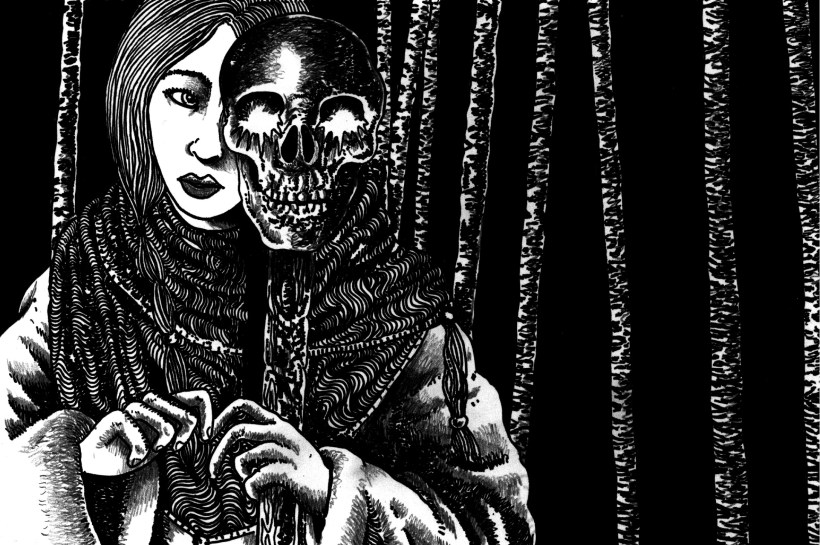
Folklore Thursday: Vasilisa the Brave

VASILISA

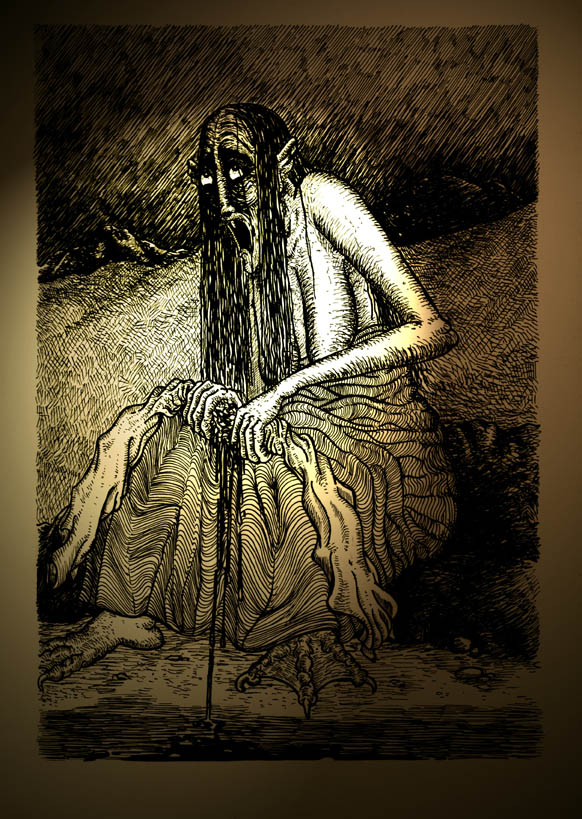
One of the most popular characters of Russian folk characters is a heroine named Vasilisa (or Vasilissa) who appears in several Russian fairy tales collected by the folklorist Alexander Afanasyev. Known variously as Vasilisa the Wise, Vasilisa the Brave and Vasilisa the Beautiful, her virtues are held in esteem.
In a trope familiar to fairytales the world over, Vasilisa’s mother died whilst Vasilisa was still a child and her father remarries another woman who proves to be an unkindly stepmother to her. Furthermore her stepsisters were none too kindly either. When her father had reason to travel away for a while, the family moved into a cabin deep within a huge forest.
Vasilisa was given a heavy workload of chores by her new family, but she had in her possession a magic doll that was her mother’s final gift to her and which assisted her with her work. Also the stepmother would send Vasilisa out into the forest to collect sticks or mushrooms, but really in the hope that the girl would become fatally lost.
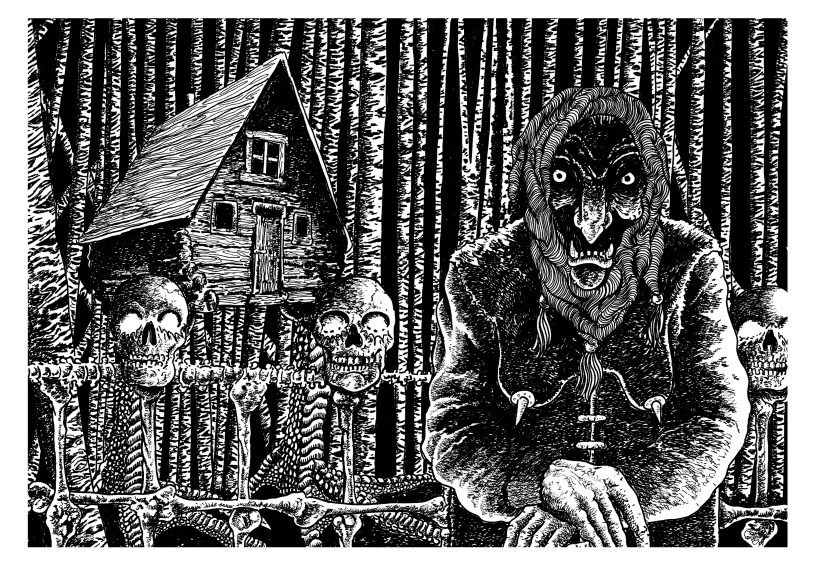
Whilst living in that remote cabin within the woods, the girls were instructed always to have a single candle kept alight from which other fires could be lit. It so happened one day that one of the elder stepsisters let the candle go out, so the young Vasilisa was ordered to gather fire from their nearest neighbour, who was none other than the witch Baba Yaga. So Vasilisa made the considerable trek beneath the darkness of trees to the macabre chicken-legged hut of Baba Yaga. On the way she is passed in turn by three horsemen. Each of which is clad in a single colour which also corresponds to their mount; first a white rider, then a red then finally a black rider whom nightfall followed soon after. Reaching the abode of the old witch, Vasilisa is petrified by the skulls on the fenceposts, whose eye-sockets burn with an eerie glow. Upon finding the girl, Baba Yaga instructs her that in order to retrieve fire Vasilisa must undertake certain tasks.
However should she fail in these chores or attempt to leave without performing them, then she was informed that she would be cooked and eaten.
The duties allocated to her were to clean Baba Yaga’s hut, to separate bad kernels of grain from the good and to separate poppy seeds from soil. Baba Yaga left the girl to her business but Vasilisa was distraught and already exhausted from her long walk through the woods. However the magic doll again assisted her in her tasks and the girl slept.
In the morning, Vasilisa looked out and saw the white rider pass by, later on the red rider passed and finally the black rider, followed both by darkness and the return of Baba Yaga. Seeing the chores beset Vasilisa completed, the witch proceeded to invoke several pairs of invisible hands to wring juice from the separated grains. She asked Vasilisa if she had any questions. The girl enquired about the horsemen and was informed that the white rider was the break of dawn, the red rider was the midday sun and the black one was the fall of night. Vasilisa was then about to enquire about the disembodied hands that worked for the old woman, but sensing this the magic doll in her apron pocket shook as if to warn her to hold her tongue. Vasilisa understood this and asked not of the mysterious hands.
Instead Baba Yaga asked How Vasilisa had managed to complete the difficult chores she had beset her. Vasilisa replied not too revealingly but not untruthfully that she had managed through her mother’s blessing.
The old witch wanted to hear of no blessing in her abode so cast Vasilisa out into the dark, but did not renege her promise and gave the girl a skull upon a stick. The fire in the dead eyes would both illuminate her path home and relight the fires within the cabin.
Upon returning there however, her stepmother and stepsisters became transfixed by the smoldering eyes of the skull and were reduced to nought but ashes. Vasilisa buried the skull.
Different tales follow the further life of Vasilisa, in one she is seen to weave threads of flax into gold or the finest silk. So impressed is the Tsar himself upon seeing the cloth, that he bids Vasilisa to meet him. Upon seeing her he is smitten with her beauty and takes her for his wife. In another variation Vasilisa is named as the girl whose kiss transformed a frog into a prince, who was then to become her husband. Whatever the tale of Vasilisa’s later life, there seems to be a common agreement that she and her father spent it in greater wealth and happiness than before.

From the book Black Earth: A Field Guide to the Slavic Otherworld. Written and Illustrated by Andy Paciorek
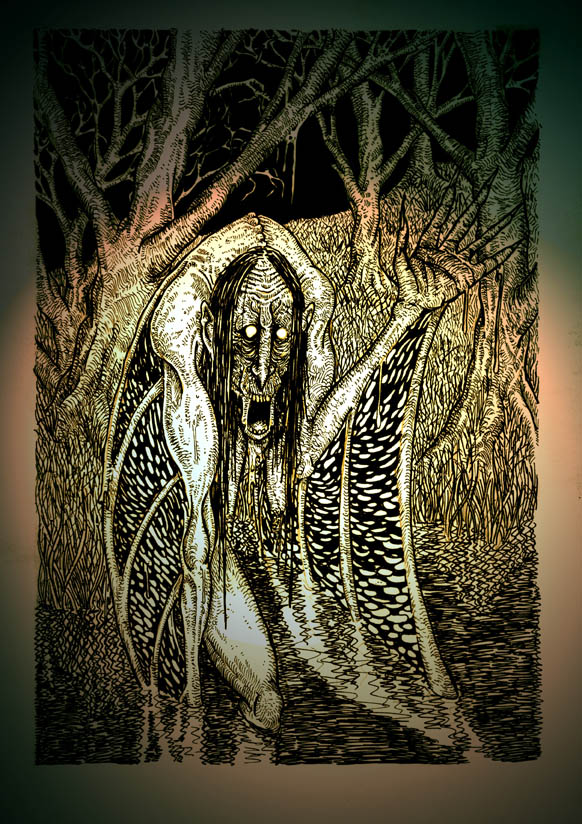
BABA YAGA

Samhain Greetings and Book Discount

hal

🎃 Happy Samhain – All Hallows – Día de Muertos – Failte na Marbh – Halloween to All Revivalists … 🎃
A little early but to mark the thinning of the veils treat your ghoulfriend or boofriend or yourself or anybody to 20% off Folk Horror Revival / Wyrd Harvest Press Books !!!

Use Code: TWENTY18
at checkout at -* http://www.lulu.com/spotlight/andypaciorek

*All Sales profits of books bought through our online store ^ are donated quarterly to The Wildlife Trusts

Using the Discount Code here, does not affect the sum donated to charity, so help a damn fine charity by buying great books at a bargain price !!
Offer ends 1 November at 11:59 PM 🍂☀️

halloween.jpg

Folklore Thursday: Samhain and the Celtic Vampires

https://i0.wp.com/www.batcow.co.uk/strangelands/images/sl%20images/143%20vampires%2B.JPG

In Ireland, the Failte na Marbh (Festival of the Dead) was held annually on the 31st October. (also known as Samhain. All Souls and most commonly Halloween).  At this time, the dead would pay a short visit to their living relatives and, after a year in the grave, they were obviously thirsty and famished. It was then the duty of the living kin to provide them with food and drink. If sufficient victuals were not offered, the dead would then feed from the veins of the living. These creatures were known as Marbh Bheo – the Night-walking Dead. On the Scottish Isle of Skye pure vengeance was often thought to be the prime mover for the Biasd Bheulach. These Vampire-like creatures would not only spare their revenge for the specific individuals who had done them wrong in life, or had sent them to the grave, but would exact grim penance upon any living soul that fell within their grasp. In England the dead thought most likely to rise again were suicides & executed criminals, and Northumbria in particular was said to have suffered several Vampire plagues. Prevalent also in both Irish and Scottish lore were Vampires that had no discernible human heritage, and instead seemed to be of a malevolent Fay stock. Such a shadowy creature was the Irish Dearg-Due or Dearg-Diulai – the Red Bloodsucker. Frequently the Dearg-Diulai appeared as beautiful, pale females cloaked in a sanguine-red capes. Attracting warm-blooded males with their feminine charm, seduction soon turned to slaughter.

https://i0.wp.com/www.batcow.co.uk/strangelands/images/sl%20images/144%20baobhan%20sith%2B.JPG

The Baobhan Sith, or Spirit Women, are a strange breed of Scottish Vampiric entities. They most frequently manifest as small groups of beguiling women, dressed in flowing green cloaks that almost conceal the fact that their legs are of a form more befitting Deer. They may also at times take the forms of Hooded Crows. Highland tales relate how they may entrance men with their dancing before sinking their fangs into them. The Baobhan Sith display a fear of cold iron.

https://i0.wp.com/www.batcow.co.uk/strangelands/images/sl%20images/145%20glaistigs%2B.JPG

The Glaistig are green-clad Fay women of fair beauty despite their lower bodies which are actually those of Goats. They are solitary creatures of converse character, for whilst they at times may greatly assist children, old people and cattle-farmers, should they chance upon lone male travellers or shepherds then their temperament changes entirely. They will first engage their victim in a seductive dance, before murdering and feasting upon them. In addition to fresh man’s blood the Glaistigs also have a taste for fresh cow’s milk.
Abridged text and amended images from Strange Lands: A Field Guide to the Celtic Otherworld – © Andy Paciorek


‘On Halloween Strange Sights Are Seen’ – About a Short film by Tea & Morphine

Folk Horror Tea & Morphine 1.jpg

Folk Horror Tea & Morphine 2.jpg
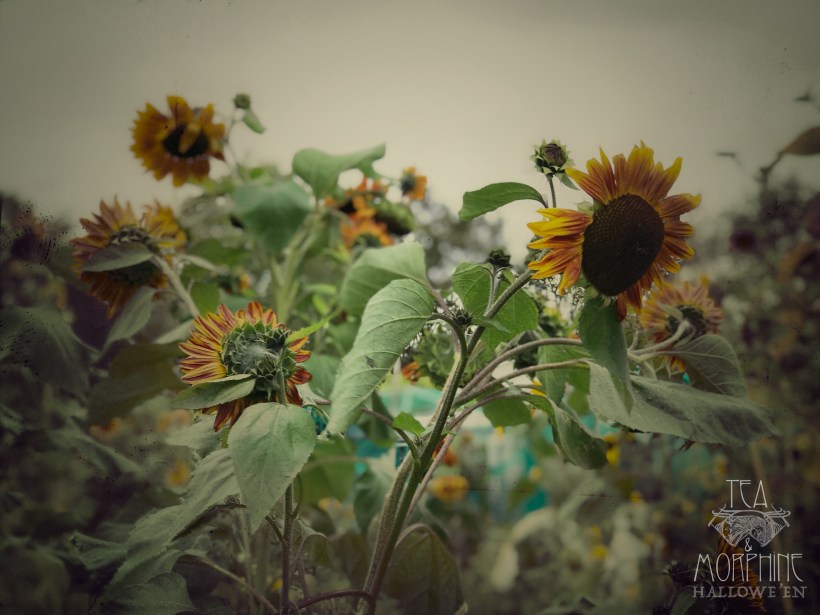
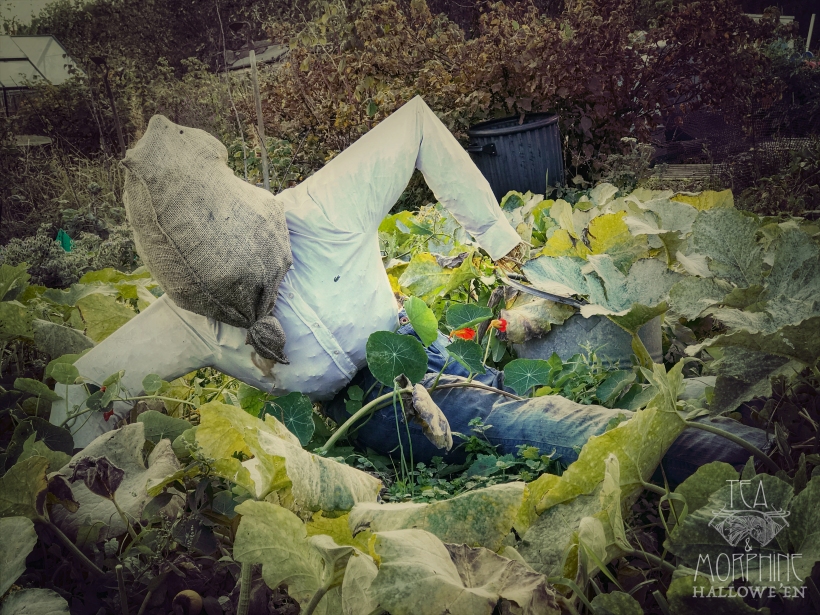
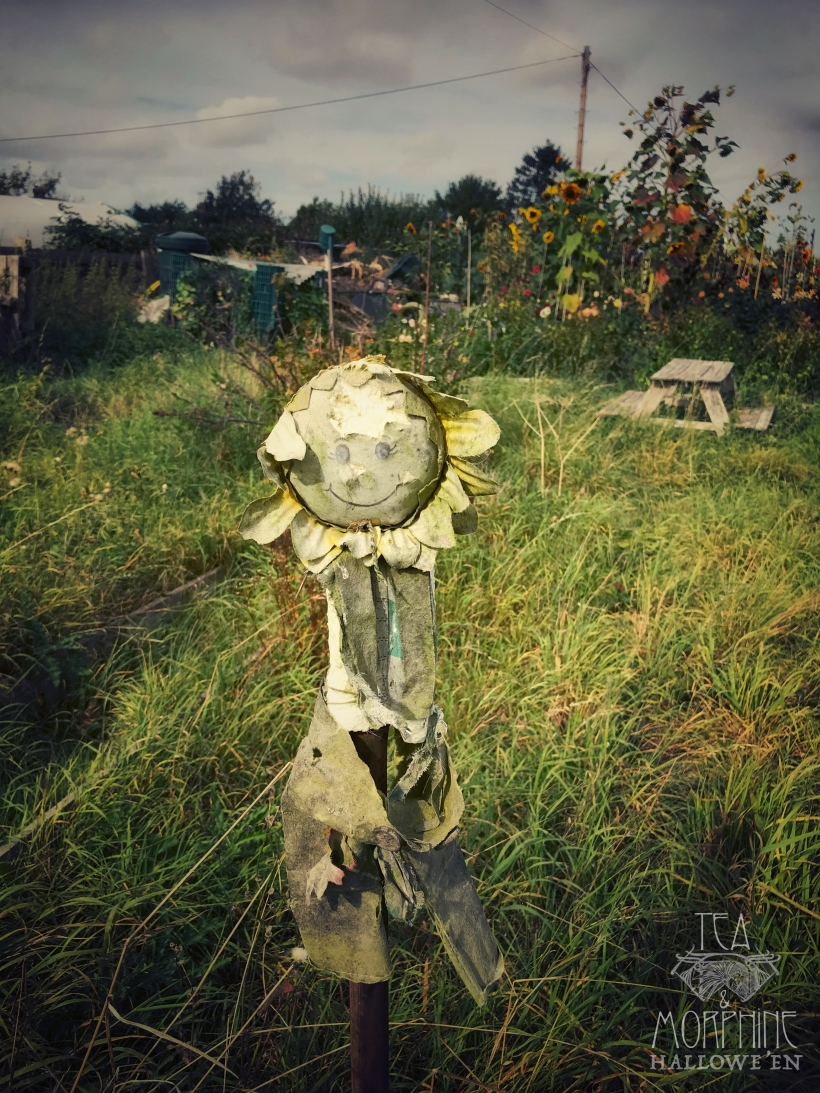
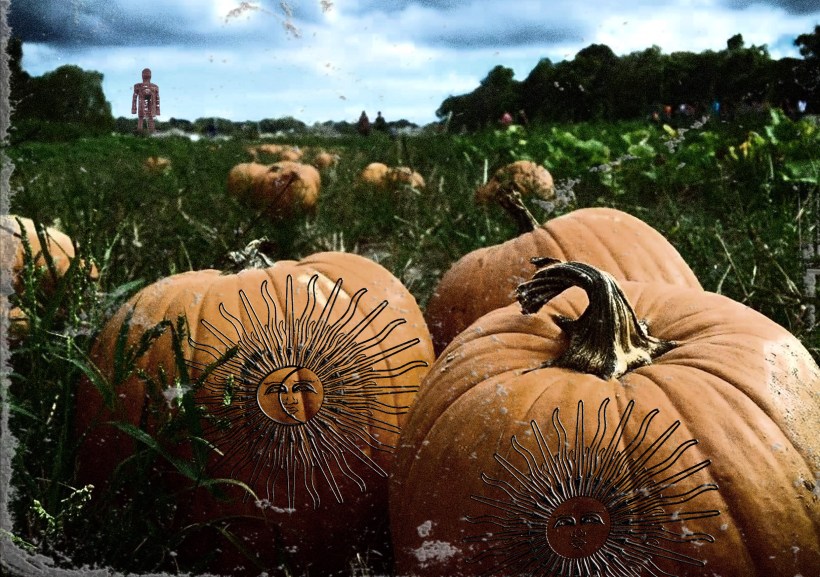
On 31st October, this Halloween, ‘Tea & Morphine’ will take us on an unusually eerie walk through a small Hertfordshire allotment. In this seven minute video short the viewer is taken on a surreal journey that transforms an everyday allotment into a world of mystery and intrigue as we are introduced to the many weird and wonderfully handcrafted characters who reside among the plots there.

Along the way we encounter sinister sunflowers, pumpkin laden tables and a whole host of quirky scarecrows and oddly imagined effigies, set to the atmospherically whimsical music of The Parlour Trick, the film takes the traditionally English pastime and spins a darkly twisted tale of the unseen going’s on when the inhabitants are left alone to their own devices. With no rigid plot or narrative it is left to the viewer to imagine the storyline as the procession moves dreamily through this surreal landscape.

‘Tricksters and Threats’. Also known as: Scarecrows, Wurzels, Tatter-Men, Mommets, Bugbears ~ Tatty-Bogles cannot help but frighten, as they shamble down country roads with their arms outstretched as if crucified – yet inspiring terror may not be their prime motive, as they simply want to stretch their legs after a long day of solitude standing. The fear generated in human observers may be either amusing or regrettable to them, or it may even go unregistered. It is by their very name and nature to frighten, for they are the Scarecrows erected in fields by farmers to try and protect their crops from the hungry beaks of birds.

https://i0.wp.com/www.batcow.co.uk/strangelands/images/sl%20images/55%20tatty-bogles%2B.JPG

The reasons for their nocturnal animation is somewhat of a mystery, for perhaps not all will rise and leave their plot, but some seem more inclined to come to life at night. Perhaps this is of their own volition or maybe there is some external enchantment at work. It could be that the magic of Witches or perhaps Fay beings animate these rag-bag effigies in order to cause mischief or perform other tasks. Otherwise a Scarecrow could provide an ideal host for a wandering spirit or Demon that possesses no true form of its own. Such strange and shapeless souls are the Brollochan. These uncanny wanderers may visibly consist of at best a mouth and pair of eyes but they can grant mobility to any inanimate object they enter. Should a Tatty-Bogle be thus possessed by a Brollochan, this would be revealed as “Thyself” and “Myself” are said to be the only words it can utter.

Extract on the folklore of scarecrows from – ‘Strange Lands ~ Supernatural Creatures of the Celtic Otherworld’ by Andrew L. Paciorek.

Folk Horror Tea & Morphine 7.jpg

http://theparlourtrick.com
Music is by The Parlour Trick; a song chosen from ‘A Blessed Unrest’ known “The Halloween album of the year” ~ Douglas Wolk (Rolling Stone, Pitchfork, TIME) Meredith Yayanos; Voice, strings, theremin, percussion & Dan Cantrell; Accordion, bass accordion, pump organ, celeste, glockenspiel, percussion.
https://theparlourtrick.bandcamp.com

‘On Halloween Strange Sights Are Seen’ is being shown Wednesday 31st October 2018 on the Tea & Morphine Facebook Page

https://www.facebook.com/teaandmorphine/
Images © 2018 Tea & Morphine

Folk Horror Tea & Morphine 4


Folklore Thursday ~ Night Hags and Demon Lovers

https://i0.wp.com/www.batcow.co.uk/strangelands/images/sl%20images/139%20night-hags%2B.JPG
Night Hags: Also known as: Night-Mares, Mara, Mera, Mares, Crushers, Drudes, Mare-Demons, Hagges, Haints, Entities, Mallt y Nos, Night-Fiends, Cauchemar, Night-Elves.
Sometimes people who suffered from wasting diseases such as Tuberculosis Consumption were said to look ‘Haggard’ or ‘Hag-Ridden’. This refers to the belief that, as they slept, a Night-Hag had entered their bedchambers and either sat upon their chests crushing them (but not to the point of fatality) and perhaps sucked away at their breath, or their vitality, or alternatively had actually ridden their victims entirely into the air and sometimes over distance. Either way, their human victims were left exhausted and often diseased. The alternative name of Mara and its similar derivatives is said to have meant Crusher in Old-English, and it is from this word that the term Night-Mare originated – initially meaning not a bad dream but an actual external terror. The term Hag-Riding has also been applied when horses who had been left resting have been found to be exhausted and covered in sweat in the morning. Again it was considered that the Night-Hags had been riding the horses around in circles to the point of collapse during the hours of darkness. In some locations it was thought that these fiends on horseback delivered bad dreams to households, thus giving an additional meaning to Night-Mare. An alternatively used term to Hag-Riding is to be Owl-Blasted, which refers to the belief that Night-hags would sometimes take the form of these nocturnal birds.

https://i0.wp.com/www.batcow.co.uk/strangelands/images/sl%20images/141%20demon%20lovers%2B.JPG

Demon Lovers: An Incubus is a male spirit that seeks to indulge a mortal woman in carnal activity, whilst a Succubus is a female spirit that likewise preys on the passions of mortal men. However it has been suggested that both spirits are one and the same, and that the Incubi / Succubi adopts only a specific gender in relationship to its particular victim. The nature of these nocturnal paramours preyed heavily upon the minds of the Medieval Church, possibly because many of the alleged victims were members of their own ministry who had prescribed to a life of chastity. (Merlin, the great sage of Arthurian legend was thought to be the offspring of an Incubus and a Nun). The Church scholars deliberated on whether the phenomenon was mere hallucination borne out of celibate frustration, or sinful fantasies made flesh, but this held their own people to blame almost as much as the other considered option that such claims were in fact a cover-up for actual corporeal liaisons with human partners. Frequently, though, those who claimed an encounter with an Incubus / Succubus seemed not to have been pleasured by such a visit but to have been genuinely shocked and frightened. Therefore further attention was concentrated on seeking out an external, supernatural culprit. They questioned whether these night-visitors were perhaps a salacious breed of Faerie, or maybe vengeful Ghosts, but as all were considered agents of the Devil anyway then it was simple enough to label them Demon-Lovers.

Images and Text © Andy Paciorek
Adapted from the book Strange Lands: A Field Guide to the Celtic Otherworld

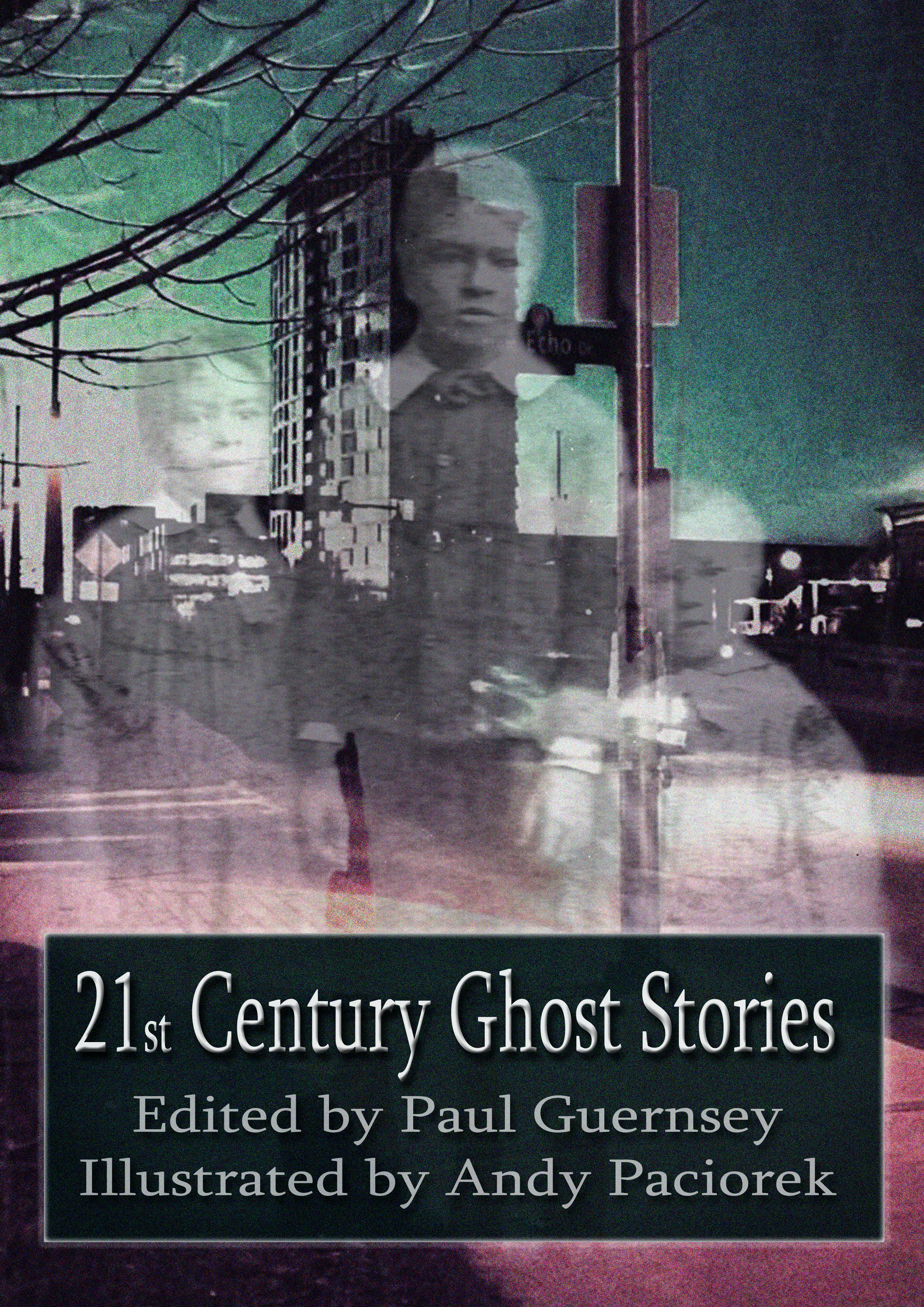
21st Century Ghost Stories

FC Low ResThis astonishing anthology gathers award-winning work by contemporary short-fiction writers from around the English-speaking world, all of whom drew their inspiration from the supernatural. Each of these fine authors, whether from the U.K., the U.S., Ireland, Canada, Australia, or elsewhere, puts his or her own thought-provoking, 21st century spin on some aspect of the paranormal—there are ghosts, of course, but you’ll also find tales revolving around demons, zombies, spirits in the Voudou pantheon, out-of-body episodes, doppelgangers, shape-shifters, hallucinations, dreams, imaginary people, mythical beings, and Things You Just Can’t Explain. These 29 stories are chilling, or funny, or a bit of both, and they all will continue to turn in your imagination long after you’ve finished reading them.
Available now from ~ http://www.lulu.com/shop/paul-guernsey/21st-century-ghost-stories/paperback/product-23734410.html

Launch offer – 25% off

15% will be directly deducted from cover price – to save a further 10% Use the Code –

LULU10

at checkout at – http://www.lulu.com/spotlight/andypaciorek

Ends 9 August at 23:59

100% of profits from FHR / Wyrd Harvest Press books sold in this store will be charitably donated at intervals to different environmental, wildlife and community projects undertaken by the Wildlife Trusts.

death2 small

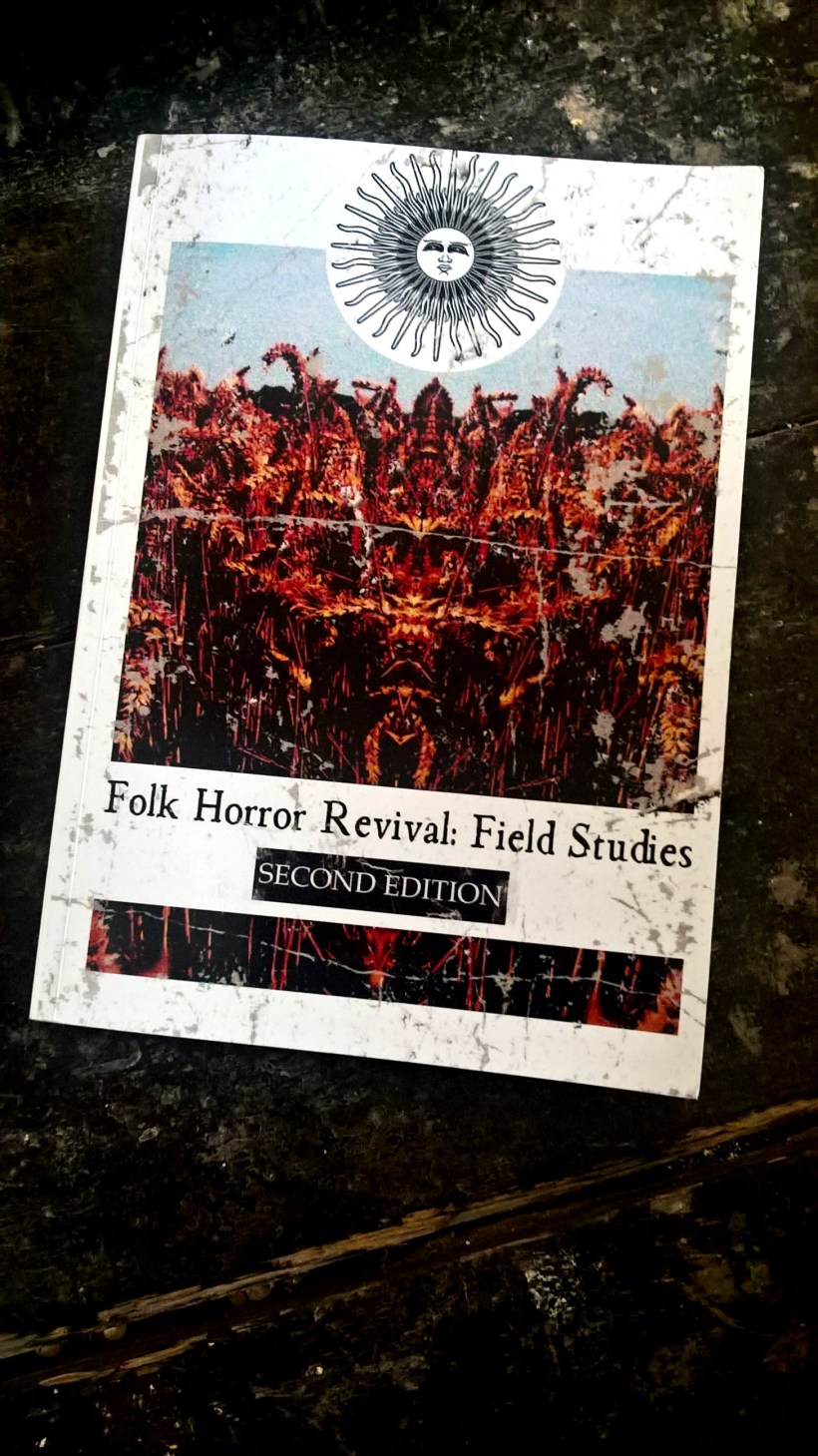
The Potatoes Have Eyes ~ A Glance into the Field ( + Discount Code)


WP_20180803_15_44_12_Pro

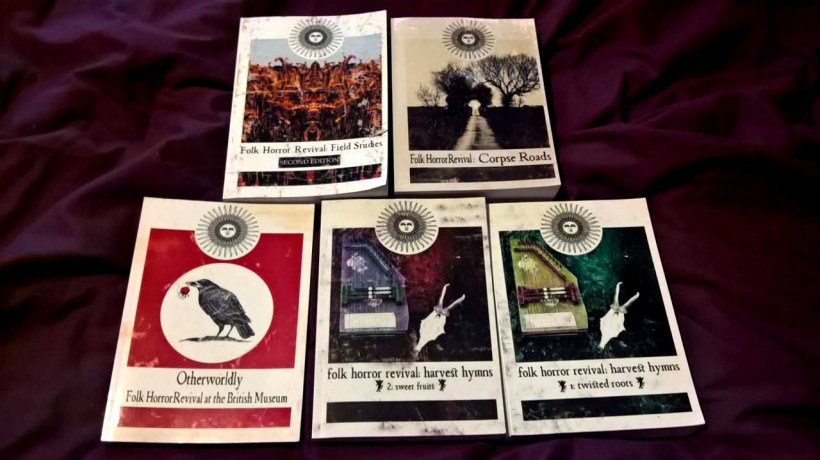
Presenting the  revised edition of the seminal tome Folk Horror Revival: Field Studies. A collection of essays, interviews and artwork by a host of talents exploring the weird fields of folk horror, urban wyrd and other strange edges. Contributors include Robin Hardy, Ronald Hutton, Alan Lee, Philip Pullman, Thomas Ligotti, Kim Newman, Adam Scovell, Gary Lachman, Susan Cooper and a whole host of other intriguing and vastly talented souls. An indispensable companion for all explorers of the strange cinematic, televisual, literary and folkloric realms. This edition contains numerous extra interviews and essays as well as updating some information and presented with improved design. 100% of all sales profits of this book bought in our online Lulu store are charitably donated at quarterly intervals to The Wildlife Trusts.

http://www.lulu.com/shop/folk-horror-revival/folk-horror-revival-field-studies-second-edition/paperback/product-23557533.html

whplogbw

Save 10% on orders of Wyrd Harvest Press Books, plus free mail or 50% off ground shipping

Use Code: BOOKSHIP18

at checkout at – http://www.lulu.com/spotlight/andypaciorek

(change little flag at top of sales page to get your local currency)

Ends 6 August at 23:59

Corner of the eye … something is coming …

Untitled-3.jpg

What is this? … what is coming? …

Coming very soon from Wyrd Harvest Press … 21st Century Ghost Stories

An impressive anthology of new haunted fiction from a variety of award winning and upcoming writers. Edited by author Paul Guernsey and illustrated throughout by Andy Paciorek.

Available from 7th August 2018 …

NEGROES ANONYMOUS a


#FolkloreThursday ~ The Banshee, Bean-Nighe & the Gwrach-y-Rhibyn

Presenting for Folklore Thursday a collection of strange entities from the Paciorek bestiary …
164 banshees+

The Banshee

Also known as: Beansidhe, Bean-Si, Benshee, Fairy Woman, Woman of the Hills, Bachuntas, Badbh-Chaointes, Cointeach, Wailers, The Keener, The One Who Keens, Mna-Sige, Mna-Sidhe, Cyhiraeth, Cyraeth, Cyoerrath, Cyhyraeth, The White Lady of Sorrows, The Weeper, The Skree, Caoineag, Caointeach, Fear-Sidh, Seinn-Bais, Death Music, Tolaeth, Ghost Sounds, Bocanachs, Bowa.

The wail of the Banshee (known as the Keening) is said to be heard either by the person whose death is imminent, or by someone closely associated to them. People with a strong Celtic bloodline are considered more likely to encounter a Banshee, and some old families may hold a peculiarly strong bond with one of these creatures. This is sometimes thought to indicate a distant Fay strain within their genes but others have suggested an earthier, more sinister reasons for the connection. The finger points at certain reputedly Banshee-ridden families with the accusation that one of their ancestors murdered a young lady, possibly a pregnant mistress or other similar unfortunate, and so it is believed that their descendants must carry a reminder of this shame for evermore. The shadow of this sin falls at the approach of their darkest hours and may be specifically regarded as being a Hateful Banshee. To those who have not heard the Banshee’s cries (and count themselves lucky for this), it is often imagined that this must be a loud, dreadful noise and sometimes it has been reported as such (usually in the cases of Hateful Banshees), but not always. Sometimes her Keening was described as being oddly melodic and strangely comforting, especially if heard by someone who was old and failing , had endured a long, discomforting illness or was of a family favoured by the Faeries.

165 bean-nighe+

The Bean-Nighe

Also known as: Night Women, Washer Women, Caoineag, Ban Nighechain, Nigheag-Na-H’ath, Washing Women, Little Washers by the Ford, Washers by the Banks, Washers of the Shroud, Washers of the Night, Night Washers, Cannerd Noz, Konnerez Noz.

The Bean-Nighe are generally encountered either sitting beside, or sometimes paddling in, remote streams and the shallows of rivers. Here they attend to their laundry, yet they are not conventional mortal women tending bucolic washing chores. A single glance at their hideous visage and the grim cloth they wring betwixt their fingers is more than enough to determine their anomalous character. The clothing that the Bean-Nighe is seen to wash is either the blood-drenched clothing of the observer, or the burial shroud that will consequently wrap their lifeless body. These creatures are said to be the souls of women who died whilst giving birth, doomed to remain on this earth either until Judgement Day or, as it is more frequently thought, until the day that they would otherwise have died. As a grim consequence of their fate, they are also aware of all the other people that will soon be visited by death and are sometimes reported as crooning a mournful dirge to themselves that recounts the names of all the ill fated.

166 gwrach-y-rhibyn+

The Gwrach-y-Rhibyn

Also known as the Hag of the Dribble, Hag of the Mist and also sometimes as y Cyhiraeth.

This Welsh portent of death may suddenly leap out of a water channel, but otherwise she will invisibly stalk her victims until they pass a crossroads or stream. Here she will become all too visible and audible, for in both instances her cries, like those of the Banshees and Cyraeths, are harrowing. If the person thus doomed to die (either the observer or someone they know) is a man the Gwrach-y-Rhibyn will holler “Fy ngwr! Fy ngwr!” (“My Husband! My Husband!”) but if a youth is to succumb, then she will cry “Fy mlentyn! Fy mlentyn bach!” (“My child! My little child!”) She is a hideous sight to behold, with her crooked back, hooked nose, long filthy hair and manic eyes. She is pinched and scrawny, yet her superficial mass likely betrays her true strength and vigour. The most frightfully inhuman of all her features, however, are her long thin arms, for not only do they end in dreadful talon-like hands, but black scaly wings also hang from these extremities. These bat-like appendages are thought capable of flight. Her negligible clothing is black and ragged.

All Text and Imagery © Andy Paciorek
For more on these subjects and many many others see the book
Strange Lands: A Field Guide to the Celtic Otherworld

cover_2

Available to purchase from – http://www.blurb.co.uk/user/andypaciorek

Free Shipping + 10% Discount on Folk Horror Revival books

37402472_10160618417995484_3847269899453857792_n.jpg

Free Shipping + 10% Discount off cover price on All Folk Horror Revival / Wyrd Harvest Press Books *

Use Code: BOOKSHIP18
at checkout at – http://www.lulu.com/spotlight/andypaciorek

*Offer Ends 23 July 2018 at 23:59

37610755_10160618423715484_1748936001763409920_n

100% of profits from FHR / Wyrd Harvest Press books sold in this store will be charitably donated at intervals to different environmental, wildlife and community projects undertaken by the Wildlife Trusts.

dozen

whplogbw
wyrd harvest logo