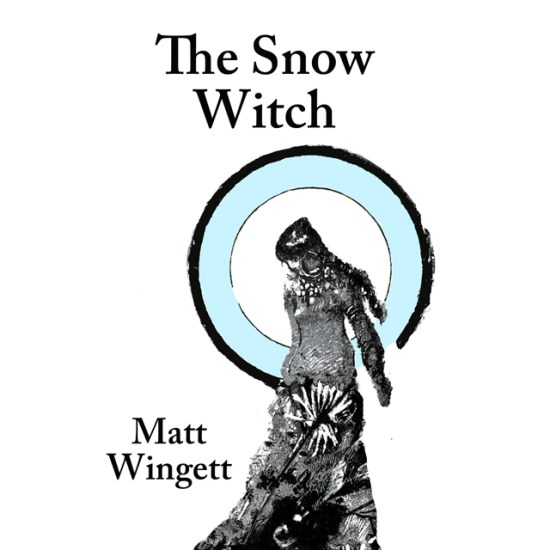
The Snow Witch by Matt Wingett will be available as a free kindle download from Saturday 17th February – Wednesday 21st February. This story of obsession, loss, murder and magic has been getting great reviews on Amazon and on Folk Horror Revival and is highly recommended as a great read.
You can download it here, available for 5 days only for free, from 17th February –
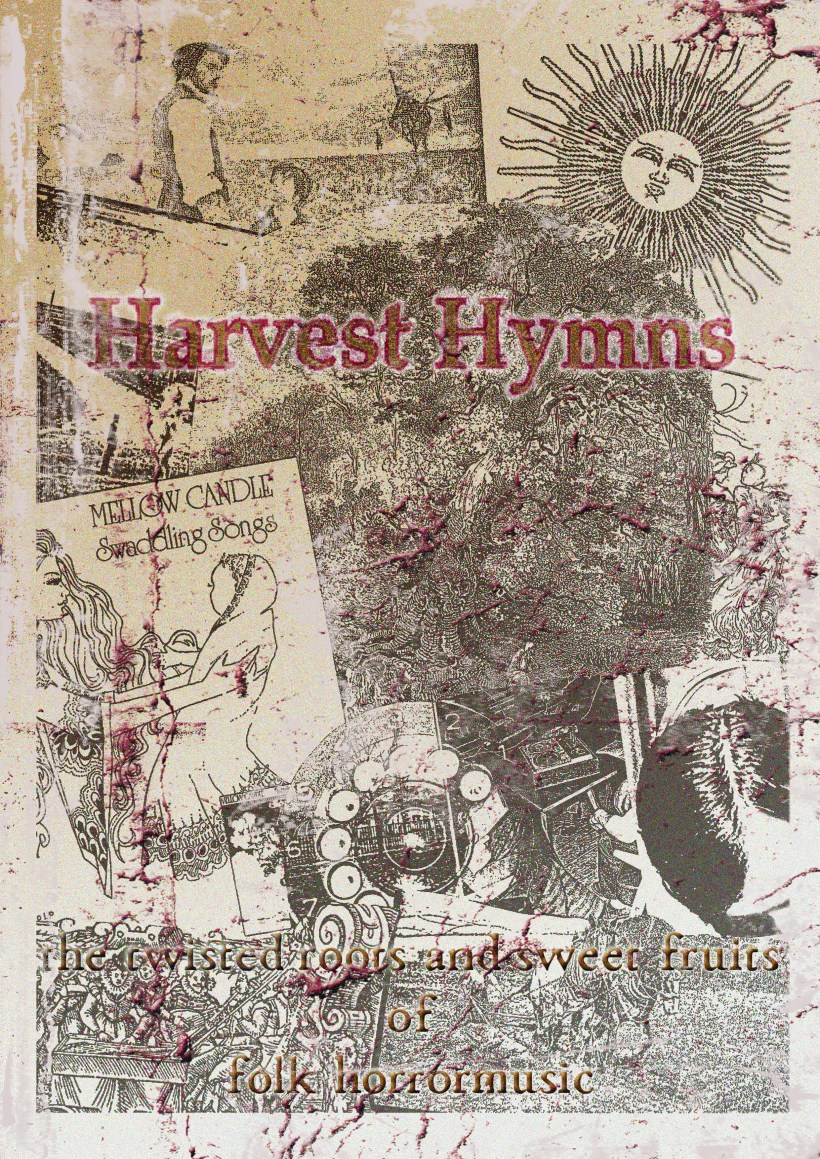
From the foundation stones of Acid Folk and Child Ballads, Occult Rock and the Blues to the influence of Folk Horror on TV and Film soundtracks, Hauntology and even mainstream Pop.
Harvest Hymns is a diverse and fascinating collection of articles, reviews and interviews with and from the likes of Jim Jupp, Maddy Prior, John Cameron, Jonny Trunk, Candia McKormack, Moon Wiring Club, Alison O’Donnell, The Soulless Party, Andrew Liles and Adam Scovell.
Available soon from Wyrd Harvest Press – the publication wing of Folk Horror Revival
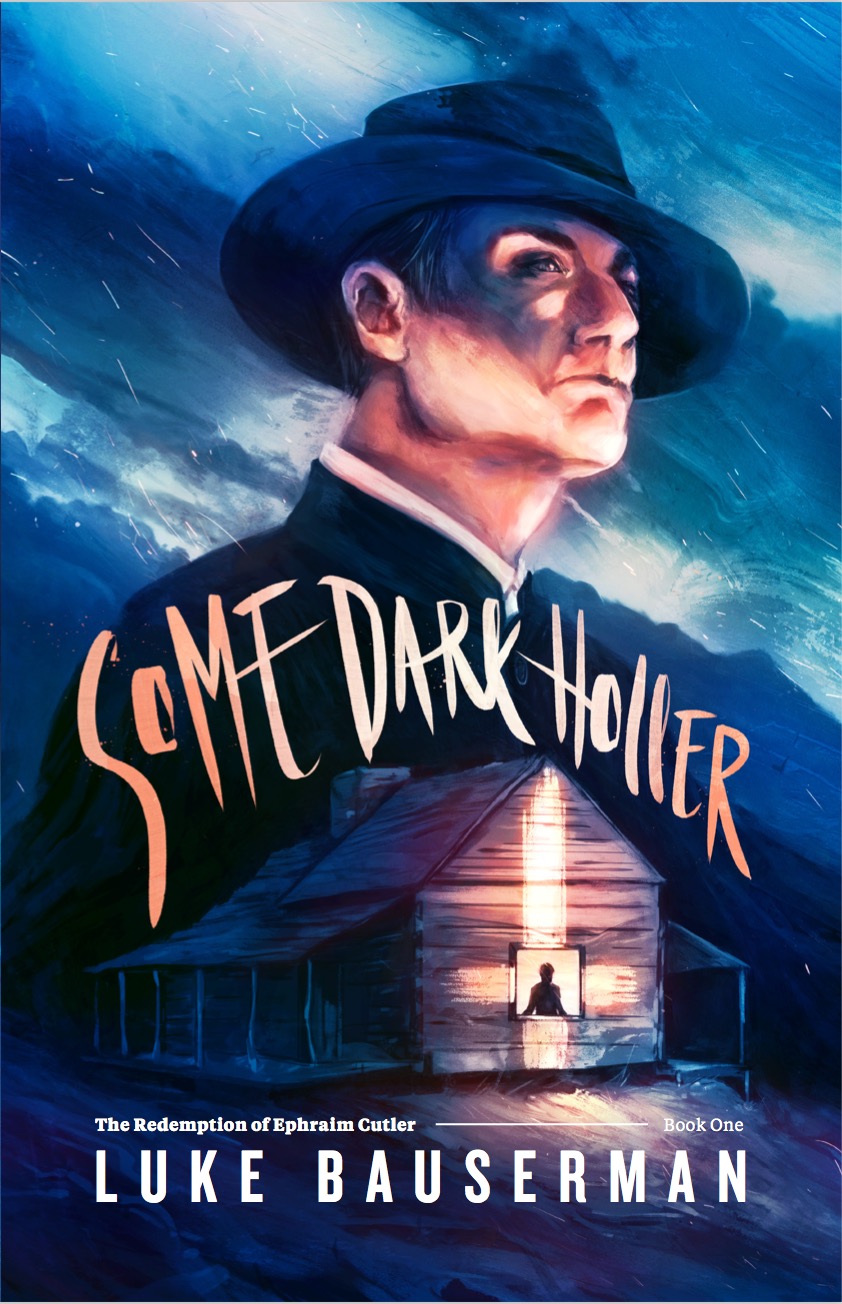
Ephraim Cutler is a 16 year boy, living in the backwoods of Appalachia in the aftermath of the American Civil War. His mother hasn’t been right since his father was killed in the war, killed by a Union bullet. She blackmails him into taking revenge by killing an innocent Yankee, so Ephraim, forced to choose between killing an innocent man or the death of his mother, commits murder. To try and redeem himself, he flees into the forest, but unknown to him, there’s more powerful and sinister forces than the local townsfolk after him, and soon he has a hellhound on his tail.
Some Dark Holler is richly evocative of it’s setting, drawing heavily on Appalachian folklore. I found this to be one of the most interesting aspects of the book, seeing how traditional European beliefs had changed when transplanted to America; the hellhound is a real dog reanimated by a black magic ritual rather than the spectral hound you may be more familiar with, there’s also a granny doctor, an old woman wise in the ways of healing, similar to the wise women of old. It certainly made me want to find out more about the folk tales the author drew on. Luckily, he’s produced a book on this very subject, which is available free from his website, which I’m looking forward to reading.
The plot itself moves along at a fair old gallop, with a fair few twists and turns. Although it’s the first book in a series, it’s satisfying as a stand alone book. I’ll certainly be picking up the sequel when it comes out this year.
More info at www.lukebauserman.com, where as well as his previously mentioned ebook, the author also blogs about local folklore, so well worth checking out.
*offer expires at one minute to midnight Monday 5th February 2018
(To change prices to your local currency, select your nation’s flag at the top of the sales webpage)
Wyrd Harvest Press books explore the landscapes of Folk Horror and related realms in film, tv, books, art, music, events and other media and also psychogeography, hauntology, folklore, cultural rituals and costume, earth mysteries, archaic history, hauntings. southern gothic, ‘landscapism / visionary naturalism & geography’, backwoods horror, murder ballads, carnivalia, dark psychedelia, wyrd forteana and other strange edges.
100% of profits from FHR / Wyrd Harvest Press books sold in this online store will be charitably donated at intervals to different environmental, wildlife and community projects undertaken by the Wildlife Trusts.
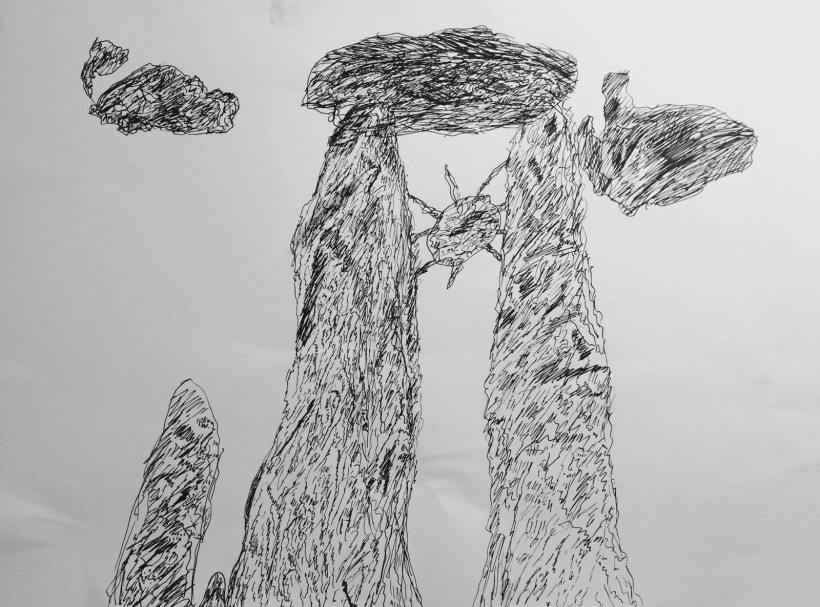
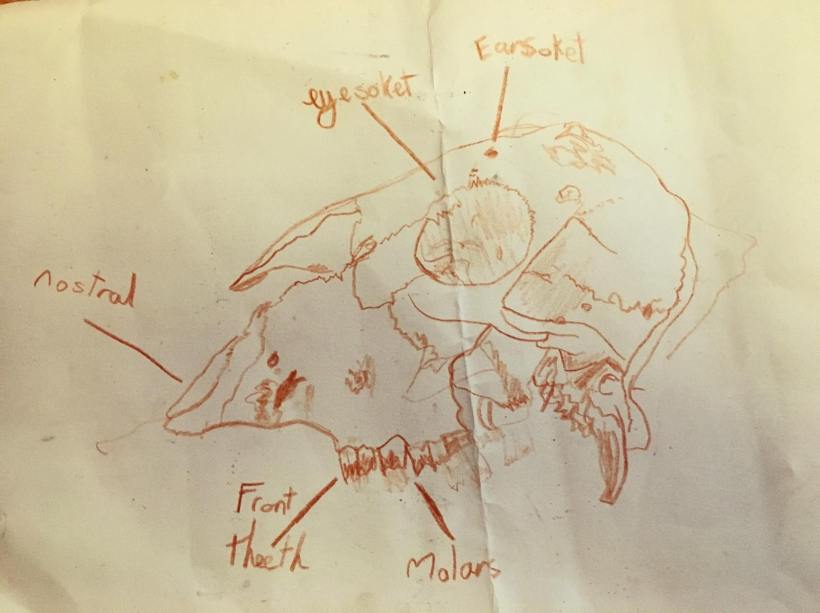
Folk Horror Revival is proud to present the Young Artist of the Month winner for January 2018 as Luis Dutton . His winning picture was this great rendition of Stonehenge shown above, the following drawings are also by Luis.
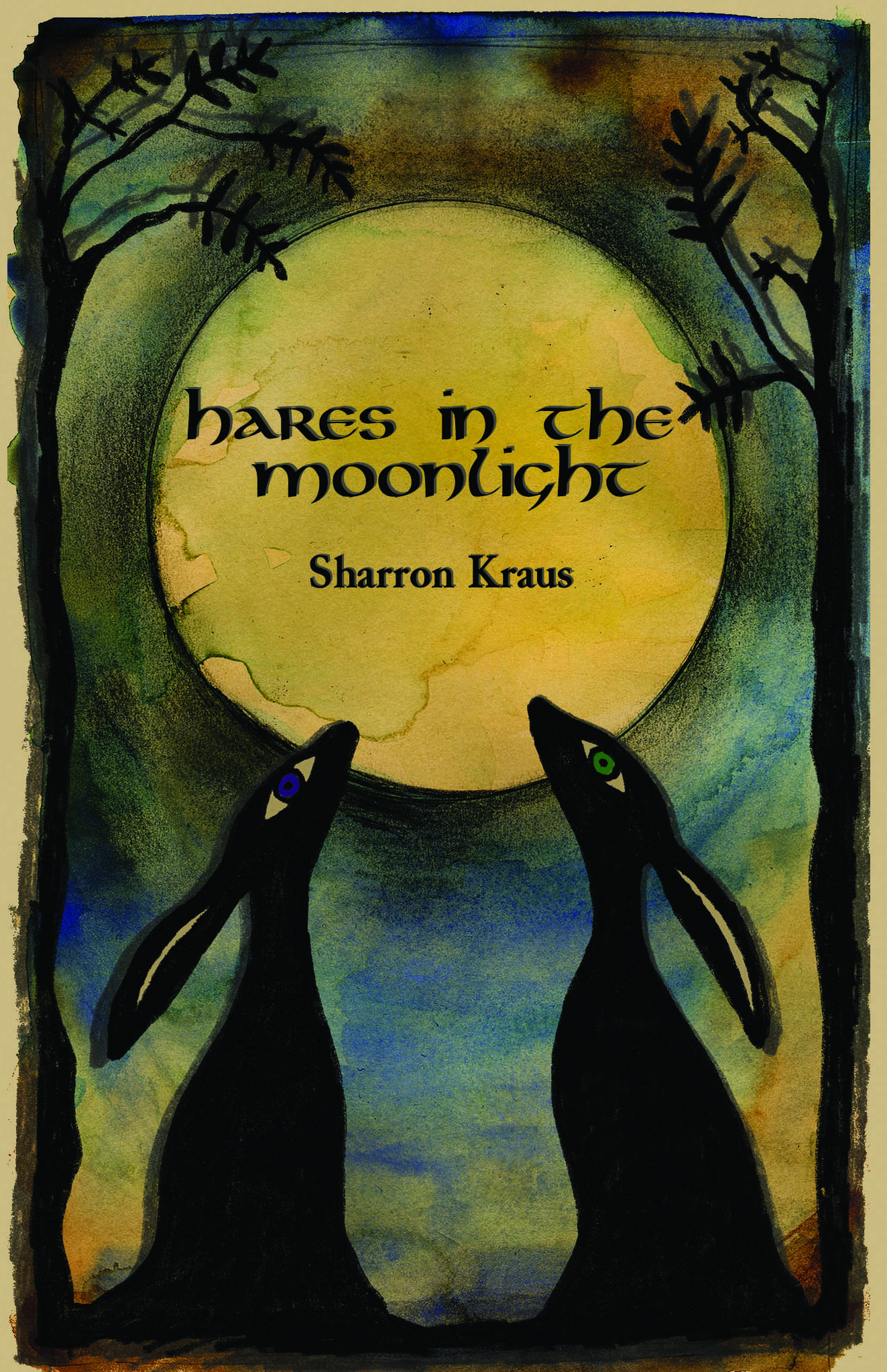
He wins a copy of the book Hares in the Moonlight by Sharron Kraus.
We also received these fantastic pictures below from other Young Artists.
To enter your child’s art into the Folk Horror Revival: Young Artist of the Month competition –
Please send scans or photographs of the child’s work by email to fhryoungartistawards@gmail.com
Please include the child’s name and age
(the competition is open to children up to the age of 12).
Please include a postal address so that we can send a certificate to each young artist and the book to that month’s winner. (Email and postal addresses will not be shared online nor with any other party and will be used by us only in association to this competition. )
By submitting the child’s work you agree to us potentially publishing it in a book containing all the Young Artist competition entries (the book would likely be printed in black and white). Such a book will be non-profit for Folk Horror Revival / Wyrd Harvest Press with all sales profits being charitably donated to The Wildlife Trusts environmental, community and conservation projects.
All young artists will be granted a free PDF digital copy of the book, (as we utilise Print on Demand and are non profit, we are alas unable to supply young artists with hard-copy paper editions of the book).
The monthly winner of the competition will receive a copy of the book
Hares in the Moonlight by Sharron Krauss.
All Young artists will receive a little Thank You by post.
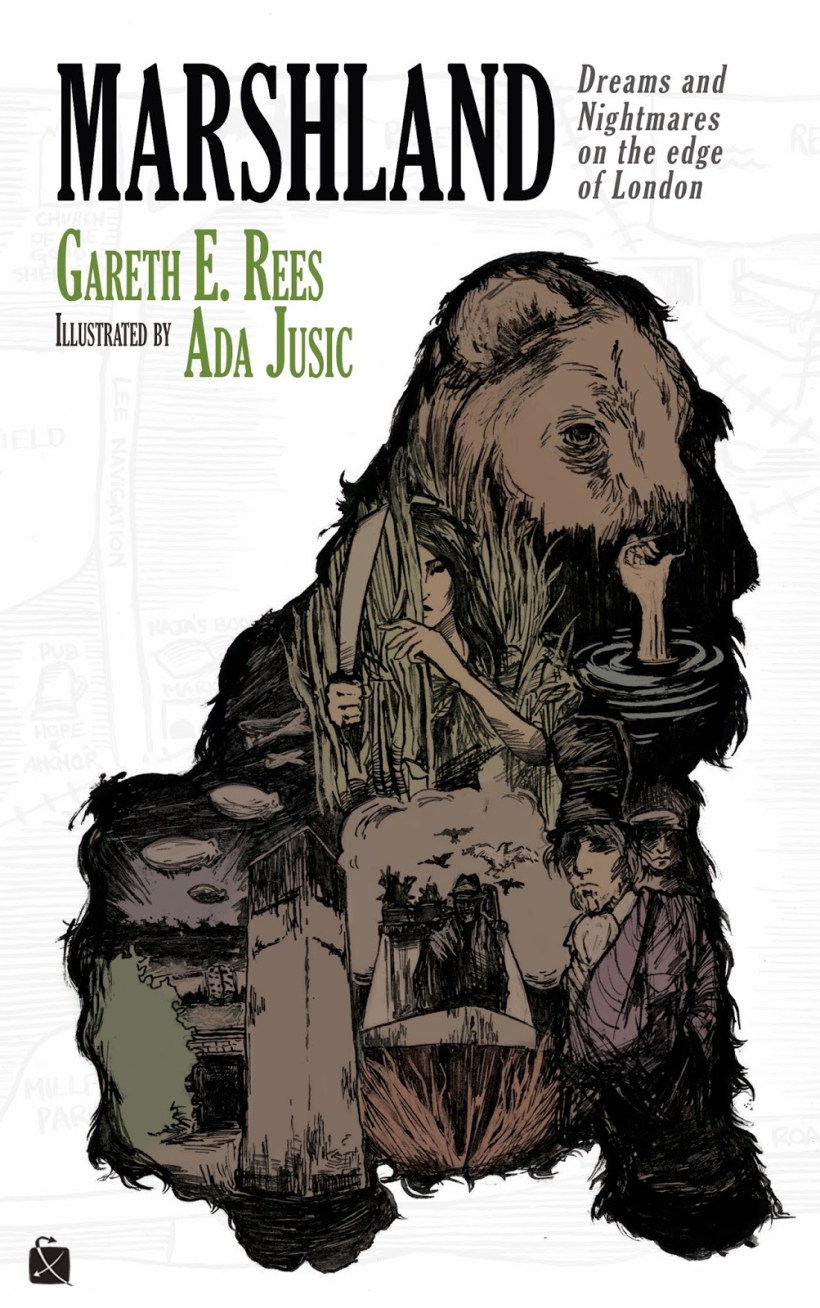
“Cocker spaniel by his side, Rees wanders the marshes of Hackney, Leyton and Walthamstow, avoiding his family and the pressures of life. He discovers a lost world of Victorian filter plants, ancient grazing lands, dead toy factories and tidal rivers on the edgelands of a rapidly changing city. Ghosts are his friends. As strange tales of bears, crocodiles, magic narrowboats and apocalyptic tribes begin to manifest themselves, Rees embarks on a psychedelic journey across time and into the dark heart of London. It soon becomes clear that the very existence of this unique landscape is at threat. For on all sides of the marshland, the developers are closing in… Marshland is a deep map of the East London marshes, a blend of local history, folklore and weird fiction, where nothing is quite as it seems.” (Taken from the blurb.)
It is hard to write a considered review of a book that has affected one emotionally. This book is inspiring, emotive and eye-opening.
I have never been to Hackney. I fear London. There is a side of me that despises it. This is the seat of our utterly disappointing government, the home of evil bankers, vacuous celebrities and relentless musical theatre. London decides what to watch, what to visit, what is best and fashionable to wear, what to listen to, to read, to eat. It is faceless and monstrous, the twisted soul of our country.
I initially approached this book with some trepidation, did I want to spend days trawling through a text that explored an area of this city? After exploring the blurb and the fantastic quote pulled from its recesses:
“I had become a bit part in the dengue-fevered fantasy of a sick city.”
I figured that the writer could be singing from the same hymn-sheet. In many ways his book reveals an attitude far more complex than that. Whilst he despairs at the encroaching development of London into the edges of the Marshland in Hackney it is also clear that were it not for earlier developments such as the railway it would not exist. Significantly it is the meeting of these two worlds – this island of nature and the bizarre mix of architecture and industry – that creates a synergy. A little universe in which the strange will occur. A world in which the mundane and the surreal collide. This little world sticks its middle finger up at the city with such defiance that it crackles with an other-worldly energy.
“Wherever you’ve got a margin between two types of culture and two types of landscape you often get a deeper awareness of the supernatural and the spiritual.” – Revd. Tony Redman – (taken from M.R.James: Ghost Writer – BBC)
It is this margin that Gareth Rees explores. Like a 21st Century Kay Harker, he explores a world in which the lines between imagination and reality are continually blurred. In Masefield’s “The Midnight Folk” we constantly question whether Kay is dreaming or awake and the sensation is similar here. By placing the real; the architecture, news reports and stringent historical research, alongside the unreal, we are plunged into a vortex of monsters, bears, time-slips, shamen and hallucination.
The book explores the geographic reality of the Hackney Marshes, but overlaying this in soft swirls of mystical graffiti are utterly compelling tales inspired by or pulled from Mr Rees’ study of the area. It appears that his study is a mix of hard graft and rambling through the Marshes with his dog Hendrix.
Rees introduces us to a man who transforms into a bear, two unfortunate time-travellers and an unhappy couple who find themselves possessed and changing into the occupants of a demolished factory. We meet the occupants of a barge from London’s netherworld, explore the legacy of the Olympic Village whilst visiting a mystical peddler in contraband antique books. This scratches the surface and I would urge you to seek out this book to discover more.
What strikes me about this book is how it has opened my eyes to my own town. I live in Reading which like many urban sprawls contains a weird mix of old and new. It was on finishing the final chapter that I took my children out for a walk. We have been to the nature reserve in Reading but on our way there we decided to try a different route and found ourselves on an old railway line. This ran high above the water meadows. On one side the beauty of the floods were framed by pink-grey tower blocks, while on the other streams and rivers snaked through swathes of green before the drab majesty of the town dump in the distance. We discovered:
dumped mattresses, ceiling fans and wheelbarrows vomited out of the backs of broken garden fences
the remnants of an old fire on the old railway bridge, made from its tumbling bricks
a lake of glass (my son’s words)
two rusted metal fences that framed the path creating “a gate to Narnia” (my daughter’s words)
It was into this margin that a deer ran across our path.
In August 2017 via the pages of Fortean Times Magazine I first heard of the film Holy Terrors created by Mark Goodall and Julian Butler much to my delight and anxiety. Not only was it a movie featuring 6 weird tales of Arthur Machen but it was made in Whitby! Machen and Whitby – two things I cherish very dearly so I was very eager to see this film but also worried that it might be awful. (Those worries were happily unnecessary.)
Also at the time we at Folk Horror Revival were organising the Winter Ghosts event for the following December in Whitby. I mentioned to our Events Manager, Darren Charles how the film could’ve been a good addition to our bill if it were not already fully booked. Then much to my surprise and delight, I received an email from the film director Mark Goodall, who had heard about our event and was wondering if we would like to screen Holy Terrors there. Would we?? Is a bear Catholic? Does the pope … Yes! We were interested!
Some jiggling around of schedule and the film was added to the bill and was indeed an atmospheric and beautiful end-piece to the event.
Before discussing the film further, just a short resume of Arthur Machen, for although his light is belatedly beginning to shine brighter, outside of certain horror fiction circles, he is still something of an unknown quantity to many folk.
Born in Wales in 1863, Machen’s career in weird fiction blossomed out of the Symbolist and Aesthetic fin de siècle of the 1890’s. Like a number of other artists and writers of the era, Machen’s work was a curious brew of spirituality and decadence. Blending paganism and Christianity both in his work and in his own personal mysticism, born the son of an Anglican minister he was a member of the Hermetic Order of the Golden Dawn, but did not renounce his Christian faith. He therefore, in a sense, has an air of the notion of Celtic or Insular Christianity, whereby it has been suggested that some of the earliest priests of the Celtic Church were possibly former druids some of whom preferred to preach in the outside cathedral of nature than within a church; and that numerous acolytes of which were ascetic hermits that lived in remote quiet places. Oddly enough it is often claimed that the Synod of Whitby marked the official end of the Celtic Church. (The Synod of Whitby (664 A.D.) was a Northumbrian synod where King Oswiu of Northumbria ruled that his kingdom would calculate Easter and observe the monastic tonsure according to the customs of Rome, rather than the customs practised by Irish monks at Iona and its satellite institutions. The synod was summoned at Hilda’s double monastery of Streonshalh (Streanæshalch), later called Whitby Abbey.)
Machen was one of the early masters of weird fiction, particularly a faction of which, with his own use of folklore (notably the use of fairies not in their tiny twee Disneyfied forms but as the strange human sized people of old lore) and spirit of place, may now frequently be referred to as Folk Horror.
Those who cite Machen as an inspiration or to express enthusiasm for his work include figures as diverse as the writers H.P. Lovecraft, Jorge Luis Borges, Stephen King, Ramsay Campbell, Alan Moore, Iain Sinclair and Sir John Betjeman through to musicians such as Mark E. Smith, Belbury Poly and Current 93. Notorious occultist Aleister Crowley was a fan of Machen’s work but reputedly it was far from being reciprocated, with Machen having a personal dislike for the man.
So how would Machen’s subtle strange tales translate to screen?
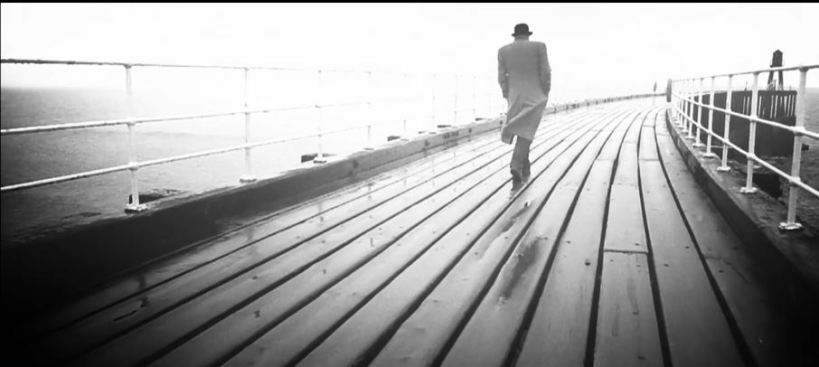
Holy Terrors slowly fades in to scenes of an empty shore and a desolate man. The hauntological soundscape of composer David Chatton Barker (Folklore Tapes) leads us to the body of a man beneath a bridge. Thus opens ‘A Cosy Room’ the first of the 6-weird tales of Arthur Machen. (Indeed, I can vouch it is a cosy room and one not devoid of otherly presence either as I recognised it straight away as a room that I myself have spent several nights in. In fact, after viewing Holy Terrors for the first time at Winter Ghosts, it was the room that I would return to sleep in that very night. The filming location for this segment was The Stoker Room of the cool and quirky hotel La Rosa in Whitby’s East Terrace. Overlooking a great view of Whitby Abbey and the harbour, the wonderful building-sized cabinet of curiosities that is La Rosa hotel has a plaque outside marking it as a place that author Charles Dodgson, aka Lewis Carroll of Wonderland fame amongst other things, stayed at several times. The Angel Hotel in New Quay Road is also suitably plaque-bearing as a residence where Machen stayed.)
The opening wordless narrative shot in atmospheric black and white marked in me the feeling that I was really going to like this film, but also mark it as a film that would not appeal to viewers who only like their horror visceral, fast and with a simple plot and conclusion. Like the tales of Machen, this film adaptation is steady, subtle, atmospheric and most often strange rather than horrific. Some of the tales do not build up to a definite explanation and conclusion but remain more as captures of a strange moment or sequence, rather like many reported real life anomalous experiences.
So, it is safe to say from the outset I could see that Holy Terrors will not be to all tastes but is deliciously to mine.
We are then invited to taste The White Powder of the second tale. This is one of the Machen stories to have a more typical sense of narrative in that it follows an event to a solid culmination. It is a tale of both dread and decadence and has both the air of M.R. James ‘The Ash Tree and Kafka’s Metamorphosis but still remains essentially a Machen tale.
(an amusing synchronicity with the screening at Winter Ghosts was that the imbiber of the said White Powder of the film develops an odd black spot on his hand as an early symptom that something is amiss. The black spot very much resembled the black spot on the audience members’ hands that bore the blurred remains of the mark of the Folk Horror Revival sun symbol hand-stamp.)
The White Powder is a solidly told tale and it really brings forth the power of Goodall’s film-making. Relying strongly on an audio narration that bonds Machen completely with these new dreaming of his creations, the character that is etched within the faces, particularly the eyes of the actors in this film is a strong motif, that in its use becomes somewhat hypnotic. Another film-making skill that Goodall employs to great effect is making Whitby timeless; the use of soft focus, careful framing and light bleached backgrounds removes any trappings of modern life such as shopfront banners and so forth.
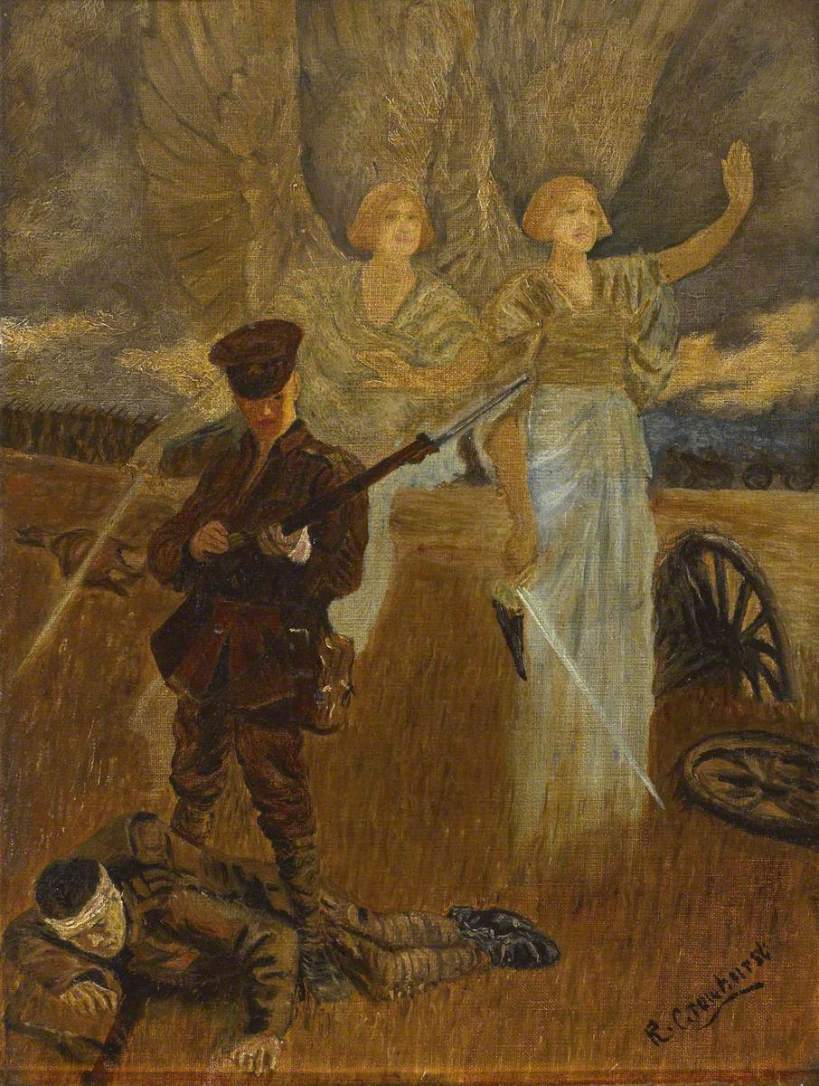
The third tale is one of Machen’s most famous, not because it is his best work or most identifiable of his style but because it has been noted as being the possible origin of the Angels of Mons legend. At the Battle of Mons on the French borders in 1914, it was claimed and published in the British Spiritualist magazine in 1915, that British soldiers were protected in battle by a host of Heavenly angels. However, in 1914 The Evening News newspaper had published Machen’s story The Bowmen, in which a battalion headed by Saint George intervenes in a conflict between World War I British and German forces.
Out of all the stories within the Holy Terrors film The Bowmen could have been the most problematic for a low budget production. By the effective use of old newsreels of wartime footage, Goodall skillfully conquers this problem and overall the artistry of the entire film does not give the slightest impression at all that it is not studio funded. The photography, editing and production is on the contrary not only skillful but beautiful.
The fourth segment of the portmanteau initiates us into the Ritual. It is however not a ritual of hooded or sky-clad figures in the depths of a wood or desecrated church but that of a playground game of schoolchildren. The simplicity of this has a deeply unsettling nature and again the actors of Holy Terrors deserve applause. To act without words uttered needs to tread a line between expression, subtlety and communicative skill lest it become exaggerated like a mime performance. Again, we find great casting is at work here, for the children have a look to them that would not see their faces out of place in antique Victorian or Edwardian photography.
The next tale, The Happy Children remains with the theme of strange youths. Unlike those in Ritual, there is a question arises as to whether these children are alive or even of human nature – a Celtic belief about Fairies is that they are spirits of the dead and the Happy Children indeed have an otherworldly sense to them. This segment again effectively uses the townscape of Whitby as a strange and beautiful filming location, and with good cause for this tale is set in Whitby. It is renamed Banwick but the tale is undeniably inspired by Machen’s visit to Whitby on a journalistic task to report on the town’s Jet industry. The story reveals Machen’s mystical sensitivity both of place and to the horrors of war. Whitby and other towns on the North Eastern English coast had been subject to wartime attack by the Germans and Machen’s reference also to the biblical slaughter of the innocents undertaken by Herod in his efforts to eliminate the infant messiah.
A phrase within the story describing Whitby as The Town of Magical Dream is a perfect description (it also is aptly used by Carolyn Waudby for her excellent essay on Whitby). The night after Winter Ghosts I walked Whitby’s streets and the pier and the 199 steps to Saint Mary’s Church and the Abbey, and it was not mere suggestion but there was a palpable otherness to the coastal town darkened save for the twinkling of Christmas lights. There was a definite presence, not unwelcoming for the most part save for the pool behind the abbey where I felt that I was not meant to proceed further so I didn’t and for a strange unsettling sensation in the Screaming Tunnel of the Khyber Pass. I know that I am far from being the only one to sense something strange in Whitby’s thin sea fretted air – Machen sensed the liminality as did Bram Stoker and Mark Goodall captures it in Holy Terrors as do Michael Smith and Maxy Neil Bianco in their atmospheric and poetic short film ~ Stranger on the Shore: Hounds of Whitby.
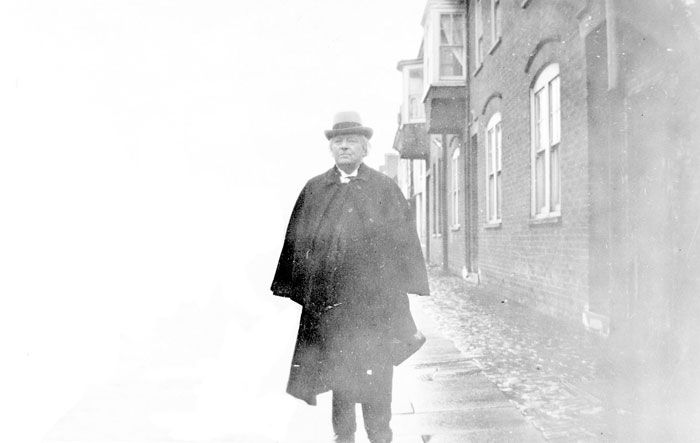
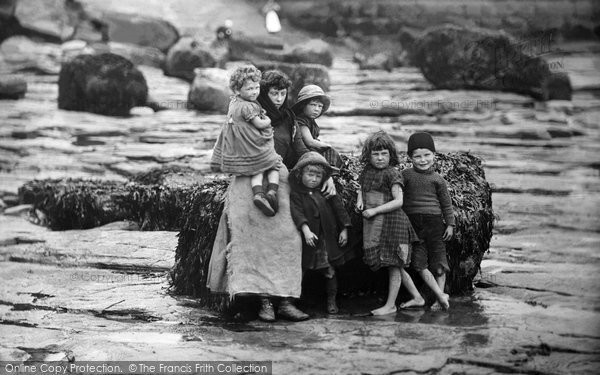
Francis Frith: The Peart family. Whitby 1891
Holy Terrors concludes with Midsummer and for the first time, the effective ambient monochrome palette is replaced with colour; but this is the colour of hand-tinted antique photographs, the faded pastels of half-remembered dreams and half-forgotten memories. It is a fitting place to leave the darkness and step into the light, but minding always that they are integral to and part of each other.
And on this note we will depart this house of souls, with the conclusion that whilst Holy Terrors may not suit the constitution of all, it is a film that has found its way under my skin and into my head and heart and for it its understated beauty and mesmeric invocations, it is something I feel that has touched me deeply. When I first read about this film with my mingled feelings of trepidation and tantalisation, I happily know now that I had nothing to worry about but happily a fair bit perhaps to fear.
Thumb Rivera is a small time drug dealer who makes the mistake of trying to get in league with the local biker gang, which ends badly for him. American Ghost follows his efforts to solve his own murder from the afterlife. Paul Guernsey’s third novel is basically a supernatural detective story with a heavy dose of dark Americana, featuring backwoods biker club houses, trailer meth labs and abandoned murder houses.
The story is structured in an interesting fashion, with Thumb’s spirit travelling through time and space, with no knowledge of how the afterlife works, this being revealed slowly to him via other trapped spirits he meets on the way, including the ghost of a man who died in a road accident, who now lingers in the spot he died. By and large Thumb has to observe how life moves on without him, but learns to communicate with two living people, a hapless ghost hunter and a pig farmer who is also a frustrated novelist, who provide a conduit to the land of the living.
The story is well constructed and keeps you engaged as the plot unfolds, as Thumb comes closer to discovering who killed him and why. The afterlife Guernsey constructs is fascinating, with it’s own internal logical and laws.
I’m not usually much of a fan of crime fiction, but this supernatural twist on the murder mystery made it much more enjoyable. If you fancy a haunting (in both senses of the word) mystery novel, then this is for you.
Paul Guernsey also edits The Ghost Story, which has much of interest to revivalists.
For this season’s charity donation of all the profits from sales in our Wyrd Harvest Press online bookstore ( http://www.lulu.com/spotlight/andypaciorek ) we are happy to donate £368 to Sheffield Wildlife Trust’s Hedgehog Hero appeal (as voted for in a poll by members of this group.)
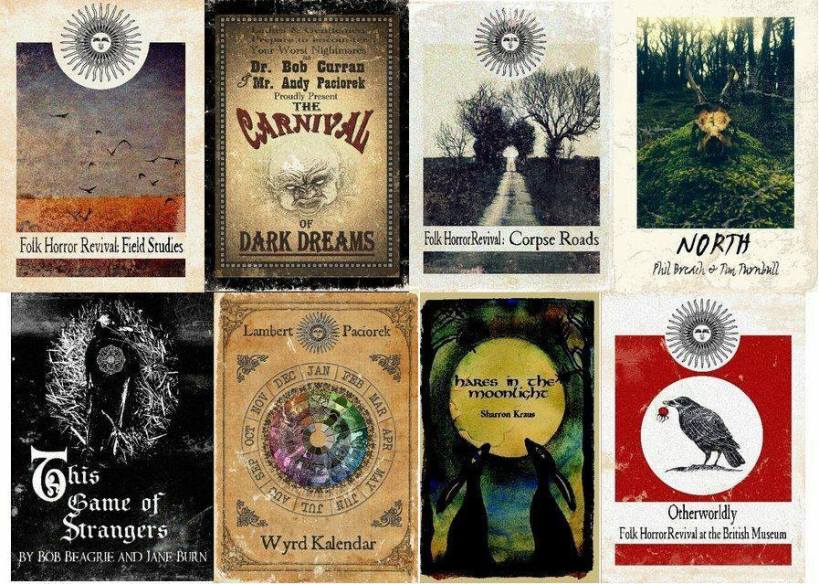
Folk Horror Revival / Wyrd Harvest Press donate all sales profits from their range of very good books to Wildlife Trusts environmental charity projects, 4 times a year (Folk Horror Revival: Field Studies is recommended as essential reading for all fans of folk horror, especially those entering into discussion or posting on the facebook group as it contains essays and interviews with many leading lights of both classic fh and of the ongoing Revival).
A host of intriguing books are planned for 2018 from a diversity of talents.
Thank you to everybody who supported these very worthy causes by buying our books







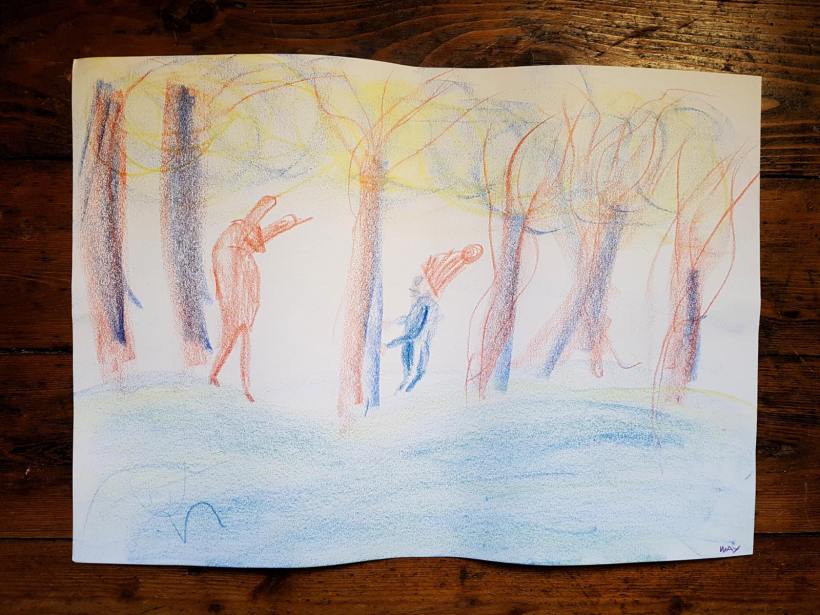
 by Mia Newholm










 Folk Horror Revival & Urban Wyrd Project ⨘