Book Review ~The Book of Beasts: Folklore, Popular Culture and Nigel Kneale’s ATV Horror Series by Andrew Screen

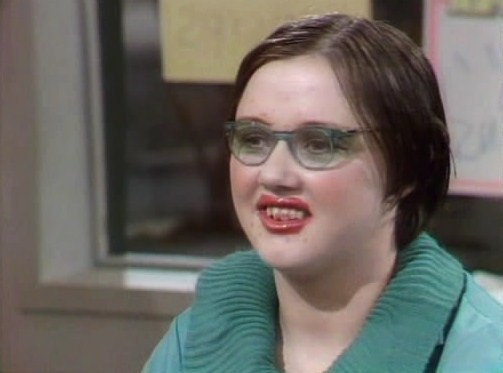
Interest in speculative fiction screenwriter Nigel Kneale has seen a 21st Century cult renaissance, mostly regarding his creation the rocket scientist Quatermass, but here Andrew Screen puts the focus on Kneale’s ATV series Beasts. Broadcast in 1976 during the golden age of British television plays and supernatural/thriller anthology shows, even amidst this bizarre telly miscellany, Beasts is something of a strange … well … beast. Each episode tangentially is related to animals or sometimes the animalistic within human nature – diverse beastly menace from an invasion of super-rats to a possessed kaiju film costume ensues. Screen dives deep into this strangeness seeking possible inspirations for Kneale’s manifestations. The folklore, history, Forteana and comparative media covered is wide and intriguing – resulting at one point in possibly the oddest and most amusing note disclaimer I’ve ever witnessed, stating that the author was in no way suggesting that Kneale was a viewer of equine erotica! – all the more bizarre by the fact that this is mentioned in relation to Buddy Boy, an episode about a dead dolphin haunting a potential porn theatre!


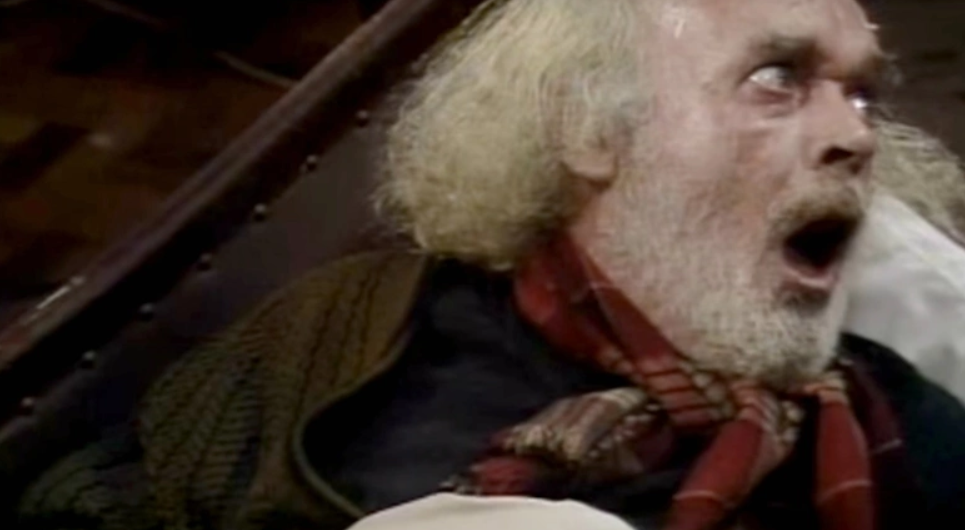
That extra special talking mongoose Gef gets coverage in the chapter covering Special Offer, an episode whereby teenager Pauline Quirke telekinetically terrorises a mini-mart. Discussion of therianthropy arises in relation to What Big Eyes, an episode where Patrick Magee, at his bombastic best, conducts weird experiments at a pet shop. Many aspects of weird history and preternatural phenomena are covered in this book making every chapter an enthralling read. Regarding the episode During Barty’s Party, I started to feel unsettled by the discussion of actual cases of rat attacks and infestation. I am pleased to see Screen feature Kneale’s TV play Murrain in this book. Although part of a TV play series called Against the Crowd, Murrain played a part in the commissioning of the Beasts show but also it feels akin, tonally, aesthetically and subject wise with Beasts, particularly to the episode Baby.
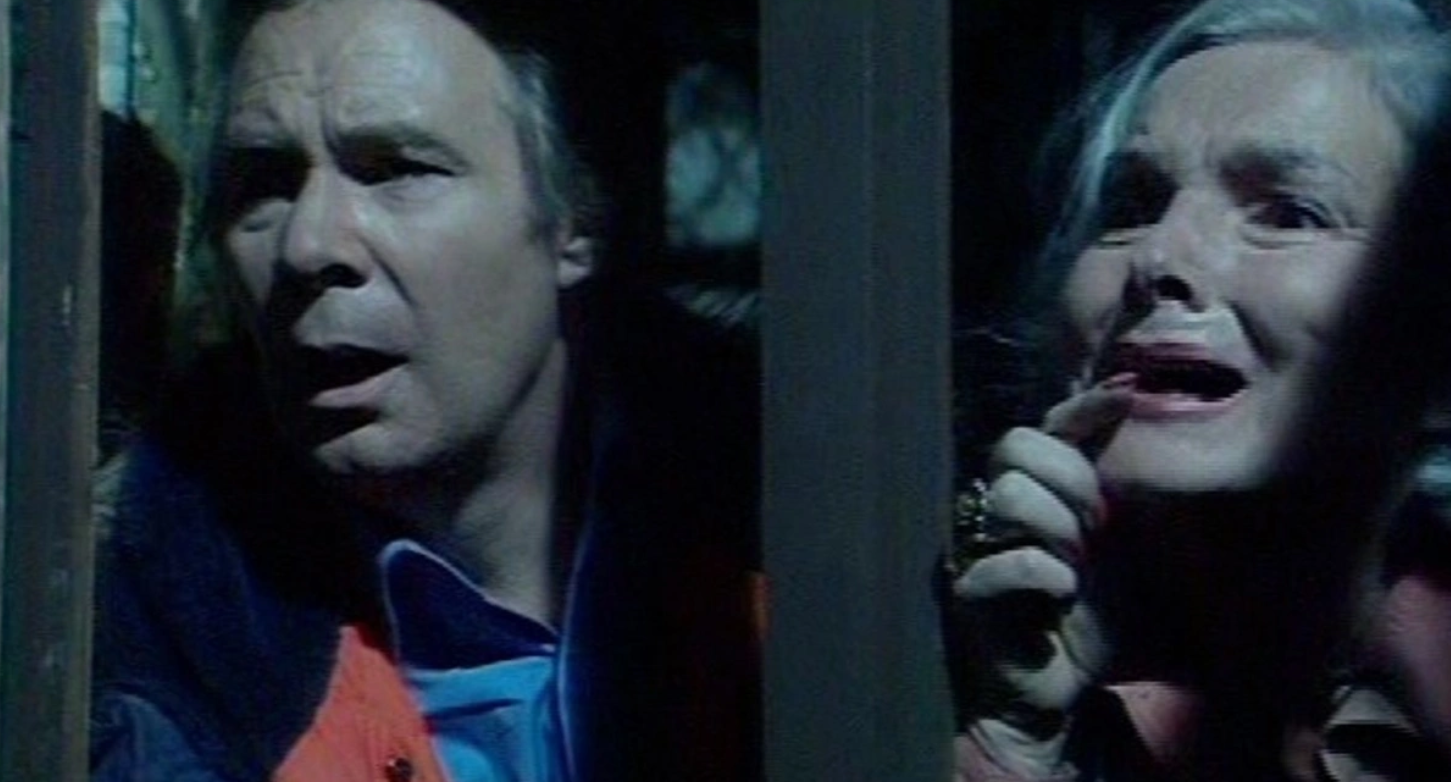
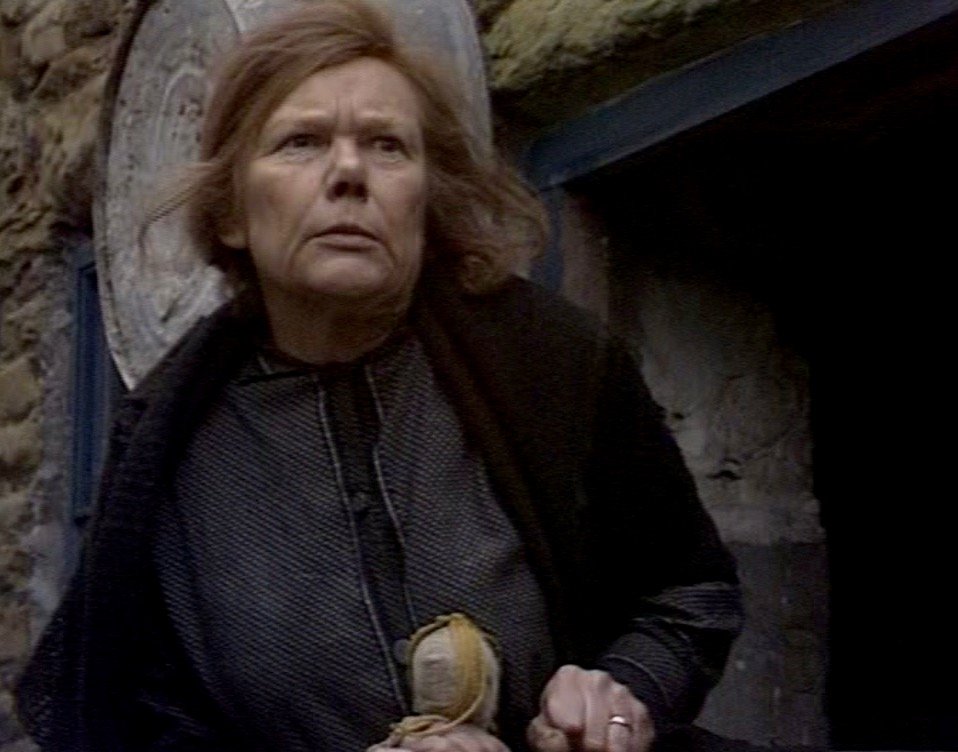
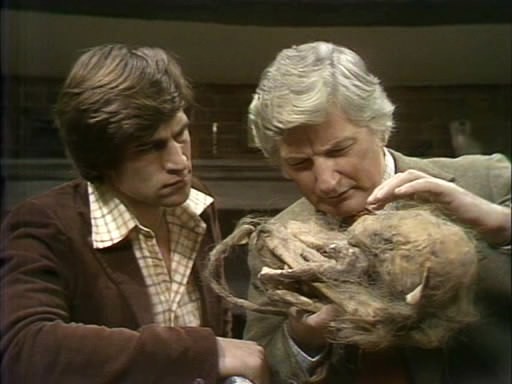
Both Murrain and Baby are set in bleak rural settings and deal with the fear of witchcraft and curses. Murrain, as the name indicates, concerns a rustic community that fears that a swine disease outbreak and other local misfortunes are due to the malfeasance of a suspected witch; whilst Baby concerns the discovery of an anomalous mummified creature found interred in an old rustic house – confined there not perhaps for apotropaic reason but for malediction.  As well as rigorously covering production tech-specs and post-production reaction, Screen’s book is the most interesting, inviting and entertaining commentary on the work of Nigel Kneale I’ve encountered. A great tribute to possibly Nigel Kneale’s most peculiar body of work.

The Book of Beasts: Folklore, Popular Culture and Nigel Kneale’s ATV Horror Series
Andrew Screen
Headpress. 2023
pb. Illus. index. 434 pages. £22.99
ISBN. 191531609X

Reviewed by Andy Paciorek
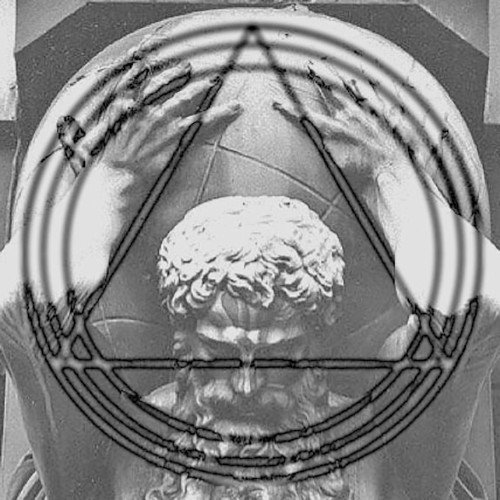
The Psychic Audio Group

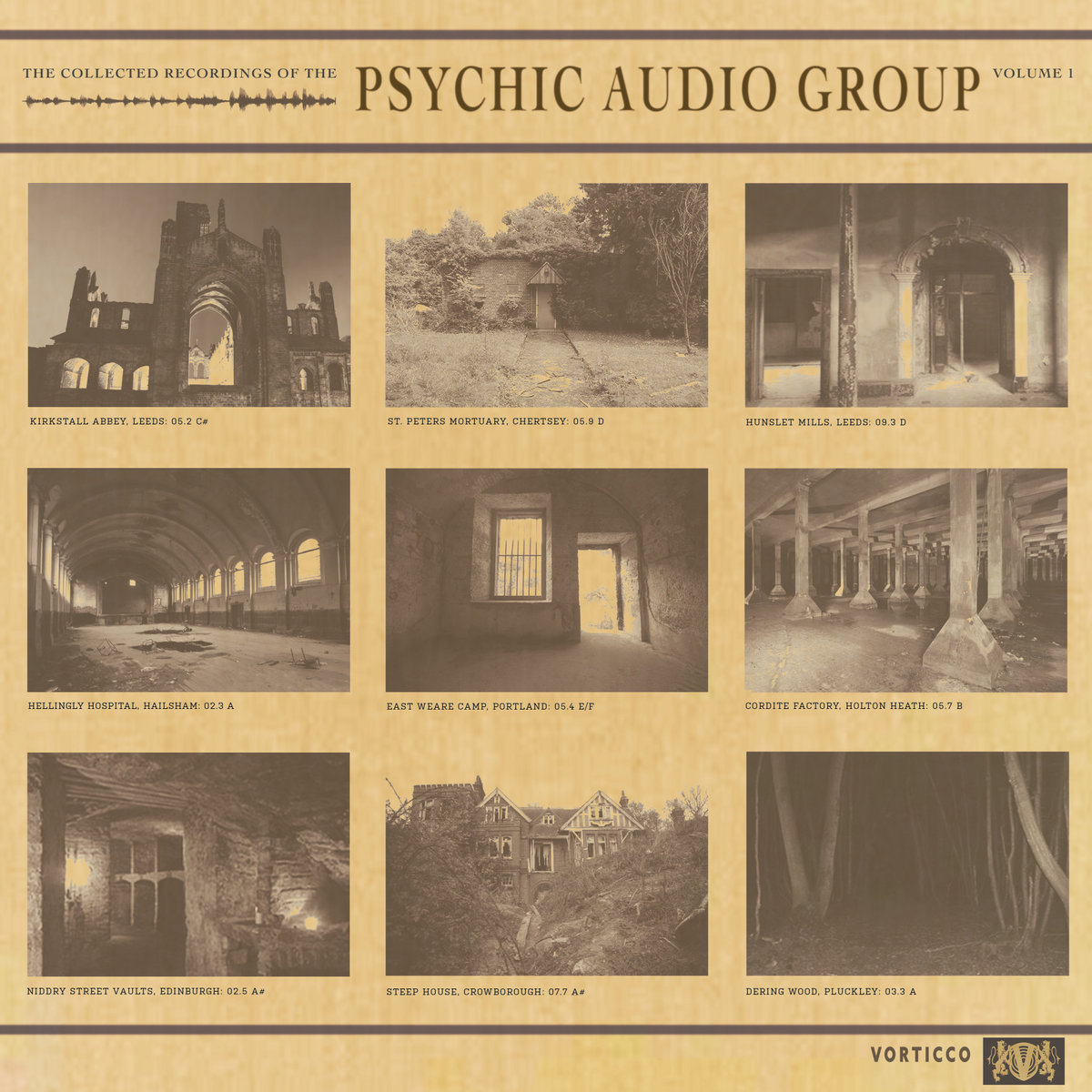
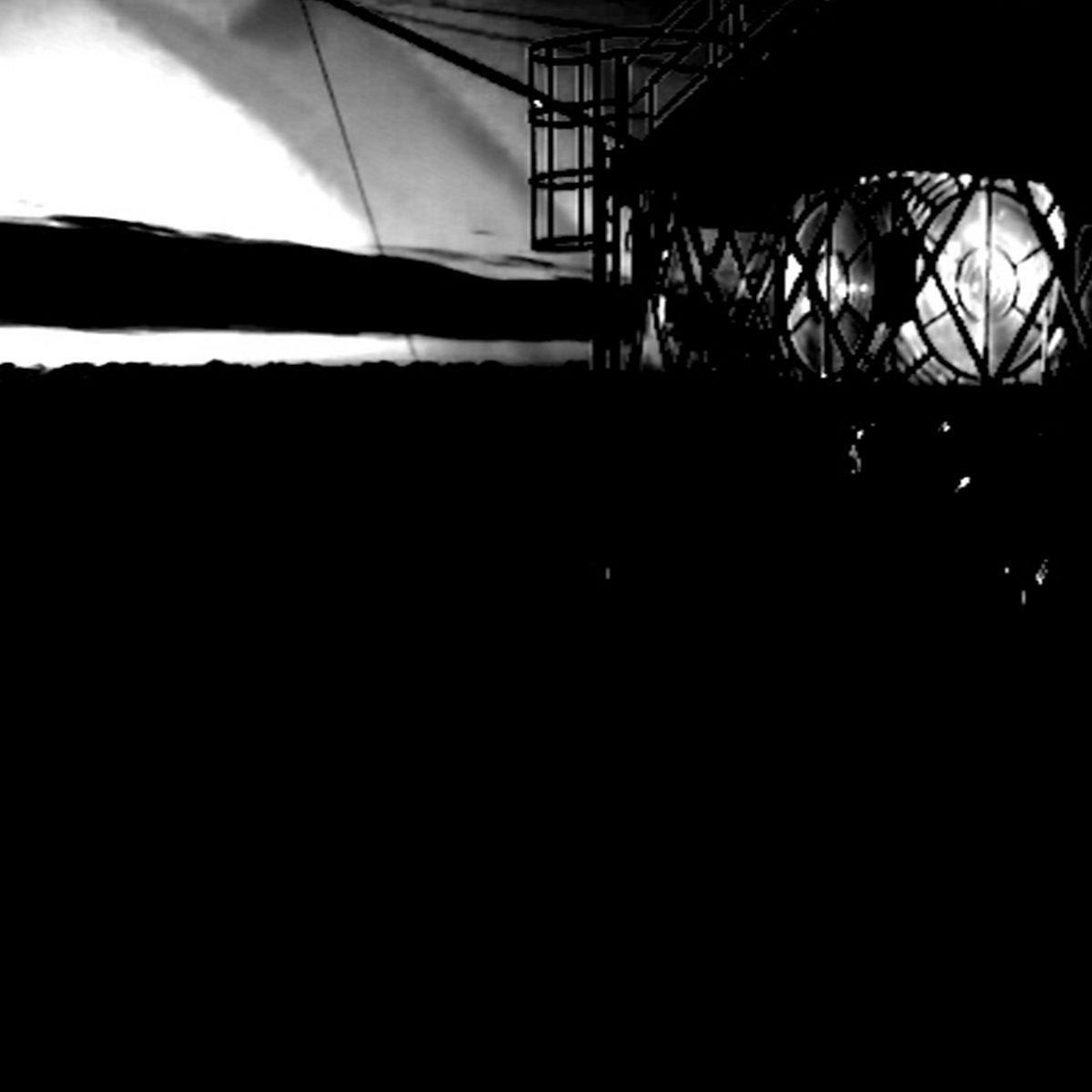
The Psychic Audio Group are a collective of paranormal investigators and music technologists based in Leeds who generate audio based around hauntings, drawing inspiration from Nigel Kneale’s ‘The Stone Tape’ they reconfigured their equipment to generate noise, producing some remarkable psychic feedback when installed at certain haunted locations. Here we review their three recordings thus far released.

Collected Recordings of the Psychic Audio Group, Volume 1

The first release of the Psychic Audio Group, features 11 tracks of suitably wyrd phonics, mixing ambient drones with glitchy off kilter electronics, field recordings and found sounds. I really enjoyed this one, there’s a level of dread filled intensity about the recording that verges on audial assault, and the whole thing has a sinister blackened noise vibe to it. Links to Nigel Kneale’s ‘The Stone Tape’ and EVP just add to the creepiness of the project. I guarantee this will go down a storm with Revivalists everywhere. This is highly recommended for fans of John Carpenter, Haxan Cloak, Burial Hex, Demdike Stare and the Nate Young (Wolf Eyes) and Steven Kenney (Werewolves) project Demons.

https://psychicaudiogroup.bandcamp.com/album/the-collected-recordings-of-the-psychic-audio-group-volume-2-eycheil

Also worth mentioning is the accompanying video, featuring the same sequences of audio as used in the album, but coupled with visuals from the recording sessions.

Sea of Ink

Sea of Ink is a stand alone track recorded during the sessions for their second album. What we get is more of the same glitchy electronic drones and sinister sounding atmospherics as the debut album. A work of creepy excellence.

https://psychicaudiogroup.bandcamp.com/track/sea-of-ink

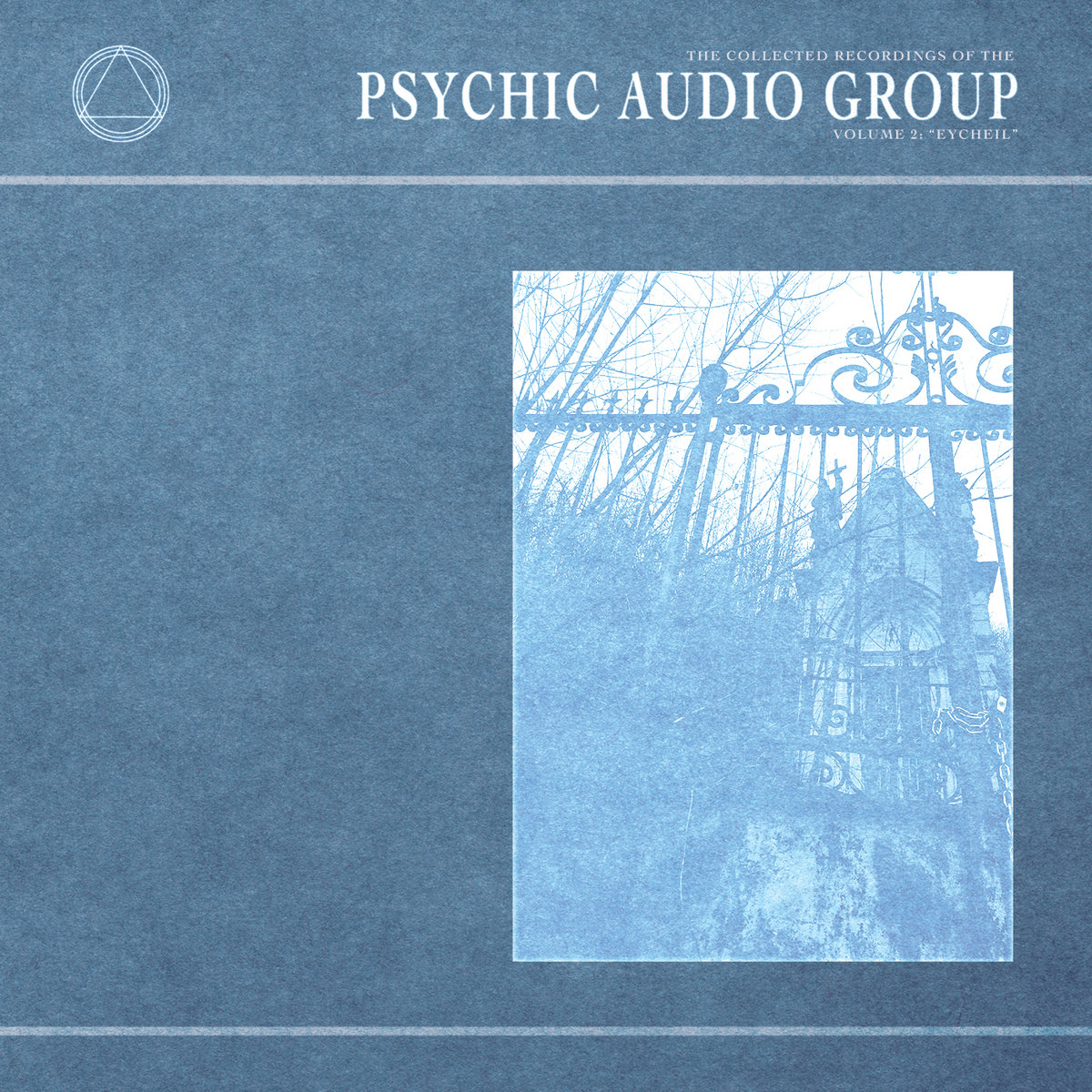
The Collected Recordings of the Psychic Audio Group, Volume 2: Eycheil

The third release and second full length album from the Psychic Audio Group is an absolute doozy from start to finish. Recorded entirely on location at the Theatre Eycheil in the foothills of the French Pyrenees, with each track concieved in relation to the atmosphere of the site, and boy what an atmosphere it must have as this is off the scale for creepiness.

The album features 7 tracks of more of the same, but once again it excels at what it does. Darkly atmospheric electronic noise that recalls some of the most sinister music ever placed on vinyl. Nighmarish and disquieting, the whole thing has a deeply malefic aura about it. If someone were to ever remake John Hough’s 1973 supernatual tour de force ‘The Legend of Hell House’ these guys should record the soundtrack.

https://psychicaudiogroup.bandcamp.com/album/the-collected-recordings-of-the-psychic-audio-group-volume-2-eycheil

A Taste of Urban Wyrd Cinema

Urban Wyrd: A mode not a genre. A sense of otherness within the narrative, experience, image or feeling concerning a densely human-constructed area or the in-between spaces and edge-lands bordering the bucolic and the built -up: Or surrounding modern technology with regard to another energy at play or in control: be it supernatural, spiritual, historical, nostalgic or psychological. Possibly sinister but always somehow unnerving or unnatural.

This is not an exhaustive list of Urban Wyrd films but merely a taster, concentrating on cinema releases rather than television offerings.

Quatermass and the Pit (1967)

https://img.moviemaya.com/xxrz/1200x600/204/13/4e/134ee5b20f2129303123d2e6b685c55a/134ee5b20f2129303123d2e6b685c55a.jpg

Directed by Roy Ward Baker.
No Urban Wyrd list would be complete without the featuring the work of writer Nigel Kneale and in cinematic examples this tale of the eminent scientist Bernard Quatermass and his research into ancient alien artefacts found beneath London is a neat fit. Beyond simply being hidden in the English capital’s subterranea, the influence of the extraterrestrials is discovered to be nestled deep within humankind’s psyche.

Berberian Sound Studio (2012)

https://d2ycltig8jwwee.cloudfront.net/reviews/25/fullwidth.efcb5762.jpg

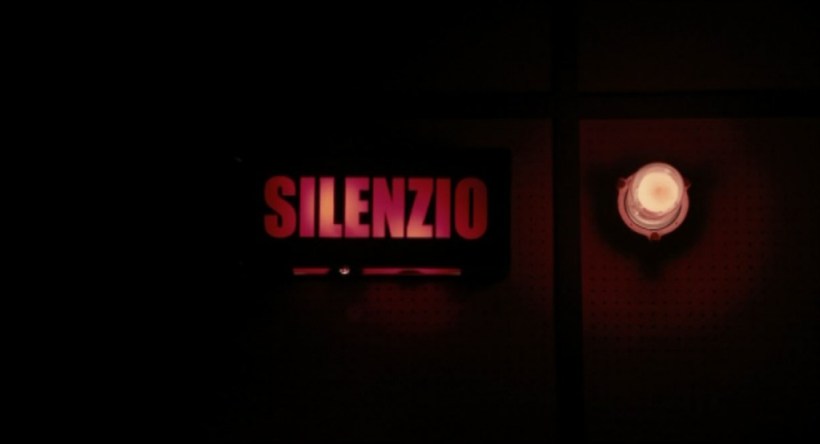
Directed by Peter Strickland. A quiet British sound engineer accepts a job at an Italian film studio specialising in violent cinema. As he becomes immersed into a world of sound and intense working practice, he also finds himself immersed into the brutal world unfolding onscreen.

Dead Man’s Shoes (2004)

https://filmdaily.co/wp-content/uploads/2018/01/Dead-Mans-Shoes.jpg

Directed by Shane Meadows. Returning to his home town, a hardened soldier tracks down the gang who tormented his vulnerable brother whilst he was away. A brutal kitchen-sink revenge thriller with a twist in its tale.

The Apartment Trilogy:
Repulsion (1965)
Rosemary’s Baby (1968)
The Tenant (1976)

https://folkhorrorrevival.com/wp-content/uploads/2021/01/028ea-repulsion7.jpg
Repulsion
https://i0.wp.com/clothesonfilm.com/wp-content/uploads/2009/12/Rosemarys-Baby_Mia-Farrow_plaid-scarf_Gatsby.bmp.jpg?resize=800%2C477
Rosemary’s Baby
https://www.starkinsider.com/wp-content/uploads/2015/07/the-tenant-roman-polanski-film-apartment-paris.jpg
The Tenant

Directed by Roman Polanski. Polanski’s career and creation has been overshadowed by the heinous crimes commited by him and there is no morally sound defense of the man. Whether art and artist can be divided however is a personal decision, yet films are a sum of parts – cast, crew, director; and The Apartment Trilogy is a significant element of cinema invoking the Urban Wyrd mode.
In Repulsion we see madness envelop and absorb a young woman within her apartment in London, whereas in Rosemary’s Baby (shot at the Dakota building in New York that has its own real-life urban wyrd history) a young couple move into a building where the husband falls under the spell of his overbearing elderly neighbours whilst his wife falls pregnant but all may not be fine with her baby.
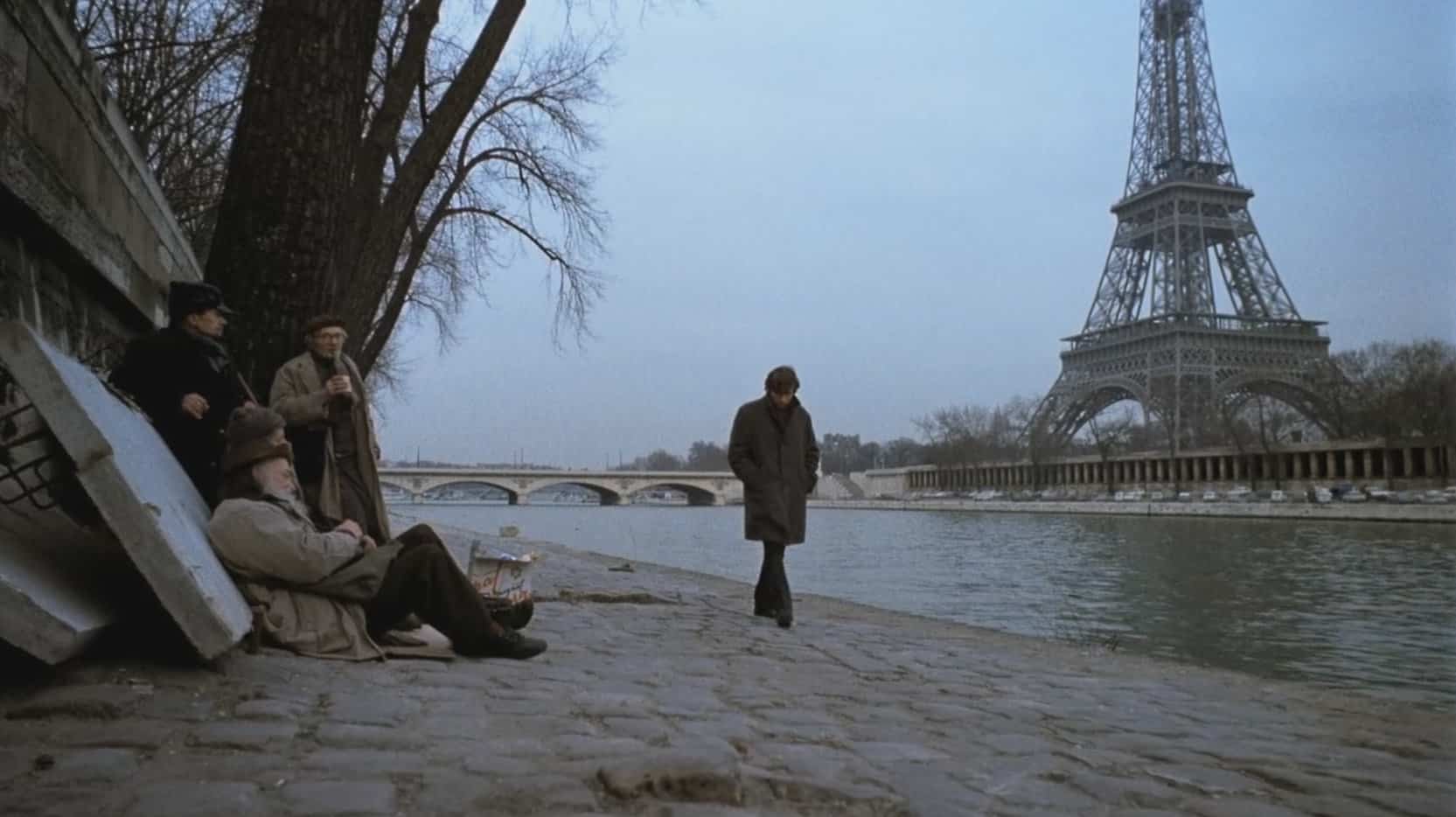
The Tenant is the least known and possibly weakest of the trilogy, but this tale of a man moving into a Parisian apartment where the neighbours are somewhat off, is certainly well worth a watch, but as it does star Roman Polanski himself, some viewers may choose to bypass this one.

Possum (2018)

https://i1.wp.com/setthetape.com/wp-content/uploads/2018/11/possum-cover.jpg?fit=1200%2C460&ssl=1

Directed by Matthew Holness. Following a scandal, a puppeteer moves back to his childhood home where his past and present continue to haunt him. A child vanishes whilst the marionette maker is tormented by one of his own creations. The shooting locations and Radiophonic soundtrack of this psychological thriller add to its dank unsettling atmosphere.

Eraserhead (1977)

https://rantbit.files.wordpress.com/2015/03/eraserhead_7.jpg

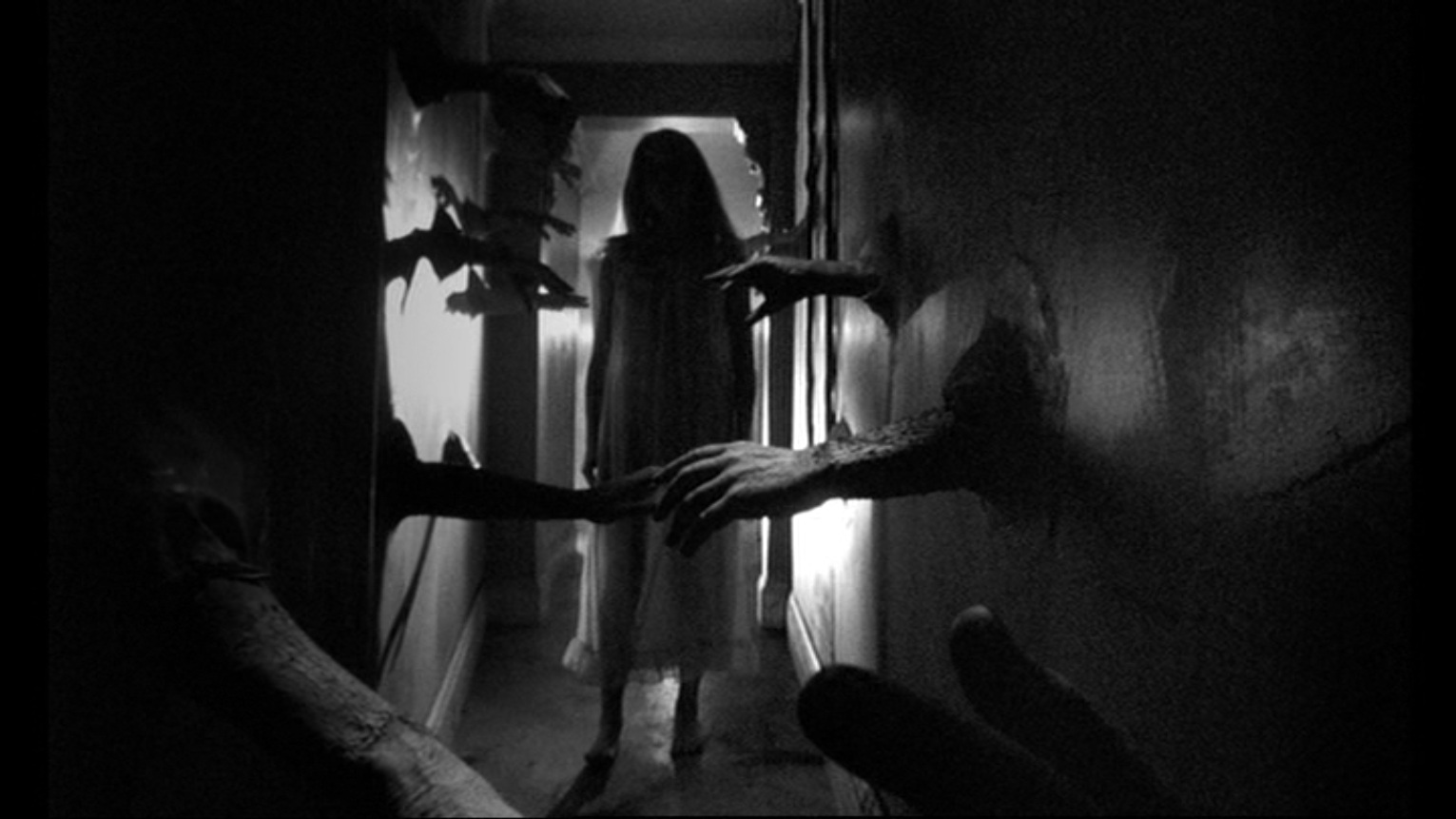
Directed by David Lynch. Henry, a nervous quiet man discovers that his girlfriend has given birth but the baby is deformed, sickly and incessantly crying. In a mix of domestic strangeness and factory surrealism, Henry is caused to confront life in Lynch’s weird and grotesquely beautiful cinematic debut.

Under the Skin (2013)

https://i0.wp.com/images.fandango.com/MDCsite/images/featured/201309/Scarlett-Johansson-in-Under-the-Skin-2012-Movie-Image.jpg

Directed by Jonathan Glazer. This loose adaption of Michael Faber’s book of the same name quite possibly owes more to Nicholas Roeg’s 1976 film The Man Who Fell to Earth as it does the source novel, concerning itself with an alien on earth with a purpose but discovering more about itself whilst discovering humankind. One of the oddest road movies out there, this film features some atmospheric and impressive photography and sound work.

Crash (1996)

Crash (1996) | JPK's Adventures in Cinema

Directed by David Cronenberg. A good portion of Cronenberg’s films have an urban wyrd edge, so which to go for here? Let’s opt for 1996’s Crash which has perhaps the most unconventional narrative, dealing as it does with the world of symphorophilia – the kink of being sexually aroused by observing and even orchestrating disasters – most pertinently in this film in the form of automobile accidents. Based on a novel by maestro of the urban wyrd JG Ballard, this is perhaps not the most joyful or comfortable watch but is an intriguing shard of cinematic history.

Themroc (1973)

Themroc (Claude Faraldo, 1973) - obscure objects of desire

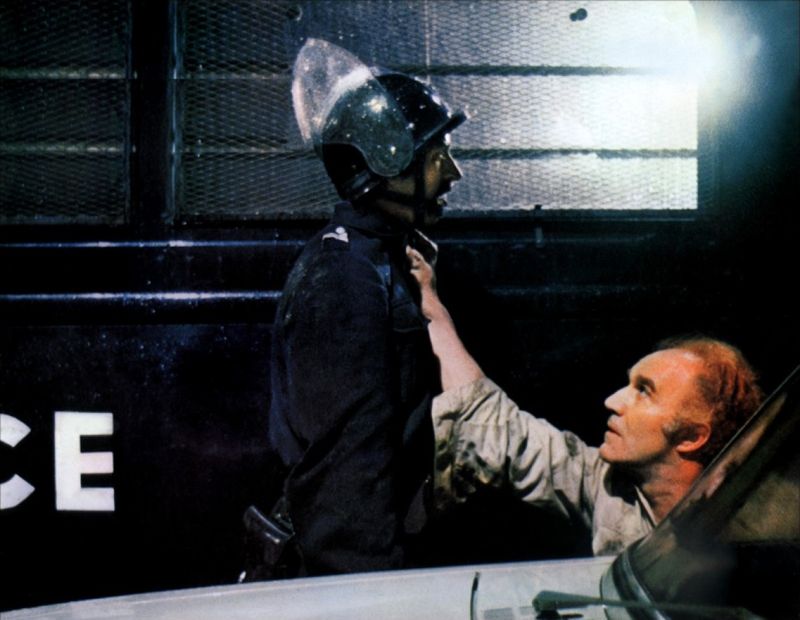
Directed by Claude Faraldo. The 1973 French movie Themroc is another curious piece of cinema. It follows a day in the life of titular character Themroc, but not just any day. It is the day that he grows weary of his humdrum job and his apartment block existence and turns instead to incest with his sister, the cannibalism of a policeman and destruction on a scale that soon extends beyond anarchy but into a chaotic riotous regression into a primitive existence.

Films selected by Andy Paciorek
See more here