Review: Hours Dreadful & Things Strange

as

Fans of folk horror, hauntology, psychogeography, visionary ruralism, the urban wyrd and other such strange edges will proably be no stranger to the name of Adam Scovell or perhaps his thorough and impressive website Celluloid Wicker Man

Adam is a writer and filmmaker currently based between Liverpool and London He has produced film and art criticism for over twenty publications including The Times and The Guardian, runs the Celluloid Wicker Man website and has had work screened and given lectures at places as esteemed as Cambridge University, The British Museum, The BFI, The Everyman Playhouse, Queen’s University – Belfast, Hackney Picturehouse and Manchester Art Gallery.

Within his first book for film and media publishing house Auteur , Scovell wanders forests and fields to unearth answers to the thorny question  “What is Folk Horror?” It is quite a task for folk horror is not simply a subgenre of horror but is a subgenre of various other genres and subgenres and it is also conversely unique in itself.
The Unholy Trinity of films, Blood on Satan’s Claw, Witchfinder General and The Wicker Man do of course get thorough necessary attention, but this book gives cause for any of the opinion that folk horror is a 3 movie phenomenon, much cause to think again.  Scovell, the creator of Scovell’s Chain – a system of defining elements of folk horror succeeds in outlining and showcasing diverse examples of folk horror and related fields, but does not hammer its legs down with iron stakes in too rigid a definition allowing folk horror to continue to wander myriad paths and remain as an evolving entity.
Kwaidan, Picnic at Hanging Rock, The Ballad of Tam Lin,True Detective, Penda’s Fen, Quatermass, Children of the Stones and many many other films, tv shows are given the full (Owl) service and prove that folk horror is not limted to the British Isles as some folk would kid you believe. .

For all fans and scholars of folk horror and related sub-genres this book is indispensable. Scovell proves himself an excellent writer as the level of research and consideration in this book is impeccable yet it is not at all dry and is a captivating, flowing read for every body interested in the subject matter, not only those involved in academic field studies.
Many examples of folk horror are investigated and discussed (as such beware of spoilers for films and Tv plays you may not have seen yet) and also their relation to akin subjects such as the Urban Wyrd, Hauntology, Backwoods Horror, Ruralism and Southern Gothic.
This book investigates its subject matter with a contagious passion and does extremely well to explain a subject that is nebulous and still evolving. Whilst concentrating mostly on film the book also explores such matter as Public Information Films and the design and music of the Ghost Box label.
As well as being a very worthy addition to Auteur’s film study publication ouvre it is an essential read for all fans of folk horror and the sinuous other company it keeps.

Folk Horror Revival looks forward very much to reading further books and watching new films in future from Adam.

Hours Dreadful & Things Strange is available from Amazon and other book stores.
13466034_10154332274095530_1944516659989939499_n

A Year In The Country; Notes From The Edgelands…


18317935_1478540725551063_1953895057_o

For Folk Horror Revivalists who wish to further explore off the beaten track into the wyrder corners of literature, TV, film and music, you are invited to explore the rich, tangled undergrowth of ‘A Year In The Country’. A blog, website and music label, for the last few years AYITC has been quietly but ceaselessly documenting the edgelands of popular culture whilst adding their own unique contribution via such album releases as ‘The Quietened Village’ and ‘The Restless Field’ (featuring folk horror friendly artists such Sproatly Smith, Polypores and Keith Seatman); music which AYITC feels ‘draws from the above strands of inspiration – the patterns beneath the plough and pylons’.

Alongside their musical excursions, AYITC are keen curators of the unsettling and the bucolic. The scripts and writings of Nigel Kneale, the music of The Owl Service, hauntological favourites from TV past such as ‘The Changes’ or ‘Children of the Stones’, contemporary explorations such as Rob Young’s acid folk tome ‘Electric Eden’; just some of the otherworldly characters, programmes and emissions from which AYINC draws its inspiration and focus for its regular features and postings. The site’s curator describes his vision as;

’A set of year-long explorations of the undercurrents and flipside of bucolic dreams, the further reaches of folk music and culture, work that takes inspiration from the hidden and underlying tales of the land and where such things meet and intertwine with the lost futures, spectral histories and parallel worlds of what has come to be known as hauntology. The main website features writing about such work and themes, posts that are intended as a trail of cultural breadcrumbs, starting points for their readers’ own wanderings and pathways through related fields’.

18297283_1478541075551028_562663136_o

A highly recommended excursion for all curious and avid Revivalists there is much to be found in AYITC’s darkened hedgerows and industrial borderlands. Find them here and wander freely;

ayearinthecountry.co.uk/

article by Grey Malkin

The Great Lafayette; an extraordinary interment

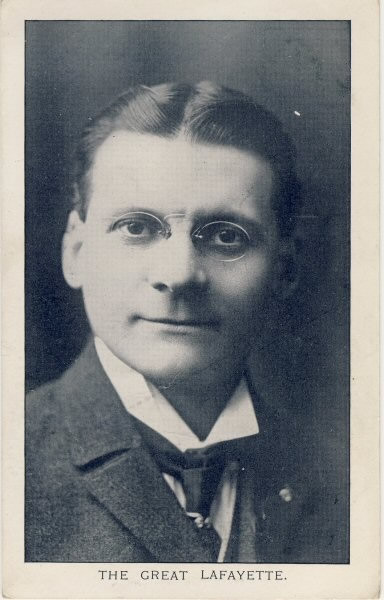
In 1911 one man dominated the vaudeville stage, commanding yearly earnings of what would amount to almost £4million in today’s money. He was lauded by his audiences, sneered at by his detractors and loved by those he himself loved the most; his dogs. He was The Great Lafayette, master magician and illusionist.

mainphoto

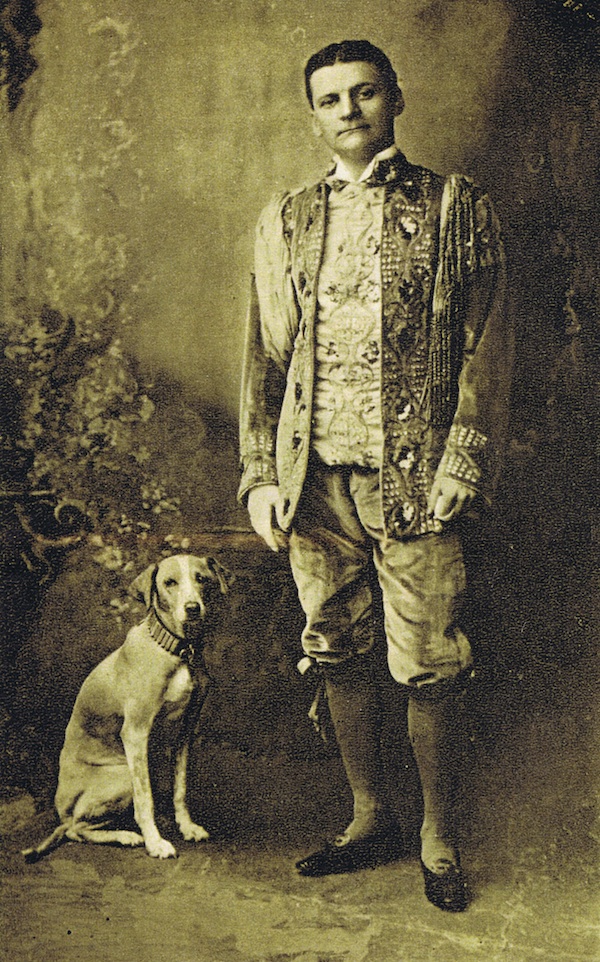
The Great Lafayette was born in Munich, 1871, as the not-so-great Sigmund Neuberger before emigrating with his family to America and creating his life on the stage. He did not mix well with other people, he could be domineering and demanding, but he doted on his dogs, most especially the slender hound he was given as a gift by fellow illusionist Harry Houdini. Beauty ate the finest food, wore jewelled collars and slept on silken cushions. When Lafayette was on tour, Beauty stayed in her own suite of rooms.

lafayette-with-beauty-11

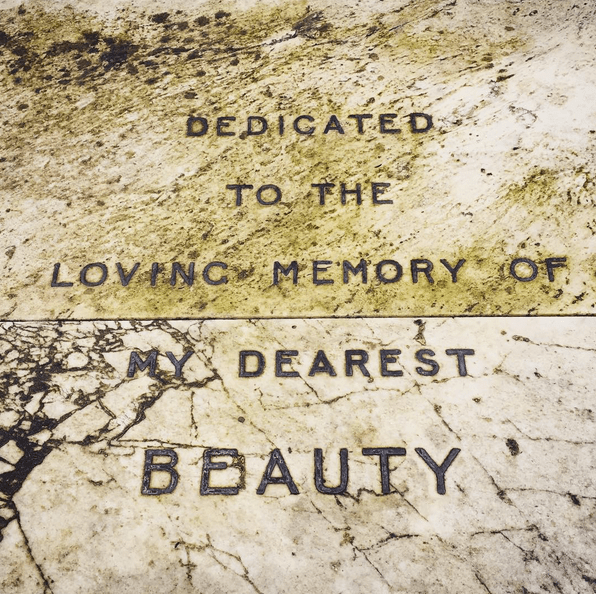
It is no surprise that when Beauty died unexpectedly, shortly before a run of shows in Edinburgh, Lafayette was inconsolable in his grief. Lafayette demanded that she be buried formally, in a proper grave and in a human cemetery. Officials responded that a pet could only be buried in its owner’s grave so, in order to achieve this goal, Lafayette bought a plot in Edinburgh’s Piersfield cemetery where Beauty would lie, awaiting the day when her master would join her.

Wrapped tightly in a cloak of despair and loss, Lafayette is claimed to have said that her death had  shattered his very soul and she would not have long to wait.

He was right.

Less than a fortnight later, Lafayette was performing in the Empire Theatre when something went terribly wrong. A pyrotechnic element of the show, some say an oriental lamp and others a wall sconce, ignited one of the theatre’s curtains, the wooden set dressing was consumed rapidly and the entire stage was enveloped in a roaring inferno. Lafayette himself is said to have escaped the fire but, realising that his black stallion was still in danger, returned to the flames. He was last seen desperately attempting to lead the horse to safety.

Eleven performers, including Lafayette, died in the fire. Amazingly, nobody in the audience was harmed although the theatre itself was razed to the ground. Confusion reigned as a charred body, pulled from the ashes and believed to be Lafayette, was later identified as a body double used in some of the magician’s routines. Where then, was the great illusionist himself? Speculation ran riot.

Legend states that a workman, sifting through the rubble of the theatre some days later, stumbled across a curious find; a papier mâché hand, itself intact but detached from the statue it had come from, that pointed ominously to a corner of the destroyed theatre. The workman followed the silent instruction and found Lafayette’s body, horribly burned but identifiable from rings on his blackened fingers.

0_around_edinburgh_-_piershill_cemetery_lafayette_funeral_procession

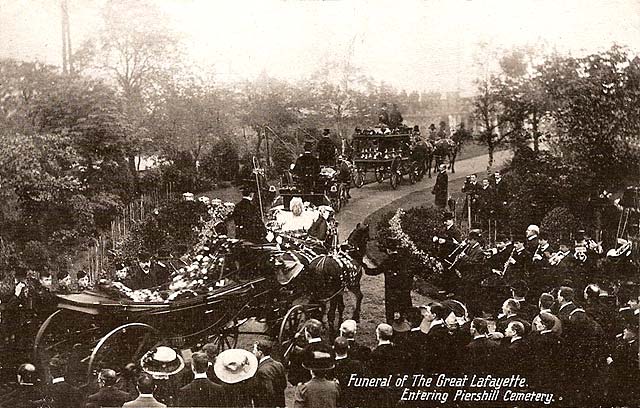
Given that his body was so badly burned, Lafayette was cremated and placed in an ornate urn. A grand funeral procession, described as “one of the most extraordinary interments of modern times”, carried the urn to Piersfield Cemetery where it was placed in the grave he had only recently bought, nestled between Beauty’s outstretched paws.

screen-shot-2017-01-08-at-20-37-07screen-shot-2017-01-08-at-20-37-32

Daniel Pietersen, 08/02/17

20% Discount – Strange Lands and The Human Chimaera

51. Phookas.JPG

Save 20% on Orders of the books Strange Lands: A Field Guide To the Celtic Otherworld and The Human Chimaera: Sideshow Prodigies and Other Exceptional People. Both written and fully illustrated by Andy Paciorek.

Just add code GIFTWORTHY20 at checkout at http://www.blurb.com/user/andypaciorek

No minimum or maximum order amount.
*Offer valid through December 13, 2016.

prince-randian-the-human-caterpillar

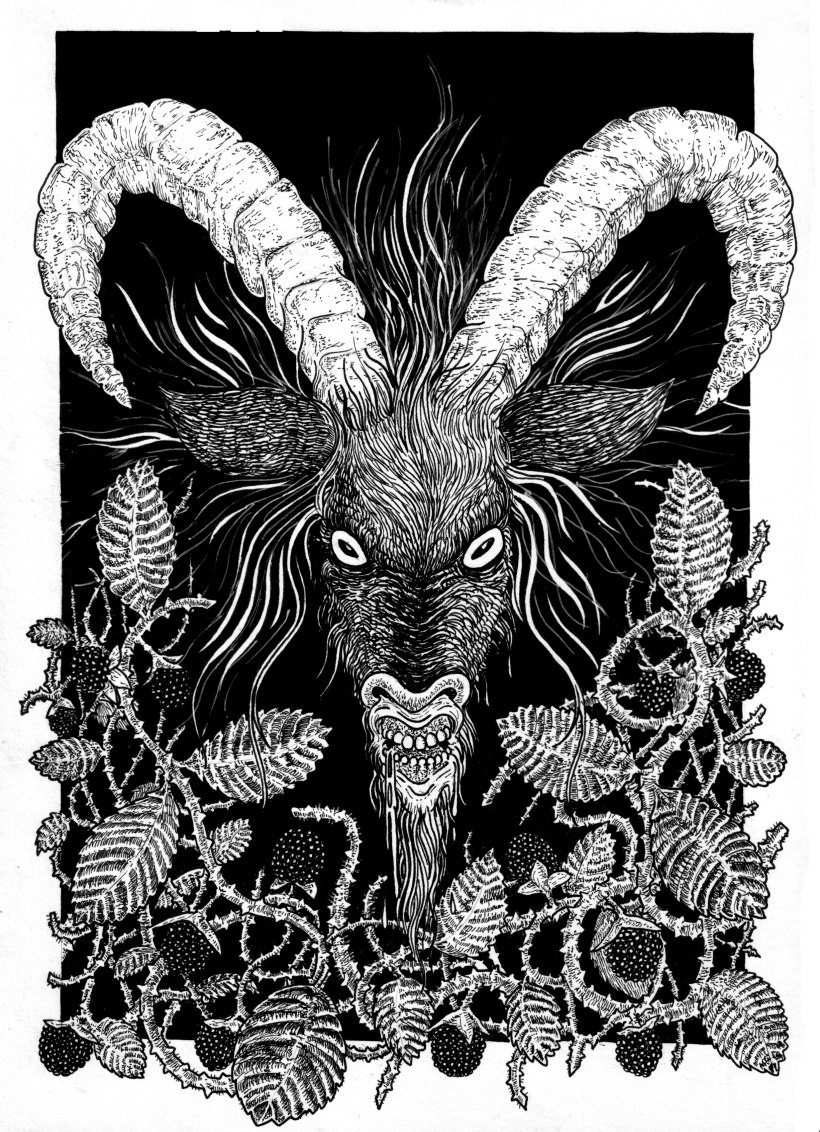
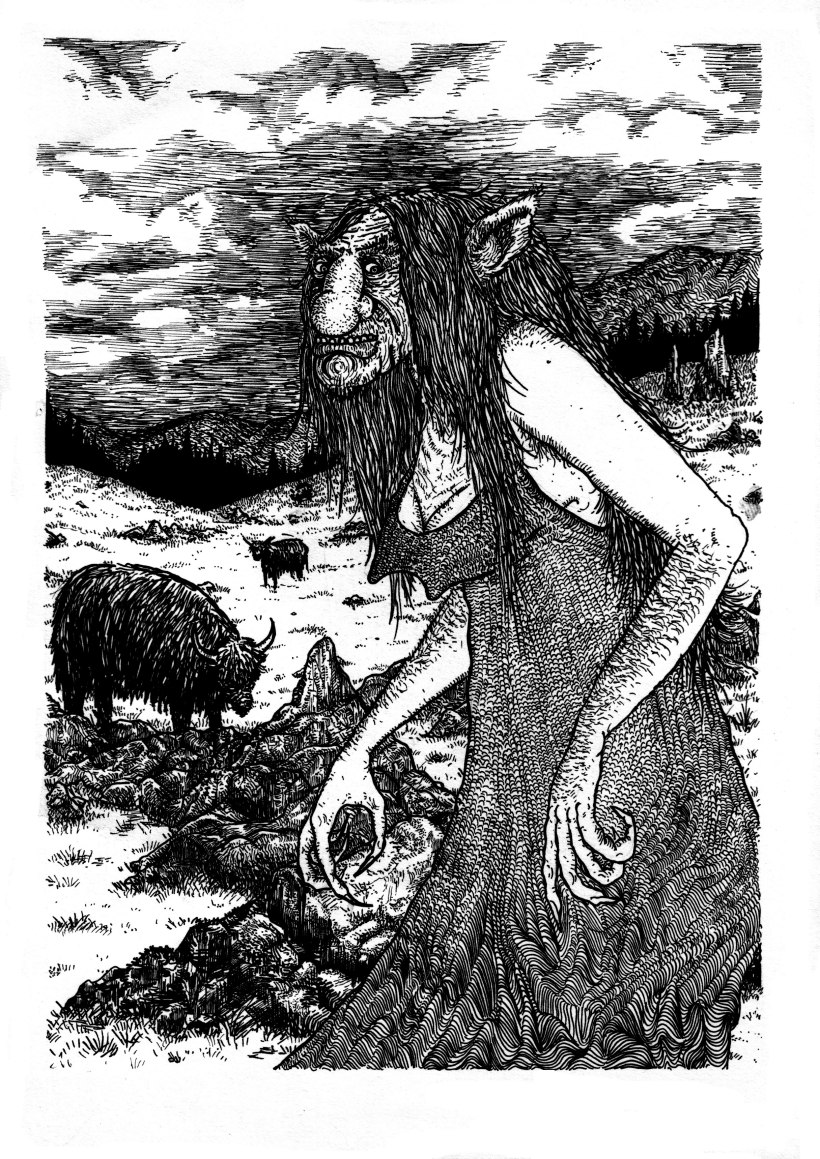
Strange Lands is a deeply researched and richly illustrated information guide to the entities and beasts of Celtic myth & legend and to the many strange beings that have entered the lore of the land through the influence of other cultures and technological evolution.
At nearly 400 pages and featuring over 170 original illustrations, Strange Lands is an essential accompaniment for both the novice and seasoned walkers between worlds. Includes a foreword by Dr. Karl Shuker

46-grugachs

esther-blackmon-the-alligator-skinned-woman

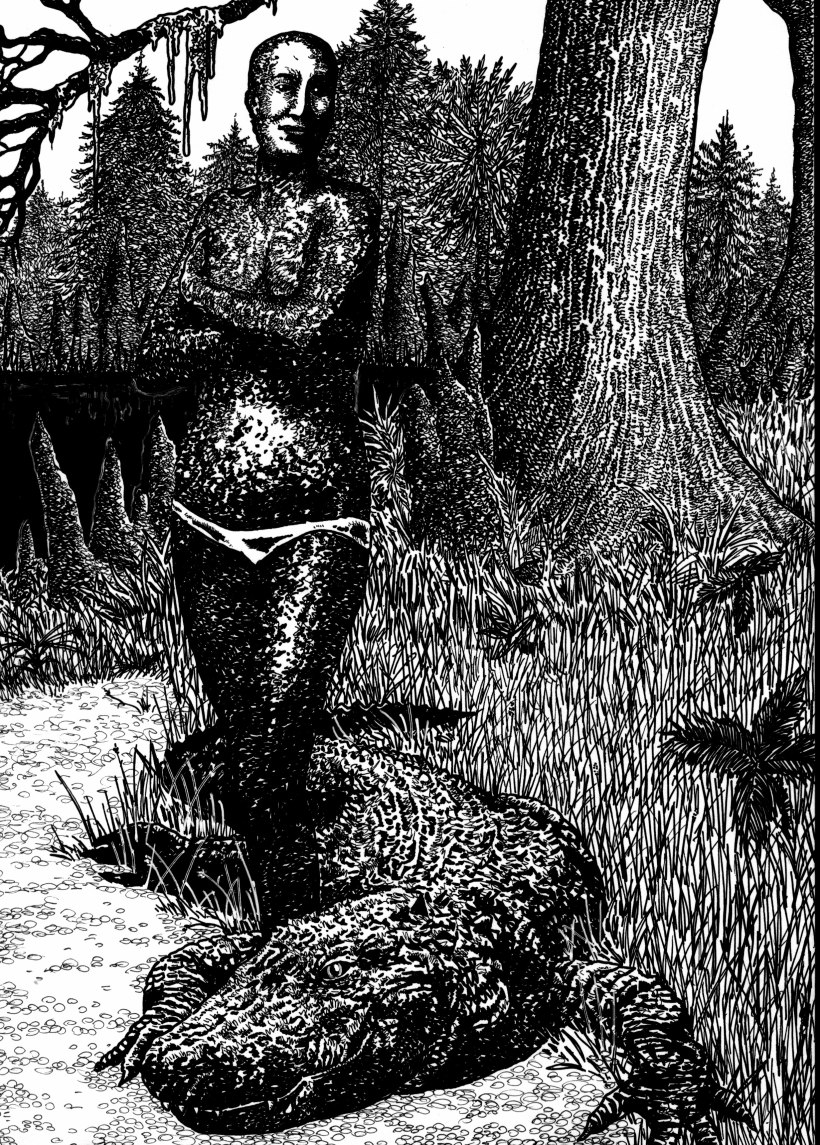
Containing over 100 original pen & ink portraits alongside biographic text, The Human Chimaera is an indispensable guide to the greatest stars of the circus sideshows and dime museums.
Includes a foreword by John Robinson of Sideshow World.

Just add code GIFTWORTHY20 at checkout at http://www.blurb.com/user/andypaciorek

No minimum or maximum order amount.
*Offer valid through December 13, 2016.

13007356_10156776797620484_3170269718379415585_n

REVIEW – Rusalnaia `Time Takes Away ‘

time-takes-away

Rusalnaia – `Time Takes Away’


Rusalnaia combines the significant talents of both Sharron Kraus (who has already had a prolific run of essential albums in the last year with the gorgeous ‘Friends And Enemies; Lovers And Strangers’, its sister album ‘Hen Llan Recordings’ and most recently the poetry/music of ‘If You Put Out Your Hand’) and Ex Reverie’s Gillian Chadwick (if you haven’t encountered 2008’s ‘The Door Into Summer’ then I recommend you do so immediately). The previous Rusalnaia outing, their self-titled début, was a psych folk gem recorded with various members of Espers that left the listener spellbound, eagerly awaiting its follow up. ‘Time Takes Away’ may be eight years in the making but it is well worth any wait, indeed it surpasses the already high expectations held by those who follow the music of both Kraus, Chadwick and their work together.

The album begins with the creeping dread of ‘Cast A Spell’, a looping acoustic motif merging with hand drums and ever increasing chants to conjure a truly sacrificial Summerisle mood before scattering into a full blown psych guitar and violin dervish. At once both hugely powerful and hypnotic it is a shiver inducing opening to an album that then maintains its spellbinding hold upon the listener until the final fade out. ‘Take Me Back’ follows, Chadwick and Kraus’s vocals mingling and weaving in and out of the others amidst the most unsettling array of analogue synths and pounding, ritualistic drums. Equal parts acid folk and full blown gothic psych (in the sense of such forerunners as Mellow Candle and Stone Angel) Rusalnaia display an (un)easy mastery of the wyrder angles and corners of folk; this music is in their blood, these incantations come from their very beings and are all the more affecting and alluring for this. ‘Driving’ is a case in point, its deceptively simple rhythmic pace is both beautiful and unsettling, a minor key entering and tilting the song into the darker shadows and more hidden, unusual places. Aficionados of Faun Fables, Espers and UK psych folkers Sproatly Smith and The Rowan Amber Mill will find much to love here.

The Pentangle-esque ‘The Love I Want’ introduces woodwind to its call and response folk majesty and is breathtaking in its steady but dramatic building and layering towards a bucolic and Bacchanalian finale. Next, ‘The Beast’ is transported on an intense and fiery flow of fuzz guitar and organ, both vocalist’s lines intertwining as if recounting some twisted, unearthly nursery rhyme. Rusalnaia are no fey, rustic folk act, these songs scream, howl and haunt with intent; think early PJ Harvey meets the black hearted acid folk stylings of Comus. And when they quieten, they do so in a manner that gets under your skin to just the same extent, if not more so. ‘The Honeymoon Is Over’ is by turn a spectral and ghostly lament, solitary drumbeats punctuating a delicate but driven slice of melancholy perfection. ‘Bright Things’ casts its (book of) shadows gently but with a circling and cackling sense of expertly pitched melodrama. ‘Lullaby (For A Future Generation)’ meanwhile allows some sunlight in, organ and vocal harmonies combining to create a work of genuine emotive impact and beauty. All too soon the album reaches its finale with the title track, a recorder and organ filled wonder that stays with the listener long after the song has finished.

In short, ‘Time Takes Away’ is a triumph. It is no leap of the imagination to picture this album being played and revered in twenty years’ time in the same manner that we do with our copies of ‘Basket Of Light’, ‘Swaddling Songs’ or ‘Commoners Crown’. This is a hugely accomplished and truly special recording; trust me, you need this album.

Available now on download from the band’s Bandcamp page and as a digipack CD from Cambrian Records.

(Reviewed by Grey Malkin (The Hare & The Moon) – With thanks to The Active Listener blog at which this review was first published)

https://rusalnaia.bandcamp.com/album/time-takes-away


REVIEW – The Mortlake Bookclub `Exquisite Corpse’

The Mortlake Bookclub – `Exquisite Corpse’

The Mortlake Bookclub are a shadowy collective whose first release on the brilliant Reverb Worship label is “inspired and directed by the surrealist parlour game Exquisite Corpse” wherein each collaborator adds to the previous person’s output. One of these members is Melmoth the Wanderer. Add to the mix a reading group centred around Dr. Dee’s library and surrealism, and you won’t be surprised to hear I was hooked immediately.

Opener, ‘The Sexton’s Dream’ sets the phantasmagoric tone beautifully: hazed and throbbed electrics, distanciated plucking and a spoken sample that is as threatening as it is cautionary. And it’s this sample that places the Exquisite Corpse squarely in a spectral rurality, where half-glimpsed simulacrums spook and uncanny survivals pervade.

‘Live Deliciously’ has ritual purpose. And I say this in a the same way an archaeologist digs into the land, finds something that can only be surmised as significant, and deems it a ritual object. Here this translates into a vague sense and aural awareness of a ceremonial performance whose importance and meaning is both enlivened and obscured by a resonant dissonance and distant chants. Only a tolling bell gives some clarity that a ritual is happening or has happened here. And no amount of polishing your obsidian stone will allow a clearer view.

With its swirling strings and baritone spoken word, ‘Exquisite Corpse’ could not be more haunting. The reversed voices, the shards of whispered narration, the funereal atmosphere – it’s definitively one of the heart-rending and poignant pieces of music I’ve heard in years. In short, it’s incredible.

With samples from this documentary the final piece ‘The Trial of Margaret Brown’, tells of witchcraft and cunning folk, and brilliantly envelopes and haunts like its predecessors.

Exquisite Corpse is available here in a limited and desirable edition. It’s on its second run so be quick.

`This review was originally posted on the `Both Bars On’ blog in November 2016 and is reposted with their kind permisssion (https://bothbarson.wordpress.com)’

JUST SAYING IT COULD EVEN MAKE IT HAPPEN: A short introduction to folk horror in the work of Kate Bush

This piece was inspired by a member of the FHR Facebook page querying mention of Kate Bush on the group; it struck me suddenly that many people may not understand why this pop-star has such a hold on the hearts of those who grew up in a certain time, in a certain place, and why she is so indelibly linked with that particularly eccentric Englishness that is a core of folk horror. There is the same dark and capering glee in Kate’s work, a mindset that makes dressing up as itinerant monks to perform ‘Running Up That Hill‘ on Wogan seem perfectly normal, as there is in the concluding procession of The Wicker Man, as there is in Cotswold cheese-rolling and the fireworks of Lewes. There is the delight in sun-kissed mornings and the melancholy of mist-shrouded nights, there is the sadness of loss and the purity of love.

260415ivykate
I’m not attempting to write a biography, there are better ones out there, but simply to select an hour’s-worth of music that, for me, exemplify this claim that Kate Bush has to part of the folk horror pantheon and that inspire something in me, personally. This selection will be challenged, I am sure, as there are what many people will consider to be glaring omissions. I’ve not included ‘Wuthering Heights’ because, well, it’s ‘Wuthering Heights’ and is very much its own work as well as having a tendency to dominate collections. Neither ‘Waking The Witch’ nor ‘Jig Of Life’, perhaps obvious choices, make appearances here; sadly, other tracks from Hounds Of Love took precedence. There are probably rare b-sides or alternate versions that could’ve made the cut, if only I had heard them.

I’ve enjoyed sitting with these songs for a while, listening more intensely than I have done for some time.

I hope you do too.
Continue reading “JUST SAYING IT COULD EVEN MAKE IT HAPPEN: A short introduction to folk horror in the work of Kate Bush”

Local Lore; Wild Edric

Many areas of Britain have stories of local heroes that have entered national legend; Bodmin Moor has King Arthur’s Hall and Dozmary Pool (into which Excalibur was thrown after “the Strife of  Camlann in which Arthur and Medraut perished”, the battle having taken place on the banks of the  nearby River Camel), but two of the many sites throughout Britain with Arthurian associations; Sherwood Forest has Robin Hood and The Fens have Hereward the Wake – but Hereward’s contemporary, Wild Edric of Shropshire, has never really entered the national imagination to the same extent; which is a pity, because his legend is every bit as remarkable.

Historically, Eadric Cild (or “Childe”, also known as Eadric Sylvaticus and Eadric the Forester) was one of the richest thegns in Shropshire at the time of the Norman Conquest, and, like Hereward, he became one of the leaders of the Saxon Resistance. Allied with Bleddyn ap Cynfyn, Prince of Powys and Gwynedd, he unsuccessfully attacked the Norman castle at Hereford, then took his army northwards, burning a castle in the Teme Valley along the way. He then burned down the town of Scrobbesburh (Shrewsbury), but again was unable to take the castle. The rebel army and its Welsh allies were defeated by King William in a battle at Stafford in 1069. Eadric fled into the wild wood and became an outlaw, finally submitting to William in 1070. In return for his oath of fealty, he was granted a small manor near Offa’s Dyke, but his extensive holdings in Shropshire and Herefordshire were confiscated and given to Norman lords.

And now for the legend…

927620ccd9763eff141173a628e639ea-950x475
‘The Wild Hunt’, Johann Wilhelm Cordes (1824 – 1869)

Thegn Edric Aelfricson was famous for his love of hunting and fishing, spending so much time in the pursuit of game that he earned the sobriquet “Wild”. One day, Wild Edric was hunting in the forest near Clun, when he became separated from his fellows. Lost, he wandered among the trees until twilight descended, whereupon he saw a light. Approaching, he discerned that the light came from the window of a small cottage. He peered in and spied a group of beautiful women dancing together.  Entranced, Edric forced his way into the cottage and seized the most beautiful of them, dragging her to his horse as the others screamed and clawed at him. Once back at his hall, the captive woman refused to speak for three days and three nights, but on the fourth day she broke silence; her name was Godda, she was a princess of the Fey and, yes, she would marry him, but on one condition – that she be permitted to visit her sisters in the forest as often as she pleased and that Edric must never rebuke her for the time she spent away. He agreed and they were wed.

Rumour of the beauty of Wild Edric’s bride spread throughout the land, coming eventually to the ears of Duke William, styled “the Conqueror”. William wished to see this woman, and so arranged a truce with Edric that they might meet. When William witnessed Godda’s otherworldly beauty for himself, he swore that it would be a shameful thing to rob such a woman of her husband, and so Edric and William made peace (although it is remembered that Edric did not kneel). So Edric and Godda lived happily until one day, when she had been gone even longer than usual, Edric snapped, “I suppose you have been off frolicking with your sisters in the forest!” Too late he bit back his words, for Godda instantly vanished. In vain he sought her for many years, but he could not find her, nor even the cottage where he had first seen her, and, wasting away for love of his faery wife, he eventually died of despair.

But Wild Edric is not truly dead. For the treason of surrendering to William the Bastard, he was shut up with his wife’s folk in the ancient lead mines at Snailbeach, there condemned to remain until the Normans have been hurled back in to the sea.  Miners would often say that they had heard Edric and his faery kin tapping at the walls of the deepest tunnels, seeking escape from imprisonment. Only on the eve of war is the disgraced Saxon thegn allowed out of the mine. Then he heads for The Stiperstones, there to muster the Fey and his long-dead warriors for the Wild Hunt, which he and Godda then lead shrieking pell-mell through the county of Shropshire. A miner’s daughter from Rorrington claimed to have seen Wild Edric leading the Hunt in 1854, just before the Crimean War, just as her father had seen him preceding the outbreak of the Napoleonic Wars. Other sightings were reported before the Boer War, the Great War, and as recently as the beginning of World War Two. Despite his sorcerous incarceration and its anachronistic condition of release, it would seem that Wild Edric may still indulge his love of the hunt.

By rj krijnen-kemp.

Local Lore; Ellesmere

A few over-grassed earthworks are all that remain of a Norman motte-and-bailey castle in the picturesque market town of Ellesmere (North Shropshire), stood on the banks of The Mere, the largest of a number of small lakes in the area. It is said that the lake was originally dry pasture, with a good well on it; but when, in a time of drought, the farmer (a wicked old woman – presumably a witch) who owned the field charged the townspeople a ha’penny for every bucket of water they drew, God punished her by causing the well to overflow, drowning the pasture and forming The Mere. Whatever the truth of its origin, The Mere is reputedly home to some very fay creatures.

The_Mere,_Ellesmere
Once, on a clear night of the full Moon, a fisherman caught an Asrai in his net.  An Asrai is a water spirit, taking the form of a beautiful, green-haired, lithe-limbed woman the height of a child. He was entranced, staring at the Asrai where she lay in the bottom of his boat, entwined in the net, bathing her pale body in the moonlight (Asrai are said to feed on the Moon’s rays).  Come sunrise, she became distressed and struggled to return to the water. The fisherman, determined to keep her, covered her with pond weed to protect her from the sunlight and rowed hard for the shore; but, once ashore, all that remained beneath the weed was his empty net and a pool of water.

Another denizen of The Mere is Wicked Jenny, a type of water-hag relatively common in England – others of her kin are Jinny Greenteeth, in Lancashire, and Peg Powler, in the River Tees (effectively portrayed as “Meg Mucklebones” in Ridley Scott’s 1985 film, ‘Legend’).  Wicked Jenny lurks at the edges of the lake, waiting to sieze the unwary and drag them to the muddy bottom, where she devours them. Her favoured prey are children.

By rj krijnen-kemp

Death is woven in with the violets…

Bury the dead deeply, water its grave with streaming eyes, and in spring-tide pluck a withered violet or some other sweet-scented blossom from the green sod” – ‘The Writings of Althea Swarthmore’ (Collected in ‘A Night On The Moor, and other tales of Dread‘), by R Murray Gilchrist.

I was inspired to write this post by Gilchrist’s line, which made me think how a symbolic knowledge adds depth and nuance to even simple statements. Gilchrist can be almost as dense in his writing as the fogs that settle on the Peak District settings of his horror fiction but a little knowledge of the symbols and thoughts he employs will help us navigate both his work and the work of many other artists.

I would give you some violets, but they withered all when my father died
(Hamlet: IV.v.181-183)

12961478_10153453247605334_9028032243175809371_n
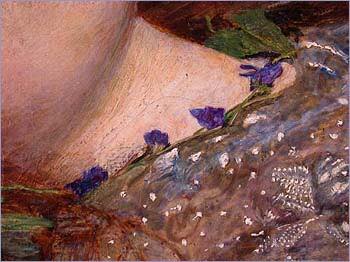
Detail of a violet garland around the neck of Ophelia; taken from ‘Ophelia‘ by Sir John Everett Millais (1852).

Violets are a symbol of constancy and faithfulness, but equally of untimely death in the young and melancholy. This leads the flower to be identified not only as a reminder of the natural cycle of life, death and rebirth but as a catalyst to transition; from maiden to wife, innocence to knowledge, life to death…

At_the_First_Touch_of_Winter_Summer_Fades_Away_by_Valentine_Cameron_Prinsep
‘At The First Touch Of Winter, Summer Fades Away’, by Valentine Cameron Prinsep (1897).

Persephone was gathering violets when Pluto rose from the underworld, enamoured with the maiden, and drew her down into his shadowy domain. Her abduction caused great despair in her mother, Demeter, who neglected her duties as harvest goddess while searching vainly for her daughter (using, interestingly, the twin torches of Hecate to cast light into dark places). This neglect led to fruits withering on the branch, crops rotting in the field and starvation in the people of the Earth. Zeus, petitioned by the starving, commanded Pluto to release Persephone to her mother for two-thirds of the year, the summer-time of sowing and harvest. She would then return to assist her husband in judging the dead for the remaining third of the year, the winter-time of sorrow.

Many of the Persephone myths show her as an unwilling victim, abducted and forced into a relationship that takes on something of the Stockholm Syndrome. A handful, however, show Persephone as willingly taking on her role as arbiter of both Life and Death; she tempers her husband’s stern views but is also fully aware that the hope she gives the living is ultimately doomed.

Violet! Sweet violet! Thine eyes are full of tears; Are they wet, even yet, with the thought of other years?James Russell Lowell

(The title of this post is taken from ‘The Waves’, by Virginia Woolf, almost herself a modern Ophelia. Valentine Cameron Prinsep was Virginia Woolf’s maternal great-uncle).

Daniel Pietersen, 18/04/16