Folklore Thursday: Vasilisa the Brave

VASILISA

One of the most popular characters of Russian folk characters is a heroine named Vasilisa (or Vasilissa) who appears in several Russian fairy tales collected by the folklorist Alexander Afanasyev. Known variously as Vasilisa the Wise, Vasilisa the Brave and Vasilisa the Beautiful, her virtues are held in esteem.
In a trope familiar to fairytales the world over, Vasilisa’s mother died whilst Vasilisa was still a child and her father remarries another woman who proves to be an unkindly stepmother to her. Furthermore her stepsisters were none too kindly either. When her father had reason to travel away for a while, the family moved into a cabin deep within a huge forest.
Vasilisa was given a heavy workload of chores by her new family, but she had in her possession a magic doll that was her mother’s final gift to her and which assisted her with her work. Also the stepmother would send Vasilisa out into the forest to collect sticks or mushrooms, but really in the hope that the girl would become fatally lost.
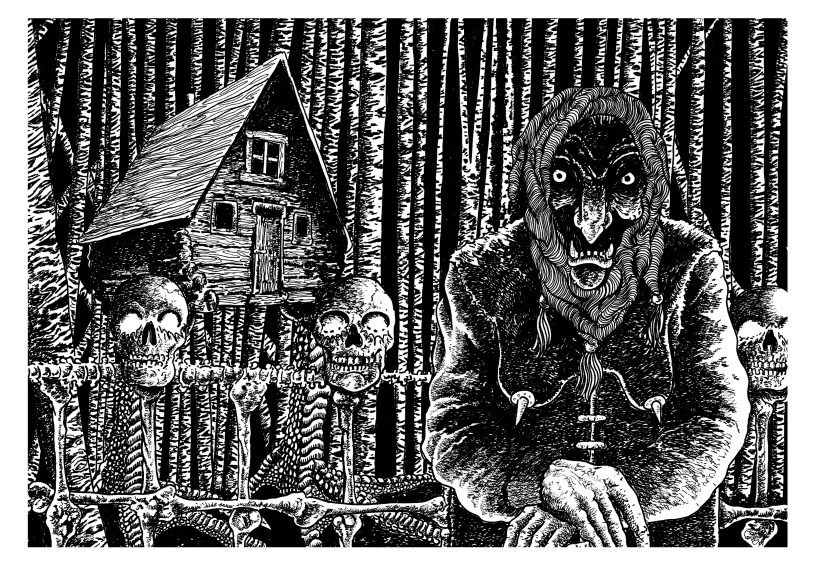
Whilst living in that remote cabin within the woods, the girls were instructed always to have a single candle kept alight from which other fires could be lit. It so happened one day that one of the elder stepsisters let the candle go out, so the young Vasilisa was ordered to gather fire from their nearest neighbour, who was none other than the witch Baba Yaga. So Vasilisa made the considerable trek beneath the darkness of trees to the macabre chicken-legged hut of Baba Yaga. On the way she is passed in turn by three horsemen. Each of which is clad in a single colour which also corresponds to their mount; first a white rider, then a red then finally a black rider whom nightfall followed soon after. Reaching the abode of the old witch, Vasilisa is petrified by the skulls on the fenceposts, whose eye-sockets burn with an eerie glow. Upon finding the girl, Baba Yaga instructs her that in order to retrieve fire Vasilisa must undertake certain tasks.
However should she fail in these chores or attempt to leave without performing them, then she was informed that she would be cooked and eaten.
The duties allocated to her were to clean Baba Yaga’s hut, to separate bad kernels of grain from the good and to separate poppy seeds from soil. Baba Yaga left the girl to her business but Vasilisa was distraught and already exhausted from her long walk through the woods. However the magic doll again assisted her in her tasks and the girl slept.
In the morning, Vasilisa looked out and saw the white rider pass by, later on the red rider passed and finally the black rider, followed both by darkness and the return of Baba Yaga. Seeing the chores beset Vasilisa completed, the witch proceeded to invoke several pairs of invisible hands to wring juice from the separated grains. She asked Vasilisa if she had any questions. The girl enquired about the horsemen and was informed that the white rider was the break of dawn, the red rider was the midday sun and the black one was the fall of night. Vasilisa was then about to enquire about the disembodied hands that worked for the old woman, but sensing this the magic doll in her apron pocket shook as if to warn her to hold her tongue. Vasilisa understood this and asked not of the mysterious hands.
Instead Baba Yaga asked How Vasilisa had managed to complete the difficult chores she had beset her. Vasilisa replied not too revealingly but not untruthfully that she had managed through her mother’s blessing.
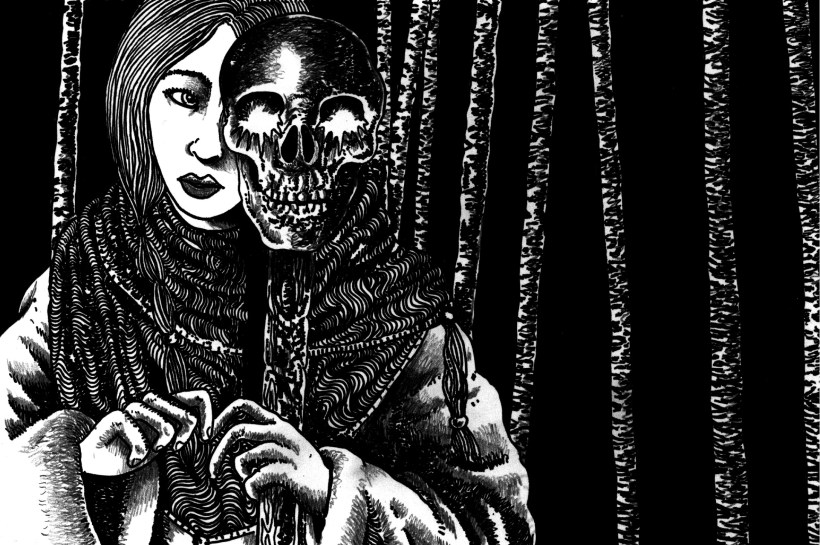
The old witch wanted to hear of no blessing in her abode so cast Vasilisa out into the dark, but did not renege her promise and gave the girl a skull upon a stick. The fire in the dead eyes would both illuminate her path home and relight the fires within the cabin.
Upon returning there however, her stepmother and stepsisters became transfixed by the smoldering eyes of the skull and were reduced to nought but ashes. Vasilisa buried the skull.
Different tales follow the further life of Vasilisa, in one she is seen to weave threads of flax into gold or the finest silk. So impressed is the Tsar himself upon seeing the cloth, that he bids Vasilisa to meet him. Upon seeing her he is smitten with her beauty and takes her for his wife. In another variation Vasilisa is named as the girl whose kiss transformed a frog into a prince, who was then to become her husband. Whatever the tale of Vasilisa’s later life, there seems to be a common agreement that she and her father spent it in greater wealth and happiness than before.

From the book Black Earth: A Field Guide to the Slavic Otherworld. Written and Illustrated by Andy Paciorek
BABA YAGA

Samhain Greetings and Book Discount

hal

🎃 Happy Samhain – All Hallows – Día de Muertos – Failte na Marbh – Halloween to All Revivalists … 🎃
A little early but to mark the thinning of the veils treat your ghoulfriend or boofriend or yourself or anybody to 20% off Folk Horror Revival / Wyrd Harvest Press Books !!!

Use Code: TWENTY18
at checkout at -* http://www.lulu.com/spotlight/andypaciorek

*All Sales profits of books bought through our online store ^ are donated quarterly to The Wildlife Trusts

Using the Discount Code here, does not affect the sum donated to charity, so help a damn fine charity by buying great books at a bargain price !!
Offer ends 1 November at 11:59 PM 🍂☀️

halloween.jpg

The Wyrd Kalendar – Wyrd Artists Mix

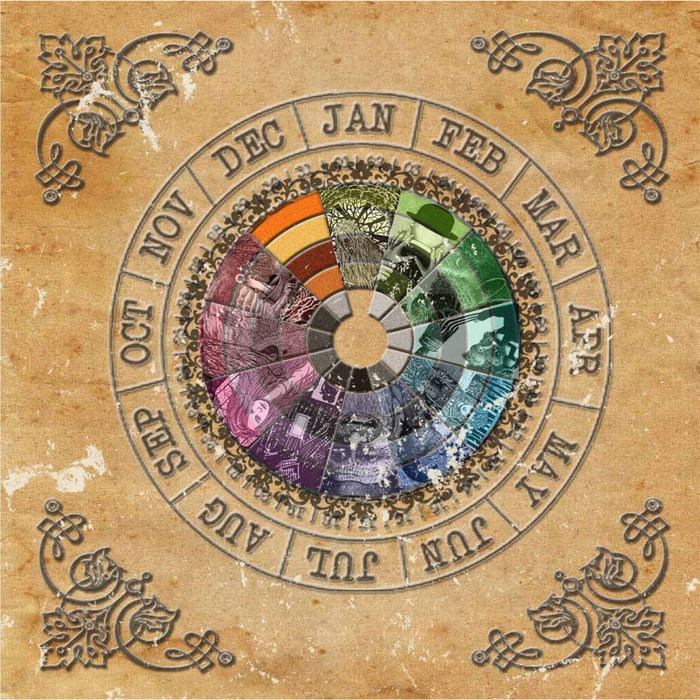
Join the Kalendar Host as we prepare for the launch of the Wyrd Kalendar album. This will be released on January 1st the beginning of the next Wyrd year.

Artists from the England, Scotland, Ireland and Portugal were each given a month of the year and a story from the book (Wyrd Kalendar) as a starting point from which to create a vastly eclectic and evocative mix of genres that sweep from the worlds of Folk to Electronica via Psychedelic licks and lost Horror Soundtracks.

Explore the work of these artists and find out more about the music they have created in this special mix. Listen to The Hare and the Moon (lead by Grey Malkin who has created the Song for January with his new group Widow’s Weeds), Keith Seatman, Emily Jones, Crystal Jacqueline, Beautify Junkyards, Alison O’Donnell, Concretism, Icarus Peel, Tir na nOg, Wyrdstone, The Soulless Party, The Rowan Amber Mill and The Mortlake Bookclub.

You can preorder the album here: https://megadodo.bandcamp.com/album/wyrd-kalendar

a3949485468_5.jpg Wyrd Kalendar | Mega Dodo
megadodo.bandcamp.com
Wyrd Kalendar by Mega Dodo, releases 01 January 2019 1. Widow’s Weeds – A Song for January 2. Keith Seatman – Three Day Girl 3. Emily Jones – Waiting for Spring 4. Crystal Jaqueline – Chasing the Gowk 5. Beautify Junkyards – May Day Eve 6. Alison O’Donnell – Deadly Nest 7. Concretism – The Fair by the Sea 8. Icarus Peel – The Weeping Will Walk 9.

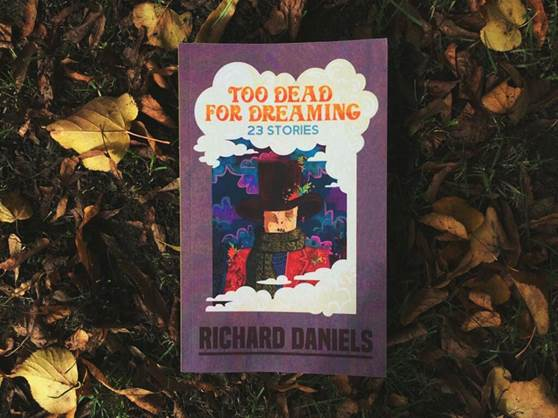
The ancient streets too dead for dreaming….. (a book review)

The ancient streets too dead for dreaming – interview and review by Jim Peters

`It was the morning a scarecrow ran across the field and got tangled up in the fence that I realised the game was really up.’

Any book of tales that includes one that starts with these opening lines and claims to have been collected by the author from the residents of Low Scaraby has surely got to be worth picking up and investigating? How right you are…….

“Too Dead For Dreaming is a collection of 23 stories of weirdness, wonder and woe. Most are stand-alone but in several there is the setting of Low Scaraby. It’s a village that’s hidden in the gently rolling Wolds of Lincolnshire. Most people will not have heard of it and that’s pretty much how the villagers like it. I know a few people there and have been able to pick up on some of the stories of the place. A lot of people say there’s something in the soil in those parts. It’s true.”

Read on and find out more about the author and about this marvellously intriguing and refreshing collection of 23 stories from the pen of Richard Daniels – in the shops from November 9th from Plastic Brain Press.

Richard Daniels is a difficult writer to describe or fully understand. His stories seem more like dreams being recounted half-remembered and still full of possibility – snatches of brilliant ideas that many people would dismiss as `just ideas’ but in his hands they become fascinating and decidedly dark vignettes. In the same way that some of Bob Dylan’s best narrative songs seem to start half way through and end leaving you with 100 questions (think `All Along the Watchtower’, ` Frankie Lee & Judas Priest’ or `Lily Rosemary and the Jack of Hearts’) Richard’s stories use a similar technique to draw you in and have you investing in his tales. Folk Horror Revival managed to get a few words with Richard about his craft and in particular `Too Dead for Dreaming’ and as his responses show his unconventional approach to writing extends to interview responses too…..

“I’m not sure how I ended up writing. It was something that I always did one way or another. The killer blow came when I started to take it seriously. I think Freddie Mercury put it best when he spoke about Flash Gordon and I would apply the same standard. I’m just a man, with a man’s courage. Of course I haven’t saved the Earth yet.

I like reading Guy N Smith, particularly when I’m in bed and you can hear the wind howling outside but I draw inspiration from anything, from the metallic prism of an old sweet wrapper to the homely traditions of dated Christmas cards with pictures of churchyards in the snow.”

This eclectic mix of inspirations manifests itself in the stories in Richard’s latest book with tales that cover James Dean (on wheels), the death of a rock star, ghosts in machines as well as the lost city of Atlantis. What makes this spectrum of stories so intriguing is that tiny hints and links will peep out at you as you read which suggest that they are all part of a bigger story yet to be told.

There is some real darkness in them there tales which opens up with a nihilistic rant that wouldn’t sound out of place on the lips of Frankie Boyle and ends with a nod to `The Never Ending Story’ but running throughout the book is a feeling of unsettling rural oddness which carries more than just a hint of Folk Horror. Does the author agree with this description though?

“I think aspects of it certainly do. Taken as a whole I think it creates a mood which can be unsettling in some way. A lot of life is unsettling and the mind is a natural narrative creating machine, so it’s got to do something with all the chaos and weirdness that just doesn’t fit. The 23 stories in Too Dead for Dreaming are just an aspect of that.

My earliest memory is walking to school and clutching hold of my mother’s hand very tightly when we went through the graveyard. It is forever Autumnal and thick with the smell of rotting leaves. I would close my eyes until we were through it. Things like that swirled around and mixed with TV shows I couldn’t make head nor tale of – like Sapphire & Steel or Chocky. For me Folk Horror is often a balanced mix between comfort and discomfort and the thrusting of signs and symbols onto your psyche which you know are telling you something but which can never quite be fathomed and perhaps it is for the best.”

It’s very on trend currently to be working within the Folk Horror genre but this collection of stories doesn’t feel like it is trying to do that – it feels like folk horror’s presence in the pages of `Too Dead for Dreaming’ is not just a nod to the genre but a wider reflection on the influences that Richard draws on.

“I recently went out on a night walk with my friend Tom. It was one of those late night expeditions where the darkness seemed made to be explored in the same way a dream you have is made to be explored. We had our torches – an essential folk horror piece of kit. Down a deserted country track we came upon a hooded figure on a bench with a beast keeping guard. Our hearts started racing and had we been out walking alone without each other for company I’m sure we would have turned back. The figure paid us no mind – nor did his beast. We ended up on the winding roads of an industrial park. Sure it could just have been a dog walker but I think it more likely to have been something more eerie and spectral.

I think the best way to work up ideas is to take a long walk. I’m lucky where I live – I can be out on a track with nothing but fields within a few minutes. That’s often when I turn ideas over and poke at them. Usually by the time I return I have found one or two juicy worms I can bring home and keep in a jar. The only real ritual I have is to have a cup of coffee on the go and in the winter a blanket or two wrapped about me at my desk….”

Some of this publication’s best `worms’ are the stories that deal with the possibly diabolical careers of a movie director and a rock star. By the time you have read them you will want to track down the film `Hexagasm’ and Chip Chatterton’s “hypnotic solo’ album `Lost behind the Rainbow’ so it is with a real sense of annoyance that you have to remind yourself that Richard has made all this up….I even e-mailed Plastic Brain Press for details on how to access the film `Hexagasm’ – I won’t spoil the fun by telling you what their response was. These two stories aside the subject matter covered in `Too Dead for Dreaming’ is so wide reaching that most readers will find a story that has that familiar feel for them whilst still having a fresh spin on it as part of the whole. I have read and re-read and still it feels like there are clues that I have missed which will help explain why Low Scaraby is a source of such marvellous tales – maybe Richard’s future plans will help answer these questions….so Mr D. what is next?

“Next it’s back to the compost heap. I have a few ideas for a longer examination of Low Scaraby’s topography. I’m also going to be helping to edit a collection of poems by Melody Clark who designed the cover for Too Dead for Dreaming. From what I’ve seen so far the poems are dark, devilish and fun.”

I thoroughly recommend `Too Dead for Dreaming’ and thank Richard for not only providing a preview of his work but also for answering my questions. Before we sign off though I had one last question….

  • Do you have any particular book recommendations (not necessarily Folk Horror)?

    “If you’re a Folk Horror fan and haven’t already read A Year in the Country by Stephen Prince I think you would really enjoy it.
    I’ve recently read Graveyard Love by Scott Adlerberg which was great and set around obsession in a wintry graveyard.
    Everyone should definitely read GBH by Ted Lewis. He wrote Get Carter and seems to be much underrated and mostly forgotten in this country. GBH was his last novel. It’s set in Lincolnshire and is utterly brilliant.”

    `Too Dead For Dreaming’ by Richard Daniels is out on 9th November and is published by Plastic Brain Press.

Folklore Thursday: Samhain and the Celtic Vampires

https://i0.wp.com/www.batcow.co.uk/strangelands/images/sl%20images/143%20vampires%2B.JPG

In Ireland, the Failte na Marbh (Festival of the Dead) was held annually on the 31st October. (also known as Samhain. All Souls and most commonly Halloween).  At this time, the dead would pay a short visit to their living relatives and, after a year in the grave, they were obviously thirsty and famished. It was then the duty of the living kin to provide them with food and drink. If sufficient victuals were not offered, the dead would then feed from the veins of the living. These creatures were known as Marbh Bheo – the Night-walking Dead. On the Scottish Isle of Skye pure vengeance was often thought to be the prime mover for the Biasd Bheulach. These Vampire-like creatures would not only spare their revenge for the specific individuals who had done them wrong in life, or had sent them to the grave, but would exact grim penance upon any living soul that fell within their grasp. In England the dead thought most likely to rise again were suicides & executed criminals, and Northumbria in particular was said to have suffered several Vampire plagues. Prevalent also in both Irish and Scottish lore were Vampires that had no discernible human heritage, and instead seemed to be of a malevolent Fay stock. Such a shadowy creature was the Irish Dearg-Due or Dearg-Diulai – the Red Bloodsucker. Frequently the Dearg-Diulai appeared as beautiful, pale females cloaked in a sanguine-red capes. Attracting warm-blooded males with their feminine charm, seduction soon turned to slaughter.

https://i0.wp.com/www.batcow.co.uk/strangelands/images/sl%20images/144%20baobhan%20sith%2B.JPG

The Baobhan Sith, or Spirit Women, are a strange breed of Scottish Vampiric entities. They most frequently manifest as small groups of beguiling women, dressed in flowing green cloaks that almost conceal the fact that their legs are of a form more befitting Deer. They may also at times take the forms of Hooded Crows. Highland tales relate how they may entrance men with their dancing before sinking their fangs into them. The Baobhan Sith display a fear of cold iron.

https://i0.wp.com/www.batcow.co.uk/strangelands/images/sl%20images/145%20glaistigs%2B.JPG

The Glaistig are green-clad Fay women of fair beauty despite their lower bodies which are actually those of Goats. They are solitary creatures of converse character, for whilst they at times may greatly assist children, old people and cattle-farmers, should they chance upon lone male travellers or shepherds then their temperament changes entirely. They will first engage their victim in a seductive dance, before murdering and feasting upon them. In addition to fresh man’s blood the Glaistigs also have a taste for fresh cow’s milk.
Abridged text and amended images from Strange Lands: A Field Guide to the Celtic Otherworld – © Andy Paciorek


‘On Halloween Strange Sights Are Seen’ – About a Short film by Tea & Morphine

Folk Horror Tea & Morphine 1.jpg

Folk Horror Tea & Morphine 2.jpg
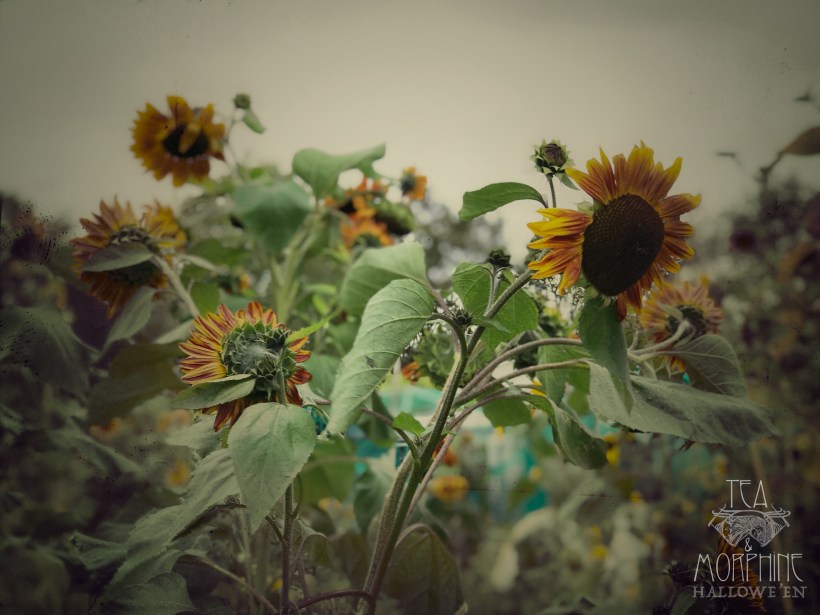
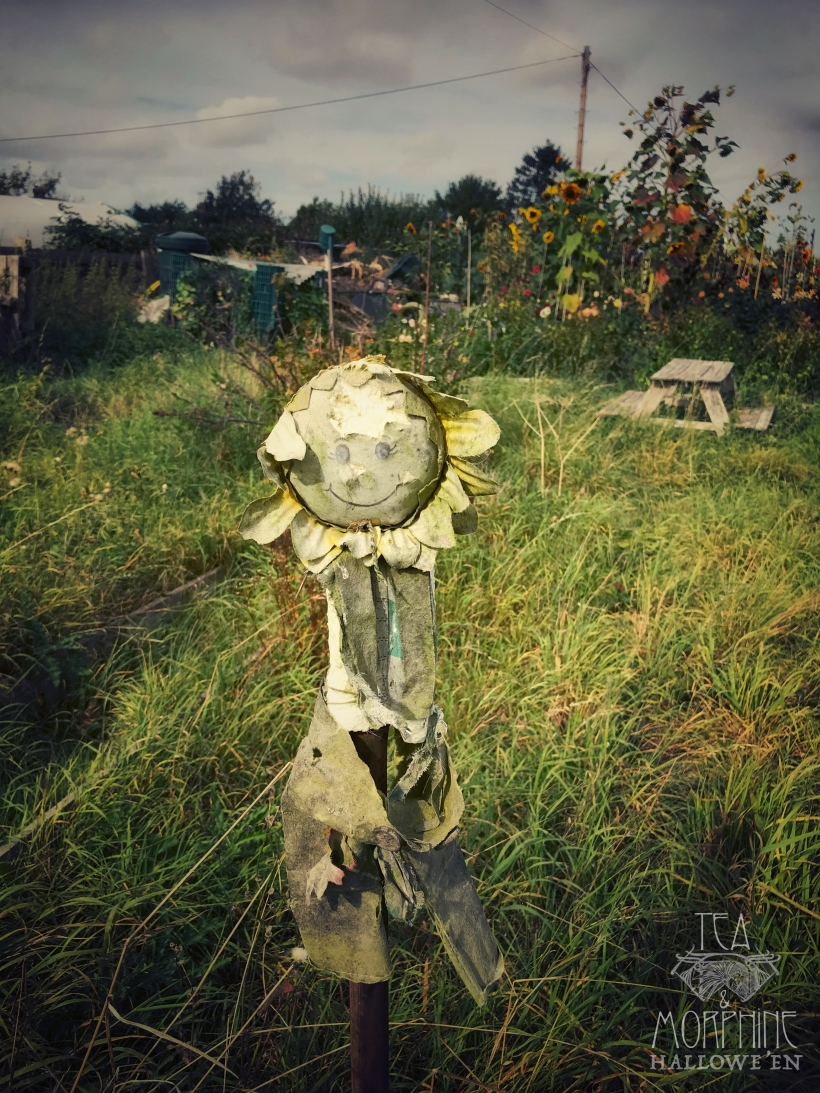
On 31st October, this Halloween, ‘Tea & Morphine’ will take us on an unusually eerie walk through a small Hertfordshire allotment. In this seven minute video short the viewer is taken on a surreal journey that transforms an everyday allotment into a world of mystery and intrigue as we are introduced to the many weird and wonderfully handcrafted characters who reside among the plots there.

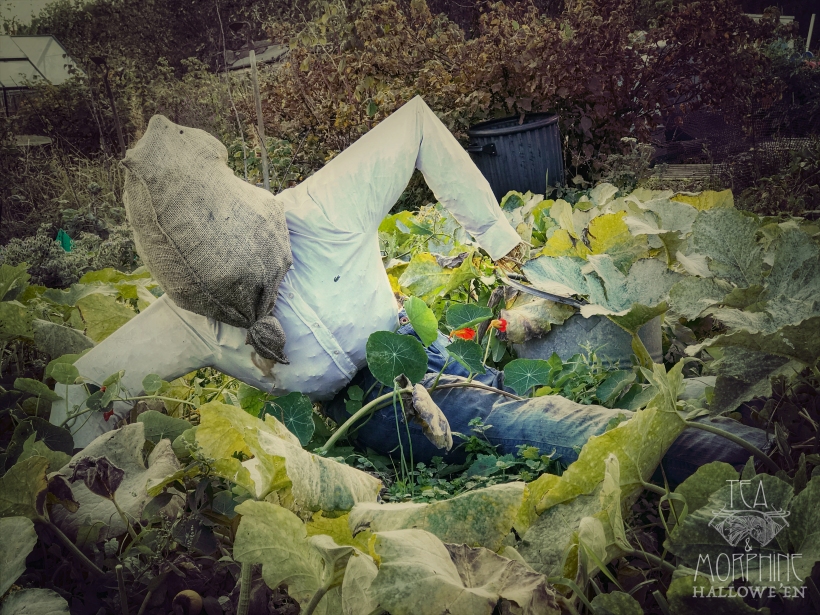
Along the way we encounter sinister sunflowers, pumpkin laden tables and a whole host of quirky scarecrows and oddly imagined effigies, set to the atmospherically whimsical music of The Parlour Trick, the film takes the traditionally English pastime and spins a darkly twisted tale of the unseen going’s on when the inhabitants are left alone to their own devices. With no rigid plot or narrative it is left to the viewer to imagine the storyline as the procession moves dreamily through this surreal landscape.

‘Tricksters and Threats’. Also known as: Scarecrows, Wurzels, Tatter-Men, Mommets, Bugbears ~ Tatty-Bogles cannot help but frighten, as they shamble down country roads with their arms outstretched as if crucified – yet inspiring terror may not be their prime motive, as they simply want to stretch their legs after a long day of solitude standing. The fear generated in human observers may be either amusing or regrettable to them, or it may even go unregistered. It is by their very name and nature to frighten, for they are the Scarecrows erected in fields by farmers to try and protect their crops from the hungry beaks of birds.

https://i0.wp.com/www.batcow.co.uk/strangelands/images/sl%20images/55%20tatty-bogles%2B.JPG

The reasons for their nocturnal animation is somewhat of a mystery, for perhaps not all will rise and leave their plot, but some seem more inclined to come to life at night. Perhaps this is of their own volition or maybe there is some external enchantment at work. It could be that the magic of Witches or perhaps Fay beings animate these rag-bag effigies in order to cause mischief or perform other tasks. Otherwise a Scarecrow could provide an ideal host for a wandering spirit or Demon that possesses no true form of its own. Such strange and shapeless souls are the Brollochan. These uncanny wanderers may visibly consist of at best a mouth and pair of eyes but they can grant mobility to any inanimate object they enter. Should a Tatty-Bogle be thus possessed by a Brollochan, this would be revealed as “Thyself” and “Myself” are said to be the only words it can utter.

Extract on the folklore of scarecrows from – ‘Strange Lands ~ Supernatural Creatures of the Celtic Otherworld’ by Andrew L. Paciorek.

Folk Horror Tea & Morphine 7.jpg

http://theparlourtrick.com
Music is by The Parlour Trick; a song chosen from ‘A Blessed Unrest’ known “The Halloween album of the year” ~ Douglas Wolk (Rolling Stone, Pitchfork, TIME) Meredith Yayanos; Voice, strings, theremin, percussion & Dan Cantrell; Accordion, bass accordion, pump organ, celeste, glockenspiel, percussion.
https://theparlourtrick.bandcamp.com

‘On Halloween Strange Sights Are Seen’ is being shown Wednesday 31st October 2018 on the Tea & Morphine Facebook Page

https://www.facebook.com/teaandmorphine/
Images © 2018 Tea & Morphine

Folk Horror Tea & Morphine 4


Folklore Thursday ~ Night Hags and Demon Lovers

https://i0.wp.com/www.batcow.co.uk/strangelands/images/sl%20images/139%20night-hags%2B.JPG
Night Hags: Also known as: Night-Mares, Mara, Mera, Mares, Crushers, Drudes, Mare-Demons, Hagges, Haints, Entities, Mallt y Nos, Night-Fiends, Cauchemar, Night-Elves.
Sometimes people who suffered from wasting diseases such as Tuberculosis Consumption were said to look ‘Haggard’ or ‘Hag-Ridden’. This refers to the belief that, as they slept, a Night-Hag had entered their bedchambers and either sat upon their chests crushing them (but not to the point of fatality) and perhaps sucked away at their breath, or their vitality, or alternatively had actually ridden their victims entirely into the air and sometimes over distance. Either way, their human victims were left exhausted and often diseased. The alternative name of Mara and its similar derivatives is said to have meant Crusher in Old-English, and it is from this word that the term Night-Mare originated – initially meaning not a bad dream but an actual external terror. The term Hag-Riding has also been applied when horses who had been left resting have been found to be exhausted and covered in sweat in the morning. Again it was considered that the Night-Hags had been riding the horses around in circles to the point of collapse during the hours of darkness. In some locations it was thought that these fiends on horseback delivered bad dreams to households, thus giving an additional meaning to Night-Mare. An alternatively used term to Hag-Riding is to be Owl-Blasted, which refers to the belief that Night-hags would sometimes take the form of these nocturnal birds.

https://i0.wp.com/www.batcow.co.uk/strangelands/images/sl%20images/141%20demon%20lovers%2B.JPG

Demon Lovers: An Incubus is a male spirit that seeks to indulge a mortal woman in carnal activity, whilst a Succubus is a female spirit that likewise preys on the passions of mortal men. However it has been suggested that both spirits are one and the same, and that the Incubi / Succubi adopts only a specific gender in relationship to its particular victim. The nature of these nocturnal paramours preyed heavily upon the minds of the Medieval Church, possibly because many of the alleged victims were members of their own ministry who had prescribed to a life of chastity. (Merlin, the great sage of Arthurian legend was thought to be the offspring of an Incubus and a Nun). The Church scholars deliberated on whether the phenomenon was mere hallucination borne out of celibate frustration, or sinful fantasies made flesh, but this held their own people to blame almost as much as the other considered option that such claims were in fact a cover-up for actual corporeal liaisons with human partners. Frequently, though, those who claimed an encounter with an Incubus / Succubus seemed not to have been pleasured by such a visit but to have been genuinely shocked and frightened. Therefore further attention was concentrated on seeking out an external, supernatural culprit. They questioned whether these night-visitors were perhaps a salacious breed of Faerie, or maybe vengeful Ghosts, but as all were considered agents of the Devil anyway then it was simple enough to label them Demon-Lovers.

Images and Text © Andy Paciorek
Adapted from the book Strange Lands: A Field Guide to the Celtic Otherworld

The Wyrd Kalendar – The Autumn Mix

Join the Kalendar Host this Autumn for a delicious collection of harvest treats. Words from Wyrd Kalendar, Darren Charles and Howard Ingham mingle with music from the likes of Matt Berry, Moon Wiring Club, Nick Drake, Ivor Cutler, Heslington Primary School, John Barry, Beth Orton, Bridget St. John, Emil Richards, Tricky, Bobby Darin, Mark Barnes, Francoise Hardy, The Dandy Warhols, The Vines, Jon Hopkins, Strawbs, Pulp, Jeff Buckley, Gene Moore, Hi Tension, Pink Floyd, Nat King Cole, Lee Hazelwood, Lonesome Wyatt & the Holy Spooks, Pacific, New Model Army, The Overlanders, Barbara Streisand, The Kinks, XTC, Moondog, Cleaners from Venus, Donna Summer, Kirsty MacColl, God is an Astronaut, Allah Las, Airhead, Forest, Frontier Ruckus, Small Faces, The Spotnicks, Reverend & the Makers, David Cain and Autumn.

Buy the Wyrd Kalendar book: http://www.lulu.com/shop/http://www.lulu.com/shop/chris-lambert/wyrd-kalendar/paperback/product-23371751.html

The Wyrd Kalendar album is coming soon…

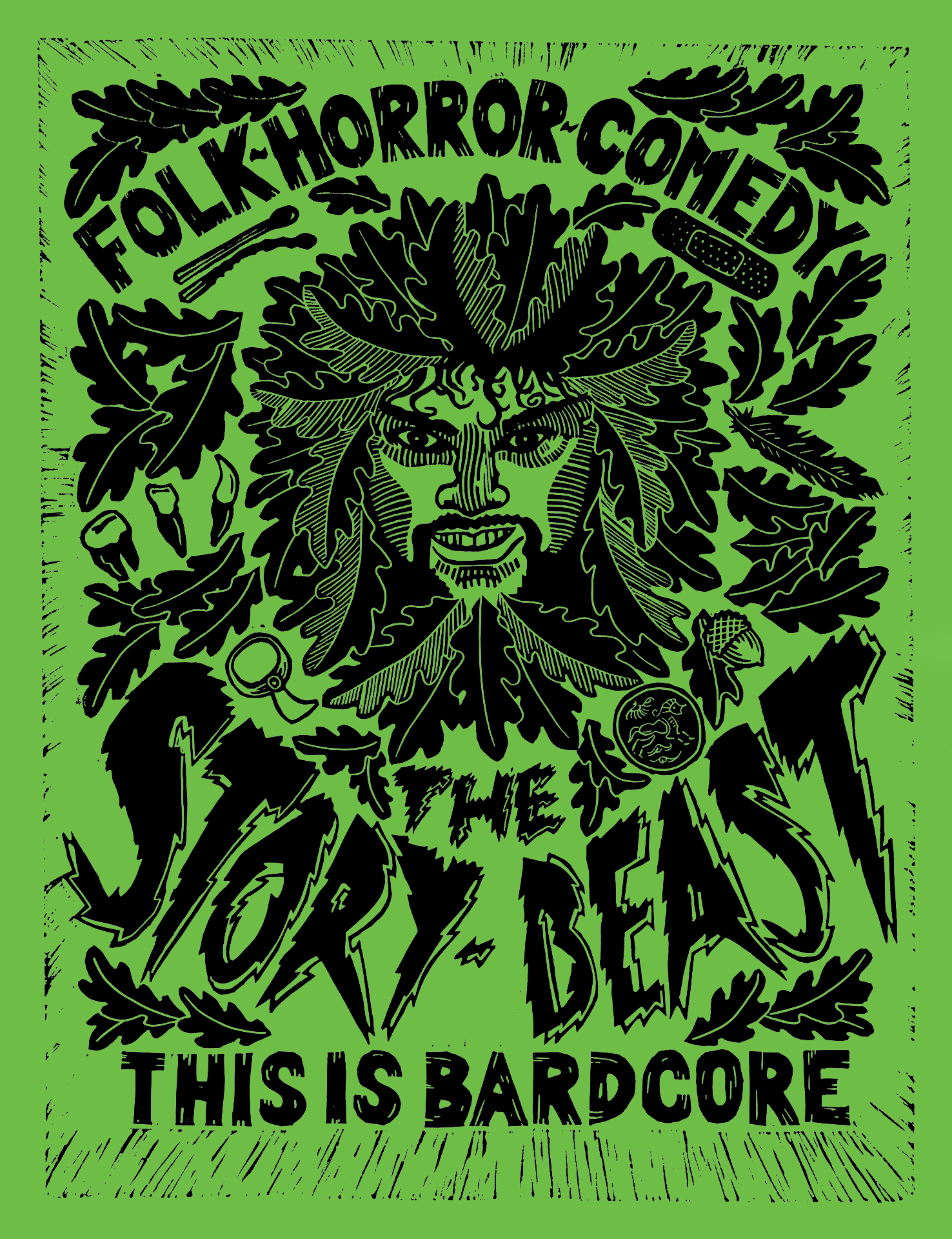
“This Is Bardcore” – an interview with The Story Beast on his Prog Rock Folk Horror Comedy Show

Folk Horror Revival recently got wind of a new show being performed in London this Saturday the 15th in London. We spoke to the creator about the piece and his inspirations.

So, if you can first tell us a bit about yourself?
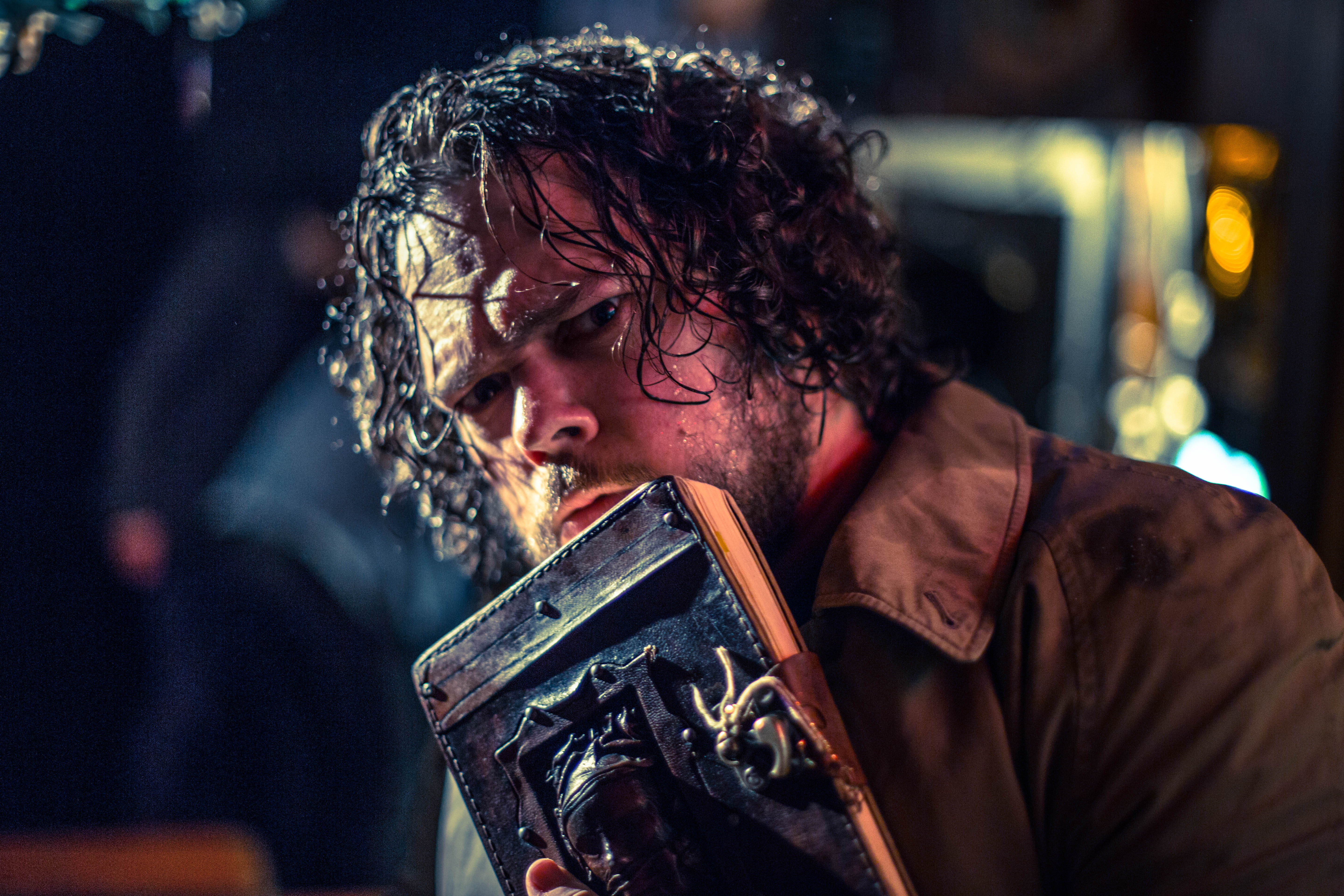
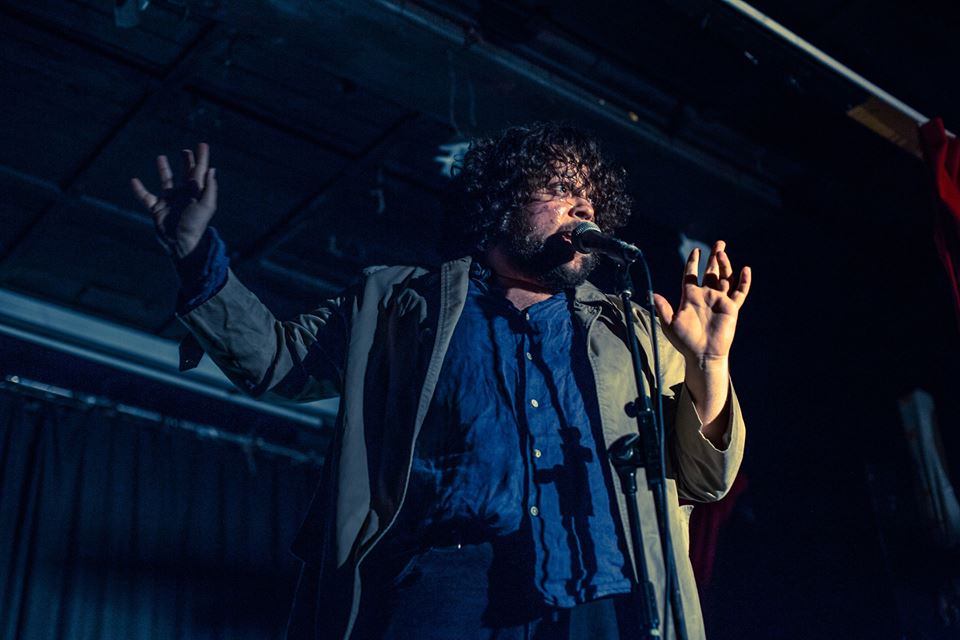
In my day to day life I am mere actor/writer John Henry Falle but onstage I am the mortal vessel for cosmic bullshit merchant, The Story Beast. He’s an immortal wizard whose seemingly self-appointed duty seems to be to tell the Old Tales a-new and the New Tales a-old. He’s basically a crap, slightly pissed up version of Doctor Who.

What’s This Is Bardcore about then?
It’s a Prog Rock Folk Horror Comedy Show or #ProRoFolkHoCoSho…I’m sure that’ll get trending soon. This is my second show as The Story Beast. The first got nominated for the Edinburgh Comedy Award for Best Newcomer (formerly the Perrier) and This Is Bardcore finds him arriving in our dimension accompanied by his best mate – a sentient Tree rooted to the Centre of your Reality. He’s entirely convinced that the world is coming to a very swift end. I take the audience on a folkloric trip through our collective unconscious via Blue Peter, an epic poetry rendering of Die Hard and the geological history of the Earth told through the medium of Rock & Roll. I’m hoping this is how I get on Live At The Apollo.

Where does your interest in folk horror stem from?
I grew up in the countryside on the island of Jersey surrounded by cows and a lot of those terrors felt quite close to the surface, I suppose. We lived in an old farmhouse where my Dad had grown up. The house was on a hill above a Mental Hospital where my Great-Grandad had spent the last third of his life. We found an actual stillborn child in the walls of the house once.

Sorry, what?
The plumbing in the house went to shit and flooded out my parent’s bedroom. Just this hideous black dripping as the water flowed through years of dust and horse-hair plaster. The whole room had to be ripped apart and on the inside of the walls we found this bricked up little alcove. A window where a window shouldn’t be. So we opened it up and on the inside we found some pages torn out of The Book Of Common Prayer, a shoe and the dusty, leathery protuberance of a stillborn child.

Isn’t that the plot to Nigel Kneale’s “Baby“?
Pretty much! And we never found out why, either! It must have been someone over a century ago who were giving their baby a decent burial. But Jersey is a full of that sort of folkloric strangeness. There’s an active coven of witches on the island! Down the road was the Barn where the people of the Parish would make the float for the island’s annual Battle Of Flowers. I remember when I first saw The Wicker Man when I was 14 and thinking “This is all a bit familiar.” I live in South London now and I think one of the reasons I love Folk Horror so much is just basic Nostalgia.

Why do you think Folk Horror has caught the public mood right now?
I’m not the first to say this but it feels like a perfect metaphor for what’s going on in this country right now, doesn’t it? That dangerous nostalgia. The desire to go back to— what? The 70s? The 30s? The Past in general despite the dreadful things we left there? This show is slightly more political than my first one as it’s the first I’ve done since the BrexiTrump happened and I’m one of those tedious, explosive Remoaners who can’t stop talking about the State of this Country once he gets going. One of my opening songs is a Pink Floyd-y rock number called “Whatever Happened To The Country That You Once Knew?“ where I sing about that nostalgia and how it constantly blooms into violence, madness and bestiality.

Do you think there is something peculiarly British about it?
Well we may have the Unholy Trilogy but Children Of The Corn seems as prescient a version of Trump’s America. What seems particularly British is how susceptible we are to a certain stripe of Fantasy. We invented the genre and if you look at a lot of the Tolkiens and Lewises they have this Romantic with a Capital R belief that if we only get the Good King back on his throne then everything will be alright again. Horror from Mary Shelley onwards is more equivocal and clear eyed about how fragile society can be and the dreadful things we’re capable of as a species. Folk Horror looks at our violence head on. It tells us that if your only concern is to purify society this will inevitably lead to burning the Outsider or the Witch. 52% of the country told the Eastern European seasonal workers to Fuck Off and now our Summer Fruit crop rots on the vine. Jersey’s little different. The island couldn’t vote in a UK Referendum but the motivation is there. The Jersey Royal crop was disappointing this year because there no one there to pick the bloody potatoes! The island’s farming has always depended on outside seasonal workers to pick the potatoes be it Bretons or Irish or Portuguese or Polish people. The local paper had the temerity to blame the weather this year. Apparently the Romanians were leaving because it was too rainy. What really happened is that when they went into a pub they’d be made to feel unwelcome by a load of thick proto-fascists. These people don’t have to come to Britain. They’re bright people who know the value of their labour and they’ll go somewhere else if they feel they’re not wanted. Sorry – got carried away there.

With all that Doom and Gloom do you think Folk Horror and Comedy can coexist?
I think they go hand in hand! The one thing that doesn’t seem to get said about The Wicker Man in all the articles about The 78 Greatest Horror Films That’ll Make You Shit Yourself is that it’s really, really funny. I was 10 when that first episode of The League Of Gentleman came on. Far too young. My Mum only turned it off when Tubbs started breastfeeding the Pig. It was the most shocking thing I’d ever seen but it also had silly people doing funny voices and that’s what lured me in. My brother and I still quote “And in the cupboard beneath the stair / You’ll find the towel for pubic hair.” You gotta laugh, don’t you?

Who should see this show?

Well your readers obviously. If you like 70s rock, classic Doctor Who, Horror and can’t get tickets to the League Of Gentlemen reunion then this is the Comedy Show for you! Also you get to see a hairy man sweating through a whole trench coat in an hour so there is honestly something for everyone.

The Story Beast: This Is Bardcore is on 9pm This Saturday at 2Northdown in London’s Kings Cross
https://www.tickettext.co.uk/2-northdown/thisisbardcore/


Wanderings With The Fae No.3. The Faceless Man of Crosspatrick.

Wanderings with the fae. A photographic journal of places of atmosphere, folklore, history and strangeness, found on my travels around Ireland.

Crosspatrick Graveyard lies just outside the village of Killala and therein stands the strangely faceless monument to Thomas Mulloy. His hands crossed on his chest as if in death, he looms, unnerving and eerie.

Being a respected local stonemason Thomas took the time to carve his own memorial prior to his passing, adorned with strange angels and staring faces.

Legend has it that Thomas left five shillings in his will to anyone who could close the bottom button of his stone jacket. In 1926 a severe storm blew poor Thomas over, strangely the only damage was that his face was sheared clean off.

It is said that the graveyard is the site of a battle between St Patrick and a number of Druids, when he defeated them he struck the ground with his staff and there sprung forth a spring and at the site he then built a church. Maybe it’s no surprise that Hawthorn now grows across the site…. maybe the Druids have not forgotten… maybe they sent the wind that felled Thomas…..

(Photography by Jackie Taylor. Crosspatrick Graveyard, Killala, County Mayo, Summer 2016)