Sharron Kraus – The Pilgrim Interview

After John Pilgrim’s most insightful interview with Phil and Layla from Hawthonn, he has been in touch with Folk Horror Revival favourite Sharron Kraus to chat about her inspirational new album, her enchanting novella Hares in the Moonlight and Folk Horror’s  revival, as well as talking about the upcoming Swansongs event at the Black Swan in York on May 12th. Anyway, I shall leave the floor clear for Sharron and John to guide us through the mist.


Publication1


John Pilgrim: You are a good friend of Folk Horror Revival, having appeared on stage at the 2016 event at the British Museum and at the Hepworth Gallery in Wakefield last year. What do you make of the revival of interest in folk horror which is taking place more generally? What do you think accounts for this and do you have thoughts on how this might continue to develop?


Sharron Kraus: The question of why there’s now an upsurge of interest in folk horror is an interesting one but I’m probably not best qualified to answer it, as to me the real question is what’s taken everyone else so long?! If I were to speculate wildly about why folk horror is gaining in popularity now, though, I’d guess that it’s something to do with the fact that the world has recently become a darker, more chaotic place.


John Pilgrim: A deep spiritual connection with the landscape permeates much of your work.  What were the formative experiences for you in connecting to the landscape and how has your connection and awareness changed over the years?


Sharron Kraus: I loved insects and trees as a child and forests have always been special places for me. I spent a year in Aberystwyth as a student and the landscape of Mid Wales cast a spell on me. For years after leaving there the kind of landscapes I’d found there appeared in my dreams. The first time I took LSD I was in a copse just outside Oxford with a couple of friends. We spent hours in what felt like an enchanted land and afterwards, though the vividness of the trip wore off, the things I’d discovered never left me. It feels like there are new layers to my experience of landscape being added all the time.
sharron


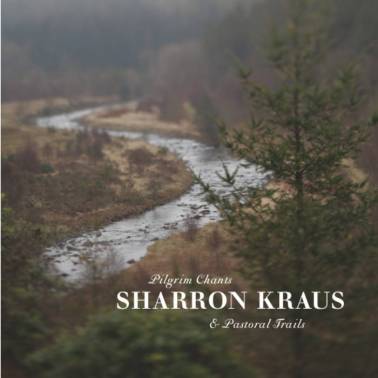
John Pilgrim: Your album Pilgrim Chants and Pastoral Trails has been described as inhabiting “an an eerie and wonderful world, somewhere between eisteddfod and witches’ sabbat” . and as being “suffused with a lovingly melancholic sense of place”. How did this album come about?


Sharron Kraus: I visited Mid Wales, after years of not having been back there and my heart swelled with love for the place. I drove up through the Elan Valley, stopping and walking here and there, and wherever I stopped I had a tantalising sense of there being music just out of earshot. I stayed with friends and told them how I was feeling and they diagnosed a case of ‘hiraeth’, which is a Welsh word meaning something like homesickness or deep longing for somewhere. I decided to move to Mid Wales and try to listen to the land and draw out its music. At the time I thought that what I was doing was only possible because of the ‘magic’ of the place, but the way of working that I developed – that kind of listening and opening up to the place – became something I could then apply to other things, working on different projects. Two collaborations I’ve worked on since then – one with poet Helen Tookey and one with writer Justin Hopper – have involved the same kind of ‘listening’ to the text and responding musically to it.


John Pilgrim: One of your songs is ‘Blodeuwedd’ which I am sure must derive from the Mabinogi – the earliest prose stories in Britain. Can you tell us more about your interest in this mythology?


Sharron Kraus: I read the Mabinogi whilst I was living in Wales and loved the fact that some of the settings in the stories were actual places around me – that made obvious the magic in the land I was living in. I found the stories confusing at first – they’re very condensed and seem to require unlocking – and my way in was through writing songs about the stories or characters I wanted to gain some understanding of. As well as Blodeuwedd, the woman conjured out of flowers, I wrote about Branwen, the Welsh princess who’s married to Matholwch, King of Ireland, and who trains a starling to take a message to her brother Bran in Wales,   Efnisien, the troublemaker who starts a war between the Welsh and Irish, kills his own nephew by throwing him in the fire, then redeems himself somewhat by sacrificing his life to save his countrymen. I was writing about the characters in the stories, but also about my own experiences living in Wales, and about eternal themes found in the stories – like the plight of the migrant forced to seek work in a foreign land.


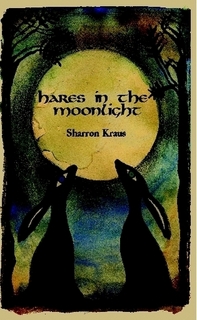
John Pilgrim: You have recently published ‘Hares in the Moonlight’, a tale of magic and adventure for readers aged 8 to 12, in the tradition of Alan Garner and Susan Cooper. What prompted you to follow this tradition in writing for this particular age group?
hares


Sharron Kraus: I wrote ‘Hares’ for children of good friends of mine and wrote a story I thought they would enjoy. I didn’t exactly decide to write in a tradition, but was influenced by the writers and stories I’d enjoyed as a child, including Garner and Cooper. I was keen to write about magic in a way that conveyed something true, which is what I think the best magical children’s writing does. I think this is something children’s fiction shares with folk horror: both of these things try to convey something of the mysteriousness, weirdness or magic of the world we live in.
John Pilgrim: You spoke on ‘Art as Alchemy’ at the ‘Psychoanalysis, Art and the Occult’ conference in London in 2016. Recognising that this is complex subject, can you say something about how you see art as a form of alchemy. How does this thinking apply to your artistic practice and day-to-day life?


Sharron Kraus: The basic idea is that through art we can take suffering, pain and darkness and transmute them into something golden. The way the crucible of creativity does this is one of the things I think of as true magic – not supernatural magic, but just our ability to take chaos and form something from it – the way we make something out of nothing. That’s a very short answer; for a fuller one, there’s a podcast of the talk I gave at that conference here: https://soundcloud.com/highbrowlowlife/sharron-kraus-ru-podcast.


John Pilgrim: Joy’s Reflection is Sorrow, your new album, will be released on Sunstone Records in June. What themes have you been exploring in this recording and what are the points of continuity and discontinuity with your previous work?


Sharron Kraus: Most of the songs on the new album were written in the year my Dad died, and the wider world started to edge its way towards darkness, so death and darkness are pretty central. The chorus of one song asks the question “What can we do when darkness falls; what can we do when evil calls?” and I think the album is my attempt to answer that question. I guess it’s a question that’s been there implicitly in my work for a long time but that came up to the surface on this one. Sonically this is probably the most poppy album I’ve recorded – kind of baroque-folk-pop. I think that’s partly due to my decision to try to write in standard tuning and using verse-chorus song structures more than I’d normally do. Maybe it’s also partly because the world got darker and I wanted to add some light.

14724361_10154054580664211_434121861910531704_n


John Pilgrim: You will be playing at the Swansongs event at the Black Swan – a haunted medieval public house in York – on 12 May. What might people expect and do you think the venue might influence your performance?


Sharron Kraus: Playing in an atmospheric venue always adds something and the darker and spookier the better! I’ll be playing a mix of songs and semi-improvised instrumental pieces with Guy Whittaker joining me on drums and percussion. We may have a special guest with us and whip up some Rusalnaia magic too!

www.sharronkraus.com

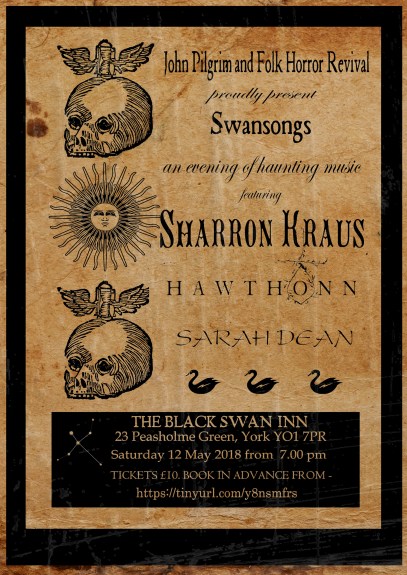
Sharron will playing at our Swansongs event at the Black Swan in York on May 12th alongside Hawthonn and Sarah Dean. To buy tickets for this intimate evening visit the link below, but remember tickets are very limited and we would advise pre-booking to ensure admission.

https://www.eventbrite.co.uk/e/swansongs-tickets-44059576379
swansongs

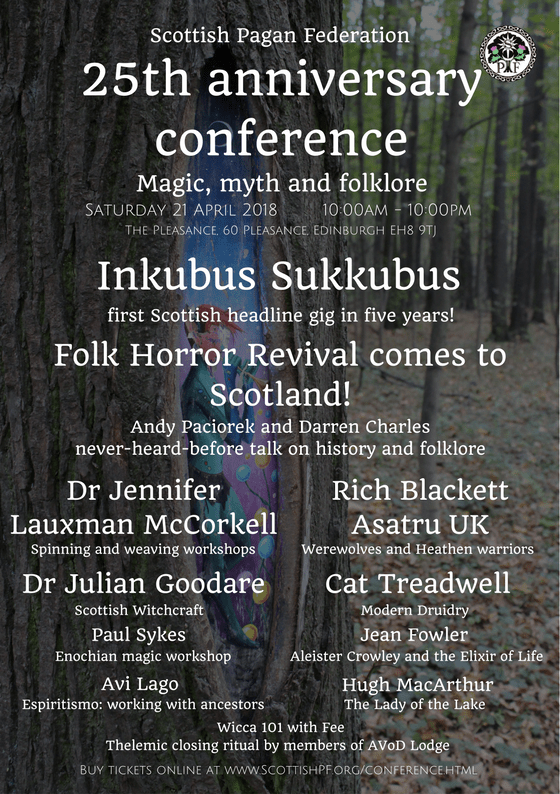
Folk Horror Revival at the Scottish Pagan Federation Conference 2018


29572787_1071870936285593_8849265059687862238_n

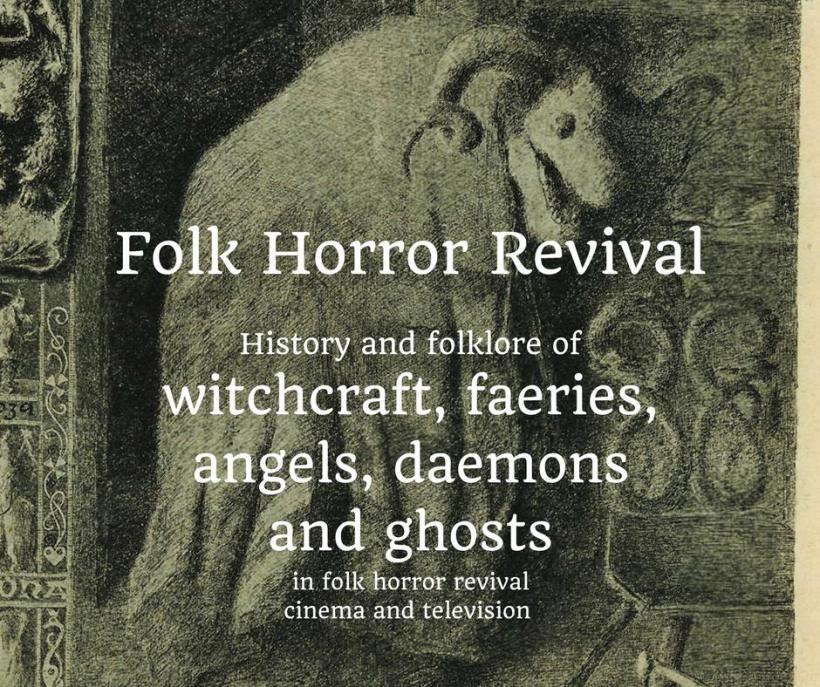
This weekend sees the 25th annual Scottish Pagan Federation Conference taking place in the beautiful city of Edinburgh. Andy Paciorek and I are immensely proud to be representing Folk Horror Revival on this most auspicious occasion. We will be presenting a brand new talk on ‘The History and Folklore of Witchcraft, Faeries, Angels, Daemons, Ghosts & Other Worlds in Folk Horror cinema and television’. The following should give you an idea of what to expect if you are coming along.


30727243_1084551371684216_8388084261182389757_n

 
The amazing Inkubus Sukkubus will be our evening entertainment. We expect loads of old favourites from their extensive discography, plus one or two from their new album!

We will delve into the world of Folk Horror Revival with Andy Paciorek and Darren Charles, our keynote speakers. They will present a never-been-heard-before talk on the history and folklore of witchcraft, faeries, angels, daemons, an ghosts in relation to folk horror revival cinema and television. It’s absolutely fantastic we can bring them to Scotland and we are sure everyone will want to hear what they have to say on this amazing topic.

Rich Blackett – Chair of Asatru UK and part of Folk Horror Revival – will give an amazing insight into werewolves, wolf cults and Heathen warriors. A feast of magic and folklore.

The magnificently open Cat Treadwell will talk about being a modern Druid as well as being a Pagan and living with depression. A really insightful discussion to be had!

We’ll also explore Aleister Crowley and the Elixir of Life as Jean Fowler, Pagan Celebrant and Edinburgh University Honorary Chaplain, presents her research on the topic.

Spin some magick with Dr Jennifer Lauxman McCorkell, expert in wool and metalwork, with two unique workshops – hand spinning and weaving – both limited numbers!

An exploration of everyday Enochian magic is the focus of a much anticipated workshop by Paul Sykes. Paul will reveal the work of John Dee and Edward Kelly as they unveiled the angelic language and made contact with the Angelic realm.

Having explored Voodoo, western mysticism and traditional witchcraft, to name but a few, Avi Lago will take us through a workshop on Espiritismo: working with the ancestors.

Hear about the King of the Scots, King Arthur, with an thrilling talk by Glaswegian historian Hugh MacArthur, who has spent many years studying the roots of the legendary king.

If you’ve ever wanted to talk with two experienced Wiccans, here is your chance. Fee and Jon will facilitate this fascinating open discussion group.

Members of Midlothian AVoD Lodge will lead everyone in a Thelemic ritual for this year’s closing ritual; a first for the SPF conference and one we hope everyone enjoys experiencing.

From inspring talks, interactive workshops, open discussions and spectacular evening entertainment, we’ve got a brilliant day out in the heart of Edinburgh.

Avanced tickets will close on Wednesday 18 April 2018 at 11:59pm.

Advanced adult all-day (evening included) tickets: £15 per SPF or affiliate PF member or £20 per person (non-member).

*NEW* Advanced teen tickets: £8 per teen (must be aged 12 to 17 years-old and accompanied by parent/guardian/carer with valid all-day conference ticket).

Advanced evening (gig only) tickets: £8 per person.

Tickets are still available from the link below.

http://www.scottishpf.org/conference.html

Hawthonn Interviewed

Phil and Layla from Hawthonn have just released a critically acclaimed album ‘Red Goddess: Of this Men Shall Know Nothing’ on Ba Da Bing records. They will also be appearing at our Folk Horror Revival event, Swansongs which takes place in York on May 12th at the Black Swan. John Pilgrim caught up with Phil and Layla for a chat about the new album, their influences and what we can expect from the upcoming gig.

hawthonn

Your new album is Red Goddess: Of this Men Shall Know Nothing. Who is the Red Goddess and what is it that men shall know nothing of?   What clues does the album provide in these respects?


Phil: For a long time the new album didn’t really have a title. We had a lot of themes that we touched on: mugwort (‘In Mighty Revelation’), menstruation (‘Lady of the Flood’), hysteria (‘Eden’), the post-mortem exploitation of women’s bodies (‘Misandrist’), and dream… all things which I suppose could be considered as relating to the feminine experience. Originally I’d given the album the working title Flood, but I don’t think either of us were 100% happy with that…


Layla: We had been reading several books around the time we were working on the album, particularly Penelope Shuttle and Peter Redgrove’s The Wise Wound, which had a lot of invaluable knowledge on the sacred feminine and many jumping off points for inspiration, and also Peter Grey’s The Red Goddess, which explores his vision of Babalon: the Scarlet Woman, or Mother of Abominations – a goddess found in Thelemic mysticism. The idea that she represents earth and sexual impulse made her a fitting matron deity for this set of recordings.


Phil had also found a painting by Max Ernst called Of This Men Shall Know Nothing, which in the early stages of designing the album cover he had wanted to recreate in tableaux. The final cover photo by Narikka contained some coincidental resonances to the Ernst image, and the title of the painting seemed to echo concepts within the album of feminine wildness, and the perceived unknowableness of the female nature.


Phil: The Ernst picture has also been interpreted as depicting sexual alchemy, which also ties in with much of Peter Grey’s writing on Babalon and the goddess’ connection to sexual magic and the three ‘Fs’: f(e)asting, flagellation and fucking!


Red Goddess has already been critically acclaimed. Ben Chasny, of Six Organs of Admittance, had this to say:


    “Hawthonn is the real deal. Equally adept at transcribing crow calls into musical scales as they are at creating horizon melting atmospheres, Red Goddess raises the bar for musicians interested in composing straight from the creative imagination. For fans of Jocelyn Godwin, John Dee and Folk Horror as much as the darker spectrum of British music, this is a record of staggering breadth.”


Following on from this, here, can you say something on how you went about composing Red Goddess and the role of  the creative imagination in this project? How did the experience develop your theory and practise of the creative process more generally?


Phil: I think imagination and creativity are inextricably linked. Many of our favourite artists and poets place great emphasis on imagination, reverie and sudden illumination. Of course, that doesn’t mean there’s not a lot of hard work to do in bringing these visions to fruition, but it is the imaginative aspects that dominate their experience and make the whole enterprise worthwhile. There are often equal amounts of technique and imaginative work going on in a piece – and, as in poetry, we often try to bring disparate symbols together into a whole. Layla’s work on ‘In Mighty Revelation’ really worked well in this respect: she brought together sounds recorded at an abandoned cooling tower with a recording of Rin’dzin Pamo’s thighbone trumpet blasts (- using an instrument anointed with her menstrual blood -), which evokes a very interesting sonic atmosphere and attendant mental imagery: a decaying post-industrial temple, open to the stars (- as we recently discovered were the ancient Indian temples of the cult of the Yoginis, female tantric deities -), and the sort of space where edgeland herbs blossom: in particular mugwort, which rather became our ‘vegetable ally’ for this album (our previous collaborations having explored hawthorn and yew!). Conjuring mental spaces to accompany the sound – and continuing to explore them through the ongoing process of producing the music – is a very important part of our practice, but only one amongst a whole other lot of imaginative and creative techniques we use!


Layla: Dreams, for example, have been integral to the creative process for Hawthonn from the start and continue to be so. The latest track we’ve been working on is conceived around a dream I had recently that I was reading a grimoire of Andrew Chumbley’s, whilst a portrait of him next to me began to shapeshift into a demon. The dream sound/landscape was incredibly vivid and evoking those sounds, feelings and thoughts again has made it a compelling project on both a creative and imaginative level.


The cover image for the album is powerfully striking.  How did this come about? What was the location and what was its significance to you? 


Layla: The cover image came about due to a set of lucky coincidences/syncronicities, I had followed a photographer, Aki Pitkänen, alias Narikka, on Tumblr after a friend of mine posted a pagan/magic themed set of his. I thought his work was exceptional, so showed it to Phil.


Phil looked him up on Facebook and that same day Aki had posted to say he was looking for collaborators/models to work with in our home town of Leeds the following month. We got in touch and found we had a lot of shared interests, and agreed to take him up on Ilkley moor as apparently they have no moors in his home country of Finland and he’d always wanted to shoot on one!


A friend very kindly drove us all up to Whetstone Gate, and as I still didn’t really know what Aki wanted as a backdrop I had planned a walking route to take him to various antiquities that held personal significance to us… but ultimately Aki just wanted “bleak” as the backdrop so most of the photos he took of us are from a particularly desolate spot near the Badger stone, overlooking a huge barrow that most people don’t even know is there.


We had a few hours of larking around with skulls before the proper Yorkshire weather hit us, and then I was extremely glad to be wearing a thick wool cloak! He sent us that shot almost immediately when we got home and we knew right away that one of them was the cover, which we had been stuck on for a couple of months.


Both of us have a long love and personal connection with Ilkley moor so it seems doubly fitting that the cover was shot there – Phil recorded some of his earlier music as Xenis Emputae Travelling Band on the moor and we have spent many hours wandering there together. It’s especially wonderful in the mist, when the edges of the real world are completely erased and all you can see are the soft curves of land in front of you. It’s a beautiful, liminal landscape that can become quite frightening after dark!


As  a duo of ‘Mugwort-smoking surburban witches’ in what ways do you seek to connect with the ‘old ways’ and the hidden currents of Old Albion ?


Layla: I think we both have quite vivid, mystic connections with landscape. Our relationship with the world we inhabit both on a physical and imaginal level is essential to both our personal practices and our music. We don’t try and claim any tradition. Although Traditional Witchcraft has been a source of inspiration at times, we are more interested in the poetic relevance of the landscape and it’s past inhabitants: a palimpsest of activity and meaning, which we unearth and interpret in our own way. The place where we live is rich in Romano-Celtic history so we have made dedication to, and drawn inspiration from, an Iron age shrine in the woods and a sacred river that flows nearby. The two deities associated with them – Cocidius and Verbeia – have formed a god/goddess duality in our personal mythos, which has become a particular backdrop to our more recent music.


Phil: Cocidius and Verbeia are very much deities embedded in our northern landscape, and they derive their names from the meetings of two cultures: Roman and Celtic. In some ways, thinking deeply about this – and the political climate of our time – has forced us to revise our thoughts on religious syncretism and the bugbear of cultural appropriation. We want to distance ourselves from the idea of pantheons being nationalistic and tied up with rigid ideas of cultural identity, which have become increasingly toxic. We emphasise the highly syncretic nature of religion in the ancient world as a potential alternative, and one that does not dilute the power and individuality of deities by reducing them simply to interchangeable masks of pop-Jungian archetypes. On our track ‘Lady of the Flood’, we borrowed from the Graeco-Egyptian magical papyri, which are masterpieces of heady magical lore and symbolism, incorporating fragments of ancient Egyptian ceremonialism, Greek mythology and Gnostic cosmology into something that more visceral and powerful than its component parts.  In some ways, it is the Roman presence in England that also connects us to Egypt, and I find it fascinating that the English witch Andrew Chumbley incorporated so much Egyptian lore into his ‘Sabbatic Craft’, which at first glance seems very much rooted in the British landscape, but again yields work that is highly eclectic, but utterly spellbinding and aesthetically ravishing in its execution.


You are clearly fascinated by occult thinkers and writers from previous centuries such as  Heinrich Cornelius Agrippa and Dr John Dee. Do you see a contemporary relevance to such  figures?


Phil: I think Dee is most relevant to my solo work, such as Hesperian Garden, which features compositions drawn from his Hieroglyphic Monad: a glyph which he believed had profound implications for all arts and sciences. I do find it quite funny how such an establishment figure – a courtier and member of England’s elite – has become such a countercultural hero, although there is no denying that he was a deep and eccentric genius.  Agrippa, similarly, is a rather profound inspiration personally, but in Hawthonn we often concentrate on the works of more contemporary occultists and artists: John Balance, Andrew Chumbley, Peter Grey & Alkistis Dimech, Penelope Shuttle & Peter Redgrove, and so on. I think my own work can be quite cerebral and uncompromising sometimes, often with quite dense swathes of sleeve-notes or accompanying texts, but with Hawthonn we strive toward something more direct and relevant to the present.


You will be playing at ‘Swansongs’ at the Black Swan in York on 12 May. What can people expect from your performance?


Phil: The three Fs! Haha, only joking…


Layla: I was so nervous but dead-set that we’d play live this year, the first gig was an absolute joy to do, so I’m hoping the York gig will be equally transcendentally fun! Ritual elements, death whistle, singing bowl, synths and bone rattles… I hope it’s a little bit spooky and we can coax the resident ghost out for a duet.


Phil: Hah, in that case, we definitely have to re-use the Spiricom frequencies that we used in our first album. After that particular recording session, our infant son woke up sat on our bed babbling excitedly to thin air! We managed to record that and include on our track ‘Thanatopsis’! I hope that whatever happens, it will be a mesmerising and sonically engaging experience even for those who don’t buy into the occult side of things!


Lastly, can you tell us something amusing that has happened while working together recently as Hawthonn?


Phil: Well, we’re often quite serious when it comes to Hawthonn and how we go about working on these pieces. They are often entwined in our interests, obsessions, dreams etc, and we have quite critical listening sessions while each piece develops. Sparks often fly, but that process definitely enhances the quality of our output tenfold. Our friend Gretchen (of the noise rock band Guttersnipe) said she imagined us working together in perfect hippyish harmony – but our ‘studio’ is definitely an infernal forge, and what we create there is far more robust for it!


However, one amusing thing that did happen was when we decided to make a kangling, or thighbone trumpet, which is an important tool in chöd rituals of Tibetan Buddhism, which involve the use of fear to cut through the ego. Being made of a human thighbone, the kangling has a unique, utterly unnerving and haunting sound. We were very interested in making our own, and a friend of ours told us that he had some human bones from a medical skeleton that had been given to him by someone else who felt uneasy keeping them around. So, we gathered all the material, including dust masks, hacksaws, knitting needle (for poking through the marrow), and so on. I took the bone outside to cut it, and sat with it for a while, sombrely meditating on death and thanking the original donor from which it came.


As I began to saw the top end off, however, it became apparent something wasn’t right. The bone was too hard… and solid. It turned out to be a very convincing plastic cast! At that point, it seemed like the universe was having a cosmic joke at my expense, and the solemnity of the occasion was undermined somewhat! It was even more amusing to think of our friends respectfully transporting these bones from flat to flat as they moved around Leeds, completely oblivious to the fact that they had never been part of a living thing!


Wow… we probably sound like a right pair of ghouls!

You can listen/buy Red Goddess: Of this Men Shall Know Nothing here.

Swansongs takes place on May 12th at the Black Swan, York featuring live performances from Sharron Kraus, the aforementioned Hawthonn and Sarah Dean. Tickets are available from the following link.

https://www.eventbrite.co.uk/e/swansongs-tickets-44059576379
 

The Devil and the Universe (Live) – The Church of the Goat

The Devil and the Universe – The Church of the Goat

by Jim Peters

(this is an excerpt from an article that will feature in Harvest Hymns (Volume 2: Sweet Fruits)

It began with two cards selected from the 78-piece tarot card-set as utilised by the most famous occultist of the 20th century Aleister Crowley. ”The Devil” and “The Universe” were the cards pulled that would prophesize a name for a musical-magical-transcendental composition and transformation project…..

Ashley Dayour – (instruments and voice), David Pfister – (instruments and field recordings) and Stefan Elsbacher (percussion) set out to create music from magical systems. Their aim was to give up their musical creativity and allow the legitimacy of magic and religious mechanisms form musical rules. The process and its system dictated and created not just phonetic anarchy but also examples of sound perfection.

With this as their mission and the influence of Crowley’s tarot The Devil and the Universe were born. Using their transcendental music design and occult and religious iconography as inspiration they combined and reinterpreted these elements and influences to create a variety of musical offerings from Space Disco, Psychedelic Glam, Synth Pop, new wave and Black Metal. There is one musical style however that is very much The Devil and the Universe’s own and it is one they have christened `Goat-Wave’.

Watching The Devil and the Universe live is when all the various influences come into their own and combine to create a magical experience. I don’t mean that in a Disney way (there are no enchanted castles and princesses here!) but in a truly occult sense of the word.

The scene is set with images and film clips showing various robed figured in goat masks connecting with the landscape – communing and seeming taking inspiration from the sepia tinged rural landscape they roam across.

First to enter the Church of the Goat is Stefan (although you wouldn’t know it was him under his robe and mask) and he immediately starts pounding out a tribal rhythm as if to call the audience together – to get us all breathing, swaying and hearts beating in unison to one hypnotic beat.

Next David – once again fully robed and goated up – joins the swirling mist on stage and seems to merge with the visuals before joining in the rhythmic pulse. By now samples, field recordings and synth swathes envelop the audience entrancing them further as Ashley joins the others completing the Unholy Trinity. All three add to the growing sonic conjuration with the most unlikely of instruments – the wooden football rattle. Building the intensity until every person in the room – themselves included – is well and truly under the spell of The Church of the Goat.

There is no let up. Even when there is a change in pace or style or when new instruments are brought into the mix there is no pause between tracks – no chance to break the spell. The whole experience is built around that tribal primeval rhythm – it hypnotises, seduces, entrances and completely captivates the audience and when all three on stage become robed silhouettes pounding against the backdrop of creeping visuals the effect is magnificent. It is a shared experience – all those called to worship at the Church of the Goat do so as one.

The John Carpenter-esque synths, crunching guitars, perfectly chosen samples and field recordings – plus an array of percussive instruments – all play their part in the sonic alchemy but it is so much more than that. What makes The Devil and the Universe such an unmissable live experience is the sum of many parts – the music, the robes, the masks, the visuals, the lights, the audience and the rhythm….that never ending rhythm….the rhythm of the Universe…and The Devil.

(THE DEVIL & THE UNIVERSE)

Swansongs

swansongs.jpg

John Pilgrim and Folk Horror Revival proudly present ‘Swansongs’, an evening of haunting music at the Black Swan Inn, York featuring Sharron Krauss, Hawthonn and Sarah Dean.

front_cover.jpg

Sharron Kraus is a singer of folk songs, a songwriter and multi-instrumentalist whose solo work and collaborations offer a dark and subversive take on traditional music. As well as drawing on the folk traditions of England and Appalachia, her music is influenced by gothic literature, surrealism, myth and magick. Her songs tell intricate tales of rootless souls, dark secrets and earthly joys, the lyrics plucked as sonorously as her acoustic guitar.

She has released six solo albums, the first of which, ‘Beautiful Twisted’, was named by Rolling Stone in their Critics’ Top Albums of 2002. As well as her solo work, Sharron has recorded an album of traditional songs – ‘Leaves From Off The Tree’ – with Meg Baird and Helena Espvall of Espers, written an album of songs to celebrate the seasons of the year – ‘Right Wantonly A-Mumming’ – which was recorded with some of England’s finest traditional folk singers including Jon Boden, Fay Hield and Ian Giles – as well as recording and performing as a duo – Rusalnaia – with Ex Reverie’s Gillian Chadwick, with Tara Burke (Fursaxa) as Tau Emerald and with Irish free-folk collective United Bible Studies.


cover1-sm

Hawthonn  are Mugwort-smoking suburban witches. Sinister wailing from abandoned cooling towers. New observatories for atomic occultism. Synth-haloed chanting from the caverns of the blood moon. Gnostic pentagrams and underground spectralism.

Nice me and harp

Sarah Dean aka The Incredible String Blonde, has been writing her own music and ‘noodling’ for years on various instruments, but only since 2007 has Sarah finally pulled all the years of performance as a singer and hours of practice together, to go solo and write and perform her own songs. 
It is the Celtic Harp that allows Sarah to create rich textures and atmospheres to the words and meaning of a song, taking listeners to another place with its magical and mesmeric soundscapes.   Peppered amongst her own self-penned songs are some surprising contemporary covers (the bluesy Man In The Long Black Coat, Pink Floyds’ atmospheric Grantchester Meadows, Walking On The Moon by The Police etc) and beautifully arranged traditional folk songs.  20 years of performing have given Sarah a relaxed and easy stage presence and audiences are treated to amusing anecdotes.

dcb36ce40345af8fdbe35870a62d6e57--the-black-swan-swans

Dating from the 15th century, The Black Swan Inn is a half-timbered pub with rooms is a block from the River Foss, a 10 minute walk from York Castle and a 5-10 minute walk from Jorvik Viking Centre.

Its traditional rooms all include en suite bathrooms and antique, 4-poster beds with rich draperies. Parking and breakfast are complimentary.

They boast a wood panelled restaurant with coffered ceilings and an open fireplace where we serve food daily, and two beer gardens where you can relax with a drink when the sun comes out.

Within this early 15th century merchant’s mansion various ghostly sightings have occurred.

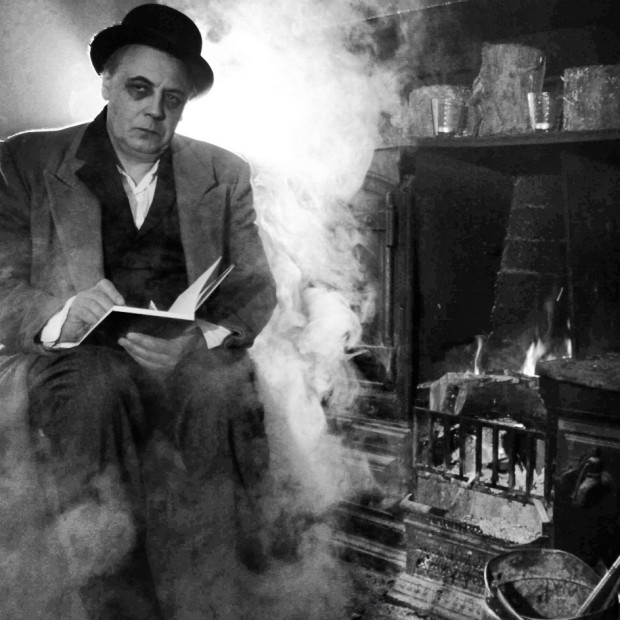
There is a ghost of the gentleman in a bowler hat who appears to be impatiently waiting for someone at the bar – eventually his apparition slowly fades away.

Another ghost can be seen sitting staring into the fire in the bar. It is the ghost of a particularly beautiful young woman thought to be a jilted bride. It is said that should a man stare into her face he will die in ecstasy.

There are several other ghosts who appear regularly. A small boy, known affectionately to the staff as Matthew, is frequently seen in the bar and passageway. He is dressed in Victorian style clothes and is reportedly a pickpocket, which might explain the disappearance of various items kept behind the bar.

A rumoured highwayman, who we know as Jack, appears regularly in the kitchen, dressed in riding boots and a long black cloak. Interestingly, the kitchen was built over the original stable yard. He can also be heard singing along to Irish folk songs in the corner of the bar late at night.

A less frequent ghostly visitor is a large black cat wandering around the pub. This ghost causes confusion among staff and frequent customers alike as it bears a strong resemblance to Salem, the pubs resident feline.

The chair by the fire is reputedly cursed and it is said that should anyone sit in it a curse will fall upon them. We recommend standing.

There have been regular sightings of a pair of legs disappearing up the stairs leading to the landlord’s flat. We believe the landlord may have to be legless himself to dare to sleep there!

In the main bar area there is a clay pipe mounted on the wall. This pipe was found during restoration work. It is said that the workmen threw it out and at that very moment a chill descended upon them. There was a moment of frozen fear until one of them went to retrieve the pipe, after which the chill lifted. The pipe will always remain in the pub for fear of high electricity bills.

The Black Swan Inn – 23 Peasholme Green, York YO1 7PR

Tickets for Swansongs are available now £10 + small booking fee from –
https://www.eventbrite.co.uk/e/swansongs-tickets-44059576379
Event is likely to sell out so please book soon to avoid disappointment.

logo


Lookee yonder ~ Wyrd Harvest Press 2018

whplogbw.jpg

2018 is already again a busy year for both Folk Horror Revival and Wyrd Harvest Press.
Lined up are talks at others’ events or media presences and again a fruitful focus of books.

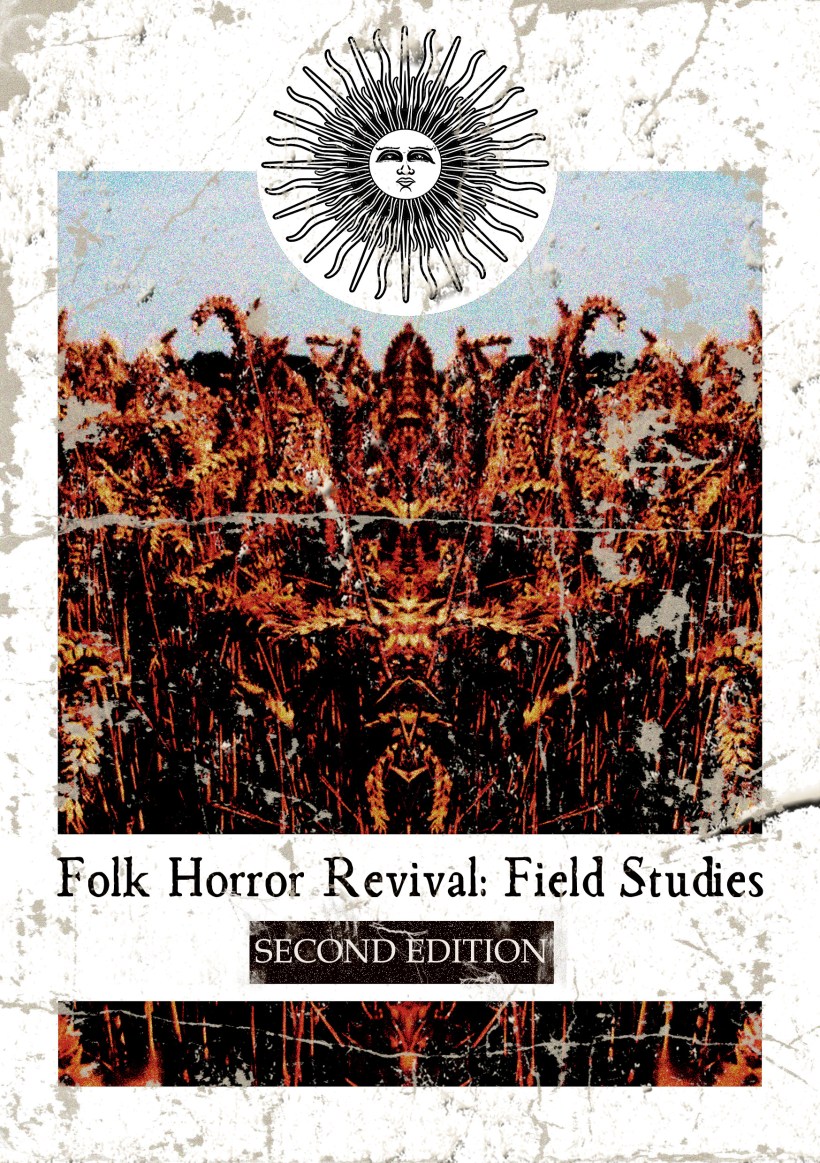
FS2E fc.jpg

Our first venture into publishing back in the winter of 2015, Folk Horror Revival: Field Studies was very much a cutting of teeth. Using multi-contributors from many a field close and far for inclusion in a charity book and testing out unfamiliar Print on Demand demands led it is safe to say a headache or ten … But we were left in our hands, somehow put together by a new and relatively unexperienced quantity a tome that featured amongst its pages , contributions by the likes of Philip Pullman, Robin Hardy, Alan Lee and also a cornucopia of interviews with or essays by a surge of new talent. Field Studies, I think it is fair to say, opened more eyes to the genre of folk horror and its revival. Furthermore, though its creators have not made a penny from it; conservation and biodiversity projects conducted by The Wildlife Trusts have benefited well from its presence.
It was not a perfect book however, as some reviewers fairly pointed out, there were some formatting issues which gave an uneven appearance. A minor complaint, but one we took note of …..sooooooo …. this year sees a Second Edition of Field Studies, which not only sees the design improved but also features numerous new interviews and essays featuring the talents for instance of Susan Cooper, Pat Mills and Ronald Hutton and themes such as cults in cinema, communications with the dead and the wolf in the rye, amongst others.
The original Field Studies is no longer available to buy from our book-store but a new, bigger and better version is coming soon.

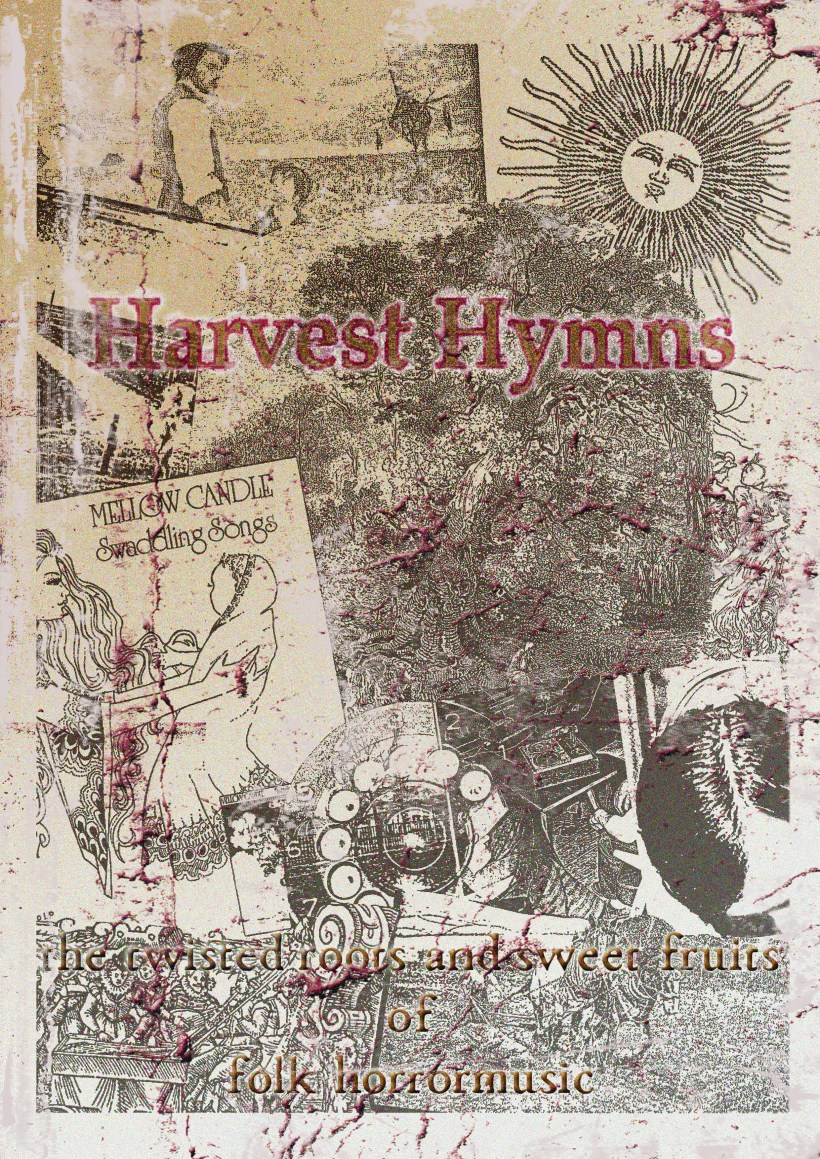
It will be followed by Harvest Hymns (a 2 volume extravaganza released simultaneously). Pieced together by the mysterious music-magician Melmoth the Wanderer, prepare to be treated to the sumptious tastes of the twisted roots and sweetest fruits of Folk Horror music. Delving first via essays and interviews, into a paganistic past of folk music, experimental electronics and witchy metal we are brought into the present of dark folk, drone and many other strange and wondrous aural delights.
HH cover.jpg

Also this year, we will bring to you a collection of contemporary ghost stories gathered by the author Paul Guernsey from a pool of talented haunted souls, whose nightmares have been illustrated by Andy Paciorek.
WILBUR2.jpg

Andy Paciorek has also been in cahoots again with professor and traditional storyteller Dr. Bob Curran to unearth the grisly tome that is The Wytch Hunters’ Manual.

cover.jpg

Also on the agenda and in progress for this year or beyond are Goddess – a volume brought to you by a female powerhouse delving into a wide variety of topics, The Choir Invisible, a book that deals with death in its varying shades of morbidity and beauty; and Urban Wyrd – a study into what happens when the harvest of folk horror and other strange fields, spills beyond the lines of town and country, both in place and mind.

whplogbwi

Peruse our existing titles at – http://www.lulu.com/spotlight/andypaciorek

100% of profits from FHR / Wyrd Harvest Press books sold in this store will be charitably donated at intervals to different environmental, wildlife and community projects undertaken by the Wildlife Trusts.

the twisted roots and sweetest fruits …


27783242_1522703837836452_32228011_n.jpg

From the foundation stones of Acid Folk and Child Ballads, Occult Rock and the Blues to the influence of Folk Horror on TV and Film soundtracks, Hauntology and even mainstream Pop.

Harvest Hymns is a diverse and fascinating collection of articles, reviews and interviews with and from the likes of Jim Jupp, Maddy Prior, John Cameron, Jonny Trunk, Candia McKormack, Moon Wiring Club, Alison O’Donnell, The Soulless Party, Andrew Liles and Adam Scovell.

Untitled-1.jpg

Available soon from Wyrd Harvest Press – the publication wing of Folk Horror Revival

IMG_20180121_083911_382a

Images – Jim Peters & Grey Malkin

When Will The Wolves Howl ?” / ” Kiedy Wilki Zawyja ?” by Mzylkypop

This is an album which throbs, pulsates and yes, howls, with imaginative intensity.

When Will The Wolves Howl? provides the soundtrack of a chilling imagined future. England is surrounded by the Republics of Scotland and Wales. Albion is now ruled by a far right government that has come to power on a manifesto of forced repatriation. There is panic in the streets. Resistance is scattered as bands of immigrants, environmentalists and activists flee to the ‘wild space’ north of the border. Here they bind together as they hide away from the UKops who deploy witch drones to trap, imprison and deport them.

So far, so dystopian. However, while this album undoubtedly warps the dark currents of the present into the future in disturbing ways, this is a recording that delights the listener with the most vibrant musicianship. The soundscape is ever-changing, twisting and turning with dexterity in ways which bewitch and surprise. Analogue instrumentation, mostly drawn from Somerset’s collection of 1960s keyboards, effects and woodwind, is used throughout to provide distinctive and innovative instrumentation.

Three years in the making, When Will the Wolves Howl? is an album fermented to perfection. It is the brainchild of Michael Somerset, formerly of industrial funksters Clock DVA and Was (Not Was). Those Revivalists who were lucky enough to attend the FHR events at the British Museum in 2016 and the Hepworth Gallery, Wakefield in 2017, will most likely recall the striking performances delivered by Michael alongside The Consumptives and Mother Crow.

The album brings together a variety of other talented musicians on the Sheffield music scene, including I Monster, Simon Lewinski and several highly skilled drummers and bassists. Of particular note is the singer Sylwia Anna Drwal, whose vocal performance animates the whole recording with flair and sonic seduction. Given the subject of the album it is interesting to note that Sylvia is Polish and one might assume that the band’s name Mzylkypop is also of Eastern European derivation. However, this is not so as it is in fact a word which Somerset made up as a child to describe the ‘mischief maker’ in the Superman of DC Comics whose name was just a bunch of letters and symbols. As the strange uncertainties of 2018 begin to unfold, it is time that we allowed Mr Somerset and his fellow Mzylkypop mischief makers to entertain and protect us.

The howling has begun.

John Pilgrim

Holy Terrors: Film Review

Holy-Terrors-Arthur-Machen-2017-Derby-Film-Festival

In August 2017 via the pages of Fortean Times Magazine I first heard of the film Holy Terrors created by Mark Goodall and Julian Butler much to my delight and anxiety. Not only was it a movie featuring 6 weird tales of Arthur Machen but it was made in Whitby! Machen and Whitby – two things I cherish very dearly so I was very eager to see this film but also worried that it might be awful. (Those worries were happily unnecessary.)

Capture3

Also at the time we at Folk Horror Revival were organising the Winter Ghosts event for the following December in Whitby. I mentioned to our Events Manager, Darren Charles how the film could’ve been a good addition to our bill if it were not already fully booked. Then much to my surprise and delight, I received an email from the film director Mark Goodall, who had heard about our event and was wondering if we would like to screen Holy Terrors there. Would we?? Is a bear Catholic? Does the pope … Yes! We were interested!
Some jiggling around of schedule and the film was added to the bill and was indeed an atmospheric and beautiful end-piece to the event.

Before discussing the film further, just a short resume of Arthur Machen, for although his light is belatedly beginning to shine brighter, outside of certain horror fiction circles, he is still something of an unknown quantity to many folk.

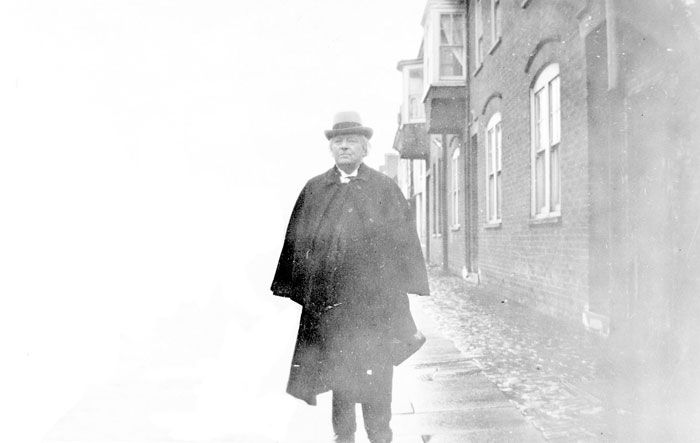
arthur-machen
Born in Wales in 1863, Machen’s career in weird fiction blossomed out of the Symbolist and Aesthetic fin de siècle of the 1890’s. Like a number of other artists and writers of the era, Machen’s work was a curious brew of spirituality and decadence. Blending paganism and Christianity both in his work and in his own personal mysticism, born the son of an Anglican minister he was a member of the Hermetic Order of the Golden Dawn, but did not renounce his Christian faith. He therefore, in a sense, has an air of the notion of Celtic or Insular Christianity, whereby it has been suggested that some of the earliest priests of the Celtic Church were possibly former druids some of whom preferred to preach in the outside cathedral of nature than within a church; and that numerous acolytes of which were ascetic hermits that lived in remote quiet places. Oddly enough it is often claimed that the Synod of Whitby marked the official end of the Celtic Church. (The Synod of Whitby (664 A.D.) was a Northumbrian synod where King Oswiu of Northumbria ruled that his kingdom would calculate Easter and observe the monastic tonsure according to the customs of Rome, rather than the customs practised by Irish monks at Iona and its satellite institutions. The synod was summoned at Hilda’s double monastery of Streonshalh (Streanæshalch), later called Whitby Abbey.)

Machen was one of the early masters of weird fiction, particularly a faction of which, with his own use of folklore (notably the use of fairies not in their tiny twee Disneyfied forms but as the strange human sized people of old lore) and spirit of place, may now frequently be referred to as Folk Horror.
Those who cite Machen as an inspiration or to express enthusiasm for his work include figures as diverse as the writers H.P. Lovecraft, Jorge Luis Borges, Stephen King, Ramsay Campbell, Alan Moore, Iain Sinclair and Sir John Betjeman through to musicians such as Mark E. Smith, Belbury Poly and Current 93. Notorious occultist Aleister Crowley was a fan of Machen’s work but reputedly it was far from being reciprocated, with Machen having a personal dislike for the man.

2514055_1a383703_120x120
So how would Machen’s subtle strange tales translate to screen?
Holy Terrors slowly fades in to scenes of an empty shore and a desolate man. The hauntological soundscape of composer David Chatton Barker (Folklore Tapes) leads us to the body of a man beneath a bridge. Thus opens ‘A Cosy Room’ the first of the 6-weird tales of Arthur Machen. (Indeed, I can vouch it is a cosy room and one not devoid of otherly presence either as I recognised it straight away as a room that I myself have spent several nights in. In fact, after viewing Holy Terrors for the first time at Winter Ghosts, it was the room that I would return to sleep in that very night. The filming location for this segment was The Stoker Room of the cool and quirky hotel La Rosa in Whitby’s East Terrace. Overlooking a great view of Whitby Abbey and the harbour, the wonderful building-sized cabinet of curiosities that is La Rosa hotel has a plaque outside marking it as a place that author Charles Dodgson, aka Lewis Carroll of Wonderland fame amongst other things, stayed at several times. The Angel Hotel in New Quay Road is also suitably plaque-bearing as a residence where Machen stayed.)

The opening wordless narrative shot in atmospheric black and white marked in me the feeling that I was really going to like this film, but also mark it as a film that would not appeal to viewers who only like their horror visceral, fast and with a simple plot and conclusion. Like the tales of Machen, this film adaptation is steady, subtle, atmospheric and most often strange rather than horrific. Some of the tales do not build up to a definite explanation and conclusion but remain more as captures of a strange moment or sequence, rather like many reported real life anomalous experiences.

So, it is safe to say from the outset I could see that Holy Terrors will not be to all tastes but is deliciously to mine.

Capture4
We are then invited to taste The White Powder of the second tale. This is one of the Machen stories to have a more typical sense of narrative in that it follows an event to a solid culmination. It is a tale of both dread and decadence and has both the air of M.R. James ‘The Ash Tree and Kafka’s Metamorphosis but still remains essentially a Machen tale.
(an amusing synchronicity with the screening at Winter Ghosts was that the imbiber of the said White Powder of the film develops an odd black spot on his hand as an early symptom that something is amiss. The black spot very much resembled the black spot on the audience members’ hands that bore the blurred remains of the mark of the Folk Horror Revival sun symbol hand-stamp.)

The White Powder is a solidly told tale and it really brings forth the power of Goodall’s film-making. Relying strongly on an audio narration that bonds Machen completely with these new dreaming of his creations, the character that is etched within the faces, particularly the eyes of the actors in this film is a strong motif, that in its use becomes somewhat hypnotic. Another film-making skill that Goodall employs to great effect is making Whitby timeless; the use of soft focus, careful framing and light bleached backgrounds removes any trappings of modern life such as shopfront banners and so forth.

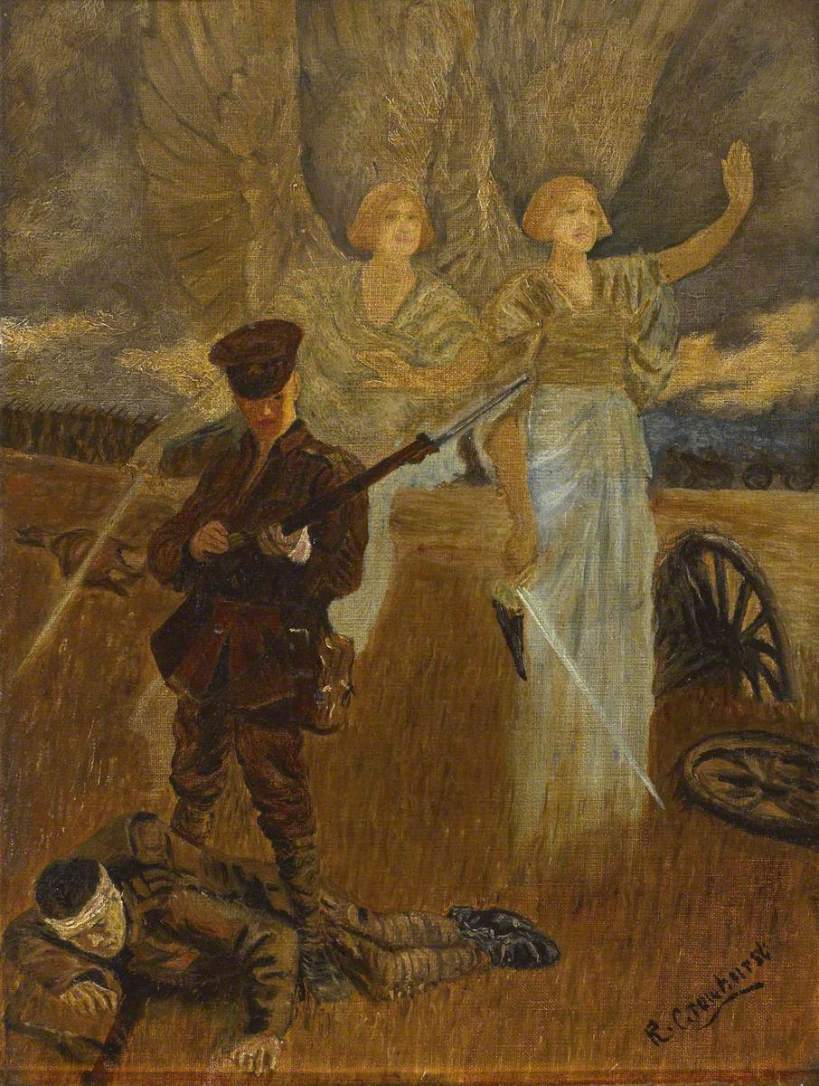
Crowhurst, R.; The Angel of Mons, c.1914
Crowhurst, R.; The Angel of Mons, c.1914; National Army Museum; http://www.artuk.org/artworks/the-angel-of-mons-c-1914-182603

The third tale is one of Machen’s most famous, not because it is his best work or most identifiable of his style but because it has been noted as being the possible origin of the Angels of Mons legend.  At the Battle of Mons on the French borders in 1914, it was claimed and published in the British Spiritualist magazine in 1915, that British soldiers were protected in battle by a host of Heavenly angels. However, in 1914 The Evening News newspaper had published Machen’s story The Bowmen, in which a battalion headed by Saint George intervenes in a conflict between World War I British and German forces.
Out of all the stories within the Holy Terrors film The Bowmen could have been the most problematic for a low budget production. By the effective use of old newsreels of wartime footage, Goodall skillfully conquers this problem and overall the artistry of the entire film does not give the slightest impression at all that it is not studio funded. The photography, editing and production is on the contrary not only skillful but beautiful.

The fourth segment of the portmanteau initiates us into the Ritual. It is however not a ritual of hooded or sky-clad figures in the depths of a wood or desecrated church but that of a playground game of schoolchildren. The simplicity of this has a deeply unsettling nature and again the actors of Holy Terrors deserve applause. To act without words uttered needs to tread a line between expression, subtlety and communicative skill lest it become exaggerated like a mime performance. Again, we find great casting is at work here, for the children have a look to them that would not see their faces out of place in antique Victorian or Edwardian photography.

Capture

The next tale, The Happy Children remains with the theme of strange youths. Unlike those in Ritual, there is a question arises as to whether these children are alive or even of human nature – a Celtic belief about Fairies is that they are spirits of the dead and the Happy Children indeed have an otherworldly sense to them. This segment again effectively uses the townscape of Whitby as a strange and beautiful filming location, and with good cause for this tale is set in Whitby. It is renamed Banwick but the tale is undeniably inspired by Machen’s visit to Whitby on a journalistic task to report on the town’s Jet industry. The story reveals Machen’s mystical sensitivity both of place and to the horrors of war. Whitby and other towns on the North Eastern English coast had been subject to wartime attack by the Germans and Machen’s reference also to the biblical slaughter of the innocents undertaken by Herod in his efforts to eliminate the infant messiah.
NGMA3_203_1024x1024

A phrase within the story describing Whitby as The Town of Magical Dream is a perfect description (it also is aptly used by Carolyn Waudby for her excellent essay on Whitby). The night after Winter Ghosts I walked Whitby’s streets and the pier and the 199 steps to Saint Mary’s Church and the Abbey, and it was not mere suggestion but there was a palpable otherness to the coastal town darkened save for the twinkling of Christmas lights. There was a definite presence, not unwelcoming for the most part save for the pool behind the abbey where I felt that I was not meant to proceed further so I didn’t and for a strange unsettling sensation in the Screaming Tunnel of the Khyber Pass. I know that I am far from being the only one to sense something strange in Whitby’s thin sea fretted air – Machen sensed the liminality as did Bram Stoker and Mark Goodall captures it in Holy Terrors as do Michael Smith and Maxy Neil Bianco in their atmospheric and poetic short film ~ Stranger on the Shore: Hounds of Whitby.

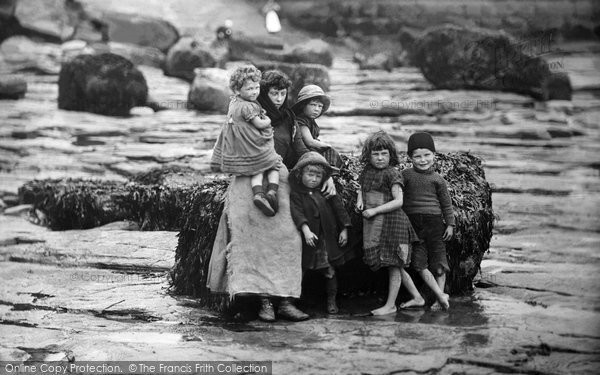
whitby-the-peart-children-1891_28866_large
Francis Frith: The Peart family. Whitby 1891

Holy Terrors concludes with Midsummer and for the first time, the effective ambient monochrome palette is replaced with colour; but this is the colour of hand-tinted antique photographs, the faded pastels of half-remembered dreams and half-forgotten memories. It is a fitting place to leave the darkness and step into the light, but minding always that they are integral to and part of each other.
And on this note we will depart this house of souls, with the conclusion that whilst Holy Terrors may not suit the constitution of all, it is a film that has found its way under my skin and into my head and heart and for it its understated beauty and mesmeric invocations, it is something I feel that has touched me deeply. When I first read about this film with my mingled feelings of trepidation and tantalisation, I happily know now that I had nothing to worry about but happily a fair bit perhaps to fear.

22861689_1361936793929438_5666376929960203555_o

oj6qzdb614d5xqhacv9j

Holy Terrors DVD available here

Holy Terrors book available here

Review by Andy Paciorek

Unearthing Forgotten Horrors

This week’s Unearthing Forgotten Horrors radio show features fantastic new music from With the Dead, and Youngblood Supercult, alongside our very wonderful Viking Saga SoLA written and directed by Michael Somerset. Tonight’s episode is the second in the series and is called The Draugr.

25074771_1513101052073143_5310318142132584667_o

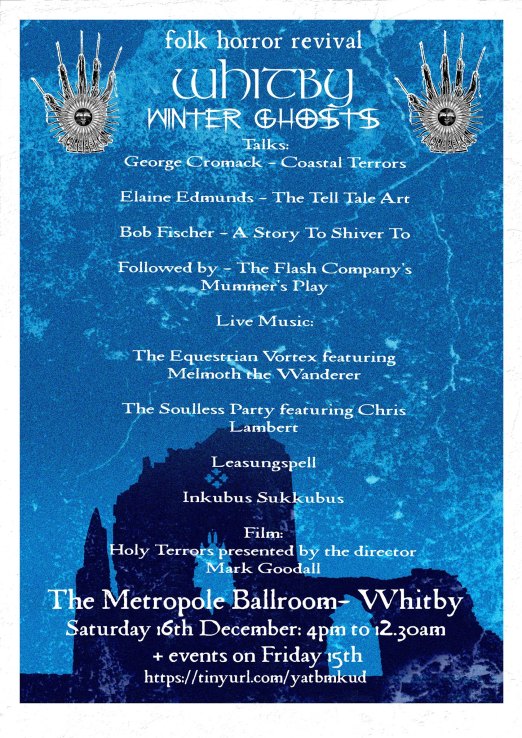
The second half of tonight’s show is dedicated to the bands playing at the Folk Horror Revival – Winter Ghosts event in Whitby across the weekend of December 15th – 16th, with tracks from The Equestrian Vortex, The Soulless Party, Leasungspell (which is to be performed for the final time) and the legendary Inkubus Sukkubus.

23631968_1493347840712637_815544203597014071_o

Join me tonight, Monday 11th December from 7pm UK time on a1radio.co.uk and we will head on down the rabbit hole together.

https://unearthingforgottenhorrorsblog.wordpress.com/

http://a1radio.co.uk/

https://www.eventbrite.co.uk/e/folk-horror-revival-presents-winter-ghosts-2017-tickets-34484492044