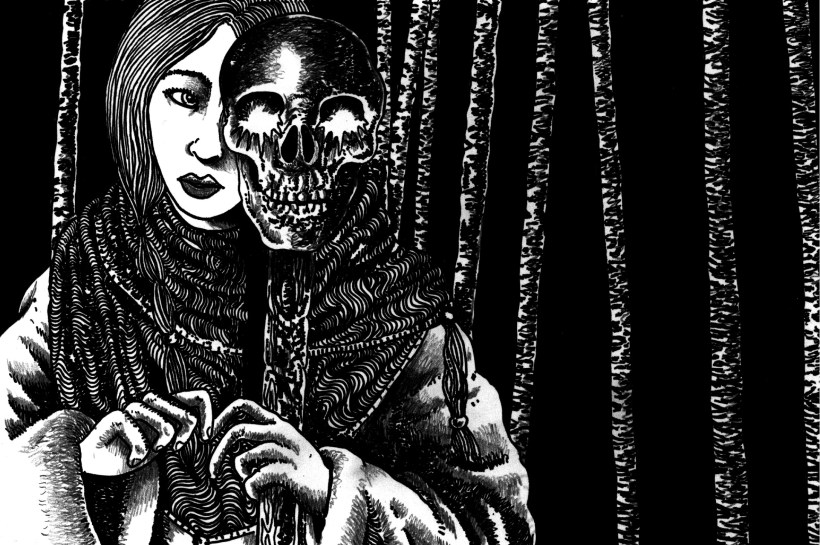
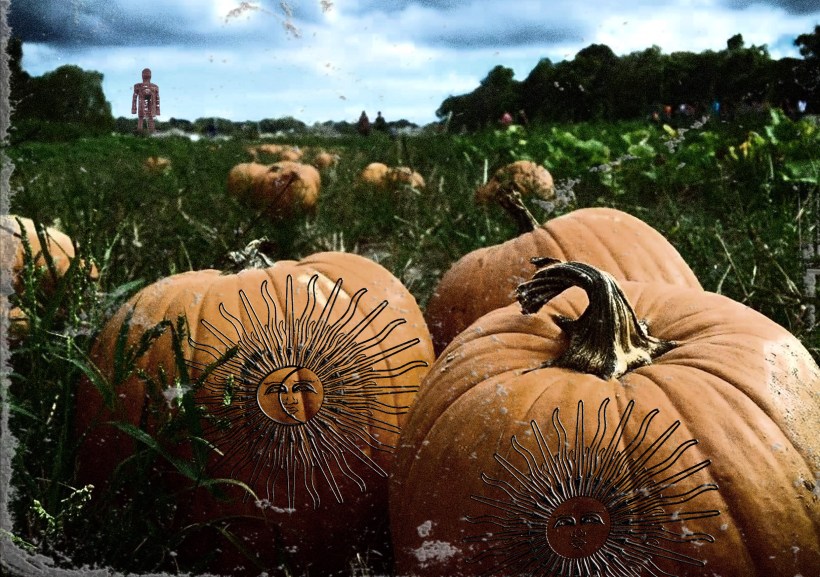
☕ ☀ Folk Horror Revival Mugs ☀ ☕

23805790_10155864059616948_980477774_n

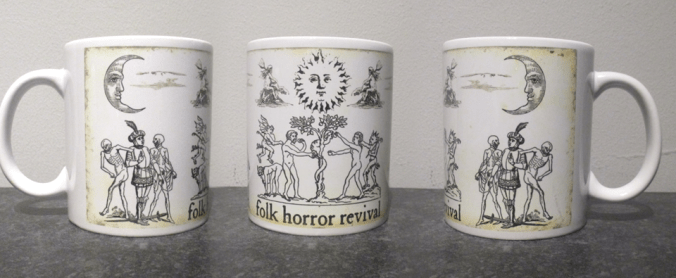
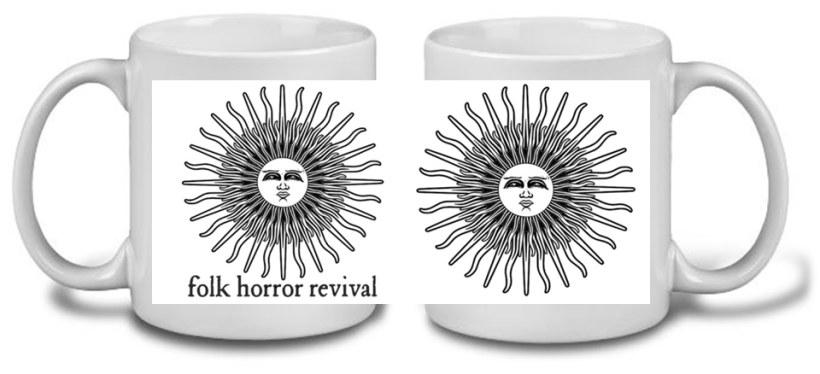
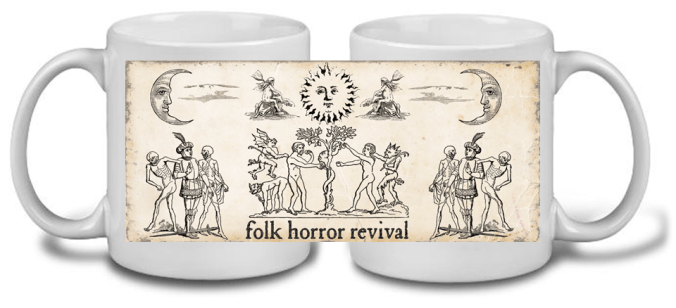
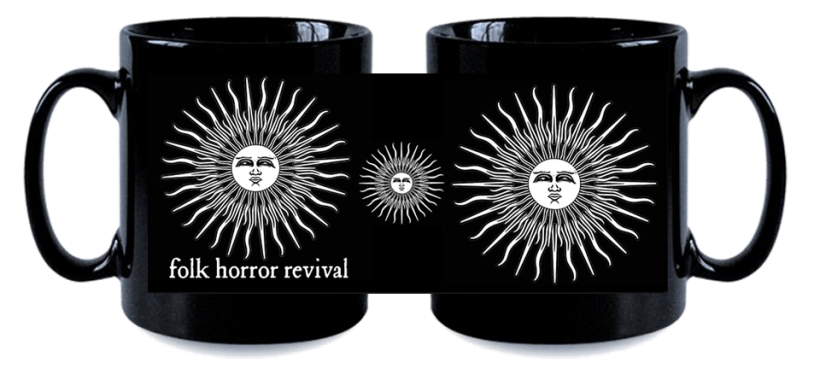
Folk Horror Revival and Midnight Mugs are happy to present a range of rather remarkable beverage utensils

To purchase these fine cups ~
Contact Steve via the Midnight Mugs Facebook Group

or email at stevie7771@hotmail.co.uk

or buy direct from E-bay on the links next to image

£8 each + postage & packaging per item for White mugs.

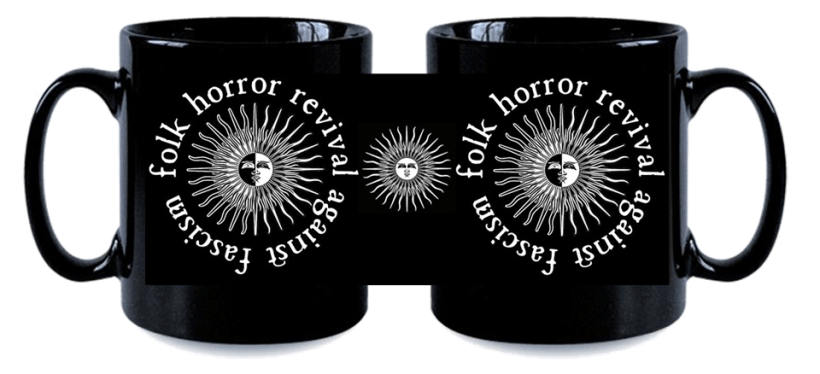
£9 each + postage & packaging per item for Black mugs.

Postage and Packaging –  £4.00 for up to 4 mugs in UK.

Check with Steve for overseas and quantity shipping costs.


classic white

Classic Folk Horror Revival : White Mug – https://www.ebay.co.uk/itm/362481284075

classic black

Classic Folk Horror Revival : Black Mug – https://www.ebay.co.uk/itm/362481285009

23721778_10155845818951948_2017156580_n

Folk Horror Revival: Olde Style White Mug – https://www.ebay.co.uk/itm/362351620172

FHR AF

Folk Horror Revival: Against Fascism Black Mug –  https://www.ebay.co.uk/itm/362481289073

~~~~~~~~~~~~~~~~~~~~~~~~~~~~~~~~~~~~~~~~~~~~~~~~~~~~~~~~~~~~~~~~~~~~~~~~~

With regard to the Folk Horror Revival Against Fascism design.
Folk Horror Revival ideally wanted to remain as apolitical as possible, but following threats and abuse received by a friend and associate  from individuals who were trying to appropriate her work and project name for xenophobic nationalistic purposes, in support to her we have decided to nail our flag to the mast and state our clear and solid opposition to ideologies, actions and individuals who express bigotry and hate towards others because of their race, religion, culture, gender, sexuality, physical health and identity.  Folk Horror Revival is Against Fascism!!
Folk Horror Revival is in support of celebrating the folklore, folk custom and costumes of all cultures – not  labeling such as  ‘horror’ or for exploitative cause but to display our appreciation of  and interest in different  cultural aesthetic expression and for educational and inspirational purposes.
Some of those who supported our stance have also expressed an interest in us producing merchandise sporting the Folk Horror Revival Against Fascism , so we have made mugs available – the sales proceeds of which will be put back into producing further Folk Horror Revival events and projects.

Note:

Sales profits from our books are charitably donated to the Wildlife Trusts.

Sales profits from other FHR merchandise go towards funding further live events and projects, not into our pockets.


#Folklore Thursday: Folk Magic – Horse Whisperers

https://i0.wp.com/www.batcow.co.uk/strangelands/images/sl%20images/135%20horse-whisperers%2B.JPG

Horse-Whisperers were far more common in the times when horses were more widely utilised for transportation, agriculture and industry. Some horses more than others are loath to be ridden and strongly resist being tamed. It is in these circumstances that Horse-Whisperers would come into their own. They were so named because they were believed able to calm and train wild horses by whispering into their ears (the Horseman’s Word). There have been suggestions that concoctions of certain aromatic herbs may have also been utilised in the soothing of equine temper and nervousness. Whatever their true methods, it could not be disputed that the Horse-Whisperers generally had an excellent and impressive record of breaking beasts. Onlookers and clients would often conclude that supernatural powers were afoot, a supposition that Horse Whisperers did little to dispel and may even have encouraged. Not just anyone could become a Horse-Whisperer however, for they guarded their prowess with the utmost secrecy. Elaborate Masonic-style initiation was the only way into the ranks in Scotland, and women were never made privy to the Horseman’s Word. Rumours spread that the introductory rites and the deliverance of knowledge involved the presence of the Devil himself. The form of Horse-Whisperers known as Toad-Men heightened this sinister notion further. Their name was derived from their habit of carrying the skeleton of a Toad around in a pouch, apparently as a magical device.

Image and text. © Andy Paciorek. Adapted from the book Strange Lands: A Field Guide to the Celtic Otherworld

View Strange Lands by Andrew L. Paciorek

Let’s Summon Demons

Let’s Summon Demons – folk horror theatre in old London Town – by Jim Peters

“Is it wise to ask the questions you always wanted to ask?
Let’s Summon Demons is a semi-immersive folk horror play in the round. It examines our attitudes to ritual, to revenge and to the uprising of female power. Can community lead to mob mentality? What are ghosts and demons and do they come from below or from within? If you stare into the abyss, can you come back?
Join our coven for one night to encounter comedy, folk horror and – perhaps – some demons.”
I am not big on immersive theatre and felt quite nervous walking up the narrow stair of the Old Red Lion Theatre however the minute I walked into the venue I felt very much at home. The air was thick with the heady scent of incense resin; the lighting was low and the haunting strains of `The Fiend Discovered’ from `The Blood on Satan’s Claw’ soundtrack greeted my ears – I felt that I was among my people.

The intimate setting was perfect for this production with the semi-circle tiers of wooden benches carrying echoes of Victorian Operating Theatres. Before the performance begun we were initiated as a part of the evening’s entertainment with learning lines from an ancient sounding song, generating a communal drone, having our measures taken and some of us (it felt like we were definitely an `us’) being selected to be guardians of summoning spells. I say `before the performance’ but this was all really very much a part of the show.

The scene was set – we had been invited to stay at an isolated guest house in the wilds of Wales that had once belonged to our host Rowan’s grandmother – Maggie. Through a series of light hearted conversations with the audience Rowan (a reference to Rowan Morrison from The Wicker Man possibly?) fills in the back story nicely and we find out that Maggie always thought the house haunted and in fact had a creepy experience one night alone in the house. We are gathered here to help mark the first year anniversary of the death of Rowan’s husband Allister’s (that other famous Allister – Mr Crowley – will give you a clue as to how this is likely to end up) and it also transpires that all the assembled (the audience) are witches, seers, cunning folk or occultists of some description…oh and we are all women!

This first act is charmingly presented by Katy Schutte with a thoroughly engaging and quirky style that puts the audience at ease whilst drawing them in and making them laugh – there is quite a lot of laughter in the early part of the performance as fortunes are told usingTasseography (the forgotten art of fortune telling using biscuits) and well informed comments on the nature of the dark arts are perfectly pitched and delivered. Then comes the second act…….

I won’t ruin your future enjoyment of `Let’s Summon Demons’ (although as with` The Wicker Man’ the title does give away a fair part of the plot) but I will say that it gets very dark very quickly in more ways than one. Suddenly the lights drop and we find ourselves part of a ritual that takes several unexpected turns and all joking is well and truly forgotten. It almost felt like we had gone from relaxed jovial participation into a descent that was so steep that we became unwilling observers gripping onto our seats as the sinister side of Rowan’s sisterhood was played out before us. With some neat call-backs (you really need to pay attention as even when being seemingly offhand and informal Katy is drip feeding us clues) and some very clever lighting tricks a violent and twisted tale unfolds – with the arrival of an unexpected guest who acts as a catalyst for the downward spiral. (Christian Walker played by Edmund Fargher)

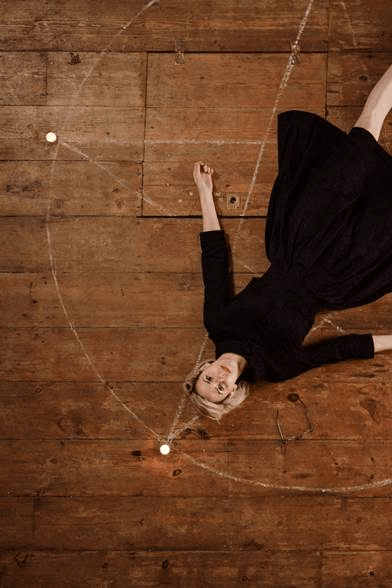
As previously mentioned the venue was a perfect match for the feel of the piece with its intimate, communal atmosphere and wooden floor which became an otherworldy canvas with the use of some very smart projections. Katy controlled the room expertly flipping from chummy to obsession bordering on possession and with good use made of some fantastic music that feeling of isolation, ritual and the paranoia of a skewed moral belief was always in the air….waiting for the Fiend to be discovered.
A dark descent into the moral maze of mob mentality and its justification for extreme polemic and behaviour……a witch hunt carried out by witches.

Folk Horror Revival was fortunate enough to be able to question Katy about her production (and herself) and find out a bit about the inspiration for `Let’s Summon Demons’

Folk Horror Revival – Firstly can you tell us a little about yourself – your background, how you ended up acting and writing and who has influenced you?

Katy Schutte – I studied Drama then fell hard into the cult of long form improvisation. So hard that I studied in Chicago, wrote a book about improv and that’s mostly what I do. I spent a few years on the stand-up circuit too but prefer to do full shows and I love to collaborate.

In comedy, I’ve always loved Bill Bailey, but I also adore writer/performers Tina Fey, Phoebe Waller Bridge and Rachel Bloom among others. For this show I was very inspired/influenced by Liam Gavin’s movie A Dark Song. It’s amazing.

FHR – Do you consider your work to fit into the Folk Horror genre and if so what is it about it that you feel fits that label?

KS – I was in a training coven in my early 20s, so it definitely influenced my real life! I’m quite Jungian in my beliefs though.

My current show is folk horror as there’s a strong Wiccan vein running through it, we actually enact a ritual and there’s also a social and religious commentary which is strong in my favourite folk horror movies.

I was researching witchcraft when I first came across the Wicker Man and it is so well pitched, accurate in terms of pagan ritual and belief and also scary and beautiful. There are a lot of elements that are not overtly called out or explained and I love that too.

FHR – Can you give an outline of the content and of what your show is about?

KS – The crux of my show is to address the a post-#metoo climate. Are we witch-hunting men? Should we? What does that mean? It’s set in a haunted Bed and Breakfast where Rowan – a practicing wiccan – has invited her female friends to join in a ritual marking her husband’s death one year after the fact.

FHR – Do you have a particular process (ritualistic or preparatory) when you are writing a show? Any way in which you get yourself in `the zone’ or work up ideas?

KS – Every show is different and there’s no one clear process. I certainly made sure I magickally protected the people collaborating on this one! Improv and just plain writing a first draft are useful ways to get started. A visit to Salem was inspiring too and my director John Henry Falle was amazing; especially getting me clear on the Lore of my show.

FHR – So what is next?

KS – I’m going on a three month walk through New Zealand, so although I have a lot of ideas, I’ll be letting them stew while I put one foot in front of the other…

FHR – And finally do you have any particular shows that have left an impression on you (not necessarily Folk Horror) – and can you say a few brief words about it/them?

KS – There is a company called Curious Directive that combine science fiction with science. Their show Pioneer was stunning and I’ve loved other works I’ve seen by them since. It’s powerful, makes you ask questions and beautifully conceived.

I think it is fair to say that there will be many folk who have been lucky enough to have seen Katy in `Let’s Summon Demons’ who would include it in their list of shows that have left an impression on them. Witty, twisted, sharply written and well informed if `Let’s Summon Demons’ comes around again we will be sure to let you know and I highly recommend you make sure you get a ticket.

( http://www.katyschutte.co.uk/ )
The Dark Masters Trilogy, A Review

Dark-Masters-Trilogy_Cover-IMAGE-216x300

The Dark Masters Trilogy comprise of a trio of novellas from acclaimed horror writer Stephen Volk, a member of the select group of Welsh writers alongside Arthur Machen, whose work is held in the highest esteem within horror circles. Volk is most famous for his scriptwriting work on Ken Russell’s Gothic, and above all else the BBC drama Ghostwatch.

The Dark Masters Trilogy brings together three novellas, Whitstable, Leytonstone and Netherwood as a trio of dark tales of fiction constructed around a quartet of celebrated horror and occult figures from the 20th Century’s cultural past. Hammer legend Peter Cushing takes the lead role in Whitstable, a juvenile Alfred Hitchcock in Leytonstone and we get a twofer in Netherwood with both horror novelist Dennis Wheatley and Occultist Aleister Crowley squaring up to one another.

stephen volk

Whitstable is up first. This is a story about the darker side of the 1970s that takes place in Peter Cushing’s beloved Whitstable in the period directly after the death of his much cherished wife, Helen. The story itself features some wonderfully written characters, and an interesting and well developed plot, however the real genius here is Volk’s touching portrayal of Cushing at this most difficult time in his life. The whole novella revolves around his incredible portrait of the horror legend as a broken man, the loss of his soul mate had rendered him a physical and mental wreck until a chance encounter with a young boy who mistakes him for the character he portrays on screen, the vampire hunter Dr Van Helsing. This leads to Cushing undertaking the role of investigator, delving into a crime that has been committed against the young boy, and saving himself at the same time.

Leytonstone is a story based on the childhood of Alfred Hitchcock that examines the roots of his fascination with crime and punishment, the two factors that form the basis for much of his cinematic output. The story begins with the young Hitchcock incarcerated in a police cell for a crime he did not commit. His Father had him locked up for a night to teach him a lesson. This inspires the young Fred as he was known to further investigate these ideas of crime and punishment with severe repercussions for those involved.  Once again this is beautifully written, Volk once again highlighting his incredible turn of phrase and attention to detail, as well as his incredible knack for writing wholly believable characters. Despite much of this story being fictional you feel as though you are delving into the mind of the real Hitchcock, such is Stephen Volk’s incredible talent for writing character.

Netherwood is the final entry in the trilogy. Volk imagines a meeting between two of the most important figures in the Twentieth Century occult world, Dennis Wheatley and Aleister Crowley. Once again Stephen Volk has created a truly believable work of fiction by rooting it in facts. An aging Crowley requests the presence of Wheatley at Netherwood, the guest house in Hastings that was to be Crowley’s last resort. A visibly sick and dying Crowley requests Wheatleys assistance to complete one one final magickal working before his death. The interplay between the two men who never actually met in real life is excellent and you really do get the sense that this is exactly how these events would have  played out had they actually happened. This is of course Stephen Volk’s greatest achievement, his characters are so well researched and developed that he almost instinctively knows how they would behave in almost any scenario. A rare commodity indeed and one that should be cherished.

The Dark Masters Trilogy is a triumph, a beautifully written volume that takes the Twentieth Century’s most infamous practitioners of horror and the dark arts and places them into new scenarios. Stephen Volk has written three fictional tales, that are so believable as to be future urban legends, such is the power of his writing, the great attention to detail, and his knowledge of the history of horror and the occult. You simply can’t imagine these stories having the same impact in anyone else’s hands. Each tale having its roots in fact provides a strong base for Volk’s writing, whether this is Cushing’s sad loss, Hitchcock’s incarceration, or Crowley’s final days at Netherwood.

As many of you will already be aware, Stephen Volk is a visionary writer in the field of horror and these novellas are a very strong addition to an already richly acclaimed career. I simply cannot recommend these tales highly enough.

the-dark-masters-trilogy-hardcover-by-stephen-volk-choose-your-edition-unsigned-j-[2]-4697-1-p

The Dark Masters Trilogy is published by PS Publishing and is available to order from their website now at the link below.

https://www.pspublishing.co.uk/the-dark-masters-trilogy–hardcover-by-stephen-volk-4696-p.asp


The Sermon – available to view online now.

45218057_10156029119256867_4328963070249402368_n

The rather wonderful Folk Horror short, The Sermon from director Dean Puckett is now available to view online. This fabulous short film deals with issues that arise from the question of a young woman’s sexuality in a small rural English village. The film is both thought provoking and beautifully shot on 35mm film in deepest darkest Dartmoor. Puckett uses the British landscape to great effect in this near 12 minute masterpiece. Don’t just take my word for it, view the film yourself from the link below.

Director Dean Puckett cut his teeth making documentary films, the most recent of which was released in 2013, Grasp the Nettle highlights the exploits of a group of land rights activists who battle to set up alternative communities in Britain. The Sermon is his second fiction short to have been supported by Creative England and the BFI after the comedy, horror, sci-fi short Circles in 2015. Circles, which was also set in Devon involved paranormal investigators taking their revenge on a group of crop circle hoaxers. The Sermon premiered at the BFI Flare London LGBTQ+ Film Festival on March 24th, 2018 to critical acclaim.

Possum Review

POSSUM (2018.)

Directed by Matthew Holness.

Starring Sean Harris and Alun Armstrong.

https://horrorfuel.com/wp-content/uploads/2018/10/Possum_4x6_300dpi.jpg

I didn’t by any stretch of the imagination have a miserable childhood. I didn’t live in poverty or in a run down house on the edge of some industrial area that not so long ago was a rural and beautiful place. Wallpaper wasn’t peeling off the walls. Everything wasn’t a dull yellow and the garden wasn’t overgrown and hiding the ruins of some long forgotten out building. I didn’t have any of that but Possum made me think I did.

Without revealing too much plot, Possum is the story of Phillip (Sean Harris) returning to his childhood home and having to live with his demons. It is unclear what he has done to make him return home. His stepfather lingers in the corners of the house seemingly tormenting him. In the background a story develops about a missing person and Philip seems to have some baggage that he needs to get rid of. You need not know anymore as you enter into this fever dream of your life in the United Kingdom of the bleak 1980s. As I watched Possum I felt like I was watching a public information film. It was like a memory of sitting in a classroom watching a huge box television that had been wheeled in by the janitor. I was expecting to be warned about the dangers of railroad crossings. The video suffering from the neglect of nobody adjusting the contrast on the television for at least ten years and the audio suffering from a build up of static and the wear of repeated viewings. Instead of the dangers of railroads or a lesson in science or geography you have instead been heavily dosed with LSD. As it sets in a long suppressed memory comes to the fore and plays out on screen. The demons are set loose and become a horrendous reminder of a life you aren’t sure if you did or didn’t live. That is what Possum was to me.

https://pmcvariety.files.wordpress.com/2018/11/possum.jpg?w=1000&h=543&crop=1

Visually and audio wise Possum is a masterpiece. Think Scarfolk Council and you are there. Remove all humour and insert forgotten trauma instead. The music is haunting and used along with sound effects to great effect. Drifting in and out like that worn out VCR copy you probably watched a hundred times in your time at school. The story is disturbing and even though slow captivates you and keeps you engaged. It builds and builds in tension throughout and it never lets you truly understand what is happening. For a lot of people today that sounds poor, but to me it was brilliant. Why does the missing person story keep appearing? Is it relevant? What is the significance of his step dad? Is that really there? And so on and so on.

The only issue I had with it was a poorly executed ending. It sure is disturbing but it ultimately fell flat for me. But then again I feel that is what the horror genre suffers from most of all. It is hard to wrap up such subjects, especially ones as bleak as this. Ultimately you should watch it and let those suppressed memories come flooding back.

Reviewed by Paul Beech

https://www.dreadcentral.com/wp-content/uploads/2017/07/Possums.jpg

THE WICK – A disturbing tale of deceit and persecution two years on.

THE WICK – A disturbing tale of deceit and persecution two years on.

Two years ago I reported on an exciting new Folk Horror film that was in its early pre-production stages trying to raise funds to help move the project on. A Crowd funder page was set up and through the generous support of people from around the globe – including Folk Horror Revival – enough money was raised to move the film closer to becoming a real thing. FHR caught up with Michelle Coverley (writer and producer of `THE WICK’ and the films herbal healing protagonist) for an update.

Folk Horror Revival: Can you briefly remind us what the film is about and in particular what you feel makes it a work of Folk Horror?

Michelle Coverley: `THE WICK’ is a dark, period drama, set in the early 1800’s in rural England, seventy-three years after witch trials were banned. It’s a disturbing tale of deceit and persecution of a woman who fights for justice against a lawless witch hunter.

`THE WICK’ definitely channels Folk Horror. The village that Esther, our female protagonist lives in, is extremely superstitious to the point of horrifying. What these villagers are led to believe, without much proof and the lengths that some of them go to, to ‘fix’ things is quite shocking. The deception and ignorance is quite barbaric, with folklore and religion being at the heart of it.

FHR: What inspired you to embark on this journey and dedicate so much of your life for the last few years to `THE WICK’?

MC: I decided to take a step from acting into writing and producing as I found there is a lack of female protagonists in film, as well as a lack of presence of women in the film industry. I realised that doing this would bring me more control over my career and give me the satisfaction that by telling my stories, women have a voice.

I wanted to make short film on a small budget with a strong female lead. I thought about potential locations that looked interesting on screen but were cheap or free to film at. I decided a forest would be a great idea, then went to bed and the next morning, awoke with the idea about witchcraft. Who knows where it came from? I really have no idea? But I searched for historical British witch trials that morning on line and came across a few about how some of these women fought back, this really caught my eye. From there, I heavily researched the subject and then began to write the script. Although period drama can be pretty difficult and expensive to make, I felt so strongly about the subject matter, I just went with it.

FHR: So what stage in the production are you at now?

MC: We are in post-production at the moment. We finished shooting at the end of June, then went straight into the editing room. We are now trying out and tweaking different versions of the edit and experimenting with music composition. After this, it will be the colour grade, then onto promotion and pushing it round domestic and international film festivals.

FHR: Has much changed about the story during the filming and if so was it born of necessity or was it an organic change that occurred once the actors started inhabiting the characters?

MC: The story didn’t change during the filming process as that could be tricky and problematic, but the script had gone through changes after the postponement of the shoot last year. We had to postpone because of budget limitations and then I realised that the story had to be more focused on just a couple of themes and characters instead of skimming over the surface of many. It was a blessing in disguise and I’m so happy that I waited till this year to shoot.

FHR: What has been the biggest challenge so far and what has been the biggest/ best moment(s)?

MC: The forced postponement last year was one of the biggest challenges that I endured and I was totally not expecting it. It was a massive shock to the system and as I was the writer, producer and lead actor, I had so much invested in this project and had to single-handedly sort it out. Although I got through it and didn’t lose too much of the budget, I found it hard at first, to pick the project up again. Finding the right director was also a challenge. Not only do you have to share a similar vision, you also need to have the same way of working too. I feel that finding the right people to collaborate with is one of the most important things to get right as a filmmaker.

One of the best moments for me was turning up on set with my actor’s hat on and feeling so confident and content that I could trust every single crew member to do their job. Those first few moments kind of blew my mind actually. I arrived on set with the other actors, crew were running around, setting up their equipment, placing last minute props and the extras were all in costume. It was pretty emotional seeing it all coming together. I couldn’t actually believe it was happening at last and we were finally about to do the first take. I’ll never forget that moment. The other amazing moment was on the last day and wrapping the last scene. Holding the clapperboard and getting a group photo was so special too.

Also, having quite a well-known actor, Ian Reddington on set was a fantastic experience. He was such a great laugh and really relaxed and easy going. Acting alongside a pro was amazing. I was buzzing, knowing that he genuinely wanted to be a part of my short film and that he took time out of his busy schedule to do it. It was a privilege and I am very thankful to him for that.

FHR: So what is next – for the film and for you?

MC: I can’t wait to finish post-production, to then start the fun process of promotion and the film festival circuit so people can actually watch what we’ve all created. I’m also itching to start my next short film script too. With THE WICK, I didn’t want to direct it, as I was wearing too many hats already. But I’m very keen to direct this next script. It’s a supernatural thriller.

THE WICK Website:( http://www.michellecoverley.com/the-wick-short-film)
THE WICK Facebook:( https://www.facebook.com/TheWickShortFilm)
THE WICK Instagram:( https://www.instagram.com/thewickshortfilm/)

Folklore Thursday: Vasilisa the Brave

VASILISA

One of the most popular characters of Russian folk characters is a heroine named Vasilisa (or Vasilissa) who appears in several Russian fairy tales collected by the folklorist Alexander Afanasyev. Known variously as Vasilisa the Wise, Vasilisa the Brave and Vasilisa the Beautiful, her virtues are held in esteem.
In a trope familiar to fairytales the world over, Vasilisa’s mother died whilst Vasilisa was still a child and her father remarries another woman who proves to be an unkindly stepmother to her. Furthermore her stepsisters were none too kindly either. When her father had reason to travel away for a while, the family moved into a cabin deep within a huge forest.
Vasilisa was given a heavy workload of chores by her new family, but she had in her possession a magic doll that was her mother’s final gift to her and which assisted her with her work. Also the stepmother would send Vasilisa out into the forest to collect sticks or mushrooms, but really in the hope that the girl would become fatally lost.
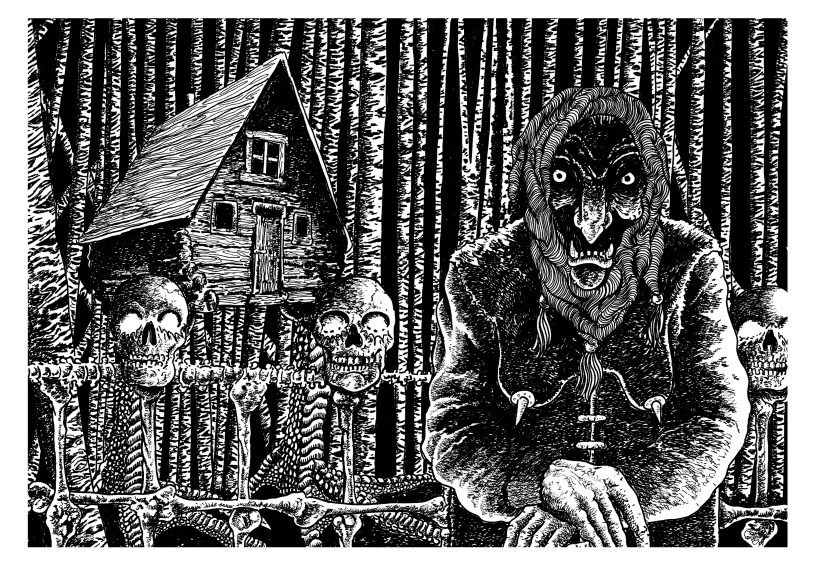
Whilst living in that remote cabin within the woods, the girls were instructed always to have a single candle kept alight from which other fires could be lit. It so happened one day that one of the elder stepsisters let the candle go out, so the young Vasilisa was ordered to gather fire from their nearest neighbour, who was none other than the witch Baba Yaga. So Vasilisa made the considerable trek beneath the darkness of trees to the macabre chicken-legged hut of Baba Yaga. On the way she is passed in turn by three horsemen. Each of which is clad in a single colour which also corresponds to their mount; first a white rider, then a red then finally a black rider whom nightfall followed soon after. Reaching the abode of the old witch, Vasilisa is petrified by the skulls on the fenceposts, whose eye-sockets burn with an eerie glow. Upon finding the girl, Baba Yaga instructs her that in order to retrieve fire Vasilisa must undertake certain tasks.
However should she fail in these chores or attempt to leave without performing them, then she was informed that she would be cooked and eaten.
The duties allocated to her were to clean Baba Yaga’s hut, to separate bad kernels of grain from the good and to separate poppy seeds from soil. Baba Yaga left the girl to her business but Vasilisa was distraught and already exhausted from her long walk through the woods. However the magic doll again assisted her in her tasks and the girl slept.
In the morning, Vasilisa looked out and saw the white rider pass by, later on the red rider passed and finally the black rider, followed both by darkness and the return of Baba Yaga. Seeing the chores beset Vasilisa completed, the witch proceeded to invoke several pairs of invisible hands to wring juice from the separated grains. She asked Vasilisa if she had any questions. The girl enquired about the horsemen and was informed that the white rider was the break of dawn, the red rider was the midday sun and the black one was the fall of night. Vasilisa was then about to enquire about the disembodied hands that worked for the old woman, but sensing this the magic doll in her apron pocket shook as if to warn her to hold her tongue. Vasilisa understood this and asked not of the mysterious hands.
Instead Baba Yaga asked How Vasilisa had managed to complete the difficult chores she had beset her. Vasilisa replied not too revealingly but not untruthfully that she had managed through her mother’s blessing.
The old witch wanted to hear of no blessing in her abode so cast Vasilisa out into the dark, but did not renege her promise and gave the girl a skull upon a stick. The fire in the dead eyes would both illuminate her path home and relight the fires within the cabin.
Upon returning there however, her stepmother and stepsisters became transfixed by the smoldering eyes of the skull and were reduced to nought but ashes. Vasilisa buried the skull.
Different tales follow the further life of Vasilisa, in one she is seen to weave threads of flax into gold or the finest silk. So impressed is the Tsar himself upon seeing the cloth, that he bids Vasilisa to meet him. Upon seeing her he is smitten with her beauty and takes her for his wife. In another variation Vasilisa is named as the girl whose kiss transformed a frog into a prince, who was then to become her husband. Whatever the tale of Vasilisa’s later life, there seems to be a common agreement that she and her father spent it in greater wealth and happiness than before.

From the book Black Earth: A Field Guide to the Slavic Otherworld. Written and Illustrated by Andy Paciorek

BABA YAGA

Samhain Greetings and Book Discount

hal

🎃 Happy Samhain – All Hallows – Día de Muertos – Failte na Marbh – Halloween to All Revivalists … 🎃
A little early but to mark the thinning of the veils treat your ghoulfriend or boofriend or yourself or anybody to 20% off Folk Horror Revival / Wyrd Harvest Press Books !!!

Use Code: TWENTY18
at checkout at -* http://www.lulu.com/spotlight/andypaciorek

*All Sales profits of books bought through our online store ^ are donated quarterly to The Wildlife Trusts

Using the Discount Code here, does not affect the sum donated to charity, so help a damn fine charity by buying great books at a bargain price !!
Offer ends 1 November at 11:59 PM 🍂☀️

halloween.jpg

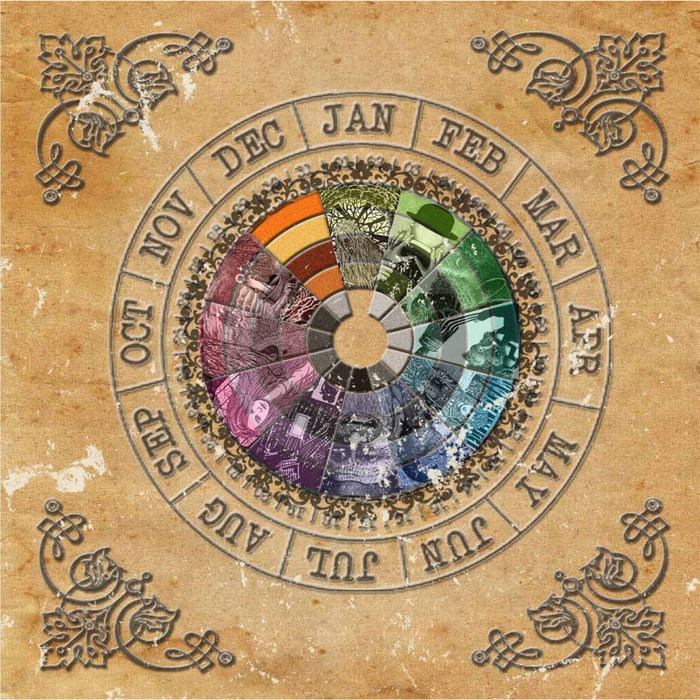
The Wyrd Kalendar – Wyrd Artists Mix

Join the Kalendar Host as we prepare for the launch of the Wyrd Kalendar album. This will be released on January 1st the beginning of the next Wyrd year.

Artists from the England, Scotland, Ireland and Portugal were each given a month of the year and a story from the book (Wyrd Kalendar) as a starting point from which to create a vastly eclectic and evocative mix of genres that sweep from the worlds of Folk to Electronica via Psychedelic licks and lost Horror Soundtracks.

Explore the work of these artists and find out more about the music they have created in this special mix. Listen to The Hare and the Moon (lead by Grey Malkin who has created the Song for January with his new group Widow’s Weeds), Keith Seatman, Emily Jones, Crystal Jacqueline, Beautify Junkyards, Alison O’Donnell, Concretism, Icarus Peel, Tir na nOg, Wyrdstone, The Soulless Party, The Rowan Amber Mill and The Mortlake Bookclub.

You can preorder the album here: https://megadodo.bandcamp.com/album/wyrd-kalendar

a3949485468_5.jpg Wyrd Kalendar | Mega Dodo
megadodo.bandcamp.com
Wyrd Kalendar by Mega Dodo, releases 01 January 2019 1. Widow’s Weeds – A Song for January 2. Keith Seatman – Three Day Girl 3. Emily Jones – Waiting for Spring 4. Crystal Jaqueline – Chasing the Gowk 5. Beautify Junkyards – May Day Eve 6. Alison O’Donnell – Deadly Nest 7. Concretism – The Fair by the Sea 8. Icarus Peel – The Weeping Will Walk 9.