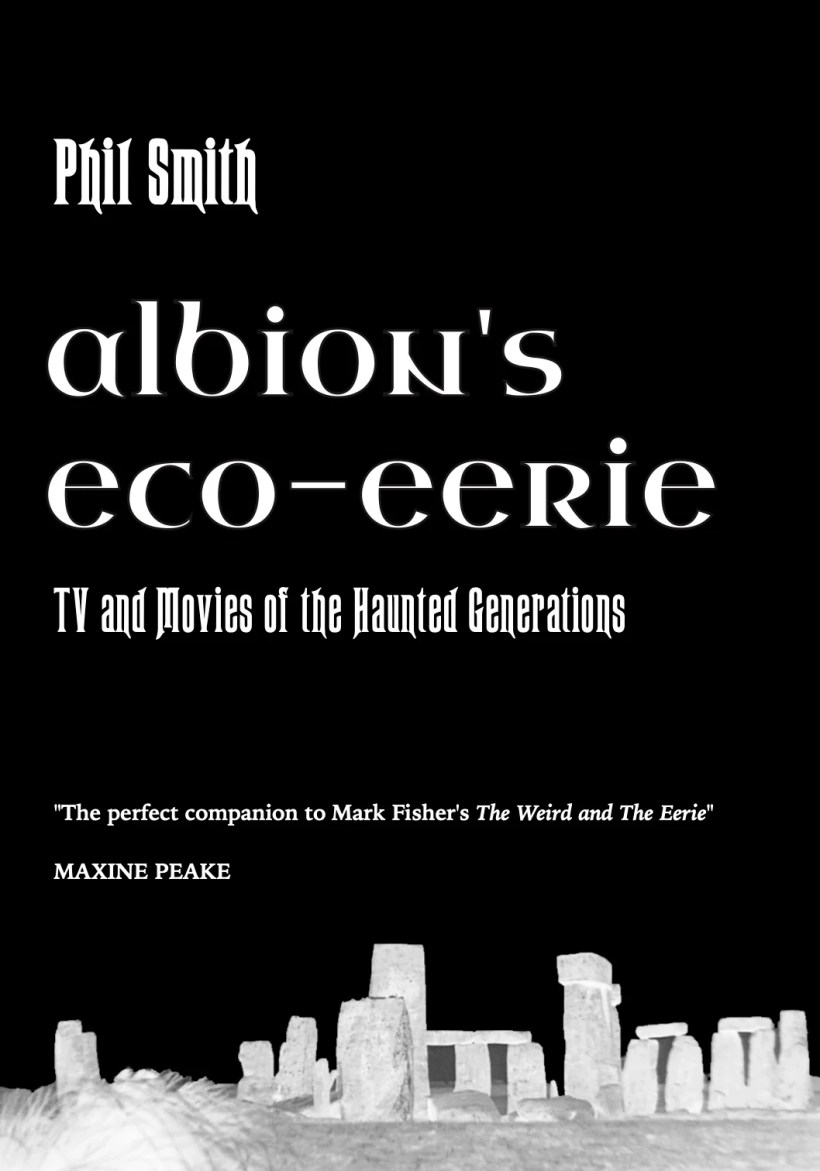
In Albion’s Eco-Eerie, author and professor, Phil Smith seeks an alternative readingof TV and Movies of the Haunted Generations suggesting looking at the media in terms of ‘unhuman characters, the materials and the edgeland spaces’. He suggests the term ‘hobgoblinology’ as a name for his contemplation of the subject matter, but I question whether that is necessary as the ‘Eco-eerie’ term he uses in the book title does a much better job of specifically conveying the centre of attention. If the use of a term helps the writer unlock what they want to say in the book, then it’s a useful tool, but going forward I don’t know if there is a need for any further terminology within the gamut of topics. I enjoyed reading Smith just talk about his selected subjects more than about the terminology and application of it, which I felt disrupted the flow a little. I have personally discovered with labels that they have a limited purpose – they only need to point in a direction rather than map a territory down to the millimetre. Sometimes too much definition risks stifling and suffocating further creativity in the crib, whilst a net cast too widely can serve no real purpose. Further labelling may be best served to supermarket shelves and the toes of mortuary corpses. I fully understand that as wider interest in the sub-genres/modes have grown that the terms ‘Folk Horror’ and ‘Hauntology’ may carry some baggage or alternatively are limiting but I don’t feel like the remedy for that is more terminology. That said, for the purpose of this book the term ‘Eco-eerie’ alone is ideal.
Smith’s lens upon the estrangement between humankind and nature when looking at specific examples is an intriguing vantage point to take. Smith adds an s to the end of Bob Fischer’s term ‘Haunted Generation’ to take us back before Generation X’s particularly spectre-ridden childhoods (a demographic that also seems particularly attuned to Burns’ predilection for a nostalgia that is part warm and fuzzy and part traumatised by monsters).
Smith’s book, as the name suggests, mainly concentrates its attention on British examples (some creations from other countries are discussed at times in comparison) and again there’s a nice range of choices including The Company of Wolves, Oh Lucky Man!, Whistle and I’ll Come to You and the work of the late Nigel Kneale (whom is currently enjoying a long renaissance of interest) is covered well particularly regarding one of his lesser-discussed creations The Quatermass Xperiment. One of the strongest sections in the book for me talks about the strange 1975 children’s television series The Changes. This curious show is possibly the epitome of Albion’s Eco-eerie, though I must admit that whilst I enjoyed watching that programme I was never as much a fan of its conclusion and its explanation as I was of what came before in earlier episodes.
Albion’s Eco-eerie is a slim book but there is a lot packed within its covers and I would recommend it as a book for those with an existing interest in the fields who want to look at the subject matter from a different and intriguing vantage point, and as a reference book for students and film-TV critics/writers rather than a first-stop introduction to the subjects covered.
Films and TV shows discussed:
Night of the Demon The Maze The Company of Wolves The Quatermass Xperiment Quatermass 2 The Strange World of Planet X Fireball XL5: ‘Plant Man from Space’ Quatermass and the Pit O Lucky Man! The Changes Children of the Stones Whistle and I’ll Come to You A Warning to the Curious The Lovecraft Investigations (podcast) Hellraiser and Hellbound: Hellraiser II The Girl with All the Gifts
As the number of books about Folk Horror and Hauntology is considerably increasing, focus falls now upon a quest for a unique selling point – the tone, the angle, which cultural examples will be concentrated upon. With Ghost of an Idea the aspect of Nostalgia is a point of interest.
There is only so much that can be said about the ‘Unholy Trinity’ of folk horror films or Jacques Derrida’s origin of the word Hauntology – mention of either is inevitable but this book mentions the former more in passing but gives the latter a fair bit of attention. Problem with the discussion of Derrida and his concept of political Hauntology is that quite a bit of distance has fallen between that and the ‘popular Hauntology’ of the Haunted Generation. It still has a place however as the associated mode of Folk Horror frequently has a political dimension. But here its introduction early risks the book being taken as dry covering a matter that Mark Fisher and others have adequately discussed prior, but anybody facing that qualm should stick with the book as it becomes more animated with the detailing of specific movies and music.
An issue facing Folk Horror and /or Hauntology arises then of how to shape a book on the subjects and which audience to target. This makes Ghost of an Idea something of a mixed bag as it at times reads like an academic tome (and would prove very useful for anyone studying the subject matter at university) and at others like a more mass-market book on the cultural entertainment examples – and at this it excels as it provides a very useful list of films and music – a good proportion of it straying from the well-beaten track.
The book opens with a dedication to Mark Fisher, the late writer whose own work investigated the relationship between emotion and the hauntological media of film, literature and music and political philosophy (as well as investigating the concepts of the ‘weird’ and ‘eerie’), and a quotation by the folklorist Catherine Crowe. Burns’ appreciation for Fisher is very clear and well-placed but I would have liked to have also seen more integration of ghost-lore within the book, though aspects such as Stone Tape Theory are covered.
The ‘unique selling point’ of this book is the discussion of Nostalgia. It’s a subject that I have a particular interest in and whilst I found the contemplation of it in Burns’ work intriguing – I did really want more. Indeed I would have preferred further discussion of the psychological conditions of Nostalgia and maybe related feelings such as Deja vu than the content matter of later chapters, which in some instances felt somewhat misplaced.
Burns masterfully covers the wide range of associated music from Blind Willie Johnson to Boards of Canada and beyond. This includes an apt and colourful description of Syd Barrett that I enjoyed – “Psychedelia’s first hauntological casualty Syd Barrett, the Edwardian psychonaut, had one foot on an interstellar spacecraft and the other on a penny-farthing bicycle, haunting his own acid-addled mind, becoming rock’s premier living ghost.” Included are some interviews with musicians extraordinaire such as The Rowan Amber Mill’s Stephen Stannard, Angeline Morrison and Epic45. Though interesting I wonder whether the interviews would have been better suited to a book collection of their own (with other interviewees included) as their inclusion does break up Burns own train of thought a little. Also I am not sure about the section where Burns recollects certain concerts attended. The recommended albums list however is a great inclusion.
With regard to the films that Burns discusses, again the range and inclusion of some lesser-known examples is very useful and to be applauded. Whilst in such discussions the personal views and tastes of the writer and different readers may vary – for instance I disagree with Burns in my opinion that the remake of Suspiria is a much better film than The Void. Sometimes though I feel that he may sometimes be a bit too harshly cynical towards some examples (even when I share a similar dislike towards some of the media mentioned) and a little too gushing towards others (an example being Alan Moore, although I do think that he’s a very good writer and a huge influence on the evolution of comics, I do feel that too many other excellent comic writers get smothered in his shadow). Though I do share Burns’ great admiration of David Lynch, some people for some strange reason don’t, but one man’s poison is another man’s meat.
I do question the amount of space devoted towards some films/shows and their actual inclusion – eg. American Horror Story, Star Wars and Toy Story. The attention to these feels somewhat incongruous to what has gone before and I would have preferred (along with the concert reviews) either their omission here, for possible use in other works, meaning that Ghost of an Idea be a shorter book or for other studies of the concept of Nostalgia / additional examples of place memory hauntings to have been featured in their place. Or possibly a deeper dive into more found footage/ fake documentary films may have been better placed (I’d have liked to have read about Lake Mungo for instance) or a discussion about Backwoods films or even more about Hoodie Horrors may have been a better fit.
In conclusion it is a well written book, in some instances it really hits the mark perfectly and the film and album lists would prove very useful to both newcomer and those already quite immersed in the fields covered. But … There’s just some inclusions and choices that didn’t fully land and spoiled the flow for me – though of course they may land very well for others. And it’s totally up to an author what they include in their own books as the ending quote from John Cassavetes, included in in Ghost of an Idea, states “I don’t give a fuck what anybody says. If you don’t have time to see it, don’t. If you don’t like it don’t. If it doesn’t give you an answer. fuck you. I didn’t make it for you anyway.” 😉
Ghost of an Idea: Hauntology, Folk Horror and the Spectre of Nostalgia is due to be released in early 2025 – More Information HERE
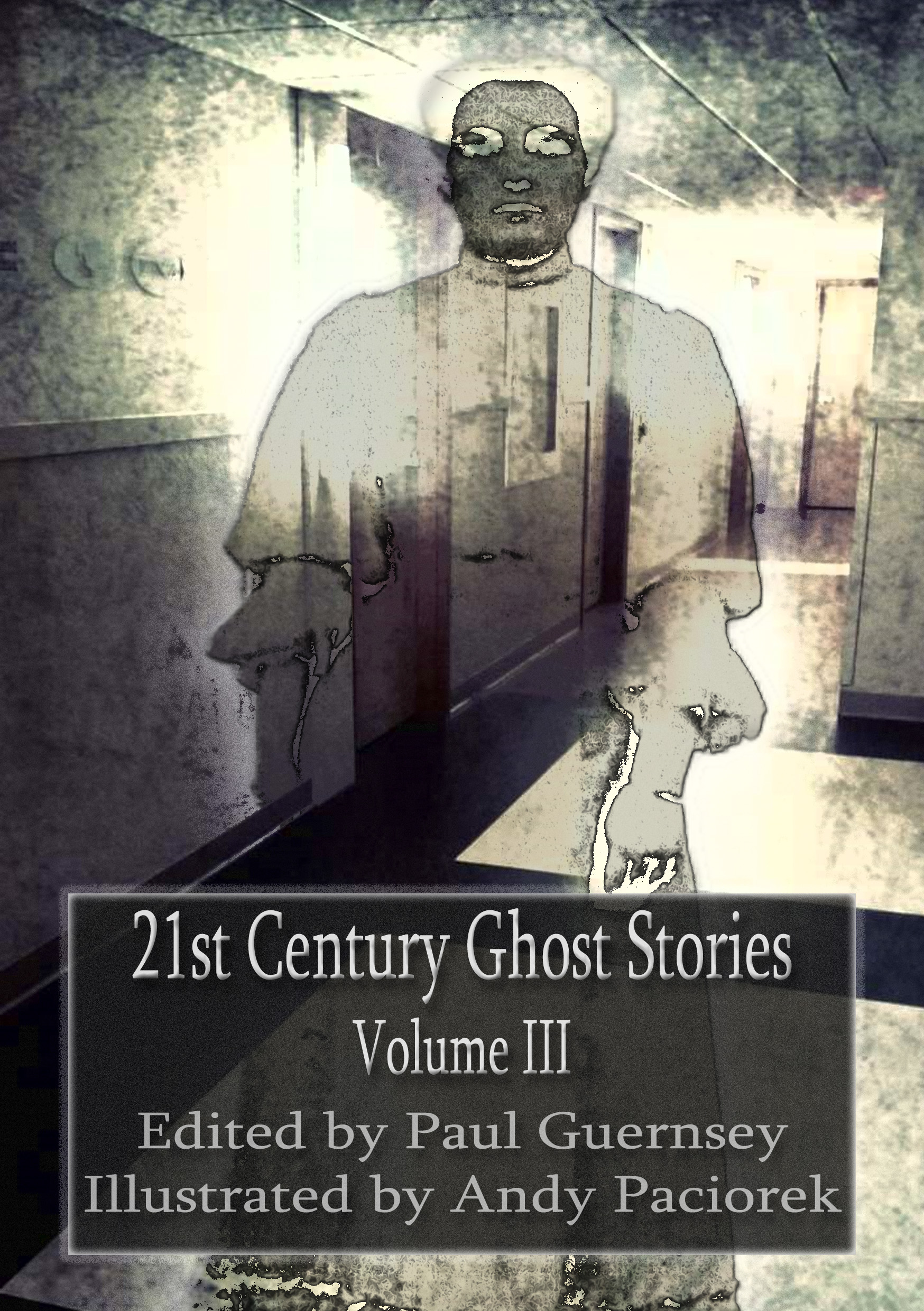
Wyrd Harvest Press are thrilled to present 21st Century Ghost Stories: Volume III the latest in our spooky anthology series. Featuring a host of new stories by a wealth of talented writers, edited by Paul Guernsey, illustrated by Andy Paciorek and created with great thanks to Richard Hing and Grey Malkin; sales profits from this book will be charitably donated to The Wildlife Trusts ‘ nature conservation projects.
This third volume in our 21st Century Ghost Stories anthology series features 39 astonishing short-fiction contributions from writers the world over, each with a surprising and contemporary twist on some aspect of the uncanny. The collection includes unsettling stories of supernatural seduction, episodes of AI gone terrifyingly awry, accounts of workplace witchcraft, and tales of ghostly and/or demonic forces that infest places and ensnare people. We invite you to open this book and feel the chill!
featuring …
Introduction – Paul Guernsey
The Carny — Ann O’Mara Heyward
Gina Of Golden Gardens — Shala Erlich
The Pickup — Kathryn Pratt Russell
Door To Door — Ruth Schemmel
Ghost Story — Isobel Oliphant
He Loved His Mamma And His Mayonnaise — Gerard J Waggett
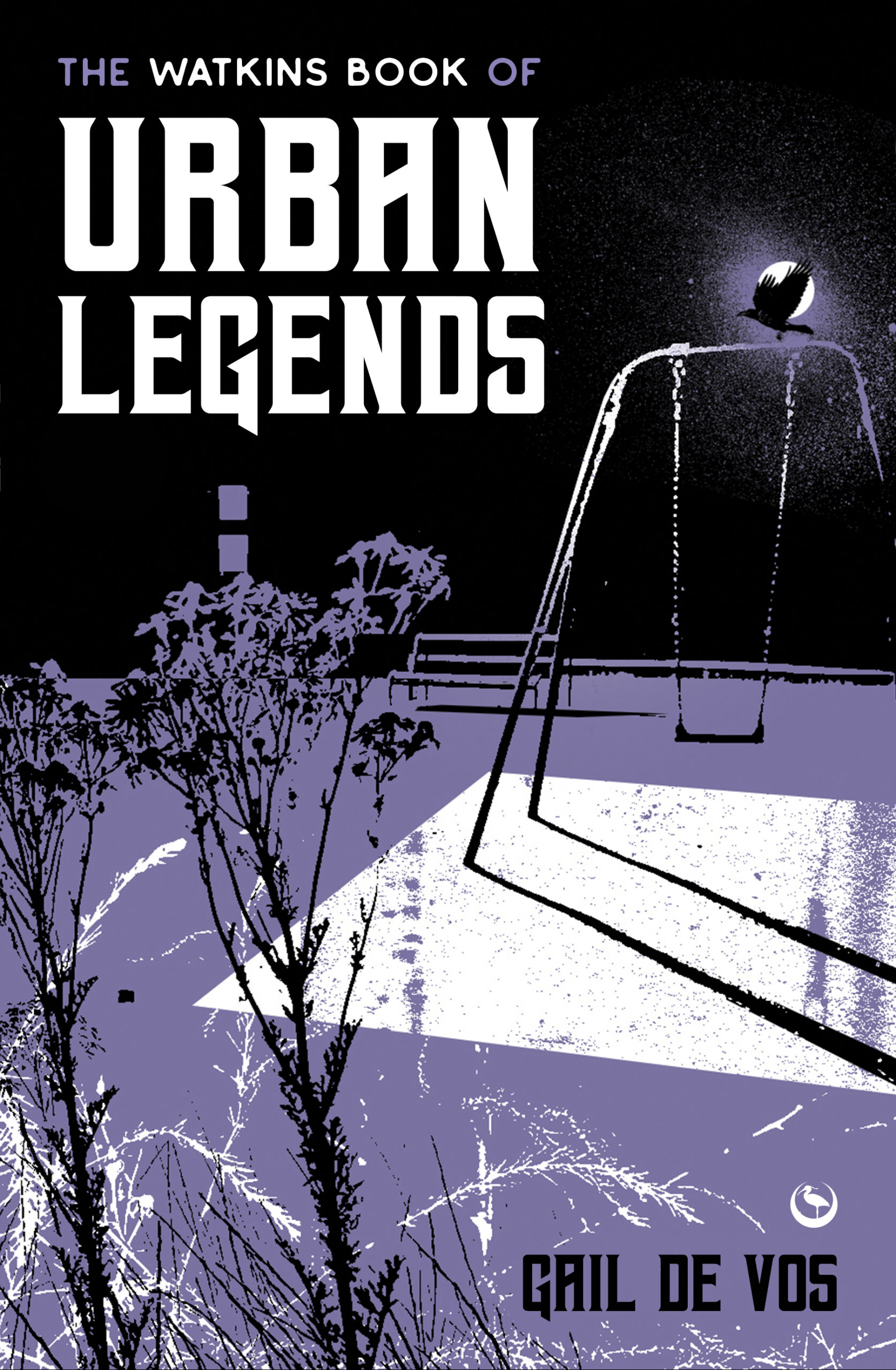
The Watkins Book of Urban Legends by Gail De Vos: Book Review
Before I get to the book, indulge me in a little waffle about the subject matter … I first became aware of Urban Legends … Friend of a Friend Tales … Whale Tumour Stories … Contemporary Legends … call them what you will at a very young age. I was a monster kid into horror films and scary stories (think Mark from Salem’s Lot) so anything that stirred my morbid curiosity has stuck in my mind. The first examples I remember hearing are variations of those covered by Gail De Vos under the banners of ‘The Boyfriend’s Death’ and ‘The Babysitter and the Man Upstairs’ (the version I recall hearing of the latter distastefully and disturbingly added the extra grotesque detail of a cannibal with Down’s Syndrome!). But I had a distance from these stories as they weren’t told with any degree of association (ie. happening to a ‘friend of a friend’) just as scary … possibly true (?) stories. Locally there were several variations of the ‘Bloody Mary’ recital and invocation of malign presences stories – a couple I’ve mentioned on my Northumbria Ghostlore Society blog … Jenny Cut-throat’s Grave and The Devil’s Stone but I would have been about 13 years old the first time I heard the term ‘Urban Legend’.
At school I would have the tactic of sometimes getting out of classwork by sending the teachers off on tangential conversations. This occasion was I recall a Religious Education lesson and somehow I had ended up telling the teacher and class a story I believed to be true. It would have been about 1986 and the largest shopping mall in the area, the Metrocentre at Gateshead, Tyne & Wear, had just opened. I cannot remember who it was, a friend of my elder sister’s perhaps or a relation of one of my mother’s friends maybe – but anyway nobody I directly knew but this time it was a specific place familiar to me, so in my mind it must be true. Anyway the tale goes as follows. A woman had been shopping alone in the Metrocentre and she was surprised to discover upon returning to her vehicle in the carpark that a woman was sat in the passenger seat of her car. The woman explained that she was feeling ill and upon discovering the car door left open had taken a seat in the vehicle. She asked the driver whether she would mind taking her home, it wasn’t far and she did not feel up to waiting for a bus. The driver agreed but asked the woman if she’d mind getting out of the car to help guide her whilst she reversed the vehicle out. The passenger complied and as soon as she was out of the vehicle the driver hastily locked all the doors and drove away abandoning the other woman. When the driver got home she noticed that there was a plastic bag tucked under the passenger seat. Gazing inside she discovered men’s clothing … and an axe!! My teacher informed me that the story was not true and that she’d heard the very same tale told about different locations in the past. She also informed me of the phrase ‘Urban Legends’.
My curiosity piqued, I went to the local library and ordered books on the subject by Rodney Dale and Jan Brunvand (how I came upon the names of the books to order I cannot recall, as this was pre-internet times). The subject greatly appealed to my interests (especially the more grisly and weird stories) and has done ever since. And so when offered the chance to read and review Gail De Vos’ The Watkins Book of Urban Legends I jumped at the chance. Upon its arrival and seeing the beautifully bleak and eerie cover illustration by Shonagh Rae I was eager to dive inside.
Notably from the introduction, De Vos chooses the more accurate designation of Contemporary Legends rather then the more poetic Urban Legends, for the tales covered are not in any way confined to urbanity of any description and furthermore the material contained expands further than the Friend of a Friend Tales that generally work as a synonym for Urban Legends.
Within the pages of this charming, interesting book we find numerous familiar or classic Friend of a Friend tales as well as many examples of supernatural tales from cryptids to hauntings and folkloric entities. The folkloric entities was of particular interest to me as they concentrated mostly on boogieman / bogey figures which is a subject that particularly inspired me to write and illustrate my books ‘Strange Lands: A Field Guide to the Celtic & British Otherworld’ and ‘Black Earth: A Field Guide to the Slavic Otherworld’ as well as illustrating similarly themed books written by Dr Bob Curran and John & Caitlin Matthews. I was really pleased to see some of my favourite bogies mentioned such as Black Annis and Jenny Greenteeth. Indeed regarding the latter water-witch or Grindylow, there are a number of them local to me – Peg Powler of the River Tees (link there to an account I wrote of a visit to one of her haunts), Nanny Longarms of the River Wear and Nanny Powler of the River Skerne. I discovered these creatures through reading folklore books rather than hearing about them as direct warning tales as a child. It was rumours of quicksand and undercurrents plus not being able to actually swim anyway that stopped me wandering into river depths as a child. So I do wonder if tales of them are still being told as warnings to children today … I’d like to think so.
But kids of today are very capable of creating new monsters for the 21st Century and I found De Vos’ sections on toilet ghosts, Creepypasta and internet challenges very interesting and a great coverage of evolution of contemporary legends. Except for a few tragic and horrific ostension cases involving the creepypasta (copy and paste replacing the oral tradition to some extent) creation the Slenderman, it seems that the greater panic surrounding such phenomenon as the Momo Challenge have been amongst adults rather than the kids.
Regarding the ghost section I had the odd shiver down the spine sensation of being either part of the Friend of a Friend Tale or involved in ostentation whereby folklore becomes fact … In the section of Haunted Tunnels I saw a familiar place mentioned, although much of the book, though international in scope, has a predominance of American locations and of De Vos’ homeground of Canada (the Canadian entries I found intriguing as many other books on the subject do centre strongly on the USA) … but the place in question was Whitby in North Yorkshire. Regarding the Screaming Tunnel there, I was aware of its eerie reputation prior to my extremely odd walk in the Whitby fog one winter’s night whereby I had a strange experience, but my hairs rose on my arms when De Vos returned to Whitby some pages later to tell the tale of a sunken bell. I did not know of this story but again to return to a post on my Ghost blog I actually had an experience pertaining to this on that same very strange night. My experiences can be read Here … So the unexpected personal association gave the book an extra frisson for me.
Another valuable entry to the book is the coverage of another associated phenomenon to Contemporary Legends, that being Conspiracy Theories. Whilst Conspiracy Theories are nothing new, the age of the internet and viral transmission of information has caused this area to spread far further and to be believed by far more people than ever before. The period of Covid19 lockdown particularly saw a rise in stories and theories. But as De Vos acutely stresses at the conclusion of the Conspiracy Theories chapter this area is not a finished story … indeed had there been a little while longer before going to print, there may have been a section relating to the legend (spread further ‘on TV’ by a former US President and current presidential candidate) that immigrants to the USA are “… eating the ‘dawgs’. They’re eating the cats. They’re eating the pets” – (A similar story I recall hearing whenever a new foreign food fast food restaurant opened locally when I was a child).
And with that takeaway, in conclusion Contemporary Legends are clearly alive and well (although their story protagonists frequently aren’t so healthy) and will continue to evolve and provide us with numerous occasions to shake our heads, roll our eyes and say well that can’t be true … can it?
And in the meantime to bring us up to speed on what was rumoured before either in hushed playground whispers or amongst the deafening internet chatter, The Watkins Book of Urban Legends is a wonderful, entertaining and informative guide to those sad and strange circumstances that befell friends of friends …
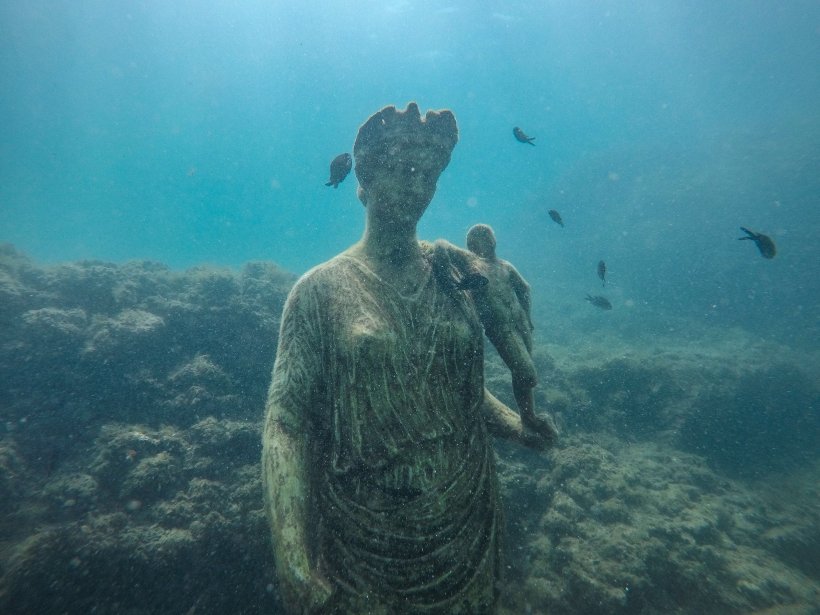
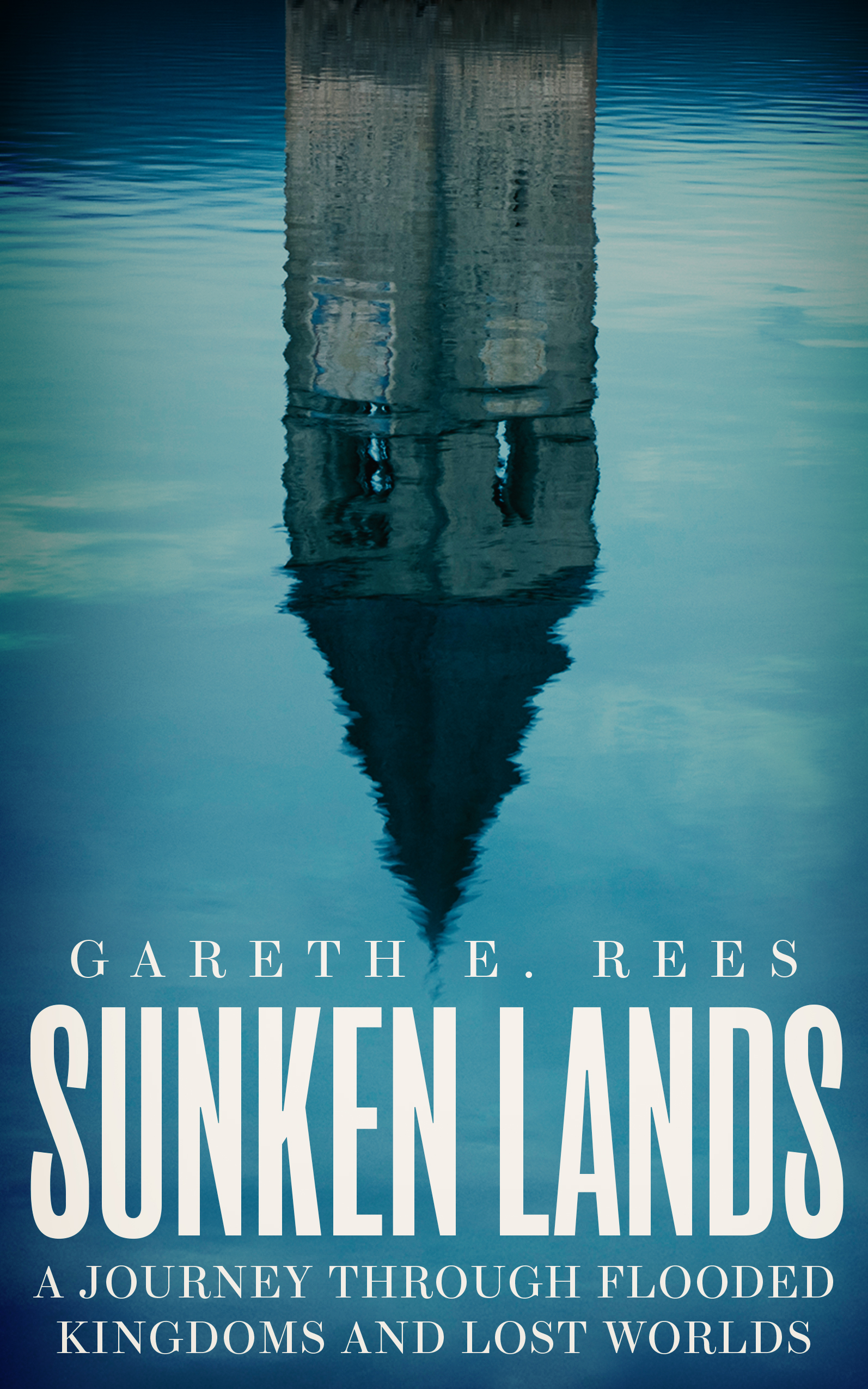
Sunken Lands, the new book by Gareth E. Rees may be one of those that forms a quandary for bookshop staff – just what shelf should it be placed on? For within its pages it covers a wealth of terrain (mostly of the moist or entirely saturated variety). Is it a folklore and legend book? A travel and history book? Psychogeographical philosophy? Natural History/Conservation? Occulture and Mystery? Part-Memoir? It is a blend of all these things, but it is a smooth fusion rather than hotch-potch. If pushed I would place it on the Environmentalism shelf I think, for its core I feel is Rees’ interest, anxiety and contemplation of the lands lost to the waves, those currently in that flux and those destined to sink beneath the sea. As such it won’t be a book that is favoured by Climate Change deniers (but in that particular demographic there seems to be an intersection of those that would tend to ban books rather than read them). But it is not a dry book, well considering the subject matter, it couldn’t be – but delivers the concerns in wide contemplative arcs. The chapters begin with flood myths and legends of varied cultures and then in an apt rendition of the psychogeographical wandering term ‘drift’ into diverse topics and places. So within its pages we encounter sunken forests and towns, places smote by the wrath of the gods and dwellings that battle whenever heavy rains fall or the waves rise. We are taken to various places, some accessible still and visited in person by Rees and others that are lost to people but home now to aquatic life and others still whose existence is either folk-memory or from the depths of the imagination. We are taken to the Lowland Hundred of Wales, the ruins of decadent Baiae in the shadow of Neapolitan volcanoes, the lost worlds of Ys, Lemuria, Lyonesse and of course Atlantis. We witness the tragedy of New Orleans in the wake of Hurricane Katrina and of the Pacific islands encroached upon by the rising ocean. For company we travel with such diverse figures as David Bowie, Francis Bacon, Madame Blavatsky, Mark Fisher, numerous indigenous societies, Edgar Cayce, Sun Ra, Lord Krishna, Voodoo Queen Julia Brown, Hawkwind, Aleister Crowley (He whom seems to get everywhere!) and many more beside. Mostly though we are in the company of Rees himself, whose presence is integral in the book for you can tell that this isn’t just something he thought would be interesting to write about, but something that he personally feels very deeply about.
Sunken Lands: A Journey Through Flooded Kingdoms and Lost Worlds
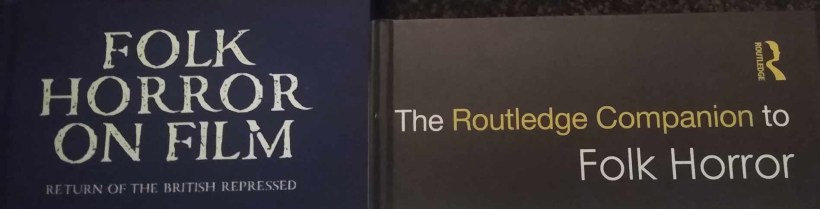
The following article is not a review as such to avoid accusation of bias as I (Andy Paciorek) have essays in the books (‘Yesterday’s Memories of Tomorrow: Nostalgia, Hauntology and Folk Horror’ in The Routledge Companion to Folk Horror, and ‘Albion Unearthed: social, political and cultural influences on British Folk Horror, Urban Wyrd and Backwoods Cinema’ in Folk Horror on Film’) – but instead is a spotlight of some tomes that may be of interest and/or use to students, lecturers and aficionados of folk horror and its associated fields.
“The Routledge Companion to Folk Horror offers a comprehensive guide to this popular genre. It explores its origins, canonical texts and thinkers, the crucial underlying themes of nostalgia and hauntology, and identifies new trends in the field.
Divided into five parts, the first focuses on the history of Folk Horror from medieval texts to the present day. It considers the first wave of contemporary Folk Horror through the films of the ‘unholy trinity’, as well as discussing the influence of ancient gods and early Folk Horror. Part 2 looks at the spaces, landscapes, and cultural relics, which form a central focus for Folk Horror. In Part 3, the contributors examine the rich history of the use of folklore in children’s fiction. The next part discusses recent examples of Folk Horror-infused music and image. Chapters consider the relationship between different genres of music to Folk Horror (such as folk music, black metal, and new wave), sound and performance, comic books, and the Dark Web. Often regarded as British in origin, the final part analyses texts which break this link, as the contributors reveal the larger realms of regional, national, international, and transnational Folk Horror.
Featuring 40 contributions, this authoritative collection brings together leading voices in the field. It is an invaluable resource for students and scholars interested in this vibrant genre and its enduring influence on literature, film, music, and culture.”
Table of Contents –
General Introduction – Robert Edgar and Wayne Johnson
Part I: Origins and Histories
Christopher Flavin Fear of the World: Folk Horror in Early British Literature
Brendan Walsh The Early Modern Popular Demonic and the Foundations of Twentieth Century British Folk Horror
Katy Soar “Banished to woods and a sickly moon”: The Old Gods in Folk Horror
Craig Thomson “I am the writing on the wall, the whisper in the classroom”: The Changing Conception of the ‘Folk’ in the Western Folk Horror Tradition
Darryl Jones M. R. James and Folk Horror
Miranda Corcoran “Leave Something Witchy”: Evolving Representations of Cults and New Religious Movements in Folk Horror
Alan Smith The spectacle of the uncanny revel: Thomas Hardy’s Mephistophelian Visitants and ‘Folk Provenance’.
Charlotte Runcie ‘We’re not in the Middle Ages’: Alan Garner’s Folk Horror Medievalism
Peter Bell Terror in the Landscape: Folk Horror in the Stories of M.R. James
John Miller Folk Horror, HS2 and the Disenchanted Woods
David Evans-Powell Mind the Doors! Characterising the London Underground on Screen as a Folk Horror Space
Beth Kattelman Queer Folk: The Danger of Being Different
David Sweeney “Out of the dust”: Folk Horror and the Urban Wyrd in Too Old to Die Young and Other Works by Nicolas Winding Refn
Catherine Spooner Meeting the Gorse Mother: Feminist Approaches to Folk Horror in Contemporary British Fiction
Ruth Heholt Handicrafts of Evil: Nostalgia and the Make-Culture of Folk Horror
Lauren Stephenson Restoring Relics – (Re)-releasing Antrum (2018) and film as Folk Horror
Andy Paciorek Yesterday’s Memories of Tomorrow: Nostalgia, Hauntology & Folk Horror
Diane A. Rodgers Ghosts in the Machine: Folklore and technology onscreen in Ghostwatch (1992) and Host (2020)
Douglas McNaughton The Pattern Under the Plough: Folk Horror in 1970s British Children’s Television
Jez Conolly ‘This calm, serene orb’: a personal recollection of the comforting strangeness found in the worlds of Smallfilms
Jon Towlson ‘To Traumatise Kids for Life’: The Influence of Folk Horror on 1970s Children’s Television
Bob Fischer That Haunted Feeling: Analogue Memories
Stephen Brotherstone “Don’t Be Frightened. I Told You We Were Privileged”: The British Class System in the Televised Folk Horror of the 1970s
Dave Lawrence The 4:45 Club: Folk Horror Before Teatime in the 1970s and 1980s
Julianne Regan The Idyllic Horrific– Field, Farm, Garden, Forest and Machine
Richard D. Craig “And the devil he came to the farmer at plough” – November, Folk Horror and folk music
Julian Holloway Sounding Folk Horror and the Strange Rural
Jason D. Brawn Sounds of Our Past: The electronic music that links Folk Horror and Hauntology
Joseph S. Norman Even in death: The ‘Folk Horror Chain’ in Black Metal
Ben Halligan Towards ‘Squire Horror’: Genesis 1972-3
Barbara Chamberlin Patterns beneath the grid: the haunted spaces of Folk Horror comics
Max Jokschus From the Fibers, from the Forums, from the Fringe – Folk Horror from the Deep, Dark Web
Dawn Keetley ‘The dark is here’: The Third Day and Folk Horror’s Anxiety about Birth-rates, Immigration, and Race
Robert Edgar Hinterlands and SPAs: Folk Horror and Neoliberal Desolation
Andrew M. Butler “Why Don’t You Go Home?”: The Folk Horror Revival in Contemporary Cornish Gothic Films
Adam Smith Satire and the British Folk Horror Revival
Matthew Cheeseman English Nationalism, Folklore and Pagans
Keith McDonald Bound by Elusiveness: Transnational Cinema and Folk Horror
James Thurgill Strange Permutations, Eerie Dis/locations: On the cultural and geographic specificity of Japanese Folk Horror
Adam Spellicy “All the little devils are proud of Hell”: The First Wave of Australian Folk Horror
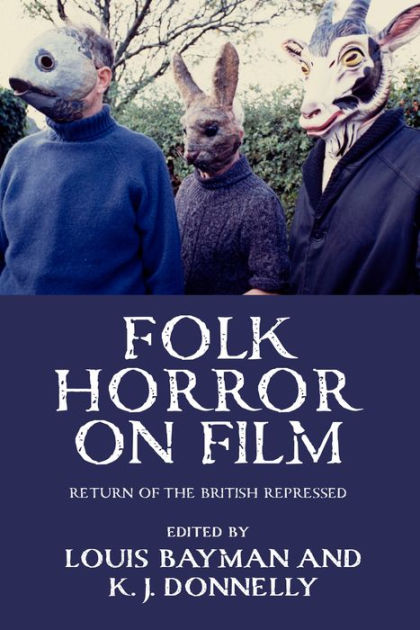
Folk Horror On Film: Return of the British Repressed.
Edited by Kevin J. Donnelly and Louis Bayman (Manchester University Press. 2023)
“What is folk horror and how culturally significant is it? This collection is the first study to address these questions while considering the special importance of British cinema to the genre’s development.
The book presents political and aesthetic analyses of folk horror’s uncanny landscapes and frightful folk. It places canonical films like Witchfinder General (1968), The Blood on Satan’s Claw (1971) and The Wicker Man (1973) in a new light and expands the canon to include films like the sci-fi horror Doomwatch (1970-72) and the horror documentary Requiem for a Village (1975) alongside filmmakers Ken Russell and Ben Wheatley.
A series of engrossing chapters by established scholars and new writers argue for the uniqueness of folk horror from perspectives that include the fragmented national history of pagan heresies and Celtic cultures, of peasant lifestyles, folkloric rediscoveries and postcolonial decline.”
Foreword by John Das Introduction: what makes the folk horrific? – Louis Bayman and K.J. Donnelly Part I: Debating The Wicker Man (1973) 1 The context of The Wicker Man – Ronald Hutton 2 A deeply religious people: The Wicker Man, contemporary paganism, and Dracula reversed- Laurel Zwissler 3 Folk horror: a discursive approach, with application to Robin Hardy’s The Wicker Man (1973) and Neil Jordan’s The Company of Wolves (1984) – Mikel J. Koven Part II: Return of the British repressed 4 The folk of folk horror – Derek Johnston 5 Doomwatch: sacrifice zones and folk horror – Dawn Keetley 6 My ancestors died here: Requiem for a Village and the rural English horror of modernity and socio-cultural change – Paul Newland 7 Outsider history, or outside of history – K. J. Donnelly 8 Anglo creep and Celtic resistance in Apostle – Beth Carroll 9 Women’s folk horror in Britain: history, industry, style – Amy Harris Part III: Folk horror’s cultural landscapes 10 Ritualistic rhythms: exploring the sensory effect of drums in British folk horror cinema – Lyndsay Townsend 11 ‘Nature came before man’: human as subject and object within the folk horror anti-landscape – David Evans-Powell 12 Hieroglyphics: Arthur Machen on screen – Mark Goodall 13 Albion unearthed: social, political and cultural influences on British folk horror, urban wyrd and backwoods cinema – Andy Paciorek 14 ‘Isn’t folk horror all horror?’: a wyrd genre – Diane A. Rodgers https://manchesteruniversitypress.co.uk/9781526164926/
Interest in speculative fiction screenwriter Nigel Kneale has seen a 21st Century cult renaissance, mostly regarding his creation the rocket scientist Quatermass, but here Andrew Screen puts the focus on Kneale’s ATV series Beasts. Broadcast in 1976 during the golden age of British television plays and supernatural/thriller anthology shows, even amidst this bizarre telly miscellany, Beasts is something of a strange … well … beast. Each episode tangentially is related to animals or sometimes the animalistic within human nature – diverse beastly menace from an invasion of super-rats to a possessed kaiju film costume ensues. Screen dives deep into this strangeness seeking possible inspirations for Kneale’s manifestations. The folklore, history, Forteana and comparative media covered is wide and intriguing – resulting at one point in possibly the oddest and most amusing note disclaimer I’ve ever witnessed, stating that the author was in no way suggesting that Kneale was a viewer of equine erotica! – all the more bizarre by the fact that this is mentioned in relation to Buddy Boy, an episode about a dead dolphin haunting a potential porn theatre!
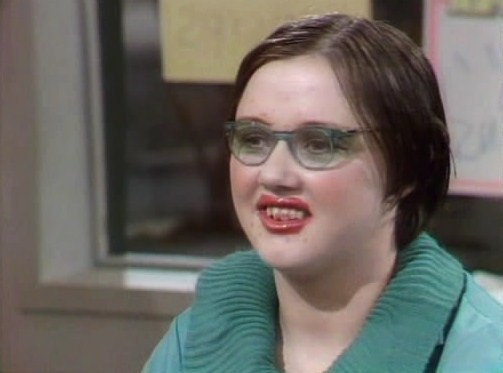
That extra special talking mongoose Gef gets coverage in the chapter covering Special Offer, an episode whereby teenager Pauline Quirke telekinetically terrorises a mini-mart. Discussion of therianthropy arises in relation to What Big Eyes, an episode where Patrick Magee, at his bombastic best, conducts weird experiments at a pet shop. Many aspects of weird history and preternatural phenomena are covered in this book making every chapter an enthralling read. Regarding the episode During Barty’s Party, I started to feel unsettled by the discussion of actual cases of rat attacks and infestation. I am pleased to see Screen feature Kneale’s TV play Murrain in this book. Although part of a TV play series called Against the Crowd, Murrain played a part in the commissioning of the Beasts show but also it feels akin, tonally, aesthetically and subject wise with Beasts, particularly to the episode Baby.
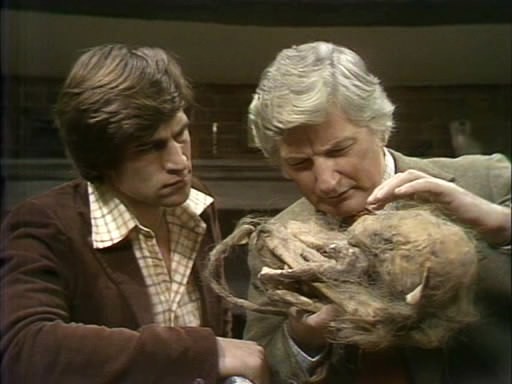
Both Murrain and Baby are set in bleak rural settings and deal with the fear of witchcraft and curses. Murrain, as the name indicates, concerns a rustic community that fears that a swine disease outbreak and other local misfortunes are due to the malfeasance of a suspected witch; whilst Baby concerns the discovery of an anomalous mummified creature found interred in an old rustic house – confined there not perhaps for apotropaic reason but for malediction. As well as rigorously covering production tech-specs and post-production reaction, Screen’s book is the most interesting, inviting and entertaining commentary on the work of Nigel Kneale I’ve encountered. A great tribute to possibly Nigel Kneale’s most peculiar body of work.
The Book of Beasts: Folklore, Popular Culture and Nigel Kneale’s ATV Horror Series Andrew Screen Headpress. 2023 pb. Illus. index. 434 pages. £22.99 ISBN. 191531609X
Having written and/or illustrated several myself it is fair to say that I have a soft spot for encyclopedias / guides to folkloric entities and beasts, especially the darker beings. Folklore is such a vast and diverse field and unless you are multilingual so much of it still remains hidden from many readers. Therefore it is a welcome treasure for me when English language tomes covering creatures from the lore of different cultures becomes widely available. Khanna and Bhairav’s book is such a treasure – especially as it caters to my other book bias in being illustrated throughout. And though the mysterious ‘they’ say never judge a book by its cover, the sleeve design of this book is beautiful making it a pleasure to hold and behold even before it is opened.
Airi. Illustration by Appupen (George Mathen)
Many examples the world over display that folklore and its entities can be pretty darn weird and Asian lore certainly excels in those stakes. Japanese lore of Yurei (ghosts), Yokai (demonic spirits), Tanuki (racoon-dogs with huge testicles) and many other denizens of night parades and kaidan (ghost stories) are relatively well known in the west but India’s otherworldly beings, despite being as rich and weird and despite the familiarity of the pantheon of Hindu gods and goddesses, are a lesser known gathering. Khanna and Bhairav have worked hard and done extremely well to bring a multitude of spectres and monstrous creatures to a wider audience. They have scoured the subcontinent and surrounds including not only India but Afghanistan, Tibet, Nepal, Pakistan, Bangladesh, Myanmar, the Maldives and Iran, and the various religions, folktales and superstitions of these areas and across the ages in their bid to assemble an A to Z of bizarre beasts and malign entities.
Baak. Illustration by Shyam Sankar.
Though I was previously familiar with Naga, Kali, Dev, Blemmyae, Gog & Magog, Rakshasa, Chudail, Yeti, Jinn, Manticore and Bhuta the vast majority of this chunky book was a revelation to me. Between Aavi (a mist-like, mournful ghost) and Zunhindawt (an entity that possesses people compelling them to drink from puddles of urine!) writhe hundreds of pages devoted to incredibly strange and frequently sinister specimens. Contained between the covers are such strange individuals as the Moila Deo (a spirit of jealousy manifest as an ash-coloured dwarf with long dirty hair), the Than-Thin Daini (a disembodied head of a witch that eats the entrails of sleeping people), the Ghorapaak ( a shapeshifting devourer of fish and murderer of fishermen), the Rav ( a creature that comes into existence should seven tigers die at the same moment and which causes its victims to vomit blood), the Gomua Bhoot (the ghost of a cow that died whilst calving, which can climb trees and turn into a pumpkin), the Penchapechi (a ghost in the form of an owl that can consume people whole) and many, many more besides.
Bram Bram Chok. Illustration by Vidyun Sabhaney.
Ghosts, Monsters and Demons of India is a great book for folklore collectors, aficionados of India, artists and writers seeking phantasmic inspiration, kids with ghoulish tastes (of which I was one and would have loved this book), and anybody who fancies flipping a page open on a long, dark witch-season night to see what nightmares unfold. The book is replete with peculiar, scratchy, quirky black and white illustrations by Appupen, Rashmi Ruth Devadasan, Shyam Sankar, Samita Chatterjee, Vidyun Sabhaney, Misha Michael, Priya Kuriyan, Pankaj Thapa and Osheen Siva making it an ideal, unusual gift book for Halloween or any occasion.
Watkins publishing have added to the world of Fortean travel-guides with 2 titles aimed to whet the wanderlust of wyrd voyagers. From the pen of Andy Sharp – musician, wordsmith and designator of the English Heretic black plaques (awarded to the strange denizens and dwellings that English Heritage overlooked) comes The Astral Geographic. On my first encounter with reference books, I often flip through the index to get a taste of what’s to come. Here we find an itinerary that takes us from “Anal Intercourse” to the “Zong Massacre”. Better buckle up then as it sounds like a wild ride is in store. Many eclectic ports are found along the way – myriad souls encountered include JK Huysmans, Sun Ra, Felicien Rops, Madame Blavatsky, Moloch, Manson, the Son of Sam, Saint Mary and that dweller in many an abyss – the almost ubiquitous Aleister Crowley. Although a chapter is devoted to Crowley and Neuberg’s summoning of the demon Choronzon in the Algerian desert, for readers who may feel somewhat overwhelmed by the seemingly universal presence of Magick Uncle Fester in much of occulture literature, there are also many other interesting characters and scenarios encountered within the pages of this book. Other subjects include Atlantis, the alchemy of Fulcanelli, Hekate, folk curses, Viking witchcraft and much more besides.
Sharp’s prose melds the informative and the poetic; although different in subject matter, in spirit it sometimes puts me in mind of the works of the naturalist J.A. Baker. Perhaps more accessible than his previous ‘The English Heretic Collection’ – ‘The Astral Geographic’ retains a targeted market as I suspect that mainstream TV producers may not send out Joanna Lumley or Bradley Walsh on a Saharan sodomy and ‘Satanism’ safari. Both this book and Weird Walk could however prove good ground for offbeat travel shows.
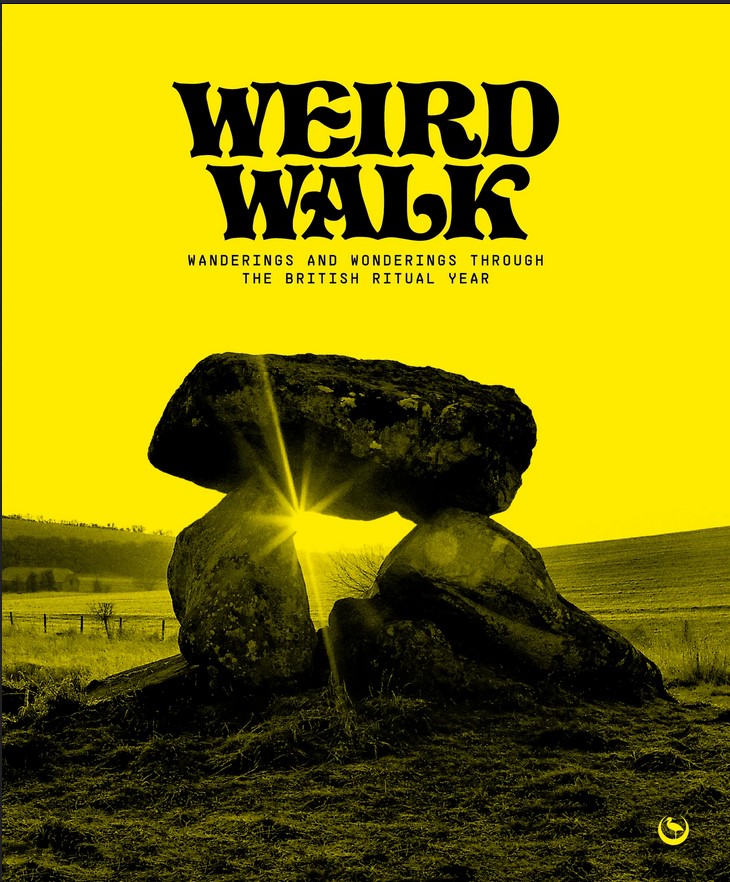
Weird Walk perambulates in a hinterland between Julian Cope’s ‘The Modern Antiquarian’ and Sara Hannant’s ‘Mummers, Maypoles & Milkmaids’ concentrating as it does on the British ritual year and megalithic monuments. It is more about rolling cheese than raising the dead. There is a little crossover with a chapter in The Astral Geographic in covering British standing stone’s relationship with short horror fiction and some Haunted Generation television shows, but Weird Walk focuses more attention on a variety of British sites – both ancient and follies of a more recent era. I particularly enjoyed Weird Walk’s commentary on EF Benson and Blakeney Point. Best remembered for his 1920’s socialite characters Mapp & Lucia, Benson’s supernatural stories have not quite enjoyed the renaissance bestowed upon M.R. James, Machen or Blackwood but are worth some attention. In its accessible psychogeographical approach to combining history, folklore, pop culture and artistic and literary inspiration, Weird Walk would also be of interest to fans of Edward Parnell’s Ghostland.
Weird Walk takes a seasonal approach and accompanies us from the Beltane fires of spring through summer’s Burryman Parade, from autumn’s Stag Dance of Abbot’s Bromley to the winter Wassailing in the company of the strange bone-horse the Mari Lwyd. Taking in many other ritual customs and enigmatic sites it illustrates that for the folk traveller Britain offers a lot of visiting opportunities the world round.
Both The Astral Geographic and Weird Walk bear an Occult Revival-revival aesthetic coupling Art Nouveauesque psychedelic title fonts, loose drawings, sun-bleached photography (Weird Walk particularly has some lovely, evocative shots) and a colour palette recalling the Gay Way primary school books, but both are equally substance as style. As someone once said “Man cannot live on bread alone” … or prana, manna or foyson… so quirkily both books occasionally include stopping off spots where the weary wanderer may partake of sustenance … though perhaps of the liquid victual variety. Whilst The Astral Geographic may point you in the direction of Absinthe, Weird Walk pours you a pint of real ale. They’re quite different books in some ways but are complimentary and provide interesting nuggets of diverse information to both the active and armchair travellers.
The Astral Geographic: The Watkins Guide to the Occult World Andy Sharp Watkins 2023 pb. Illus. index. 294pgs £20.00 ISBN 9781786786739
Weird Walk: Wanderings and Wonderings Through The British Ritual Year Alex Hornsby, James Nicholls, Owen Tromans
Watkins 2023 hb. Illus. refs. Index. 288pgs. £19.99 ISBN 9781786786821
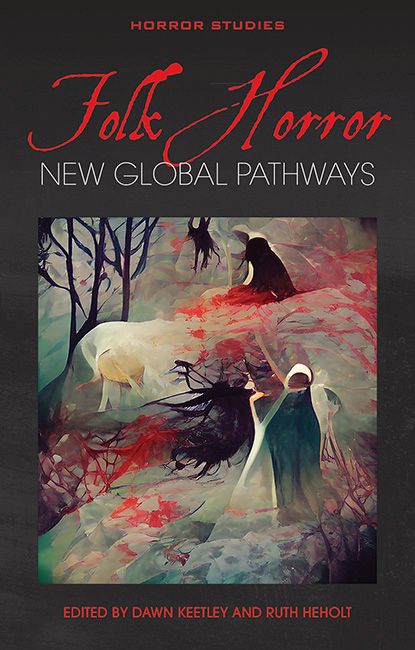
Perhaps of all the literary, cinematic and stylistic manifestations of the ‘dark arts’, only Film/Roman Noir may rival folk horror in the quantity of deliberation, discussion, debate and disagreement. Indeed in converse of the latter subject on social media oft asked is the question “But is it Folk Horror?” in regards to a particular movie, book or image. Sometimes this elicits the response of the ‘Folk Horror Police’ – fans who over-rigorously express their opinion. ‘Opinion’ is the key word however for there is no manifesto for folk horror– it is a mode named after the initial event. Adam Scovell’s ‘Folk Horror Chain’ acts as an excellent reference point for recognising commonly recurring elements (Landscape. Isolation. Skewed Belief System. Summoning or Happening) but it’s a guide not a mandatory tick box – there is still scope for deviation and room for differing opinions. Therefore multi-contributor books such as ‘Folk Horror New Global Pathways’ are extremely useful in this sometimes hazy field as they present a variety of opinions stemming from various different viewpoints, specific subject-matter and importantly from different cultures.
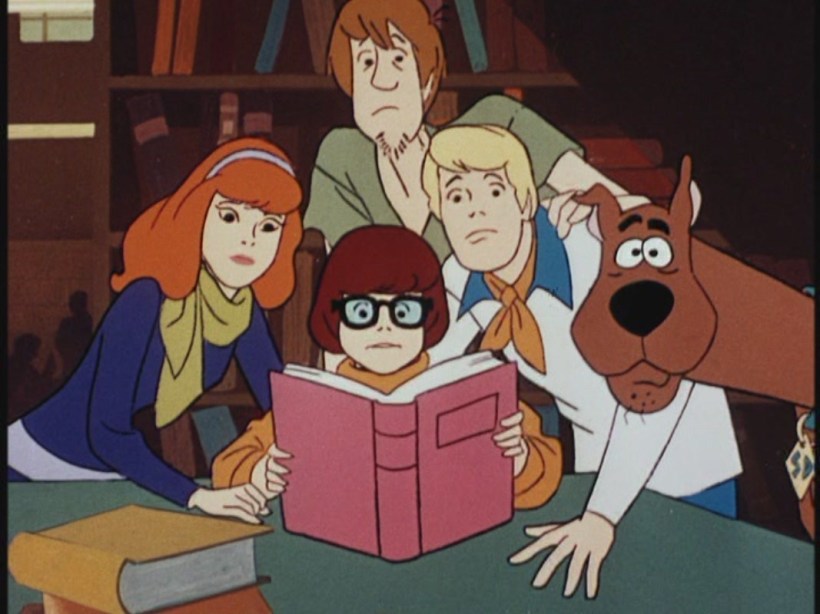
Whilst the 1960s/70s British cinematic triumvirate of Witchfinder General, Blood On Satan’s Claw and The Wicker Man have been written about extensively previously as they are important fixtures in the subject, folk horror is a form of narrative and aesthetic apparent in probably all cultures so it is good that this book does veer off the old beaten track. It wanders into diverse terrain ranging from Scooby Doo cartoons, typography, the short stories of E.F. Benson, occulture, video games, and dark tourism in Lancashire to the representations and relationships of folk horror in the cinema and culture of Mexico, Italy, Ukraine, Thailand and Appalachia. Inevitably politics do arise in the discussion. Horror fiction analysis can often be examined under a sociopolitical lens as a lot can be told about a people by looking at what scares them – be it post-war trauma in the early 20th Century Europe, atomic/ alien fears of 1950s America, generational counterculture/mainstream conflicts in the 1960s and 70s to the uncertain polarised times we currently live in. Folk horror is particularly laden with such considerations and this book does explore issues such as colonialism, sexuality and agrarian/industrial conflict.
Actually, regarding traditional vs technological conflict, I was disappointed to see however that AI generated imagery was used for the cover – especially as the book itself notes the connection between handicraft and folk horror. It would have been far more appropriate to have used imagery by an actual artist – be it centuries old chapbook illustration, a still from a relevant film or a piece by one of the many creatives currently working in the subject field, rather than using generative text.
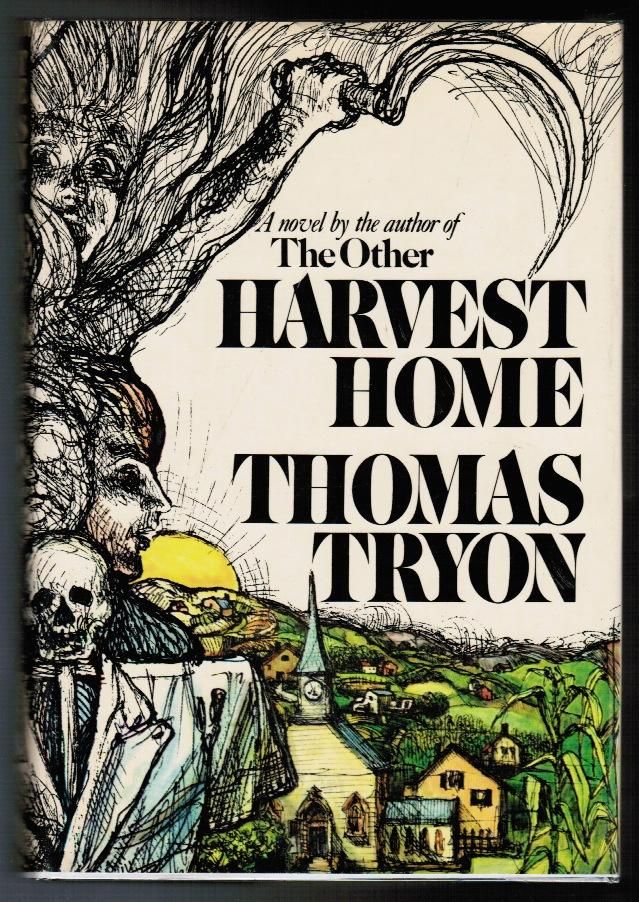
Back to the actual text: Along its course many examples of folk horror fiction are addressed, some familiar and others more obscure. I was particularly pleased to see the writing of actor-turned-author Thomas Tryon get good coverage as his work in the field is too often overlooked. Some less familiar works such as the films Jug Face and The House With the Laughing Windows are also given more attention than they usually get. I was surprised to see Robert Eggar’s The VVitch get such scant attention however, particularly in discussions of the folkloresque as it’s a good example of new folk horror using authentic old folklore in its narrative, considering that there is numerous referencing of Ari Aster’s Midsommar, (a film that I seem to be in the minority of personally finding both overrated and underwhelming).
Of Fortean interest the book discusses the Pendle Witches, the folkloric entities La Llorona and Phi Pop, ritual sacrifice, and the occult revival in relation to the influence, inspiration and development of Folk Horror. As a multi-contributor book, some chapters will be of differing interest to individual readers and the style of writing can vary, but it holds together very well. It is an academic book (as evidenced by its hefty University Press price tag) but much of it is written with an apparent enthusiasm for the subject that enables it to flow fluently, making it readable to a wider audience with an interest in this particular field.
Folk Horror New Global Pathways Various Authors. Ed: Dawn Keetley & Ruth Heholt.
University of Wales Press. 2023.
Pb. 280 pgs. £50.00 ISBN: 9781786839794
Reviewed by Andy Paciorek. This review first appeared in Fortean Times magazine




















 Folk Horror Revival & Urban Wyrd Project ⨘