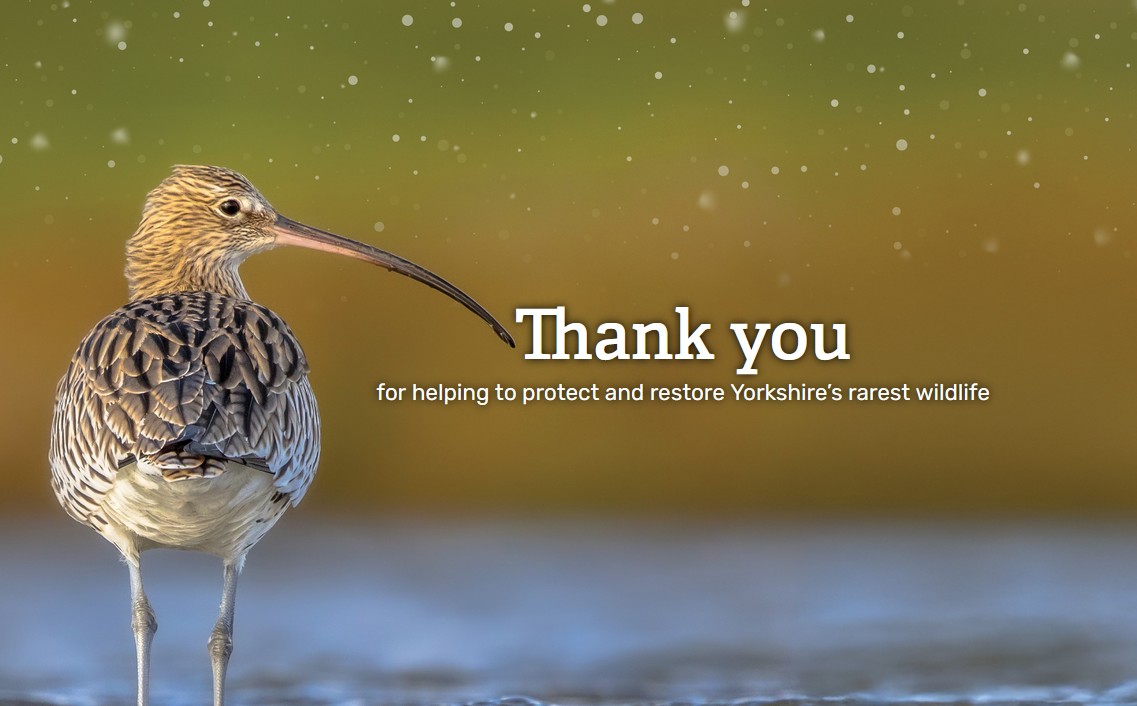
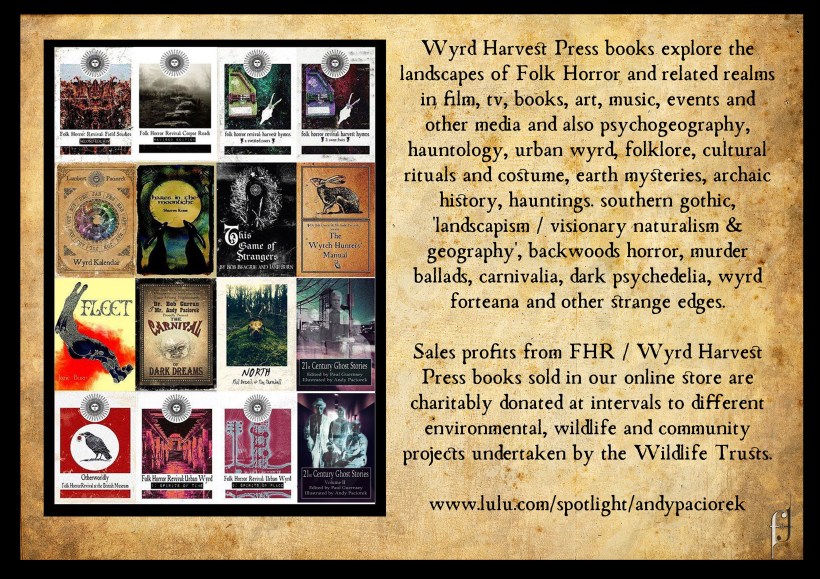
Season’s Greetings to All ~ To mark the Winter Solstice, Wyrd Harvest Press & Folk Horror Revival are again making a charity donation of our book sales profits to a Wildlife Trusts’ environmental and conservation project – This year we have donated £300 to Yorkshire Wildlife Trust’s Species Recovery Appeal.
Protect and restore Yorkshire’s rarest wildlife
From the windswept uplands of the Dales to the rolling chalk hills of the Wolds, the lowland moors on the Humberhead levels and the shining chalk cliffs of Yorkshire’s 100-mile coastline – wildlife should flock to this vast and varied county.
And yet, the data is telling us that many woodlands, wetlands and waves are slowly falling silent and still.
If we don’t act now, we will lose the species that make Yorkshire so special!
We wish you all a very peaceful and pleasant Yuletide and 2026. Special Thanks to everybody who has supported both nature and varied artists and writers by buying our books.
❄️Season’s Greetings to All ~ To mark the Winter Solstice, Wyrd Harvest Press & Folk Horror Revival are again making a charity donation of our book sales profits to a Wildlife Trusts’ environmental and conservation project – This year we have donated £500 to Gloucestershire Wildlife Trust’s ‘Corridor of Life’ project.
From ancient woodlands teeming with life and history, to buzzing hedgerows and towering oaks, trees play an essential role in our landscapes and lives.
They provide homes for a diverse range of species, act as natural flood management systems, purify our air and provide sanctuaries of solace. Yet our trees are under threat like never before.
Over-development and climate change have left the UK with some of the lowest amounts of tree cover in Europe… This hugely ambitious project aims to create, enhance and protect hedgerows, orchards, wood pasture and more to establish a 60-mile corridor of tree cover. Linking two of the UK’s biggest ancient woodlands, the Forest of Dean and the Wyre Forest, this corridor of life will give vulnerable species secure habitats that are critical to their expansion and future survival.
We wish you all a very peaceful and pleasant Yuletide and 2025. Special Thanks to everybody who has supported both nature and varied artists and writers by buying our books. ❄️
Having written and/or illustrated several myself it is fair to say that I have a soft spot for encyclopedias / guides to folkloric entities and beasts, especially the darker beings. Folklore is such a vast and diverse field and unless you are multilingual so much of it still remains hidden from many readers. Therefore it is a welcome treasure for me when English language tomes covering creatures from the lore of different cultures becomes widely available. Khanna and Bhairav’s book is such a treasure – especially as it caters to my other book bias in being illustrated throughout. And though the mysterious ‘they’ say never judge a book by its cover, the sleeve design of this book is beautiful making it a pleasure to hold and behold even before it is opened.
Airi. Illustration by Appupen (George Mathen)
Many examples the world over display that folklore and its entities can be pretty darn weird and Asian lore certainly excels in those stakes. Japanese lore of Yurei (ghosts), Yokai (demonic spirits), Tanuki (racoon-dogs with huge testicles) and many other denizens of night parades and kaidan (ghost stories) are relatively well known in the west but India’s otherworldly beings, despite being as rich and weird and despite the familiarity of the pantheon of Hindu gods and goddesses, are a lesser known gathering. Khanna and Bhairav have worked hard and done extremely well to bring a multitude of spectres and monstrous creatures to a wider audience. They have scoured the subcontinent and surrounds including not only India but Afghanistan, Tibet, Nepal, Pakistan, Bangladesh, Myanmar, the Maldives and Iran, and the various religions, folktales and superstitions of these areas and across the ages in their bid to assemble an A to Z of bizarre beasts and malign entities.
Baak. Illustration by Shyam Sankar.
Though I was previously familiar with Naga, Kali, Dev, Blemmyae, Gog & Magog, Rakshasa, Chudail, Yeti, Jinn, Manticore and Bhuta the vast majority of this chunky book was a revelation to me. Between Aavi (a mist-like, mournful ghost) and Zunhindawt (an entity that possesses people compelling them to drink from puddles of urine!) writhe hundreds of pages devoted to incredibly strange and frequently sinister specimens. Contained between the covers are such strange individuals as the Moila Deo (a spirit of jealousy manifest as an ash-coloured dwarf with long dirty hair), the Than-Thin Daini (a disembodied head of a witch that eats the entrails of sleeping people), the Ghorapaak ( a shapeshifting devourer of fish and murderer of fishermen), the Rav ( a creature that comes into existence should seven tigers die at the same moment and which causes its victims to vomit blood), the Gomua Bhoot (the ghost of a cow that died whilst calving, which can climb trees and turn into a pumpkin), the Penchapechi (a ghost in the form of an owl that can consume people whole) and many, many more besides.
Bram Bram Chok. Illustration by Vidyun Sabhaney.
Ghosts, Monsters and Demons of India is a great book for folklore collectors, aficionados of India, artists and writers seeking phantasmic inspiration, kids with ghoulish tastes (of which I was one and would have loved this book), and anybody who fancies flipping a page open on a long, dark witch-season night to see what nightmares unfold. The book is replete with peculiar, scratchy, quirky black and white illustrations by Appupen, Rashmi Ruth Devadasan, Shyam Sankar, Samita Chatterjee, Vidyun Sabhaney, Misha Michael, Priya Kuriyan, Pankaj Thapa and Osheen Siva making it an ideal, unusual gift book for Halloween or any occasion.
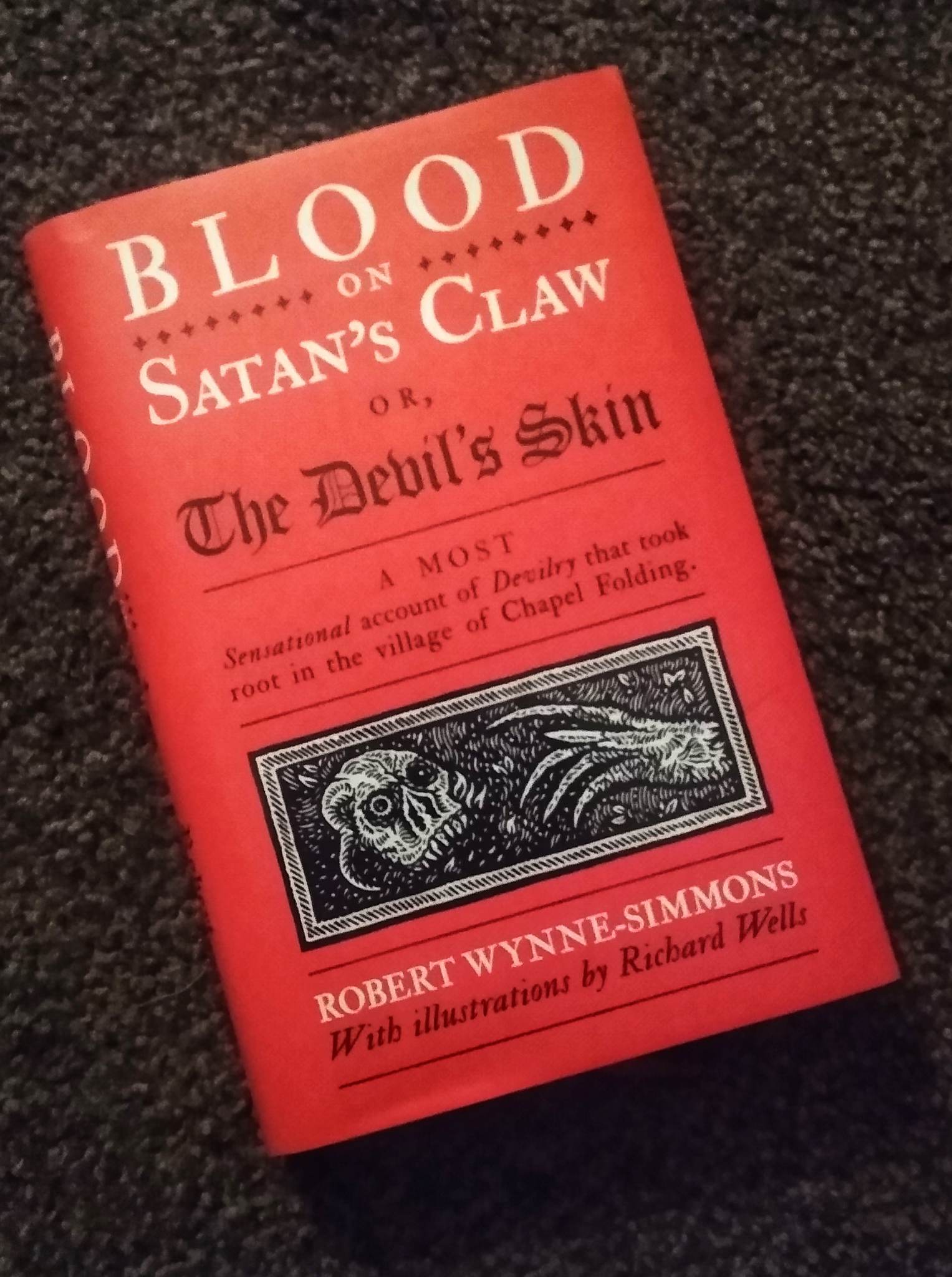
Over a half-century of waiting but finally that brooding member of the classic Folk Horror unhallowed triumvirate of British films, The Blood on Satan’s Claw (1971) has its own tie-in novel accompanying on the shelves the book partners of Witchfinder General (1968) and The Wicker Man (1973). Only in the case of Witchfinder General did the book precede the film (written by Ronald Bassett and published in 1966). The novelisations of The Wicker Man (which was initially inspired by David Pirner’s 1967 novel Ritual) and The Blood on Satan’s Claw followed the films after some years and were both penned by the screenwriters of said films – Anthony Shaffer (alongside the director of the film, Robin Hardy) in The Wicker Man’s case and Robert Wynne-Simmons with regard to The Blood on Satan’s Claw. With time passed this allowed the writers to return to their creations with a fresher mind and to alter or elaborate upon the stories – with greater success in the case of The Blood on Satan’s Claw, (The Wicker Man novel is a decent enough read and works well to flesh out Sergeant Howie’s character but the addition of the characters Beech and Sorrel and their narratives I find somewhat superfluous and distracting). Wynne-Simmons is more successful in fleshing out the bones of the characters (or rather furring up their flesh) without veering too far from the soul of the film.
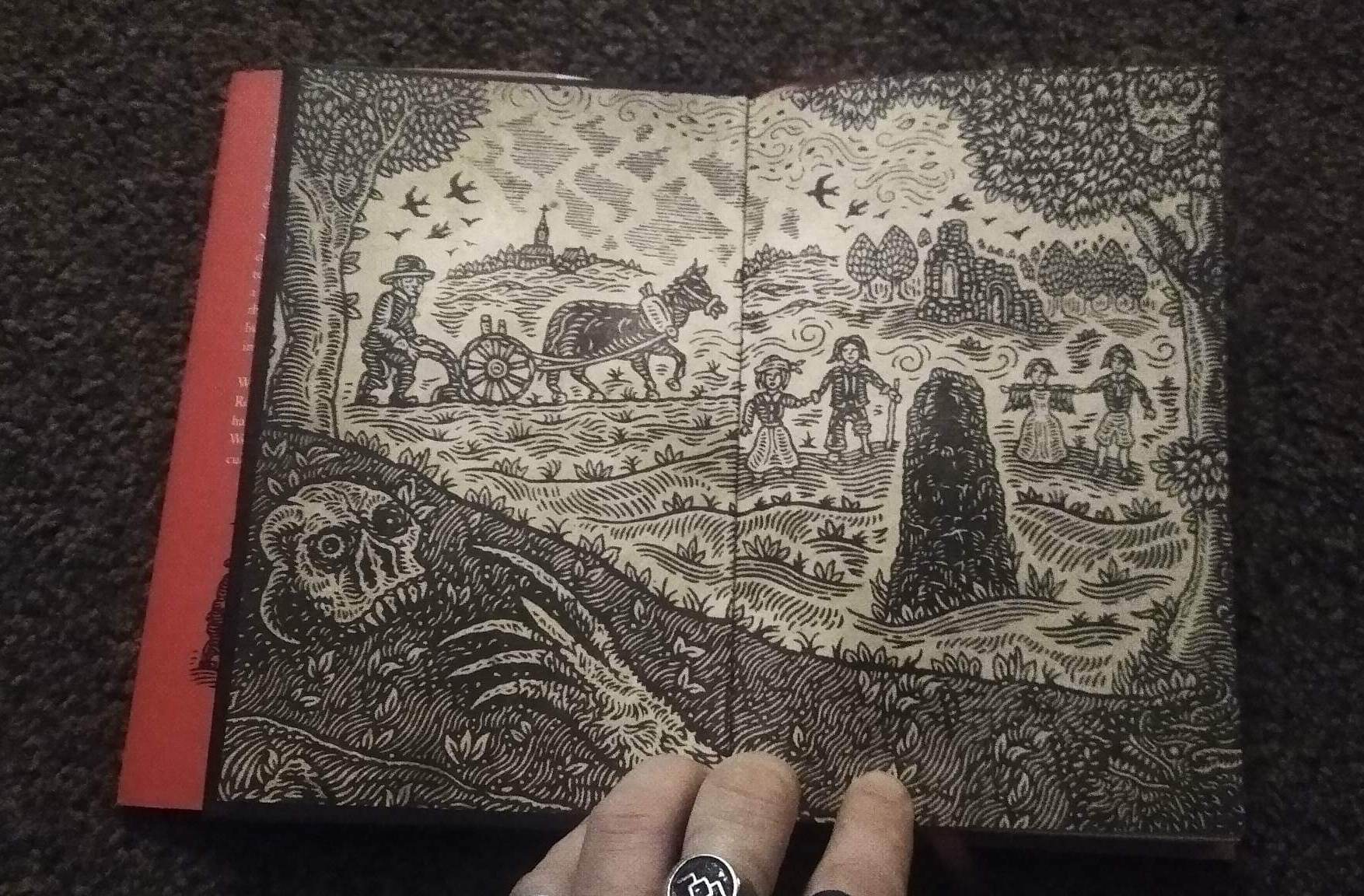
Blood On Satan’s Claw or The Devil’s Skin as the book is titled, follows events that unfurled in the early 18th Century in a pastoral British village named Chapel Folding following the discovery of grisly remains by farmhand Ralph Gower when turning the soil of Tarrant’s Field – a patch of land that generally was left un-ploughed. Remnants of the unearthed mysterious body parts fall into the hands of some local children and things in the sleepy village begin to turn decidedly fiendish. It was not simply bodily relics brought to the surface by Ralph’s toils but a malign presence that endeavored to make itself felt through the bidding and worship of many of the locals – particularly the children.
It is this utter corruption of innocence that I feel is the heart of Blood on Satan’s Claw and which gives both the film and book power. It is also however the source of controversy that casts a shadow upon the movie. Without giving away Spoilers to either film or book, there is one scene in particular that regards the fate of one of the village girls. In hindsight the director Piers Haggard says that if he were to have done it now, he would have filmed the scene differently. I personally feel that the events of this scene are pivotal in showing the savage possession that the children have fallen under but do understand the criticisms of its cinematic depiction. Perhaps this was of consideration to Wynne-Simmons in his novelisation as on paper the events unfold thematically the same but stylistically different. I am categorically a fan of the film, though utterly conscious of any issues levelled against it; but there is something I find eerily spell-binding in it. The book also captivated me. I wonder though if this would differ much had I not watched the film so many times. Dialogue I heard spoken in the specific actors’ voices and I pictured them likewise, which I think speaks well of the casting in the film. The book is a page-turner, though, written in a flowing, inviting manner so I think that for readers with no prior exposure to the film, it would still prove an engaging and interesting read.
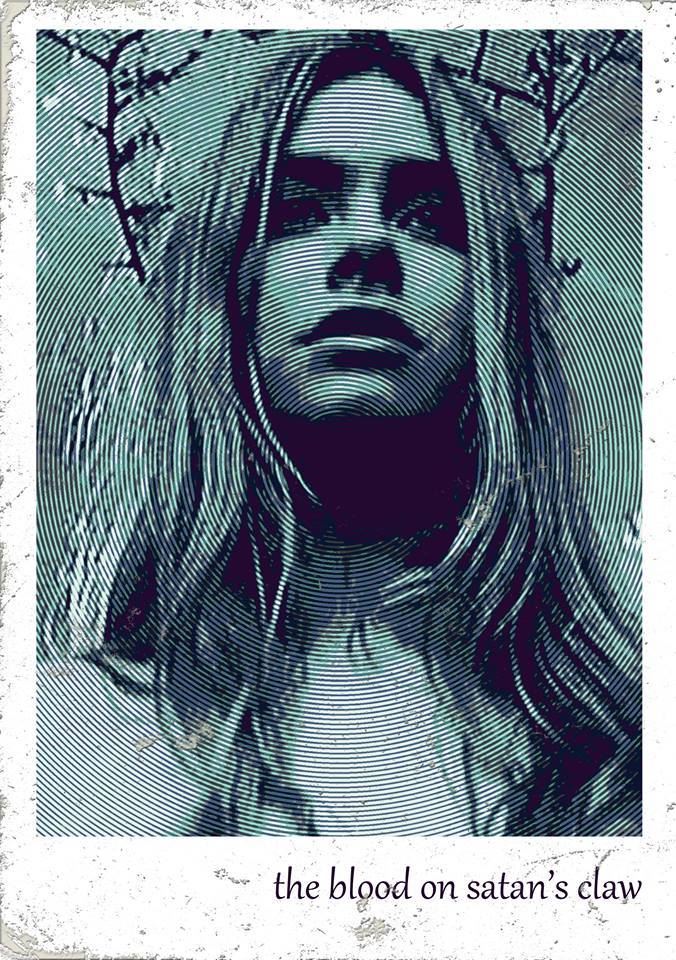
The film though also to an extent does seem to have influenced the artist Richard Wells whose chapbook-reminiscent prints illustrate the book. Depicted characters such as the beguiling Angel Blake (one of my all-time favourite movie villains) look very much like their onscreen counterparts (Linda Hayden in Angel’s case). I am a huge devotee to illustrated books so the imagery contained within is appreciated and a nice-touch. Wells being a prominent figure in the revival of Folk Horror being an apt choice for the job. One bugbear I have with the film is the visual reveal of the Fiend – I do not think the effects do the malignant entity justice (same bone of contention I have with the otherwise great 1957 film Night of the Demon). I would have preferred both to have been more unseen and would have found that more ominous and disturbing. However within the book the depiction of the devil of the fields in all his glory is reminiscent of the medieval texts and does suit the purpose better. The red bookmark ribbon is another small but pleasing touch – these visual attentions make the book more of a pleasure to behold and make for a nice ghoulish gift for someone.
It’s been a long time in coming but well worth the wait I feel, as I thoroughly enjoyed the book both for its narrative and writing and for its visual appeal.
Linda Hayden as Angel Blake in The Blood on Satan’s Claw (1971)
Blood on Satan’s Claw or The Devil’s Skin Written by Robert-Wynne Simmons, illustrated by Richard Wells
Thank You to everybody who voted in our Solstice charity donation poll. The poll is now closed and we are pleased to say that Yorkshire Wildlife Trust will receive £500 from our book sales profits towards their grassland appeal.
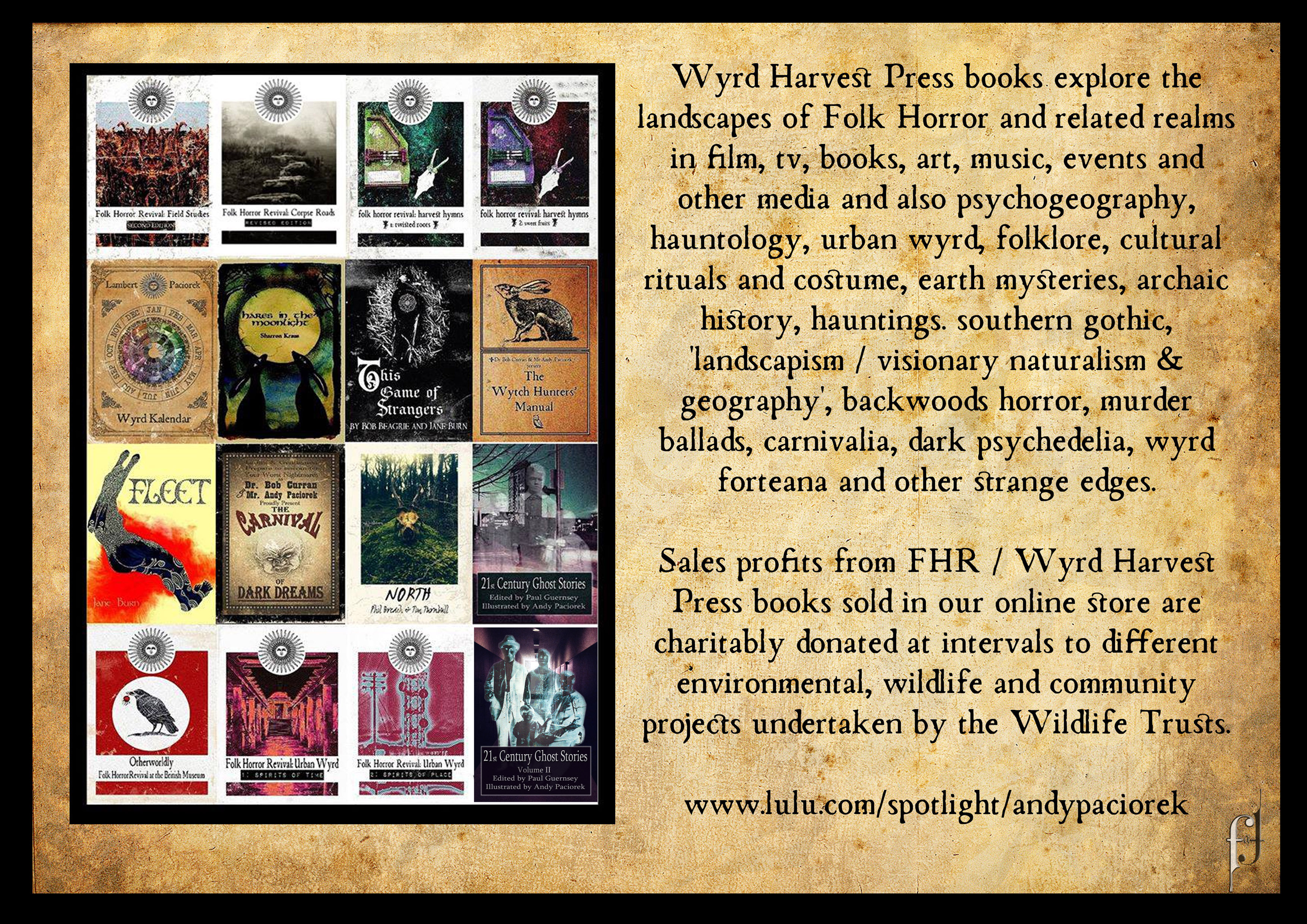
You can support more Wildlife Trusts projects by buying our folk horror and urban wyrd books at –
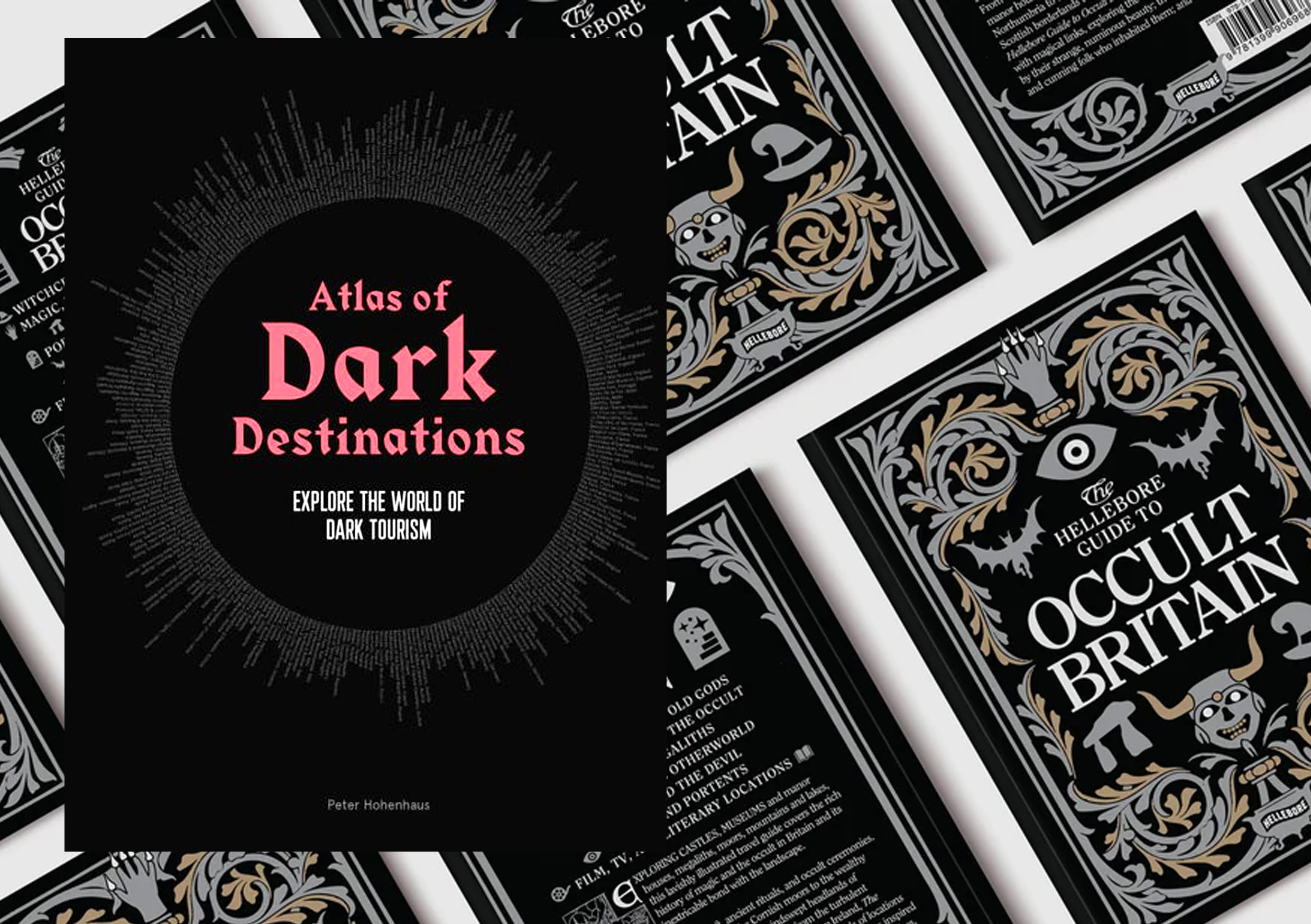
The Hellebore Guide is produced by the same team that created the very popular Hellebore zine that has blossomed in the recent renaissance of indie specialist-interest zines and the revival of attention to occulture and folklore. They have taken their sphere of interest and distinctive design aesthetic forward into book format with this very handy and beguiling gazetteer of British ritual, weird-lore and magical creativity. In the introduction specific attention is brought to the 2 books that this guide could most oft be compared to, the Readers Digest Folklore Myths and Legends of Britain and Westwood & Simpson’s The Lore of The Land. The inspiration and similarities are worn on the sleeve but as Pérez Cuervo informs us, there is a difference that carries the themes forward and makes this work a useful companion to those other books mentioned. In addition to covering numerous sites of folklore, occult practice and strange history, this book also points us to places that inspired or in some instances were used as filming locations for numerous cult /horror novels, films and TV shows. Fans of M.R. James, Derek Jarman, Witchfinder General, The Owl Service and many other such creators and creations will find notes of interest therein. This richly illustrated book will fit handily into a backpack for onsite visits. One point that readers may raise is that due to size restraints certain localities or topics may not be covered in the greatest of detail but within its 316 pages a lot of ground is trekked. The book therefore can inspire further personal research and does offer scope for further volumes.
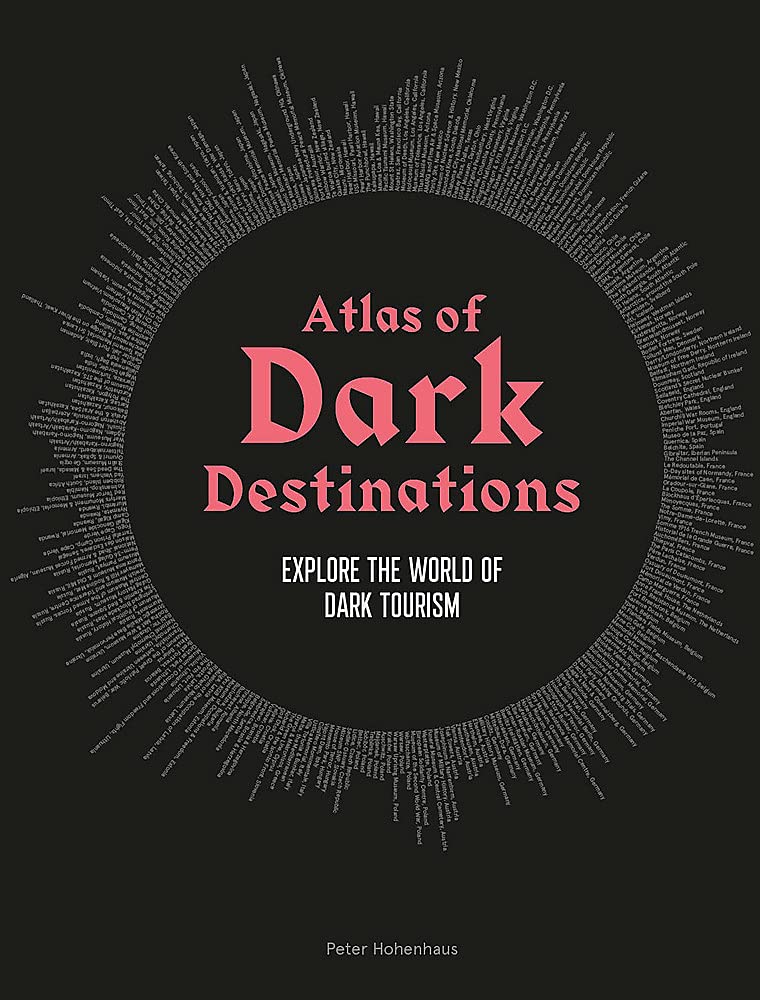
The Atlas of Dark Destinations however is not a book as easily taken out on location unless you have huge pockets as this is more of a weighty coffee-table book – lusciously illustrated but also incredibly informative. Again, as with The Hellebore Guide, the book cannot contain everywhere and everything but does cover considerable distance across the globe. As some countries are perhaps underrepresented there is again potential perhaps for a further volume. Hohenhaus, in his introduction, explains his reasoning for some omissions; he holds no truck with the visitation of living slums as tourist destinations nor does he favour notable suicide sites such as Japan’s legendary Aokigahara Forest. Serial Killer haunts and other singular murder sites are not represented but there is certainly no shortage of death behind the book’s dark cover. Sites of Genocide and wartime suffering are extremely well covered, with a lot of the book being taken up by sites of military and political intrigue. (Which upon showing the work to my 95 year old father, who was in internment and forced labour across Europe during WW2 and isn’t much of a reader generally gained a second review of the Atlas as being “A very good book”).
In addition to well known places covered within the book such as Chernobyl, Auschwitz, Hiroshima and 911 Ground Zero there are notable cemeteries, ossuaries, catacombs, penitentiaries, ghost towns and areas of natural wonder featured and some less familiar intriguing sites such as such as the ornate Milano Cimitero Monumentale necropolis, the Bali Trunyan Burial site and the Darvaza Hell Mouth (a 250 foot wide, 65 foot deep crater in Turkmenistan where an inferno fuelled by natural gas reserves has burned unabated for over 50 years.) Less obviously Fortean in subject-matter than The Hellebore Guide, and perhaps too heavily martial-politically focused for some readers of this magazine, The Atlas is nevertheless actually very readable and fascinating (in many instances particularly in provoking contemplation of humankind’s inhumanity towards each other.)
Both books could also be inspirational to fiction-writers as well as Fortean travellers, for use in setting location and back-story of their tales. Both books are designed to be dipped into rather than be read cover to cover and whether out on the road or in the comfort of my own arm-chair I can see myself delving into both titles for many years to come.
The Hellebore Guide to Occult Britain and Northern Ireland Edited by Maria J. Pérez Cuervo Hellebore Books 2021 Pb. 316 pp. illus. index. £18.75. ISBN. 9781399906968 https://helleborezine.bigcartel.com/productsAtlas of Dark Destinations: Explore the World of Dark Tourism Peter Hohenhaus Laurence King Publishing. 2021 Hb. 352 pp. illus. index. £25.00. ISBN. 9781913947194 https://www.laurenceking.com/product/atlas-of-dark-destinations/
It might be spooky season now, but you can write and publish horror all year round! Tune in to the Lulu learn what makes a great horror story and tips for getting started in the genre from Andy Paciorek, author, illustrator and founder of Folk Horror Revival, Urban Wyrd Project, Northumbria Ghost Lore Society & Wyrd Harvest Press .
In this session, Andy will share his tips, tricks and treats for writing and publishing harrowing horror stories.
Whisht! Lads, haad yor gobs,An' Aa'll tell ye 'boot the wyrms ...
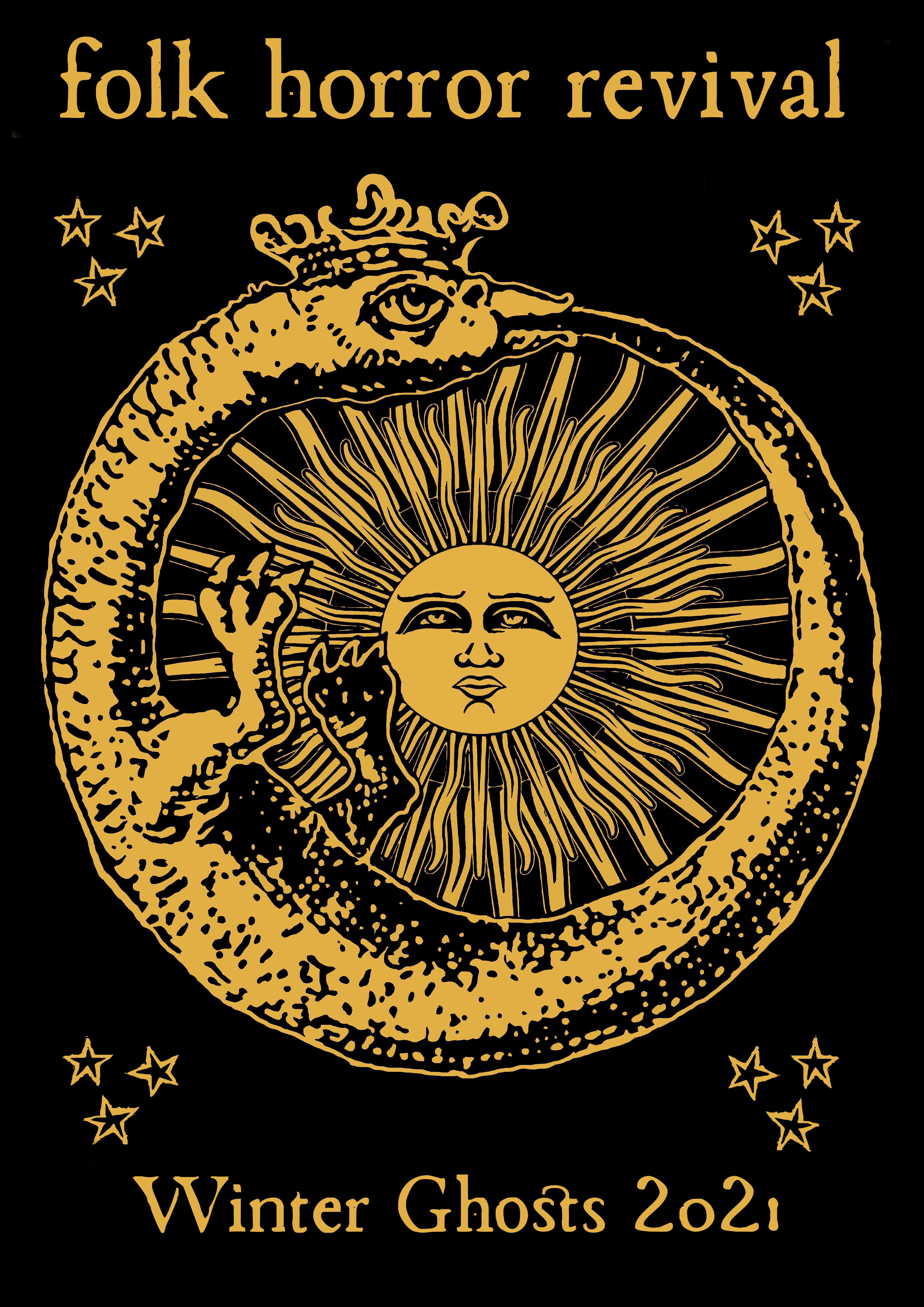
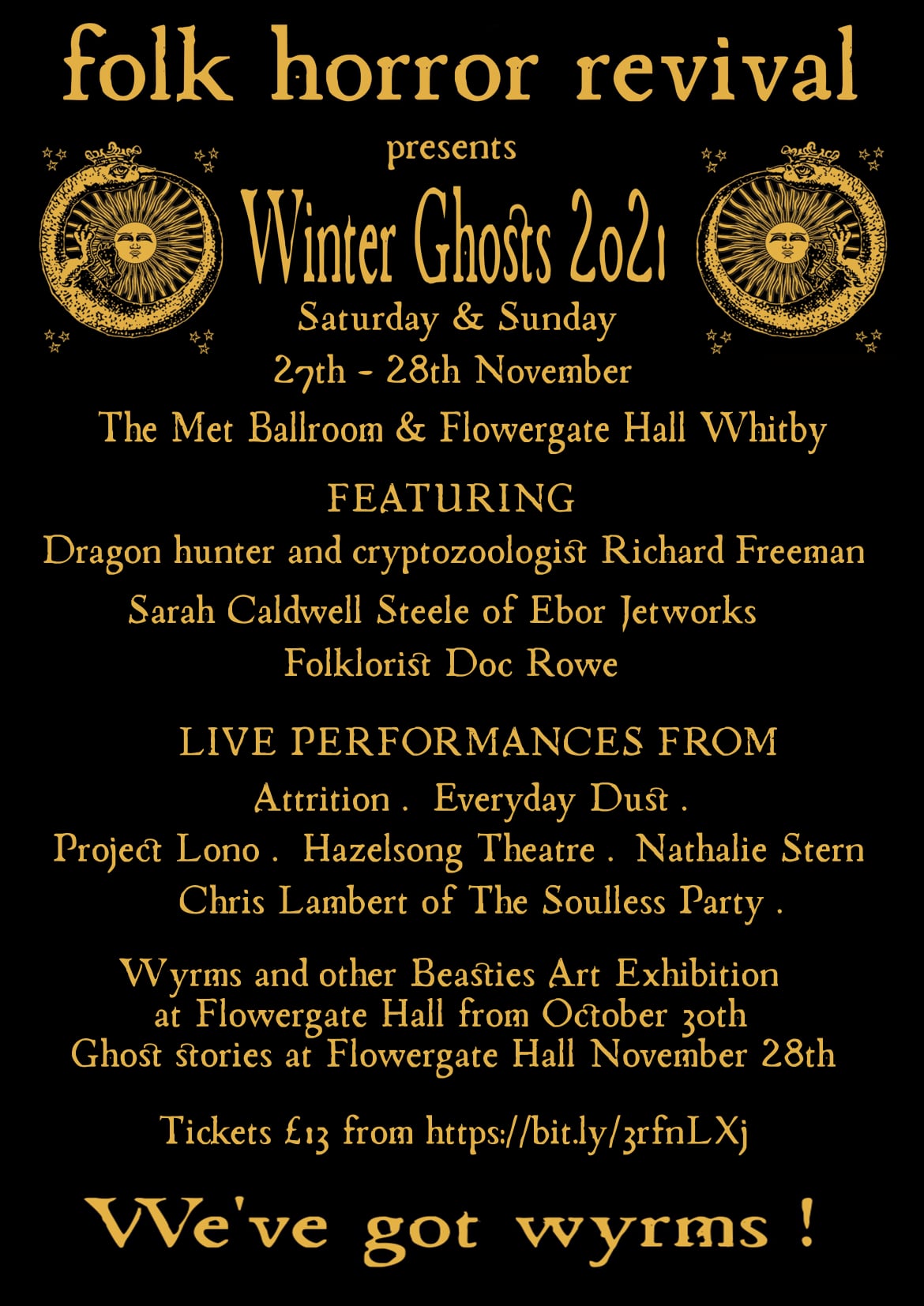
On the weekend of 27th & 28th November 2021 Folk Horror Revival are proud to present Winter Ghosts 2021 ~ a veritable feast of Cryptid inspired wonders at Whitby North Yorkshire. On Saturday 27th 2021 the Metropolitan Ballroom (The Met) will present a fantastic mixture of Talks and Live Music. Whilst on Sunday 28th 2021, there will be session of story-telling in the Flowergate Hall which will also be hosting a phenomenal Folk Horror Revival otherworldly cryptid Art Exhibition at the time …
In the first of several posts let us introduce you to the wealth of talent that will delight your senses …
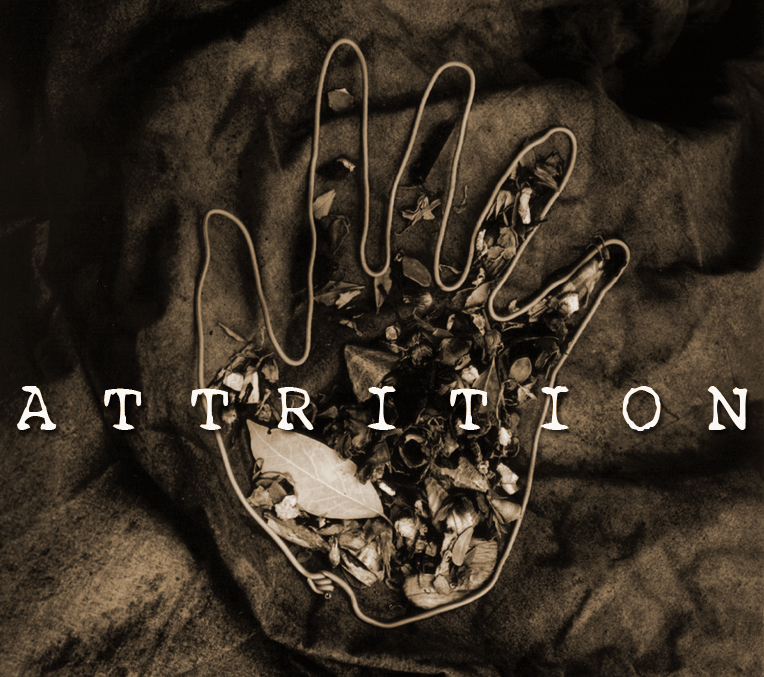
A T T R I T I O N
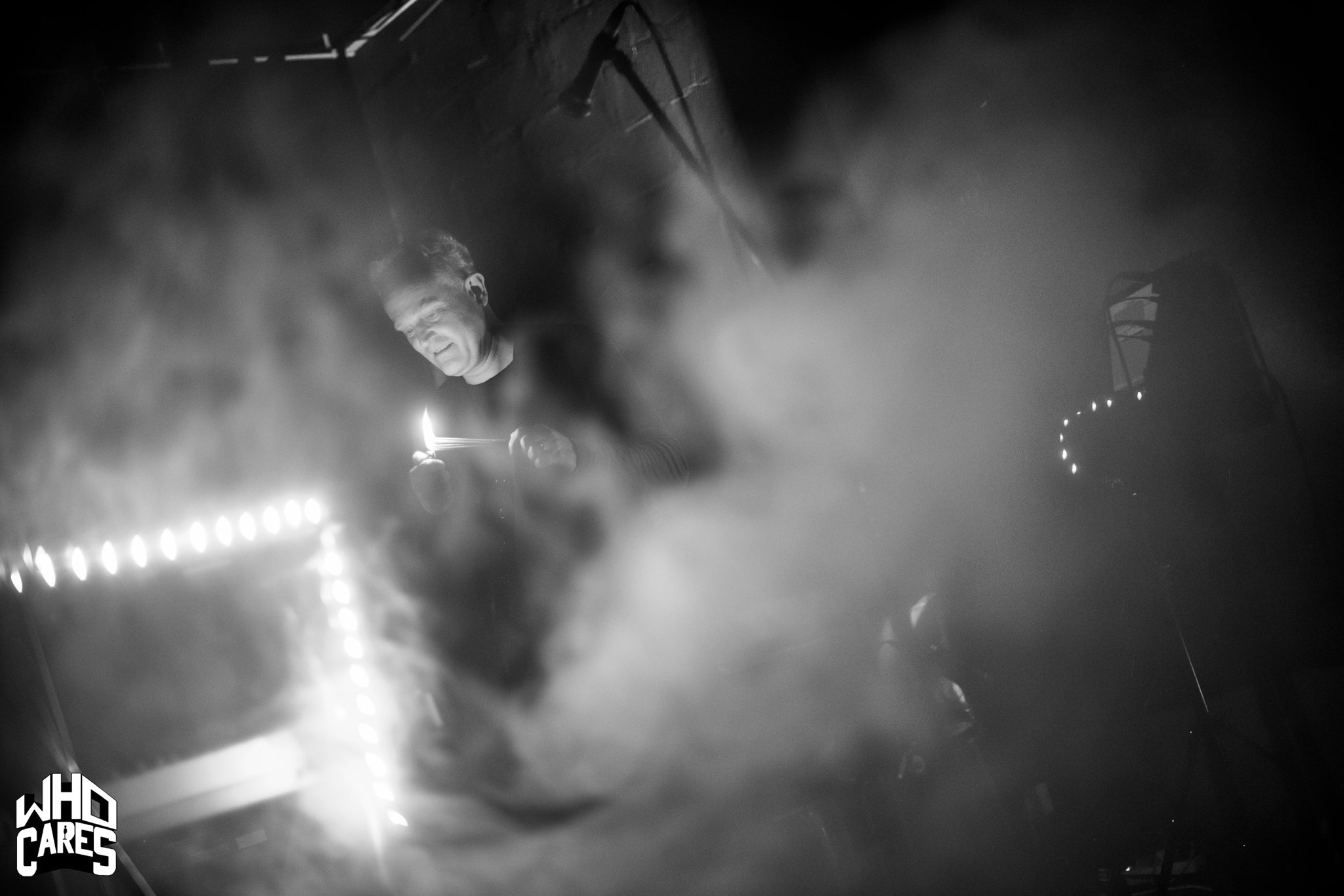
“Inside a cage of sound, Cold waves of electronics are juxtaposed against voices that seep through cracks in the walls of machinery and wires. Lyrics dart out in bullets from soundscapes peppered in sharp vocals and sound bites. A viola plays in the distance, giving life to this inorganic mass… Such is the imagery that spawns Attrition, who, with its marriage of the classic and modern, has brought to music the equivalent of a surrealist painting. From its earlier sparse and stark soundscapes, to a more expansive palette of orchestral work, Attrition has successfully melded several genres into one. The music flows – from gothic to industrial to experimental to classical – so smoothly, they might as well be making their own category. With more than twenty albums of constant variety, and an ever-expanding sound, they remain one of music’s darker and fascinating lights.” Akane
ATTRITION are pioneers in a darker electronica. Formed in 1980 in Coventry, England, influenced by a mix of punk ideology and experimental art aesthetics, they emerged as part of the early ’80’s UK Industrial scene alongside contemporaries Coil, Test Department, Legendary Pink Dots, In The Nursery, Portion Control et al. Founder Martin Bowes has steered the band through a 40 year career, fuelled by a succession of critically acclaimed albums…
The band has regularly toured Europe, North America and South America, Russia and Asia, appeared at major festivals and had their music included on a number of TV and film soundtracks….
Through their career Attrition have worked with musicians as diverse as Wolfgang Flur, psychedelic veterans The Legendary Pink Dot’s , punk legend TV Smith to Franck Dematteis of the Paris Opera.
Attrition’s music has featured on countless releases – from 1984’s “Bullshit detector 3” on Crass records to the hugely successful “Animal liberation” album alongside Siouxsie & the Banshees, The Smiths, Nina Hagen & Lene Lovich etc…
Their song “Acid Tongue” featured on KTEL’s Industrial story CD – a who’s who of industrial music with Cabaret Voltaire, Throbbing Gristle, Ministry, Nitzer Ebb, Neubauten et al…
In Germany Orkus magazine’s Best of the 90’s collection featured their darkwave classic “A girl called harmony”… Martin’s increasing studio production work at his studio, The Cage, has included mixes for The Damage Manual (Martin Atkins, Jah Wobble, Geordie Walker, Chris Connelly et al…), Die Form, In the Nursery, Black tape for a Blue girl, Mona Mur/En Esch and mastering for countless bands and labels… He contributes synths and vocals on a song on the last Pigface album, is the narrators voice on US horror series, “C for Chaos”, has written the score to US horror film G.H.O.S.T from Mutantville productions … Their most recent album, Millions of the Mouthless Dead (inspired by Martin’s grandfathers experiences on the Western Front in 1917) includes collaborations with Anni Hogan (known for her work with Marc Almond through the 80’s) and the legendary Wolfgang Flur (ex-Kraftwerk)…
ATTRITION toured in the UK, Italy, New Zealand, Transylvania, Canada and Japan in 2018/19, and are currently working on an all new album for release later in 2021: The Black Maria. Meanwhile setting up shows around the world in support of it…
“Attrition have always been a nexus of industrial fury, gothic drama, ambient structural finesse and classical chamber orchestrations. Stunning in scope, character and intellect, Martin Bowes has been a paragon of true creative prowess, holding in two hands the past and future of music, and smashing them together with a calculated and charismatic menace. Bowes builds his dark industrial music with all the compassion and attention to detail of a classical musician…”
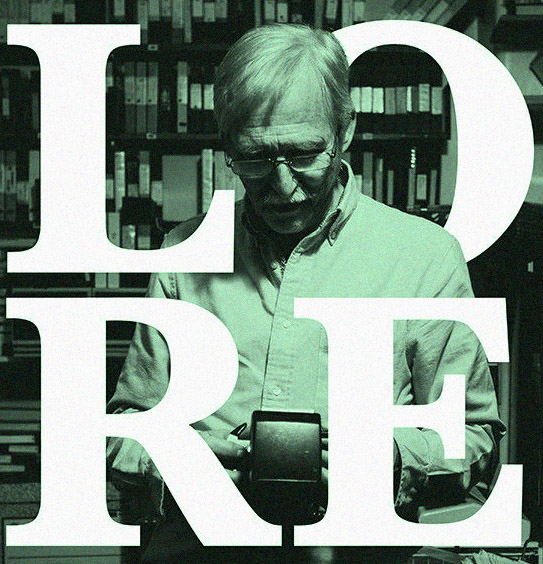
Dr ‘Doc’ Rowe has been documenting British Cultural tradition for nearly sixty years using video, film and photography as well as audio. His unique collection of contemporary and historical material on the traditional culture of the British Isles and Ireland is now housed in Whitby. The strength of the collection lies in its ongoing ‘serial’ fieldwork and regular contact with communities where individual events flourish – hence the material is at once wide-ranging, first hand and constantly updated. A long-term council member of the Folklore Society and Oral History Society, he regularly broadcasts on aspects of folklore and tradition he has also written a number of books and his photographs are regularly published. A teacher, photographer, broadcaster and performer, one major inspiration stems from working with Charles Parker in Radio documentary from the early sixties and in later theatre productions. . As well as a number of one-man exhibitions, he joined artists Alan Kane and Turner Prize winner Jeremy Deller in a British Council travelling exhibition ‘Folk Archive: Contemporary Popular Art from the UK’ [2005 and still touring internationally]; he contributed to ‘British Folk Art’ [Tate Britain, 2014] and, more recently, ‘Lore – the Living Archive’ is an Arts Council funded travelling exhibition that curated material from the archive alongside contemporary artists who drew creative inspiration from the archive itself. www.docrowe.org.uk
‘Wyrms and Dragons of the Northlands’
By Andy Bates and Linda Richardson of Hazelsong Theatre
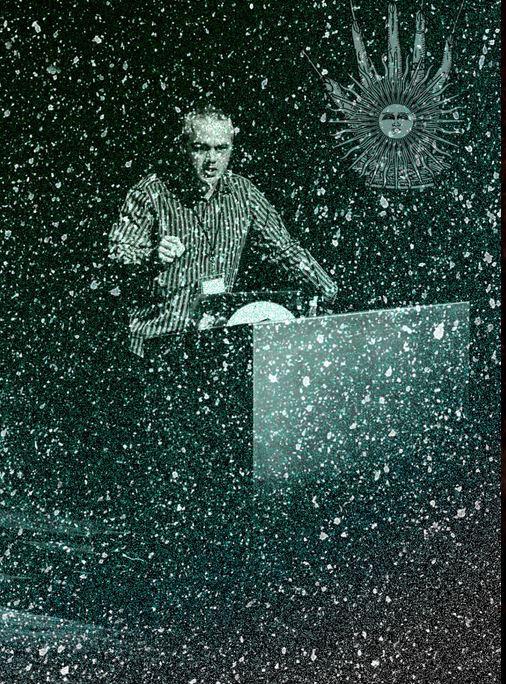
Tales of wyrms and dragons have woven their through the folklore of the North of England and of the Borders for generations. Drawing upon a multitude of sources, Andy Bates and Linda Richardson will explore these stories and their origins and will track them to their roots in Norse, Anglo Saxon and Celtic literature and iconography.
Andy and Linda will be accompanied in their presentation by an imposing and unpredictable wyrm of significant sinuousness.
Andy Bates is an archaeologist, a craftsman, a puppet maker and a performer. Linda Richardson is an artist, a costume maker, a performer and a writer. Together they are half of Hazelsong Theatre, whose work is rooted in the songs, stories, myth and folklore of the North and the Borderlands. The troupe creates performances which bring together storytelling, music, puppetry, theatre and ritual and all borne of the knowledge that these stories and songs are vital and very much alive. Hazelsong is working at the edge of the village, where the human world meets the wild and the imaginal, and where there is so much at stake.
“I bit into a pear once and tasted nothing but blood and gristle.” (from a conversation with an old man by Stanley Coulton.)
An audio visual and musical experience in which one of the strangest and darkest chapters in the history of the Black Meadow is explored.
Stay out of the mist…
Chris Lambert has been writing since 1991, creating plays for Tilt, Voice, Workswell Productions and his own company Exiled Theatre. He won the 2012 Reading playwright competition, Off the Block. Since then he has turned his hand to short stories and is completely stuck on his novel. Chris is part of The Soulless Party and has been working with Yorkshire musician Kev Oyston on the Black Meadow project inspired by the strange folk tales surrounding the North York Moors. He is founder member of experimental Mummer troupe The Mummers and the Pappers who have made appearances at two Delaware Road festivals. He has curated two albums “Songs from the Black Meadow” and “Wyrd Kalendar” for Mega Dodo that include tracks by The Hare and the Moon, Tir Na Nog, The Rowan Amber Mill, Alison O’Donnell, Concretism and Keith Seatman. He has had the pleasure of being Master of Ceremonies for Folk Horror Revival at the British Museum, Edinburgh and Whitby Winter Ghosts and for Mega Dodo and Fruits de La Mer at Séance at Syds. Chris is also a secondary school Drama and Film Teacher and occasionally dabbles in sound art.
Published works by Chris Lambert include: “Tales from the Black Meadow”, “The Black Meadow Archive – Volume 1”, “Christmas on the Black Meadow”, Songs from the Black Meadow” and “The Comic Mystery Plays” published by Exiled. His selection of short stories “Wyrd Kalendar” (illustrated by Andy Paciorek) is published by Wyrd Harvest Press. The plays “Ship of Fools”, “The Simple Process of Alchemy”, “Ugga (A play about a boy with a paper bag on his head)” and “Loving Chopin” are all published by Stagescripts. His short stories “First Step” and “Treehouse” have been published in “The Dead Files” anthologies volumes IV and V; “The Catalogue” and “Pilot” in “Tales of the Damned”; “The Eight Words” in “Dark Spirits”; “The Patient” and “The Most Precious Possession” in The Ghastling.
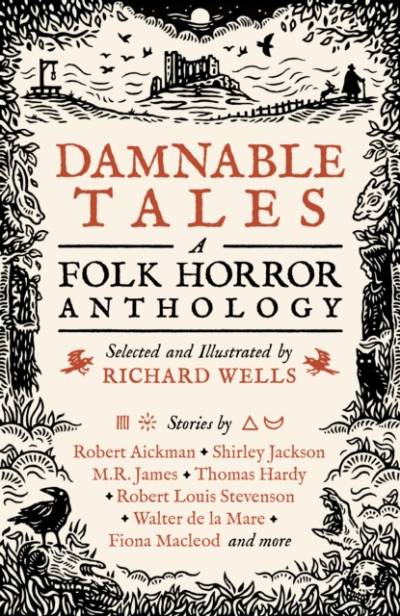
Damnable Tales: A veritable tome of classic Folk Horror stories from the pens of Shirley Jackson, MR James, Arthur Machen, Algernon Blackwood and numerous other luminary writers, selected and illustrated by master print-maker Richard Wells.
Folk Horror Revival recently interviewed Richard and reviewed his illustrated opus … Read on or be Damned.
FHR: Hello Richard. Thank You for agreeing to talk to us. Although many of the folk horror revivalists will already be very familiar with your work, please tell us a little about yourself and what you do.
Richard Wells : Hello! Thanks for having me. In my day job life, I’m a graphic designer for film and television, working as part of the art department team. It’s my job to provide any props or set dressing that requires any kind of graphic design. So, for example, on Dracula, I made the hand-written correspondence and documents relating to the sale of Carfax Abbey, and background elements like heraldic pennant flags hanging up in Dracula’s castle. I intentionally picked an exciting example there – other times it’s contemporary drama, where I’m producing mundane things like product labels to hide the real brands we aren’t allowed to show (just this morning I was working on shampoo bottles). Away from the telly work I produce my own artwork, which for the past few years has mostly taken the form of lino printing. I find the solitary, hands-on work keeps me sane, an escape from the computer screen and hectic 11 hour day TV schedules.
FHR: Much of your work has a horror flavour to it. Is there an area you’ve had a long interest in and can you remember what was the first story, TV show or film that scared or unsettled you? What are your favourite films and TV shows?
RW: Yes, an interest in horror has been there as far back as I can remember. A book I treasured as a child was the Usborne book of How to Draw Ghosts, Vampires & Haunted Houses (an illustration of Dracula by the late Victor Ambrus I would obsessively try and copy). I remember being terrorised by Stephen Volk’s Ghostwatch ‘live’ on Halloween night 1992 (age 9). Another memorable viewing was the 1953 version of House of Wax round my grandad’s. There’s a sequence where Vincent Price’s black-clad villain stalks a victim through fog-bound back alleys that really struck a chord. I seems like nothing watching it now, but at the time I had nightmares for weeks. When I was allowed a tiny TV in my bedroom to play on my SNES, I’d occasionally catch bits of late night horror following a mammoth stretch of gaming. I can vividly remember being frozen in fear at the ghoul appearing at the car window in Herk Harvey’s Carnival of Souls. In my memory, the fuzziness of the old 4:3 film on my mid 90s tv screen only added to its uncanny grip. I’ve got the shiny Blu ray now, and a small part of me wonders if it has lost some of its power looking so sharp, now you can make out the white face paint caked onto the ghouls. My favourite film is The Wicker Man, watch it every year. Last year I saw Kiyoshi Kurosawa’s Cure for the first time, I can see that quickly becoming a firm favourite. His mastery of generating understated creeping terror is thrilling to watch.
FHR: A lot of your artwork utilises a print-cut technique that is evocative of old chapbooks and the like, what is it that appeals to you about this method and style of work?
RW: I think it’s something to do with the rendering of disturbing subject matter contrasted with the fairly crude and naïve style that appeals. Historical horrors that on the surface appear like images from a children’s picture book. The horror doesn’t always hit you on first glance, the mix of dark humour and eeriness in the imagery. As a spooky teenager, I had a book on the Mexican printmaker Manuel Manilla, and would obsessively try and replicate his animated skeletons. I’m drawn to the individual imperfections you get with relief printing. No two prints will be identical, which again I find a refreshing contrast to working digitally. If I could make a living solely from relief printing, I think I would. Probably born a few centuries too late…
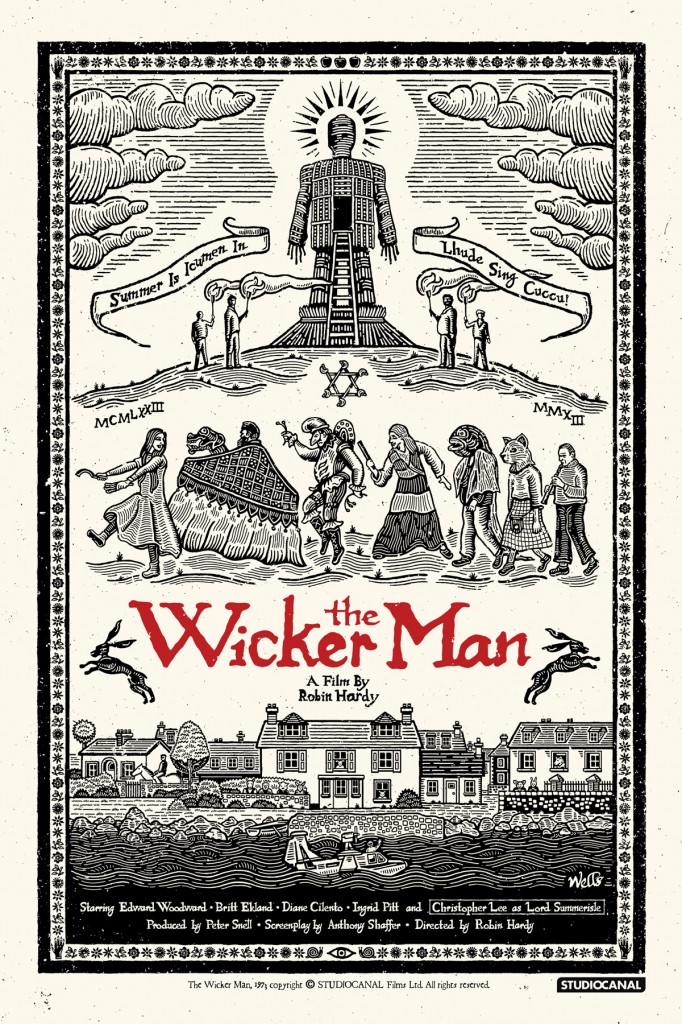
FHR: One of your first works to garner a lot of attention amongst the folk horror community was your poster for The Wicker Man. Is there anything in particular that drew you to that film and to folk horror in general?
RW: Well it definitely all started with The Wicker Man. I vividly remember seeing it for the first time on tv with my mom as a kid, glancing across to see her visible distress at the ending. To be honest, I think on first viewing I found it more silly than scary, I couldn’t really get a handle on it. I came to fully embrace it when it first appeared on DVD, and fell for its quirks and beautiful imperfections. My taste in horror tends more towards the uncanny and quietly eerie over more overt, showy horror (though I do enjoy a mad gore show on occasion), and Folk Horror fits the bill. I’m a keen walker, and I’m drawn to films that capture the landscape in an interesting way, which you obviously get with a lot of Folk Horror. Also anything with a folkloric twist, or ancient terrors, evocations, all that good stuff.
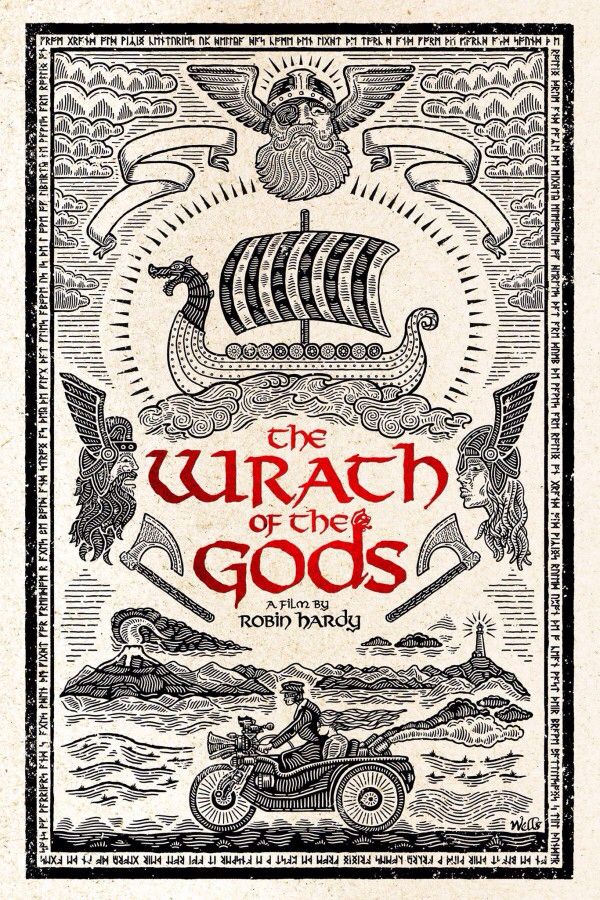
I never expected that my Wicker Man fan art would lead to me having tea and biscuits with Robin Hardy. I think he’d seen the poster at an anniversary screening. I thought it was some kind of bizarre prank call when I picked up the phone to “Hello, this is Robin Hardy, I directed the Wicker Man.” He was interested in me designing a couple of posters for the crowdfunding campaign for his new film, so I was invited down to his home to meet and discuss ideas. It was a strange and wonderful afternoon, chatting to the director of my favourite film, him occasionally sloping off to deal with the workmen fitting new curtains on the first floor. Sadly, Wrath of the Gods never came to be, but I have the memory to treasure all the same.
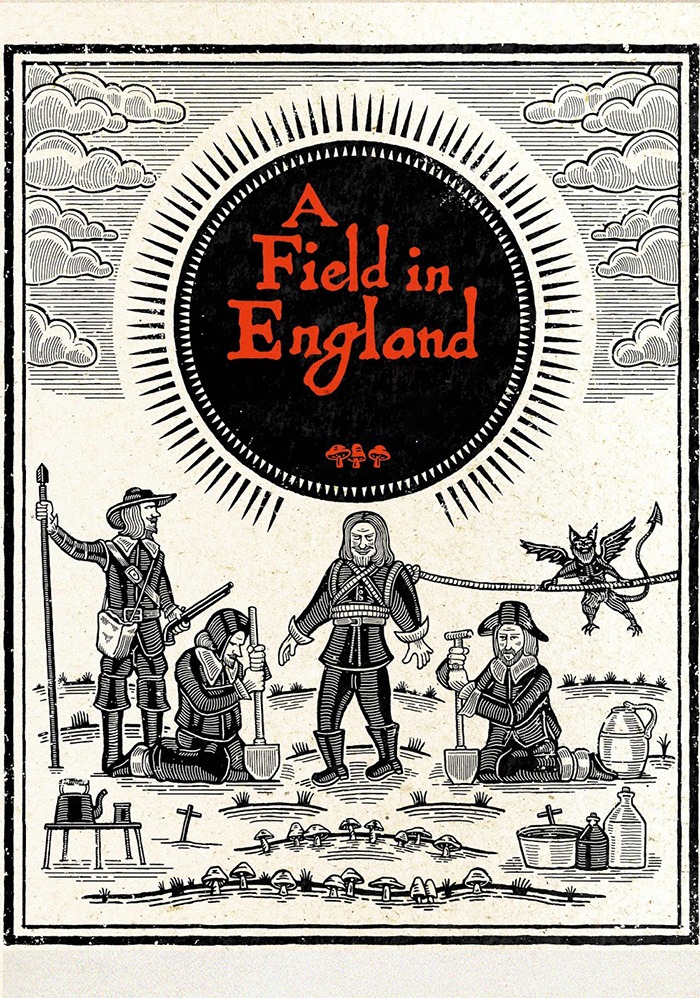
FHR: Another one of your renowned works is your poster for Ben Wheatley’s film A Field in England and subsequently your artwork featured in his most recent foray into folk horror, the film In The Earth. How did your involvement in the film come about and what are your thoughts on Ben Wheatley’s work?
I instantly became obsessed with A Field in England right from its initial poster by Kenn Goodall and Luke Insect, and the arresting teaser trailer by the great Julian House. After seeing the film on opening day, I was very keen to create my own fan artwork. On the Blu ray commentary (I think it was the first film to be released in cinemas and on Blu ray on the same day), Ben Wheatley talks about how the unusual static tableaux moments in the film were inspired by woodcut art of the period, so it seemed an obvious way to go when producing a poster design. I’d recently joined Twitter, and I think that was my first piece of artwork I put up on there. Amazingly, it quickly received attention from the film’s DOP Laurie Rose and star Reece Shearsmith (a particular thrill for me, as a huge fan of The League of Gentlemen). Some time later I then got an email from producer Andy Starke, asking to get the design printed to give out as a gift for cast and crew. So I guess I stayed in their address book from that experience. During the first Covid lockdown, I had another email from Andy enquiring about producing some art for Ben’s latest film (it was called simply ‘The Woods Film’ then). Of course I jumped at the chance, got to chat with Ben about the project, and he sent me some of his initial design sketches as a starting point. I’m especially keen on Ben’s darker pictures, the naturalistic mundanity of Kill List, making the sudden and shocking jolts of horror even more powerful. A Field in England is my favourite, the terrific ensemble cast and wonderful flow of the dialogue in Amy Jump’s screenplay. And it’s funny! I would’ve loved a spin-off series with the double act of Richard Glover & Reece Shearsmith’s Friend & Whitehead on an occult cross-country walking odyssey.
FHR: You have recently released the rather marvellous anthology of classic folk horror short stories Damnable Tales selected and illustrated by you. How long did this take to put together and what are the reasons for selecting the tales you have? Some of the stories are by more obscure writers, were they all already familiar to you or did you have to do some digging? Who are your favourite writers and which is your favourite short story and book?
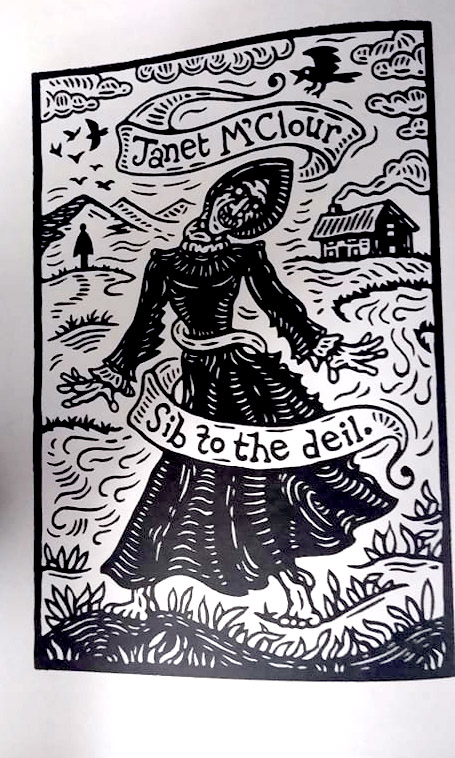
RW: The Damnable Tales project came pretty much out of the blue. In early 2020 I received an email from John Mitchinson (co-founder of crowdfunding publisher Unbound), asking if I might like to collaborate on a project. I think he’d seen some of my lino print work online. At the time I’d been working on a series of lino prints based on the ghost stories of M.R. James. I’d been thinking about expanding the series to encompass vintage Folk Horror tales, so when coming up with potential ideas for a book, that seemed a good way to go. It came about at just the right time, as like most people, my day job instantly collapsed with the arrival of the first lockdown. So I was able to solely concentrate on searching for tales and working on lino prints for a good few months. As Folk Horror has fairly slippery and wide-ranging definitions, I was generally looking for short horror stories with a folkloric element, though that isn’t true of every story. Something like Shirley Jackson’s brilliant ‘The Summer People’ has no supernatural or folkloric elements, but I think the deep rural unease and suggestion of a sinister community at work are entirely in keeping with the genre. Right off the bat, I knew two stories I definitely wanted to include were from my two favourite writers: M.R. James and Robert Aickman. ‘Bind Your Hair’ from Aickman’s 1964 Dark Entries collection is probably my favourite short story. I love how with Aickman you’re never sure where the horror is going to come from, how the stories unfold like a dream, the uncanny stealthily creeping in. ‘Thrawn Janet’ is another tale I was familiar with. I wonder if readers unfamiliar with it will be put off by the untranslated Scots text of that story, but I find it a pleasurable experience to decipher, and I think lends itself to the evocation of the period. Other tales came from fishing for recommendations, some from Folk Horror lists I found online. Others came simply through scouring any vintage horror anthologies I could lay my hands on. I’d never read any horror tales by A.C. Benson before, so ‘Out of the Sea’ came as a nice surprise, one of my favourites in the collection, fantastic imagery with the demonic goat snuffling along the seashore! A couple of tales came from my searching of Folk Horror buzzwords in a mammoth e-book of 1001 horror stories (I never claimed to be a professional anthologist)! That was how I came to find ‘A Witch-Burning’ by Gertrude Minnie Robbins (writing under her married name Mrs. Baille Reynolds).
FHR: Your work suits the book medium incredibly well; do you have any plans afoot for further illustrated anthologies or other books and what other projects can we expect to see from you in time to come?
RW: As of next week I’ll be finished on my current TV project, so I’m looking forward to getting back to some lino cutting. I’ve had a design based on In the Earth lying half-finished for months. Plus I’d like to get a few more designs added to my M.R. James series. Speaking of Monty, this Christmas we’re getting Mark Gatiss’ adaptation of The Mezzotint, in which I perform the title role! I’d produced a 17th century pamphlet for his previous adaptation Martin’s Close, and was given a lot more to do here. I was unfamiliar with the mezzotint printing process beforehand, so enjoyed researching that. The time constraints of TV meant I had to produce the haunted imagery digitally, but I had a lot of fun with it.
I think I’m going to be doing some more cursed artwork for the band Green Lung, whom I’ve enjoyed collaborating with over the past few years. And there’s a very exciting illustration project with Unbound on the horizon, but I can’t talk about that, yet (suffice to say, it will be of particular interest to fans of Folk Horror). And there’s also early talk of a second book of illustrated short stories. One idea I’m keen to pursue is a second volume of Damnable Tales that takes in vintage tales from around the world. Looking forward to researching that. Watch this space…
Damnable Tales : Book Review
As soon as I had heard the initial musings of a book of classic folk horror short stories selected and illustrated by Richard Wells, my curiosity was piqued on several levels. Being a ‘book-artist’ myself(writer, illustrator & small-press publisher) I have both a bias and fondness for illustrated editions and Wells is not an artist that has bypassed the attention of many folk horror revivalists. Should his name have somehow escaped attention then his film posters for The Wicker Man and A Field in England, his lino-cut prints of folkloric entities and his cover for Edward Parnell’s atmospheric and resonant book Ghostland, and his work featuring in film and Tv (most notably here in Ben Wheatley’s film In The Earth) will very likely not have passed unnoticed. The subject matter of this tome unexpectedly caused my ears to prick up with curiosity considering my own involvement with this whole folk horror thing and as I am a little bit of a collector of weird short stories, I was very intrigued to see which tales he would select.
As with all collections of short stories there are likely to be tales that appeal to some readers and others less so. I believe this is generally subjective on the part of the reader and not always because a bad selection is made. I will not dally on the tales which sat less well with me, because there is nothing constructive in doing so, my taste is not necessarily your taste, and I didn’t actually dislike any of the tales selected – there were just some I liked more than others, as is the way with anthologies. This book is more voluminous than I expected and within its hallowed pages may be found some familiar tales by some familiar writers, some unfamiliar tales by some familiar writers and some unfamiliar tales by some unfamiliar writers. This makes the book a good choice for those new to the folk horror ways whilst still being of appeal to those already acquainted with the strange goings-on behind the old hedges and the standing stones.
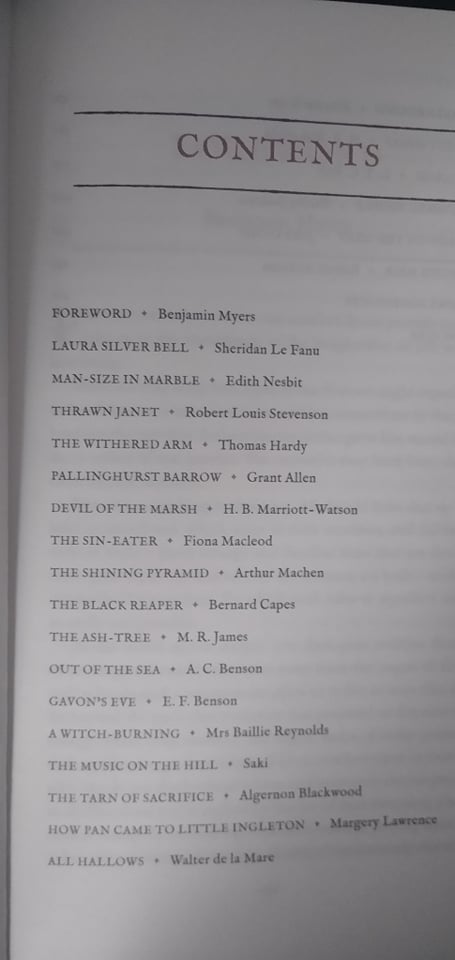
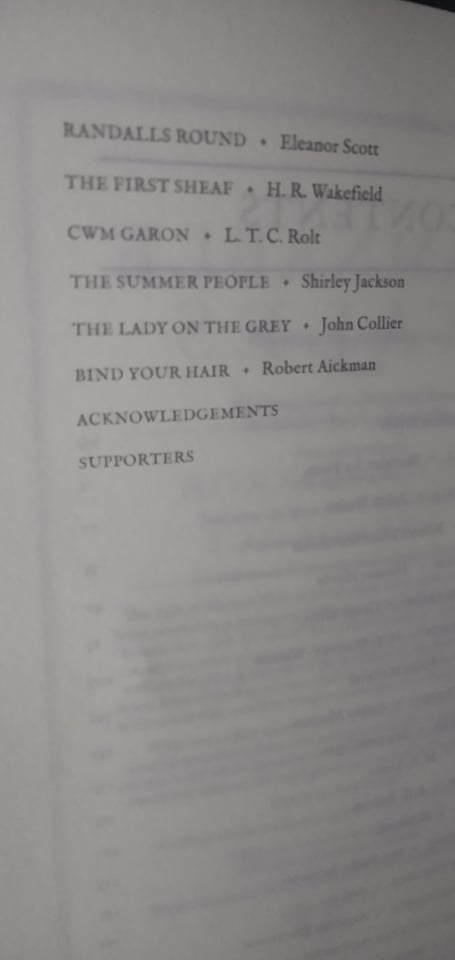
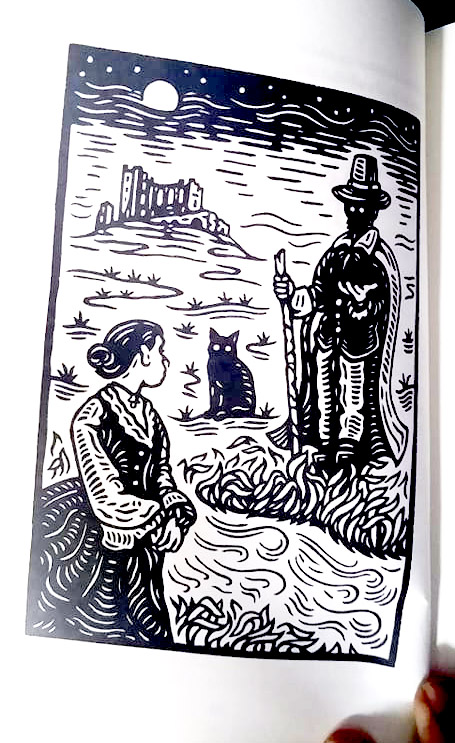
The tales are presented chronologically according to when they were written, starting with Sheridan Le Fanu’s darkly romantic Laura Silver Bell of 1872 and culminating in Robert Aickman’s delightfully bizarre 1964 story Bind Your Hair. This shows how the sub-genre or mode of folk horror developed over nearly a century, which is more stylistically than subject-wise for the most part. It also clearly illustrates otherwise to anyone who may still think that folk horror originated with 3 British films at the tail-end of the hippy dream. A note therein though is that the majority of stories in this book do have a British or Irish origin, with Shirley Jackson’s 1950 tale The Summer People notablybringing an odd slice of Wyrd Americana to the table. This may not be too unexpected as folk horror is a prevalent feature within British and Irish weird fiction as it fits so well with the landscape, lore and history of these isles. It is not of any detriment to the book but should further volumes follow (which I hope they will) then my curiosity would again be piqued to see stories selected from a variety of nations – certainly Eastern Europe and Asia could provide a wealth of possible content and it would be intriguing to see how Wells would visually approach the writings of Gogol, Meyrink and Kafka for instance or the translations made by Lafcadio Hearn of Japan’s haunted heritage. And what wonders could be dug from the soil of Africa, Australasia and Scandinavia and rendered with the imagery of Richard Wells? Temptation to the imagination, but anyway back to the book in hand and before I speak further about Well’s art, just a note that some of the early tales in this book are quite heavy on the use of vernacular dialect, which when done well can illustrate the versatile skill of a writer but can alas also sometimes put something of a screen between the reader and the tale being told. It is easier to become absorbed and drenched in the delicious dread and atmosphere of a spooky tale if you do not have to repeatedly reach for a dictionary or try to second-guess what is actually being said. However, these tales are important examples of the diversity of the folk horror tradition and worthy of inclusion in such an anthology. There are only a couple of tales that do this, so for the casual reader or those entirely new to folk horror, do not be put off. As these stories occur early in the book, it would be advised perhaps not to read cover to cover but to dip in and out randomly or even start at the last story and work widdershins back to the beginning. If, however you do wish to read chronologically and do strain a little to engage with the earlier stories due to the linguistic unfamiliarity, do not let this put you off pursuing further with the book. And what a book it is, it is a considerable and considered selection and delivered handsomely. When I heard it was being crowd-funded I was a bit wary of what the quality would be like but there’s no complaint here. It is solidly constructed and well presented. The subtle touch of adding an earthy red to some of the text of chapter opening pages is just a little thing but I found that a nice attention to detail. And the illustrations are superb. Sharply printed and the olde woodcut style suits the material. There is a quirkiness and humour to some of the illustrations which suits some folk horror tales really well, yet even so the image for Robert Louis Stevenson’s Thrawn Janet is rather disturbing (and also my favourite illustration in the book).
Of the writers included in the book are some of my personal favourites – Algernon Blackwood, Shirley Jackson, Arthur Machen and Robert Aickman, but it was great to read alongside well-known writers such as M.R James who is represented with his tale The Ash Tree , Saki (The Music on the Hill), Walter de la Mare (All Hallows) and Thomas Hardy who with his The Withered Arm, is possibly a contender for my personal favourite story in the book – tales previously unfamiliar to me such as The Sin-Eater by Fiona Macleod and Cwm Garon by L.T.C. Holt.
The book is fore-worded by the author Benjamin Myers, amongst whose gritty novels, The Gallows Pole has made an impression on many folk horror revivalist readers (and which has been adapted to screen by Shane Meadows and the BBC) and that’s another box in its favour ticked. So wicked witches, bad fairies and the restless dead be damned, for those who are looking to fill up their folk horror fiction shelves Damnable Tales is a must have.
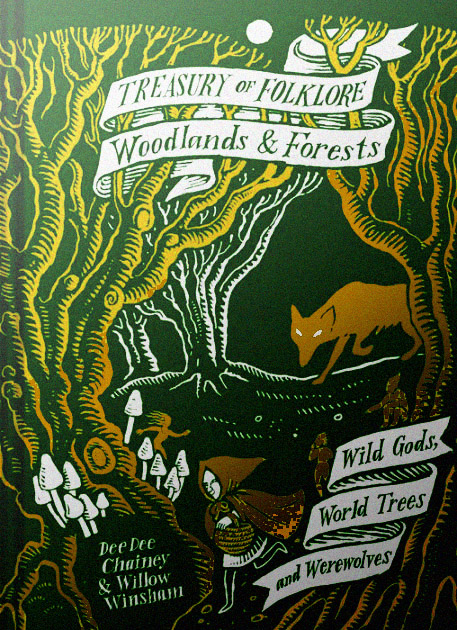
Following in the footsteps of the Treasury of Folklore: Seas & Rivers: Sirens Selkies and Ghost Ships (Reviewed Here ) folklorists extraordinaire Dee Dee Chainey and Willow Winsham (the masterminds behind the #FolkloreThursday social media phenomenon) take us by the hand now like babes in the wood and lead us … er … into the woods! But fear not, you could find no better guides to alert us to the wonders and the woes of this strange sylvan kingdom.
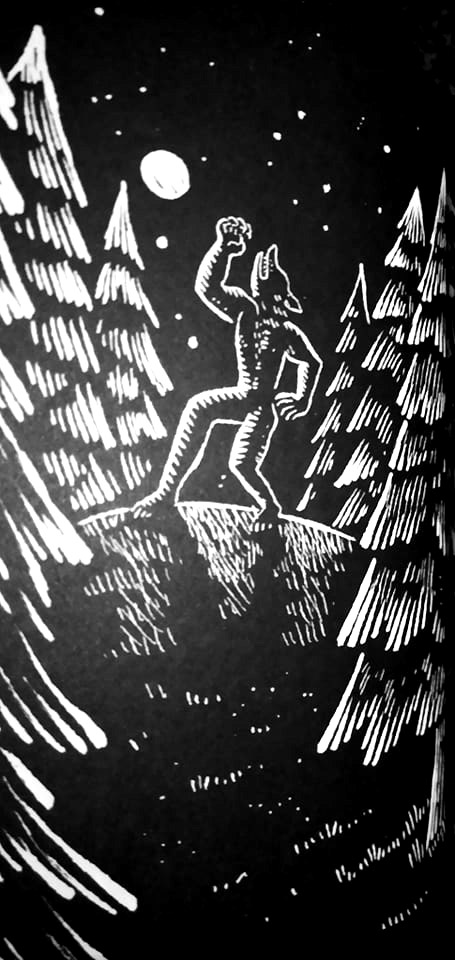
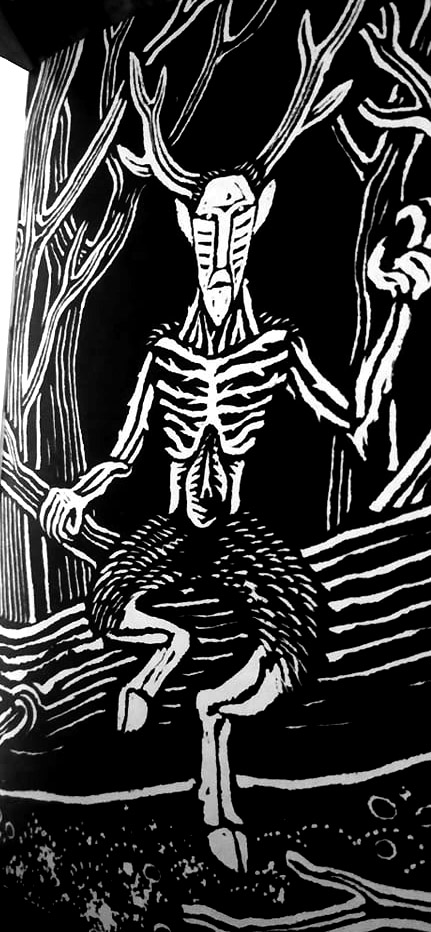
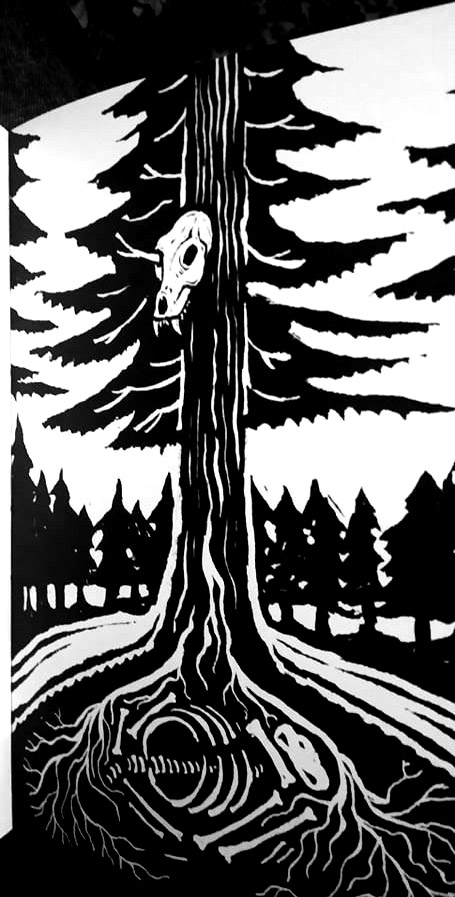
Within its pages, upon the paper that came from the woods itself, we are introduced to many amazing arboreal creatures and woodland wanderers from forests the world over. Some of them heroes and heroines like Vasilisa the Beautiful, a fair maiden who braved the cold Birch forests of old Russia and encountered one of folk horror’s favourite supernatural witches – the iron-toothed crone, Baba Yaga, and Paul Bunyan, the giant lumberjack of the North American timber lands & his loyal companion the blue-haired moose, Babe. We encounter strange creatures such as the timid Squonk which upon capture would dissolve into nothing in a flood of tears and the human-faced tree dogs of China – the Penghou. We meet gods and demi-gods and elemental spirits of the wild woods – the Leshy, Hamadryads, Herne the Hunter, the Moss People and many many more. We encounter those denizens of dark woods for centuries – the bears and the wolves, yet these bears and wolves may be more than we dreamed and may disturbingly be more like us than we’d dare to imagine. And we hear the lore of the trees themselves from the Dragon’s Blood Trees of Yemen to the ancient funereal Yews of Britain; from the sacred Banyan trees of India to the giant old Cedars of Canada.
The book is illustrated throughout by the charming block-print style illustrations of Joe McLaren. Images both dark and strange but with a quirky humour to them, which will likely appeal to readers of a wide age-range. Again as with the Seas and Rivers volume, some adult subject matter is touched upon but with parents’ own discretion and judgement I could see this book being popular with both themselves and their kids. I know I would have loved these Treasury books as a youngster. Furthermore I remember years ago when I was doing Tree Warden training at an agricultural college one of the tutors asked the class what it is we liked or indeed loved about trees and forests. I had numerous reasons, their role in the environment and natural habitat, their look both as pleasing landscape and for their interesting aesthetic from the point of an artist, their smell, their ambience and I also mentioned their role in folklore. At the end of the class another student approached me and asked if I could recommend any books that featured the folklore of trees and had Dee Dee and Willow’s book been available then I know it would have been top of the list. It is a great introductory book to the topic, yet it is also so diverse and so widely researched that all followers of folklore no matter how seasoned will find something unfamiliar or of further intrigue within this beguiling little book. I myself was rather bemused to encounter Tió de Nadal, within these pages. If unfamiliar with this bizarre Yule Log of Catalan tradition, then I’ll say no more and let you discover this rather odd custom for yourself within this fantastic book. Woodlands & Forests makes an excellent companion both visually and content wise to the Seas & Rivers volume and also Dee Dee’s earlier A Treasury of British Folklore. It would make a great little present for a loved one or for yourself for Halloween or a great stocking filler for Christmas … but maybe not put it in the same stocking as Tió de Nadal !!
Treasury of Folklore: Woodlands & Forests: Wild Gods, World Trees and Werewolves. Dee Dee Chainey & Willow Winsham Batsford. 2021. Hb. Illus. 192pgs.












 Happy Solstice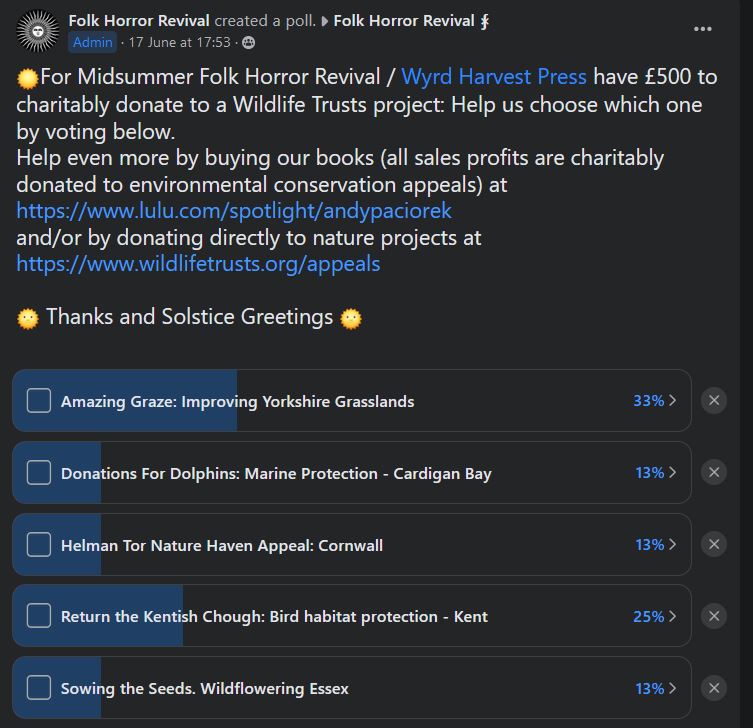






 Whisht! Lads, haad yor gobs,An' Aa'll tell ye 'boot the wyrms ...

 Folk Horror Revival & Urban Wyrd Project ⨘