Happy Christmas all you Goblins and Wraiths out there in internet land. I hope you are all keeping well and not letting the Christmas cheer turn you into piles of ash. We have a special treat for you this week as we were given the opportunity to hear a new podcast that is due to be released soon. It’s name is Folklore and is from Tamsin Wheatley……Or is it?
I’ll be honest. Much like the structure of the podcast itself the way this has come about is just as mysterious. We get a message informing us of this new podcast and were offered a chance to hear it before it’s unleashed upon the public. Who is this Tamsin? Why does she want us to hear it? (If another review doesn’t get posted next week you’ll know it didn’t end well.) Anyway… Tamsin is a radio presenter and an avid fan of crisps. (Whether she is a harbinger of doom for blogger ups remains to be seen.) This is her first foray into the world of podcasts and by what I heard it’ll be a grand one too.
Or is she any of this at all? I honestly don’t know what’s real and what’s fictional about this. But you know what? That plays in its favour. Go on to Tamsin’s Twitter account and you’ll see requests for ghost stories and weird tales you have to be submitted and a countdown of excitement for it’s release. And then you sit down and listen to it…..
From the description on its website I was expecting to hear a discussion on local Wiltshire based folklore and hauntings but instead of that I was surprised to find I was listening to an audio drama about a mysterious set of tapes and the impending investigation that goes on around them. I don’t want to give the plot away too much but we follow the narrator retracing the footsteps of her old college professor and the locations of incidentshe documented on the tapes. If you are a fan of The Lovecraft Investigations, The Black Tapes and The White Vault you are going to like this and it easily holds up to the production levels of those as well.
Folklore is released on 26/12/2020 so keep your eyes and ears peeled and definitely give it a subscribe.
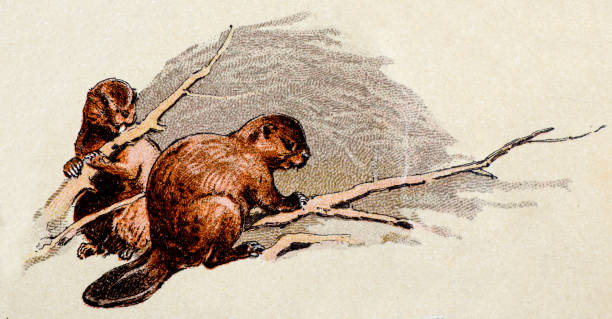
To mark the occasion Folk Horror Revival / Wyrd Harvest Press / Urban Wyrd Project have again charitably donated sales profits from our books to a Wildlife Trusts project voted for by some members of this group.This time around we are happy to grant The Scottish Wildlife Trusts £800 to help with their Beaver reintroduction project. Thank you to all who voted and especially Thank You to those who have bought our books. Not only have you purchased works by and featuring some of the greatest contributors to folk horror, urban wyrd and other associated fields, you have helped to benefit wildlife conservation work. Very Best Wishes.
Boglins and Boggarts! Fire breathing dogs and hairy hands in the fog! Welcome all to this week’s Folk Horror Revival podcast spotlight. This week we head into the mountains of Wales where Journalist and writer Mark Rees presents his very own podcast about its haunted landscape.
Mark is a journalist that has been covering the Welsh arts for many years now. His work appears in many publications and he has even had his own work adapted to the stage in the form of a play called Phantoms that was based on his writing. He has also written a few books. A few of which should be of particular interest to us here and they are Ghosts of Wales: Accounts from the Victorian archives, The A-Z of Curious Wales and Paranormal Wales. His next book will be about Welsh folklore and is titled Illustrated Tales of Wales and will be available in 2021. As if that isn’t enough though he also hosts Ghosts of Wales- Live! An evening of all things paranormal and Welsh. Sounds good to me!
The podcast itself is a great lighthearted look at everything that goes bump in the night, or day, in Wales. I am only nine episodes in but so far we have two headed phantoms, ghostly dogs, a strange and possibly paranormal statue, abusive ghosts and an entertaining episode about hoaxes. There is lots of information packed into each episode as Mark clearly does a lot of research and has a lot of extra background information to expand on the subjects. He dedicated the whole of October to Welsh Halloween related tales and he looks to be doing the same for December. I saw an episode dedicated to the Folk Horror Revival’s favorite horse; the Mari Lwyd and another on the tradition that everyone could do with more of. The ghost story for Christmas Eve.
Well there isn’t much more to add except for saying that I enjoyed it. I look forward to listening to more and I recommend giving it a listen.
Growing up in the 1970s and 80s amidst a plethora of media threatening a grim dystopian future, my generation’s minds were prepped with facing the fallout of nuclear disaster in films ranging from ‘Beneath the Planet of the Apes’ to ‘Threads’ to ‘When the Wind Blows’ and then on Saturday 26th April 1986 the wormwood star fell and science-fiction became fact – Chernobyl happened…
At the beginning of his beautifully bleak creation, the book ‘Chernobyl: A Stalker’s Guide’, author and photographer Darmon Richter primes us with “Atomic Cinema” – a brief look at how the splitting of the atom had fuelled the dreams and nightmares of creatives. From ‘Tarantula’ to ‘Dr Strangelove’ to ‘The Incredible Hulk’, radiation has provided inspiration to a multitude of stories, but it is one tale in particular that provides a backdrop to Richter’s book and indeed is inspirational to its title.
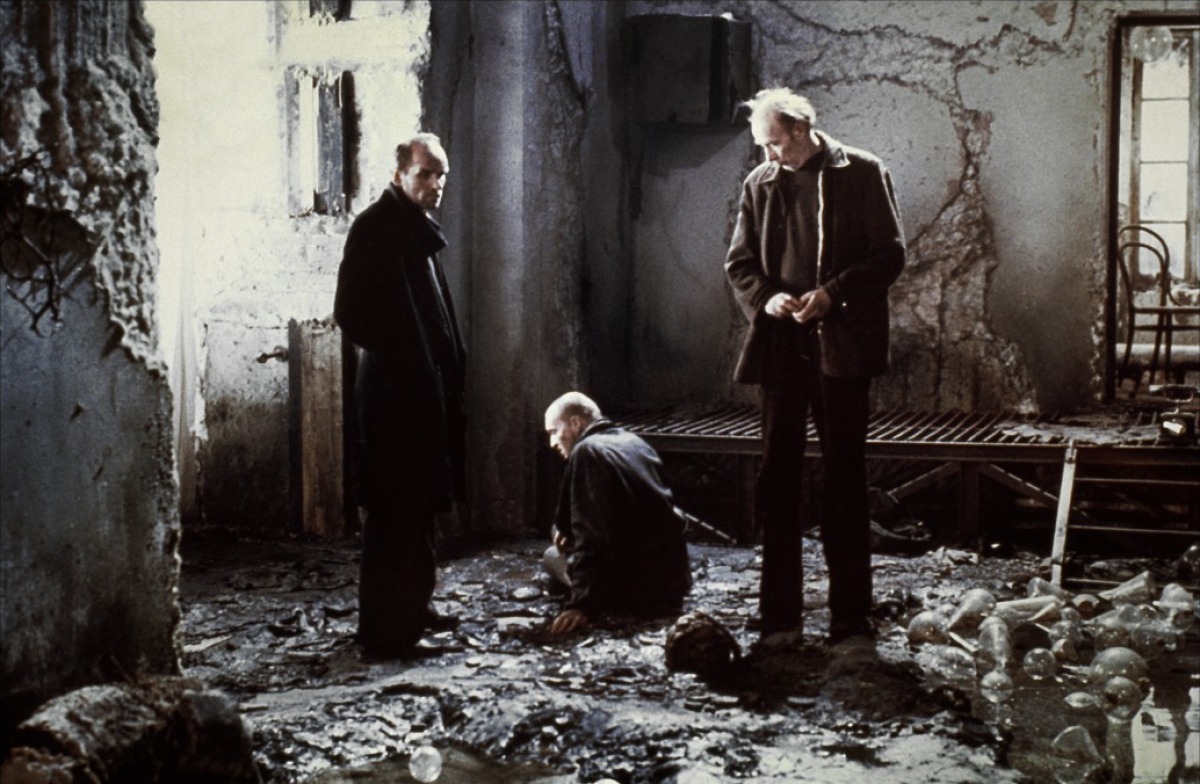
Stalker (1979) – directed by Andrei Tarkovsky
That film is Andrei Tarkovsky’s 1979 artistic masterpiece ‘Stalker’. Scripted by the brothers Boris and Arkady Strugatsky and adapted from their 1972 novel ‘Roadside Picnic’. The film follows a journey made into a forbidden exclusion zone by a writer and a scientist alongside their guide, who is known as a Stalker. They seek for a room somewhere within the Zone that is said to have the power to make wishes come true. Whilst that is not the case within the exclusion zone that exists for 1000 square miles around the epicentre of the Number 4 reactor at the Chernobyl Nuclear Power Plant, covering areas of Ukraine and Belarus; people still have a curiosity and desire to enter the zone. In the 34 years that have passed since the grievous explosion at the power-station (that ironically occurred during a safety test) ejaculated radioactive particles into the air, water and soil, ‘disaster tourism’ has become a considerable industry in the area. There are legal tours that follow certain strict measures and routes led by guides but there are also illegal excursions into the zone, where off-route paths may be trod. other things seen and explored – the guides for these clandestine visitations are the Stalkers.
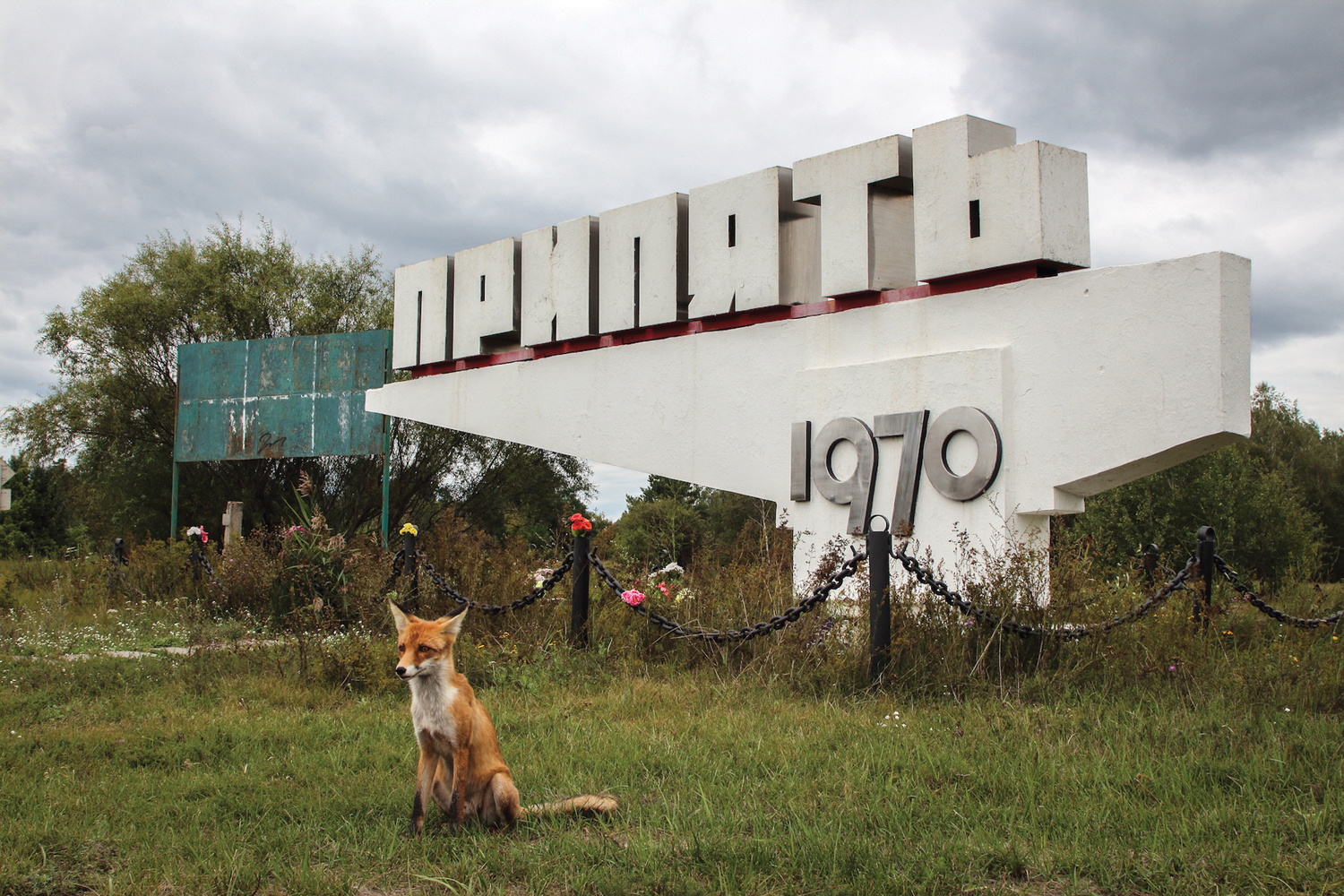
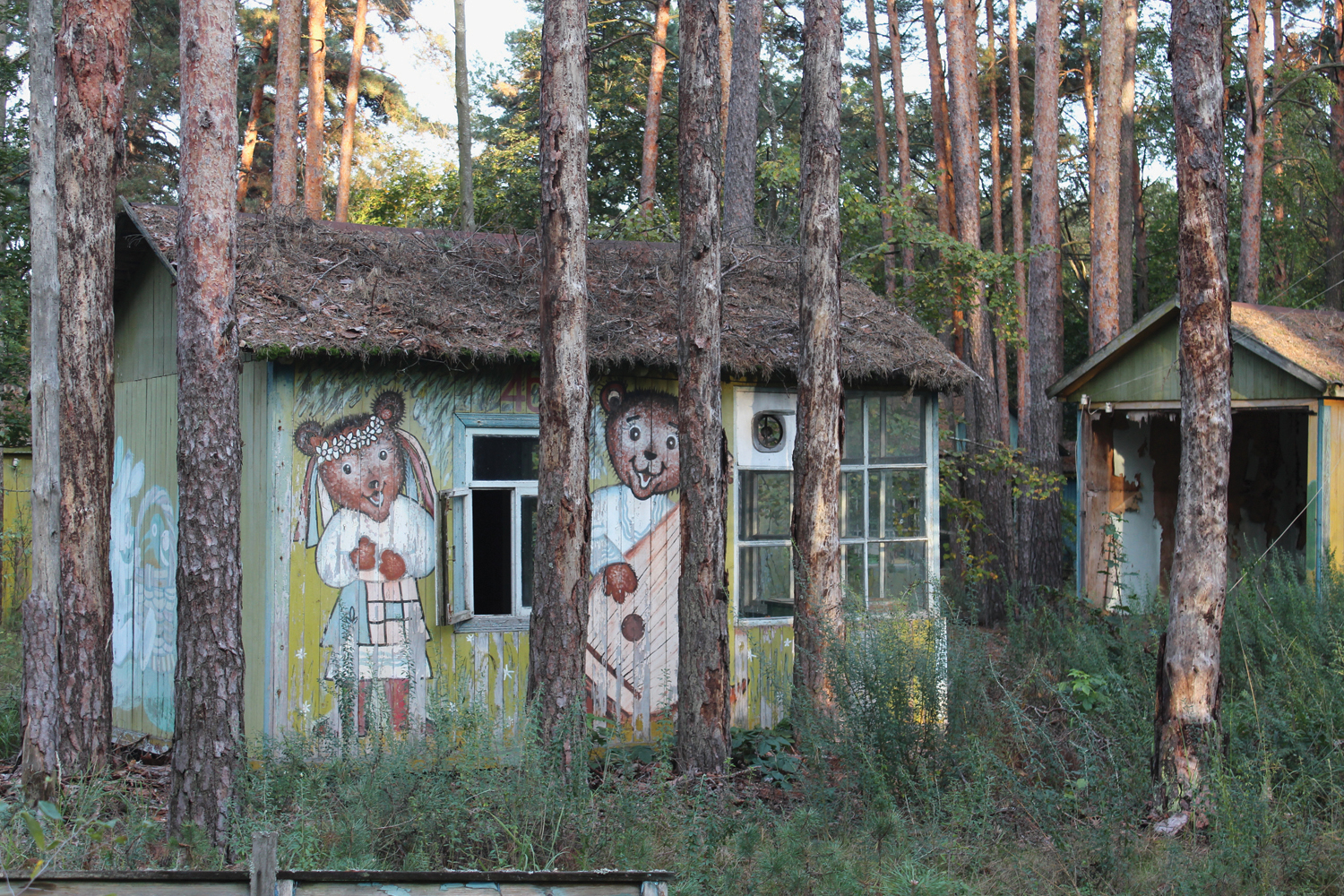
Richter employed the services of both the official tours and the illegal Stalker led missions that take him to the surrounding villages, the abandoned atomgrad city of Pripyat, the radiated Red Forest and even into the heart of the power-station itself, which was in the process of being decommissioned at the time of his visits having continued to produce electricity for some time after the disaster using the other reactors on site. The doomed reactor 4, source of the accident, is now entombed within a domed sarcophagus, its second shielding cover since the disaster.
Pripyat is a ghost city, (or was until tour buses began to drive its streets), its inhabitants forced to move far away, but in its premature urban decay, nature has taken hold and surprisingly thrives, but although Richter’s camera mostly catches the desolation and loneliness of the Zone, within his writings we find he has company. Chernobyl: A Stalker’s Guide is as much about people as it is about place. Richter is interested in the Stalkers and their motivation in following a role in life that in numerous instances leads to arrest but more deeply in the risk to their health and longevity that they potentially expose themselves too on recurring occasions. He speaks to some people who remained or have returned to live within the zone, for there are some whose lives are tied to the place and fear starvation more than radiation, people such as the babas – grandmothers; old ladies whose families who survived the Holmodor a genocide by famine during the Stalin era that claimed the lives of at least 3.3 million people and the Nazi invasion and whose spirit will not surrender to the Chernobyl disaster. He talks to people who were involved in the operation following the disaster and who survived the conditions that claimed the lives of many other liquidators and other operatives either quickly and dramatically through high levels of radiation exposure or slowly claimed over time by the cancers that grew within them. He asks those who were involved in the operations their opinion of the 2019 HBO television series ‘Chernobyl’ and for the most part their answers are favourable, saying that not all elements were factually accurate but that overall it was a fair enough representation, although one man interviewed remains bemused as to why they depicted him within the show as having a thick moustache when he has always sported a clean-shaven look.
Chernobyl (2019) – Directed by Johan Renck. Written by Craig Mazin
Richter’s book is a great addition to the Chernobyl media. It is very informative regarding the specifics of the disaster and to the clean-up operation but it is far from a dry read, his own experiences on stalker-led visits read like an adventure story and his interviews with the people whose lives are touched everyday by the 1986 catastrophe are engaging and bring a poignant presence to the areas that he captures within his evocative photographs; for as well as being a satisfying, thought-provoking read, ‘Chernobyl: A Stalkers Guide’ is a handsome, visually rich book that would make a great companion to Jonathan Jimenezs ‘Spomeniks’ and will sit comfortably on the shelves of any psychogeographers, urban explorers and Stalkers everywhere.
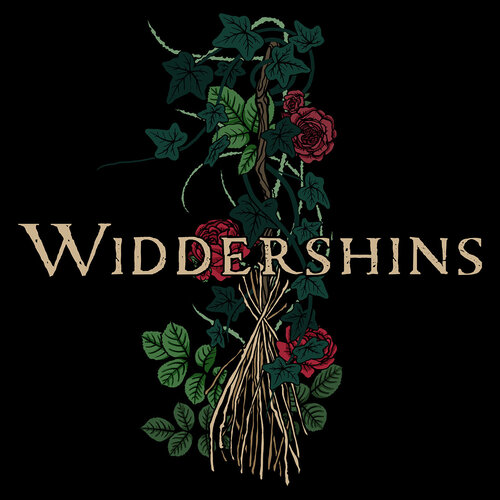
Good evening Ghouls and Goblins and welcome again to The Folk Horror Podcast Spotlight. Put the fire on, get a glass of hot whiskey, light a candle and switch off the lights because this week we have a spooky storytelling from The Widdershins.
Widdershins is composed of narrator Ashley Nunez and musician Joe Saburin. Ashley is the owner of Old Growth Alchemy and describes herself as ‘purveyor of botanical libations and sensual ephemera.’ Her shop sells all kinds of potions and concoctions for your local occultists, witches and anyone interested in the old ways. Joe teaches music and musician in his own right with an album called Dead Leaves. He can also be heard on lots of different musical projects.
Each episode they pick a tale of folklore, legends, fairies, monsters and ghosts and compose their own telling of the stories. With a wonderful added touch Joe composes a soundtrack with his guitar for each episode. At the end of the episode they get together to discuss the story and the development of the presentation. I am always interested to hear hot takes on what the meaning of a story could be (blame Blindboy!) and it is also cool to hear Joe talking about the composition he performed. If you want to hear a great example of this then tune into the Goblin Market by Christina Rosetti. As a narrative poem you get to hear Ashley performing quite an animated retelling as she keeps up with the prose while Joe creates a song to keep up. The discussion afterwards is another episode in itself!
Looking through the episode list they have so far chosen tales from the likes of Edgar Allen Poe, Samuel Taylor Coleridge, M.R. James, The Brothers Grimm, Amelia Edwards, Robert Louis Stevenson and Mary Shelley. With only twenty one episodes so far there is lots more to come too.
Hey Folks. Sorry for the lack of post last week but life, mainly work, chose to wear me down and put me through a spot of being under the weather. The joys of being a Social Care Worker! No matter though as this week we have a real gem of a podcast to share with you all.
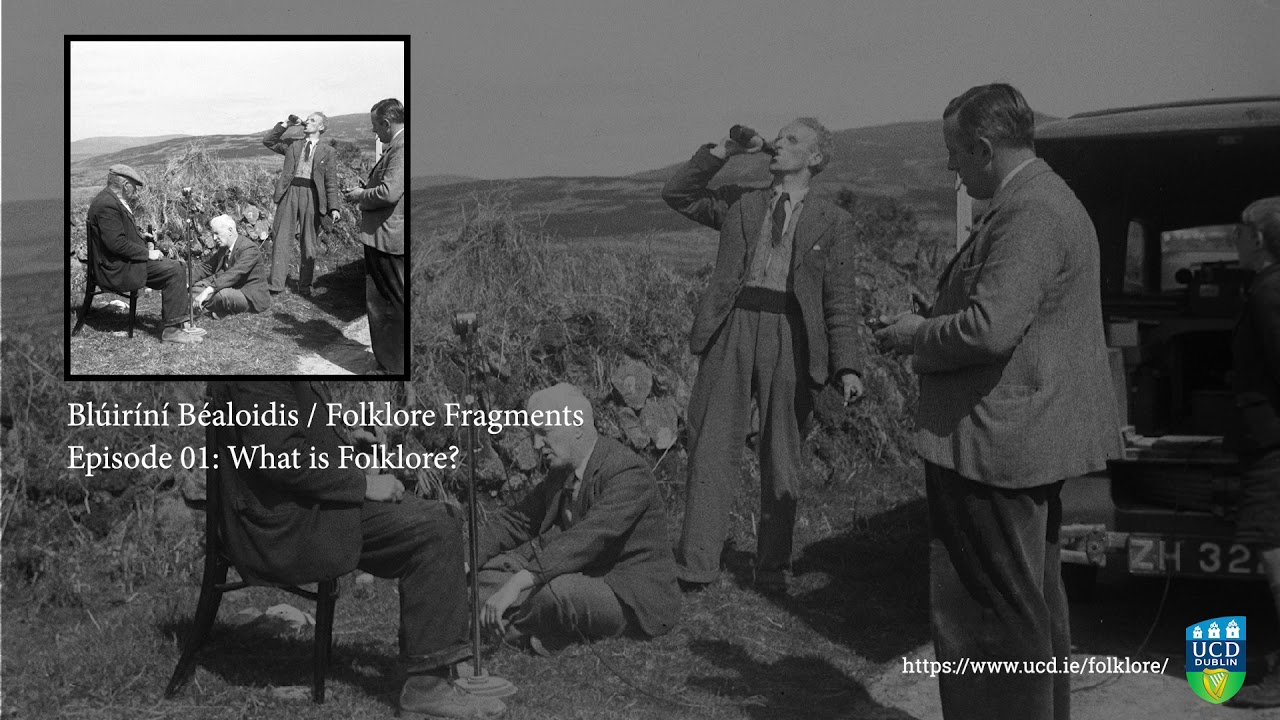
Bluiríní Béaloidis is the podcast from The National Folklore Collection, University College Dublin. As they put it themselves ‘It explores Irish and wider European folk tradition across an array of subject areas and topics. Host Jonny Dillon hopes this tour through the folklore furrow will appeal to those who wish to learn about the richness and depth of their traditional cultural inheritance; that a knowledge and understanding of our past might inform our present and guide our future.’
As a blow in to Ireland I have a special interest in the lands folklore and traditions. Drive a few minutes out of the urban developments and you can soon find yourself feeling like they are alive and well. Many people still believe in fairies, or at least if they don’t quite believe they think it’s probably best if you don’t do anything that could irritate them anyway. Just to be safe you know?
Back to the podcast though. The presentation of Folklore Fragments is quite academic with all the guests being specialists in their chosen field. Each episode casts a critical look at the chosen subject and explores the origins and explanations for why things are the way they were and still are. What is really fantastic is that the episodes are all interspersed with audio clips from the Folklore Archive of people recounting memories of events and traditions.
There are so many episodes to choose from as well. Eddie Linehan joins Jonny for one episode to talk about the otherworld of Ireland (Episode 22. Invisible Worlds.) In another we have Professor Patricia Lysaght taking an in depth look at The Banshee (Episode 27. The Banshee.) And then other episodes we see traditions take centre stage such as Episode 9. Christmas customs and traditions and Episode 4. The Luck of the House.
I cannot recommend this podcast enough. It is fascinating. Go and have a listen.
“Tonight is Vampire Night. In Romania the Strigoii or Vampires are said to leave their graves to seek out their former homes and victims. So hang out your garlic, put out your crosses… for the vampires are prowling and they’re looking for you. Be safe. And, if you can’t be safe, then dance, dance to these Vampire tunes. Happy Vampire Night!” – The Kalendar Host
With tunes from the likes of The Upsetters, Soft Cell, Gene Page, Rupert Lally, Bauhaus, Vampire Sound Incorporated, The Hues Corporation, Francois de Roubaix, Rob Zombie, Cobra Verde, Tangerine Dream, Gorillaz, Emil Richards, Beth Orton, Jonathan Elias, Radiohead, Gerard McCann, Tito and Tarantula, David Whitaker, Hot Blood, Jace Everett, Dirty Pretty Things, Barenakedladies, Jason Segel, Michael Vickers, Nouvelle Vague, Ministry, Michael Rubini and Denny Jaeger.
Good evening ghouls and goblins! Welcome to the second installment of the Goat Lords podcast spotlight. This week we are showcasing a podcast that comes from all the way across the Atlantic Ocean and into Pennsylvania USA. It is The Strange Familiars podcast.
Strange Familiars is a podcast focused on the paranormal, unexplained and folklore and consists of interviews, discussions and on location recordings.There seems to be a particular focus on Bigfoot but that may be down to it being the host Timothy’s special area of interest. I must say that I enjoy the on location recordings. One of the first I listened to was of the hosts walking about a location having a relaxed conversation about the area and its history. Timothy is the main presenter and each episode he has a rotating set of co hosts. Chad, Jon, James and Alison the resident skeptic. Timothy is an illustrator, author, paranormal investigator and a folk musician. His band Stone Breath have released over a dozen albums and the music plays a big part in the show. His art often accompanies the albums and Strange Familiars logos and merchandise.
The episode I chose to listen to was episode 137: The Tunkall. In this a lady from Norway recounts her experiences with these Gnome like spirits called the Tunkall. I had never heard of them before so it was really interesting to hear the folklore behind these odd little creatures. Or are they ghosts? You will have to listen to find out more. Much like last week’s highlight we again had the relaxed interview format with no leading questions and instead a genuine curiosity to hear about this person’s experience. What was also great was being given some historic background to the story. A theme that crops up a lot in their episodes. The history of areas, sightings, people and so on are discussed and give good backdrops. There wasn’t as much music in this episode as I am used to hearing but it didn’t take away from the enjoyment. If you listen to earlier episodes you will hear segments being broken up with tracks and songs that are written specifically about the tales being told. That has to be quite an undertaking to do every episode so I can’t criticize them for not keeping it up as time went on. I haven’t listened to all their episodes though so I could be wrong.
Give them a subscribe, start from episode one and get lost in some strangely calming tales of strange events. .
FREE to Watch ~ Folk Horror Revival’s creator Andy Paciorek’s lecture – ‘On Witches and Wolves: The Historic and Folkloric Roots of Folk Horror’ As presented by Zoom to the audience at the Denmark 2020 Folk Horror Festival.
Divided into 3 sections – Hauntings, Experiments with Time and Ghosts of Futures Past; within this new work Merlin Coverley, embarks on a mission to seek out the roots and growth of the cultural phenomenon that is known as Hauntology. It is a walk that takes the author and reader down many diverse paths, foremost among them being Memory Lane.
Though it does explore the concept of hauntings and references numerous supernatural films and TV shows, this is not a book about ghosts in the traditional sense but a study of the concept of the cultural mode known as Hauntology. The word Hauntology was conceived in 1993 by the French political philosopher Jacques Derrida in his book Spectres of Marx as a portmanteau of Haunt and Ontology and relates to his concept that Marxism continues to “haunt western society from beyond the grave”. However, Hauntology has expanded far beyond its original meaning to encompass a certain aesthetic in music, media and art and beyond that a feeling. Hauntology is a nebulous creature, difficult to define but always recognised when encountered, at least on an emotional level. The wider concept of Hauntology as an art and thoughtform owes a lot to the writings of cultural historian Mark Fisher and here Coverley joins the dots between the Derradaian and Fisherian views.
Coverley notes the cultural importance of the 1970s as a fixed point in hauntological time. Notably lying within the formative years of Generation X (or what Bob Fischer has accurately described as The Haunted Generation, which is evident in the work of Scarfolk and Scarred For Life for example) the 1970s were abundant with weird TV, strange discordant library music and were politically hard times (a ghost of which resurfaced, I think in flashbacks of Thatcher and Foot, when May and Corbyn were the UK Prime Minister and opposition leader). But Coverley turns the clock back to the 1840s when Marx released the Communist Manifesto and Charles Dickens penned ghost stories. Centring on Dicken’s A Christmas Carol, Coverley makes interesting comment on the ghosts and their repetition of the past not only within the story but within the cultural repeating of the tale by readers and viewers each Christmas. (This set me thinking of how Raymond Briggs’ The Snowman animation has now perhaps become a Christmas ghost – each year destined to be reborn and melted – an analogue ghost now haunting a digital house). The nature of haunting as a recurring point in time or a moment trapped in its environment lends itself to one of the Fortean themes to arise in the book, the theories of Charles Babbage, Eleanor Sidgwick, Edmund Gurney and most prominently in these pages of T.C. Lethbridge and the televisual drama The Stone Tape written by the recurringly hauntological explorer Nigel Kneale and first broadcast on Christmas Day 1972.
Other Fortean points of interest touched upon within the book’s meanderings include Pepper’s Ghost, J.W. Dunne’s philosophy of time, spiritualism and Alfred Watkins and John Michell’s ley-line explorations. Numerous other authors are encountered as we wind our way through the pages including W.G. Sebald, M.R. James, Arthur Machen, Susan Cooper, Alan Garner and J.G. Ballard. As with Nigel Kneale, Coverley is most interested in their use of time – how seeming anomalies of time and events can cause a person or place to be haunted.
Memory and nostalgia are key to Hauntology, but as we delve deeper it is clear that the nostalgia of hauntology is not a simple fond reverie of bygone times but in using the 1970s as a strong reference point is something akin to mild trauma, yet with a strange streak of thrill. The ghost stories of Christmas, weird TV plays, folk horror films and public information film continue to haun us. But a pertinent point is that these aspects of attention are not simply daydreams of times past but a re- living of a history that has never left us. A past that has just been buried like the fiends of horror films waiting for a sequel. It is the memories of Tomorrow’s World predicting the future that is now our present – a world not of personal jet packs and happiness machines but a present where the grim ghosts of 1970s austerity, division and unrest not only did not go away, did not stay in the past , but are risen and with us again, haunting our past, present and future. This is of course reflected in artistic expression, Hauntology as a concept may have appeared in the 1990s but it is strangely a notable aspect of our current zeitgeist. We can see its past roots in a lot of contemporary writing, film and music that dwells on the outer edge of the mainstream, but it is not simply retro, it has its originality but is haunted by the past. A catharsis of demons still needing exorcised perhaps.
Coverley’s book is thought-provoking and although rather academic is engaging, but it is theoretically focussed and therefore is perhaps not the best starting point for anyone fresh to hauntology but for anyone already immersed and seeking to dig deeper into the subject it is a great addition to the haunted bookshelf.
Hauntology by Merlin Coverley Available now from Oldcastle and other book shops/ online stores

 Winter Solstice Greetings









 Folk Horror Revival & Urban Wyrd Project ⨘