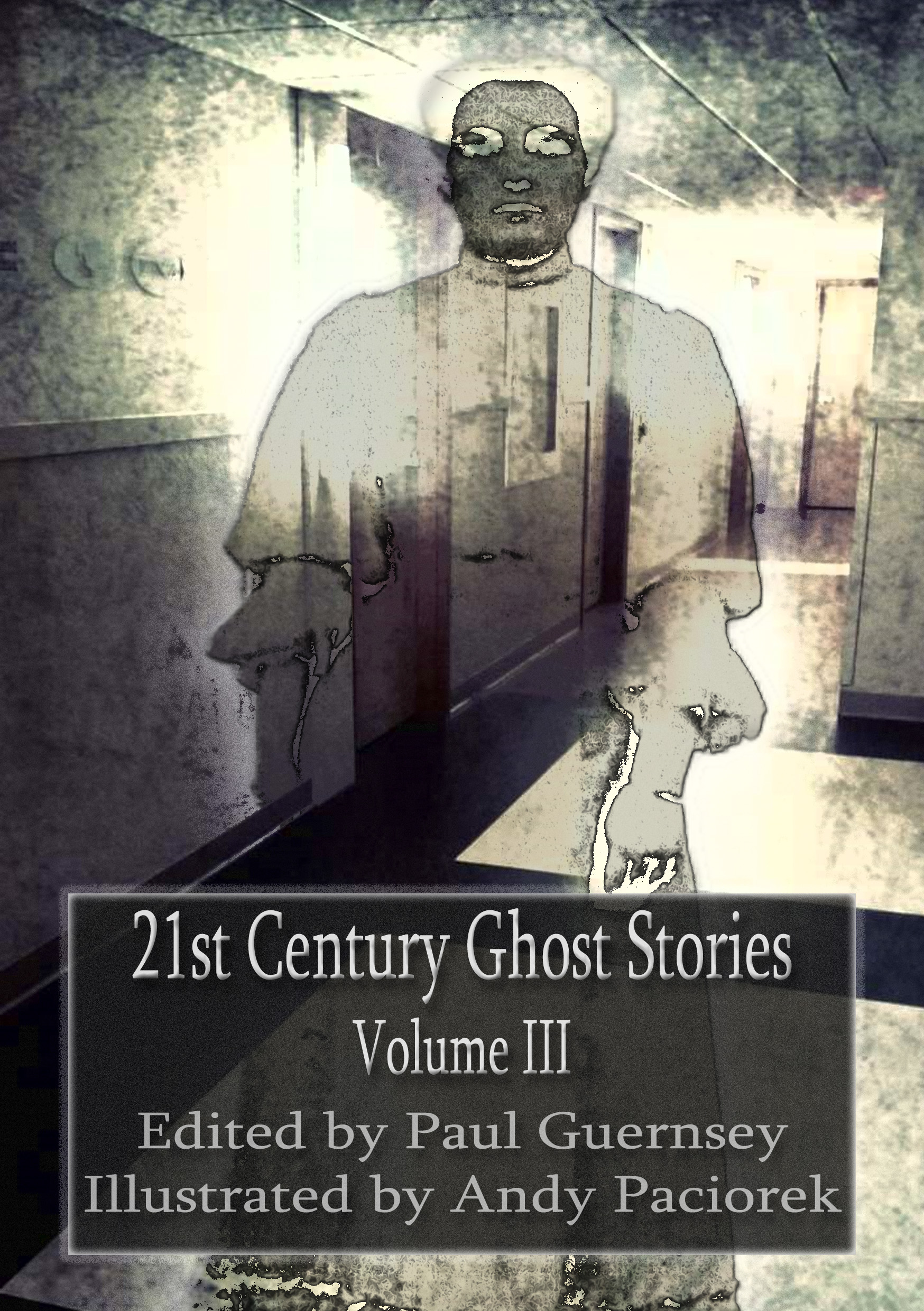
Wyrd Harvest Press are thrilled to present 21st Century Ghost Stories: Volume III the latest in our spooky anthology series. Featuring a host of new stories by a wealth of talented writers, edited by Paul Guernsey, illustrated by Andy Paciorek and created with great thanks to Richard Hing and Grey Malkin; sales profits from this book will be charitably donated to The Wildlife Trusts ‘ nature conservation projects.
This third volume in our 21st Century Ghost Stories anthology series features 39 astonishing short-fiction contributions from writers the world over, each with a surprising and contemporary twist on some aspect of the uncanny. The collection includes unsettling stories of supernatural seduction, episodes of AI gone terrifyingly awry, accounts of workplace witchcraft, and tales of ghostly and/or demonic forces that infest places and ensnare people. We invite you to open this book and feel the chill!
featuring …
Introduction – Paul Guernsey
The Carny — Ann O’Mara Heyward
Gina Of Golden Gardens — Shala Erlich
The Pickup — Kathryn Pratt Russell
Door To Door — Ruth Schemmel
Ghost Story — Isobel Oliphant
He Loved His Mamma And His Mayonnaise — Gerard J Waggett
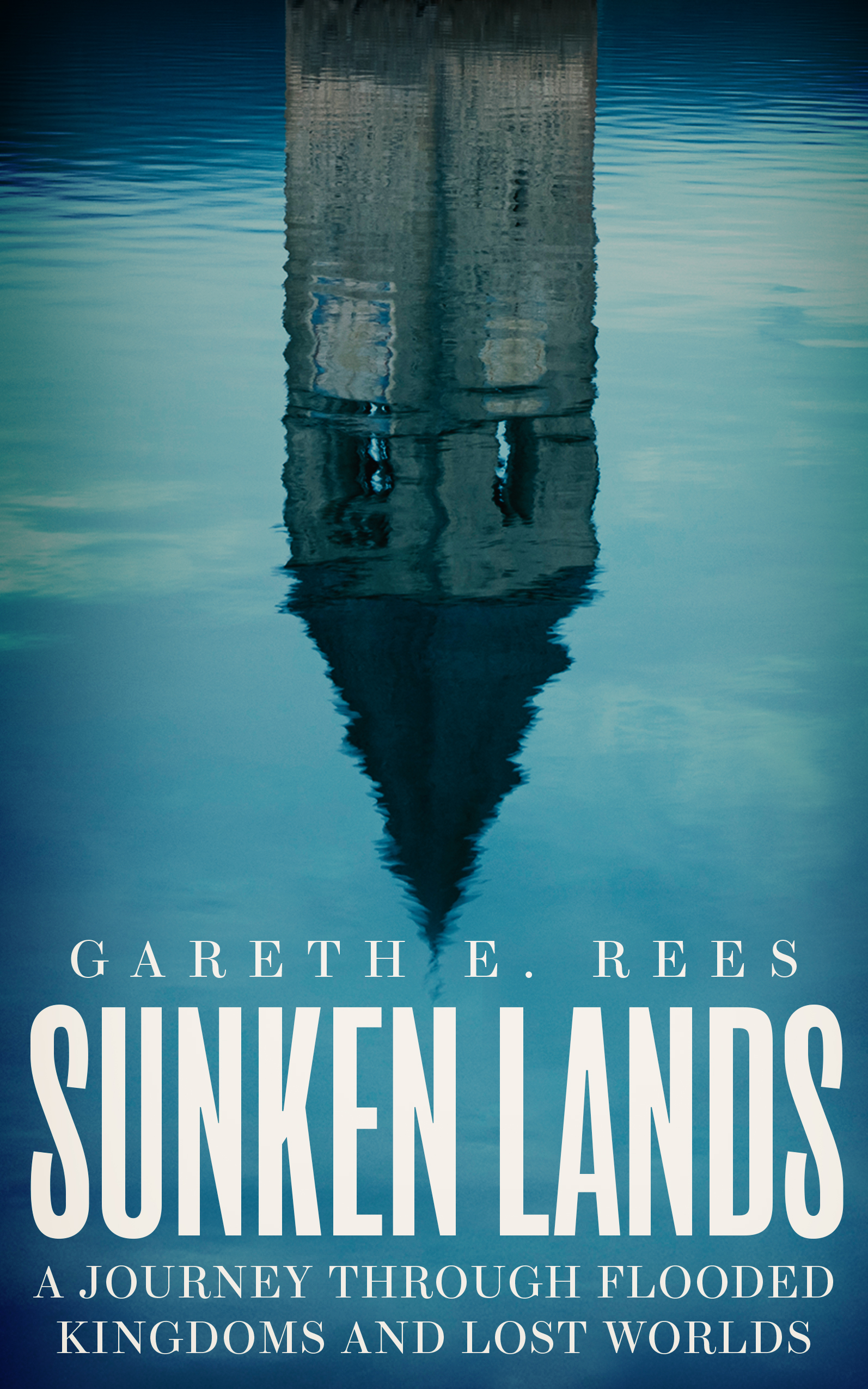
Sunken Lands, the new book by Gareth E. Rees may be one of those that forms a quandary for bookshop staff – just what shelf should it be placed on? For within its pages it covers a wealth of terrain (mostly of the moist or entirely saturated variety). Is it a folklore and legend book? A travel and history book? Psychogeographical philosophy? Natural History/Conservation? Occulture and Mystery? Part-Memoir? It is a blend of all these things, but it is a smooth fusion rather than hotch-potch. If pushed I would place it on the Environmentalism shelf I think, for its core I feel is Rees’ interest, anxiety and contemplation of the lands lost to the waves, those currently in that flux and those destined to sink beneath the sea. As such it won’t be a book that is favoured by Climate Change deniers (but in that particular demographic there seems to be an intersection of those that would tend to ban books rather than read them). But it is not a dry book, well considering the subject matter, it couldn’t be – but delivers the concerns in wide contemplative arcs. The chapters begin with flood myths and legends of varied cultures and then in an apt rendition of the psychogeographical wandering term ‘drift’ into diverse topics and places. So within its pages we encounter sunken forests and towns, places smote by the wrath of the gods and dwellings that battle whenever heavy rains fall or the waves rise. We are taken to various places, some accessible still and visited in person by Rees and others that are lost to people but home now to aquatic life and others still whose existence is either folk-memory or from the depths of the imagination. We are taken to the Lowland Hundred of Wales, the ruins of decadent Baiae in the shadow of Neapolitan volcanoes, the lost worlds of Ys, Lemuria, Lyonesse and of course Atlantis. We witness the tragedy of New Orleans in the wake of Hurricane Katrina and of the Pacific islands encroached upon by the rising ocean. For company we travel with such diverse figures as David Bowie, Francis Bacon, Madame Blavatsky, Mark Fisher, numerous indigenous societies, Edgar Cayce, Sun Ra, Lord Krishna, Voodoo Queen Julia Brown, Hawkwind, Aleister Crowley (He whom seems to get everywhere!) and many more beside. Mostly though we are in the company of Rees himself, whose presence is integral in the book for you can tell that this isn’t just something he thought would be interesting to write about, but something that he personally feels very deeply about.
Sunken Lands: A Journey Through Flooded Kingdoms and Lost Worlds
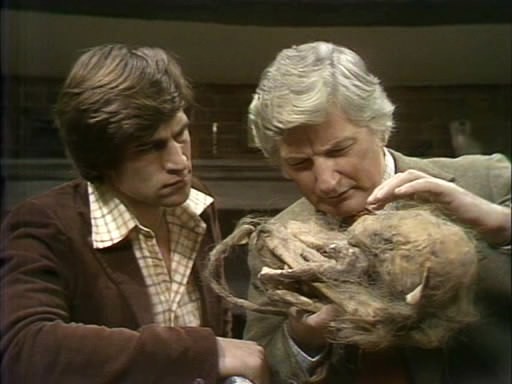
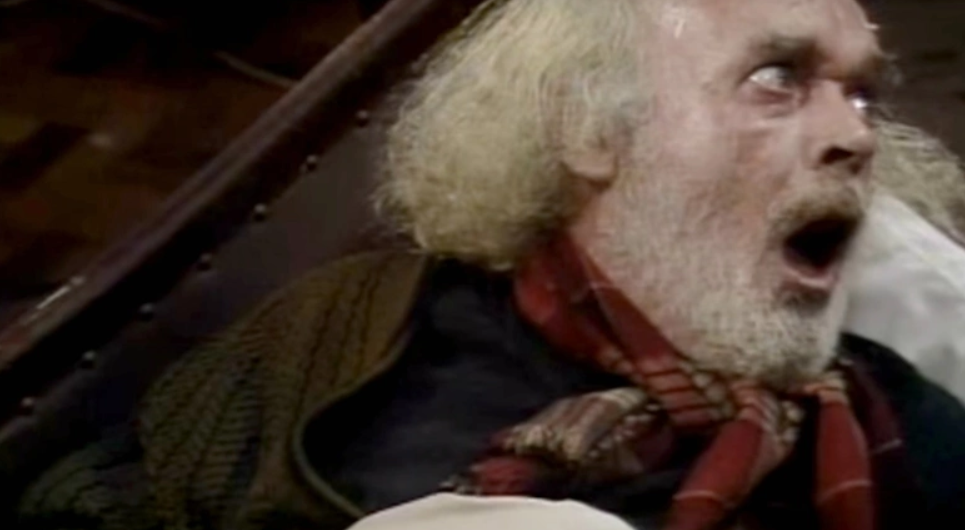
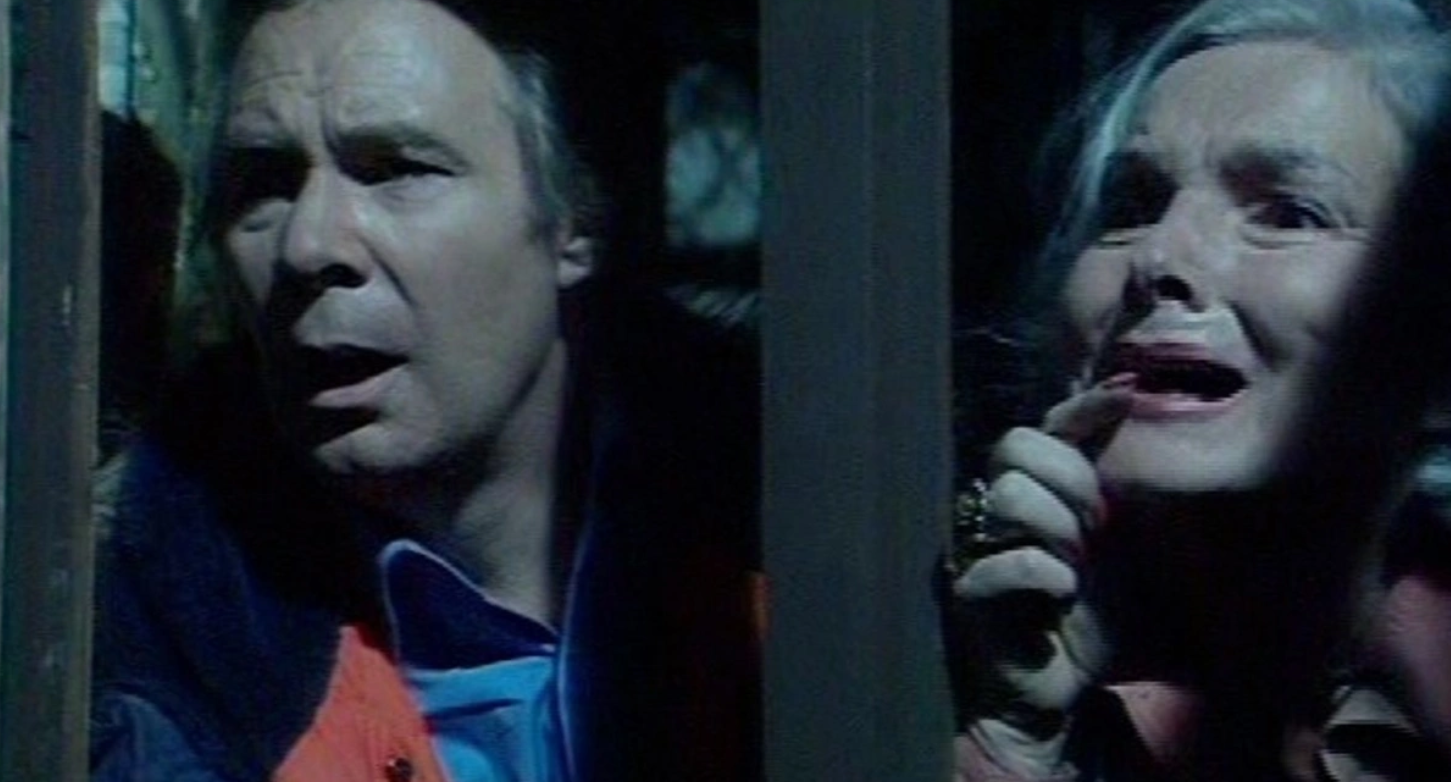
Interest in speculative fiction screenwriter Nigel Kneale has seen a 21st Century cult renaissance, mostly regarding his creation the rocket scientist Quatermass, but here Andrew Screen puts the focus on Kneale’s ATV series Beasts. Broadcast in 1976 during the golden age of British television plays and supernatural/thriller anthology shows, even amidst this bizarre telly miscellany, Beasts is something of a strange … well … beast. Each episode tangentially is related to animals or sometimes the animalistic within human nature – diverse beastly menace from an invasion of super-rats to a possessed kaiju film costume ensues. Screen dives deep into this strangeness seeking possible inspirations for Kneale’s manifestations. The folklore, history, Forteana and comparative media covered is wide and intriguing – resulting at one point in possibly the oddest and most amusing note disclaimer I’ve ever witnessed, stating that the author was in no way suggesting that Kneale was a viewer of equine erotica! – all the more bizarre by the fact that this is mentioned in relation to Buddy Boy, an episode about a dead dolphin haunting a potential porn theatre!
That extra special talking mongoose Gef gets coverage in the chapter covering Special Offer, an episode whereby teenager Pauline Quirke telekinetically terrorises a mini-mart. Discussion of therianthropy arises in relation to What Big Eyes, an episode where Patrick Magee, at his bombastic best, conducts weird experiments at a pet shop. Many aspects of weird history and preternatural phenomena are covered in this book making every chapter an enthralling read. Regarding the episode During Barty’s Party, I started to feel unsettled by the discussion of actual cases of rat attacks and infestation. I am pleased to see Screen feature Kneale’s TV play Murrain in this book. Although part of a TV play series called Against the Crowd, Murrain played a part in the commissioning of the Beasts show but also it feels akin, tonally, aesthetically and subject wise with Beasts, particularly to the episode Baby.
Both Murrain and Baby are set in bleak rural settings and deal with the fear of witchcraft and curses. Murrain, as the name indicates, concerns a rustic community that fears that a swine disease outbreak and other local misfortunes are due to the malfeasance of a suspected witch; whilst Baby concerns the discovery of an anomalous mummified creature found interred in an old rustic house – confined there not perhaps for apotropaic reason but for malediction. As well as rigorously covering production tech-specs and post-production reaction, Screen’s book is the most interesting, inviting and entertaining commentary on the work of Nigel Kneale I’ve encountered. A great tribute to possibly Nigel Kneale’s most peculiar body of work.
The Book of Beasts: Folklore, Popular Culture and Nigel Kneale’s ATV Horror Series Andrew Screen Headpress. 2023 pb. Illus. index. 434 pages. £22.99 ISBN. 191531609X
Watkins publishing have added to the world of Fortean travel-guides with 2 titles aimed to whet the wanderlust of wyrd voyagers. From the pen of Andy Sharp – musician, wordsmith and designator of the English Heretic black plaques (awarded to the strange denizens and dwellings that English Heritage overlooked) comes The Astral Geographic. On my first encounter with reference books, I often flip through the index to get a taste of what’s to come. Here we find an itinerary that takes us from “Anal Intercourse” to the “Zong Massacre”. Better buckle up then as it sounds like a wild ride is in store. Many eclectic ports are found along the way – myriad souls encountered include JK Huysmans, Sun Ra, Felicien Rops, Madame Blavatsky, Moloch, Manson, the Son of Sam, Saint Mary and that dweller in many an abyss – the almost ubiquitous Aleister Crowley. Although a chapter is devoted to Crowley and Neuberg’s summoning of the demon Choronzon in the Algerian desert, for readers who may feel somewhat overwhelmed by the seemingly universal presence of Magick Uncle Fester in much of occulture literature, there are also many other interesting characters and scenarios encountered within the pages of this book. Other subjects include Atlantis, the alchemy of Fulcanelli, Hekate, folk curses, Viking witchcraft and much more besides.
Sharp’s prose melds the informative and the poetic; although different in subject matter, in spirit it sometimes puts me in mind of the works of the naturalist J.A. Baker. Perhaps more accessible than his previous ‘The English Heretic Collection’ – ‘The Astral Geographic’ retains a targeted market as I suspect that mainstream TV producers may not send out Joanna Lumley or Bradley Walsh on a Saharan sodomy and ‘Satanism’ safari. Both this book and Weird Walk could however prove good ground for offbeat travel shows.
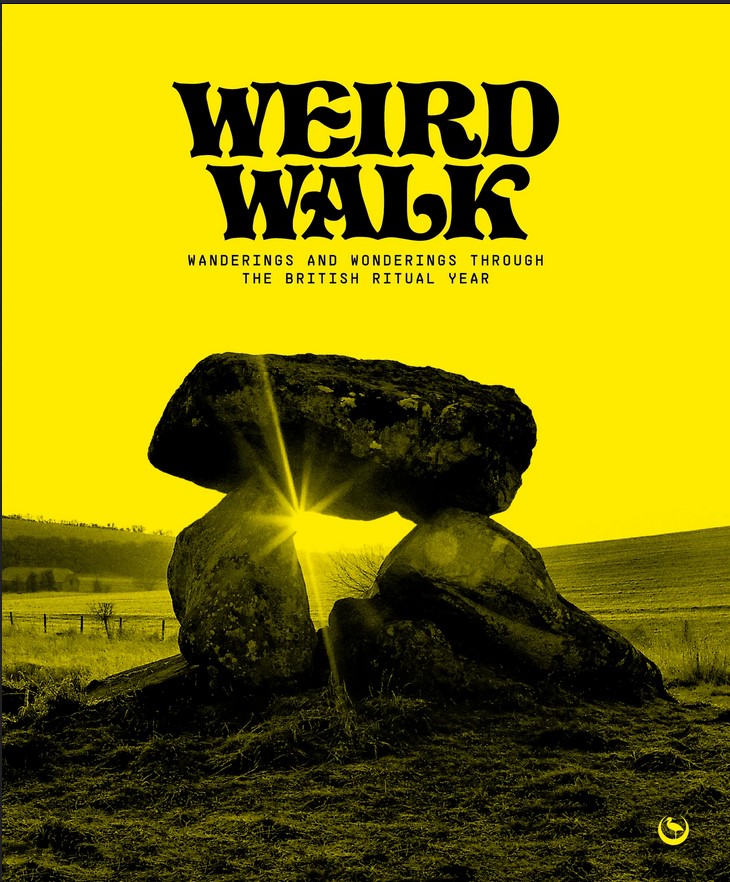
Weird Walk perambulates in a hinterland between Julian Cope’s ‘The Modern Antiquarian’ and Sara Hannant’s ‘Mummers, Maypoles & Milkmaids’ concentrating as it does on the British ritual year and megalithic monuments. It is more about rolling cheese than raising the dead. There is a little crossover with a chapter in The Astral Geographic in covering British standing stone’s relationship with short horror fiction and some Haunted Generation television shows, but Weird Walk focuses more attention on a variety of British sites – both ancient and follies of a more recent era. I particularly enjoyed Weird Walk’s commentary on EF Benson and Blakeney Point. Best remembered for his 1920’s socialite characters Mapp & Lucia, Benson’s supernatural stories have not quite enjoyed the renaissance bestowed upon M.R. James, Machen or Blackwood but are worth some attention. In its accessible psychogeographical approach to combining history, folklore, pop culture and artistic and literary inspiration, Weird Walk would also be of interest to fans of Edward Parnell’s Ghostland.
Weird Walk takes a seasonal approach and accompanies us from the Beltane fires of spring through summer’s Burryman Parade, from autumn’s Stag Dance of Abbot’s Bromley to the winter Wassailing in the company of the strange bone-horse the Mari Lwyd. Taking in many other ritual customs and enigmatic sites it illustrates that for the folk traveller Britain offers a lot of visiting opportunities the world round.
Both The Astral Geographic and Weird Walk bear an Occult Revival-revival aesthetic coupling Art Nouveauesque psychedelic title fonts, loose drawings, sun-bleached photography (Weird Walk particularly has some lovely, evocative shots) and a colour palette recalling the Gay Way primary school books, but both are equally substance as style. As someone once said “Man cannot live on bread alone” … or prana, manna or foyson… so quirkily both books occasionally include stopping off spots where the weary wanderer may partake of sustenance … though perhaps of the liquid victual variety. Whilst The Astral Geographic may point you in the direction of Absinthe, Weird Walk pours you a pint of real ale. They’re quite different books in some ways but are complimentary and provide interesting nuggets of diverse information to both the active and armchair travellers.
The Astral Geographic: The Watkins Guide to the Occult World Andy Sharp Watkins 2023 pb. Illus. index. 294pgs £20.00 ISBN 9781786786739
Weird Walk: Wanderings and Wonderings Through The British Ritual Year Alex Hornsby, James Nicholls, Owen Tromans
Watkins 2023 hb. Illus. refs. Index. 288pgs. £19.99 ISBN 9781786786821
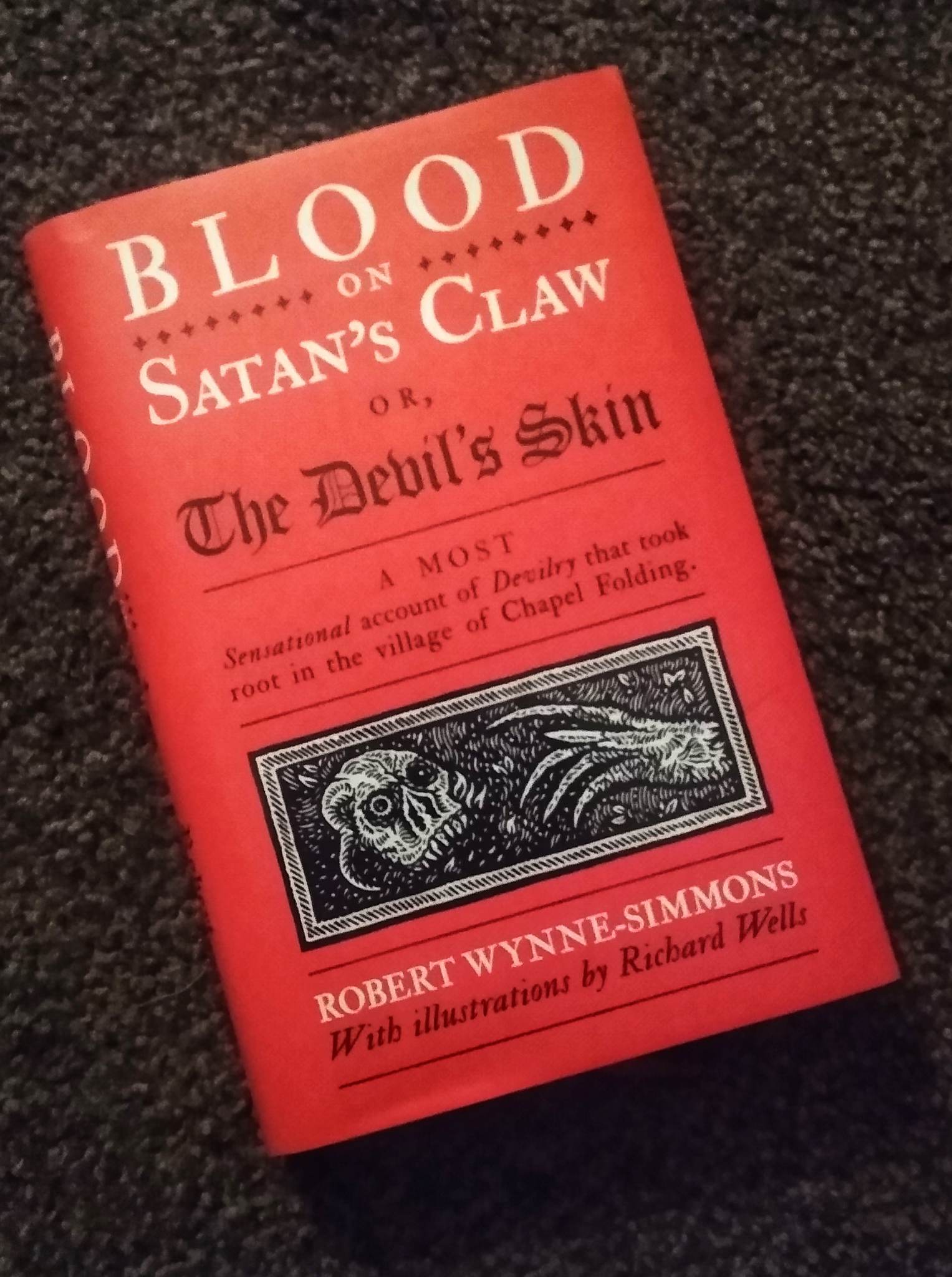
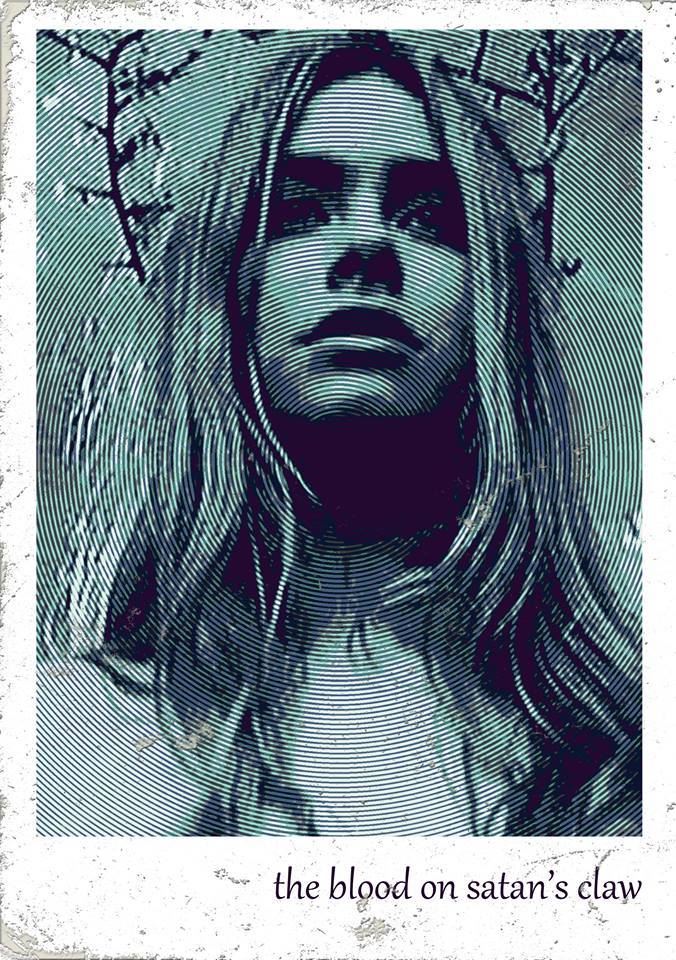
Over a half-century of waiting but finally that brooding member of the classic Folk Horror unhallowed triumvirate of British films, The Blood on Satan’s Claw (1971) has its own tie-in novel accompanying on the shelves the book partners of Witchfinder General (1968) and The Wicker Man (1973). Only in the case of Witchfinder General did the book precede the film (written by Ronald Bassett and published in 1966). The novelisations of The Wicker Man (which was initially inspired by David Pirner’s 1967 novel Ritual) and The Blood on Satan’s Claw followed the films after some years and were both penned by the screenwriters of said films – Anthony Shaffer (alongside the director of the film, Robin Hardy) in The Wicker Man’s case and Robert Wynne-Simmons with regard to The Blood on Satan’s Claw. With time passed this allowed the writers to return to their creations with a fresher mind and to alter or elaborate upon the stories – with greater success in the case of The Blood on Satan’s Claw, (The Wicker Man novel is a decent enough read and works well to flesh out Sergeant Howie’s character but the addition of the characters Beech and Sorrel and their narratives I find somewhat superfluous and distracting). Wynne-Simmons is more successful in fleshing out the bones of the characters (or rather furring up their flesh) without veering too far from the soul of the film.
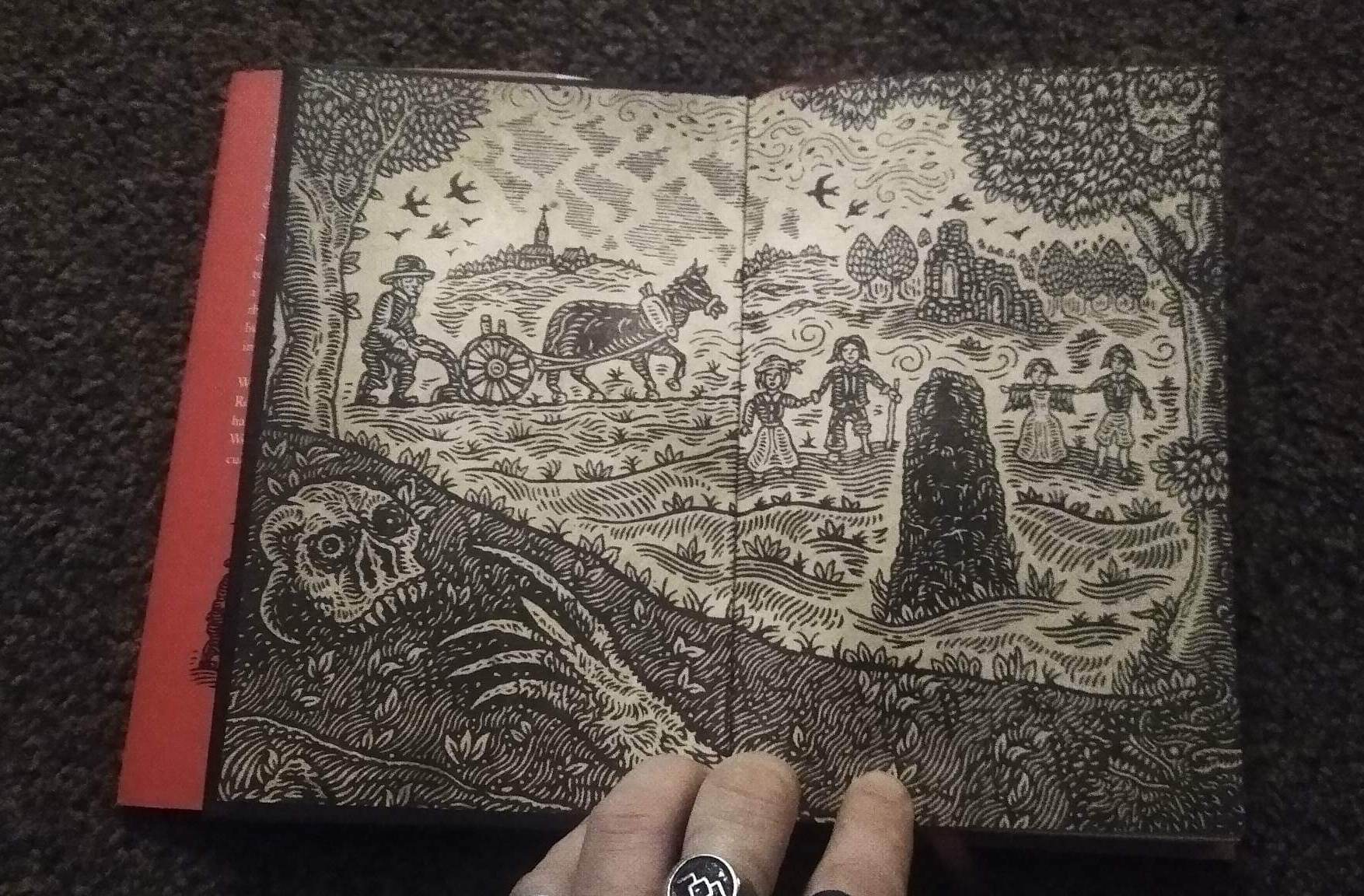
Blood On Satan’s Claw or The Devil’s Skin as the book is titled, follows events that unfurled in the early 18th Century in a pastoral British village named Chapel Folding following the discovery of grisly remains by farmhand Ralph Gower when turning the soil of Tarrant’s Field – a patch of land that generally was left un-ploughed. Remnants of the unearthed mysterious body parts fall into the hands of some local children and things in the sleepy village begin to turn decidedly fiendish. It was not simply bodily relics brought to the surface by Ralph’s toils but a malign presence that endeavored to make itself felt through the bidding and worship of many of the locals – particularly the children.
It is this utter corruption of innocence that I feel is the heart of Blood on Satan’s Claw and which gives both the film and book power. It is also however the source of controversy that casts a shadow upon the movie. Without giving away Spoilers to either film or book, there is one scene in particular that regards the fate of one of the village girls. In hindsight the director Piers Haggard says that if he were to have done it now, he would have filmed the scene differently. I personally feel that the events of this scene are pivotal in showing the savage possession that the children have fallen under but do understand the criticisms of its cinematic depiction. Perhaps this was of consideration to Wynne-Simmons in his novelisation as on paper the events unfold thematically the same but stylistically different. I am categorically a fan of the film, though utterly conscious of any issues levelled against it; but there is something I find eerily spell-binding in it. The book also captivated me. I wonder though if this would differ much had I not watched the film so many times. Dialogue I heard spoken in the specific actors’ voices and I pictured them likewise, which I think speaks well of the casting in the film. The book is a page-turner, though, written in a flowing, inviting manner so I think that for readers with no prior exposure to the film, it would still prove an engaging and interesting read.
The film though also to an extent does seem to have influenced the artist Richard Wells whose chapbook-reminiscent prints illustrate the book. Depicted characters such as the beguiling Angel Blake (one of my all-time favourite movie villains) look very much like their onscreen counterparts (Linda Hayden in Angel’s case). I am a huge devotee to illustrated books so the imagery contained within is appreciated and a nice-touch. Wells being a prominent figure in the revival of Folk Horror being an apt choice for the job. One bugbear I have with the film is the visual reveal of the Fiend – I do not think the effects do the malignant entity justice (same bone of contention I have with the otherwise great 1957 film Night of the Demon). I would have preferred both to have been more unseen and would have found that more ominous and disturbing. However within the book the depiction of the devil of the fields in all his glory is reminiscent of the medieval texts and does suit the purpose better. The red bookmark ribbon is another small but pleasing touch – these visual attentions make the book more of a pleasure to behold and make for a nice ghoulish gift for someone.
It’s been a long time in coming but well worth the wait I feel, as I thoroughly enjoyed the book both for its narrative and writing and for its visual appeal.
Linda Hayden as Angel Blake in The Blood on Satan’s Claw (1971)
Blood on Satan’s Claw or The Devil’s Skin Written by Robert-Wynne Simmons, illustrated by Richard Wells
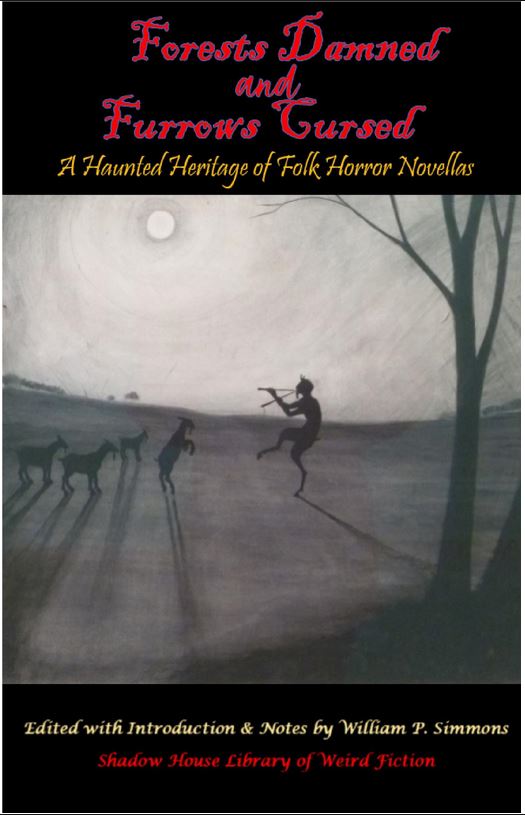
Forests Damned and Furrows Cursed is a new anthology of classic Folk Horror novellas harvested by the author William P. Simmons of Shadow House Publishing. We say ‘Folk Horror’ but all of the contained novellas were written in the late 19th/early 20th Century before the term Folk Horror was widely applied as a sub-genre or mode, therefore all are written with a purity of independence, free from the worry of whether their work conforms to a set idea or ticks all the expected boxes – a problem contemporary writers of Folk Horror may feel they face. So within these covers we are presented with 5 comparatively diverse tales, which still nonetheless should content both the casual and the more rigid readers of folk inspired horror.
The stories featured are ~ Watcher by the Threshold by John Buchan (1902) The Novel of the Black Seal by Arthur Machen (1895) Dionea by Vernon Lee (1890) The Man Whom the Trees Loved by Algernon Blackwood (1912) The Garden at 19 by Edgar Jepson (1910)
Differing from a number of Folk Horror anthologies that have collected short – short stories, Forests Damned gathers those creatures that dwell in the borderlands between short prose and novels – the land of the Novella. Outside of publisher demands (which may be of pragmatic /financial intent rather than creative) which may dictate a set word or page count, my personal belief with writing is that the story should be as long or as short as it takes to tell in the most rewarding manner. The precise amount of detail is required to describe the characters, setting and significant events. – applied to set the pace, to build suspense and either satisfy completely or to non-frustratingly leave the reader wanting more. Just enough detail for the reader to view the scene and unfolding events in their mind’s eye and to immerse in the story and be less conscious of reading a book, if that makes sense? So ideally, not so short as to appear rushed and unsatisfactory, not too long as to bloat and drag with superfluous padding. The stories in this book don’t always completely meet those aims but it is important still that they have been collected and presented again in our time as they are strong interesting stories in their own right and a vital link in the chain for any reader / collector that wishes to build a library and /or knowledge of literary fiction that falls under the umbrella of what is now rather widely referred to as Folk Horror.
Likewise these novellas are of their time which is relevant regarding their pace, style and also with reference to some social-political issues. They come from a time when there was little competition for attention in leisure time – no films, internet, games etc. So they can take their time getting where they are going and can stop to smell the roses in their descriptive manner. So as with all books and tales from different eras, may not be to the taste of all contemporary readers. In his introduction to the collection, Simmons does a good job of putting the works in context and explaining the feral nature of Folk Horror, so no previous experience of reading Folk Horror stories is necessary to enter into the wild lands contained, but it may be useful for those new to the form to read some shorter stories of both Folk Horror and of the era before tackling these long -short stories / short novels. Regarding the social-political issues within some of the tales, attitudes may raise some eyebrows and with fair enough cause; however whether they reflect the opinions specifically of the fictional characters portrayed, the author or the majority of their particular society at that time is not instantly identifiable. The reader can make their own judgement call when reading. Any issues do not overwhelm the tales, mostly they are concerned with traditional gender roles and the occasional opinion regarding foreign nations, but are mentioned purely for context of these tales being creatures of their own time. Such matters may also be of interest to Folk Horror fiction historians in their contemplation not only of tales being told but how they are told.
That overview out of the way, to look now at the individual tales contained and their creators.
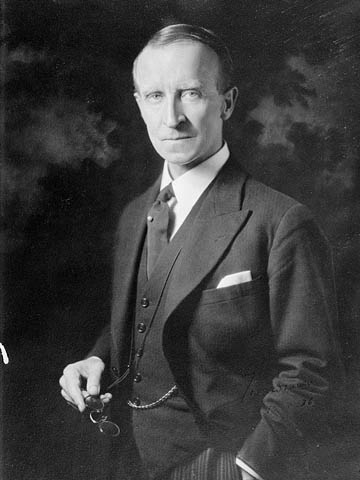
John Buchan
The first story featured is The Watcher by the Threshold by John Buchan (first published in 1902). Buchan (1875 – 1940) was a Scottish polymath. In addition to being a fiction writer (his most famous work quite probably being The Thirty Nine Steps – an adventure tale of political intrigue (known more widely for Alfred Hitchcock’s 1935 cinematic adaptation); Buchan was an editor, non-fiction author, Unionist Politician and Governor General of Canada. The Watcher by The Threshold tells of a man living on the Scottish moors whose studies of Justinian and classical philosophy go beyond obsession and finds himself feeling haunted by a devil. The importance of landscape in Folk Horror is well represented in this tale. I have a love of moors yet find them somewhat unsettling and Buchan’s writing sets the scene very well here.
Arthur Machen: Illustration by Andy Paciorek
Next we have The Novel of the Black Seal by Arthur Machen (1863 -1947) (which was first published as part of his 1895 collection The Three Imposters). Machen was a Welsh journalist, author, proto-psychogeographer and mystic – being a member of the Hermetic Order of the Golden Dawn for a while, his personal spirituality though leaned towards Celtic Christianity. The Novel of the Black Seal shares an element of Buchan’s tale which is also evident in a lot of M.R. James’ work that of academic study becoming embroiled in real situations of archeological, anthropological or folkloric horror. In this case case we find explorations of a subterranean site in the Grey Hills of Wales turning up more than expected. The existence and nature of the denizens of a Faerie Otherworld coexisting with our own goes against any Disneyfied Tinkerbell ‘airy-fairy’ conceptions of the ‘Little People’ of folklore and presents us with a forgotten, hidden swarthy, troglodyte race. In being of its time, perhaps the most horrific scene is implied rather than graphically explained. This works to its advantage, for in contemplation of the origins of the conception of the strange servant boy in the tale, I found myself genuinely unsettled. This tale went on to inspire both HP Lovecraft and Robert Howard in their weird fiction writing. It was in connection to the Machen story incidentally, that I thought of the comparatively low incidence of classic tales fitting a Folk Horror vein being adapted to film during this current current Folk Horror revival. Rather than ‘karaoke’ versions of The Wicker Man, it would be good to see more of the old stories brought to the silver screen. This train of thought commuted my mind to the (criminally little-known) film adaption of a collection of Machen tales, Holy Terrors (2018) by Mark Goodall and Julian Butler (see https://folkhorrorrevival.com/2018/01/19/holy-terrors-film-review/ ) and I think that they would be perfect to adapt Forests Damned and Furrows Cursed to film as a portmanteau – an Amicus-anthology style Folk Horror film if you will. Anyway I digress, so on with the book …
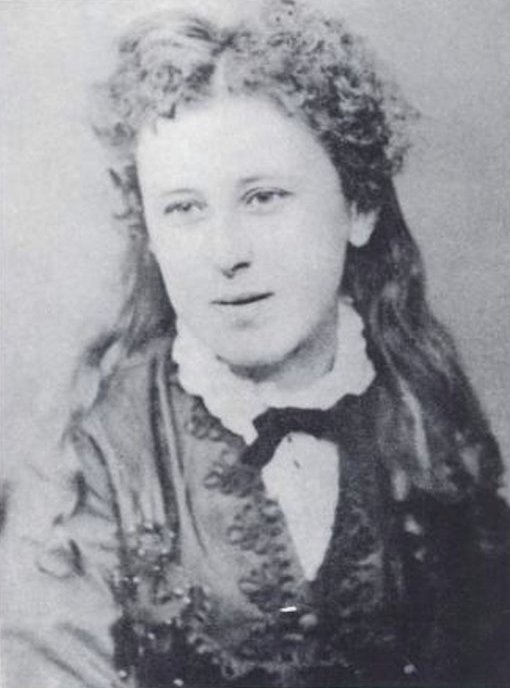
Vernon Lee aka Violet Paget
Next up we have Dionea by Vernon Lee. Originally published in 1890, Vernon Lee was actually the pseudonym of Violet Paget (1856 – 1935). Paget was a strong proponent of feminism but was published under a masculine pen-name. The author’s own contemplation and experience of gender matters can offer a further context to the story of Dionea, a foundling child raised in an Italian convent. Dionea does not care for the studies, chores and sewing that the nuns put her too and instead is drawn more to nature. As she gets older, her independence of thought – her perhaps even feral nature puts her at odds with the convent and later beyond those cloistered walls. Dionea’s strength of character and wild free-spirit is even seen to affect the fate of others and she is viewed with both suspicion and superstition. The return of buried paganism is a recurring element through different examples of Folk Horror, which marks Dionea’s place in this book and the Folk Horror canon, and the voice behind it is a refreshing interlude to the male, quite conservative – despite the themes, uttering of the other featured tale-tellers.
Algernon Blackwood: Illustration by Andy Paciorek
Perhaps one of the most evocatively titled of all horror stories follows next, The Man Whom The Trees Loved (1912) by Algernon Blackwood (1869 – 1951). A member of both The Ghost Club and like Machen, The Hermetic Order of the Golden Dawn; Blackwood is perhaps the biggest name in the book among horror circles. Extremely prodigious and successful in his horror writing career, alas I find issue with The Man Whom the Trees Loved – it’s not that it’s a bad story – it’s a decent enough tale. The problem is that in my opinion, it should be a short story not a novella. There for me is an issue of repetition in the tale – if handled skillfully then a little repeating can build up suspense but I just find too much of it and dallying here. It is surprising as Blackwood knows his craft, so it would’ve been hoped that he did not opt for a ‘less is more’ approach here. As for the tale itself, it is quite poetically beautiful as well as unsettling. A woman becomes extremely concerned with her husband’s obsession for the trees that surround their country abode. It has an underlying mystical and philosophical debate about the sentience of life, (indeed all of the stories featured in this book pose a studious contemplation of the ‘nature’ of both nature and the supernatural) and it is a valuable addition to the Folk Horror bookshelves but I unfortunately cannot help but feel that it would have been a more powerful narrative had Blackwood decided to have it edited down.
Edgar Jepson
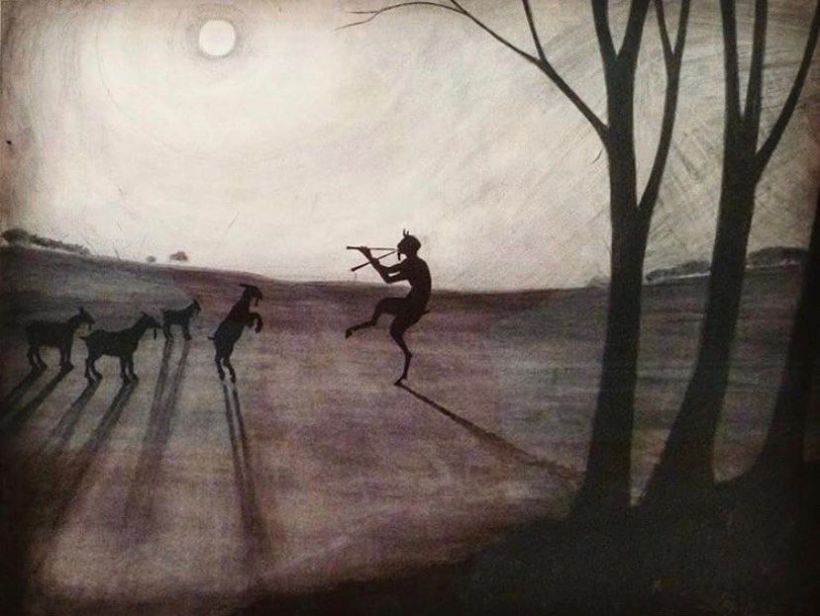
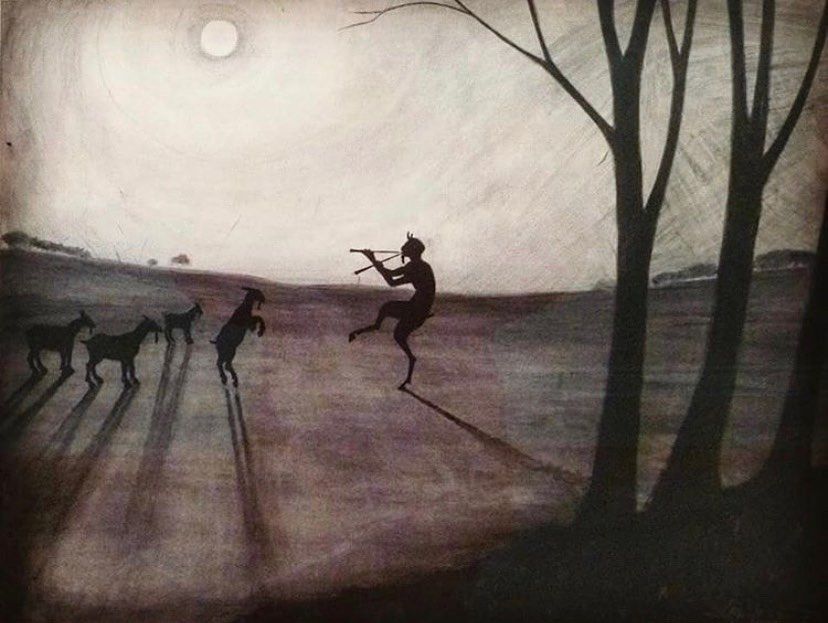
Closing the book is The Garden at 19 (1910) by Edgar Jepson (1863 -1948). Jepson, an English writer, is more widely associated to crime and adventure novels ( as well as translating Maurice Leblanc’s French tales of the aristocratic brigand Arsene Lupin into English). One of his wanderings into fantastic territory The Garden at 19 is a mixed bag. Like The Man Whom the Trees Loved, 19 could’ve probably done with being a bit shorter. It also has its eyebrow raising moments in its oddly repeated opinions of German professors and also in its portrayal of girls/women and their societal roles. Otherwise it’s a fair enough tale, reminiscent of Denis Wheatley’s Satanism in suburbia romps. The presence of that old horny deity Pan explains the book cover (featuring a painting by the, alas not familiar enough, Belgian Symbolist painter of the uncanny, Leon Spilliaert) and relates how a young lawyer becomes intrigued both by the strange goings-on in his neighbour’s garden and then by the presence of his neighbour’s niece. The character of the neighbour, Woodfell, is very clearly inspired by the notorious occultist and tabloid scandal-fodder of the time, Aleister Crowley.
The afterword of the book comes in the form of questions, an interesting addition that would perhaps prove useful for book groups, genre-study classes, and academic or personal-interest students of Folk Horror / horror literature. This and the novel approach of presenting novellas rather than shorter fiction makes this book an interesting and valuable addition to folk’s Folk Horror book collection.
Faun by Moonlight: Leon Spillaert (1900)
Forests Damned And Furrows Cursed: A Haunted Heritage of Folk Horror Novellas Edited by William P. Simmons Paperback, 236 pages Published April 26th 2022 by Shadow House Publishing ISBN13 – 798806998614
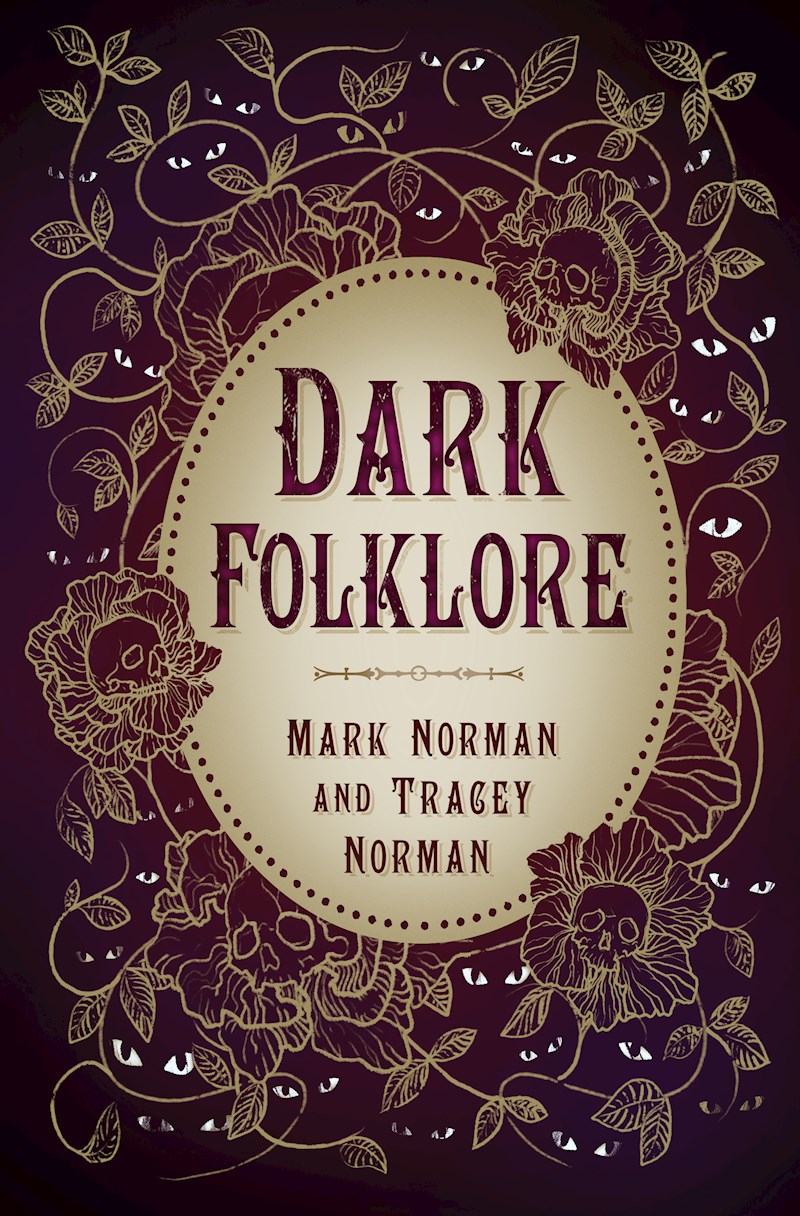
Upon hearing of the release of Dark Folklore by Mark and Tracey Norman, I was beguiled as to what Chthonic treasures the book would contain, for there is certainly darkness a ‘plenty to be found within the world of folklore. Upon opening the book and casting my eyes over the contents listing of the 5 chapters offering a bewitching array of lore with Fortean interest, the first chapter The Old Hag: Folklore and Sleep Paralysis was of particular personal intrigue to me, having experienced numerous incidents of this bizarre state myself. The Normans provide a very good overview on the subject covering the bases of superstition, psychoanalysis and scientific rationale. Presented are numerous entities associated to the Hag-riding phenomenon aspects of sleep disturbance in world folklore, from the Hungarian Liderc to the Arabian Quarinah and the Alien Greys. The authors put forward balanced and insightful consideration of the subject, without judgement. They explain the medical processes of such unsettling experiences but don’t merely dismiss the entities envisioned rather questioning why a feeling of somnolent physical inertia and laboured breathing (amongst other symptoms) can result in visions of old crones or other strange entities squatting on the sufferers’ chests or dark mysterious figures lingering in the corners of the room. Archetypal consideration is applied here, as is the rich folklore of myriad nocturnal entities that can be found across the world in both developing and more technologically advanced societies. (An unsettling folkloric belief, not mentioned within this book, was told to me by a Filipina associate who claimed that the Batibat, an entity associated to the strange hypnagogic / hypnopompic episodes is believed in her culture to be the ghost of someone who had died in their sleep).
Chapter two deals with The Dark Church and covers wide-reaching examples of association mostly between the Christian church in Britain and superstition and pagan influence. Discussed are foliate head and Sheela-na-gig carvings, St. Mark Eve vigils (whereby observers may see a procession of those destined to die in the following year and other wondrous delights. Here we wander down corpse roads and meet the priests of Devon who reputedly employed rather than denied folk magic. The magician-priests included Reverend Franke Parker who lore declares had the power to shape-shift and had an esoteric library that he was deeply protective of. The peculiar Parson Parker was reportedly once found at rest in a bed surrounded by dead toads.
Folk Ghosts provide the focus of the third chapter and considers the distinction that should be made more in haunt studies between ghosts that exist purely in lore and those reported to have been experienced by verifiable witnesses. Many places are said to be haunted by a phantom stagecoach or phantom black dog for instance, but how many have known contemporary witnesses of the particular phenomenon? ‘Cockstride ghosts’ – the spirits of those destined to perform some impossible or potentially eternal penance for an earthly crime are also given good attention. Weaving rope from grains of sand or emptying large pools with a leaking diminutive vessel are examples of such posthumous burdens that may befall wicked souls.
Following on in Chapter four we are entertained with Urban Legends and contemplation of their history, endurance and evolution from the era of Spring-Heeled Jack through the Edwardian case of the Cottingley Fairy photographs, to the radio and televisual panics of the broadcasts of War of The Worlds and Ghostwatch to the virtual ‘fakelore’ creations taking on a real-world presence and influence in the digital-age such as Slender Man and the Momo Challenge, perfectly showing that folklore is not simply a historical study but a living, developing part of human culture.
Dark Tourism and Legend Tripping provide the basis of the fifth and final chapter. Here, Mark and Tracey turn tour-guide and lead us to some intriguing and odd international locations and contemplate why people may be drawn to visit places of grisly repute, to witness rituals alien to their own cultures or to even re-enact certain strange historical happenings. Included here are Aokighara – the notorious ‘suicide forest’ of Japan, the Black Mausoleum of Edinburgh’s Greyfriars cemetery which bears reported activity by the Mackenzie poltergeist and the ghost tours of the Ararat Lunatic Asylum in Australia. Also covered are the death rites and rituals such as the Torajan Ma’nene funerary customs in South Sulawesi, Indonesia and the Día de los Muertos (Day of the Dead) celebrations in Mexico. Quite a lot of lore is surprisingly covered within this relatively thin and rather charming, attractively presented book. Subjects however are frequently given a satisfying amount of considered attention rather than being skimmed over but other examples are mentioned in passing which can whet the reader’s appetite for further research. The allocation of five chapters also works well here, giving the book a tighter focus whilst still treading a lot of ground and providing plenty of scope for possible further volumes in the series, which personally I’d be keen to read.
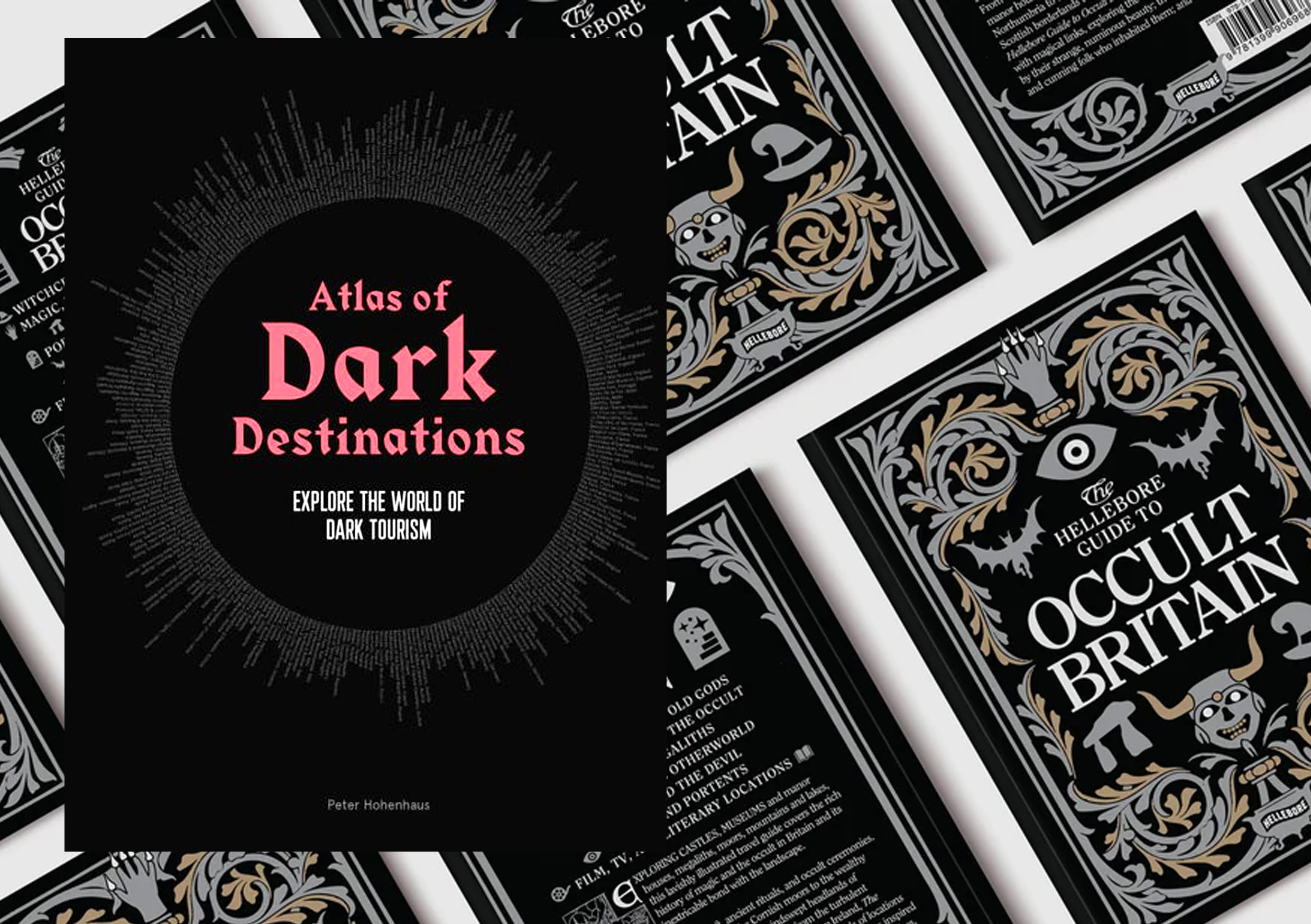
The Hellebore Guide is produced by the same team that created the very popular Hellebore zine that has blossomed in the recent renaissance of indie specialist-interest zines and the revival of attention to occulture and folklore. They have taken their sphere of interest and distinctive design aesthetic forward into book format with this very handy and beguiling gazetteer of British ritual, weird-lore and magical creativity. In the introduction specific attention is brought to the 2 books that this guide could most oft be compared to, the Readers Digest Folklore Myths and Legends of Britain and Westwood & Simpson’s The Lore of The Land. The inspiration and similarities are worn on the sleeve but as Pérez Cuervo informs us, there is a difference that carries the themes forward and makes this work a useful companion to those other books mentioned. In addition to covering numerous sites of folklore, occult practice and strange history, this book also points us to places that inspired or in some instances were used as filming locations for numerous cult /horror novels, films and TV shows. Fans of M.R. James, Derek Jarman, Witchfinder General, The Owl Service and many other such creators and creations will find notes of interest therein. This richly illustrated book will fit handily into a backpack for onsite visits. One point that readers may raise is that due to size restraints certain localities or topics may not be covered in the greatest of detail but within its 316 pages a lot of ground is trekked. The book therefore can inspire further personal research and does offer scope for further volumes.
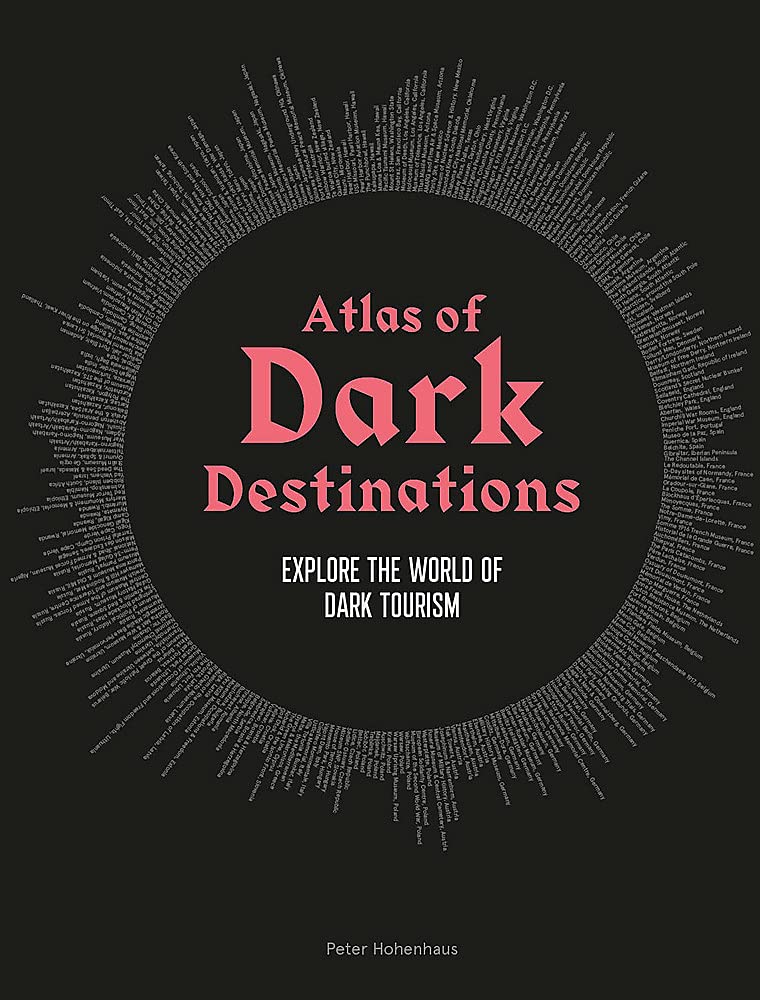
The Atlas of Dark Destinations however is not a book as easily taken out on location unless you have huge pockets as this is more of a weighty coffee-table book – lusciously illustrated but also incredibly informative. Again, as with The Hellebore Guide, the book cannot contain everywhere and everything but does cover considerable distance across the globe. As some countries are perhaps underrepresented there is again potential perhaps for a further volume. Hohenhaus, in his introduction, explains his reasoning for some omissions; he holds no truck with the visitation of living slums as tourist destinations nor does he favour notable suicide sites such as Japan’s legendary Aokigahara Forest. Serial Killer haunts and other singular murder sites are not represented but there is certainly no shortage of death behind the book’s dark cover. Sites of Genocide and wartime suffering are extremely well covered, with a lot of the book being taken up by sites of military and political intrigue. (Which upon showing the work to my 95 year old father, who was in internment and forced labour across Europe during WW2 and isn’t much of a reader generally gained a second review of the Atlas as being “A very good book”).
In addition to well known places covered within the book such as Chernobyl, Auschwitz, Hiroshima and 911 Ground Zero there are notable cemeteries, ossuaries, catacombs, penitentiaries, ghost towns and areas of natural wonder featured and some less familiar intriguing sites such as such as the ornate Milano Cimitero Monumentale necropolis, the Bali Trunyan Burial site and the Darvaza Hell Mouth (a 250 foot wide, 65 foot deep crater in Turkmenistan where an inferno fuelled by natural gas reserves has burned unabated for over 50 years.) Less obviously Fortean in subject-matter than The Hellebore Guide, and perhaps too heavily martial-politically focused for some readers of this magazine, The Atlas is nevertheless actually very readable and fascinating (in many instances particularly in provoking contemplation of humankind’s inhumanity towards each other.)
Both books could also be inspirational to fiction-writers as well as Fortean travellers, for use in setting location and back-story of their tales. Both books are designed to be dipped into rather than be read cover to cover and whether out on the road or in the comfort of my own arm-chair I can see myself delving into both titles for many years to come.
The Hellebore Guide to Occult Britain and Northern Ireland Edited by Maria J. Pérez Cuervo Hellebore Books 2021 Pb. 316 pp. illus. index. £18.75. ISBN. 9781399906968 https://helleborezine.bigcartel.com/productsAtlas of Dark Destinations: Explore the World of Dark Tourism Peter Hohenhaus Laurence King Publishing. 2021 Hb. 352 pp. illus. index. £25.00. ISBN. 9781913947194 https://www.laurenceking.com/product/atlas-of-dark-destinations/
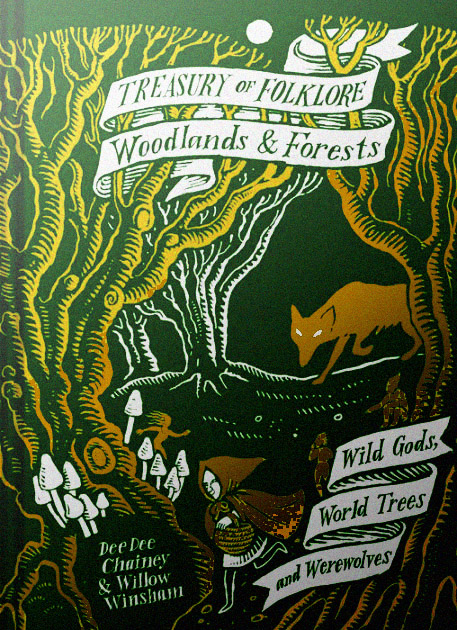
Following in the footsteps of the Treasury of Folklore: Seas & Rivers: Sirens Selkies and Ghost Ships (Reviewed Here ) folklorists extraordinaire Dee Dee Chainey and Willow Winsham (the masterminds behind the #FolkloreThursday social media phenomenon) take us by the hand now like babes in the wood and lead us … er … into the woods! But fear not, you could find no better guides to alert us to the wonders and the woes of this strange sylvan kingdom.
Within its pages, upon the paper that came from the woods itself, we are introduced to many amazing arboreal creatures and woodland wanderers from forests the world over. Some of them heroes and heroines like Vasilisa the Beautiful, a fair maiden who braved the cold Birch forests of old Russia and encountered one of folk horror’s favourite supernatural witches – the iron-toothed crone, Baba Yaga, and Paul Bunyan, the giant lumberjack of the North American timber lands & his loyal companion the blue-haired moose, Babe. We encounter strange creatures such as the timid Squonk which upon capture would dissolve into nothing in a flood of tears and the human-faced tree dogs of China – the Penghou. We meet gods and demi-gods and elemental spirits of the wild woods – the Leshy, Hamadryads, Herne the Hunter, the Moss People and many many more. We encounter those denizens of dark woods for centuries – the bears and the wolves, yet these bears and wolves may be more than we dreamed and may disturbingly be more like us than we’d dare to imagine. And we hear the lore of the trees themselves from the Dragon’s Blood Trees of Yemen to the ancient funereal Yews of Britain; from the sacred Banyan trees of India to the giant old Cedars of Canada.
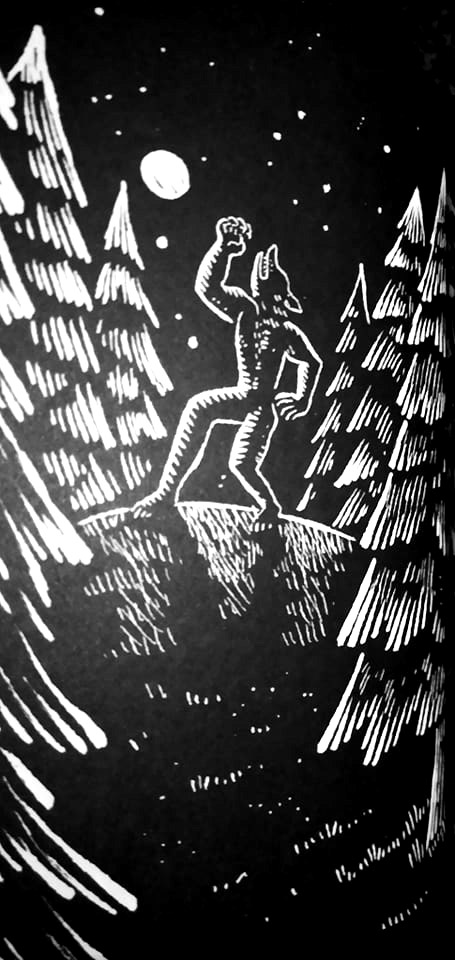
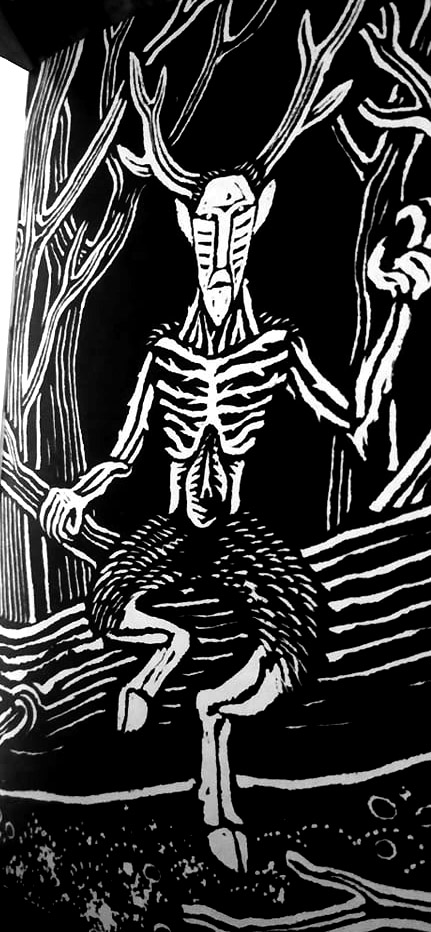
The book is illustrated throughout by the charming block-print style illustrations of Joe McLaren. Images both dark and strange but with a quirky humour to them, which will likely appeal to readers of a wide age-range. Again as with the Seas and Rivers volume, some adult subject matter is touched upon but with parents’ own discretion and judgement I could see this book being popular with both themselves and their kids. I know I would have loved these Treasury books as a youngster. Furthermore I remember years ago when I was doing Tree Warden training at an agricultural college one of the tutors asked the class what it is we liked or indeed loved about trees and forests. I had numerous reasons, their role in the environment and natural habitat, their look both as pleasing landscape and for their interesting aesthetic from the point of an artist, their smell, their ambience and I also mentioned their role in folklore. At the end of the class another student approached me and asked if I could recommend any books that featured the folklore of trees and had Dee Dee and Willow’s book been available then I know it would have been top of the list. It is a great introductory book to the topic, yet it is also so diverse and so widely researched that all followers of folklore no matter how seasoned will find something unfamiliar or of further intrigue within this beguiling little book. I myself was rather bemused to encounter Tió de Nadal, within these pages. If unfamiliar with this bizarre Yule Log of Catalan tradition, then I’ll say no more and let you discover this rather odd custom for yourself within this fantastic book. Woodlands & Forests makes an excellent companion both visually and content wise to the Seas & Rivers volume and also Dee Dee’s earlier A Treasury of British Folklore. It would make a great little present for a loved one or for yourself for Halloween or a great stocking filler for Christmas … but maybe not put it in the same stocking as Tió de Nadal !!
Treasury of Folklore: Woodlands & Forests: Wild Gods, World Trees and Werewolves. Dee Dee Chainey & Willow Winsham Batsford. 2021. Hb. Illus. 192pgs.
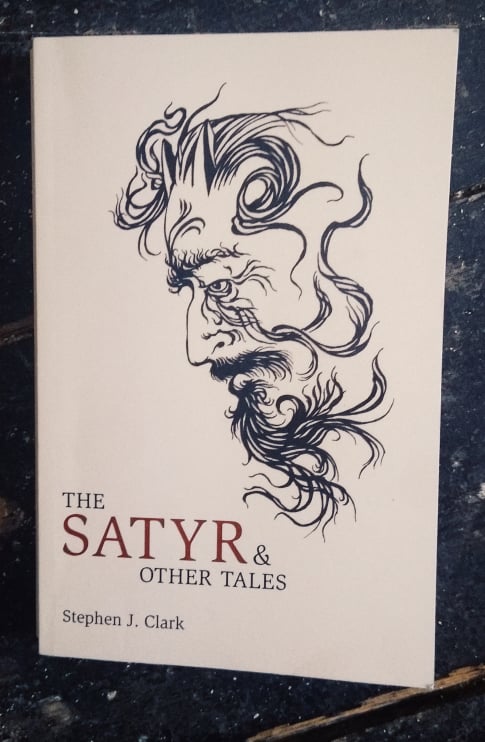
Stephen J. Clark’s The Satyr & Other Tales is an anthology of his earlier book releases The Satyr (2010) and The Bestiary of Communions (2011) now released as a paperback edition.
Uniting the 4 tales in a single anthology is a good move as the tales compliment each other and are united not only by all the tales being set around the times of the two world wars but there is also a thread of artistic significance that weaves through all the stories.
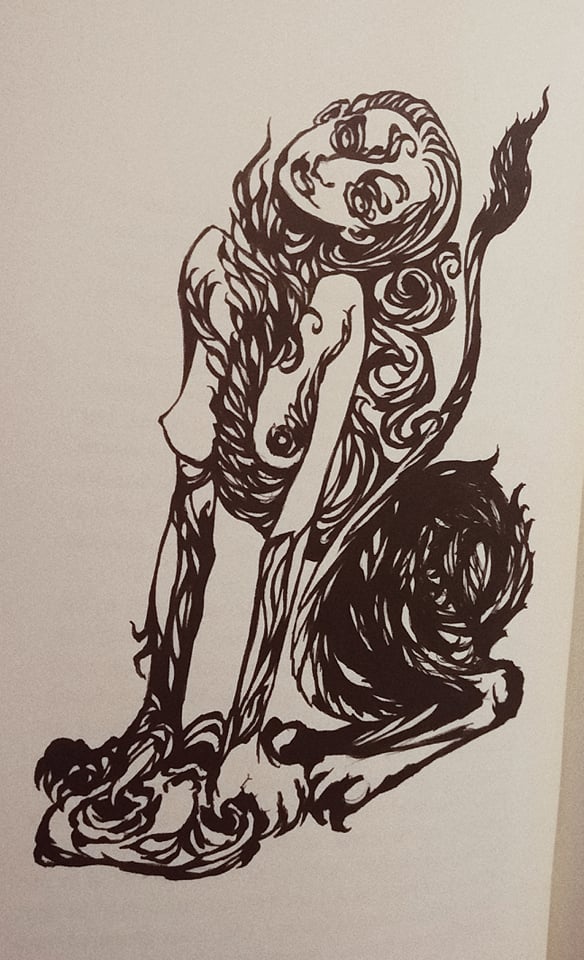
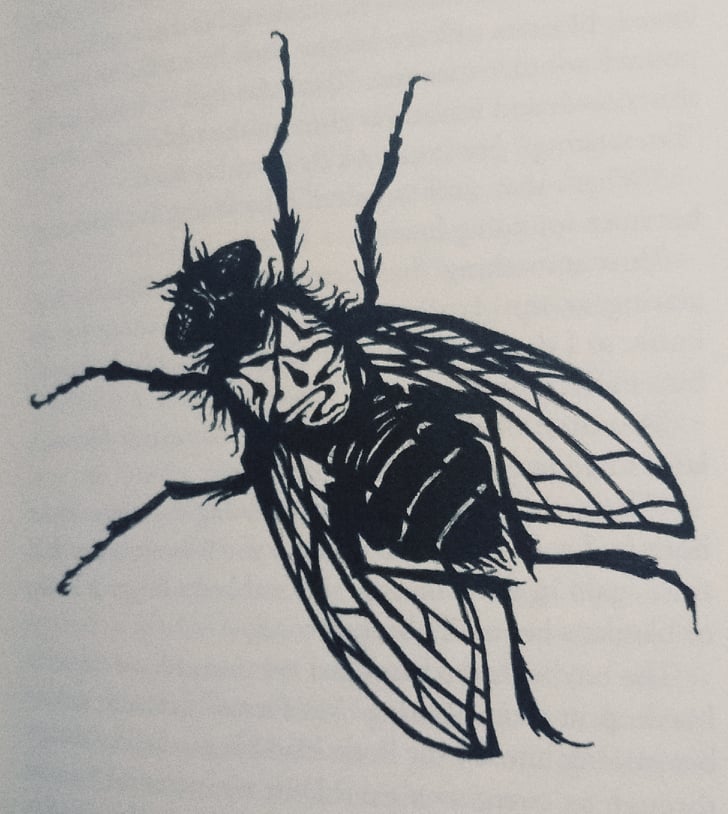
Beginning with the book’s eponymous tale The Satyr, we the readers, are taken into the world of the great artist and occultist Austin Osman Spare. Although familiar no doubt to many Folk Horror Revivalists, Spare’s star as one of Britain’s greatest lost artists has begun to deservedly shine more in the last decade, he is still too unknown a quantity in the wider public consciousness. Though he was accepted into the Royal Academy whilst still a teenager and reputedly asked by a pre-war Adolf Hitler to paint his portrait (which Spare refused), he faded into semi-obscurity living almost a hermitic (and hermetic) life, reportedly paying for beer with paintings and taking care of a clowder of stray cats in his small London home. Being a somewhat enigmatic and eccentric character in real life, he is suited to be cast as a character within fiction. For me however there is always a sense of reticence upon beginning any fictional tale that features real people – what if their characterisation is ill-fitting and totally alien to how I imagined that person? In this case my fears are unfounded, Clark’s personification of Spare is well crafted. For the most part Spare is represented by reputation within the tale as the mysterious ‘Borough Satyr’ but when we do get to meet him in person as it were, Clark’s portrayal of him is very much how I’d envision the nature of Spare. The main characters of the story however are an ex-con called Paddy and a strange visual artist he has took up with, who (her own name being unknown), is referred to as ‘Marlene Dietrich’ and her pursuer, a psychiatrist named Doctor Charnock. The story unfolds in WWII London during the aerial blitzkrieg as Marlene seeks to find Austin Osman Spare through the bombed out rubble of the nation’s capital and show him her portfolio of strange esoteric drawings and of Charnock’s endeavours to seize those drawings for her own purpose. A difference made by Clark and his publisher Swan River Press to the anthologised edition is the inclusion of Clark’s own drawings in the style of Spare. I am biased as I approve of illustrated books and I like it when authors illustrate their own work as it gives a greater insight into the original creative vision of the piece. Clark does this justice. The art certainly emulates Spare but not only does it illustrate the story, it is suggestive of what Marlene’s own portfolio would look like. The tale itself is an esoteric adventure of crime, war and occult drama.
Unfortunately Clark has not illustrated the second half of the book, the trinity of novellas that make up The Bestiary of Communion. It would have been interesting to see the tales illustrated in the author’s own hand or if he can evoke (invoke?) other artists as well as he has Spare, then illustrations in the manner of Bruno Schulz, Nicolai Kalmakoff and Marie Čermínová would be fitting as probably would be a style befitting Alfred Kubin, Hugo Steiner-Prag, the New Objectivity movement or others of that era and ilk. It is curious that earlier authors that came to mind in reading The Satyr, literally made their presence more apparent in the triumvirate that followed.
In the first of the Bestiary Tales, The Horned Tongue, a bookseller in Amsterdam, comes to learn that there were secrets about his late wife that he would never have imagined. My mind had flitted to the Russian novel The Master and Margarita by Mikhail Bulgakov, upon the introduction of a key character and it becomes apparent that readers familiar with that book are intentionally led down that path. I found this theme that recurs of having real creative luminaries inspiring and influencing the texts intriguing.
The Lost Reaches is the next tale and possibly the one that sidesteps most from early 20th Century European gritty post-decadence into the world of surrealism as refugees take sanctuary in an art-house nestled in the Carpathian mountains. Again another author whom passed through my mind in reading Clark’s work first came to mind and then manifestation. This time the remembrance of Bruno Schulz makes an appearance. Schulz, a Polish-Jewish artist and writer, whose work has been brought to the screen and a wider audience by both the visionary film director Wojciech Jerzy and the master animators The Brothers Quay, was tragically murdered by the Nazi regime during WWII.
Finally in a re-working of his novella My Mistress The Multitude, now renamed The Feast of the Sphinx (personally I preferred the first title, but I appreciate the name change in differentiating the versions) takes us to Prague whereby a strange chimeric Countess becomes the focus of attention and obsession in a time where the imminent arrival of invading Germanic troops into the city is a cause of profound dread.
These collected tales of Stephen J. Clark put me in mind of several notable authors – in addition to those mentioned above I perceived shades of Franz Kafka, JK Huysmans and Gustav Meyrink. That is not a complaint but a compliment. Clark’s writing is not derivative of these authors, his work is not a pastiche – it is just a case that his vision and settings are evocative of those times and souls and this book can stand alongside the works of these authors on its own merits. The Satyr & Other Tales may very well then be of interest to folk who like that strain of weird fiction that rose from the bones of Fin de Siècle decadent Europe, through secessionist expressionism and entartete kunst to interbellum and post-war surrealism. But how would it fare to the general reader? You do not need to be familiar with the artists and writers that cast a spell upon Clark’s tales – indeed his stories may be the gateway to discovering those creatives if previously unfamiliar with them and your curiosity piqued. But the tales need the reader’s attention, they are likely not suitable for a light summer holiday read but would suit dark nights and long rainy days.
Intriguing work, unknown to me upon its original release but that I’m very pleased to have caught The Satyr & Other Tales this time around.























 Folk Horror Revival & Urban Wyrd Project ⨘