Black Weekend : FHR Books And Merchandise Dicounts

Image

𝔹𝕝𝕒𝕔𝕜 𝔽𝕣𝕚𝕕𝕒𝕪 ~ Sale on at the Folk Horror Revival Red Bubble store between 20% and 60% Discount – just use code DEALS2020 this weekend (28 – 30 November 2020) at checkout at ~
https://www.redbubble.com/people/folkhorrorrev/shop

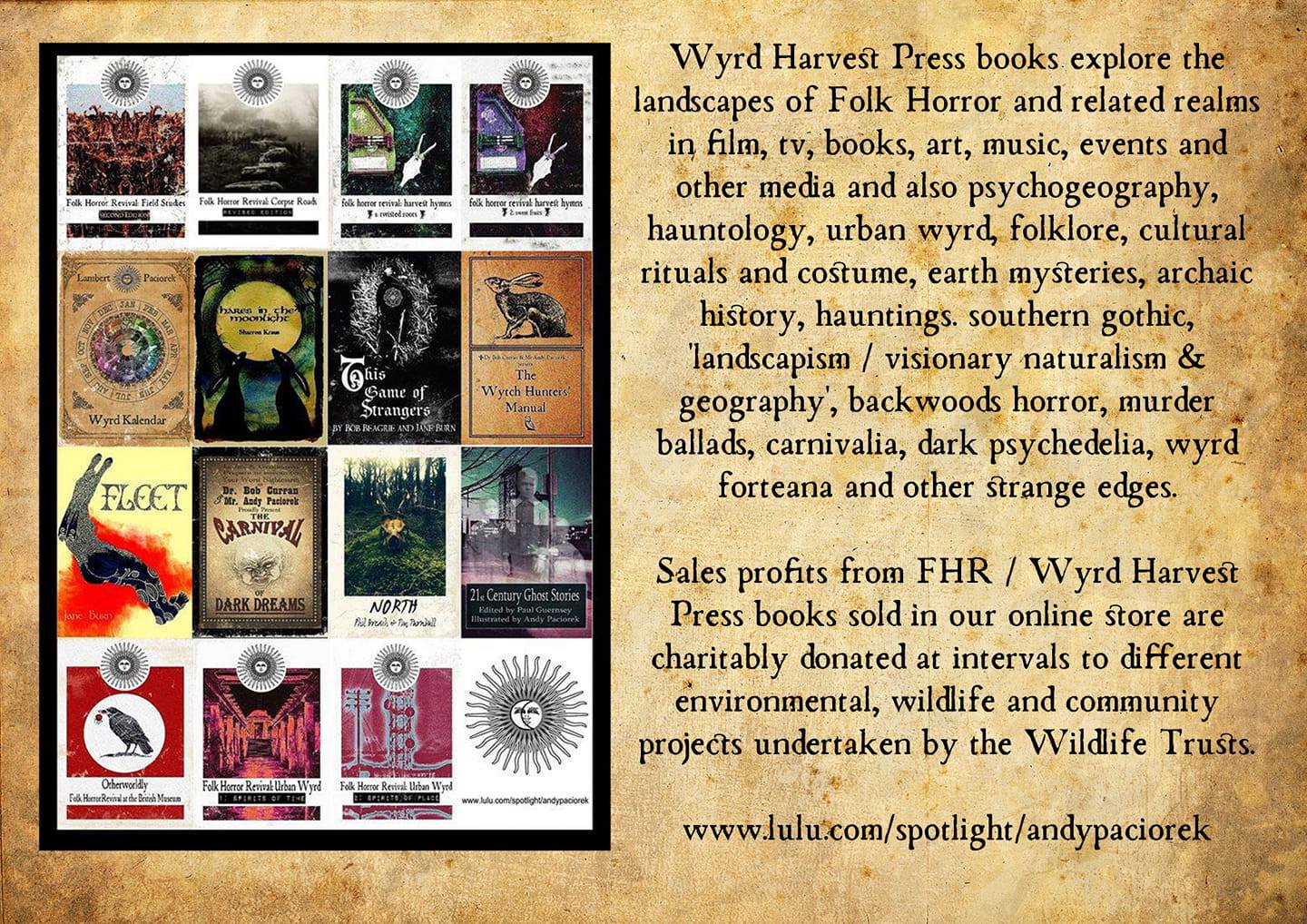
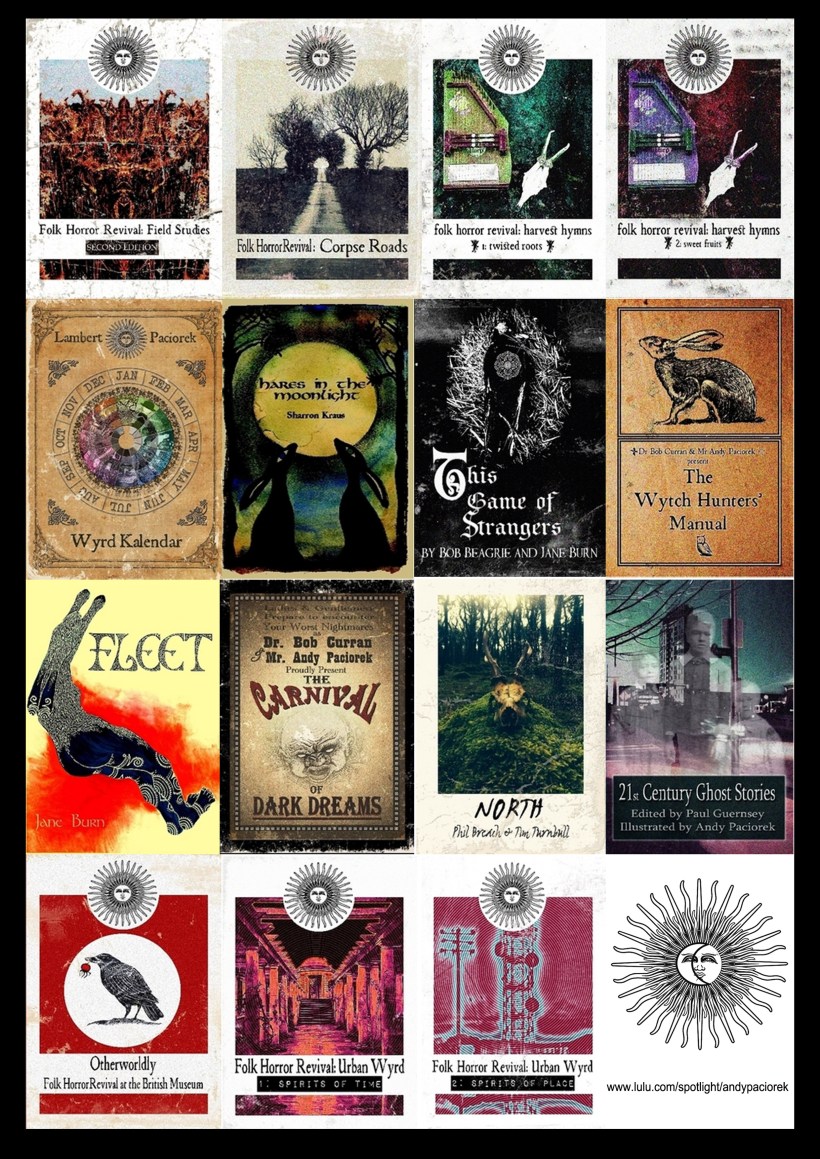
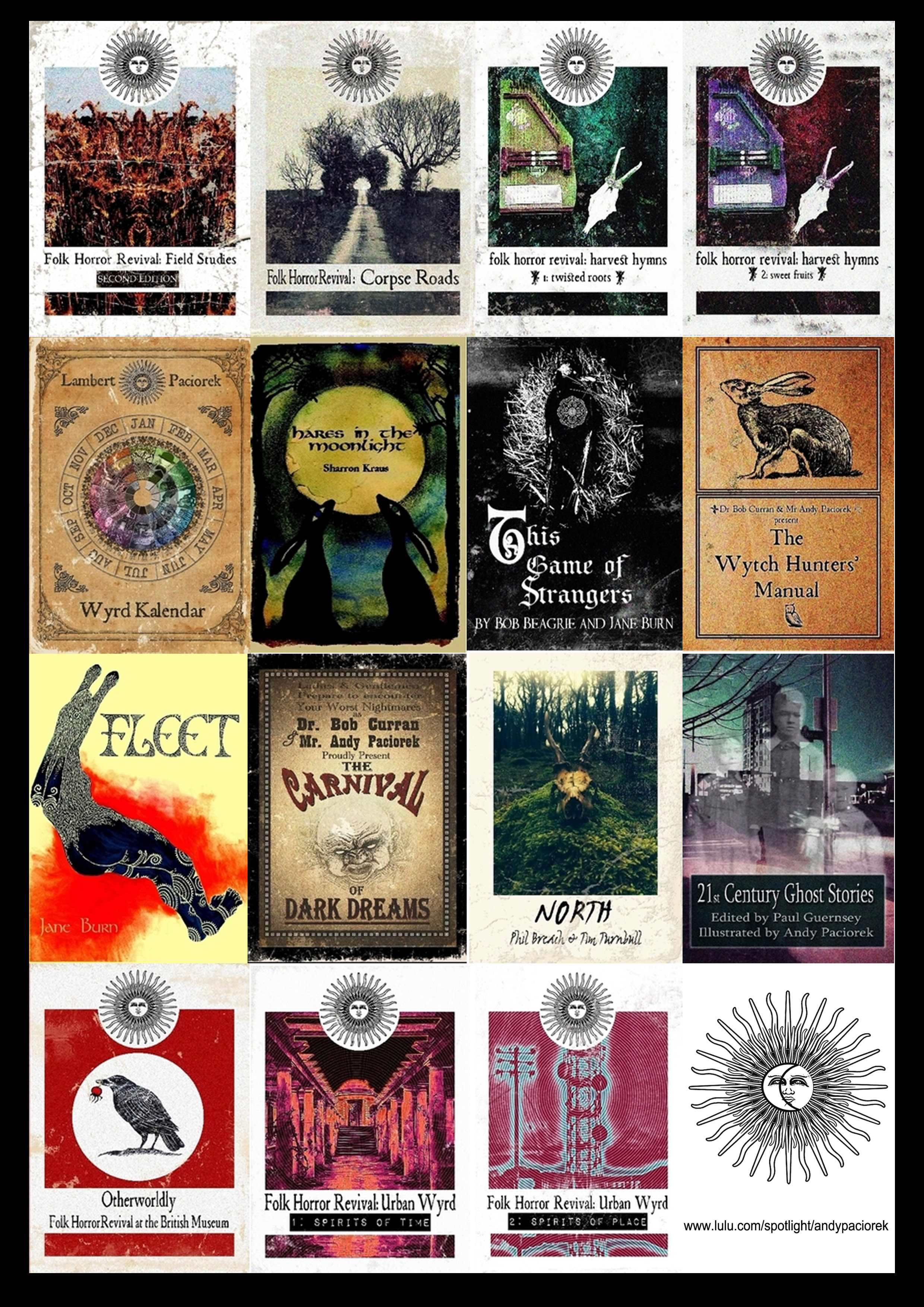
There’s a huge discount of 30% off all #FolkHorror Revival/ @UrbanWyrd books

at @Luludotcom Just add discount code BFCM30 at checkout https://lulu.com/spotlight/andypaciorek
Offer ends Nov 30th

100% of Book sales profits donated to projects by the @WildlifeTrusts

Image

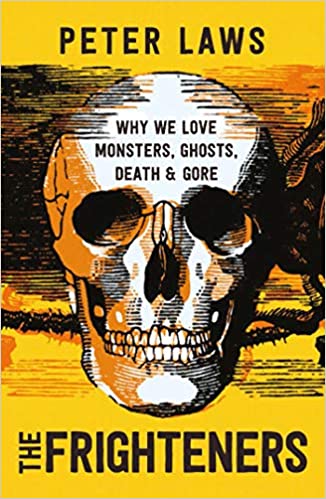
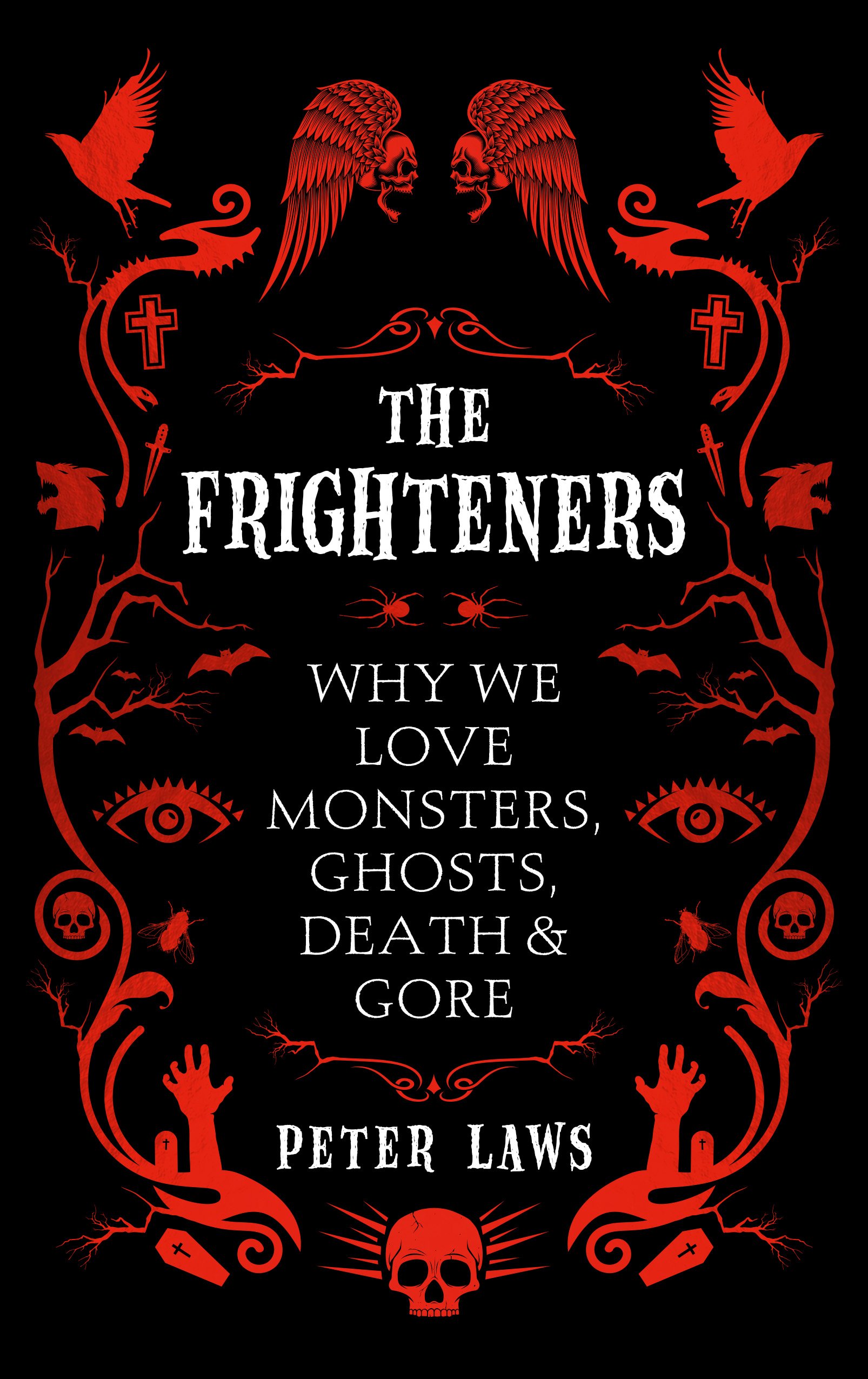
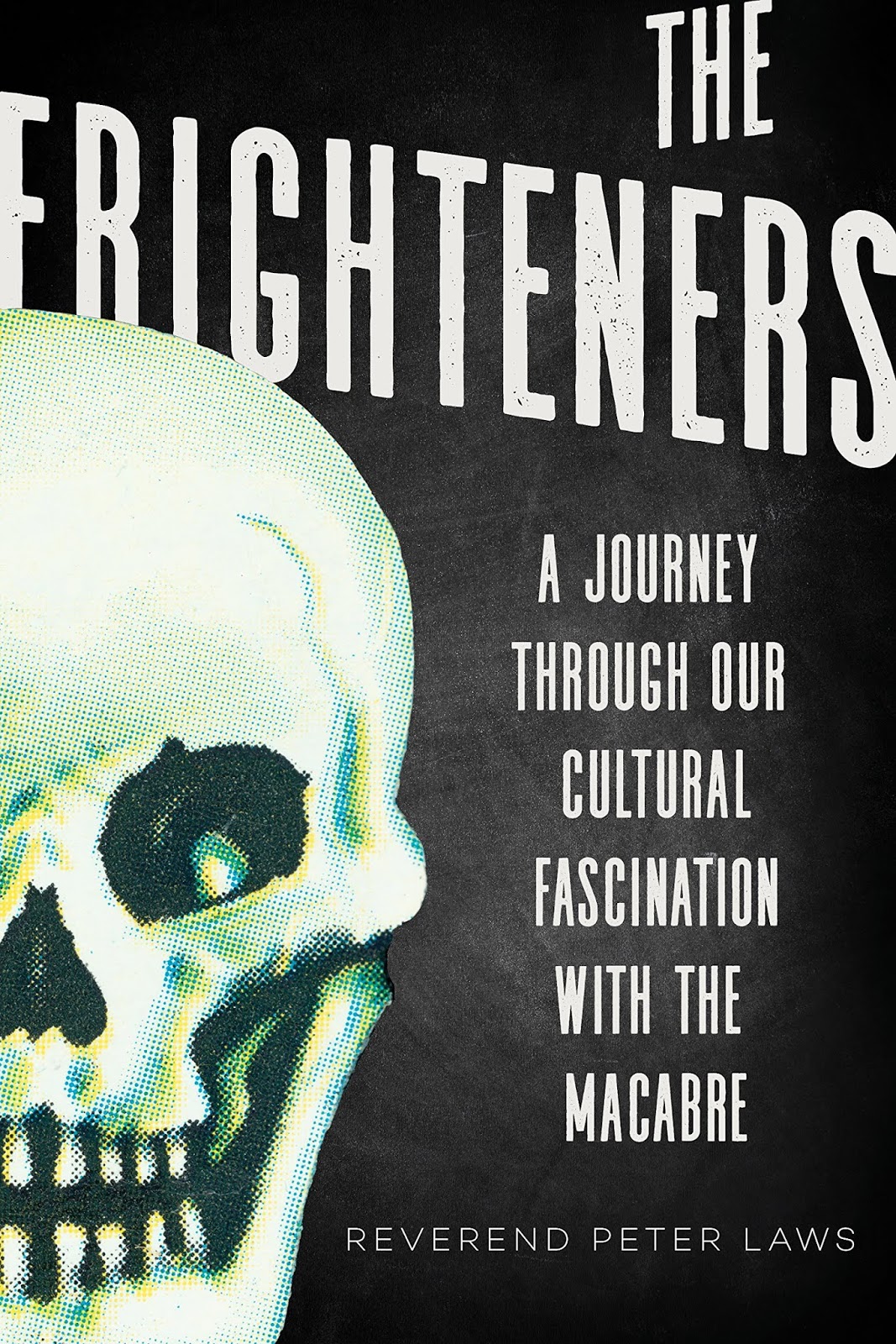
The Frighteners by Peter Laws: Book Review

https://ryedalebookfestival.com/wp-content/uploads/2018/08/Peter_Laws_Cover.jpg

I was only a couple of pages in by the time this book had me hooked. From the offset Peter Laws’ investigation into why people, like himself, are fascinated, drawn to and maybe a little obsessed by horror and other spooky or grisly weird stuff, resonated with me. I too am one of those morbid kids grown up and not grown out of morbidity. Unlike Peter Laws however, I am not a Christian church minister!! 
Laws’ day job is accompanied by a night shift that sees him writing reviews of horror films for Fortean Times magazine and penning dark fiction. Some may consider Laws’ dual paths as being incongruous but as he points out Christianity is full to the brim with supernatural elements; there are numerous grim and violent stories in the bible and The Exorcist is actually a very Christian film (and indeed was instrumental to Laws finding his vocation as ‘the sinister Minister’.
My own childhood attending a Catholic school governed sternly by nuns already had me convinced that horror and Christianity may not always be miles apart by any means!    

https://splattergeist.files.wordpress.com/2018/07/81eq4raddl.jpg

But what is the fascination of horror? Why does it draw some people in? Why do some people enjoy being frightened? Is it wrong or harmful to like freaky, frightening stuff? These are questions that Laws seeks answers to in some very strange places. Within the pages of this captivating book we join him in scenarios and company as peculiarly diverse as a haunted hotel in Hull, alongside howling dogs in Transylvania, in a shop in York that has amongst its various gee-gaws and oddities a curl of hair clipped from the head of Charles Manson and trapped in the toilet of a decommissioned war bunker whilst a Zombie in a wheelchair batters at the door. 

https://folkhorrorrevival.com/wp-content/uploads/2020/11/c5226-frighteners.jpg

The Frighteners is an intriguing book and whilst it does ask some serious questions and looks at some heavy elements such as Murderabilia (the collecting of serial killer and violent crime associated ephemera) and the matter of violence, death and dying generally, it is also a very funny book. Some of Laws’ wit is gallows humour – it has to be considering the subject matter, but it is never cruel and it gives the book a friendly glow and familiarity.  Even in the cold Capuchin crypts beneath Rome among the remains of scores of dead monks, their death presented vividly for all visitors to see, the warmth of Laws’ company is ever present. He is a perfect guide for voyages of the macabre as he does not shirk away from or sugar-coat the grisly, the violent, the tragic and the horrific. He braves the questions that some may want to ask but don’t dare and he doesn’t run from contemplation of the answers. But throughout he maintains a friendly, funny, engaging and affable manner. Humour in grim circumstances can be a good coping mechanism for dealing with things or situations that may disturb us as can confrontation of our fears. An interesting topic that arises is the observance of children that have experienced trauma playing with their toys in a manner that some may find disturbing or drawing gruesome pictures, but that in fact it may be a healthy way for them to deal and process the intense disturbance to their life. And not just kids, the book ponders what is a harmless interest and what is an unhealthy obsession. A fondness for horror can be healthy, the fantasy a safe, harmless escape and channelling of inner troubles and an invigorating thrill. Rather than break societal boundaries it can strengthen them. But there are times when people have questioned whether exposure to Horror fiction such as with the moral panics that have arisen around spooky comics, ‘video nasties’ and violent computer-game could or have indeed resulted in real-life grisly crimes. 
The answers to such a question are complex, but it is a certainty that very many of us like scary or gory things but thankfully the vast majority of us don’t go onto mass murder or other atrocious crimes and certainly not everybody who does these things are horror fans as such.
Rather than nail down solid final answers for why some people are the way they are, this book is a highly enjoyable and very interesting adventure into the dark-side. It is a book that I found myself reading excerpts from to my girlfriend (another aficionado of the frightful) which led to some interesting conversations.

The Frighteners is available Here and from other book shops and online stores

For more information about Peter Laws creative projects visit ~

https://www.peterlaws.co.uk/

Review by Andy Paciorek

Photograph of Peter Laws The Sinister Minister

Hauntology by Merlin Coverley: Book Review

https://i0.wp.com/oldcastlebooks.co.uk/images/large/9780857304193.jpg


Divided into 3 sections – Hauntings, Experiments with Time and Ghosts of Futures Past; within this new work Merlin Coverley, embarks on a mission to seek out the roots and growth of the cultural phenomenon that is known as Hauntology. It is a walk that takes the author and reader down many diverse paths, foremost among them being Memory Lane.

Though it does explore the concept of hauntings and references numerous supernatural films and TV shows, this is not a book about ghosts in the traditional sense but a study of the concept of the cultural mode known as Hauntology. The word Hauntology was conceived in 1993 by the French political philosopher Jacques Derrida in his book Spectres of Marx as a portmanteau of Haunt and Ontology and relates to his concept that Marxism continues to “haunt western society from beyond the grave”. However, Hauntology has expanded far beyond its original meaning to encompass a certain aesthetic in music, media and art and beyond that a feeling. Hauntology is a nebulous creature, difficult to define but always recognised when encountered, at least on an emotional level. The wider concept of Hauntology as an art and thoughtform owes a lot to the writings of cultural historian Mark Fisher and here Coverley joins the dots between the Derradaian and Fisherian views.

Coverley notes the cultural importance of the 1970s as a fixed point in hauntological time. Notably lying within the formative years of Generation X (or what Bob Fischer has accurately described as The Haunted Generation, which is evident in the work of Scarfolk and Scarred For Life for example) the 1970s were abundant with weird TV, strange discordant library music and were politically hard times (a ghost of which resurfaced, I think in flashbacks of Thatcher and Foot, when May and Corbyn were the UK Prime Minister and opposition leader). But Coverley turns the clock back to the 1840s when Marx released the Communist Manifesto and Charles Dickens penned ghost stories. Centring on Dicken’s A Christmas Carol, Coverley makes interesting comment on the ghosts and their repetition of the past not only within the story but within the cultural repeating of the tale by readers and viewers each Christmas. (This set me thinking of how Raymond Briggs’ The Snowman animation has now perhaps become a Christmas ghost – each year destined to be reborn and melted – an analogue ghost now haunting a digital house). The nature of haunting as a recurring point in time or a moment trapped in its environment lends itself to one of the Fortean themes to arise in the book, the theories of Charles Babbage, Eleanor Sidgwick, Edmund Gurney and most prominently in these pages of T.C. Lethbridge and the televisual drama The Stone Tape written by the recurringly hauntological explorer Nigel Kneale and first broadcast on Christmas Day 1972.

Other Fortean points of interest touched upon within the book’s meanderings include Pepper’s Ghost, J.W. Dunne’s philosophy of time, spiritualism and Alfred Watkins and John Michell’s ley-line  explorations. Numerous other authors are encountered as we wind our way through the pages including W.G. Sebald, M.R. James, Arthur Machen, Susan Cooper, Alan Garner and J.G. Ballard. As with Nigel Kneale, Coverley is most interested in their use of time – how seeming anomalies of time and events can cause a person or place to be haunted.

Memory and nostalgia are key to Hauntology, but as we delve deeper it is clear that the nostalgia of hauntology is not a simple fond reverie of bygone times but in using the 1970s as a strong reference point is something akin to mild trauma, yet with a strange streak of thrill. The ghost stories of Christmas, weird TV plays, folk horror films and public information film continue to haun us. But a pertinent point is that these aspects of attention are not simply daydreams of times past but a re- living of a history that has never left us. A past that has just been buried like the fiends of horror films waiting for a sequel. It is the memories of Tomorrow’s World predicting the future that is now our present – a world not of personal jet packs and happiness machines but a present where the grim ghosts of 1970s austerity, division and unrest not only did not go away, did not stay in the past , but are risen and with us again, haunting our past, present and future. This is of course reflected in artistic expression, Hauntology as a concept may have appeared in the 1990s but it is strangely a notable aspect of our current zeitgeist. We can see its past roots in a lot of contemporary writing, film and music that dwells on the outer edge of the mainstream, but it is not simply retro, it has its originality but is haunted by the past. A catharsis of demons still needing exorcised perhaps.

Coverley’s book is thought-provoking and although rather academic is engaging, but it is theoretically focussed and therefore is perhaps not the best starting point for anyone fresh to hauntology but for anyone already immersed and seeking to dig deeper into the subject it is a great addition to the haunted bookshelf.

Hauntology by Merlin Coverley
Available now from Oldcastle and other book shops/ online stores

review by Andy Paciorek

https://i0.wp.com/oldcastlebooks.co.uk/images/large/9780857304193.jpg

The Horned God: Life, Death & Rebirth – A Telling –

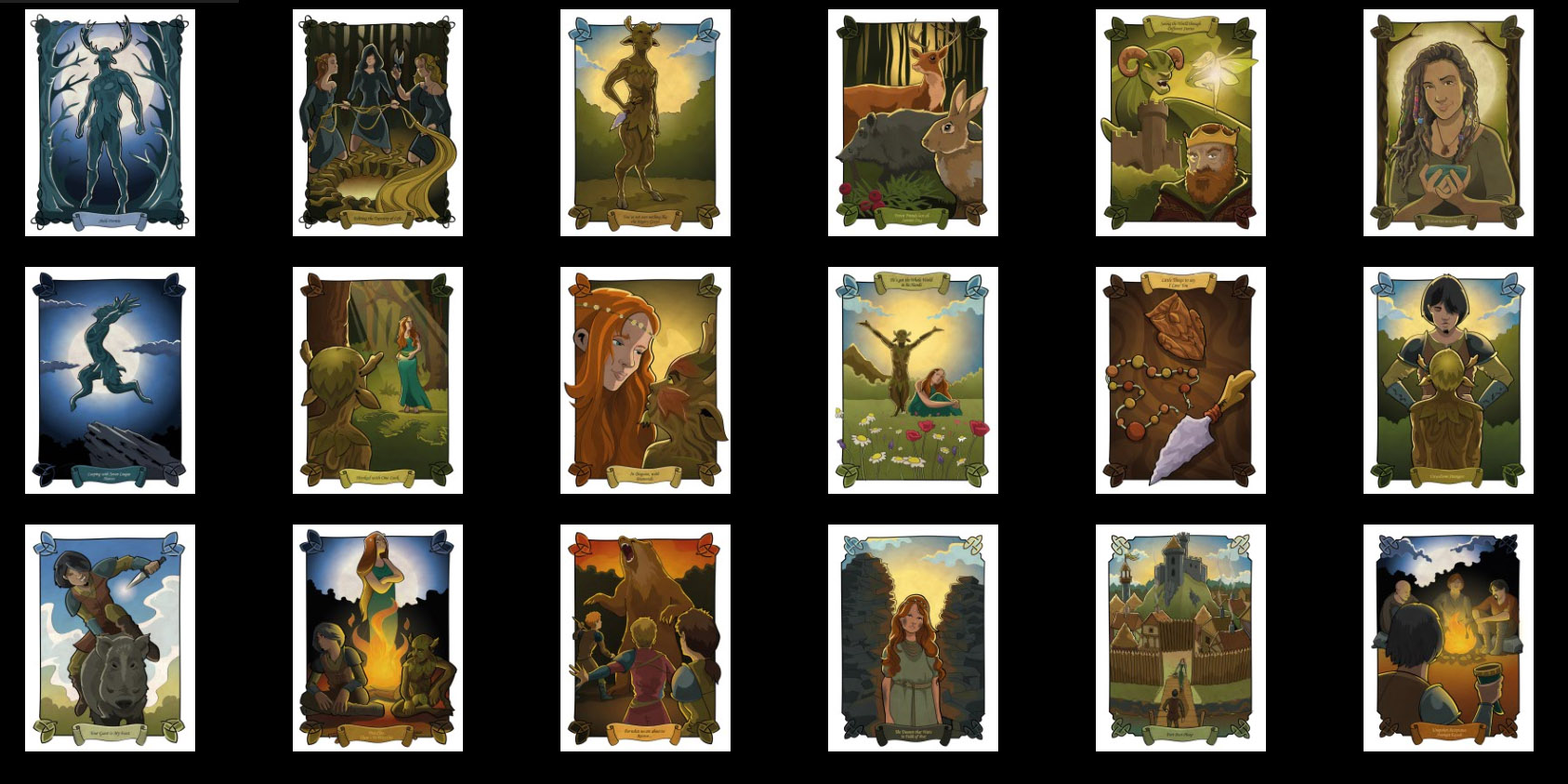
The book The Horned God: Life, Death & Rebirth ~ A Telling ~ written by Bard Cerannon and illustrated by Scott Tyrrell, John Ridgway, Shaun Durham & Tony Jennison will be published soon by Wyrd Harvest Press.

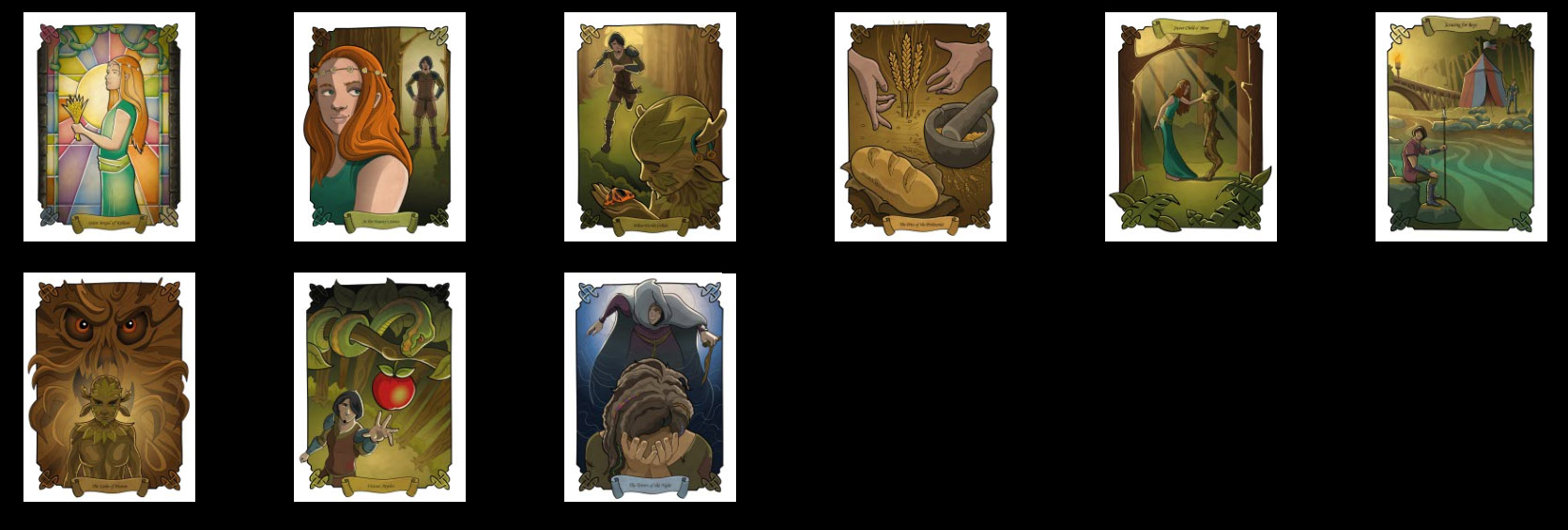
It includes blank colouring pages by Scott Tyrrell, which are shown here coloured for example but of course feel free to choose your own colours.

Purchasers of the book can download all 27 of the coloured Scott Tyrrell images
Email chosen-angel@live.com for details.

Halloween Discount at Wyrd Harvest Press

20% Discount on all Wyrd Harvest Press books ~

Insert code BIGTREAT20
at checkout at
https://www.lulu.com/spotlight/andypaciorek

Code valid until 11.59pm UTC on 1st November 2020

Wyrd Harvest Press books explore the landscapes of Folk Horror and related realms in film, tv, books, art, music, events and other media and also psychogeography, hauntology, urban wyrd, folklore, cultural rituals and costume, earth mysteries, archaic history, hauntings. southern gothic, ‘landscapism / visionary naturalism & geography’, backwoods horror, murder ballads, carnivalia, dark psychedelia, wyrd forteana and other strange edges. Sales profits from FHR / Wyrd Harvest Press books sold in this store will be charitably donated at intervals to different environmental, wildlife and community projects undertaken by the Wildlife Trusts.

Corpse Roads ~ National Poetry Day

To mark National Poetry Day
claim a 10% Discount on our book
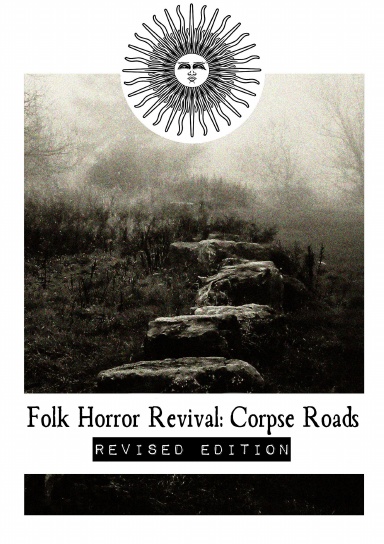
Folk Horror Revival: Corpse Roads – Revised Edition

https://assets.lulu.com/cover_thumbs/1/q/1qk5459k-front-shortedge-384.jpg


A revised and improved edition of the classic Corpse Roads – a voluminous anthology of haunting poetry by past masters and contemporary talents. Fully illustrated throughout by a wealth of atmospheric photography by various artists. Includes additional poetry, photography, new cover art and refined layout design. Sales profits from this book are charitably donated The Wildlife Trusts environmental conservation and community projects.

enter code PROSPER10 at checkout at ~
https://www.lulu.com/en/us/shop/folk-horror-revival-/folk-horror-revival-corpse-roads-revised-edition/paperback/product-1qk5459k.html

(Convert price to local currency at bottom of the webpage.)

Offer ends October 2nd 11.59 pm UTC


Charity Donation – Summer Solstice 2020

bees

☀️Happy Solstice☀️

Folk Horror Revival is pleased to announce that the winner of the poll held on this page is Derbyshire Wildlife Trust – Feel The Buzz – bee protection project who has received £600 from the sales profits of our Wyrd Harvest Press books.

Thank you to everyone who voted and especially to those who bought or worked on our books. 🐝

Purchase our books here – Profits from sales in this store are charitably donated at Solstices to The Wildlife Trusts

Image may contain: text

Mysteries of Portsmouth : Review

matt
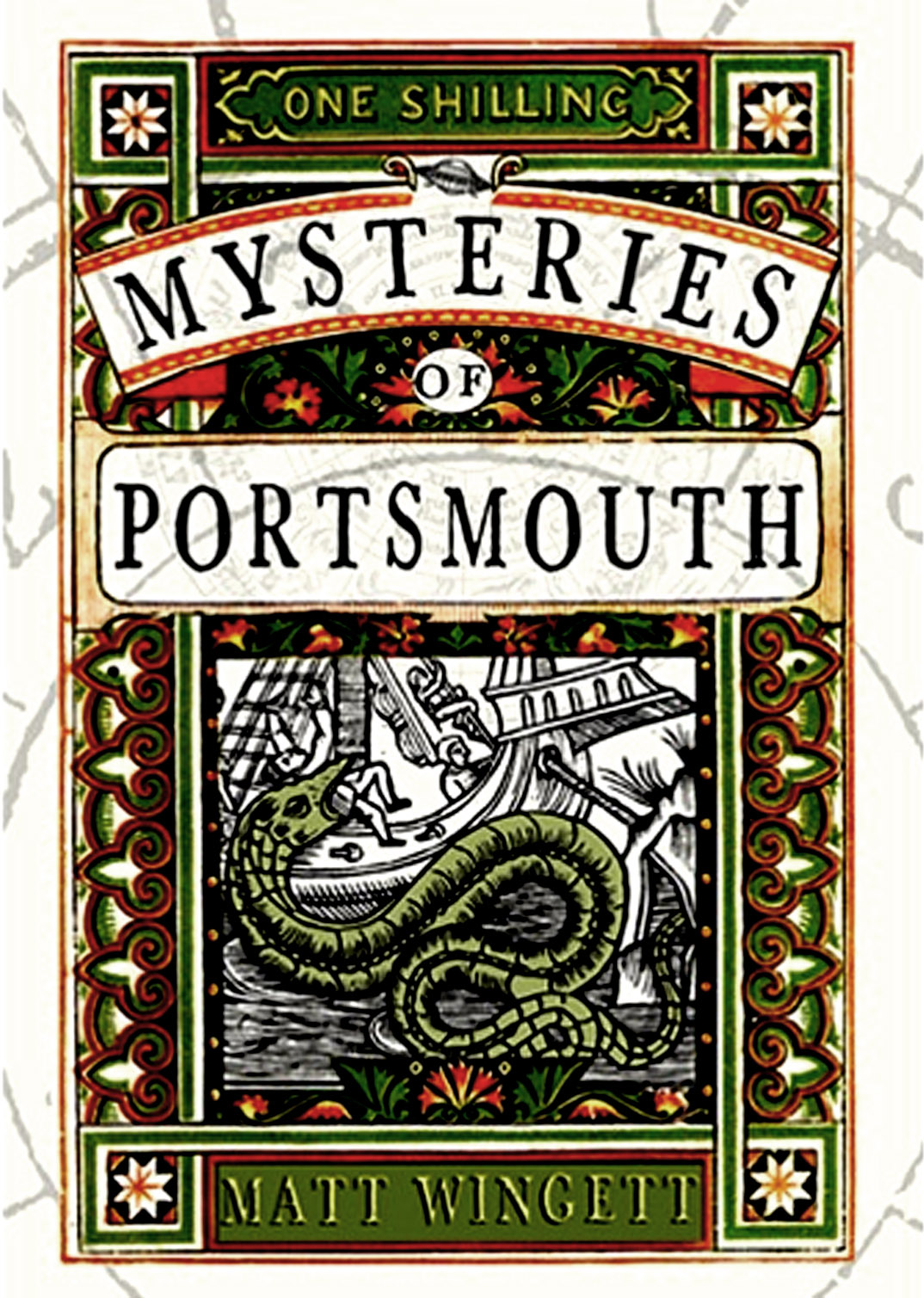
Local history books have always been a great source of folklore and Fortean material and it is always a pleasure to delve into one which concentrates on the weirder aspects of certain locales. A fine addition to the canon is Mysteries of Portsmouth by Matt Wingett.

Covering the area of Portsmouth, an island city on the south coast of England, we are of course treated to sea monsters and maritime tales but there is a wealth of other oddities that have come to haunt the lore of Pompey (as the city is affectionately known) so within its splendidly illustrated pages, Wingett treats us to UFOS, Egyptian curses, spiritualists & fortune-tellers, witches and many ghosts as well as other diverse oddities.

There is a much data covered verbatim from old newspapers which is culturally interesting to see how strange phenomenon was covered by local press in bygone times and the book will be of interest to local historians and other people from the area as well as visitors, folklorists, Forteans and other curiosity-seekers from further afield.

A thoroughly interesting, well researched and nicely presented addition to the British folklore shelves.

Available now from here – https://www.lifeisamazing.co.uk/product/mysteries-of-portsmouth-by-matt-wingett

Also available from Amazon and other booksellers

Read an Interview with the author here

Interview with Jackie Morris


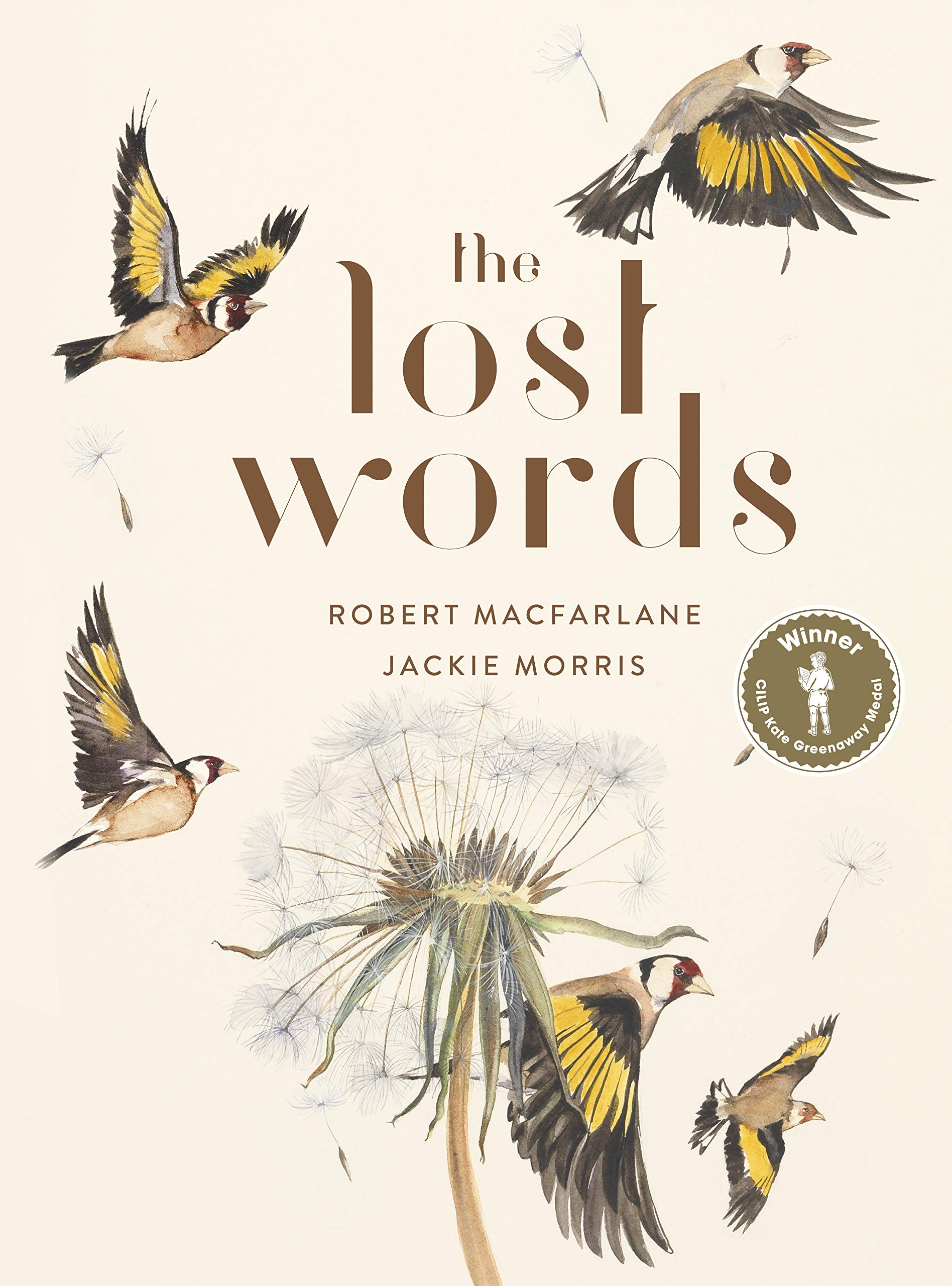
Jackie Morris is a British writer and illustrator whose work is informed by a deep love of the natural world. Her books have been published in fourteen languages and The Lost Words, which she illustrated was voted the most beautiful book of 2016 by UK booksellers. She lives in Pembrokeshire by the sea and is fascinated by bears and myths of transformation.  Folk Horror Revival’s John Pilgrim was pleased to catch up with Jackie last year to make the following enquiries about her world.
81XE-24NOyL

FHR: Let me firstly provide a bit of context for those Folk Horror Revivalists who may not be familiar with The Lost Worlds by quoting from the cover jacket of the book.


“All over the country, there are words disappearing from children’s lives. These are the words of the natural world — Dandelion, Otter, Bramble and Acorn, all gone. The rich landscape of wild imagination and wild play is rapidly fading from our children’s minds. The Lost Words stands against the disappearance of wild childhood. It is a joyful celebration of nature words and the natural world they invoke. With acrostic spell-poems by award-winning writer Robert Macfarlane and hand-painted illustration by Jackie Morris, this enchanting book captures the irreplaceable magic of language and nature for all ages.”
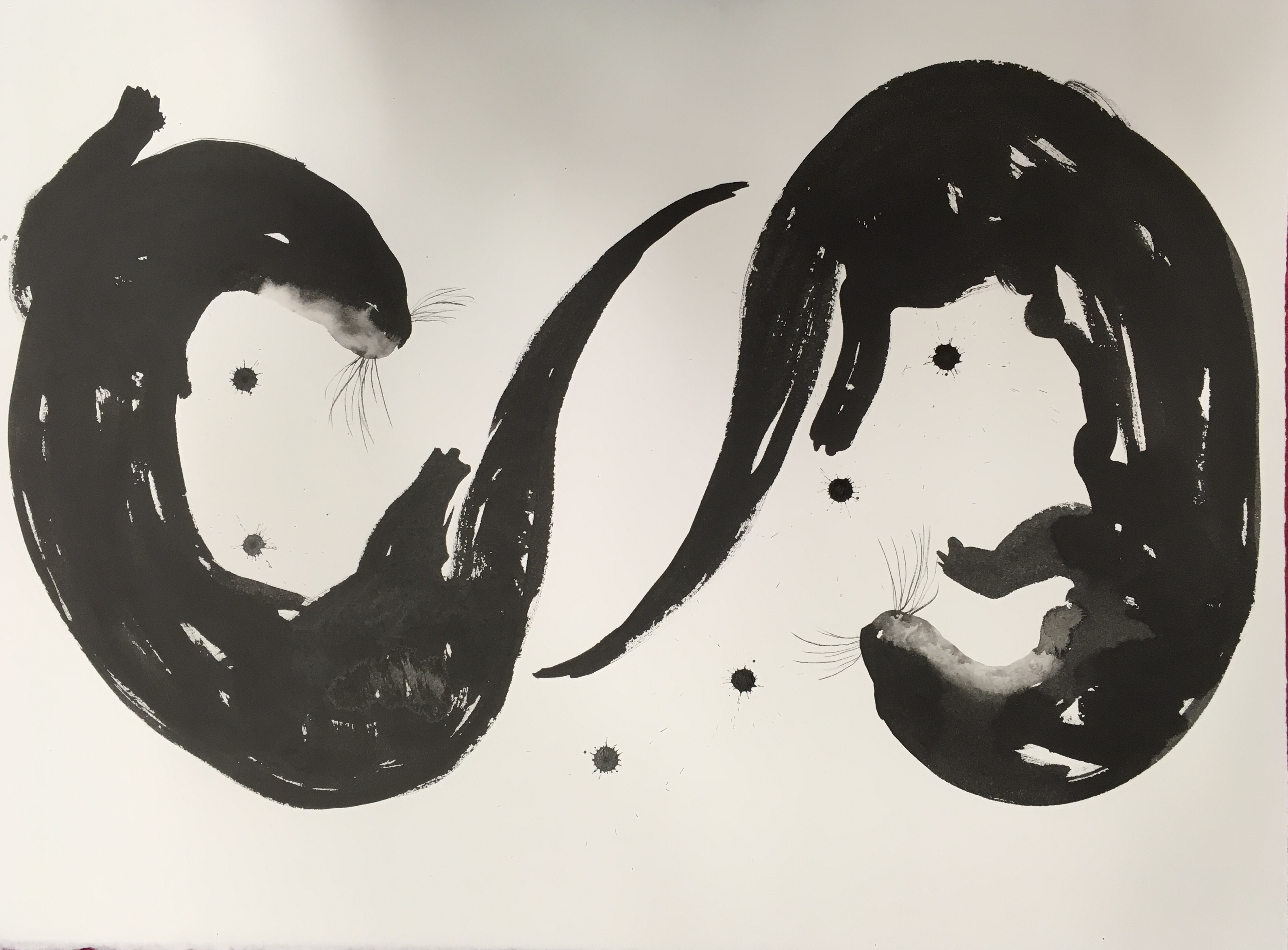
IMG_1778

FHR: The Lost Words has enchanted many people in the deepest sense of the word. Can you share some stories about the effect which it has had on people. How has their understanding and experience of the natural world changed?


JM: Since the launch of The Lost Words at Foyles in 2017 it has taken on a life of its own. Robert and I are both astonished and heart-glad at the way it has been taken into people’s hearts and homes. There have been so many tales sent to us, of how people have shared it with loved ones living with dementia, of how it has helped people to cope with depression, of how it links generations in families, how teachers respond to it, and children also.


It has an amazing wild life. I love how people send us pictures of the book outside in the world, tucked up with children, the work that children have done with the book as catalyst.


FHR: The introduction to The Lost Words warns us that the rich landscape of wild imagination and wild play is rapidly fading from children’s minds. It’s been inspiring to see the efforts that have been made to make the book freely available to children through schools and libraries. Can you tell us some more about this?


JM: It began with a tweet from a lady in Scotland who saw how the book could connect children to nature again.  She made it her mission to crowdfund to place a book in every school in Scotland.  Her success snowballed into several other campaigns, and I think the Explorer’s Notes, which are a wonderful guide to using the book in schools, also helped with this. Now almost half of the UK schools, hospices over the whole of the UK, care homes in Wales and other institutions have been gifted the book by what has grown to be a great community of crowdfunders. Their energy and enthusiasm for the book and for working beyond its pages to reconnect the lives of children and adults to the more than human world around us all is wonderful.

FHR:  The notion of wild imagination and wild play is one that strikes a chord – are there signs of hope in rekindling wildness which you’ve become aware of?


JM: The young people who are rising up against the ignorance, arrogance and greed of older generations gives me hope. The new wave of politically minded and erudite youngsters put our politicians and their self-serving party politics to shame.


FHR: What role does myth and folklore play in your artistic practice and experience of the natural world?


In the same way that some people see themselves as set apart from the natural world, when they are in fact only the tiniest part of the wonderful biosphere, so are storytellers the new myth makers. As a species we are hardwired to learn through the power of story.

I write, I illustrate, to try and make sense of the crazy world we live in, and my hope is that in so doing I help other people to do the same. And there are some powerful minds working in the field at the moment. Richard Powers’ Overstory is a case in point, teaching people to see, really see, and seek out the trees that every day are taken for granted.
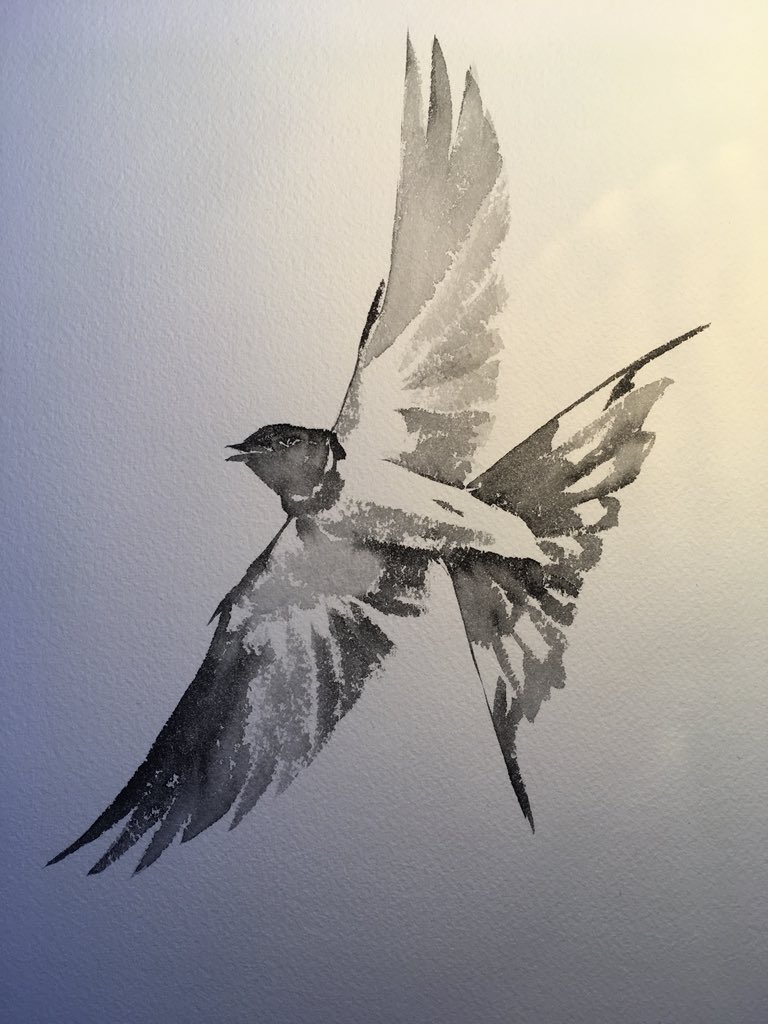
EAQWHd9X


FHR: Having been being fascinated by peregrines as a boy while on holiday in Pembrokeshire I loved your book Queen of the Sky.   For those who aren’t familiar with this book, could you say a little about the themes which you explore here?


JM: Queen of the Sky is a book about how a friend of mine found and rescued a wild peregrine falcon and released her back into the wild. It’s a story of great patience. A love story in a way, but one where something is loved so much that the person who loves it sets it free, to be as it should be. It’s a story about respect. And if H is for Hawk is a tale of how a woman was saved by a hawk, this is a tale of how a hawk is saved by a woman.


FHR: What landscapes particularly inspire you?

JM: Terrestrial. Including the ocean, above and below.


FHR: I read that you have been learning to work with wood engravings. How has this been for you?


JM: I’ve moved away from wood engravings. My eyesight is perhaps not good enough for the fine detail. But also my language is liquid and sumi ink has taken over as my medium of choice. But as with everything it takes a lifetime to master. But I am learning.

FHR:  In his book Being a Beast Charles Foster relays his experiences of seeking to live as animals such as badgers and foxes. I’m not sure whether you would want to go as far as eating worms as Foster has done, but I sense that through your art you are seeking to bring us closer to animals as fellow spirits?


JM: I’ve not read it yet. I wanted to be a bear when I was young, but would happily become an otter. And most of my work is about shapeshifting.

FHR: To what extent do you think it is important to acknowledge that despite its beauty nature is also ‘red in tooth and claw’?  Are there dangers in projecting human characteristics on to animals?


JM: I’m not a fan of ego-centric anthropomorphism if that’s what you mean. Is nature ‘red in tooth and claw’? That implies some morality? It’s not always kind. But we know so little about the world around us. It has so much to teach us. We just need to listen.


FHR: Which fellow artists and writers do you admire?


JM: So many. I love Robin Hobb’s books. Robert Macfarlane is an exceptional writer, and I need to explore Richard Powers more. John Irving has long been a favourite of mine.  Katherine Arden, James Mayhew, Brian Wildsmith, Chagall, Tunnicliffe, Alan Garner, Shaun Tan, Frieda Kahlo, Tom Bullough. Nicola Bailey, oh, so many. Picasso.  Look at me with my gender imbalance of people who spring to mind! (Though Robin Hobb is a woman, who writes under a gender-neutral name, because many men don’t read books by women.)


FHR: What are you working on at the moment and what projects would you like to take forward in the future?


JM: I’m working with the finest group of musicians to make a cd/lp and show built around The Lost Words. I’m working on a book that was written almost a century ago, writing a forward to re-introduce it to the world and painting images to decorate/illustrate it [now published as The House Without Windows]. I’m working on a book called The Keeper of Lost Dreams that I hope will be a catalyst for dreaming and a solace for troubled souls in our curious and turbulent times. And I am beginning to work on a new book with Robert, but that’s under wraps at the moment until we understand more of what it is that we are making [Ed: this has now been published as The Lost Spells; other recent publications include Mrs Noah’s Garden, with James Mayhew, published by Otter-Barry Books and The Secret of the Tattered Shoes with Ehsan Abdollahi, a wonderful Iranian illustrator, published by Tiny Owl.]


I’m also trying to take time to open my eyes to the wonderful wild world around me, wide as wide can be, and understand what is important, what time is, and how to live.


 

The Corn Mother: Night Wraiths ~ Review

AYITC_header_1px_black_stroke
Stephen Prince and his project A Year In The Country are best known for their derives through the haunted areas of unusual folk music and folklore, occult British culture, pagan children’s TV shows of the 70s and 80s and the electronica of these isles such as Delia Derbyshire and Ghost Box Records. Their website charts a course through the shadows of modern culture of TV, literature, music and film, finding that which provides a more spectral, hauntological narrative of the last 50 years. Similarly, their music imprint has spawned several high quality compilations featuring artists such as The Heartwood Institute, The Rowan Amber Mill and Grey Frequency, as well as albums by Prince himself under the moniker A Year in the Country.
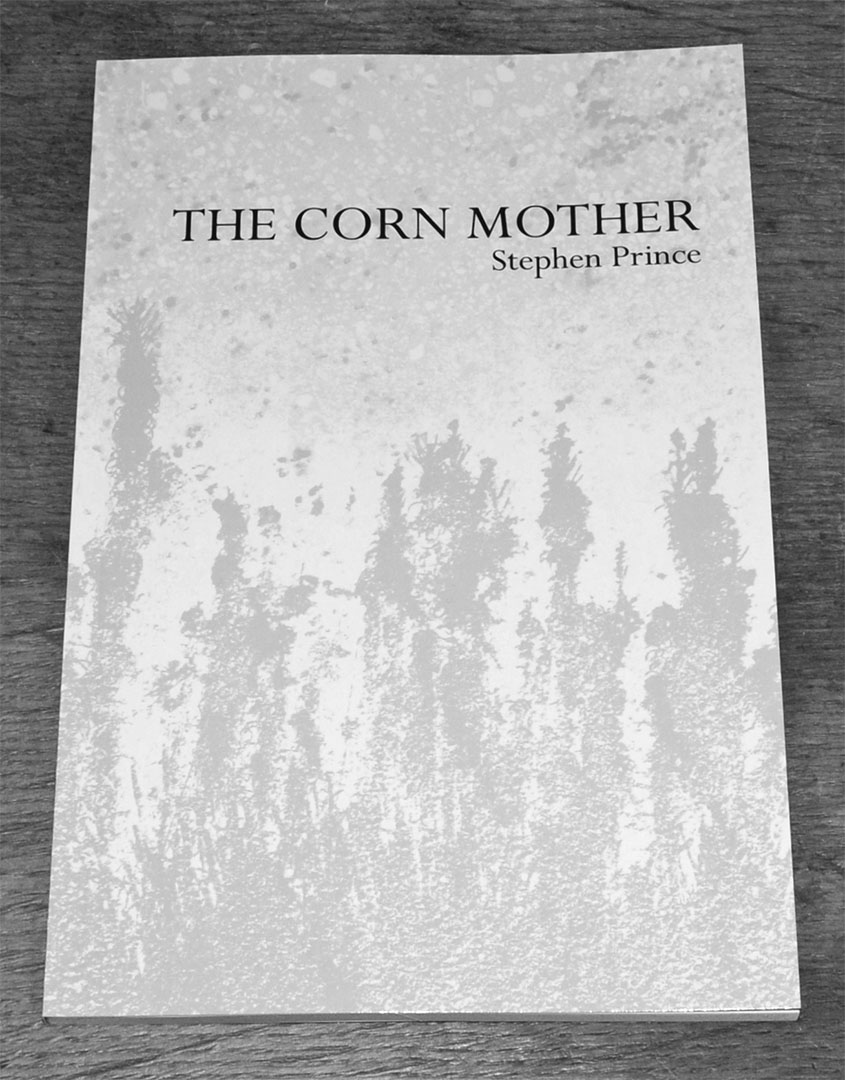
The-Corn-Mother-novella-Stephen-Prince-A-Year-In-The-Country-front-cover

‘The Corn Mother’ first (re)emerged in 2018, as the A Year in the Country music label issued a soundtrack inspired by the notorious, possibly imaginary and subsequently unreleased film of the same name. Renowned for its tortured production history and its fabled lost screenplay, the movie itself had become something apocryphal and of legend, rarely seen but oft mentioned. Described as a ‘folkloric fever dream’, how this piece of cinematic conjecture fitted within and contributed to the current folk horror trend or to aspects of psychotronic cinema has been left as, essentially, a question mark. Indeed, there has been much musing but little else solid or informative regarding ‘The Corn Mother’ to base any consideration of its urban myth upon, until now.

In its ongoing pursuit of exploring the more haunted and liminal aspects of this island’s culture, A Year in the Country has produced ‘The Corn Mother’ novella, furthering the themes and characters of this spectral and hidden world, as well as an accompanying soundtrack, entitled ‘Night Wraiths’. Both are described as being ‘explorations and reflections of the whispers that tumble forth from the corn mother’s kingdom. A place and story where fact, fiction, reality and dreams blur into one’. The novella itself is sequenced according to the cycles of the year, into four sections or seasons and 52 chapters of no more than 365 words each. This nod to nature throughout the structure of the story alludes to the rural and harvest horror that spawned the original tale of ‘The Corn Mother’. Beginning in the year 1877 in a tiny, rustic English village, we first encounter the innocent Mrs Jessop who is unfairly accused of poisoning and spoiling the crops by employing witchcraft. This initial section details the growing hysteria that descends upon the small, insular village, already unsettled by the encroaching industrial revolution and consequent unwanted changes in country life that technological progress is bringing to them. The persecution of Mrs Jessop and her subsequent revenge as ‘the corn mother’ proves both disquieting and compulsive reading.

Time then shifts rapidly on and we find ourselves in the 1970s, as scriptwriter Peter is working on a story concerning a wronged villager who causes a village to splinter, fight, go mad with guilt and eventually up and leave. Sound familiar? Arthouse director Alain, whose films sound like they inhabit a genre somewhere between the Czech New Wave and Blood on Satan’s Claw, picks up on this script, which has been named ‘The Corn Mother’, and it goes into production. Things seem to be progressing well with the movie; the character of Ellen is introduced, who is producing the movie’s soundtrack, as well as Sarah, who is to play Mrs Jessop (this asks an eerie unanswered question; how does Peter know of her, know of her name?). Each chapter is written in the first person, giving a varied perspective and a personal take on the unfolding mystery that reveals both motives and intrigue. We also hear from crooked film funder Hines, whose corrupt financial dealings result in the whole production being cancelled and all cinematic reels and work completed on the movie disappearing. All, except for those which are taken and stowed away by a certain crew member, kept safe and hidden in a basement until they eventually emerge more than twenty years later. Meanwhile, the decades roll on and the rumours circulate. There is talk of ‘The Corn Mother’ being available as a bootleg VHS. A collection of videotapes that may have an edit of the film appear and then just as quickly are gone, as if they never existed, almost as if someone or something is eliminating all trace of the film’s existence. We are introduced to Alan, a film obsessive, who spends a significant part of his life trying to track down proof of ‘The Corn Mother’s existence, attending comic cons and searching internet databases, in particular the websites dedicated to the burgeoning folk horror movement. However, as reference to the film builds, it just as quickly vanishes, deleted. The evidence that ‘The Corn Mother’ existed, is being removed, but by whom or what?

A fascinating and truly inventive novella, ‘The Corn Mother’ touches upon those familiar pillars that A Year In The Country have become known for, the hauntological (and the imagined film in this tale really is a ‘past that is haunting the present’), as well as recognisable folk horror lodestones such as The Wicker Man. The story even cleverly builds in, during a ‘meta’ moment, the existence of 2018’s ‘The Corn Mother’ compilation that was actually released by the A Year in the Country label. Additionally, the text serves as a cultural and social reference point; throughout the passing of the decades; mention is made to the three-day week and power cuts of the 70s, to the Blockbuster video chains of the 90s and the subsequent rise of the internet. Nevertheless, much is also pleasingly unexplained. Prince is in no rush or pressure to reveal or join the dots, he trusts the readers to do this themselves, to surmise or imagine what machinations are at work.

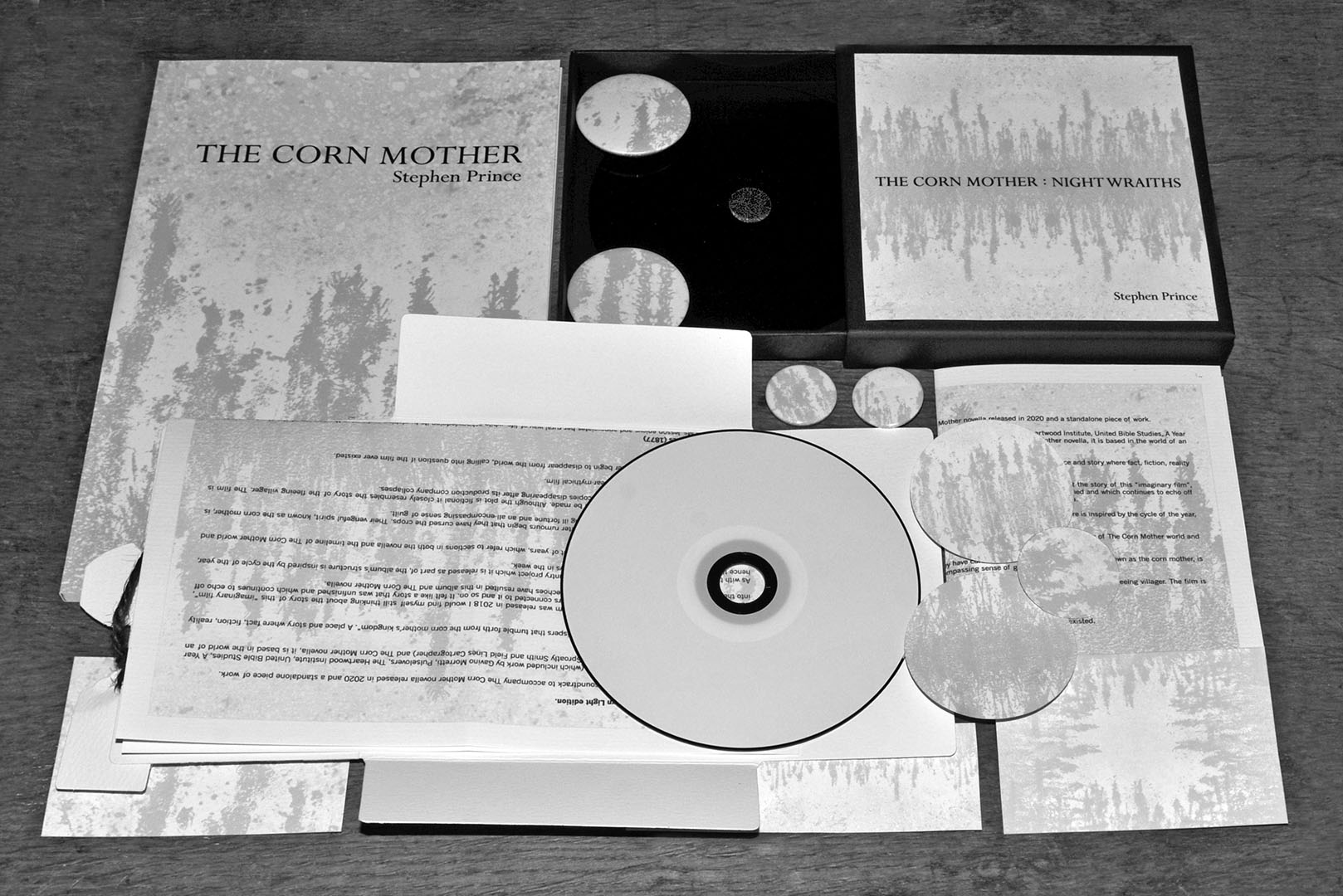
The-Corn-Mother-novella-The-Corn-Mother-Night-Wraiths-CD-albums-Stephen-Prince-A-Year-In-The-Country-all-components

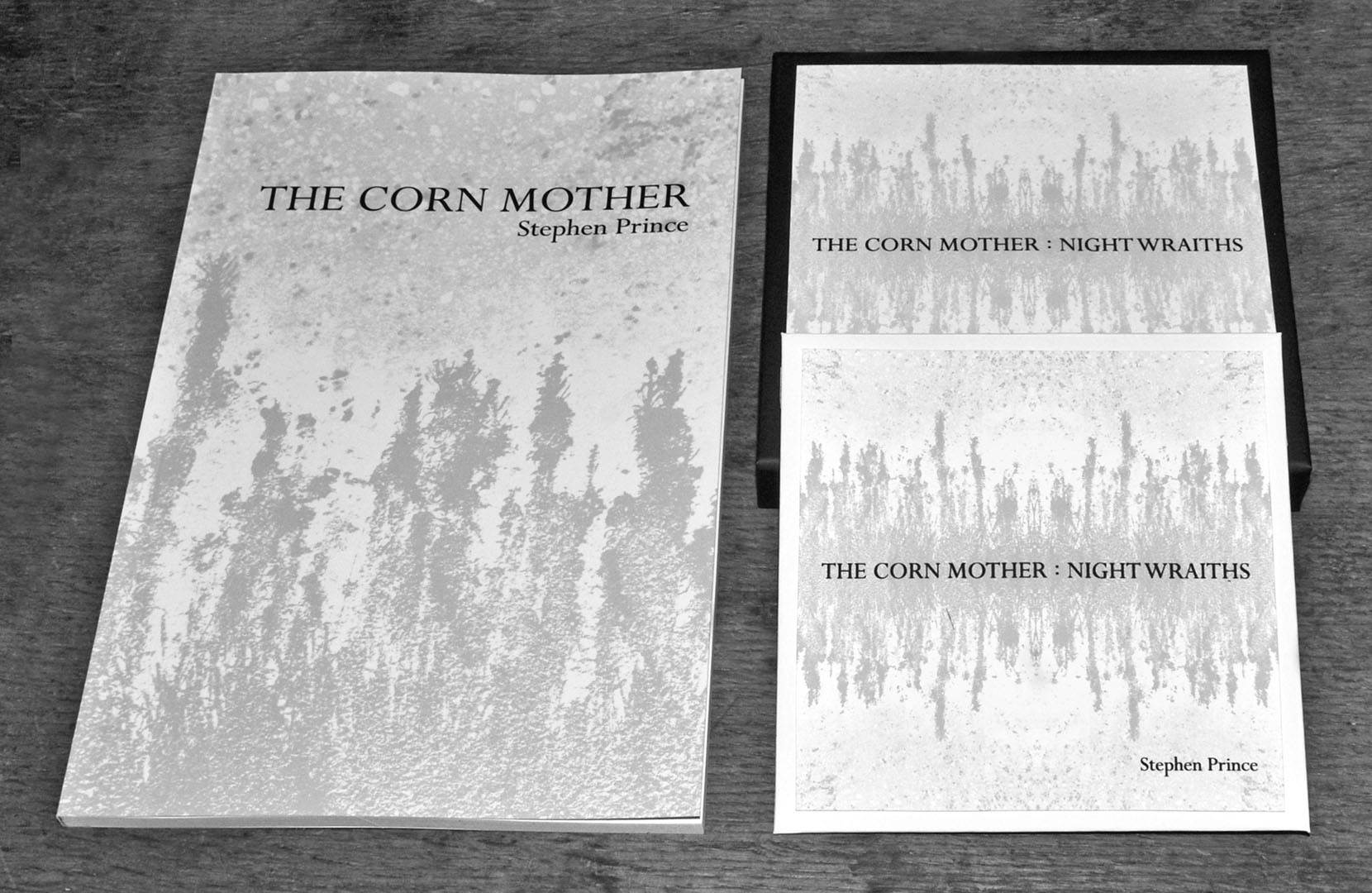
The novella comes accompanied by ‘The Corn Mother: Night Wraiths’, a soundtrack for the stories as well as a standalone piece of work. The album itself is split in a similar fashion to the novella; inspired by the cycle of the year it is sequenced into seven tracks – as in seven days of the week. Spectral, swooping electronics and ominous analogue washes create a barren, shadowed landscape to illustrate ‘The Infernal Engines’, Mrs Jessop’s walks amongst the fields and the suspicion of ever nearing industry and mechanization. ‘Night Wraiths’ stays within this era, documenting the coming of the corn mother and her lysergic revenge upon the mob hysteria of the village. Chillingly effective and genuinely unsettling, the synth pulses and growls are an adept soundtrack to the terrors in the book itself and work in a similar manner; subtle, pervasive and with a creeping sense of unease. ‘I Have Brought a Myriad Fractures and Found Some Form of Peace’ is a ghost story of a track, decaying and ebbing as much as the village and the inhabitant’s psyches were cracking and breaking under the weight of their madness and guilt. ‘Ellen’s Theme’ then takes us into the 1980s and the synth soundtrack to the long lost film, the music inspired by such compositions as featured in that period’s horror cinema such as that of ‘Halloween 3: Season of the Witch’, electronic strings hinting at the darkness behind the reoccurring melody, a pulsing and layering paranoia. Hints of Coil, John Carpenter and Tangerine Dream float on a doomed, resonating motif that circles and breathes, growing in intensity. ‘Dreams of a Third Generation Grail’ references Andy’s search for ‘The Corn Mother’ film, a spooked sense of yearning and obsession played out in the ghost-strewn harmonies. ‘They Are All Here’ charts the disappearance of any record of the film ever existing, a lonely electronic arctic wind that is framed by solitary notes and unearthly bleeps. Finally, ‘An Unending Quest’ completes the album, hinting at the cyclical and repeating nature of ‘The Corn Mother’ saga itself.

This is an original and significant piece of work, not only in its novel, singular and successful approach to folk horror and ‘imaginary’ films (tropes which, as hinted at within the book, have perhaps reached saturation point in lesser hands), but in the creation of its own self referencing  folklore. This may not be the last we have heard of ‘The Corn Mother’, her myth has been sown and will undoubtedly spring forth anew once again. Both an excellent tale of the supernatural and an effective slice of spooked electronica, ‘The Corn Mother’ is waiting in the fields for those who watch and listen. Time to gather the crops.

Available from the 16th March at www.ayearinthecountry.co.uk/shop/, Amazon and Lulu.

The-Corn-Mother-novella-and-The-Corn-Mother-Night-Wraiths-CD-albums-A-Year-In-The-Country-Stephen-Prince

Review by Grey Malkin

See also ~ https://folkhorrorrevival.com/2018/09/07/recording-our-own-ghosts-a-review-of-a-year-in-the-country-wandering-through-spectral-fields-journeys-in-otherly-pastoralism-the-further-reaches-of-folk-and-the-parallel-worlds-o/