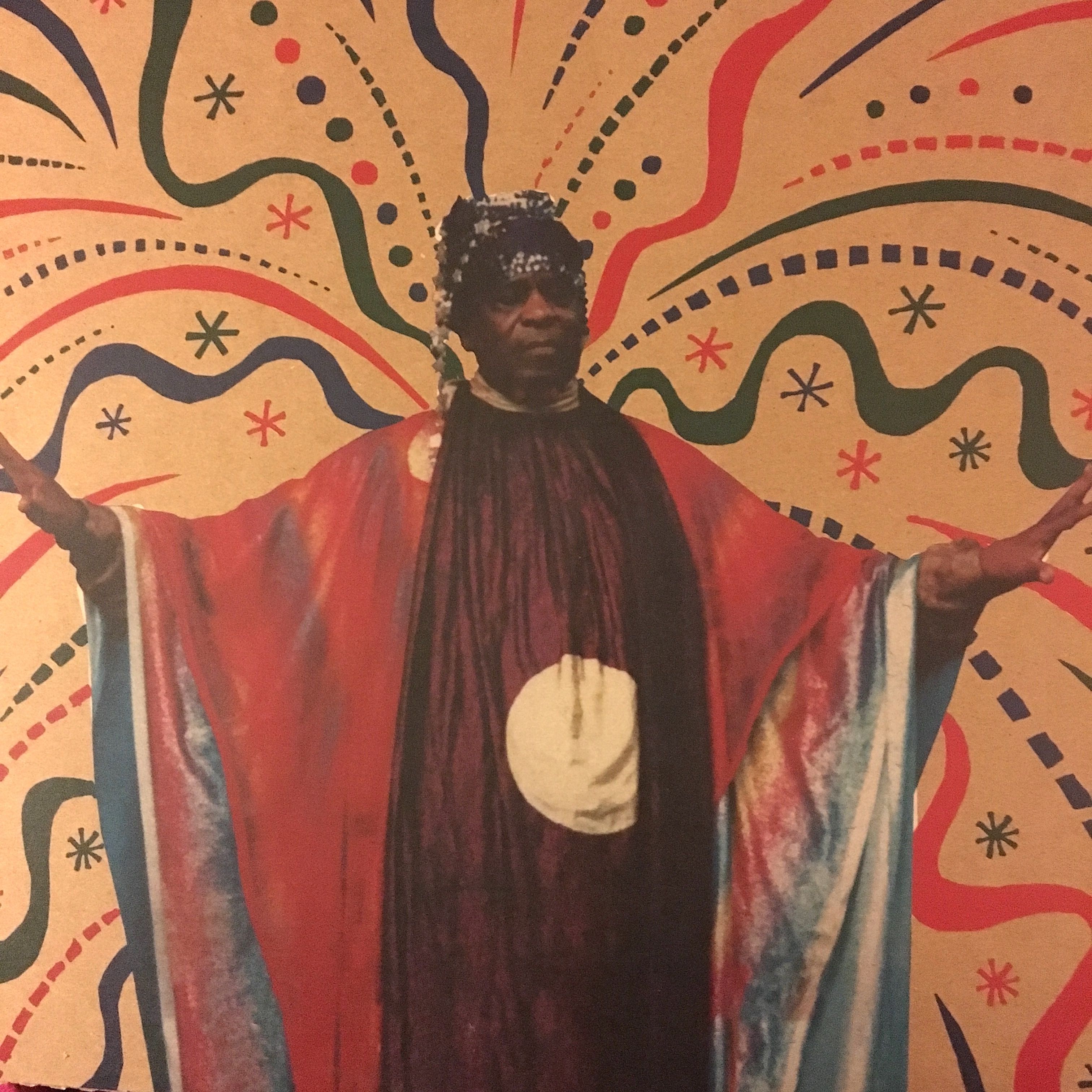
Watkins publishing have added to the world of Fortean travel-guides with 2 titles aimed to whet the wanderlust of wyrd voyagers. From the pen of Andy Sharp – musician, wordsmith and designator of the English Heretic black plaques (awarded to the strange denizens and dwellings that English Heritage overlooked) comes The Astral Geographic. On my first encounter with reference books, I often flip through the index to get a taste of what’s to come. Here we find an itinerary that takes us from “Anal Intercourse” to the “Zong Massacre”. Better buckle up then as it sounds like a wild ride is in store. Many eclectic ports are found along the way – myriad souls encountered include JK Huysmans, Sun Ra, Felicien Rops, Madame Blavatsky, Moloch, Manson, the Son of Sam, Saint Mary and that dweller in many an abyss – the almost ubiquitous Aleister Crowley. Although a chapter is devoted to Crowley and Neuberg’s summoning of the demon Choronzon in the Algerian desert, for readers who may feel somewhat overwhelmed by the seemingly universal presence of Magick Uncle Fester in much of occulture literature, there are also many other interesting characters and scenarios encountered within the pages of this book. Other subjects include Atlantis, the alchemy of Fulcanelli, Hekate, folk curses, Viking witchcraft and much more besides.
Sharp’s prose melds the informative and the poetic; although different in subject matter, in spirit it sometimes puts me in mind of the works of the naturalist J.A. Baker. Perhaps more accessible than his previous ‘The English Heretic Collection’ – ‘The Astral Geographic’ retains a targeted market as I suspect that mainstream TV producers may not send out Joanna Lumley or Bradley Walsh on a Saharan sodomy and ‘Satanism’ safari. Both this book and Weird Walk could however prove good ground for offbeat travel shows.
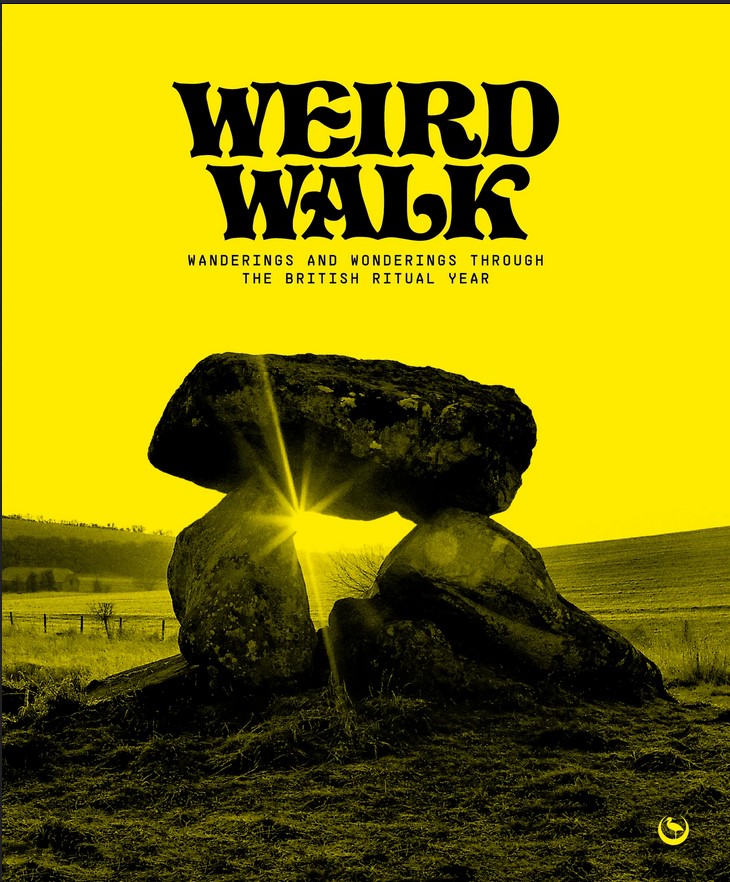
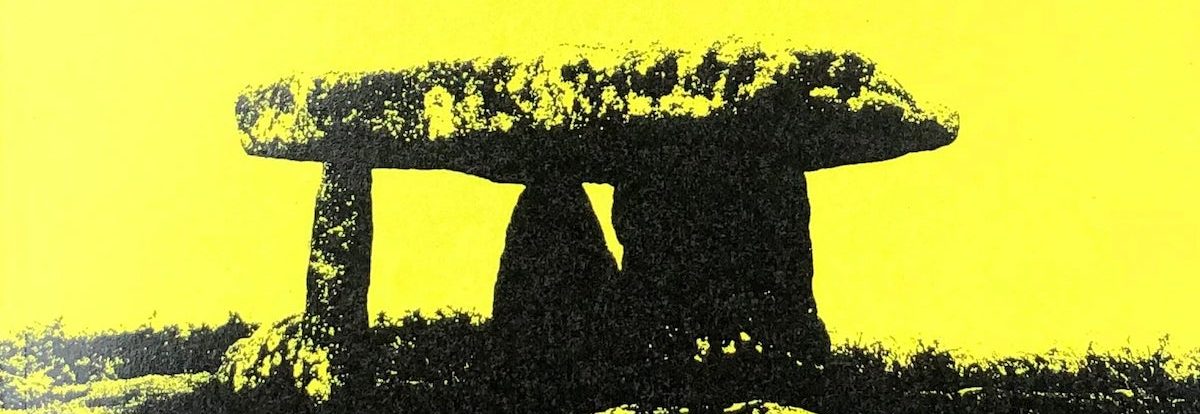
Weird Walk perambulates in a hinterland between Julian Cope’s ‘The Modern Antiquarian’ and Sara Hannant’s ‘Mummers, Maypoles & Milkmaids’ concentrating as it does on the British ritual year and megalithic monuments. It is more about rolling cheese than raising the dead. There is a little crossover with a chapter in The Astral Geographic in covering British standing stone’s relationship with short horror fiction and some Haunted Generation television shows, but Weird Walk focuses more attention on a variety of British sites – both ancient and follies of a more recent era. I particularly enjoyed Weird Walk’s commentary on EF Benson and Blakeney Point. Best remembered for his 1920’s socialite characters Mapp & Lucia, Benson’s supernatural stories have not quite enjoyed the renaissance bestowed upon M.R. James, Machen or Blackwood but are worth some attention. In its accessible psychogeographical approach to combining history, folklore, pop culture and artistic and literary inspiration, Weird Walk would also be of interest to fans of Edward Parnell’s Ghostland.
Weird Walk takes a seasonal approach and accompanies us from the Beltane fires of spring through summer’s Burryman Parade, from autumn’s Stag Dance of Abbot’s Bromley to the winter Wassailing in the company of the strange bone-horse the Mari Lwyd. Taking in many other ritual customs and enigmatic sites it illustrates that for the folk traveller Britain offers a lot of visiting opportunities the world round.
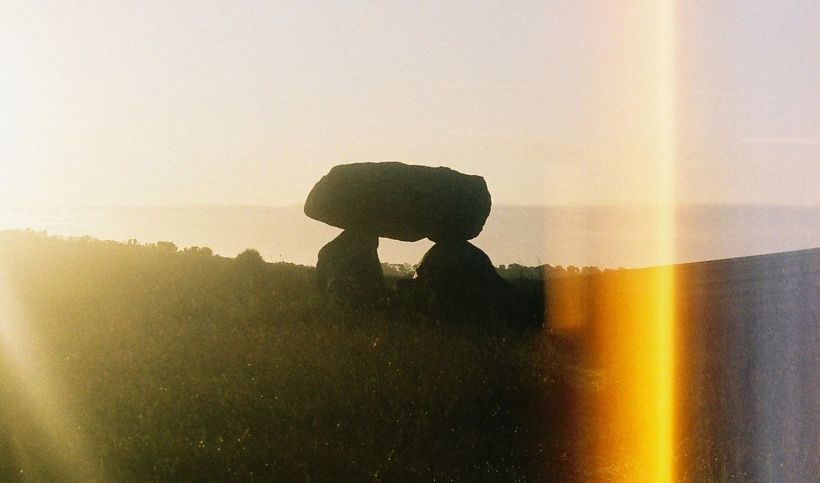
Both The Astral Geographic and Weird Walk bear an Occult Revival-revival aesthetic coupling Art Nouveauesque psychedelic title fonts, loose drawings, sun-bleached photography (Weird Walk particularly has some lovely, evocative shots) and a colour palette recalling the Gay Way primary school books, but both are equally substance as style. As someone once said “Man cannot live on bread alone” … or prana, manna or foyson… so quirkily both books occasionally include stopping off spots where the weary wanderer may partake of sustenance … though perhaps of the liquid victual variety. Whilst The Astral Geographic may point you in the direction of Absinthe, Weird Walk pours you a pint of real ale. They’re quite different books in some ways but are complimentary and provide interesting nuggets of diverse information to both the active and armchair travellers.
The Astral Geographic: The Watkins Guide to the Occult World Andy Sharp Watkins 2023 pb. Illus. index. 294pgs £20.00 ISBN 9781786786739
Weird Walk: Wanderings and Wonderings Through The British Ritual Year Alex Hornsby, James Nicholls, Owen Tromans
Watkins 2023 hb. Illus. refs. Index. 288pgs. £19.99 ISBN 9781786786821
Perhaps of all the literary, cinematic and stylistic manifestations of the ‘dark arts’, only Film/Roman Noir may rival folk horror in the quantity of deliberation, discussion, debate and disagreement. Indeed in converse of the latter subject on social media oft asked is the question “But is it Folk Horror?” in regards to a particular movie, book or image. Sometimes this elicits the response of the ‘Folk Horror Police’ – fans who over-rigorously express their opinion. ‘Opinion’ is the key word however for there is no manifesto for folk horror– it is a mode named after the initial event. Adam Scovell’s ‘Folk Horror Chain’ acts as an excellent reference point for recognising commonly recurring elements (Landscape. Isolation. Skewed Belief System. Summoning or Happening) but it’s a guide not a mandatory tick box – there is still scope for deviation and room for differing opinions. Therefore multi-contributor books such as ‘Folk Horror New Global Pathways’ are extremely useful in this sometimes hazy field as they present a variety of opinions stemming from various different viewpoints, specific subject-matter and importantly from different cultures.
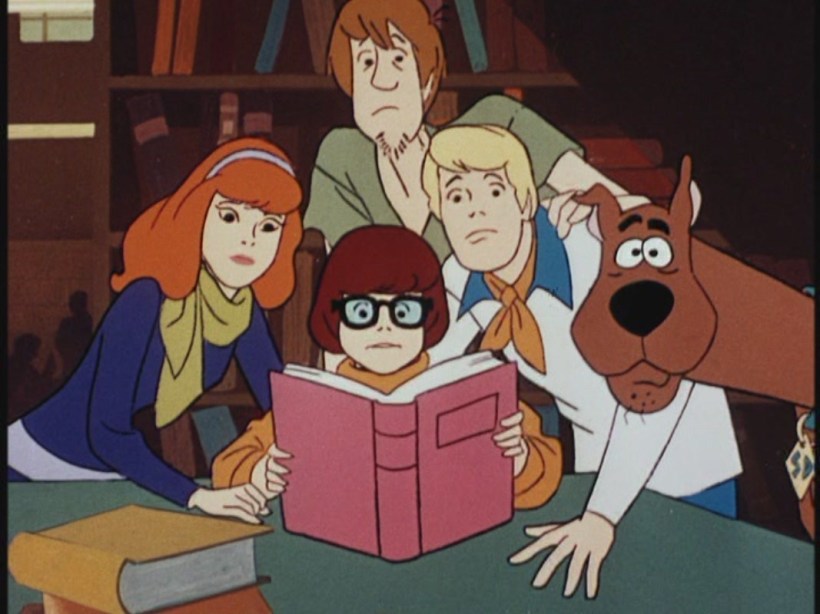
Whilst the 1960s/70s British cinematic triumvirate of Witchfinder General, Blood On Satan’s Claw and The Wicker Man have been written about extensively previously as they are important fixtures in the subject, folk horror is a form of narrative and aesthetic apparent in probably all cultures so it is good that this book does veer off the old beaten track. It wanders into diverse terrain ranging from Scooby Doo cartoons, typography, the short stories of E.F. Benson, occulture, video games, and dark tourism in Lancashire to the representations and relationships of folk horror in the cinema and culture of Mexico, Italy, Ukraine, Thailand and Appalachia. Inevitably politics do arise in the discussion. Horror fiction analysis can often be examined under a sociopolitical lens as a lot can be told about a people by looking at what scares them – be it post-war trauma in the early 20th Century Europe, atomic/ alien fears of 1950s America, generational counterculture/mainstream conflicts in the 1960s and 70s to the uncertain polarised times we currently live in. Folk horror is particularly laden with such considerations and this book does explore issues such as colonialism, sexuality and agrarian/industrial conflict.
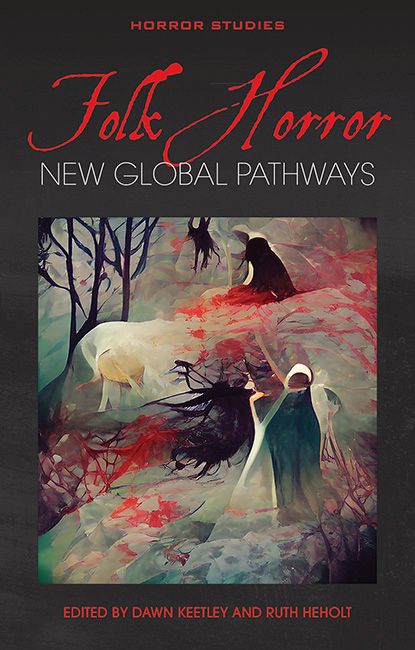
Actually, regarding traditional vs technological conflict, I was disappointed to see however that AI generated imagery was used for the cover – especially as the book itself notes the connection between handicraft and folk horror. It would have been far more appropriate to have used imagery by an actual artist – be it centuries old chapbook illustration, a still from a relevant film or a piece by one of the many creatives currently working in the subject field, rather than using generative text.
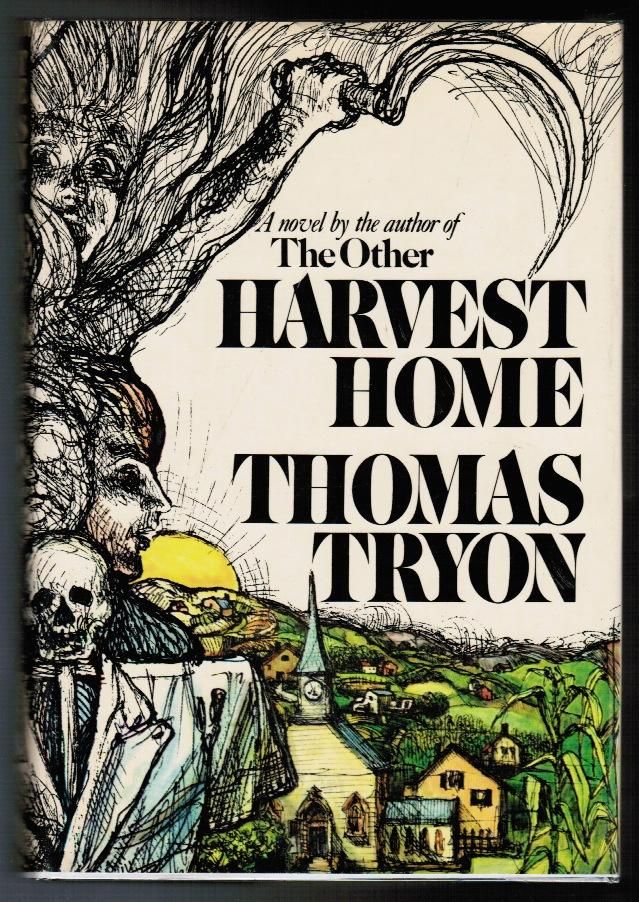
Back to the actual text: Along its course many examples of folk horror fiction are addressed, some familiar and others more obscure. I was particularly pleased to see the writing of actor-turned-author Thomas Tryon get good coverage as his work in the field is too often overlooked. Some less familiar works such as the films Jug Face and The House With the Laughing Windows are also given more attention than they usually get. I was surprised to see Robert Eggar’s The VVitch get such scant attention however, particularly in discussions of the folkloresque as it’s a good example of new folk horror using authentic old folklore in its narrative, considering that there is numerous referencing of Ari Aster’s Midsommar, (a film that I seem to be in the minority of personally finding both overrated and underwhelming).
Of Fortean interest the book discusses the Pendle Witches, the folkloric entities La Llorona and Phi Pop, ritual sacrifice, and the occult revival in relation to the influence, inspiration and development of Folk Horror. As a multi-contributor book, some chapters will be of differing interest to individual readers and the style of writing can vary, but it holds together very well. It is an academic book (as evidenced by its hefty University Press price tag) but much of it is written with an apparent enthusiasm for the subject that enables it to flow fluently, making it readable to a wider audience with an interest in this particular field.
Folk Horror New Global Pathways Various Authors. Ed: Dawn Keetley & Ruth Heholt.
University of Wales Press. 2023.
Pb. 280 pgs. £50.00 ISBN: 9781786839794
Reviewed by Andy Paciorek. This review first appeared in Fortean Times magazine
I am of that age (Generation X aka The Haunted Generation) whereby a significant part of my childhood was enveloped in the Cold War fears of an impending nuclear apocalypse. A terror adequately catered for by the less than a handful of terrestrial channels emitting their cathode rays into British living rooms. We were treated to dystopian dramas such as Threads, When the Wind Blows, the eventual broadcast of the considerably disturbing 1966 docudrama The War Game and perhaps most unsettlingly the Protect and Survive public information adverts whereby the booming voice of actor Patrick Allen accompanied by a chilling bleep and bloop Radiophonic Workshop score that would just appear on the telly advising us how to bag and tag our dead relatives for collection by the binmen of the apocalypse. At school we read Z for Zachariah – a dystopian survivalist novel by American author Robert C O’Brien (Robert Leslie Conly) – which the BBC also considerately turned into a TV play, and we turned on our radios to hear Frankie Goes to Hollywood sing about when Two Tribes go to war. The USA obviously had some similar concerns in that era as their nuclear doomsday drama The Day After also appeared on UK screens … But what about the ‘bogie-man’ threatening to bomb us? I long wondered whether the citizens of the USSR – their Generation X children also lived under the shadow of the mushroom cloud. Did their films and TV predict atomic devastation or did they dismiss it with a ‘don’t worry, we’ve got this covered’ attitude or ignore the threat of mutually assured destruction altogether?
I was aware of the 1967 Czechoslovakian movie Late August at the Hotel Ozone and the 1979 Soviet sci-fi movie Stalker (based on the novel Roadside Picnic by the brothers Strugatsky but both of them were post-apocalyptic – set sometime in the future aftermath of a nuclear crisis with a level of distance from the immediate fears of the threat in our time. Beyond that, my knowledge of Soviet Bloc ‘horror’ films consisted of Jan Svankmajer animations, Czech New Wave films such as Valerie and Her Week of Wonders, Morgiana and Witch-Hammer, adaptions of Gogol stories such as Viy and Evenings on a Farm near Dikanka and strange ‘fairy tales’ such as Ded Moroz and Baba Yaga, Polish book adaptations such as The Saragossa Manuscript and The Hourglass Sanatorium and odd offerings such as Yugoslavia’s The She Butterfly (Leptirica).
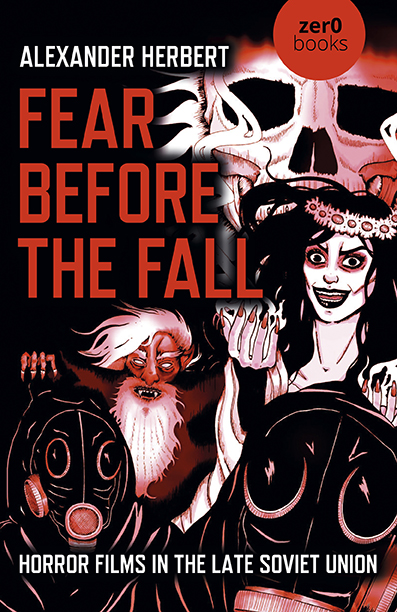
But of Soviet horror films that arose in the time of critical nuclear phobia just before the fall of the union my knowledge is as cold as the ‘war’ of that era. This is where Alexander Herbert’s book comes in. Mentioning online that I had Fear Before The Fall lined up to read and review, someone commented that they didn’t know there were any Soviet horror films and it would seem that there aren’t many. Shortly before the Fall of the title, the region experienced real-life horror and its legacy with the nuclear power-station disaster at Chernobyl.
Before looking at the films Herbert mentions in the book it is worth noting his stated aim is that “The book is not intended to be an academic monograph, it is for fun …”. That is a sentiment I approve of – for me the true success of education is and should be the sharing of information to as wide an audience as possible in the simplest manner possible – Not by dumbing-down but by imparting even the most complex of data in the most efficient and understandable way – if it’s also entertaining all the better. Too often academic writing alas can suck all life and joy out of fascinating subjects by appearing to be deliberately obtuse and ‘clever’ in its dry language and delivery. It isn’t ‘clever’ however to have the intention of educating and then failing to do so to the most comprehensive result, because of unnecessary intricacy (there’s probably a simpler way of expressing my opinion there but …)
However that said, Fear Before the Fall isn’t the most commercial of film study books but has a potentially narrower target audience. In keeping with other titles published by zer0 books and to address the symbolism of the movies mentioned, there is by necessity a lot of sociopolitical material within the book. Therefore rather than being a general read it will be of more specific interest to those who already study the political and social intricacies of the region and era and those who have a deeper interest in the psychology of film studies but it is also of use to those, who like me, have a gap in their horror film knowledge when it comes to the Soviet Union. And therein it certainly has educated me to several films that not only have I not seen but hadn’t even been aware of, but now am most curious to see.
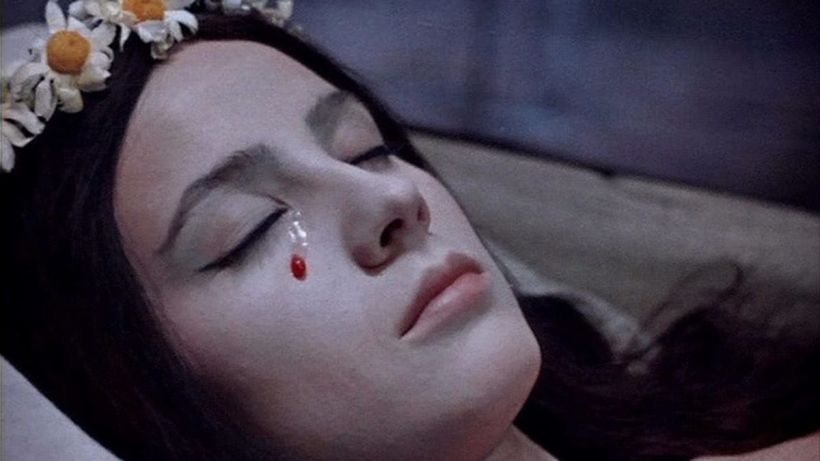
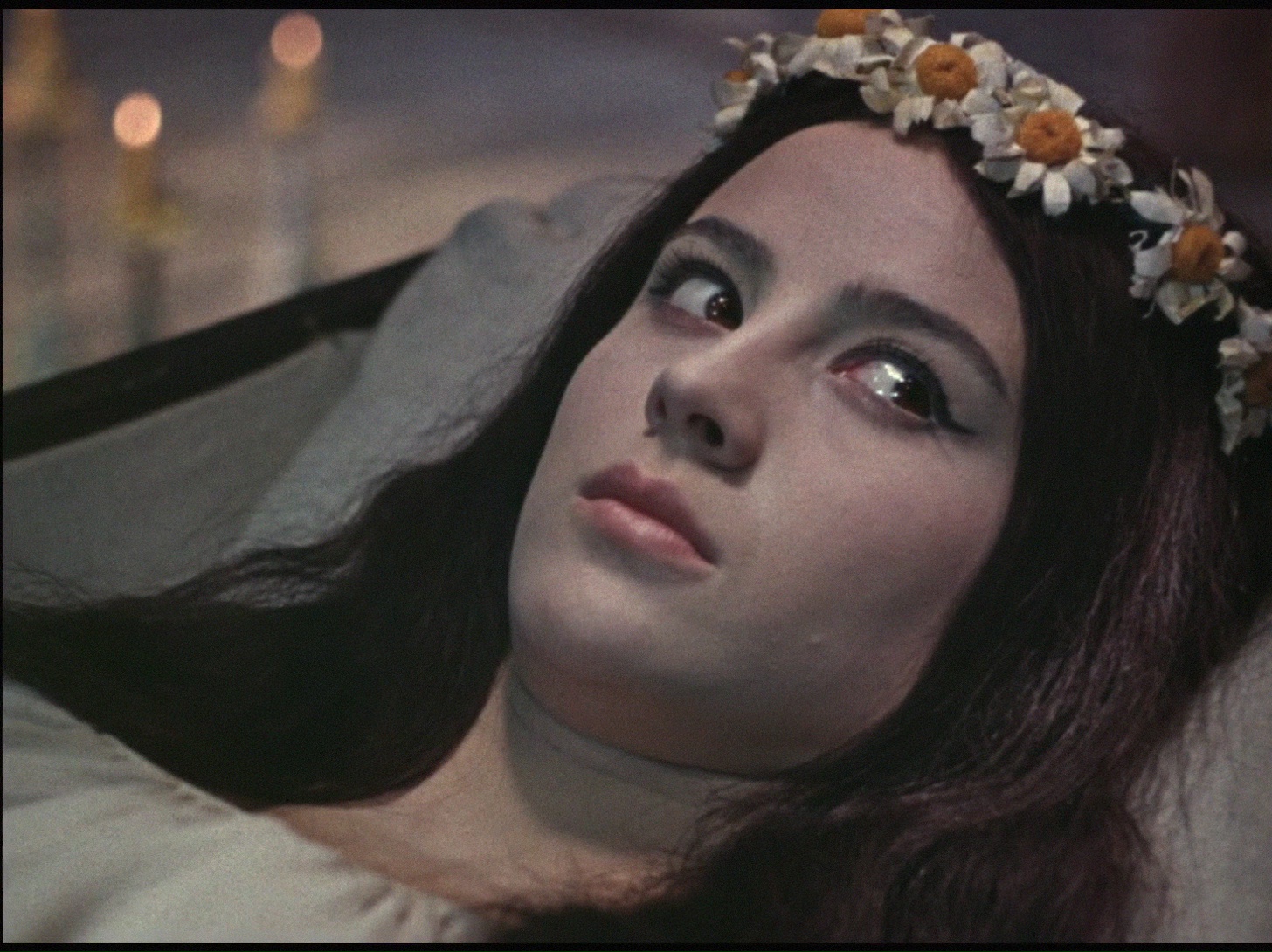
First up for consideration in the book is perhaps the most famous of Soviet films (and one which I’d both seen and read the story by Nicolai Gogol, upon which it is based). That film is the 1967 version of Viy (which also has a pre-Russian Revolution version from 1901 which is sadly lost and several 21st Century versions – it also was influential to Mario Bava’s 1960 film Black Sunday). Its premise follows a man who following a bizarre assault by an old witch beats her grievously, but upon the death of the beautiful young daughter of a Cossack chief finds himself forced to stage a 3 day vigil by the coffin of the young woman. Perhaps not all Hell but a fair portion of it then unfolds. Released 24 years before the Fall of the Soviet Union,Viy isn’t truly symbolic of those end days but its inclusion in the book is an important one – both in its context of the history of Russian horror film and also in outlining the time of mid Cold War era that strangely gave birth to it.
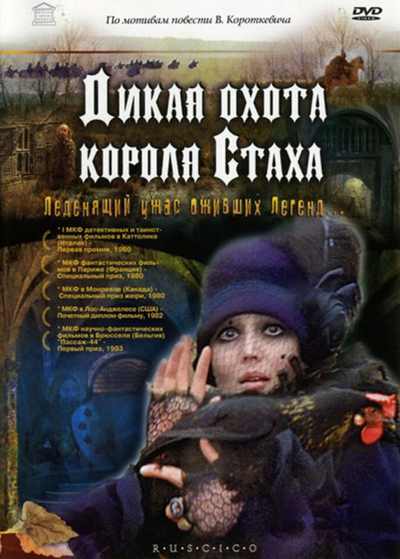
Next up is 1979’s Savage Hunt of King Stakh which is based on a story by Vladimir Korotkevich about a young anthropologist who travels to a remote region to investigate Belarusian folklore and the paranormal. It is set in 1899, which Herbert considers important as it just precedes the 20th Century which was to witness dramatic change in Eastern Europe and with regard to the beliefs and character of the people of Belarus before and during the Soviet era. In referencing the supernatural and folklore in what was to become a secular state that sought to replace individual nationalism with homogenous comradeship raises questions of matters of national identity and heritage – issues that people would consider themselves when the decline of the bloc approached.
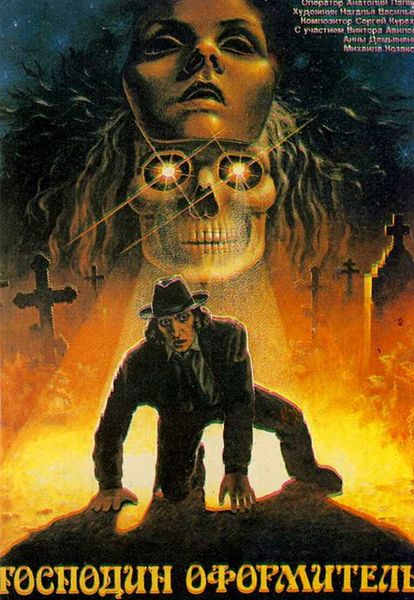
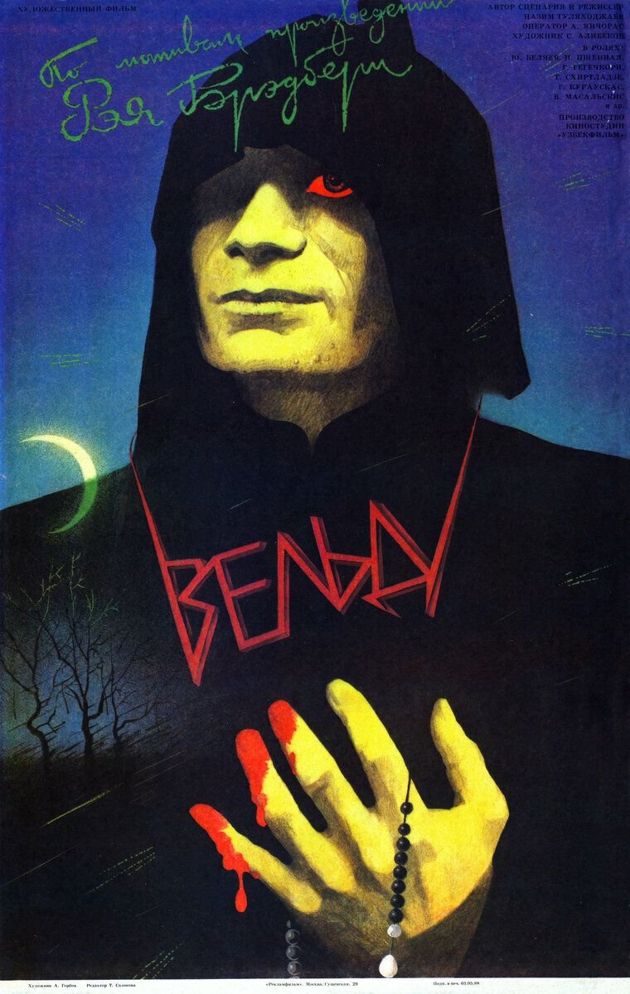
Herbert then turns his attention to two 1987 films – Mister Designer and The Vel’d. Concerning itself with an artist who seeks to address the matter of a more eternal life through the creation of mannequins. Having not seen this, it does sound something of a strange curiosity. Following the devastation at Chernobyl and the authorities realisation of the slipping of overall control but still wanting to set the narrative (in all things including film) the contemplation of the state intended and creator subliminal symbolism is thought-provoking. This is perhaps more curious still in the fact that The Vel’d is an adaptation of the short story The Veldt by Ray Bradbury. Bradbury is an author whose work oozes 20th Century Americana and for Russian authorities to permit a movie based on his work is intriguing. Increasingly the youth of the Soviet era, whom hadn’t known life before and knew only often austere times would get tasters of Western youth-culture and wanted more, be it records, denim jeans, burgers or horror movies. An interesting note about the story of The Veldt is that it tells of children turning on their parents in a more technologically advanced leisure scenario. As a big fan of Ray Bradbury I am intrigued to seek out this adaption of his work (the story does also feature incidentally in the American portmanteau movie The Illustrated Man (1969).
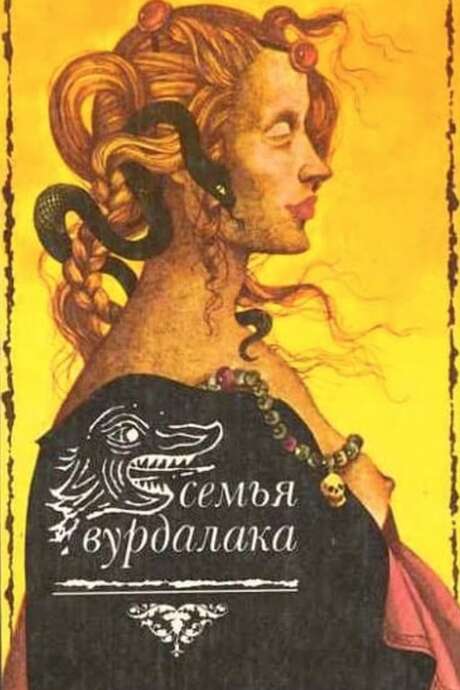
In the final chapters Herbert concentrates on films relating to Vampirism and Lycanthropy – both subjects that feature in the Slavic folklore of the different nations that made up either the USSR or the Warsaw Pact countries. Vampires and Werewolves however are frequently sources of a symbolic narrative beneath the surface story. Vampires often reflect the ‘Other’ – an outside/outsider source that represents a real or scapegoated threat. Since the dawn of Marxism, vampirism was used as a metaphor for capitalism. (On the flip-side the ‘Other’ subtext of ‘Reds Under the Bed’ can be read into some American Cold War movies such as Invasion of the Body Snatchers). Vampires are often depicted also as decaying decadents – in the Soviet Union the symbolism there could be considered a reference to the parasitic aristocracy which the Russian Revolution sought to destroy. In the 1980s the concept of tainted blood and pestilence in Vampire narratives could not help but bring to mind the AIDS crisis of the time (with its further ‘Othering’ of gay men and intravenous narcotic users who made up a large portion of infected people). Herbert considers the symbolism of women in relation to the film P’iusche Krov (released in 1991 – the year of the Soviet Union’s breakup and a time when the members of future feminist punk art activists Pussy Riot were but mere children) and the matter of generational conflict in regards to ‘Fear of the Vampire Family’ – Semya Vurdalakov (1991). Vampire Family is a contemporary loose adaption of the short horror story by A.K. Tolstoy (a period adaptation that is closer to the original tale can be found as a segment in Mario Bava’s 1963 movie Black Sabbath – starring Boris Karloff as the bloodthirsty family elder).
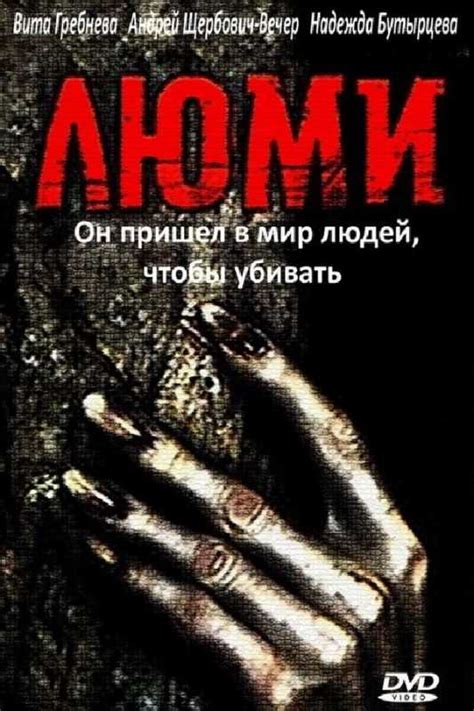
Lycanthropy can symbolise a wild inner nature but it is an effective factor to symbolise transformation and at this time the Soviet world was at the start of profound metamorphosis. Herbert takes a look at the werewolf satire Lyumi (1991), a contemporary adaptation of the Little Red Riding Hood. Russia is not through with change 30 years as it is currently writing another chapter of its own and Europe’s history. It would be intriguing for Herbert to return to the theme in the future and see what the post-dissolution horror films of Russia may reveal about the Putin era.
Fear Before The Fall: Horror Films In The Late Soviet Union Alexander Herbert
In this engaging and timely update to The Art of Wandering we are in the convivial company of Merlin Coverley, an author who has written on a variety of topics which will naturally intrigue many Folk Horror Revivalists, including hauntology, psychogeography and occult London.
Merlin Coverley
In the preface to the new edition Coverley reflects on the increasing popularity of walking, not least as an antidote to the stresses of modern life. Many of us will have experienced the positive impact which walking can have in relation to our general sense of wellbeing and in helping us to make sense of our lives. In this book Coverley guides us through the historical legacy of the ‘writer-as-walker’ and surveys the work of contemporary authors, all of whom illustrate how walking, sensemaking and writing are intimately connected.
We learn how from the ancient world to the modern day, the role of the walker has continued to evolve, ‘from philosopher and pilgrim, vagrant and visionary, to experimentalist and radical’. The deceptively simple act of placing one foot in front of another is explored in the context of a rich literary tradition which encompasses writers such as Rousseau, De Quincy, Coleridge, Wordsworth, Clare, Thoreau, Edgar Allan Poe, Machen and Virginia Woolf. We learn too of the work and lives of those involved in twentieth century movements such as Dada, Surrealism and Situationism. Other perspectives are shared such as that of the anthropologist Tim Ingold who reflects on how walking and writing are closely coupled in movement, for ‘to walk is to journey in the mind as much as on the land: it is a deeply meditative practice’.
As well as the philosophical reflections on the relationship between walking and writing, I very much enjoyed the colourful anecdotes which are peppered throughout the book. Coverley explains how Charles Dickens had an extraordinary capacity for walking, on one occasion choosing to get out of bed at two in the morning and walk for thirty miles into the country for breakfast. Another account relays how Dickens often expected his dinner guests to join him for a walk of many miles across the city at night before eating.
As might be expected given the author’s related work, some time is taken to explore the foundations and contrasting traditions of psychogeography, the space where psychology and geography intersect. Throughout the book an illuminating approach is taken to the use of literary extracts. One such example is that taken from ‘Introduction to a Critique of Urban Geography’ by Guy Debord for whom the psychogeographer, ‘like the skilled chemist, is able both to identify and distil the varied ambiences of his environment’, not least through walking in the form the aimless drift or dérive which enables the practitioner to determine the emotional characteristics of particular zones in the city in a way which would not otherwise be possible.
Several writers highlighted in The Art of Wandering will be of particular interest to those with an interest in horror. One such writer is Arthur Machen, author of The Great God Pan, who Coverley considers to be of equal significance as a literary walker to William Blake, De Quincey (Confessions of an English Opium-Eater) and Dickens.
Portrait of Arthur Machen by John Coulthart
Machen spent many years walking through the streets of London, frequently around Gray’s Inn Road but also further afield and often without direction, overwhelmed by a sense of awe bordering on sheer terror at the city’s dark undercurrents and occult associations. Coverley explains how much of Machen’s work can be seen as a strategy to combat this sense of dread and gain mastery over London’s streets by walking them, and through this knowledge overcoming their menace. Here Coverley draws a vivid picture of Machen as ‘the solitary walker seeking an escape from the labyrinth, yet fated to spend a lifetime in doing so’.
One contemporary author who appears to have been similarly fated, though not necessarily in such a solitary way, is Iain Sinclair. For more than fifty years Sinclair has pursued what he refers to has his ‘London Project’, a series of poems, novels, diaries and other non-fiction accounts of London’s neglected spaces.
Iain Sinclair in conversation with John Pilgrim at FHR’s ‘Otherworldly’ event
Early works such as Lud Heat took inspiration from work of Alfred Watkins’ thesis that much of the country’s landscape is connected by hidden ‘lines of force’:
A triangle is formed between Christ Church, St George-in-the-East and St Anne, Limehouse. These are centres of power for those territories; sentinel, sphinx-form, slack dynamos abandoned as the culture supported goes into retreat. The power remains latent, the frustration mounts on a current of animal magnetism, and victims are still claimed.
For Sinclair the city is to be re-discovered through a process of walking and imagination which has the potential to reveal the hidden relationship between the capital’s financial, political and religious institutions.
In more recent years Sinclair has extended the scope of his London project, one journey of note being his extraordinary walk around the M25 in the company of his wife Anna, the artist Brian Catling and the fantasy writer and magician Alan Moore. Participants in the Folk Horror Revival ‘Otherworldly’ event held at the British Museum may also recall Sinclair’s account of the pilgrimage which he and others undertook in memory of Edith Swan Neck, who may have been the first wife of King Harold II. This involved walking over one hundred miles from Waltham Abbey in Essex to St Leonards via Battle Abbey. In instances such as this walking and the act of writing are complementary tools by which hidden narratives and forgotten lives may be resurrected.
Lengthy and arduous walks such as those of Sinclair and Will Self (who once walked across London to New York in a day) are by no means the sole focus of Coverley’s exploration of writer-as-walker. One literary example which Coverley highlights is ‘Street-Haunting’ by Virginia Woolf. Subtitled ‘A London Adventure’, Woolf’s essay is essentially a light-hearted account of one woman’s walk across London in search of a pencil.
Virginia Woolf
The deliciously named practice of ‘street-haunting’ was a lifelong habit which Woolf first began when she moved to Gordon Square in 1904 and enabled much of the author’s creative thinking, planning and ‘scene-making’ to flourish. In this essay, Woolf leaves the solitude of her room to explore her fleeting impressions of London’s inherent strangeness and ‘that vast anonymous army of anonymous trampers’. The transitory nature of Woolf’s walking experience is reflected in her writing which reveals a sense of self which is fragile and free floating.
Importantly, Coverley notes the historical importance of Street-Haunting in relation to the female experience of writer-as-walker, a critical dimension which has traditionally been overlooked. In the preface to this new edition of the book Coverley rightly acknowledges the dominance of this ‘somewhat dispiriting demographic of ageing masculinity’ and welcomes the counter-narrative that has emerged in recent years, with Lauren Elkin’s Flâneuse providing a critical turning point in bringing the female writer-as-walker to the fore. I would have welcomed a deeper exploration of this aspect, for example, through a more detailed appraisal of Rebecca Solnit’s work (Wanderlust: A History of Walking, and A Field Guide to Getting Lost).
The updated edition of The Art of Wandering is an invigorating read, impressive both in its scholarly breadth and in the vivid way in which the relationship between walking and writing is communicated. It also offers the reader something more: a welcome stimulus to re-connect with our cities and landscapes in deeper, more meaningful ways. It is a tonic for our times.
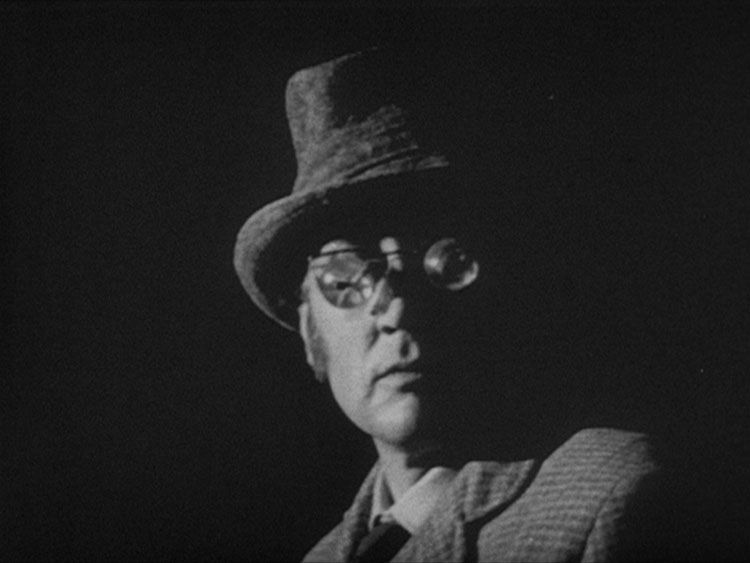
Following 2017’s Holy Terrors (review here) the excellent film adaptation of various tales by the mystical author Arthur Machen, the directorial duo of Julian Butler and Mark Goodall return with a tale from another past master of the mysterious and macabre – Oliver Onions* and an adaptation of his short tale ‘The Beckoning Fair One’.
The premise of the story follows a writer as he moves into a new apartment in order to complete a novel. Eventually it is revealed that apartment is haunted by the ghost of a previous resident- the ‘beckoning fair one’ of the title.
Timed at 23 minutes, Goodall & Butler’s version of the tale stays closer to Onion’s original short story than the 1968 Don Chaffey directed adaptation that featured as an episode of the ABC/ITV supernatural/weird anthology series Journey to the Unknown. The Chaffey version has a different tone and replaces the author protagonist with a painter. It gives a specific time-setting in that it takes place 25 years after the World War 2 bombings of London and in doing so gives a more thorough exposition of the presence in the house than either Onion’s story or the Butler-Goodall version. The Chaffey adaptation runs at one hour which is perhaps too long to tell the story as it feels repetitive in parts rather than tension-building. It is however worth a watch both in itself and as a contrast to Goodall & Butler’s envisioning. (There is also a 1973 Italian Giallo film called Un Tranquillo Posto di Campagna – A Quiet Place in the Country inspired by the tale.)
Butler & Goodall only take 23 minutes on the tale which is enough to do it justice. Its tone and atmosphere is rather oneiric; slow-burning yet getting subtly under the skin delivering an entirely believable yet uncanny experience. Its sound design and crisp well-framed photography coupled with an aesthetically pleasing palette and good location choices serve up a pleasant yet eerie package – with a tale and delivery that does hazily unsettle. It is set in contemporary times, but still maintains a timeless quality. It keeps close to the psychological aspect of the original story, keeping the presence within the house and the brooding will of the building itself to the front and foremost -its horror is cerebral and suggestive not an exhibition of gore or jump-scares. Having a narrator detail the entire tale over live-action footage may not be to the taste of all viewers but for a film of this length serves its purpose well. Indeed I could see Butler & Goodall’s The Beckoning Fair One sit perfectly into A Ghost Story For Christmas slot. Having previously seen (several times actually) and loved their take on the tales of Machen, they have now displayed an empathy and understanding of Oliver Onion’s macabre tale and how to deliver it. I am left hungering to see them take on more of the past visionaries of the horror short story. I’d be curious and keen to see what they could do with the tales of Robert Aickman and Algernon Blackwood for instance. If anyone from the BBC happens to read this, take heed for Goodall and Butler are creating work that suits these times but also sits comfortably with established spooky series such as A Ghost Story for Christmas, Supernatural (1977) or The World Beyond etc.
The Beckoning Fair One can be seen in its entirety HERE
Portrait of Oliver Onions – Andy Paciorek
*Oliver Onions (1873 – 1961) was an author and artist from Bradford, England. Originally trained as a graphic artist, Onions began writing fiction under the encouragement of the American writer Gelet Burgess. Turning his hand to detective stories, science fiction and historical drama also, it is perhaps for his short tales of the weird, supernatural and spectral that he is best known. His 1911 collection Widdershins which features The Beckoning Fair One is amongst his most famous and critically acclaimed works (including amongst several other writers of weird fiction). As with The Beckoning Fair One, the theme of the relationship between creativity and madness is a theme that he returned to in his work several times. Married to the novelist Berta Ruck and the father of two sons, Oliver Onions passed away in Aberystwyth, Wales in 1961.
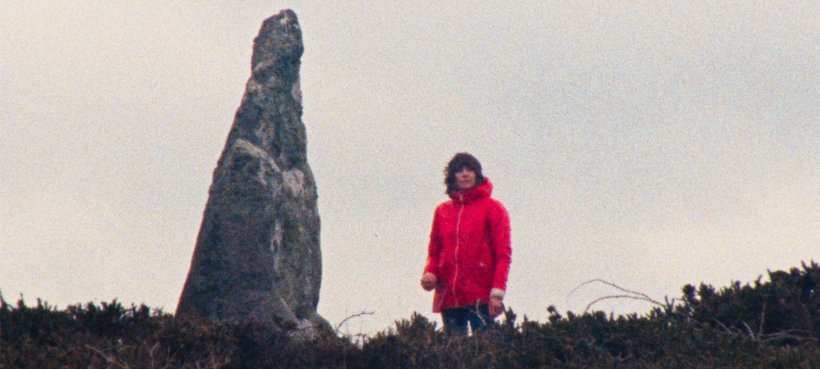
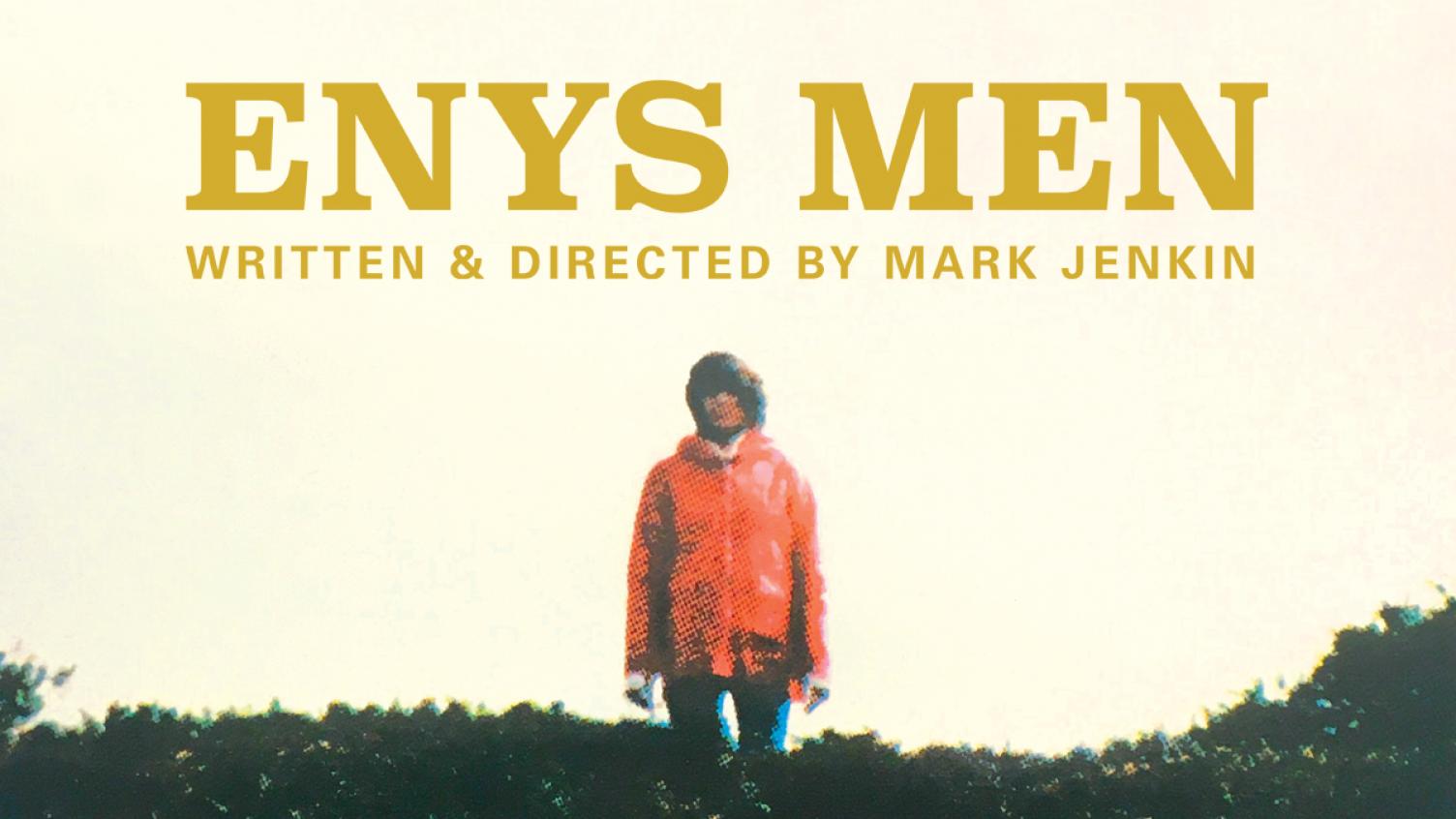
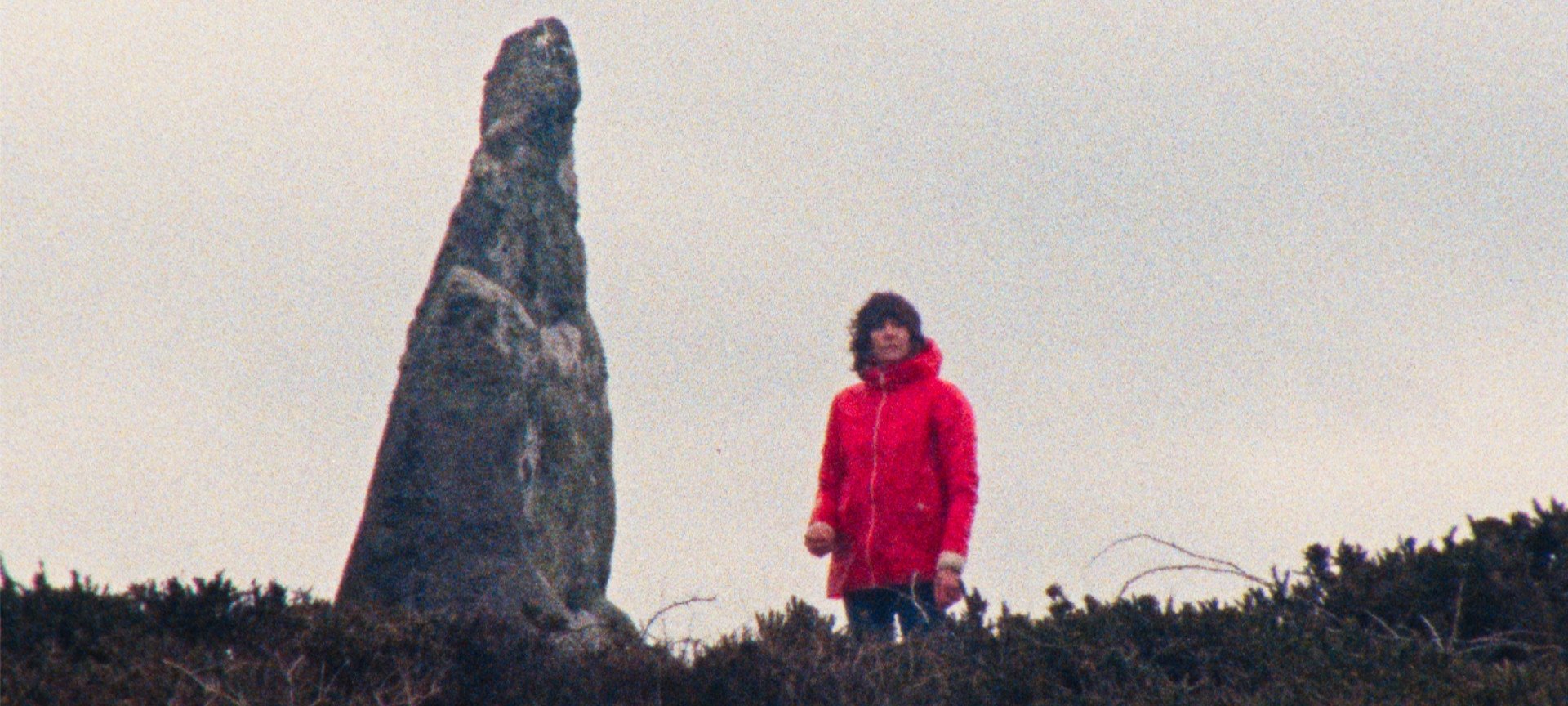
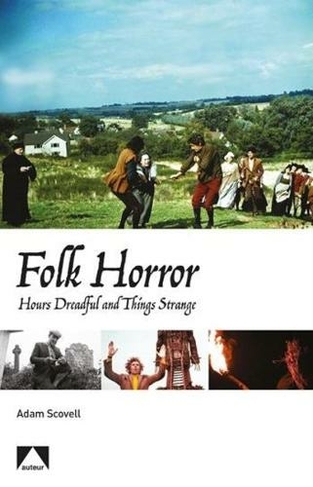
Off the back of Mark Jenkin’s new film Enys Men (2022) being premiered in official competition at the London Film Festival (LFF), the Southbank Centre hosted a panel discussion entitled What the Folk! on Saturday 15th of October. The event was advertised as an introduction to the Folk Horror subgenre; a discussion of “the dark innovative projects that test the boundaries of art and media, and [a] journey through the forests, fields and furrows to explore all the seamy, dreadful and macabre elements of the folk phenomenon” (bfi.org.uk). It was hosted by Michael Blyth (LFF programmer) and was in conversation with Mike Muncer (the creator and host of the Evolution of Horror podcast) and Adam Scovell (author of Folk Horror: Hours Dreadful and Things Strange (2017)). Anna Bogustskaya (host of The Final Girls podcast) was advertised to attend but couldn’t make it due to illness.
From the jumping-off question of ‘What’s your favourite folk horror property?’ the panel praised 70s British television like Children of the Stones (1976) and Sapphire and Steel (1979) – citing the creative and economic freedom of ITV and the BBC in this period as being an irreplicable space to introduce avant-garde film to a wide audience; “imagine something like Penda’s Fen being aired today, right after the Ten O’clock News”.
Scovell and Muncer also praised contemporary novels like Francine Toon’s Pine (2020), Andrew Michael Hurley’s The Loney (2014), and writers like Benjamin Myers, Elizabeth Gilbert, and Daisy Johnson.
These examples were then drawn together to create something towards a taxonomy of folk horror – what is it that connects these disparate works across time, form, and aesthetics? Is there then an example that neatly contains everything that the subgenre has to offer – a starting point for potential folk horror fans? Scovell repeatedly praised the quality of Czech folk horror but suggested James Mactaggart’s Robin Redbreast (1970), as a good starting point for British folk horror viewing.
Muncer moved a little further afield, speaking on the overlooked influence of Ingmar Bergman’s The Seventh Seal (1957)and The Virgin Spring (1960) on the themes and aesthetics of folk horror. He then discussed examples of films that he felt played with the typical folk horror formula in interesting ways. Films like Pumpkinhead (1988), Onibaba (1964), and Straw Dogs (1971)– those titles that have something folk horror about them but seem too difficult to define as ‘purely’ folk horror in the way that The Wicker Man (1973) or The Blood on Satan’s Claw (1971)are.
This diverse range of examples provided by both panellists drove the conversation down the difficult path of defining folk horror. After some back and forth, the conclusion ultimately ended up being that they couldn’t really define the subgenre in any concrete way. Scovell admitted that, upon rereading his seminal text Folk Horror: Hours Dreadful and Things Strange, he hadn’t managed to define the subgenre very well in that book either.
This was one major highpoint of the discussion, the panellists’ aversion to gatekeeping the discourse around folk horror. When Blyth asked if there were any films that either panellist would say definitively isn’t folk horror (despite the wider world suggesting that it is), they were reluctant to suggest anything – pointing to the ambiguity of the subgenre, a lack of concrete definition, and the importance of keeping the discussion open. To this quality, Muncer described how discussion and interaction with fans and their theories are some of the most productive parts of the Evolution of Horror podcast. In fact, the closest thing to negativity that either panellist said was that some modern folk horror chooses to reproduce the aesthetics of the 70s films but does so without any of their innovation or excitement; becoming, as Scovell said, ‘content’.
The panellists’ reluctance towards providing a solid definition of folk horror and the awareness that a firm definition will run the risk of diluting the ineffable folk horror-ness of the subgenre, is a breath of fresh air within folk horror discourse. It is a fantastic answer to the parade of ‘What is Folk Horror’ articles marching across the internet. Scovell and Muncer argued that there are a hundred different ways to define folk horror depending on form, country of origin, or time that the piece was created in. We must keep these definitions in discussion with one another, while at the same time knowing that they are all equally correct and incorrect.
As Scovell, Muncer, and Blyth agreed – now is an incredible time to be a folk horror fan. Films and television programmes that would have been expensive or impossible to track down only a few decades ago are being lovingly restored by institutions like the BFI and Arrow Films and released to a wide audience. Artists like Mark Jenkin are endeavouring to recapture the ‘English Eerie’ on screen while simultaneously creating something entirely new. And, perhaps most importantly, it has never been easier to find other fans and open these dialogues with them, attempting and failing to define or taxonomize a shared interest.
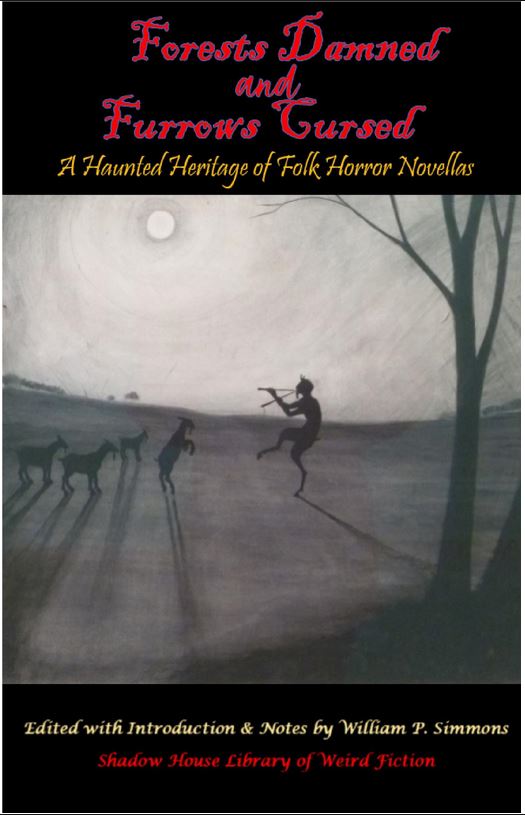
Forests Damned and Furrows Cursed is a new anthology of classic Folk Horror novellas harvested by the author William P. Simmons of Shadow House Publishing. We say ‘Folk Horror’ but all of the contained novellas were written in the late 19th/early 20th Century before the term Folk Horror was widely applied as a sub-genre or mode, therefore all are written with a purity of independence, free from the worry of whether their work conforms to a set idea or ticks all the expected boxes – a problem contemporary writers of Folk Horror may feel they face. So within these covers we are presented with 5 comparatively diverse tales, which still nonetheless should content both the casual and the more rigid readers of folk inspired horror.
The stories featured are ~ Watcher by the Threshold by John Buchan (1902) The Novel of the Black Seal by Arthur Machen (1895) Dionea by Vernon Lee (1890) The Man Whom the Trees Loved by Algernon Blackwood (1912) The Garden at 19 by Edgar Jepson (1910)
Differing from a number of Folk Horror anthologies that have collected short – short stories, Forests Damned gathers those creatures that dwell in the borderlands between short prose and novels – the land of the Novella. Outside of publisher demands (which may be of pragmatic /financial intent rather than creative) which may dictate a set word or page count, my personal belief with writing is that the story should be as long or as short as it takes to tell in the most rewarding manner. The precise amount of detail is required to describe the characters, setting and significant events. – applied to set the pace, to build suspense and either satisfy completely or to non-frustratingly leave the reader wanting more. Just enough detail for the reader to view the scene and unfolding events in their mind’s eye and to immerse in the story and be less conscious of reading a book, if that makes sense? So ideally, not so short as to appear rushed and unsatisfactory, not too long as to bloat and drag with superfluous padding. The stories in this book don’t always completely meet those aims but it is important still that they have been collected and presented again in our time as they are strong interesting stories in their own right and a vital link in the chain for any reader / collector that wishes to build a library and /or knowledge of literary fiction that falls under the umbrella of what is now rather widely referred to as Folk Horror.
Likewise these novellas are of their time which is relevant regarding their pace, style and also with reference to some social-political issues. They come from a time when there was little competition for attention in leisure time – no films, internet, games etc. So they can take their time getting where they are going and can stop to smell the roses in their descriptive manner. So as with all books and tales from different eras, may not be to the taste of all contemporary readers. In his introduction to the collection, Simmons does a good job of putting the works in context and explaining the feral nature of Folk Horror, so no previous experience of reading Folk Horror stories is necessary to enter into the wild lands contained, but it may be useful for those new to the form to read some shorter stories of both Folk Horror and of the era before tackling these long -short stories / short novels. Regarding the social-political issues within some of the tales, attitudes may raise some eyebrows and with fair enough cause; however whether they reflect the opinions specifically of the fictional characters portrayed, the author or the majority of their particular society at that time is not instantly identifiable. The reader can make their own judgement call when reading. Any issues do not overwhelm the tales, mostly they are concerned with traditional gender roles and the occasional opinion regarding foreign nations, but are mentioned purely for context of these tales being creatures of their own time. Such matters may also be of interest to Folk Horror fiction historians in their contemplation not only of tales being told but how they are told.
That overview out of the way, to look now at the individual tales contained and their creators.
John Buchan
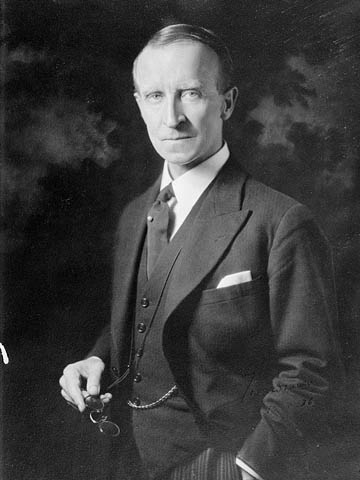
The first story featured is The Watcher by the Threshold by John Buchan (first published in 1902). Buchan (1875 – 1940) was a Scottish polymath. In addition to being a fiction writer (his most famous work quite probably being The Thirty Nine Steps – an adventure tale of political intrigue (known more widely for Alfred Hitchcock’s 1935 cinematic adaptation); Buchan was an editor, non-fiction author, Unionist Politician and Governor General of Canada. The Watcher by The Threshold tells of a man living on the Scottish moors whose studies of Justinian and classical philosophy go beyond obsession and finds himself feeling haunted by a devil. The importance of landscape in Folk Horror is well represented in this tale. I have a love of moors yet find them somewhat unsettling and Buchan’s writing sets the scene very well here.
Arthur Machen: Illustration by Andy Paciorek
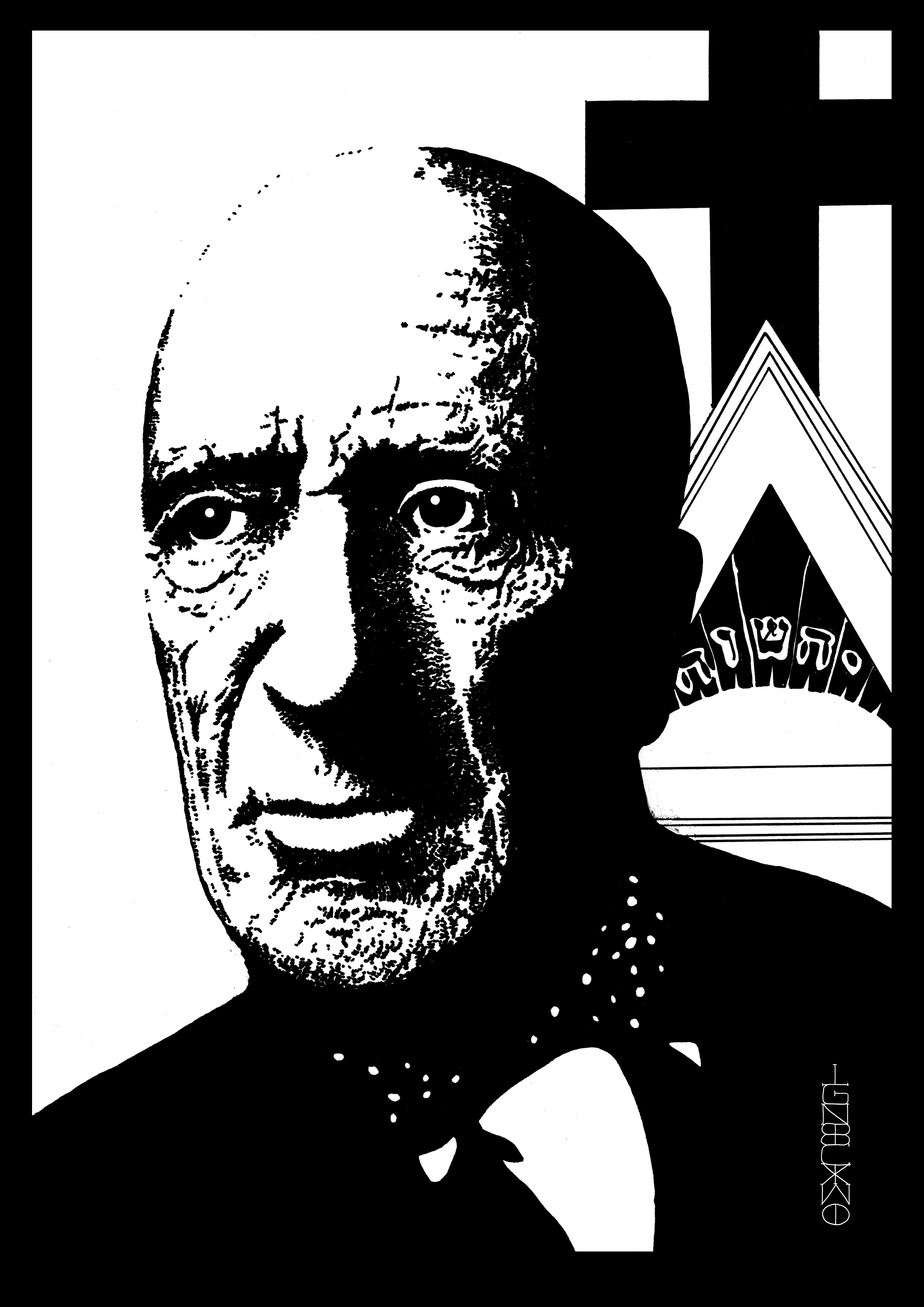
Next we have The Novel of the Black Seal by Arthur Machen (1863 -1947) (which was first published as part of his 1895 collection The Three Imposters). Machen was a Welsh journalist, author, proto-psychogeographer and mystic – being a member of the Hermetic Order of the Golden Dawn for a while, his personal spirituality though leaned towards Celtic Christianity. The Novel of the Black Seal shares an element of Buchan’s tale which is also evident in a lot of M.R. James’ work that of academic study becoming embroiled in real situations of archeological, anthropological or folkloric horror. In this case case we find explorations of a subterranean site in the Grey Hills of Wales turning up more than expected. The existence and nature of the denizens of a Faerie Otherworld coexisting with our own goes against any Disneyfied Tinkerbell ‘airy-fairy’ conceptions of the ‘Little People’ of folklore and presents us with a forgotten, hidden swarthy, troglodyte race. In being of its time, perhaps the most horrific scene is implied rather than graphically explained. This works to its advantage, for in contemplation of the origins of the conception of the strange servant boy in the tale, I found myself genuinely unsettled. This tale went on to inspire both HP Lovecraft and Robert Howard in their weird fiction writing. It was in connection to the Machen story incidentally, that I thought of the comparatively low incidence of classic tales fitting a Folk Horror vein being adapted to film during this current current Folk Horror revival. Rather than ‘karaoke’ versions of The Wicker Man, it would be good to see more of the old stories brought to the silver screen. This train of thought commuted my mind to the (criminally little-known) film adaption of a collection of Machen tales, Holy Terrors (2018) by Mark Goodall and Julian Butler (see https://folkhorrorrevival.com/2018/01/19/holy-terrors-film-review/ ) and I think that they would be perfect to adapt Forests Damned and Furrows Cursed to film as a portmanteau – an Amicus-anthology style Folk Horror film if you will. Anyway I digress, so on with the book …
Vernon Lee aka Violet Paget
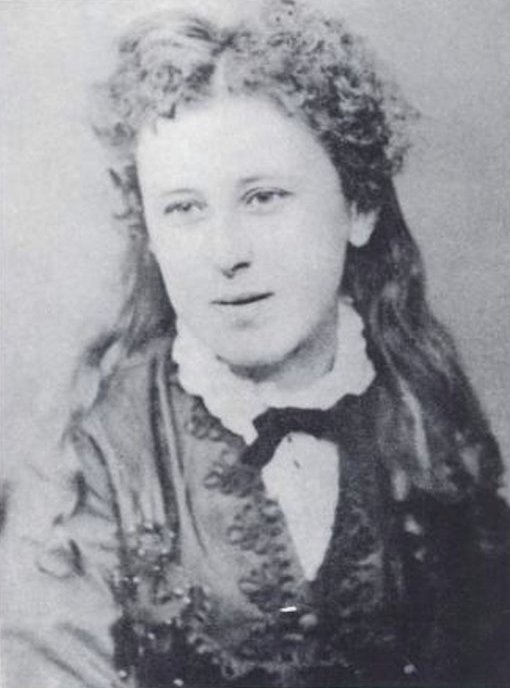
Next up we have Dionea by Vernon Lee. Originally published in 1890, Vernon Lee was actually the pseudonym of Violet Paget (1856 – 1935). Paget was a strong proponent of feminism but was published under a masculine pen-name. The author’s own contemplation and experience of gender matters can offer a further context to the story of Dionea, a foundling child raised in an Italian convent. Dionea does not care for the studies, chores and sewing that the nuns put her too and instead is drawn more to nature. As she gets older, her independence of thought – her perhaps even feral nature puts her at odds with the convent and later beyond those cloistered walls. Dionea’s strength of character and wild free-spirit is even seen to affect the fate of others and she is viewed with both suspicion and superstition. The return of buried paganism is a recurring element through different examples of Folk Horror, which marks Dionea’s place in this book and the Folk Horror canon, and the voice behind it is a refreshing interlude to the male, quite conservative – despite the themes, uttering of the other featured tale-tellers.
Algernon Blackwood: Illustration by Andy Paciorek
Perhaps one of the most evocatively titled of all horror stories follows next, The Man Whom The Trees Loved (1912) by Algernon Blackwood (1869 – 1951). A member of both The Ghost Club and like Machen, The Hermetic Order of the Golden Dawn; Blackwood is perhaps the biggest name in the book among horror circles. Extremely prodigious and successful in his horror writing career, alas I find issue with The Man Whom the Trees Loved – it’s not that it’s a bad story – it’s a decent enough tale. The problem is that in my opinion, it should be a short story not a novella. There for me is an issue of repetition in the tale – if handled skillfully then a little repeating can build up suspense but I just find too much of it and dallying here. It is surprising as Blackwood knows his craft, so it would’ve been hoped that he did not opt for a ‘less is more’ approach here. As for the tale itself, it is quite poetically beautiful as well as unsettling. A woman becomes extremely concerned with her husband’s obsession for the trees that surround their country abode. It has an underlying mystical and philosophical debate about the sentience of life, (indeed all of the stories featured in this book pose a studious contemplation of the ‘nature’ of both nature and the supernatural) and it is a valuable addition to the Folk Horror bookshelves but I unfortunately cannot help but feel that it would have been a more powerful narrative had Blackwood decided to have it edited down.
Edgar Jepson
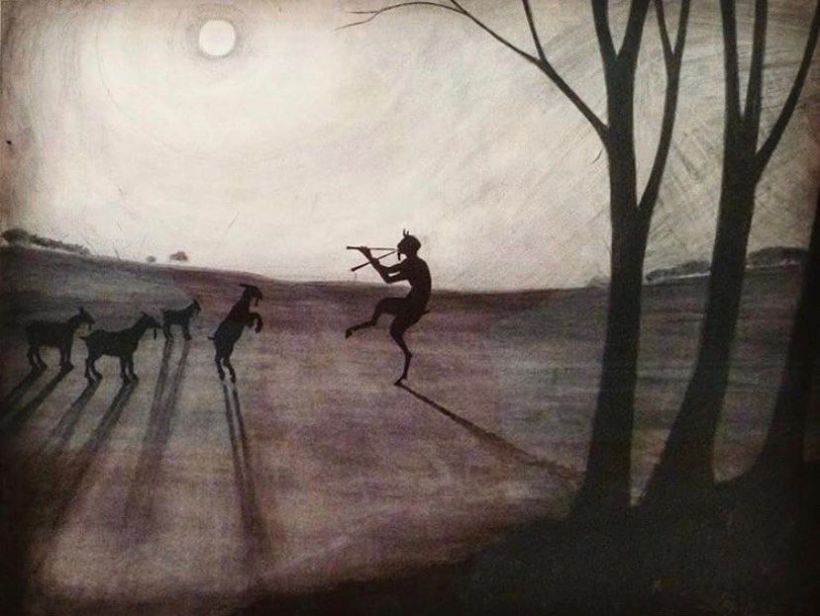
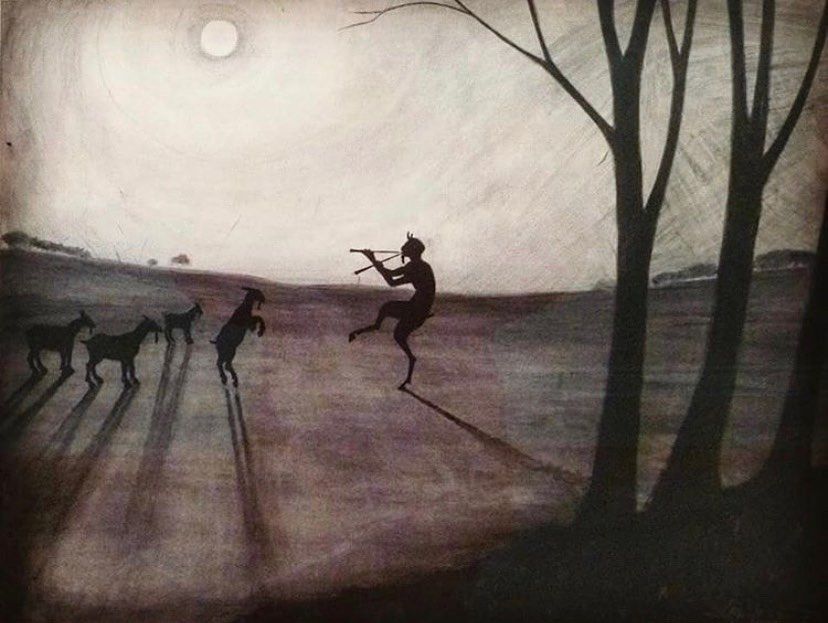
Closing the book is The Garden at 19 (1910) by Edgar Jepson (1863 -1948). Jepson, an English writer, is more widely associated to crime and adventure novels ( as well as translating Maurice Leblanc’s French tales of the aristocratic brigand Arsene Lupin into English). One of his wanderings into fantastic territory The Garden at 19 is a mixed bag. Like The Man Whom the Trees Loved, 19 could’ve probably done with being a bit shorter. It also has its eyebrow raising moments in its oddly repeated opinions of German professors and also in its portrayal of girls/women and their societal roles. Otherwise it’s a fair enough tale, reminiscent of Denis Wheatley’s Satanism in suburbia romps. The presence of that old horny deity Pan explains the book cover (featuring a painting by the, alas not familiar enough, Belgian Symbolist painter of the uncanny, Leon Spilliaert) and relates how a young lawyer becomes intrigued both by the strange goings-on in his neighbour’s garden and then by the presence of his neighbour’s niece. The character of the neighbour, Woodfell, is very clearly inspired by the notorious occultist and tabloid scandal-fodder of the time, Aleister Crowley.
The afterword of the book comes in the form of questions, an interesting addition that would perhaps prove useful for book groups, genre-study classes, and academic or personal-interest students of Folk Horror / horror literature. This and the novel approach of presenting novellas rather than shorter fiction makes this book an interesting and valuable addition to folk’s Folk Horror book collection.
Faun by Moonlight: Leon Spillaert (1900)
Forests Damned And Furrows Cursed: A Haunted Heritage of Folk Horror Novellas Edited by William P. Simmons Paperback, 236 pages Published April 26th 2022 by Shadow House Publishing ISBN13 – 798806998614
Lizzy Laurance’s debut album, Rocketman was released April 30th of this year. I would like to start by apologising to Lizzy for the delay in posting this review, however, a series of health issues and time constraints have held things up, which I hope are gradually coming to an end. Anyway, now that’s out of the way lets get down to Lizzy and her suitably impressive debut release.
Lizzy is a London based electronic musician who create “grainy pop-collages inspired by spatial locations; inner, outer and cyber”. In creating her music, she uses found sounds, ambient electronics, library samples, and electronic beats; stitching them together to create atmospheric aural soundscapes. Lizzy explores “the mythology of pop music and the icons who inhabit it”, through stories of “female identity, image-making and toxic masculinity”. Her inspirations are varied and thought-provoking, Lizzy cites David Lynch, Lana Del Ray and Godspeed You! Black Emperor as key influences on the sound of her album, and whilst this may sound like a disparate selection of artists, you can hear a little bit of each in the music, as well as a whole lot of herself. This is by no means an exercise in simply showing adulation for her heroes, she simply uses them to inspire and inform her own original sounding material.
The concept for the album came together while Laurance was artist in residence at Illutron, an arts and technology institute situated on an 800ft dredging boat in Copenhagen. She lived alone on the boat and made a number of field recordings that would form the basis of the songs featured on the album, not just from a musical perspective but from a storytelling perspective too. Lizzy says that she always felt there was “something rotten about the place” before she eventually uncovered that she was living at the site of the infamous Copenhagen Submarine murder of 2018. Founder of Copenhagen’s rocket building scene, Peter Madsen murdered a journalist (Kim Wall) who had come to interview him on board his home-made submarine. Laurance tries to reconcile the visionary ideals and technological innovations Madsen made with the destruction that was “left in its wake.”
After a short intro track (Promenade) that merely hints at what is to follow we are into our first song proper. “Baby Loves”, is a hauntingly atmospheric piece of Avant Garde audio that is eloquent and beautiful, yet possesses hints of a much colder, darker, industrial soundscape. “Come Down” almost sounds like drum and bass at times, yet Lizzy’s haunted vocals and the jazz trumpet samples give it a wholly warmer feel. “Gasoline Blue Jeans” reminds me a little of Portishead at their most experimental. There is also a starkness throughout the album that draws me back to Lynch’s solo albums Blue Bob and Crazy Clown Time. I also feel this particular track would have fitted nicely on the soundtrack to Lynch’s third series of Twin Peaks. “Too Hard to Die” is an off kilter, glitchy industrial nightmare that leaves the listener feeling drained, while “White Nights” is the sound of some sort of clanking mechanical hell, manifesting as music, with Lizzy’s ethereal vocals rising out of the clanking sounds of heavy machinery. “Shine” is a largely ambient track that allows Lizzy’s voice to take centre stage while strange otherworldly sounds move around it. I really like this track for the way in which it manages to create something that sounds like it belongs on the soundtrack to a 1970s Avant Garde science fiction movie. “Famous” starts off with what sounds like corrupted seabird samples before settling into slightly off kilter ethereal pop territory. The lyrics are written from the perspective of a man who stalked Lizzy during her time in Copenhagen, but it’s got a much deeper meaning about toxic masculinity and why women continue to fall for bad men. “Rocketman” is a collision of metallic sounds, screeching metal guitar punctuates ambient industrial drones amid the roar of mighty engines. This is a throbbing and pulsing masterpiece of wyrd electronica. The album closes with the incredibly sad, “Song for Kim Wall” a short, melancholy tour de force that reminds you of the horrific events surrounding her disappearance and subsequent discovery before coming to what feels like quite an abrupt end.
Overall, I found Rocketman to be a masterpiece of dark industrial electronica that sounds like nothing else out there. There are hints of other things from time to time, David Lynch’s albums really come to mind at certain points, but it retains a special quality all of its own. Lizzy’s ethereal vocals are somewhat reminiscent of the sadly missed Julee Cruise, but that may be a lazy observation on my part.
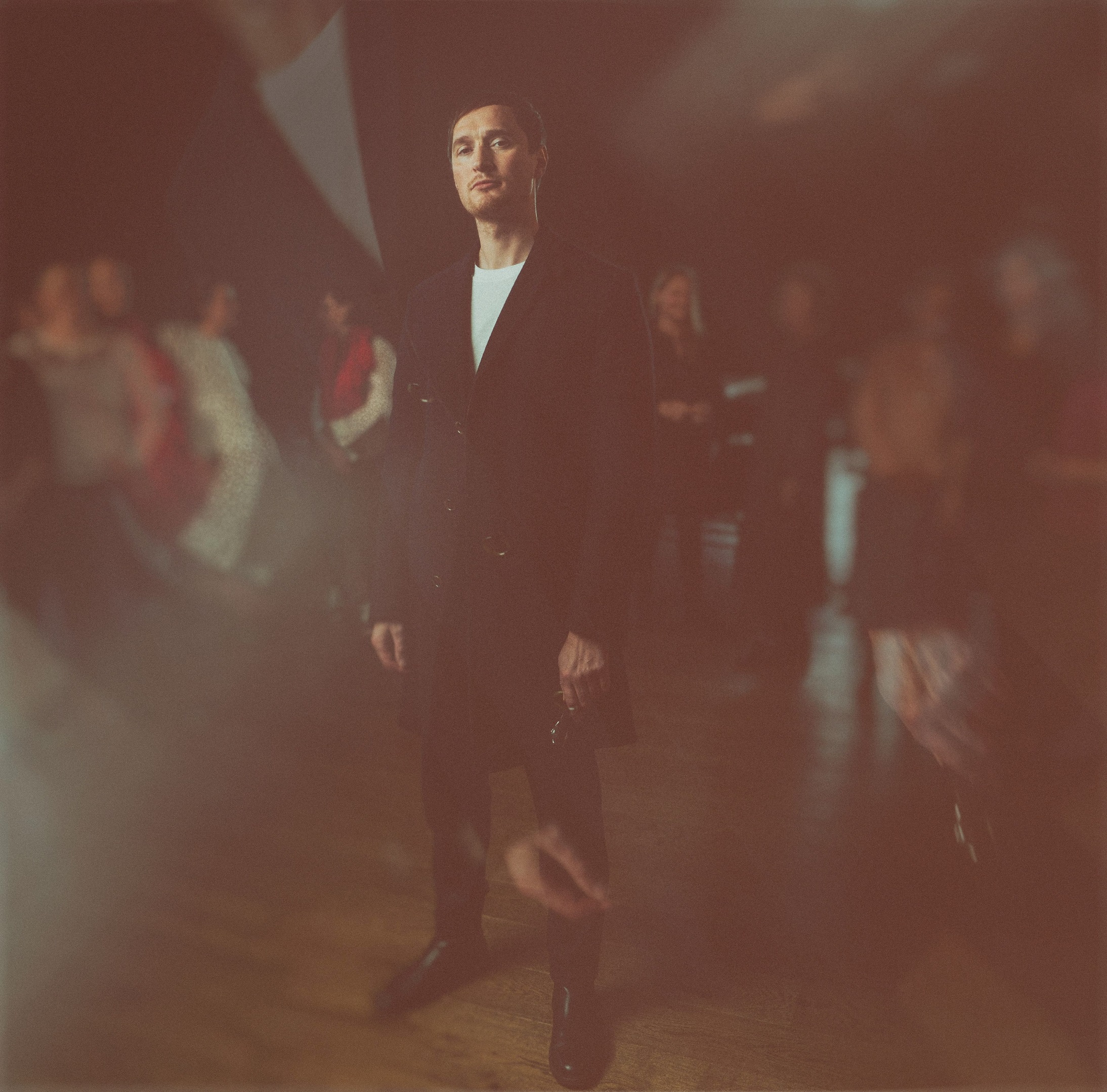
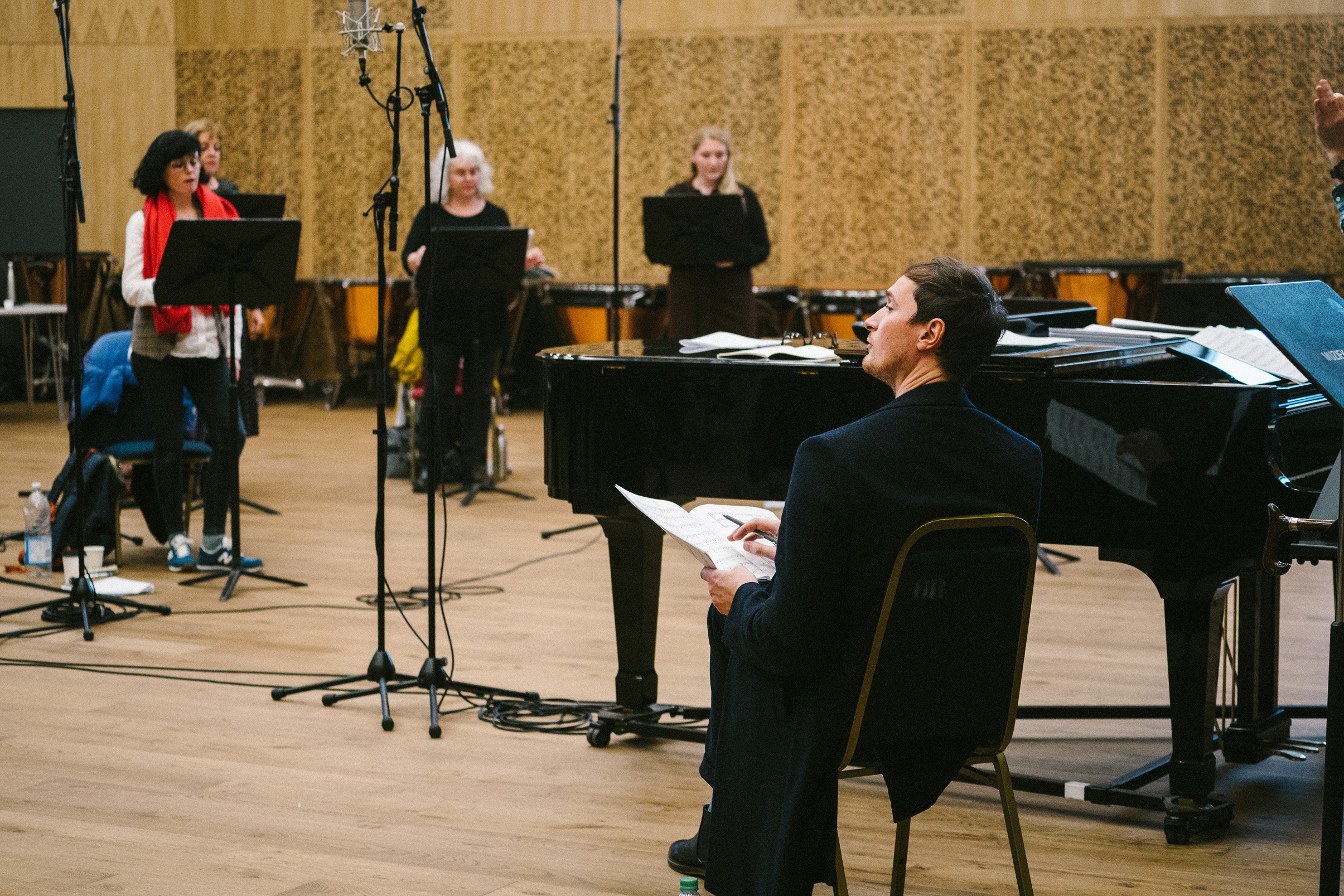
The latest commission in Opera North’s FILMusic series is Erland Cooper’s new live score for the classic 1928 silent film The Wind. Cooper has composed his predominantly vocal score for the women of the Chorus of Opera North. Folk Horror Revival were lucky enough to catch up with Erland just a few weeks before the tour kicked off in Gateshead to learn a little bit more about the project.
FHR: First off, thanks for agreeing to the interview. I suppose the first thing I really want to ask you is a bit about yourself and your musical history? Your bio states that you’ve worked in a variety of different fields of music, so if you could tell us a bit about that?
EC: Yes, it’s quite a diverse background probably, but I suppose on reflection… joining the dots back it all makes perfect sense. I grew up in the North of Scotland and folk music was quite accessible. That’s pretty much the mainstay of an island, passing troubadours would come in and out, great fiddle players, Aly Bain, accordionists…you know, all sorts of brilliant finger pickers and things like that. I kind of had this guilty pleasure of enjoying that while my mates were playing football. I was sneaking in to the town hall to listen to Phil Cunningham and Ali Bain.
So, when I got to London, I still had a real kind of interest in two things – one, recording studios, how I’d read about residential studios, and I just turned up and found one and knocked on the door. It was Ridge Farm studio, they recorded everything from Queen to…you know, Bohemian Rhapsody was recorded there. Big, big records, big, big songs, and I thought I want to see one of these residential studios. I knocked on the door and it creaked open like in a vampire film and this guy came out with jet black hair and a white strip across his fringe and I said Oh hello my name is Erland, I’m from Orkney, would it be possible to see the studio? He swore and said “fucking hell, you’re from Orkney, you better come in”. I think he thought I’d travelled that day from Orkney. This guy introduces me to the producer Youth, who’s starting a folk label, Youth’s a big producer who’s produced loads of hits. Anyway, Youth introduces me to Simon Tong, Simon was the guitarist in a band called The Verve, and then Simon and I started writing together, we both had a love for psychedelic folk, acid folk, traditional folk. Not just someone with an acoustic guitar that they call folk music, we’re talking Bert Jansch all the way through to obviously Sandy Denny, and Jackson C Frank, but even further back Cecil Sharp, Ralph Vaughan Williams collecting these folk songs and transcribing them. So we both had this big love of that, and we just hit it off, Simon and I, and every week I’d go to his house and we’d write songs. To cut a long story short, Youth was doing a folk night and Damon Albarn was there. My first gig in London, my first gig, I get thrust up on stage in some bohemian club in Notting hill completely out of my depth, out of my comfort zone, looking out and seeing some of my idols as a boy. I get up and play these really earnest folk songs and I last… two minutes. It’s a loud din and then silence and they start again.
Anyway, a month later and we’re in Damon’s studio and we’re cutting a debut album, which took folk songs, much like Fairport Convention were doing, and other bands, Pentangle. Just twisting them up and before we knew it, it was out in the world. We did three records with that band. Then I did another project called The Magnetic North, which was really centred on place, Skelmsdale, Orkney, and that had more traditional orchestration.
So, I was starting to get a real interest in classical elements of working within shoegaze and psychedelia. So, if you look at it, over those 10-15 years, kind of psychedelic rock band to slightly more sophisticated indie band, and then because I’m not classically trained, I am constantly learning. I’m up early every day studying myself, but writing, I feel like I’m just getting warmed up, you know. I get to write these 8 or 20 notes and give it to a violinist like Daniel Pioro and he makes them sound incredible, it’s like a joy. I didn’t intend to be a solo artist, that has just happened. And now I’m commissioned to compose music, so that’s what I do. So that’s the thread of where it come from and I suppose it adds a different way of seeing or looking at things, maybe if I had studied classical music I wouldn’t approach it in the same way as slashing its face with a guitar line.
FHR: It’s really wonderful that you’ve come to classical music via an alternative route to most other people.
EC: Yeah, I’m glad you’ve said that… I feel like you can bring in your influences and look at things slightly different. Being Scottish and not having classic training kind of adds a level of being the underdog, which is quite fun.
FHR: But also it means you’re using probably different influences to those who have come from a classical background. You may have classical influences but some of you influences are coming from the psychedelic and acid folk bands you’re listening to.
EC: I think the one common thread with all of these projects is storytelling. The ability to tell a story in different form. I’m actually inspired more by what I call real artists, painters, architects, film directors and producers and art curated shows. I’m more inspired by that than musicians generally. Although I am inspired by classical musicians, when I see someone walk in with a cello, I get really excited, the same kind of excitement I used to get when I was learning how to record on a Tascam tape machine, kind of, what can I do here?
FHR: I wanted to ask a question in relation to Opera North and particularly the film music project. I was really interested to see you’re following in the footsteps of some pretty amazing artists; Matthew Bourne, Jóhann Jóhannsson and Hildur Gudnadottir to mention but a few. How does it feel to be in such company?
EC: I love all their work. I mean, Johann’s work, which was vastly collaborative with Hildur, particularly over the five years prior to his death is an absolute constant. Johann would be a great collaborator, that’s what I take from his work. This idea that collaboration is being in the room constantly, that’s what it was in bands, jamming. For me, it’s different in this world and I enjoy it much more. You’re working on something on your own for ages and you get it to 80%, somewhere that’s really close, and it’s that last 20%, you just don’t know, you’re bringing in someone, Johann would work with Hildur and then that piece would just transform into something else. Was it Robert Aiki Aubrey Lowe? He’d worked with this incredible vocalist on the Arrival soundtrack and that soundtrack is, I think the best soundtrack of the last decade. I don’t know if you know the film or if you know the soundtrack, just listen to the soundtrack alone, it’s brilliant.
FHR: I think it’s the same with all of his soundtracks, I regularly just stick one on while I am working or something…actually it’s often distracting, and I end up listening to the music and not doing any work.
EC: We’re going to be quite geeky now, have you watched his First and Last Men? Watch it, and listen to the soundtrack, it’s fantastic. Hildur’s on there and Robert and another Icelandic bass player. I think you’ll really enjoy that, but anyway…
FHR: Now we’ve got a basic idea about you and your work, how did this project come about?
EC: They commissioned me to help tell this story. It was one of the last silent films, as you know, but it came at a time where it fell between the cracks, because the talkies were coming and people felt it was old hat, but now on reflection its beautifully put together. The artistry was quite cutting edge, so I see it as a kind of requiem for a dying art form. Off it goes and another art form replaces it. So, I kind of wanted to touch on that as this sub narrative of what is going on, as well as this sense of the fear of the other, for them it’s the wind, but I think it’s deeper than that, I think it’s fear of native Americans, Indians… and fear of isolation, loneliness, fear of mental and physical abuse. It touches on some very insular and dark themes, and the Mojave Desert wind is this prominent fighting force. Growing up on an island, just to answer your question, surrounded by wind, I felt some kind of connection. In the winter months from the end of September through to Feb it’s isolating and the weather dictates the terms of what happens that day.
So, they came to me, and I watched it…I muted the sound, because several people have done stuff, and I just muted the sound on YouTube and watched it and thought OK yeah, I’d be honoured to do it, but I’d like to set an ambitious manifesto. To just make the whole score out of the human voice, predominantly. So, all the electronic elements you hear, this kind of sound design, this distortion, these sub layers are actually made out of the… I think it was 12 singers voices. I did a pre-recording with them, it’s going to be 18 when we work on stage live but I’ve also got some recordings already and I manipulated them and I put them through a tape and I processed them in an interesting way and also my own voice. To my left here I have tape machines and microphones and so all these layers come out of the human, and everyone is so harmonically rich and different. I just thought that would be interesting, I’ve since added a few subtle additional layers, there’s a bit of woodwind, but for them most just the voice, but they don’t sing all the way through. This is what I noticed, other people who have approached the score, it was just kind of wall-to-wall music. Just back-to-back, what makes modern scores quite interesting, Johann in particular whilst we’re on the subject, is the use of silence and space, but in a silent film that’s harder to utilize because you’ve got no sound design, you’ve got no foley, you’ve got no sound effects. So, when you’re silent, you’re just silent again so I think people have just filled it with music, and so I’ve tried to turn that on its head…and go. There are three or four themes that happen throughout, and the rest is my own made sound design and using the wind of the Mojave Desert, processing it in a particular way and combining it with the women of the Opera North, of the chorus and doing some things that make it sound interesting to my ear. I’ve gone slightly mad.
I had these large fans and I put a valve on them so I could control the speed and I was blasting them at the piano with a speaker and I created a wind tunnel in the studio, and all of a sudden I started to distort it and I thought, interesting, now it sounds like the wind, now it sounds like the other, now it sounds really scary, now there’s something I can’t control. And the reason I got it, I was reading that when they did the film, they got loads of huge aeronautic propellers that would whip up this storm and I thought that must have been terrifyingly loud, that must have been full on. So that’s what I’ve done in the studio, made a wind tunnel. I’ve tried to imbue that into the score. So, actually thinking about it, talking to you about it for the first time, it might be closer to how it felt making the film. We’ll never know, but that’s how it feels. I can imagine that noise, the fake wind, because wind doesn’t have a sound, wind only makes noise when it rubs up against an object. So, that’s when I was looking at the science and that’s how I’ve approached it. So, what I mean by all this rambling is that I’ve tried to make sound design. Not foley, but sound design, so it’s got something so then I can cut it and have silence that feels like…ah I can have a break. So, it’s not just wall to wall music and the Opera North aren’t just singing from start to end because that would be too much, I think.
FHR: The decision to use the female voices in place of music, where did that idea come from?
EC: I just think the human voice is so harmonically rich, as I touched on, also the kind of Theatre of Voice as, what’s his name the composer, I forget his name. I started at 4 this morning on five different things.
[He is referring to Paul Hillier, the English composer, conductor and baritone who worked with Jóhan Jóhannsson on several of his later works.]
In fact, that heavily inspired the Arrival score, and I thought it would be interesting to not use a string quartet, to not use a big timpani drum, like everybody would. I thought I’m going to strip all of that out and just use the voice, and I guess it will either work or it won’t, but I guess the idea is just, it feels like it humanizes it a bit more to me. It kind of makes it feel more experimental as well and it makes it more challenging. I like to set parameters, or barriers, they’re not set in stone. I made them I can break them, it’s nice to do that. You know when you’re faced with a blank canvas, it’s no wonder people have writers block when they have every digital instrument on the planet at their disposal. I just use one synth, I love really learning one instrument, it’s a joy for me and using it in a way that maybe it shouldn’t be used or hasn’t been used or isn’t how it’s supposed to be used, then you get something interesting. And so, I knew I could take the voice and put it through other things, other processing. So, putting the voice through the filter of a synthesizer, suddenly sounds like a synthesizer but it’s not it’s still the voice. The sound source is organic, and I think that comes from me using predominantly, or I have used in my solo work a lot of field recordings, a lot of found sound and using found sound in a way that sounds familiar, but also kind of interesting and different. I guess that’s why, it probably came from there.
FHR: It says in your profile that you have an interest in the relationship between landscape and psychology. I guess we can say these things are intrinsically linked in this film and it’s pretty powerful stuff. Looking back and thinking this was made in 1928 and the themes and ideas are quite powerful and strong?
EC: I think the ending was changed, what actually happens in the end was supposed to be that she walks off into the wind, never to be seen again. Instead, she falls in love, and it’s like you’ll do let’s run off together. So American, so kind of… we can’t leave them with an unknown. To a modern audience now, we’d expect that question mark of this powerful woman…she leaves all the men in her life behind her and goes, I don’t need that, but they read it as she walks off and ultimately passes. All because she couldn’t deal with it. So, they said no because she was a producer, remind me her name…
FHR: Oh it’s Lillian Gish.
EC: She worked really hard to produce, put it together, fight to get the finance, to then have it pushed back at the end. The ending isn’t Hollywood enough. For then, the film to really not make a splash as it should have done. I think one review had said this film is ridiculous, the hats would have blown off their heads. They just wanted to hear talking and were fed up of that medium. Actually, we look at it now and think wow! With what they had at the time in 1929 or 1928…brilliant.
FHR: Yeah, it looks astonishing when you consider the year it was made. If you look at the silent films of that era and consider they didn’t have the budgets they have today. We can marvel at the creativity of the set designers and film makers responsible for the likes of Metropolis or Haxan and ask ourselves how they did it.
EC: Maybe, that’s another reason. They were limited in their technical ability and resources. I wanted to kind of do the same and kind of like limit, not just shove an orchestra on let’s not do a Zimmer-esque score, let’s think about it more. That would be more pleasing on the ear I think, I think an audience would probably have liked, and may have expected me to do a string quartet piece with piano and voice. When they asked me I just kind of said I will do it, but not in the way you probably think I’m going to do it. They were really open to just “you do whatever you want” but maybe as a tip of the hat to the limiting of resources, I’ve tried to limit my set of screwdrivers and tools.
Thanks very much to Erland Cooper for his time and for chatting to us. Just to round things up, the performance is going on a mini tour starting at the Sage, Gateshead on February 24th, RNCM Manchester on 25th February and closes at the Howard Assembly Room, Leeds on 26 February.
You can check out the trailer for The Wind on YouTube from the link below.
Tickets for the Manchester show are available here:
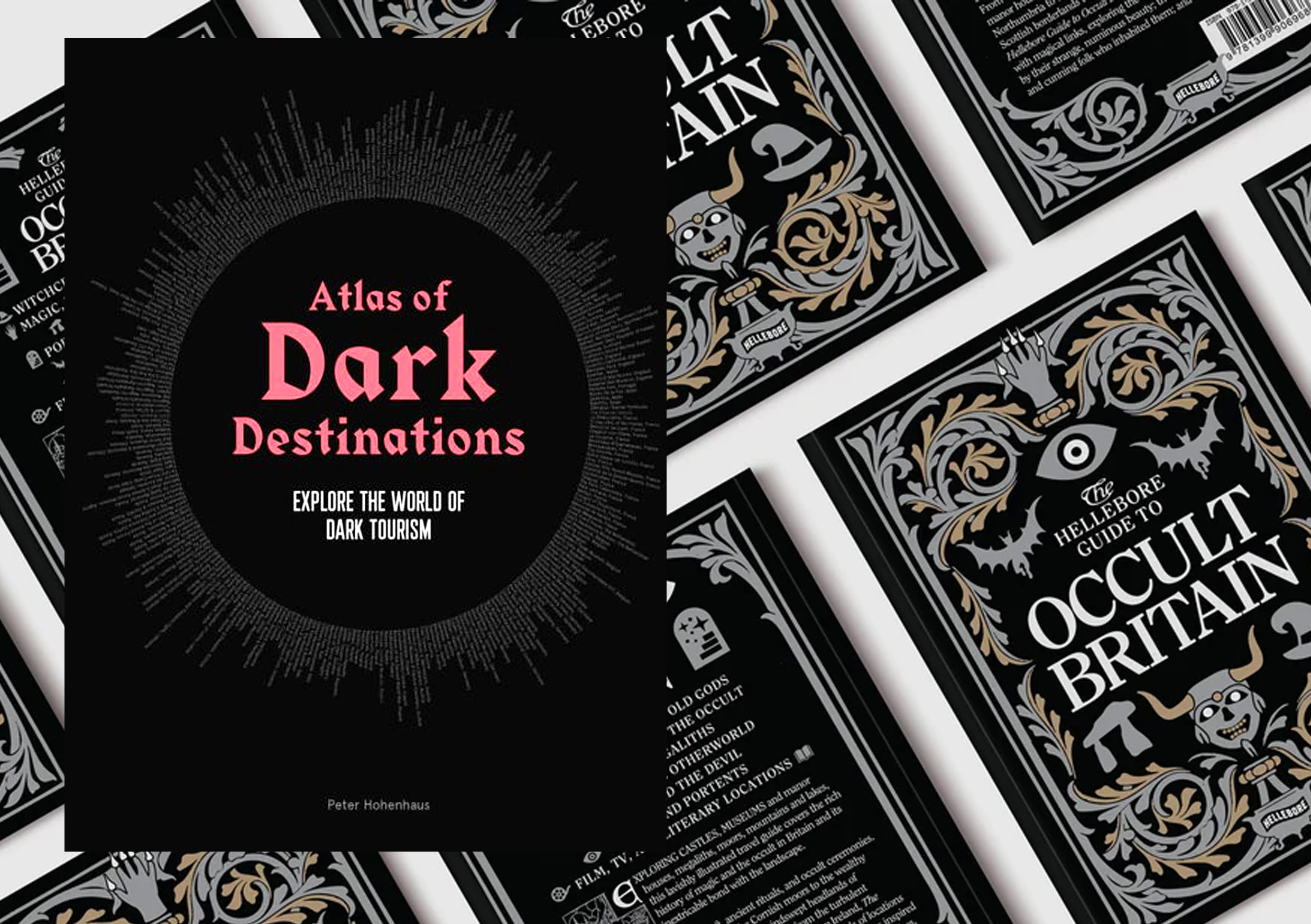
The Hellebore Guide is produced by the same team that created the very popular Hellebore zine that has blossomed in the recent renaissance of indie specialist-interest zines and the revival of attention to occulture and folklore. They have taken their sphere of interest and distinctive design aesthetic forward into book format with this very handy and beguiling gazetteer of British ritual, weird-lore and magical creativity. In the introduction specific attention is brought to the 2 books that this guide could most oft be compared to, the Readers Digest Folklore Myths and Legends of Britain and Westwood & Simpson’s The Lore of The Land. The inspiration and similarities are worn on the sleeve but as Pérez Cuervo informs us, there is a difference that carries the themes forward and makes this work a useful companion to those other books mentioned. In addition to covering numerous sites of folklore, occult practice and strange history, this book also points us to places that inspired or in some instances were used as filming locations for numerous cult /horror novels, films and TV shows. Fans of M.R. James, Derek Jarman, Witchfinder General, The Owl Service and many other such creators and creations will find notes of interest therein. This richly illustrated book will fit handily into a backpack for onsite visits. One point that readers may raise is that due to size restraints certain localities or topics may not be covered in the greatest of detail but within its 316 pages a lot of ground is trekked. The book therefore can inspire further personal research and does offer scope for further volumes.
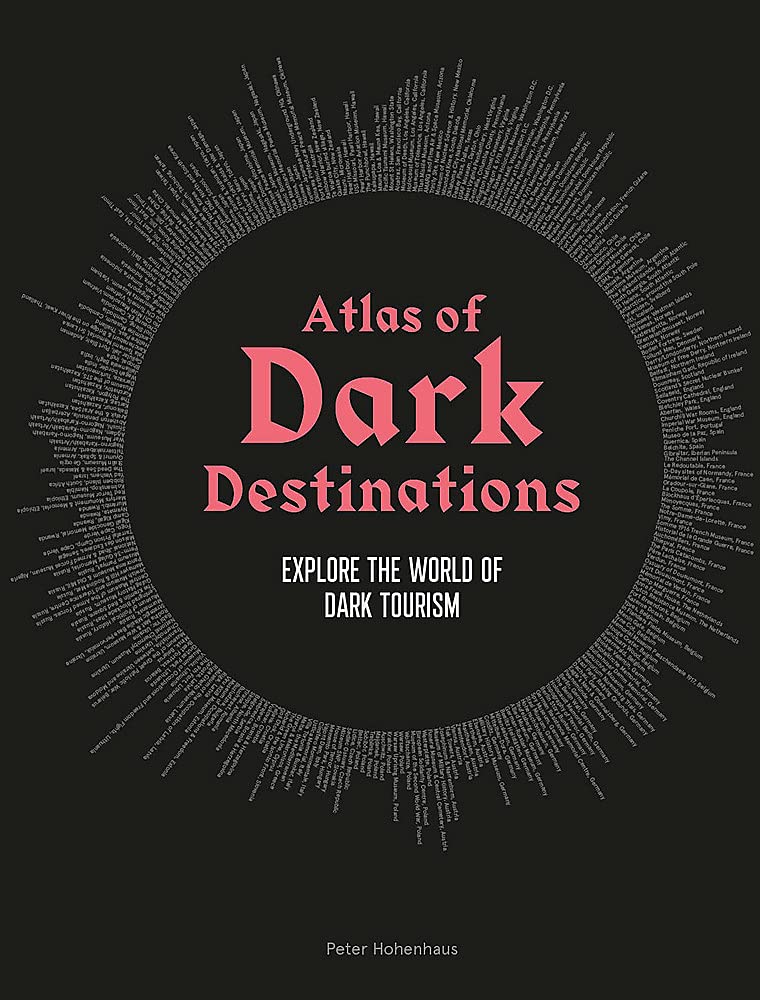
The Atlas of Dark Destinations however is not a book as easily taken out on location unless you have huge pockets as this is more of a weighty coffee-table book – lusciously illustrated but also incredibly informative. Again, as with The Hellebore Guide, the book cannot contain everywhere and everything but does cover considerable distance across the globe. As some countries are perhaps underrepresented there is again potential perhaps for a further volume. Hohenhaus, in his introduction, explains his reasoning for some omissions; he holds no truck with the visitation of living slums as tourist destinations nor does he favour notable suicide sites such as Japan’s legendary Aokigahara Forest. Serial Killer haunts and other singular murder sites are not represented but there is certainly no shortage of death behind the book’s dark cover. Sites of Genocide and wartime suffering are extremely well covered, with a lot of the book being taken up by sites of military and political intrigue. (Which upon showing the work to my 95 year old father, who was in internment and forced labour across Europe during WW2 and isn’t much of a reader generally gained a second review of the Atlas as being “A very good book”).
In addition to well known places covered within the book such as Chernobyl, Auschwitz, Hiroshima and 911 Ground Zero there are notable cemeteries, ossuaries, catacombs, penitentiaries, ghost towns and areas of natural wonder featured and some less familiar intriguing sites such as such as the ornate Milano Cimitero Monumentale necropolis, the Bali Trunyan Burial site and the Darvaza Hell Mouth (a 250 foot wide, 65 foot deep crater in Turkmenistan where an inferno fuelled by natural gas reserves has burned unabated for over 50 years.) Less obviously Fortean in subject-matter than The Hellebore Guide, and perhaps too heavily martial-politically focused for some readers of this magazine, The Atlas is nevertheless actually very readable and fascinating (in many instances particularly in provoking contemplation of humankind’s inhumanity towards each other.)
Both books could also be inspirational to fiction-writers as well as Fortean travellers, for use in setting location and back-story of their tales. Both books are designed to be dipped into rather than be read cover to cover and whether out on the road or in the comfort of my own arm-chair I can see myself delving into both titles for many years to come.
The Hellebore Guide to Occult Britain and Northern Ireland Edited by Maria J. Pérez Cuervo Hellebore Books 2021 Pb. 316 pp. illus. index. £18.75. ISBN. 9781399906968 https://helleborezine.bigcartel.com/productsAtlas of Dark Destinations: Explore the World of Dark Tourism Peter Hohenhaus Laurence King Publishing. 2021 Hb. 352 pp. illus. index. £25.00. ISBN. 9781913947194 https://www.laurenceking.com/product/atlas-of-dark-destinations/















 Folk Horror Revival & Urban Wyrd Project ⨘