Season’s Greetings to All ~ To mark the Winter Solstice, Wyrd Harvest Press & Folk Horror Revival are again making a charity donation of our book sales profits to a Wildlife Trusts’ environmental and conservation project – This year we have donated £300 to Yorkshire Wildlife Trust’s Species Recovery Appeal.
Protect and restore Yorkshire’s rarest wildlife
From the windswept uplands of the Dales to the rolling chalk hills of the Wolds, the lowland moors on the Humberhead levels and the shining chalk cliffs of Yorkshire’s 100-mile coastline – wildlife should flock to this vast and varied county.
And yet, the data is telling us that many woodlands, wetlands and waves are slowly falling silent and still.
If we don’t act now, we will lose the species that make Yorkshire so special!
We wish you all a very peaceful and pleasant Yuletide and 2026. Special Thanks to everybody who has supported both nature and varied artists and writers by buying our books.
As the number of books about Folk Horror and Hauntology is considerably increasing, focus falls now upon a quest for a unique selling point – the tone, the angle, which cultural examples will be concentrated upon. With Ghost of an Idea the aspect of Nostalgia is a point of interest.
There is only so much that can be said about the ‘Unholy Trinity’ of folk horror films or Jacques Derrida’s origin of the word Hauntology – mention of either is inevitable but this book mentions the former more in passing but gives the latter a fair bit of attention. Problem with the discussion of Derrida and his concept of political Hauntology is that quite a bit of distance has fallen between that and the ‘popular Hauntology’ of the Haunted Generation. It still has a place however as the associated mode of Folk Horror frequently has a political dimension. But here its introduction early risks the book being taken as dry covering a matter that Mark Fisher and others have adequately discussed prior, but anybody facing that qualm should stick with the book as it becomes more animated with the detailing of specific movies and music.
An issue facing Folk Horror and /or Hauntology arises then of how to shape a book on the subjects and which audience to target. This makes Ghost of an Idea something of a mixed bag as it at times reads like an academic tome (and would prove very useful for anyone studying the subject matter at university) and at others like a more mass-market book on the cultural entertainment examples – and at this it excels as it provides a very useful list of films and music – a good proportion of it straying from the well-beaten track.
The book opens with a dedication to Mark Fisher, the late writer whose own work investigated the relationship between emotion and the hauntological media of film, literature and music and political philosophy (as well as investigating the concepts of the ‘weird’ and ‘eerie’), and a quotation by the folklorist Catherine Crowe. Burns’ appreciation for Fisher is very clear and well-placed but I would have liked to have also seen more integration of ghost-lore within the book, though aspects such as Stone Tape Theory are covered.
The ‘unique selling point’ of this book is the discussion of Nostalgia. It’s a subject that I have a particular interest in and whilst I found the contemplation of it in Burns’ work intriguing – I did really want more. Indeed I would have preferred further discussion of the psychological conditions of Nostalgia and maybe related feelings such as Deja vu than the content matter of later chapters, which in some instances felt somewhat misplaced.
Burns masterfully covers the wide range of associated music from Blind Willie Johnson to Boards of Canada and beyond. This includes an apt and colourful description of Syd Barrett that I enjoyed – “Psychedelia’s first hauntological casualty Syd Barrett, the Edwardian psychonaut, had one foot on an interstellar spacecraft and the other on a penny-farthing bicycle, haunting his own acid-addled mind, becoming rock’s premier living ghost.” Included are some interviews with musicians extraordinaire such as The Rowan Amber Mill’s Stephen Stannard, Angeline Morrison and Epic45. Though interesting I wonder whether the interviews would have been better suited to a book collection of their own (with other interviewees included) as their inclusion does break up Burns own train of thought a little. Also I am not sure about the section where Burns recollects certain concerts attended. The recommended albums list however is a great inclusion.
With regard to the films that Burns discusses, again the range and inclusion of some lesser-known examples is very useful and to be applauded. Whilst in such discussions the personal views and tastes of the writer and different readers may vary – for instance I disagree with Burns in my opinion that the remake of Suspiria is a much better film than The Void. Sometimes though I feel that he may sometimes be a bit too harshly cynical towards some examples (even when I share a similar dislike towards some of the media mentioned) and a little too gushing towards others (an example being Alan Moore, although I do think that he’s a very good writer and a huge influence on the evolution of comics, I do feel that too many other excellent comic writers get smothered in his shadow). Though I do share Burns’ great admiration of David Lynch, some people for some strange reason don’t, but one man’s poison is another man’s meat.
I do question the amount of space devoted towards some films/shows and their actual inclusion – eg. American Horror Story, Star Wars and Toy Story. The attention to these feels somewhat incongruous to what has gone before and I would have preferred (along with the concert reviews) either their omission here, for possible use in other works, meaning that Ghost of an Idea be a shorter book or for other studies of the concept of Nostalgia / additional examples of place memory hauntings to have been featured in their place. Or possibly a deeper dive into more found footage/ fake documentary films may have been better placed (I’d have liked to have read about Lake Mungo for instance) or a discussion about Backwoods films or even more about Hoodie Horrors may have been a better fit.
In conclusion it is a well written book, in some instances it really hits the mark perfectly and the film and album lists would prove very useful to both newcomer and those already quite immersed in the fields covered. But … There’s just some inclusions and choices that didn’t fully land and spoiled the flow for me – though of course they may land very well for others. And it’s totally up to an author what they include in their own books as the ending quote from John Cassavetes, included in in Ghost of an Idea, states “I don’t give a fuck what anybody says. If you don’t have time to see it, don’t. If you don’t like it don’t. If it doesn’t give you an answer. fuck you. I didn’t make it for you anyway.” 😉
Ghost of an Idea: Hauntology, Folk Horror and the Spectre of Nostalgia is due to be released in early 2025 – More Information HERE
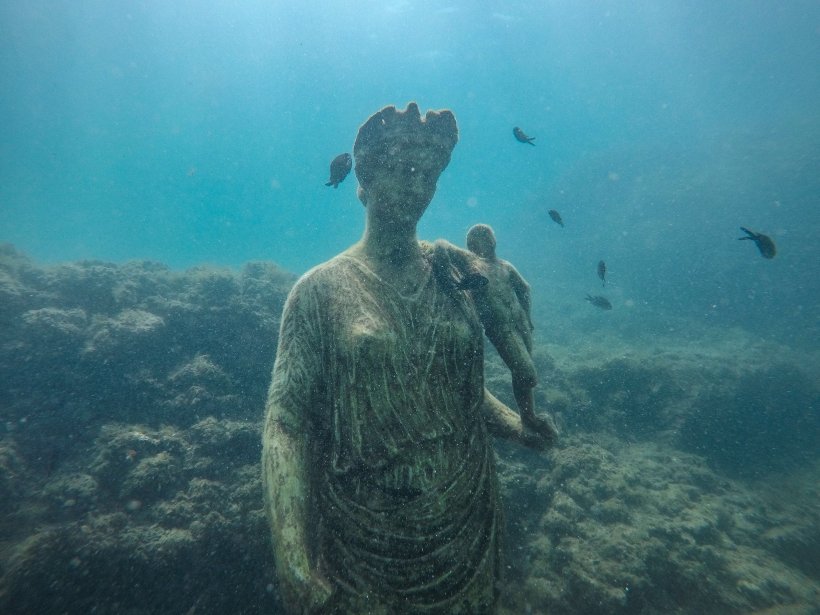
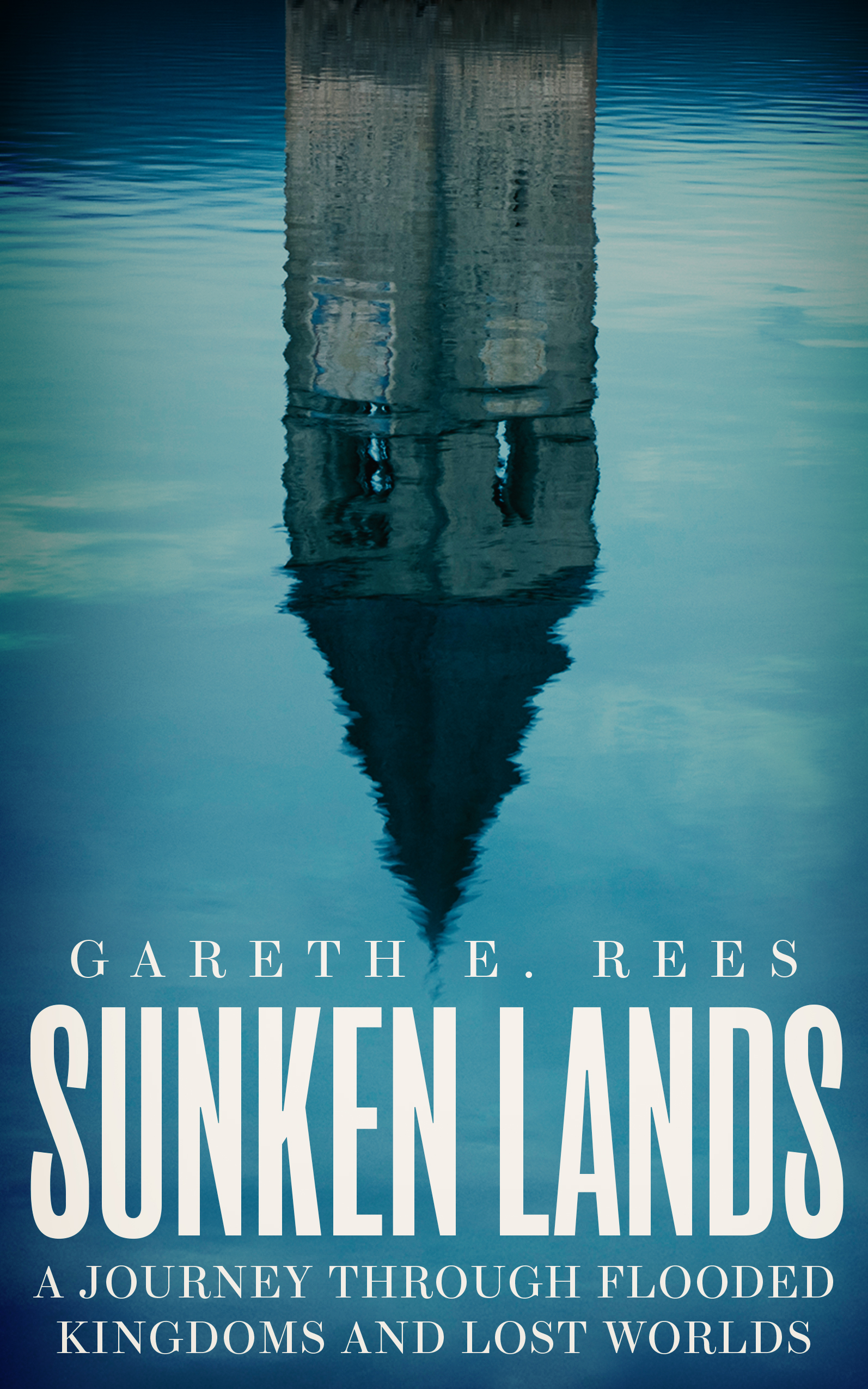
Sunken Lands, the new book by Gareth E. Rees may be one of those that forms a quandary for bookshop staff – just what shelf should it be placed on? For within its pages it covers a wealth of terrain (mostly of the moist or entirely saturated variety). Is it a folklore and legend book? A travel and history book? Psychogeographical philosophy? Natural History/Conservation? Occulture and Mystery? Part-Memoir? It is a blend of all these things, but it is a smooth fusion rather than hotch-potch. If pushed I would place it on the Environmentalism shelf I think, for its core I feel is Rees’ interest, anxiety and contemplation of the lands lost to the waves, those currently in that flux and those destined to sink beneath the sea. As such it won’t be a book that is favoured by Climate Change deniers (but in that particular demographic there seems to be an intersection of those that would tend to ban books rather than read them). But it is not a dry book, well considering the subject matter, it couldn’t be – but delivers the concerns in wide contemplative arcs. The chapters begin with flood myths and legends of varied cultures and then in an apt rendition of the psychogeographical wandering term ‘drift’ into diverse topics and places. So within its pages we encounter sunken forests and towns, places smote by the wrath of the gods and dwellings that battle whenever heavy rains fall or the waves rise. We are taken to various places, some accessible still and visited in person by Rees and others that are lost to people but home now to aquatic life and others still whose existence is either folk-memory or from the depths of the imagination. We are taken to the Lowland Hundred of Wales, the ruins of decadent Baiae in the shadow of Neapolitan volcanoes, the lost worlds of Ys, Lemuria, Lyonesse and of course Atlantis. We witness the tragedy of New Orleans in the wake of Hurricane Katrina and of the Pacific islands encroached upon by the rising ocean. For company we travel with such diverse figures as David Bowie, Francis Bacon, Madame Blavatsky, Mark Fisher, numerous indigenous societies, Edgar Cayce, Sun Ra, Lord Krishna, Voodoo Queen Julia Brown, Hawkwind, Aleister Crowley (He whom seems to get everywhere!) and many more beside. Mostly though we are in the company of Rees himself, whose presence is integral in the book for you can tell that this isn’t just something he thought would be interesting to write about, but something that he personally feels very deeply about.
Sunken Lands: A Journey Through Flooded Kingdoms and Lost Worlds
Having written and/or illustrated several myself it is fair to say that I have a soft spot for encyclopedias / guides to folkloric entities and beasts, especially the darker beings. Folklore is such a vast and diverse field and unless you are multilingual so much of it still remains hidden from many readers. Therefore it is a welcome treasure for me when English language tomes covering creatures from the lore of different cultures becomes widely available. Khanna and Bhairav’s book is such a treasure – especially as it caters to my other book bias in being illustrated throughout. And though the mysterious ‘they’ say never judge a book by its cover, the sleeve design of this book is beautiful making it a pleasure to hold and behold even before it is opened.
Airi. Illustration by Appupen (George Mathen)
Many examples the world over display that folklore and its entities can be pretty darn weird and Asian lore certainly excels in those stakes. Japanese lore of Yurei (ghosts), Yokai (demonic spirits), Tanuki (racoon-dogs with huge testicles) and many other denizens of night parades and kaidan (ghost stories) are relatively well known in the west but India’s otherworldly beings, despite being as rich and weird and despite the familiarity of the pantheon of Hindu gods and goddesses, are a lesser known gathering. Khanna and Bhairav have worked hard and done extremely well to bring a multitude of spectres and monstrous creatures to a wider audience. They have scoured the subcontinent and surrounds including not only India but Afghanistan, Tibet, Nepal, Pakistan, Bangladesh, Myanmar, the Maldives and Iran, and the various religions, folktales and superstitions of these areas and across the ages in their bid to assemble an A to Z of bizarre beasts and malign entities.
Baak. Illustration by Shyam Sankar.
Though I was previously familiar with Naga, Kali, Dev, Blemmyae, Gog & Magog, Rakshasa, Chudail, Yeti, Jinn, Manticore and Bhuta the vast majority of this chunky book was a revelation to me. Between Aavi (a mist-like, mournful ghost) and Zunhindawt (an entity that possesses people compelling them to drink from puddles of urine!) writhe hundreds of pages devoted to incredibly strange and frequently sinister specimens. Contained between the covers are such strange individuals as the Moila Deo (a spirit of jealousy manifest as an ash-coloured dwarf with long dirty hair), the Than-Thin Daini (a disembodied head of a witch that eats the entrails of sleeping people), the Ghorapaak ( a shapeshifting devourer of fish and murderer of fishermen), the Rav ( a creature that comes into existence should seven tigers die at the same moment and which causes its victims to vomit blood), the Gomua Bhoot (the ghost of a cow that died whilst calving, which can climb trees and turn into a pumpkin), the Penchapechi (a ghost in the form of an owl that can consume people whole) and many, many more besides.
Bram Bram Chok. Illustration by Vidyun Sabhaney.
Ghosts, Monsters and Demons of India is a great book for folklore collectors, aficionados of India, artists and writers seeking phantasmic inspiration, kids with ghoulish tastes (of which I was one and would have loved this book), and anybody who fancies flipping a page open on a long, dark witch-season night to see what nightmares unfold. The book is replete with peculiar, scratchy, quirky black and white illustrations by Appupen, Rashmi Ruth Devadasan, Shyam Sankar, Samita Chatterjee, Vidyun Sabhaney, Misha Michael, Priya Kuriyan, Pankaj Thapa and Osheen Siva making it an ideal, unusual gift book for Halloween or any occasion.
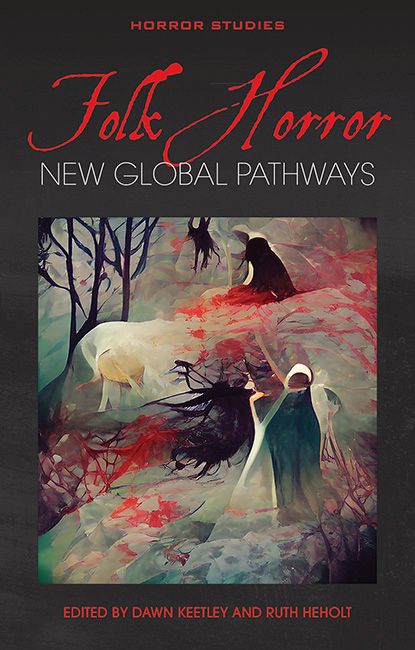
Perhaps of all the literary, cinematic and stylistic manifestations of the ‘dark arts’, only Film/Roman Noir may rival folk horror in the quantity of deliberation, discussion, debate and disagreement. Indeed in converse of the latter subject on social media oft asked is the question “But is it Folk Horror?” in regards to a particular movie, book or image. Sometimes this elicits the response of the ‘Folk Horror Police’ – fans who over-rigorously express their opinion. ‘Opinion’ is the key word however for there is no manifesto for folk horror– it is a mode named after the initial event. Adam Scovell’s ‘Folk Horror Chain’ acts as an excellent reference point for recognising commonly recurring elements (Landscape. Isolation. Skewed Belief System. Summoning or Happening) but it’s a guide not a mandatory tick box – there is still scope for deviation and room for differing opinions. Therefore multi-contributor books such as ‘Folk Horror New Global Pathways’ are extremely useful in this sometimes hazy field as they present a variety of opinions stemming from various different viewpoints, specific subject-matter and importantly from different cultures.
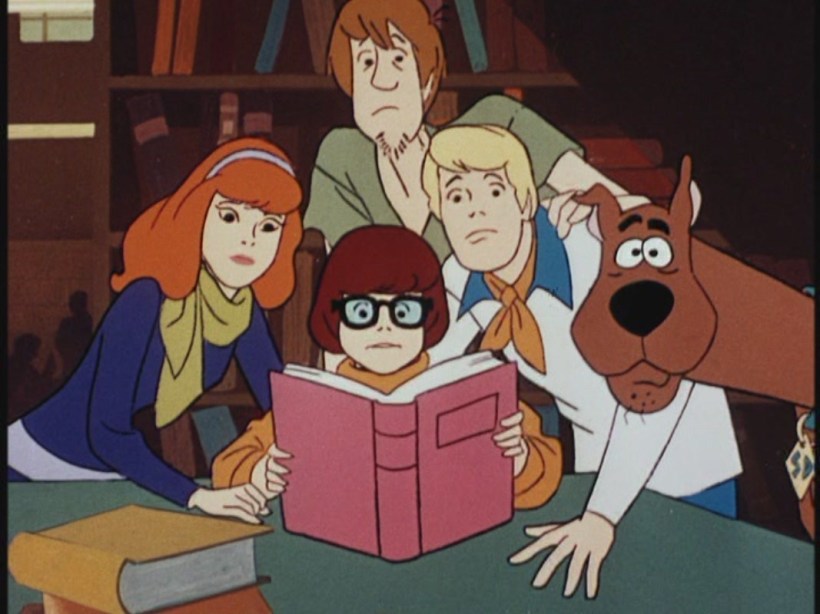
Whilst the 1960s/70s British cinematic triumvirate of Witchfinder General, Blood On Satan’s Claw and The Wicker Man have been written about extensively previously as they are important fixtures in the subject, folk horror is a form of narrative and aesthetic apparent in probably all cultures so it is good that this book does veer off the old beaten track. It wanders into diverse terrain ranging from Scooby Doo cartoons, typography, the short stories of E.F. Benson, occulture, video games, and dark tourism in Lancashire to the representations and relationships of folk horror in the cinema and culture of Mexico, Italy, Ukraine, Thailand and Appalachia. Inevitably politics do arise in the discussion. Horror fiction analysis can often be examined under a sociopolitical lens as a lot can be told about a people by looking at what scares them – be it post-war trauma in the early 20th Century Europe, atomic/ alien fears of 1950s America, generational counterculture/mainstream conflicts in the 1960s and 70s to the uncertain polarised times we currently live in. Folk horror is particularly laden with such considerations and this book does explore issues such as colonialism, sexuality and agrarian/industrial conflict.
Actually, regarding traditional vs technological conflict, I was disappointed to see however that AI generated imagery was used for the cover – especially as the book itself notes the connection between handicraft and folk horror. It would have been far more appropriate to have used imagery by an actual artist – be it centuries old chapbook illustration, a still from a relevant film or a piece by one of the many creatives currently working in the subject field, rather than using generative text.
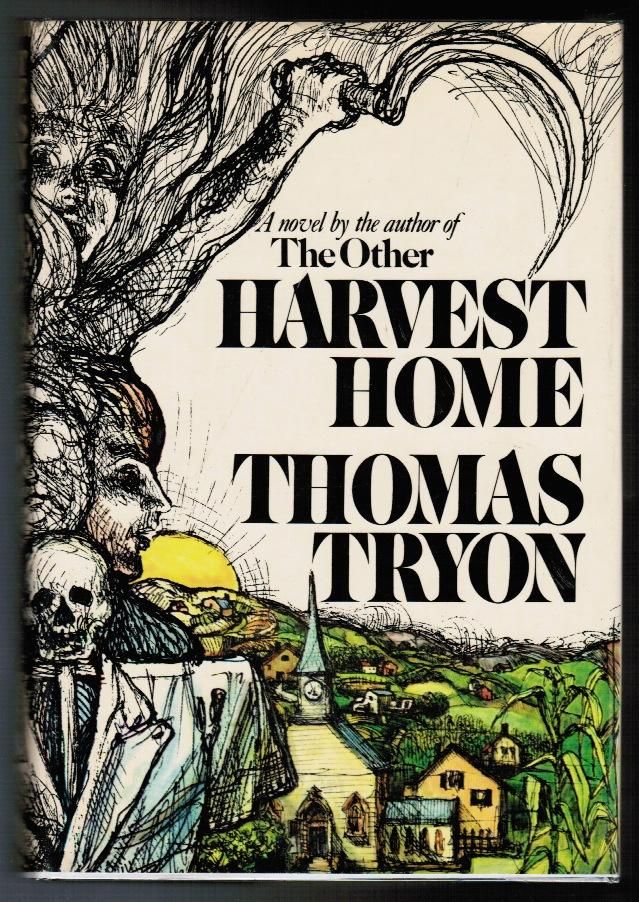
Back to the actual text: Along its course many examples of folk horror fiction are addressed, some familiar and others more obscure. I was particularly pleased to see the writing of actor-turned-author Thomas Tryon get good coverage as his work in the field is too often overlooked. Some less familiar works such as the films Jug Face and The House With the Laughing Windows are also given more attention than they usually get. I was surprised to see Robert Eggar’s The VVitch get such scant attention however, particularly in discussions of the folkloresque as it’s a good example of new folk horror using authentic old folklore in its narrative, considering that there is numerous referencing of Ari Aster’s Midsommar, (a film that I seem to be in the minority of personally finding both overrated and underwhelming).
Of Fortean interest the book discusses the Pendle Witches, the folkloric entities La Llorona and Phi Pop, ritual sacrifice, and the occult revival in relation to the influence, inspiration and development of Folk Horror. As a multi-contributor book, some chapters will be of differing interest to individual readers and the style of writing can vary, but it holds together very well. It is an academic book (as evidenced by its hefty University Press price tag) but much of it is written with an apparent enthusiasm for the subject that enables it to flow fluently, making it readable to a wider audience with an interest in this particular field.
Folk Horror New Global Pathways Various Authors. Ed: Dawn Keetley & Ruth Heholt.
University of Wales Press. 2023.
Pb. 280 pgs. £50.00 ISBN: 9781786839794
Reviewed by Andy Paciorek. This review first appeared in Fortean Times magazine
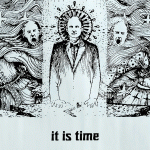
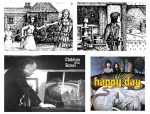
Our great friends at Buried Treasure (they of the magnificent Delaware Road) are releasing 100 limited edition LPs of "Children of the Stones" this Friday. It will come with incredible art and goodies in a folk horrortastic bundle. Don’t miss out! Check out their incredible output here: https://buriedtreasure.bandcamp.com/
I am of that age (Generation X aka The Haunted Generation) whereby a significant part of my childhood was enveloped in the Cold War fears of an impending nuclear apocalypse. A terror adequately catered for by the less than a handful of terrestrial channels emitting their cathode rays into British living rooms. We were treated to dystopian dramas such as Threads, When the Wind Blows, the eventual broadcast of the considerably disturbing 1966 docudrama The War Game and perhaps most unsettlingly the Protect and Survive public information adverts whereby the booming voice of actor Patrick Allen accompanied by a chilling bleep and bloop Radiophonic Workshop score that would just appear on the telly advising us how to bag and tag our dead relatives for collection by the binmen of the apocalypse. At school we read Z for Zachariah – a dystopian survivalist novel by American author Robert C O’Brien (Robert Leslie Conly) – which the BBC also considerately turned into a TV play, and we turned on our radios to hear Frankie Goes to Hollywood sing about when Two Tribes go to war. The USA obviously had some similar concerns in that era as their nuclear doomsday drama The Day After also appeared on UK screens … But what about the ‘bogie-man’ threatening to bomb us? I long wondered whether the citizens of the USSR – their Generation X children also lived under the shadow of the mushroom cloud. Did their films and TV predict atomic devastation or did they dismiss it with a ‘don’t worry, we’ve got this covered’ attitude or ignore the threat of mutually assured destruction altogether?
I was aware of the 1967 Czechoslovakian movie Late August at the Hotel Ozone and the 1979 Soviet sci-fi movie Stalker (based on the novel Roadside Picnic by the brothers Strugatsky but both of them were post-apocalyptic – set sometime in the future aftermath of a nuclear crisis with a level of distance from the immediate fears of the threat in our time. Beyond that, my knowledge of Soviet Bloc ‘horror’ films consisted of Jan Svankmajer animations, Czech New Wave films such as Valerie and Her Week of Wonders, Morgiana and Witch-Hammer, adaptions of Gogol stories such as Viy and Evenings on a Farm near Dikanka and strange ‘fairy tales’ such as Ded Moroz and Baba Yaga, Polish book adaptations such as The Saragossa Manuscript and The Hourglass Sanatorium and odd offerings such as Yugoslavia’s The She Butterfly (Leptirica).
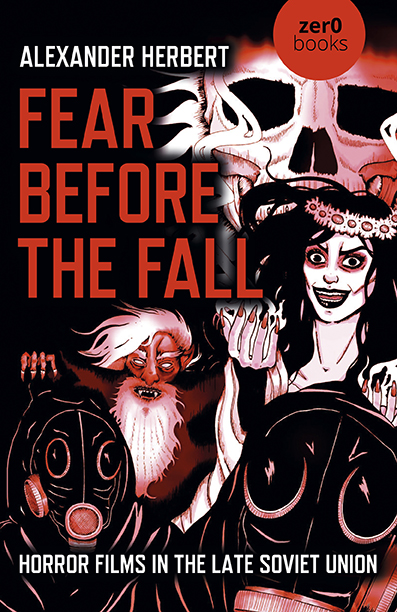
But of Soviet horror films that arose in the time of critical nuclear phobia just before the fall of the union my knowledge is as cold as the ‘war’ of that era. This is where Alexander Herbert’s book comes in. Mentioning online that I had Fear Before The Fall lined up to read and review, someone commented that they didn’t know there were any Soviet horror films and it would seem that there aren’t many. Shortly before the Fall of the title, the region experienced real-life horror and its legacy with the nuclear power-station disaster at Chernobyl.
Before looking at the films Herbert mentions in the book it is worth noting his stated aim is that “The book is not intended to be an academic monograph, it is for fun …”. That is a sentiment I approve of – for me the true success of education is and should be the sharing of information to as wide an audience as possible in the simplest manner possible – Not by dumbing-down but by imparting even the most complex of data in the most efficient and understandable way – if it’s also entertaining all the better. Too often academic writing alas can suck all life and joy out of fascinating subjects by appearing to be deliberately obtuse and ‘clever’ in its dry language and delivery. It isn’t ‘clever’ however to have the intention of educating and then failing to do so to the most comprehensive result, because of unnecessary intricacy (there’s probably a simpler way of expressing my opinion there but …)
However that said, Fear Before the Fall isn’t the most commercial of film study books but has a potentially narrower target audience. In keeping with other titles published by zer0 books and to address the symbolism of the movies mentioned, there is by necessity a lot of sociopolitical material within the book. Therefore rather than being a general read it will be of more specific interest to those who already study the political and social intricacies of the region and era and those who have a deeper interest in the psychology of film studies but it is also of use to those, who like me, have a gap in their horror film knowledge when it comes to the Soviet Union. And therein it certainly has educated me to several films that not only have I not seen but hadn’t even been aware of, but now am most curious to see.
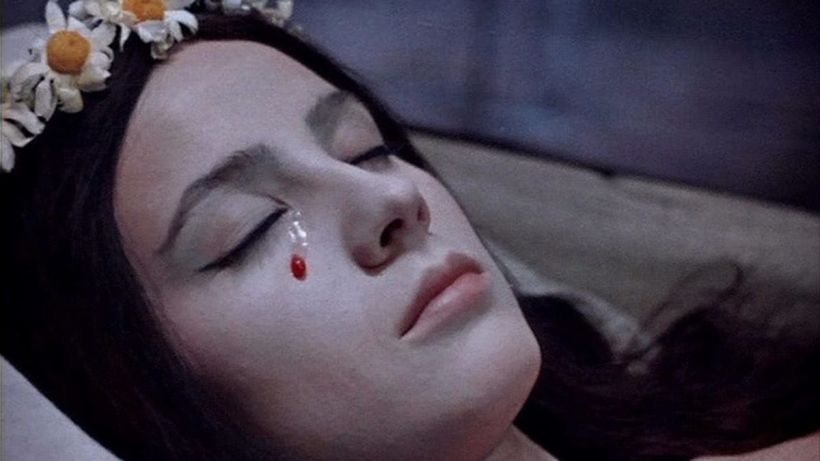
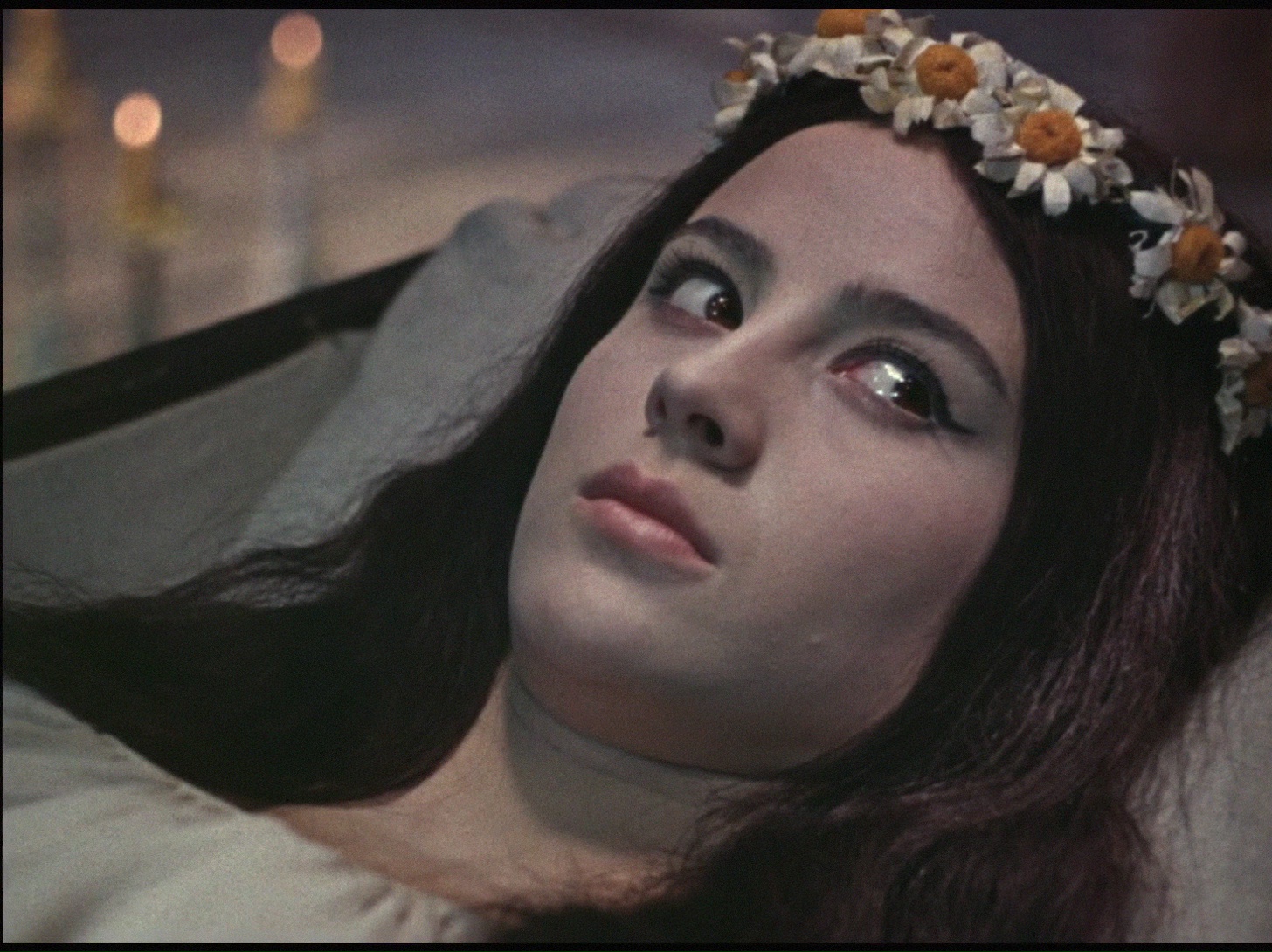
First up for consideration in the book is perhaps the most famous of Soviet films (and one which I’d both seen and read the story by Nicolai Gogol, upon which it is based). That film is the 1967 version of Viy (which also has a pre-Russian Revolution version from 1901 which is sadly lost and several 21st Century versions – it also was influential to Mario Bava’s 1960 film Black Sunday). Its premise follows a man who following a bizarre assault by an old witch beats her grievously, but upon the death of the beautiful young daughter of a Cossack chief finds himself forced to stage a 3 day vigil by the coffin of the young woman. Perhaps not all Hell but a fair portion of it then unfolds. Released 24 years before the Fall of the Soviet Union,Viy isn’t truly symbolic of those end days but its inclusion in the book is an important one – both in its context of the history of Russian horror film and also in outlining the time of mid Cold War era that strangely gave birth to it.
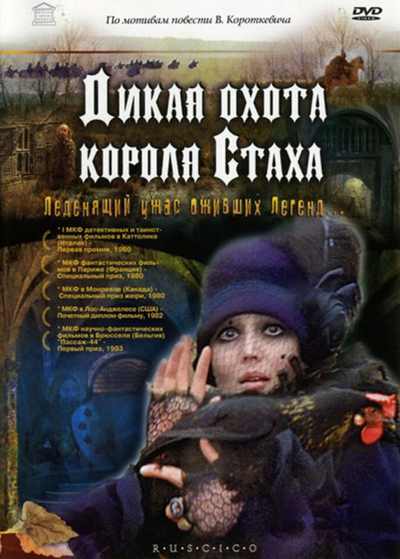
Next up is 1979’s Savage Hunt of King Stakh which is based on a story by Vladimir Korotkevich about a young anthropologist who travels to a remote region to investigate Belarusian folklore and the paranormal. It is set in 1899, which Herbert considers important as it just precedes the 20th Century which was to witness dramatic change in Eastern Europe and with regard to the beliefs and character of the people of Belarus before and during the Soviet era. In referencing the supernatural and folklore in what was to become a secular state that sought to replace individual nationalism with homogenous comradeship raises questions of matters of national identity and heritage – issues that people would consider themselves when the decline of the bloc approached.
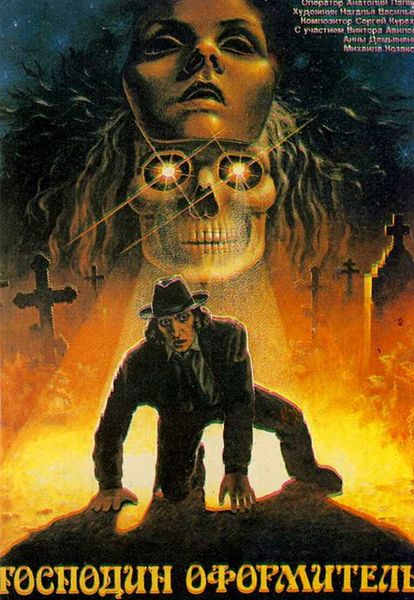
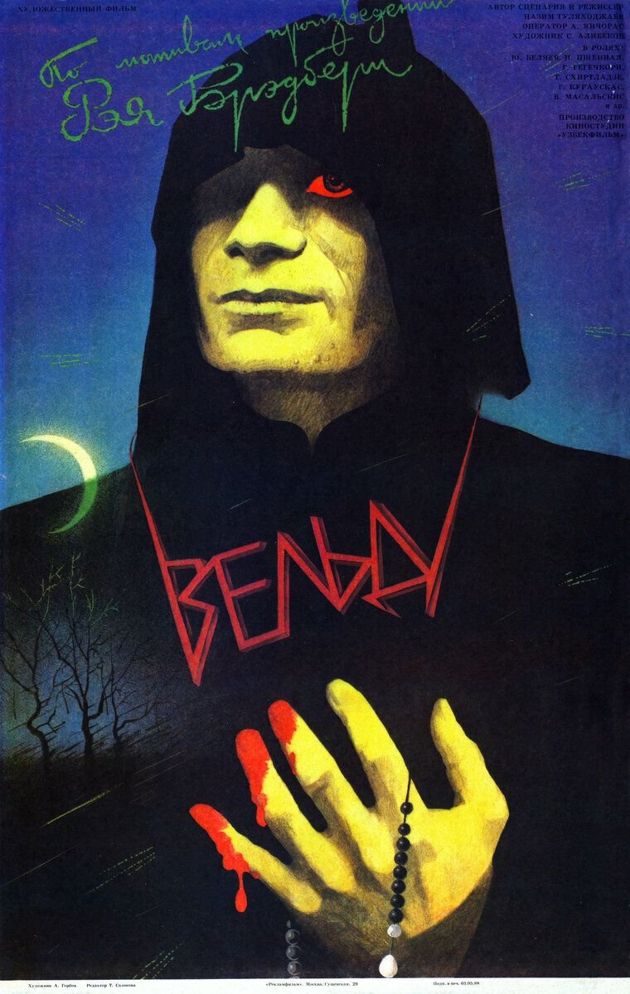
Herbert then turns his attention to two 1987 films – Mister Designer and The Vel’d. Concerning itself with an artist who seeks to address the matter of a more eternal life through the creation of mannequins. Having not seen this, it does sound something of a strange curiosity. Following the devastation at Chernobyl and the authorities realisation of the slipping of overall control but still wanting to set the narrative (in all things including film) the contemplation of the state intended and creator subliminal symbolism is thought-provoking. This is perhaps more curious still in the fact that The Vel’d is an adaptation of the short story The Veldt by Ray Bradbury. Bradbury is an author whose work oozes 20th Century Americana and for Russian authorities to permit a movie based on his work is intriguing. Increasingly the youth of the Soviet era, whom hadn’t known life before and knew only often austere times would get tasters of Western youth-culture and wanted more, be it records, denim jeans, burgers or horror movies. An interesting note about the story of The Veldt is that it tells of children turning on their parents in a more technologically advanced leisure scenario. As a big fan of Ray Bradbury I am intrigued to seek out this adaption of his work (the story does also feature incidentally in the American portmanteau movie The Illustrated Man (1969).
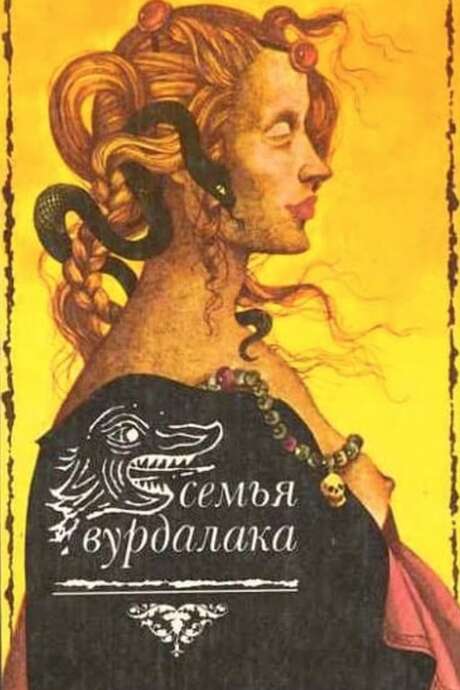
In the final chapters Herbert concentrates on films relating to Vampirism and Lycanthropy – both subjects that feature in the Slavic folklore of the different nations that made up either the USSR or the Warsaw Pact countries. Vampires and Werewolves however are frequently sources of a symbolic narrative beneath the surface story. Vampires often reflect the ‘Other’ – an outside/outsider source that represents a real or scapegoated threat. Since the dawn of Marxism, vampirism was used as a metaphor for capitalism. (On the flip-side the ‘Other’ subtext of ‘Reds Under the Bed’ can be read into some American Cold War movies such as Invasion of the Body Snatchers). Vampires are often depicted also as decaying decadents – in the Soviet Union the symbolism there could be considered a reference to the parasitic aristocracy which the Russian Revolution sought to destroy. In the 1980s the concept of tainted blood and pestilence in Vampire narratives could not help but bring to mind the AIDS crisis of the time (with its further ‘Othering’ of gay men and intravenous narcotic users who made up a large portion of infected people). Herbert considers the symbolism of women in relation to the film P’iusche Krov (released in 1991 – the year of the Soviet Union’s breakup and a time when the members of future feminist punk art activists Pussy Riot were but mere children) and the matter of generational conflict in regards to ‘Fear of the Vampire Family’ – Semya Vurdalakov (1991). Vampire Family is a contemporary loose adaption of the short horror story by A.K. Tolstoy (a period adaptation that is closer to the original tale can be found as a segment in Mario Bava’s 1963 movie Black Sabbath – starring Boris Karloff as the bloodthirsty family elder).
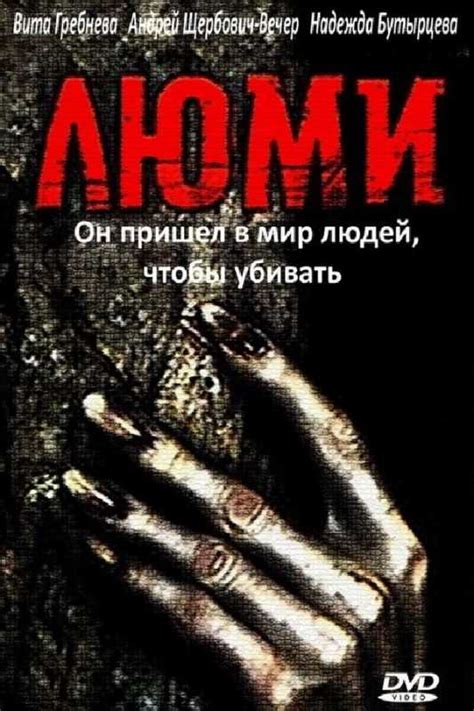
Lycanthropy can symbolise a wild inner nature but it is an effective factor to symbolise transformation and at this time the Soviet world was at the start of profound metamorphosis. Herbert takes a look at the werewolf satire Lyumi (1991), a contemporary adaptation of the Little Red Riding Hood. Russia is not through with change 30 years as it is currently writing another chapter of its own and Europe’s history. It would be intriguing for Herbert to return to the theme in the future and see what the post-dissolution horror films of Russia may reveal about the Putin era.
Fear Before The Fall: Horror Films In The Late Soviet Union Alexander Herbert
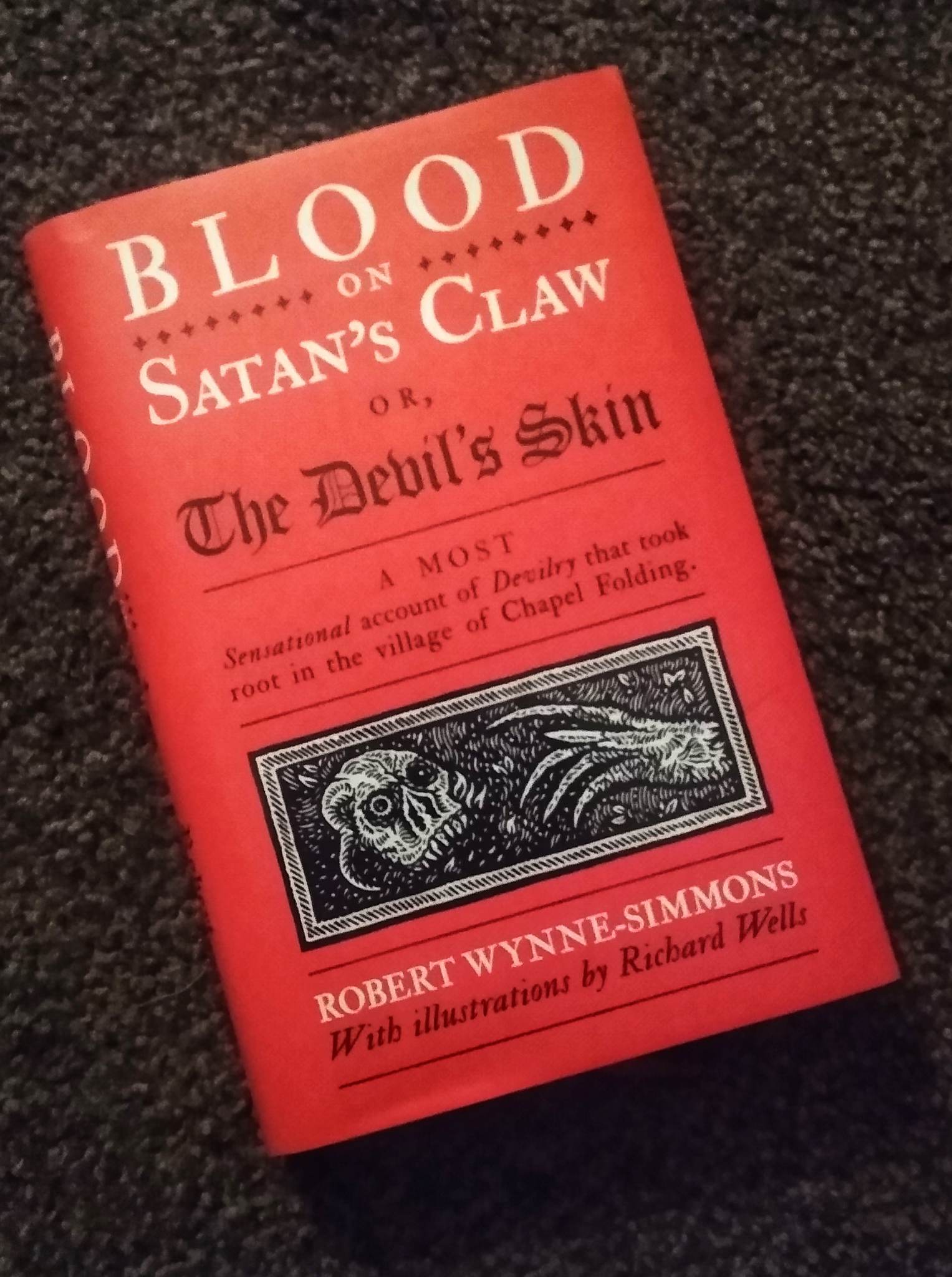
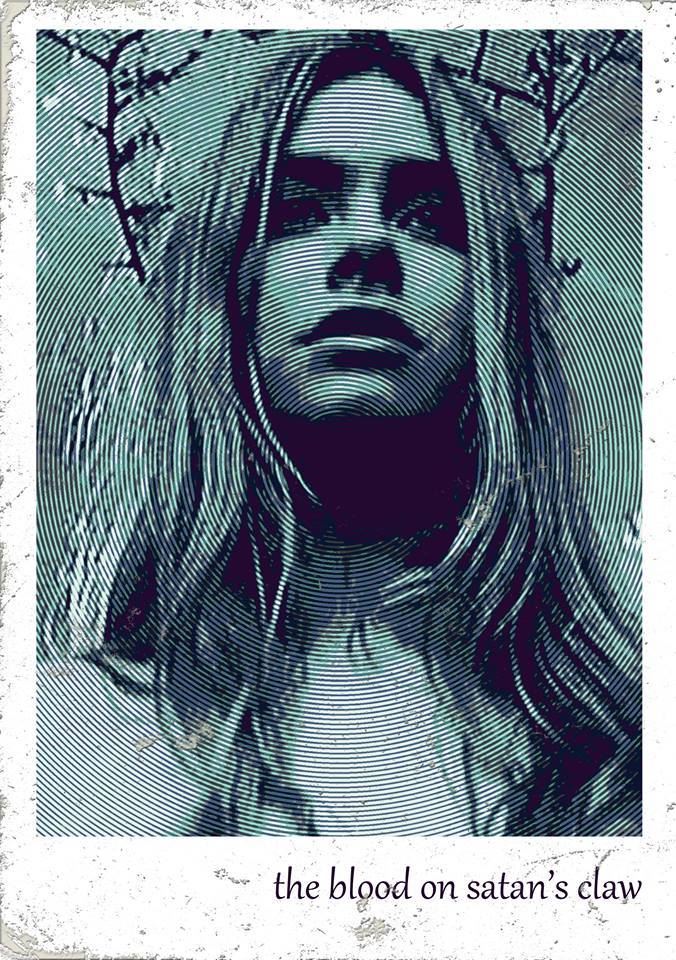
Over a half-century of waiting but finally that brooding member of the classic Folk Horror unhallowed triumvirate of British films, The Blood on Satan’s Claw (1971) has its own tie-in novel accompanying on the shelves the book partners of Witchfinder General (1968) and The Wicker Man (1973). Only in the case of Witchfinder General did the book precede the film (written by Ronald Bassett and published in 1966). The novelisations of The Wicker Man (which was initially inspired by David Pirner’s 1967 novel Ritual) and The Blood on Satan’s Claw followed the films after some years and were both penned by the screenwriters of said films – Anthony Shaffer (alongside the director of the film, Robin Hardy) in The Wicker Man’s case and Robert Wynne-Simmons with regard to The Blood on Satan’s Claw. With time passed this allowed the writers to return to their creations with a fresher mind and to alter or elaborate upon the stories – with greater success in the case of The Blood on Satan’s Claw, (The Wicker Man novel is a decent enough read and works well to flesh out Sergeant Howie’s character but the addition of the characters Beech and Sorrel and their narratives I find somewhat superfluous and distracting). Wynne-Simmons is more successful in fleshing out the bones of the characters (or rather furring up their flesh) without veering too far from the soul of the film.
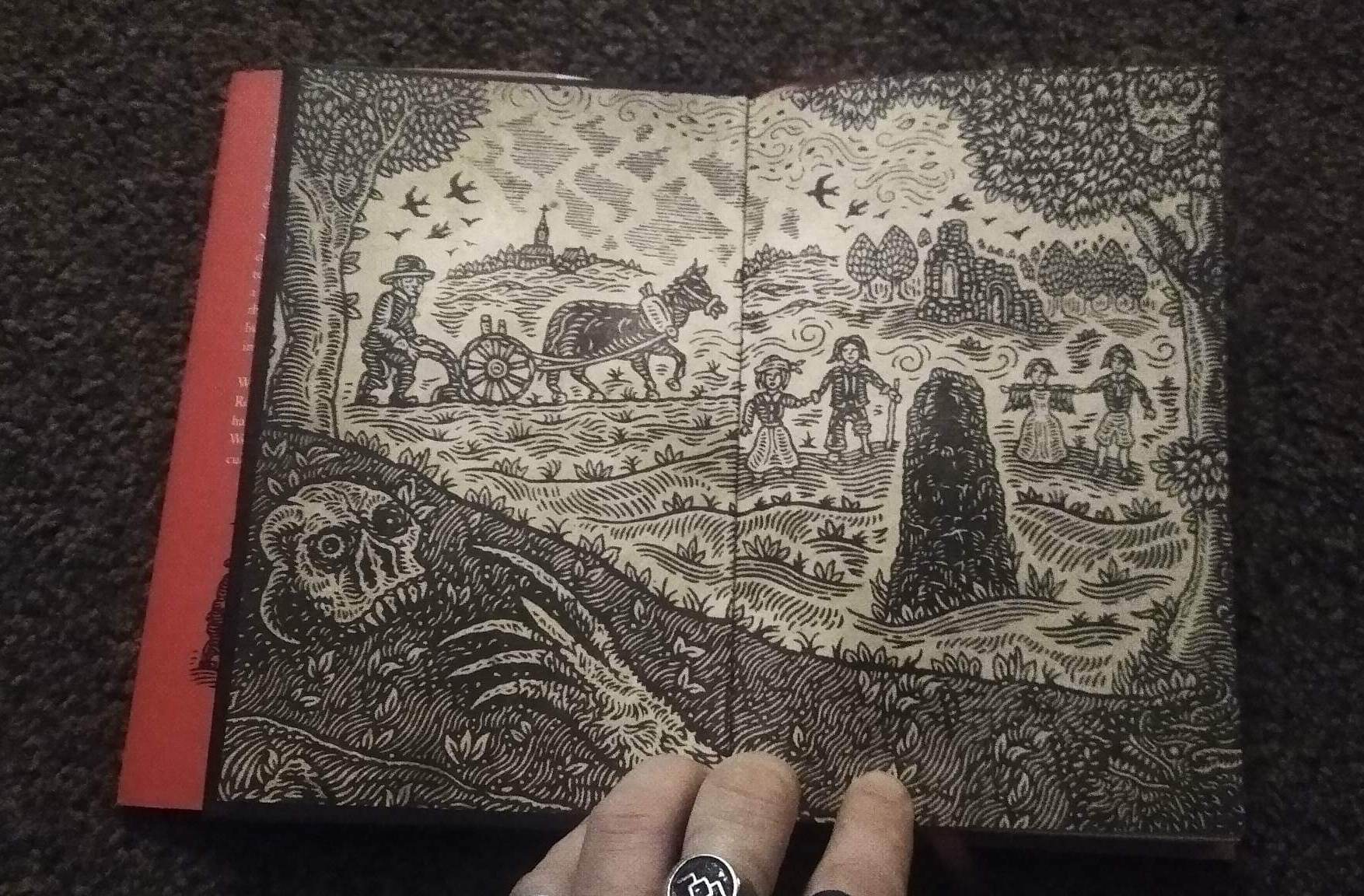
Blood On Satan’s Claw or The Devil’s Skin as the book is titled, follows events that unfurled in the early 18th Century in a pastoral British village named Chapel Folding following the discovery of grisly remains by farmhand Ralph Gower when turning the soil of Tarrant’s Field – a patch of land that generally was left un-ploughed. Remnants of the unearthed mysterious body parts fall into the hands of some local children and things in the sleepy village begin to turn decidedly fiendish. It was not simply bodily relics brought to the surface by Ralph’s toils but a malign presence that endeavored to make itself felt through the bidding and worship of many of the locals – particularly the children.
It is this utter corruption of innocence that I feel is the heart of Blood on Satan’s Claw and which gives both the film and book power. It is also however the source of controversy that casts a shadow upon the movie. Without giving away Spoilers to either film or book, there is one scene in particular that regards the fate of one of the village girls. In hindsight the director Piers Haggard says that if he were to have done it now, he would have filmed the scene differently. I personally feel that the events of this scene are pivotal in showing the savage possession that the children have fallen under but do understand the criticisms of its cinematic depiction. Perhaps this was of consideration to Wynne-Simmons in his novelisation as on paper the events unfold thematically the same but stylistically different. I am categorically a fan of the film, though utterly conscious of any issues levelled against it; but there is something I find eerily spell-binding in it. The book also captivated me. I wonder though if this would differ much had I not watched the film so many times. Dialogue I heard spoken in the specific actors’ voices and I pictured them likewise, which I think speaks well of the casting in the film. The book is a page-turner, though, written in a flowing, inviting manner so I think that for readers with no prior exposure to the film, it would still prove an engaging and interesting read.
The film though also to an extent does seem to have influenced the artist Richard Wells whose chapbook-reminiscent prints illustrate the book. Depicted characters such as the beguiling Angel Blake (one of my all-time favourite movie villains) look very much like their onscreen counterparts (Linda Hayden in Angel’s case). I am a huge devotee to illustrated books so the imagery contained within is appreciated and a nice-touch. Wells being a prominent figure in the revival of Folk Horror being an apt choice for the job. One bugbear I have with the film is the visual reveal of the Fiend – I do not think the effects do the malignant entity justice (same bone of contention I have with the otherwise great 1957 film Night of the Demon). I would have preferred both to have been more unseen and would have found that more ominous and disturbing. However within the book the depiction of the devil of the fields in all his glory is reminiscent of the medieval texts and does suit the purpose better. The red bookmark ribbon is another small but pleasing touch – these visual attentions make the book more of a pleasure to behold and make for a nice ghoulish gift for someone.
It’s been a long time in coming but well worth the wait I feel, as I thoroughly enjoyed the book both for its narrative and writing and for its visual appeal.
Linda Hayden as Angel Blake in The Blood on Satan’s Claw (1971)
Blood on Satan’s Claw or The Devil’s Skin Written by Robert-Wynne Simmons, illustrated by Richard Wells
High John the Conqueror, the latest novel by Tariq Goddard – author, founder of Zero Books and Publisher at Repeater Books, is a strange brew – in large part a gritty British police procedural, partfolk horror / urban wyrd, political commentary and psychedelic trip-literature.
Set in Wessex in 2016, the book follows a team of detectives as they investigate a series of teenagers going missing from council estates in a provincial city and pursue a rumour that wealthy individuals are kidnapping the youths as sex-slaves and perhaps even sacrifices for orgiastic rituals. This premise is fed by Goddard’s political reflections as is a factor of numerous Zero and Repeater books. The debate of class divide and exploitation of the poor by the privileged is pertinent to the book’s plot and for the most part, the political message is delivered without preachiness, but I do question whether the prolonged discussion between a police investigator and a wealthy, powerful suspect is a realistic conversation but it does serve a purpose of exposition. Otherwise the book, which is led by a lot of dialogue paints believable characters. One issue I had with it, which may not bother most readers is the names of the police officers. Though I think it’s fine to pay tribute to inspirations in naming characters, for me the nomenclature of the individual coppers was too much. I visualise books strongly, and once a worm has burrowed into my brain I find it difficult to dislodge and as the officers were named after cult musicians – in one scene featuring a number of cops I pictured members of Coil, Psychic TV and the Banshees all dressed up as police officers. It does add to the surreal aspect of the book I guess, but alas for me was difficult to dislodge the image from my mind which distanced me a little from the story.
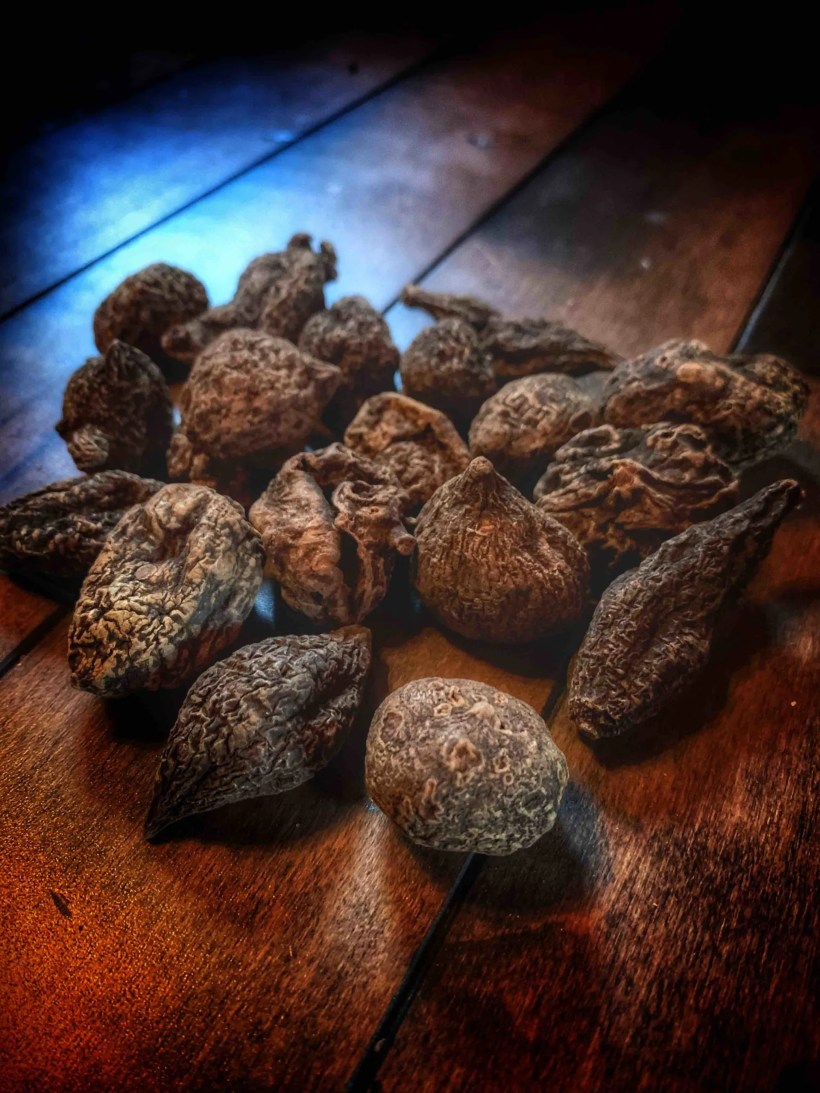
The combination of neo-noir police procedural and folk horror evokes thoughts of The Wicker Man and David Pinner’s Ritual, and other elements of the book reminded me of the Ben Wheatley films Kill List and IN THE EⱯRTH, but High John the Conqueror is also its own beast. The High John of the title referring to a natural psychoactive substance that only grows at lengthy intervals and when it does demands attention. This powerful drug is deeply entwined with the disappearance of the teens, but is far more strange and sinister than any recreational drug being peddled on the streets and across county lines.
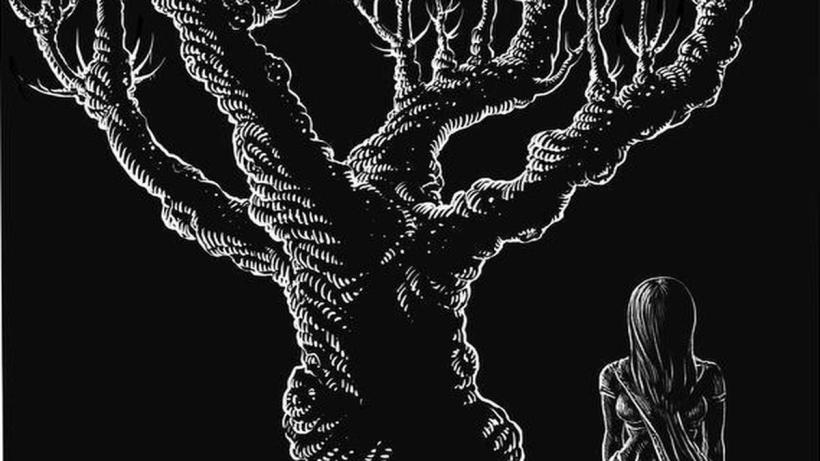
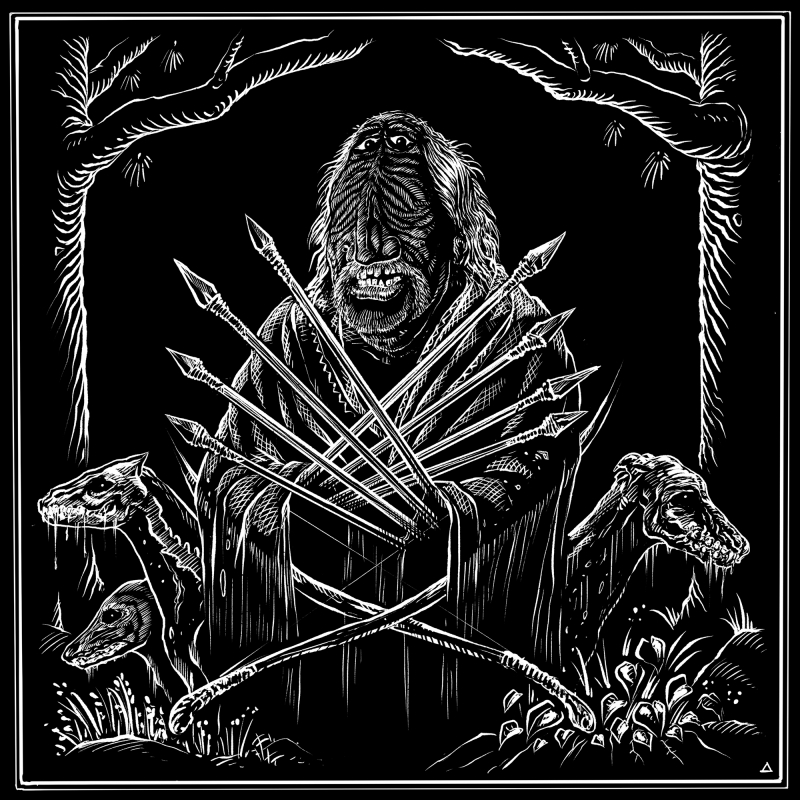
Hallucinatory yet gritty, Goddard’s novel is a genuine portrait of Britain’s shadowy underworld but intensified to a psychogenic peak. Scattered throughout are scratchy, flowing line drawings which have a feel of automatic art to them. As a big appreciator of books featuring illustrations, I approve of this – actually I’d have liked it to feature more drawings, but kudos to the inclusion of book art.




































 Folk Horror Revival & Urban Wyrd Project ⨘