Ghost of an Idea: Hauntology, Folk Horror and the Spectre of Nostalgia by William Burns. Book Review.

As the number of books about Folk Horror and Hauntology is considerably increasing, focus falls now upon a quest for a unique selling point – the tone, the angle, which cultural examples will be concentrated upon. With Ghost of an Idea the aspect of Nostalgia is a point of interest.

There is only so much that can be said about the ‘Unholy Trinity’ of folk horror films or Jacques Derrida’s origin of the word Hauntology – mention of either is inevitable but this book mentions the former more in passing but gives the latter a fair bit of attention. Problem with the discussion of Derrida and his concept of political Hauntology is that quite a bit of distance has fallen between that and the ‘popular Hauntology’ of the Haunted Generation. It still has a place however as the associated mode of Folk Horror frequently has a political dimension. But here its introduction early risks the book
being taken as dry covering a matter that Mark Fisher and others have adequately discussed prior, but anybody facing that qualm should stick with the book as it becomes more animated with the detailing of specific movies and music.

An issue facing Folk Horror and /or Hauntology arises then of how to shape a book on the subjects and which audience to target. This makes Ghost of an Idea something of a mixed bag as it at times reads like an academic tome (and would prove very useful for anyone studying the subject matter at university) and at others like a more mass-market book on the cultural entertainment examples – and at this it excels as it provides a very useful list of films and music – a good proportion of it straying from the well-beaten track.

The book opens with a dedication to Mark Fisher, the late writer whose own work investigated the relationship between emotion and the hauntological media of film, literature and music and political philosophy (as well as investigating the concepts of the ‘weird’ and ‘eerie’), and a quotation by the folklorist Catherine Crowe. Burns’ appreciation for Fisher is very clear and well-placed but I would have liked to have also seen more integration of ghost-lore within the book, though aspects such as Stone Tape Theory are covered.

The ‘unique selling point’ of this book is the discussion of Nostalgia. It’s a subject that I have a particular interest in and whilst I found the contemplation of it in Burns’ work intriguing – I did really want more. Indeed I would have preferred further discussion of the psychological conditions of Nostalgia and maybe related feelings such as Deja vu than the content matter of later chapters, which in some instances felt somewhat misplaced.

Burns masterfully covers the wide range of associated music from Blind Willie Johnson to Boards of Canada and beyond. This includes an apt and colourful description of Syd Barrett that I enjoyed – “Psychedelia’s first hauntological casualty Syd Barrett, the Edwardian psychonaut, had one foot on an interstellar spacecraft and the other on a penny-farthing bicycle, haunting his own acid-addled mind, becoming rock’s premier living ghost.” Included are some interviews with musicians extraordinaire such as The Rowan Amber Mill’s Stephen Stannard, Angeline Morrison and Epic45. Though interesting I wonder whether the interviews would have been better suited to a book collection of their own (with other interviewees included) as their inclusion does break up Burns own train of thought a little. Also I am not sure about the section where Burns recollects certain concerts attended.
The recommended albums list however is a great inclusion.

With regard to the films that Burns discusses, again the range and inclusion of some lesser-known examples is very useful and to be applauded. Whilst in such discussions the personal views and tastes of the writer and different readers may vary – for instance I disagree with Burns in my opinion that the remake of Suspiria is a much better film than The Void. Sometimes though I feel that he may sometimes be a bit too harshly cynical towards some examples (even when I share a similar dislike towards some of the media mentioned) and a little too gushing towards others (an example being Alan Moore, although I do think that he’s a very good writer and a huge influence on the evolution of comics, I do feel that too many other excellent comic writers get smothered in his shadow). Though I do share Burns’ great admiration of David Lynch, some people for some strange reason don’t, but one man’s poison is another man’s meat.

I do question the amount of space devoted towards some films/shows and their actual inclusion – eg. American Horror Story, Star Wars and Toy Story. The attention to these feels somewhat incongruous to what has gone before and I would have preferred (along with the concert reviews) either their omission here, for possible use in other works, meaning that Ghost of an Idea be a shorter book or for other studies of the concept of Nostalgia / additional examples of place memory hauntings to have been featured in their place. Or possibly a deeper dive into more found footage/ fake documentary films may have been better placed (I’d have liked to have read about Lake Mungo for instance) or a discussion about Backwoods films or even more about Hoodie Horrors may have been a better fit.

In conclusion it is a well written book, in some instances it really hits the mark perfectly and the film and album lists would prove very useful to both newcomer and those already quite immersed in the fields covered. But … There’s just some inclusions and choices that didn’t fully land and spoiled the flow for me – though of course they may land very well for others.
And it’s totally up to an author what they include in their own books as the ending quote from John Cassavetes, included in in Ghost of an Idea, states “I don’t give a fuck what anybody says. If you don’t have time to see it, don’t. If you don’t like it don’t. If it doesn’t give you an answer. fuck you. I didn’t make it for you anyway.” 😉

Ghost of an Idea: Hauntology, Folk Horror and the Spectre of Nostalgia is due to be released in early 2025 – More Information HERE
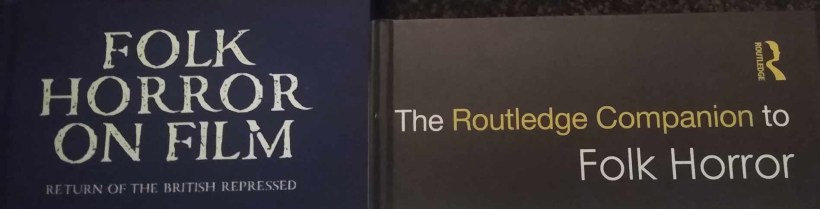
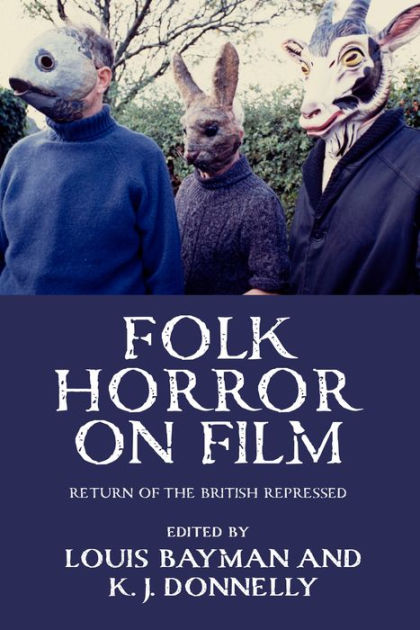
Books Spotlight: The Routledge Companion to Folk Horror and Folk Horror On Film: The Return of the British Repressed.

The following article is not a review as such to avoid accusation of bias as I (Andy Paciorek) have essays in the books (‘Yesterday’s Memories of Tomorrow: Nostalgia, Hauntology and Folk Horror’ in The Routledge Companion to Folk Horror, and ‘Albion Unearthed: social, political and cultural influences on British Folk Horror, Urban Wyrd and Backwoods Cinema’ in Folk Horror on Film’) – but instead is a spotlight of some tomes that may be of interest and/or use to students, lecturers and aficionados of folk horror and its associated fields.

The Routledge Companion to Folk Horror

Edited By Robert Edgar, Wayne Johnson (Routledge. 2023)

The Routledge Companion to Folk Horror offers a comprehensive guide to this popular genre. It explores its origins, canonical texts and thinkers, the crucial underlying themes of nostalgia and hauntology, and identifies new trends in the field.

Divided into five parts, the first focuses on the history of Folk Horror from medieval texts to the present day. It considers the first wave of contemporary Folk Horror through the films of the ‘unholy trinity’, as well as discussing the influence of ancient gods and early Folk Horror. Part 2 looks at the spaces, landscapes, and cultural relics, which form a central focus for Folk Horror. In Part 3, the contributors examine the rich history of the use of folklore in children’s fiction. The next part discusses recent examples of Folk Horror-infused music and image. Chapters consider the relationship between different genres of music to Folk Horror (such as folk music, black metal, and new wave), sound and performance, comic books, and the Dark Web. Often regarded as British in origin, the final part analyses texts which break this link, as the contributors reveal the larger realms of regional, national, international, and transnational Folk Horror.

Featuring 40 contributions, this authoritative collection brings together leading voices in the field. It is an invaluable resource for students and scholars interested in this vibrant genre and its enduring influence on literature, film, music, and culture.”


Table of Contents –

General Introduction – Robert Edgar and Wayne Johnson

Part I: Origins and Histories

  1. Christopher Flavin Fear of the World: Folk Horror in Early British Literature
  2. Brendan Walsh The Early Modern Popular Demonic and the Foundations of Twentieth Century British Folk Horror
  3. Katy Soar “Banished to woods and a sickly moon”: The Old Gods in Folk Horror
  4. Craig Thomson “I am the writing on the wall, the whisper in the classroom”: The Changing Conception of the ‘Folk’ in the Western Folk Horror Tradition
  5. Darryl Jones M. R. James and Folk Horror
  6. Miranda Corcoran “Leave Something Witchy”: Evolving Representations of Cults and New Religious Movements in Folk Horror
  7. Alan Smith The spectacle of the uncanny revel: Thomas Hardy’s Mephistophelian Visitants and ‘Folk Provenance’.
  8. Charlotte Runcie ‘We’re not in the Middle Ages’: Alan Garner’s Folk Horror Medievalism
  9. Peter Bell Terror in the Landscape: Folk Horror in the Stories of M.R. James
  10. John Miller Folk Horror, HS2 and the Disenchanted Woods
  11. David Evans-Powell Mind the Doors! Characterising the London Underground on Screen as a Folk Horror Space
  12. Beth Kattelman Queer Folk: The Danger of Being Different
  13. David Sweeney “Out of the dust”: Folk Horror and the Urban Wyrd in Too Old to Die Young and Other Works by Nicolas Winding Refn
  14. Catherine Spooner Meeting the Gorse Mother: Feminist Approaches to Folk Horror in Contemporary British Fiction
  15. Ruth Heholt Handicrafts of Evil: Nostalgia and the Make-Culture of Folk Horror
  16. Lauren Stephenson Restoring Relics – (Re)-releasing Antrum (2018) and film as Folk Horror
  17. Andy Paciorek Yesterday’s Memories of Tomorrow: Nostalgia, Hauntology & Folk Horror
  18. Diane A. Rodgers Ghosts in the Machine: Folklore and technology onscreen in Ghostwatch (1992) and Host (2020)
  19. Douglas McNaughton The Pattern Under the Plough: Folk Horror in 1970s British Children’s Television
  20. Jez Conolly ‘This calm, serene orb’: a personal recollection of the comforting strangeness found in the worlds of Smallfilms
  21. Jon Towlson ‘To Traumatise Kids for Life’: The Influence of Folk Horror on 1970s Children’s Television
  22. Bob Fischer That Haunted Feeling: Analogue Memories
  23. Stephen Brotherstone “Don’t Be Frightened. I Told You We Were Privileged”: The British Class System in the Televised Folk Horror of the 1970s
  24. Dave Lawrence The 4:45 Club: Folk Horror Before Teatime in the 1970s and 1980s
  25. Julianne Regan The Idyllic Horrific– Field, Farm, Garden, Forest and Machine
  26. Richard D. Craig “And the devil he came to the farmer at plough” – November, Folk Horror and folk music
  27. Julian Holloway Sounding Folk Horror and the Strange Rural
  28. Jason D. Brawn Sounds of Our Past: The electronic music that links Folk Horror and Hauntology
  29. Joseph S. Norman Even in death: The ‘Folk Horror Chain’ in Black Metal
  30. Ben Halligan Towards ‘Squire Horror’: Genesis 1972-3
  31. Barbara Chamberlin Patterns beneath the grid: the haunted spaces of Folk Horror comics
  32. Max Jokschus From the Fibers, from the Forums, from the Fringe – Folk Horror from the Deep, Dark Web
  33. Dawn Keetley ‘The dark is here’: The Third Day and Folk Horror’s Anxiety about Birth-rates, Immigration, and Race
  34. Robert Edgar Hinterlands and SPAs: Folk Horror and Neoliberal Desolation
  35. Andrew M. Butler “Why Don’t You Go Home?”: The Folk Horror Revival in Contemporary Cornish Gothic Films
  36. Adam Smith Satire and the British Folk Horror Revival
  37. Matthew Cheeseman English Nationalism, Folklore and Pagans
  38. Keith McDonald Bound by Elusiveness: Transnational Cinema and Folk Horror
  39. James Thurgill Strange Permutations, Eerie Dis/locations: On the cultural and geographic specificity of Japanese Folk Horror
  40. Adam Spellicy “All the little devils are proud of Hell”: The First Wave of Australian Folk Horror

https://www.routledge.com/The-Routledge-Companion-to-Folk-Horror/Edgar-Johnson/p/book/9781032042831

Folk Horror On Film: Return of the British Repressed.

Edited by Kevin J. Donnelly and Louis Bayman (Manchester University Press. 2023)

“What is folk horror and how culturally significant is it? This collection is the first study to address these questions while considering the special importance of British cinema to the genre’s development.

The book presents political and aesthetic analyses of folk horror’s uncanny landscapes and frightful folk. It places canonical films like Witchfinder General (1968), The Blood on Satan’s Claw (1971) and The Wicker Man (1973) in a new light and expands the canon to include films like the sci-fi horror Doomwatch (1970-72) and the horror documentary Requiem for a Village (1975) alongside filmmakers Ken Russell and Ben Wheatley.

A series of engrossing chapters by established scholars and new writers argue for the uniqueness of folk horror from perspectives that include the fragmented national history of pagan heresies and Celtic cultures, of peasant lifestyles, folkloric rediscoveries and postcolonial decline.”

Foreword by John Das
Introduction: what makes the folk horrific? – Louis Bayman and K.J. Donnelly
Part I: Debating The Wicker Man (1973)

1 The context of The Wicker Man – Ronald Hutton
2 A deeply religious people: The Wicker Man, contemporary paganism, and Dracula reversed- Laurel Zwissler
3 Folk horror: a discursive approach, with application to Robin Hardy’s The Wicker Man (1973) and Neil Jordan’s The Company of Wolves (1984) – Mikel J. Koven
Part II: Return of the British repressed
4 The folk of folk horror – Derek Johnston
5 Doomwatch: sacrifice zones and folk horror – Dawn Keetley
6 My ancestors died here: Requiem for a Village and the rural English horror of modernity and socio-cultural change – Paul Newland
7 Outsider history, or outside of history – K. J. Donnelly
8 Anglo creep and Celtic resistance in Apostle – Beth Carroll
9 Women’s folk horror in Britain: history, industry, style – Amy Harris
Part III: Folk horror’s cultural landscapes
10 Ritualistic rhythms: exploring the sensory effect of drums in British folk horror cinema – Lyndsay Townsend
11 ‘Nature came before man’: human as subject and object within the folk horror anti-landscape – David Evans-Powell
12 Hieroglyphics: Arthur Machen on screen – Mark Goodall
13 Albion unearthed: social, political and cultural influences on British folk horror, urban wyrd and backwoods cinema – Andy Paciorek
14 ‘Isn’t folk horror all horror?’: a wyrd genre – Diane A. Rodgers
https://manchesteruniversitypress.co.uk/9781526164926/

Folk Horror Revival: British Museum Otherworldly (First Reveal)

00

The first Folk Horror Revival event will be taking place at the British Museum, London on  October 16th 2016, featuring talks, lectures, short films, poetry readings, museum tours and other wyrd and intriguing happenings.

Cult television programmes and films of the 1960s and 70s are inspiring a new generation of poets, writers, artists and musicians with their atmospheric themes of contemporary individuals interacting with a uniquely British world of ancient mythology and magic, often uncanny and unsettling.

This special event will feature lectures, film screenings, performances and gallery tours of featured objects in the Museum’s collection to explore themes of cultural rituals, earth mysteries, psychogeography and folklore. Come along and prepare to be scared!

Ticket details to be announced very shortly.

We can proudly announce that one of the guest speakers will be Gary Lachman.

Gary is an American writer and musician. he is best known to readers of mysticism and the occult from the numerous articles and books he has published – Turn Off Your Mind: The Mystic Sixties and The Dark Side Of The Age of Aquarius (2002), The Dedalus Book of the Occult: A Dark Muse (2004), The Quest For Hermes Trismegistus From Ancient Egypt to the Modern World (2011), Revolutionaries of the Soul: Reflections on Magicians, Philosophers, and Occultists (2014) – He is additionally known to music fans as Gary Valentine one of the founders, and bassist of alternative rock/new wave band Blondie.

Gary will be presenting on Colin Wilson and the Angry Young Outsiders.

Before bursting on the London literary scene with the overnight success of his first book The Outsider in 1956, Colin Wilson spent some months sleeping rough on Hampstead Heath while writing his first no0gvel, Ritual in the Dark by day in the old Reading Room of the British Museum. Wilson was caught up in the media craze around the Angry Young Men, and he suffered from it, when the critics turned on the Angries and Wilson in particular. With a few exceptions, like his 1971 ‘comeback’ book The Occult, for most of his long career, Wilson remained an Outsider, ignored by the cultural establishment, while writing book after book. He died in 2013 at the age of 82. Gary’s talk will be based on his biography of Wilson, Beyond the Robot: The Life and Work of Colin Wilson, which, like a new edition of The Outsider to which he has contributed a new foreword, is published to commemorate the sixtieth anniversary of The Outsider’s first publication.

A tribute to Colin Wilson and An Interview with Gary Lachman features in the book        Folk Horror Revival: Field Studies


Also appearing will be Michael Somerset and his new ensemble The Consumptives. Michael is a former member of Clock DVA, has collaborated with Was (Not Was) and I Monster.

He is currently a freelance writer published by BMG and has written a series of short stories and poems accompanied by music and read by Reece Shearsmith, Bat For Lashes, Barry Adamson and numerous other impressive souls.

0m

FHR are proud to announce that The Consumptives (Michael Somerset’s new Gothic Orchestra) will be gracing us with their presence on the 16th. Performing macabre tales set to music (suitable for children and adults), Sylwia D Kittyfly,  Jules Lawrence,  Ozlem Simsek and Michael Somerset will guide us through a labyrinth of supernatural tales accompanied by singing and classic horror soundtrack instruments including theremin and saw.

A selection of Michael’s poetry features in the book Folk Horror Revival: Corpse Roads

More speakers and ticket details to be revealed soon. Follow us on Facebook

12705724_10156474613515484_1299533609324065036_n

The Hallowed Halls of Learning: Folk Horror at Cambridge University


13495198_10157081038425484_7753546394648192294_n

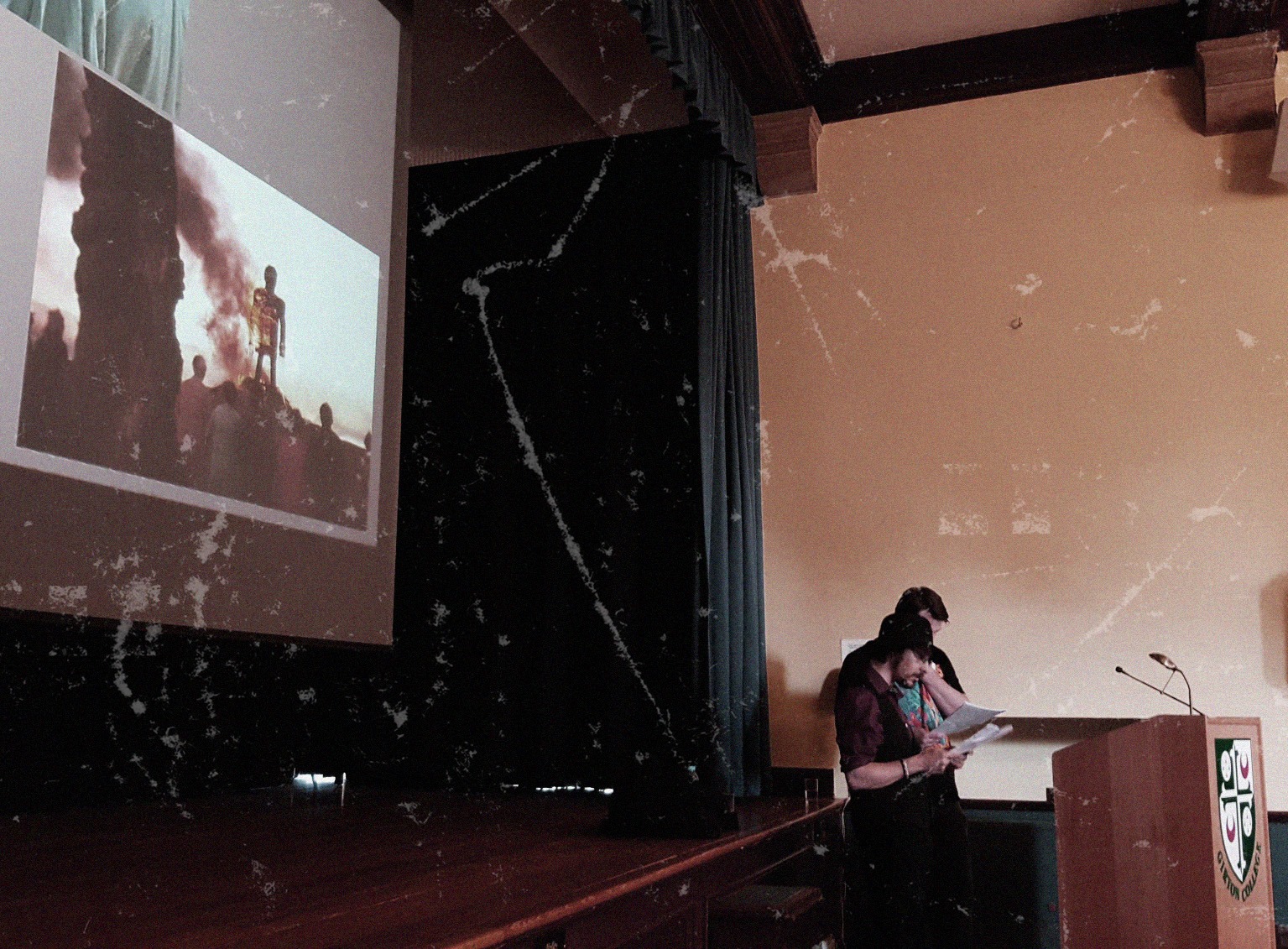
On the 7th July 2016, by happenchance the anniversary of Cambridge’s son Syd Barrett, Folk Horror Revivalists Adam Scovell, Andy Sharp, Gary Parsons, Darren Charles and Andy Paciorek were all invited to speak alongside several other interesting chroniclers of the wyrd at the Alchemical Landscapes II symposium at Girton College,  University of Cambridge – the same seat of learning at which  Deliah Derbyshire studied.

13620032_10157102294425484_1208021429080038546_n

The talks given that day were ~

Jo Melvin (Chelsea College of Arts)

Double Exposure: ’pataphysics and the Rural in Barry Flanagan’s Sculptural Practice

Lewis Wynn (University of Cambridge)

The Visual Occulture of Left Fields: Reclaiming the Radical History of Fields in Contemporary English Film

Adam Scovell (Goldsmiths / Celluloid Wicker Man)

Rurality in the Films of David Gladwell

Liberty Rowley (Four Feet Films)

Microgeography and an Exploration of the Magic that can be Found at the Bottom of the Garden

Harry Baker, (London Film School)

Folk Horror and the Mythic Cycle

Gary Parsons (University of East London)

British Witchcraft Documentaries of the 1970s and their Relation to Landscape and Culture

Christopher Josiffe (Independent Researcher)

The Dalby Spook in his Landscape: Gef the Talking Mongoose

(Un) remembered

Andy Paciorek (Wyrd Harvest Press)

Darren Charles (Unearthing Forgotten Horrors)

The Folk Horror Revival

Andy Sharp (English Heretic)
Video Anxieties

Marc Atkins and Rod Mengham (Sounding Pole Films)

The Fields of England

Folk Horror Revival would like to thank Yvonne Salmon and James Riley for their interest and enthusiasm in our various work and the kind hospitality they showed.
We thoroughly enjoyed the day and all the talks and look forward to more symposiums to come.

Keep watching the horizon …

13738090_10157126165470484_8216095507930361395_o

Photos: Andy Paciorek. Except third image by Yvonne Salmon