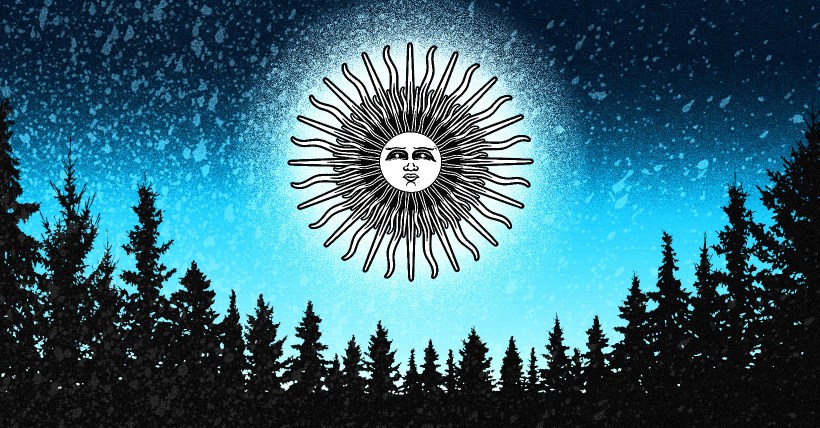
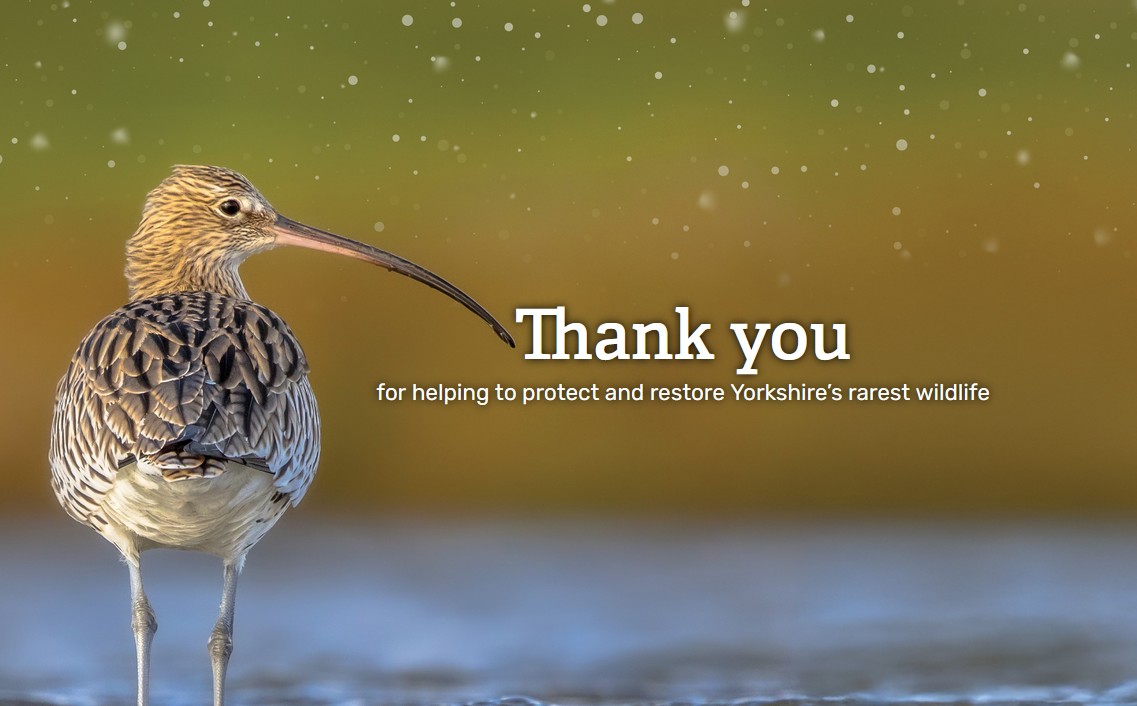
Season’s Greetings to All ~ To mark the Winter Solstice, Wyrd Harvest Press & Folk Horror Revival are again making a charity donation of our book sales profits to a Wildlife Trusts’ environmental and conservation project – This year we have donated £300 to Yorkshire Wildlife Trust’s Species Recovery Appeal.
Protect and restore Yorkshire’s rarest wildlife
From the windswept uplands of the Dales to the rolling chalk hills of the Wolds, the lowland moors on the Humberhead levels and the shining chalk cliffs of Yorkshire’s 100-mile coastline – wildlife should flock to this vast and varied county.
And yet, the data is telling us that many woodlands, wetlands and waves are slowly falling silent and still.
If we don’t act now, we will lose the species that make Yorkshire so special!
We wish you all a very peaceful and pleasant Yuletide and 2026. Special Thanks to everybody who has supported both nature and varied artists and writers by buying our books.
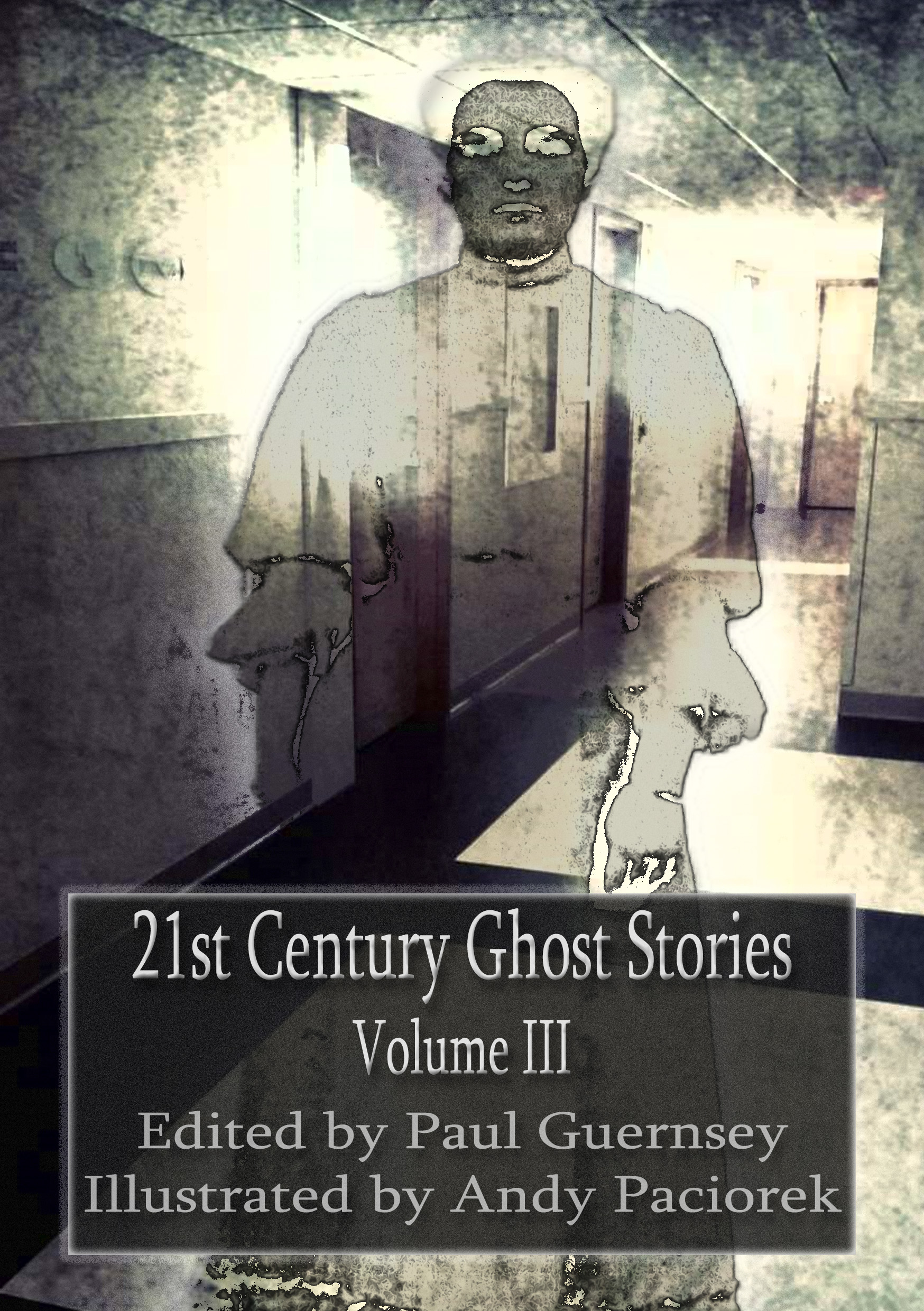
Wyrd Harvest Press are thrilled to present 21st Century Ghost Stories: Volume III the latest in our spooky anthology series. Featuring a host of new stories by a wealth of talented writers, edited by Paul Guernsey, illustrated by Andy Paciorek and created with great thanks to Richard Hing and Grey Malkin; sales profits from this book will be charitably donated to The Wildlife Trusts ‘ nature conservation projects.
This third volume in our 21st Century Ghost Stories anthology series features 39 astonishing short-fiction contributions from writers the world over, each with a surprising and contemporary twist on some aspect of the uncanny. The collection includes unsettling stories of supernatural seduction, episodes of AI gone terrifyingly awry, accounts of workplace witchcraft, and tales of ghostly and/or demonic forces that infest places and ensnare people. We invite you to open this book and feel the chill!
featuring …
Introduction – Paul Guernsey
The Carny — Ann O’Mara Heyward
Gina Of Golden Gardens — Shala Erlich
The Pickup — Kathryn Pratt Russell
Door To Door — Ruth Schemmel
Ghost Story — Isobel Oliphant
He Loved His Mamma And His Mayonnaise — Gerard J Waggett
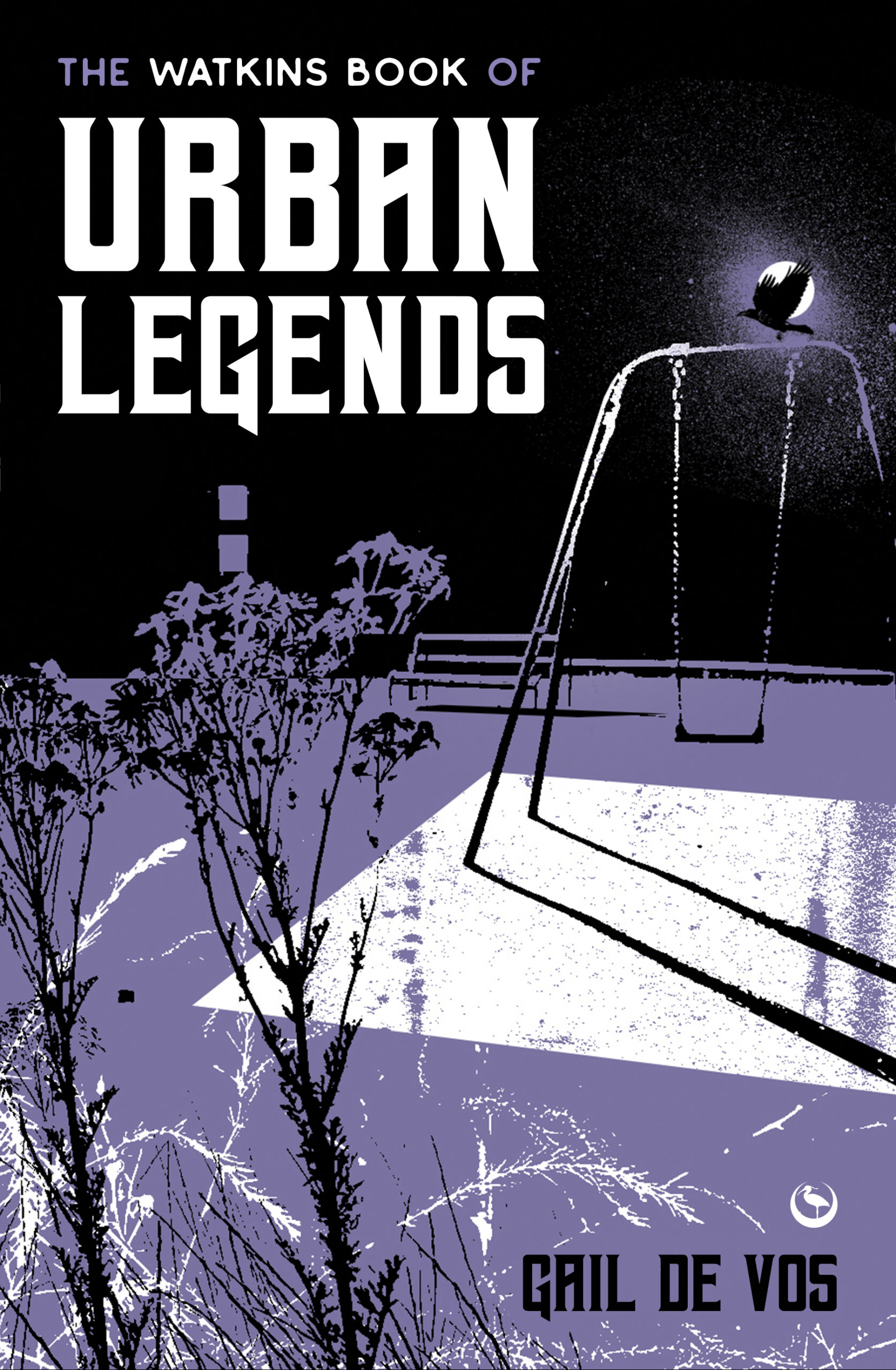
The Watkins Book of Urban Legends by Gail De Vos: Book Review
Before I get to the book, indulge me in a little waffle about the subject matter … I first became aware of Urban Legends … Friend of a Friend Tales … Whale Tumour Stories … Contemporary Legends … call them what you will at a very young age. I was a monster kid into horror films and scary stories (think Mark from Salem’s Lot) so anything that stirred my morbid curiosity has stuck in my mind. The first examples I remember hearing are variations of those covered by Gail De Vos under the banners of ‘The Boyfriend’s Death’ and ‘The Babysitter and the Man Upstairs’ (the version I recall hearing of the latter distastefully and disturbingly added the extra grotesque detail of a cannibal with Down’s Syndrome!). But I had a distance from these stories as they weren’t told with any degree of association (ie. happening to a ‘friend of a friend’) just as scary … possibly true (?) stories. Locally there were several variations of the ‘Bloody Mary’ recital and invocation of malign presences stories – a couple I’ve mentioned on my Northumbria Ghostlore Society blog … Jenny Cut-throat’s Grave and The Devil’s Stone but I would have been about 13 years old the first time I heard the term ‘Urban Legend’.
At school I would have the tactic of sometimes getting out of classwork by sending the teachers off on tangential conversations. This occasion was I recall a Religious Education lesson and somehow I had ended up telling the teacher and class a story I believed to be true. It would have been about 1986 and the largest shopping mall in the area, the Metrocentre at Gateshead, Tyne & Wear, had just opened. I cannot remember who it was, a friend of my elder sister’s perhaps or a relation of one of my mother’s friends maybe – but anyway nobody I directly knew but this time it was a specific place familiar to me, so in my mind it must be true. Anyway the tale goes as follows. A woman had been shopping alone in the Metrocentre and she was surprised to discover upon returning to her vehicle in the carpark that a woman was sat in the passenger seat of her car. The woman explained that she was feeling ill and upon discovering the car door left open had taken a seat in the vehicle. She asked the driver whether she would mind taking her home, it wasn’t far and she did not feel up to waiting for a bus. The driver agreed but asked the woman if she’d mind getting out of the car to help guide her whilst she reversed the vehicle out. The passenger complied and as soon as she was out of the vehicle the driver hastily locked all the doors and drove away abandoning the other woman. When the driver got home she noticed that there was a plastic bag tucked under the passenger seat. Gazing inside she discovered men’s clothing … and an axe!! My teacher informed me that the story was not true and that she’d heard the very same tale told about different locations in the past. She also informed me of the phrase ‘Urban Legends’.
My curiosity piqued, I went to the local library and ordered books on the subject by Rodney Dale and Jan Brunvand (how I came upon the names of the books to order I cannot recall, as this was pre-internet times). The subject greatly appealed to my interests (especially the more grisly and weird stories) and has done ever since. And so when offered the chance to read and review Gail De Vos’ The Watkins Book of Urban Legends I jumped at the chance. Upon its arrival and seeing the beautifully bleak and eerie cover illustration by Shonagh Rae I was eager to dive inside.
Notably from the introduction, De Vos chooses the more accurate designation of Contemporary Legends rather then the more poetic Urban Legends, for the tales covered are not in any way confined to urbanity of any description and furthermore the material contained expands further than the Friend of a Friend Tales that generally work as a synonym for Urban Legends.
Within the pages of this charming, interesting book we find numerous familiar or classic Friend of a Friend tales as well as many examples of supernatural tales from cryptids to hauntings and folkloric entities. The folkloric entities was of particular interest to me as they concentrated mostly on boogieman / bogey figures which is a subject that particularly inspired me to write and illustrate my books ‘Strange Lands: A Field Guide to the Celtic & British Otherworld’ and ‘Black Earth: A Field Guide to the Slavic Otherworld’ as well as illustrating similarly themed books written by Dr Bob Curran and John & Caitlin Matthews. I was really pleased to see some of my favourite bogies mentioned such as Black Annis and Jenny Greenteeth. Indeed regarding the latter water-witch or Grindylow, there are a number of them local to me – Peg Powler of the River Tees (link there to an account I wrote of a visit to one of her haunts), Nanny Longarms of the River Wear and Nanny Powler of the River Skerne. I discovered these creatures through reading folklore books rather than hearing about them as direct warning tales as a child. It was rumours of quicksand and undercurrents plus not being able to actually swim anyway that stopped me wandering into river depths as a child. So I do wonder if tales of them are still being told as warnings to children today … I’d like to think so.
But kids of today are very capable of creating new monsters for the 21st Century and I found De Vos’ sections on toilet ghosts, Creepypasta and internet challenges very interesting and a great coverage of evolution of contemporary legends. Except for a few tragic and horrific ostension cases involving the creepypasta (copy and paste replacing the oral tradition to some extent) creation the Slenderman, it seems that the greater panic surrounding such phenomenon as the Momo Challenge have been amongst adults rather than the kids.
Regarding the ghost section I had the odd shiver down the spine sensation of being either part of the Friend of a Friend Tale or involved in ostentation whereby folklore becomes fact … In the section of Haunted Tunnels I saw a familiar place mentioned, although much of the book, though international in scope, has a predominance of American locations and of De Vos’ homeground of Canada (the Canadian entries I found intriguing as many other books on the subject do centre strongly on the USA) … but the place in question was Whitby in North Yorkshire. Regarding the Screaming Tunnel there, I was aware of its eerie reputation prior to my extremely odd walk in the Whitby fog one winter’s night whereby I had a strange experience, but my hairs rose on my arms when De Vos returned to Whitby some pages later to tell the tale of a sunken bell. I did not know of this story but again to return to a post on my Ghost blog I actually had an experience pertaining to this on that same very strange night. My experiences can be read Here … So the unexpected personal association gave the book an extra frisson for me.
Another valuable entry to the book is the coverage of another associated phenomenon to Contemporary Legends, that being Conspiracy Theories. Whilst Conspiracy Theories are nothing new, the age of the internet and viral transmission of information has caused this area to spread far further and to be believed by far more people than ever before. The period of Covid19 lockdown particularly saw a rise in stories and theories. But as De Vos acutely stresses at the conclusion of the Conspiracy Theories chapter this area is not a finished story … indeed had there been a little while longer before going to print, there may have been a section relating to the legend (spread further ‘on TV’ by a former US President and current presidential candidate) that immigrants to the USA are “… eating the ‘dawgs’. They’re eating the cats. They’re eating the pets” – (A similar story I recall hearing whenever a new foreign food fast food restaurant opened locally when I was a child).
And with that takeaway, in conclusion Contemporary Legends are clearly alive and well (although their story protagonists frequently aren’t so healthy) and will continue to evolve and provide us with numerous occasions to shake our heads, roll our eyes and say well that can’t be true … can it?
And in the meantime to bring us up to speed on what was rumoured before either in hushed playground whispers or amongst the deafening internet chatter, The Watkins Book of Urban Legends is a wonderful, entertaining and informative guide to those sad and strange circumstances that befell friends of friends …
The following article is not a review as such to avoid accusation of bias as I (Andy Paciorek) have essays in the books (‘Yesterday’s Memories of Tomorrow: Nostalgia, Hauntology and Folk Horror’ in The Routledge Companion to Folk Horror, and ‘Albion Unearthed: social, political and cultural influences on British Folk Horror, Urban Wyrd and Backwoods Cinema’ in Folk Horror on Film’) – but instead is a spotlight of some tomes that may be of interest and/or use to students, lecturers and aficionados of folk horror and its associated fields.
“The Routledge Companion to Folk Horror offers a comprehensive guide to this popular genre. It explores its origins, canonical texts and thinkers, the crucial underlying themes of nostalgia and hauntology, and identifies new trends in the field.
Divided into five parts, the first focuses on the history of Folk Horror from medieval texts to the present day. It considers the first wave of contemporary Folk Horror through the films of the ‘unholy trinity’, as well as discussing the influence of ancient gods and early Folk Horror. Part 2 looks at the spaces, landscapes, and cultural relics, which form a central focus for Folk Horror. In Part 3, the contributors examine the rich history of the use of folklore in children’s fiction. The next part discusses recent examples of Folk Horror-infused music and image. Chapters consider the relationship between different genres of music to Folk Horror (such as folk music, black metal, and new wave), sound and performance, comic books, and the Dark Web. Often regarded as British in origin, the final part analyses texts which break this link, as the contributors reveal the larger realms of regional, national, international, and transnational Folk Horror.
Featuring 40 contributions, this authoritative collection brings together leading voices in the field. It is an invaluable resource for students and scholars interested in this vibrant genre and its enduring influence on literature, film, music, and culture.”
Table of Contents –
General Introduction – Robert Edgar and Wayne Johnson
Part I: Origins and Histories
Christopher Flavin Fear of the World: Folk Horror in Early British Literature
Brendan Walsh The Early Modern Popular Demonic and the Foundations of Twentieth Century British Folk Horror
Katy Soar “Banished to woods and a sickly moon”: The Old Gods in Folk Horror
Craig Thomson “I am the writing on the wall, the whisper in the classroom”: The Changing Conception of the ‘Folk’ in the Western Folk Horror Tradition
Darryl Jones M. R. James and Folk Horror
Miranda Corcoran “Leave Something Witchy”: Evolving Representations of Cults and New Religious Movements in Folk Horror
Alan Smith The spectacle of the uncanny revel: Thomas Hardy’s Mephistophelian Visitants and ‘Folk Provenance’.
Charlotte Runcie ‘We’re not in the Middle Ages’: Alan Garner’s Folk Horror Medievalism
Peter Bell Terror in the Landscape: Folk Horror in the Stories of M.R. James
John Miller Folk Horror, HS2 and the Disenchanted Woods
David Evans-Powell Mind the Doors! Characterising the London Underground on Screen as a Folk Horror Space
Beth Kattelman Queer Folk: The Danger of Being Different
David Sweeney “Out of the dust”: Folk Horror and the Urban Wyrd in Too Old to Die Young and Other Works by Nicolas Winding Refn
Catherine Spooner Meeting the Gorse Mother: Feminist Approaches to Folk Horror in Contemporary British Fiction
Ruth Heholt Handicrafts of Evil: Nostalgia and the Make-Culture of Folk Horror
Lauren Stephenson Restoring Relics – (Re)-releasing Antrum (2018) and film as Folk Horror
Andy Paciorek Yesterday’s Memories of Tomorrow: Nostalgia, Hauntology & Folk Horror
Diane A. Rodgers Ghosts in the Machine: Folklore and technology onscreen in Ghostwatch (1992) and Host (2020)
Douglas McNaughton The Pattern Under the Plough: Folk Horror in 1970s British Children’s Television
Jez Conolly ‘This calm, serene orb’: a personal recollection of the comforting strangeness found in the worlds of Smallfilms
Jon Towlson ‘To Traumatise Kids for Life’: The Influence of Folk Horror on 1970s Children’s Television
Bob Fischer That Haunted Feeling: Analogue Memories
Stephen Brotherstone “Don’t Be Frightened. I Told You We Were Privileged”: The British Class System in the Televised Folk Horror of the 1970s
Dave Lawrence The 4:45 Club: Folk Horror Before Teatime in the 1970s and 1980s
Julianne Regan The Idyllic Horrific– Field, Farm, Garden, Forest and Machine
Richard D. Craig “And the devil he came to the farmer at plough” – November, Folk Horror and folk music
Julian Holloway Sounding Folk Horror and the Strange Rural
Jason D. Brawn Sounds of Our Past: The electronic music that links Folk Horror and Hauntology
Joseph S. Norman Even in death: The ‘Folk Horror Chain’ in Black Metal
Ben Halligan Towards ‘Squire Horror’: Genesis 1972-3
Barbara Chamberlin Patterns beneath the grid: the haunted spaces of Folk Horror comics
Max Jokschus From the Fibers, from the Forums, from the Fringe – Folk Horror from the Deep, Dark Web
Dawn Keetley ‘The dark is here’: The Third Day and Folk Horror’s Anxiety about Birth-rates, Immigration, and Race
Robert Edgar Hinterlands and SPAs: Folk Horror and Neoliberal Desolation
Andrew M. Butler “Why Don’t You Go Home?”: The Folk Horror Revival in Contemporary Cornish Gothic Films
Adam Smith Satire and the British Folk Horror Revival
Matthew Cheeseman English Nationalism, Folklore and Pagans
Keith McDonald Bound by Elusiveness: Transnational Cinema and Folk Horror
James Thurgill Strange Permutations, Eerie Dis/locations: On the cultural and geographic specificity of Japanese Folk Horror
Adam Spellicy “All the little devils are proud of Hell”: The First Wave of Australian Folk Horror
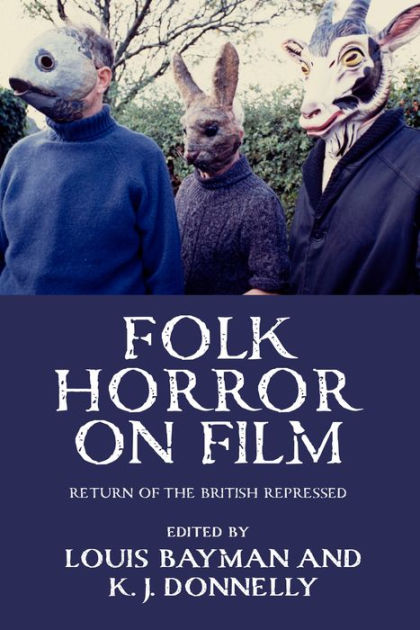
Folk Horror On Film: Return of the British Repressed.
Edited by Kevin J. Donnelly and Louis Bayman (Manchester University Press. 2023)
“What is folk horror and how culturally significant is it? This collection is the first study to address these questions while considering the special importance of British cinema to the genre’s development.
The book presents political and aesthetic analyses of folk horror’s uncanny landscapes and frightful folk. It places canonical films like Witchfinder General (1968), The Blood on Satan’s Claw (1971) and The Wicker Man (1973) in a new light and expands the canon to include films like the sci-fi horror Doomwatch (1970-72) and the horror documentary Requiem for a Village (1975) alongside filmmakers Ken Russell and Ben Wheatley.
A series of engrossing chapters by established scholars and new writers argue for the uniqueness of folk horror from perspectives that include the fragmented national history of pagan heresies and Celtic cultures, of peasant lifestyles, folkloric rediscoveries and postcolonial decline.”
Foreword by John Das Introduction: what makes the folk horrific? – Louis Bayman and K.J. Donnelly Part I: Debating The Wicker Man (1973) 1 The context of The Wicker Man – Ronald Hutton 2 A deeply religious people: The Wicker Man, contemporary paganism, and Dracula reversed- Laurel Zwissler 3 Folk horror: a discursive approach, with application to Robin Hardy’s The Wicker Man (1973) and Neil Jordan’s The Company of Wolves (1984) – Mikel J. Koven Part II: Return of the British repressed 4 The folk of folk horror – Derek Johnston 5 Doomwatch: sacrifice zones and folk horror – Dawn Keetley 6 My ancestors died here: Requiem for a Village and the rural English horror of modernity and socio-cultural change – Paul Newland 7 Outsider history, or outside of history – K. J. Donnelly 8 Anglo creep and Celtic resistance in Apostle – Beth Carroll 9 Women’s folk horror in Britain: history, industry, style – Amy Harris Part III: Folk horror’s cultural landscapes 10 Ritualistic rhythms: exploring the sensory effect of drums in British folk horror cinema – Lyndsay Townsend 11 ‘Nature came before man’: human as subject and object within the folk horror anti-landscape – David Evans-Powell 12 Hieroglyphics: Arthur Machen on screen – Mark Goodall 13 Albion unearthed: social, political and cultural influences on British folk horror, urban wyrd and backwoods cinema – Andy Paciorek 14 ‘Isn’t folk horror all horror?’: a wyrd genre – Diane A. Rodgers https://manchesteruniversitypress.co.uk/9781526164926/
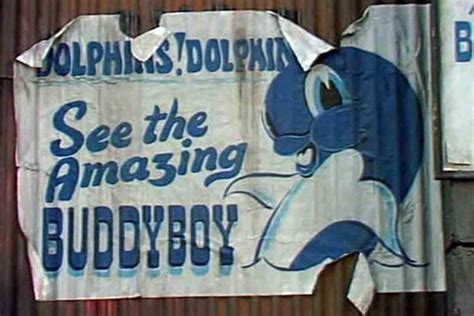
Interest in speculative fiction screenwriter Nigel Kneale has seen a 21st Century cult renaissance, mostly regarding his creation the rocket scientist Quatermass, but here Andrew Screen puts the focus on Kneale’s ATV series Beasts. Broadcast in 1976 during the golden age of British television plays and supernatural/thriller anthology shows, even amidst this bizarre telly miscellany, Beasts is something of a strange … well … beast. Each episode tangentially is related to animals or sometimes the animalistic within human nature – diverse beastly menace from an invasion of super-rats to a possessed kaiju film costume ensues. Screen dives deep into this strangeness seeking possible inspirations for Kneale’s manifestations. The folklore, history, Forteana and comparative media covered is wide and intriguing – resulting at one point in possibly the oddest and most amusing note disclaimer I’ve ever witnessed, stating that the author was in no way suggesting that Kneale was a viewer of equine erotica! – all the more bizarre by the fact that this is mentioned in relation to Buddy Boy, an episode about a dead dolphin haunting a potential porn theatre!
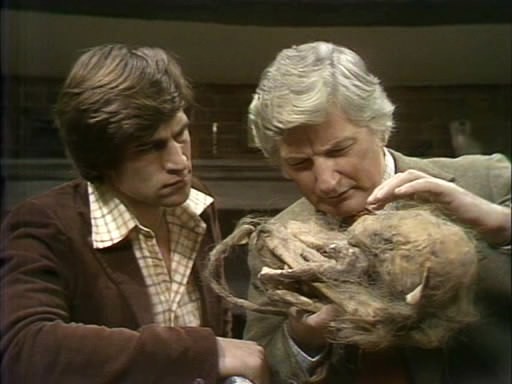
That extra special talking mongoose Gef gets coverage in the chapter covering Special Offer, an episode whereby teenager Pauline Quirke telekinetically terrorises a mini-mart. Discussion of therianthropy arises in relation to What Big Eyes, an episode where Patrick Magee, at his bombastic best, conducts weird experiments at a pet shop. Many aspects of weird history and preternatural phenomena are covered in this book making every chapter an enthralling read. Regarding the episode During Barty’s Party, I started to feel unsettled by the discussion of actual cases of rat attacks and infestation. I am pleased to see Screen feature Kneale’s TV play Murrain in this book. Although part of a TV play series called Against the Crowd, Murrain played a part in the commissioning of the Beasts show but also it feels akin, tonally, aesthetically and subject wise with Beasts, particularly to the episode Baby.
Both Murrain and Baby are set in bleak rural settings and deal with the fear of witchcraft and curses. Murrain, as the name indicates, concerns a rustic community that fears that a swine disease outbreak and other local misfortunes are due to the malfeasance of a suspected witch; whilst Baby concerns the discovery of an anomalous mummified creature found interred in an old rustic house – confined there not perhaps for apotropaic reason but for malediction. As well as rigorously covering production tech-specs and post-production reaction, Screen’s book is the most interesting, inviting and entertaining commentary on the work of Nigel Kneale I’ve encountered. A great tribute to possibly Nigel Kneale’s most peculiar body of work.
The Book of Beasts: Folklore, Popular Culture and Nigel Kneale’s ATV Horror Series Andrew Screen Headpress. 2023 pb. Illus. index. 434 pages. £22.99 ISBN. 191531609X
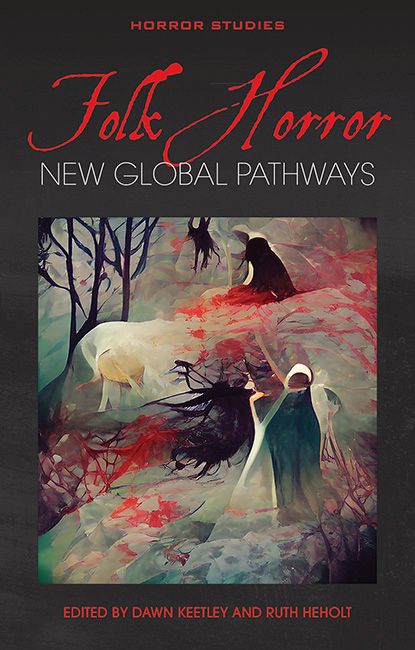
Perhaps of all the literary, cinematic and stylistic manifestations of the ‘dark arts’, only Film/Roman Noir may rival folk horror in the quantity of deliberation, discussion, debate and disagreement. Indeed in converse of the latter subject on social media oft asked is the question “But is it Folk Horror?” in regards to a particular movie, book or image. Sometimes this elicits the response of the ‘Folk Horror Police’ – fans who over-rigorously express their opinion. ‘Opinion’ is the key word however for there is no manifesto for folk horror– it is a mode named after the initial event. Adam Scovell’s ‘Folk Horror Chain’ acts as an excellent reference point for recognising commonly recurring elements (Landscape. Isolation. Skewed Belief System. Summoning or Happening) but it’s a guide not a mandatory tick box – there is still scope for deviation and room for differing opinions. Therefore multi-contributor books such as ‘Folk Horror New Global Pathways’ are extremely useful in this sometimes hazy field as they present a variety of opinions stemming from various different viewpoints, specific subject-matter and importantly from different cultures.
Whilst the 1960s/70s British cinematic triumvirate of Witchfinder General, Blood On Satan’s Claw and The Wicker Man have been written about extensively previously as they are important fixtures in the subject, folk horror is a form of narrative and aesthetic apparent in probably all cultures so it is good that this book does veer off the old beaten track. It wanders into diverse terrain ranging from Scooby Doo cartoons, typography, the short stories of E.F. Benson, occulture, video games, and dark tourism in Lancashire to the representations and relationships of folk horror in the cinema and culture of Mexico, Italy, Ukraine, Thailand and Appalachia. Inevitably politics do arise in the discussion. Horror fiction analysis can often be examined under a sociopolitical lens as a lot can be told about a people by looking at what scares them – be it post-war trauma in the early 20th Century Europe, atomic/ alien fears of 1950s America, generational counterculture/mainstream conflicts in the 1960s and 70s to the uncertain polarised times we currently live in. Folk horror is particularly laden with such considerations and this book does explore issues such as colonialism, sexuality and agrarian/industrial conflict.
Actually, regarding traditional vs technological conflict, I was disappointed to see however that AI generated imagery was used for the cover – especially as the book itself notes the connection between handicraft and folk horror. It would have been far more appropriate to have used imagery by an actual artist – be it centuries old chapbook illustration, a still from a relevant film or a piece by one of the many creatives currently working in the subject field, rather than using generative text.
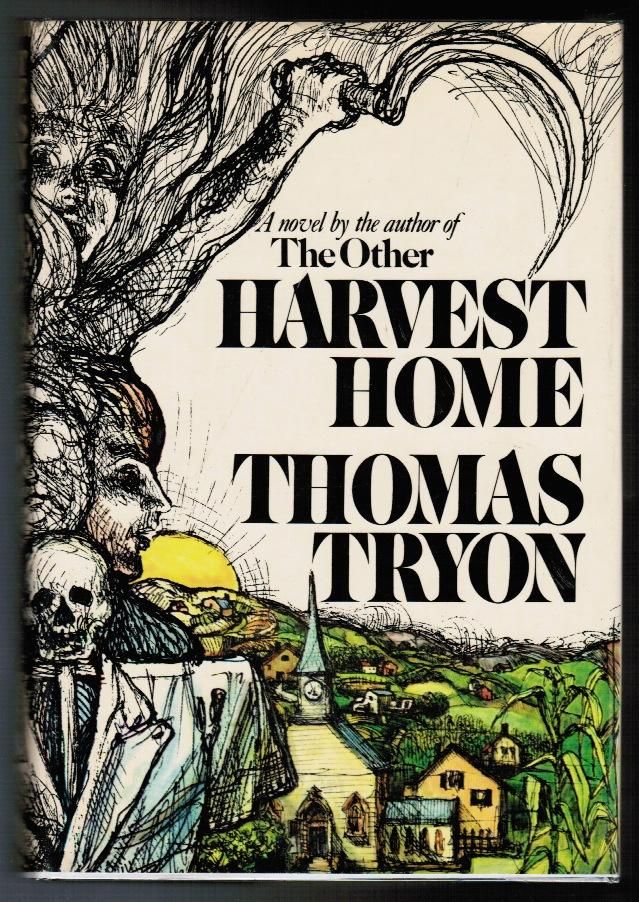
Back to the actual text: Along its course many examples of folk horror fiction are addressed, some familiar and others more obscure. I was particularly pleased to see the writing of actor-turned-author Thomas Tryon get good coverage as his work in the field is too often overlooked. Some less familiar works such as the films Jug Face and The House With the Laughing Windows are also given more attention than they usually get. I was surprised to see Robert Eggar’s The VVitch get such scant attention however, particularly in discussions of the folkloresque as it’s a good example of new folk horror using authentic old folklore in its narrative, considering that there is numerous referencing of Ari Aster’s Midsommar, (a film that I seem to be in the minority of personally finding both overrated and underwhelming).
Of Fortean interest the book discusses the Pendle Witches, the folkloric entities La Llorona and Phi Pop, ritual sacrifice, and the occult revival in relation to the influence, inspiration and development of Folk Horror. As a multi-contributor book, some chapters will be of differing interest to individual readers and the style of writing can vary, but it holds together very well. It is an academic book (as evidenced by its hefty University Press price tag) but much of it is written with an apparent enthusiasm for the subject that enables it to flow fluently, making it readable to a wider audience with an interest in this particular field.
Folk Horror New Global Pathways Various Authors. Ed: Dawn Keetley & Ruth Heholt.
University of Wales Press. 2023.
Pb. 280 pgs. £50.00 ISBN: 9781786839794
Reviewed by Andy Paciorek. This review first appeared in Fortean Times magazine
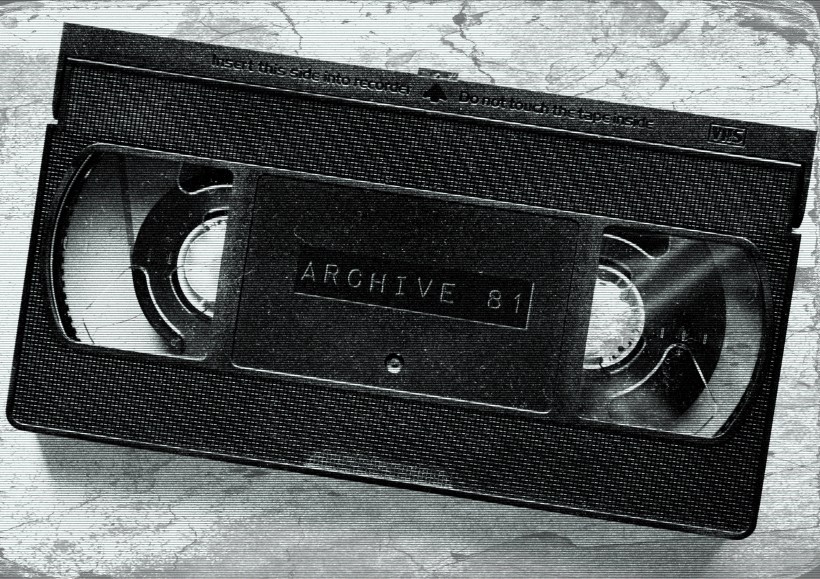
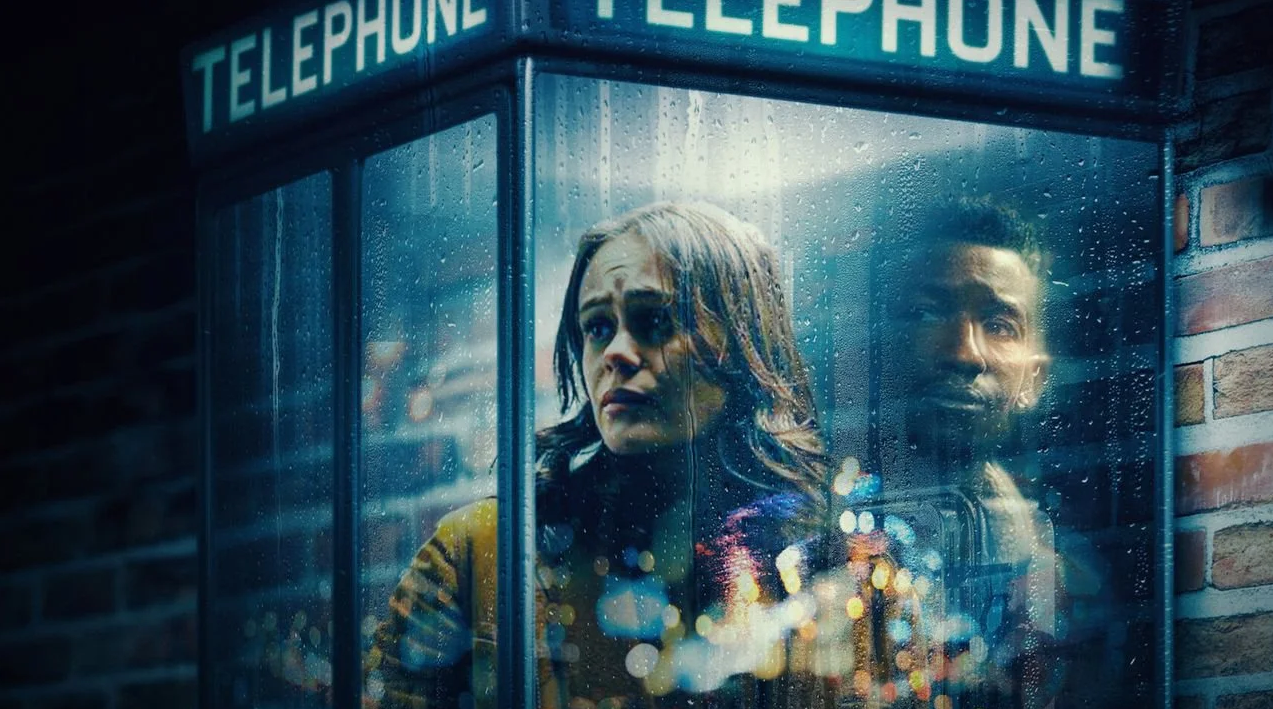
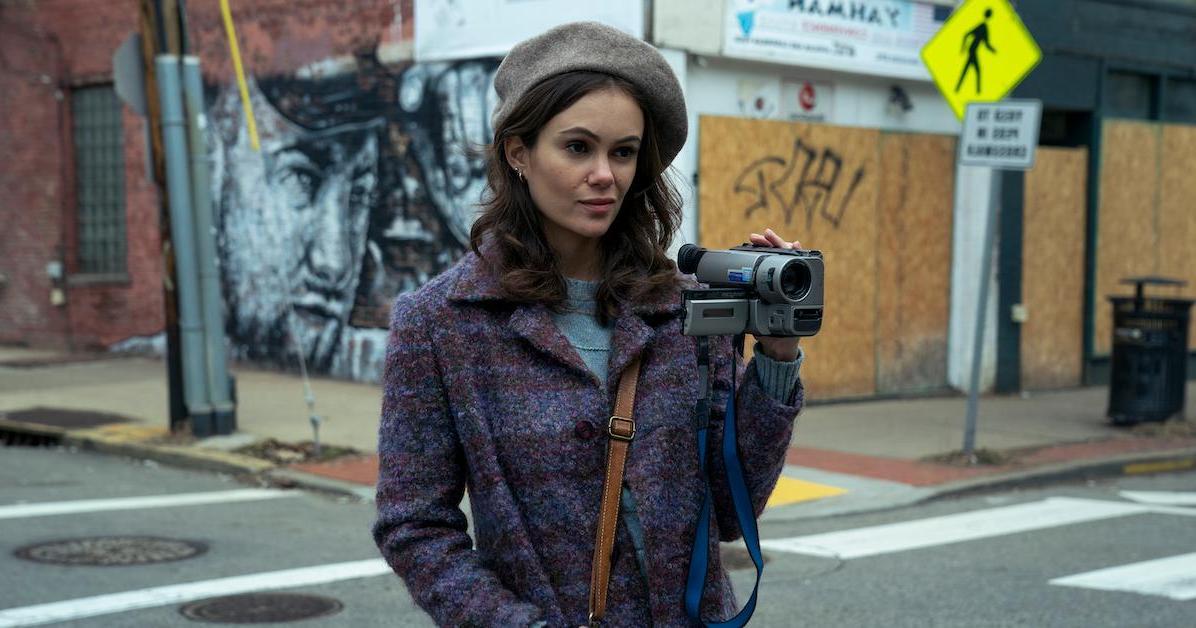
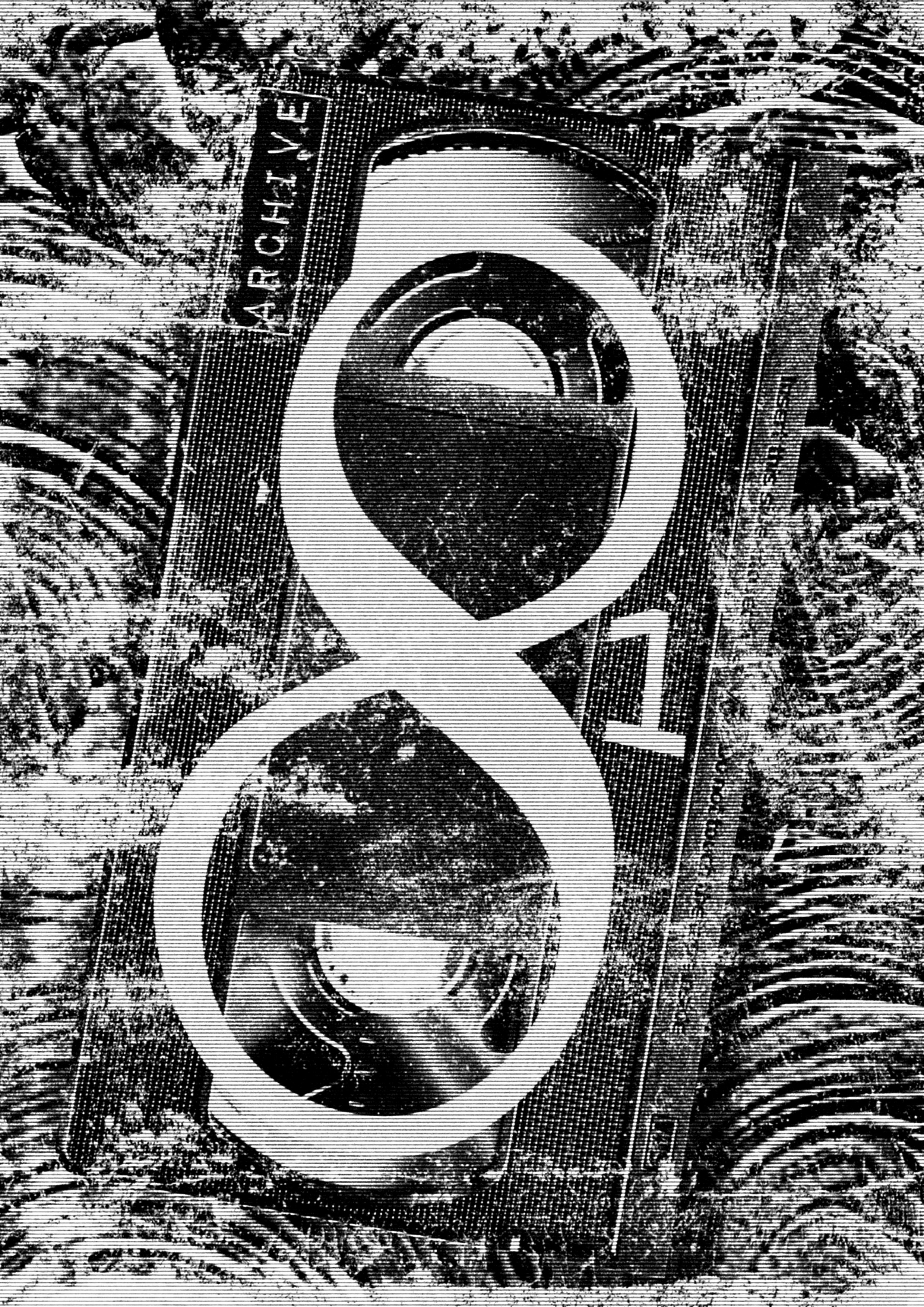
Archive 81 is a 2022 Netflix series developed by Rebecca Sonnenshine based upon the podcast of the same name created by Daniel Powell and Marc Sollinger (which I have not listened to as of yet, so cannot compare in this article).
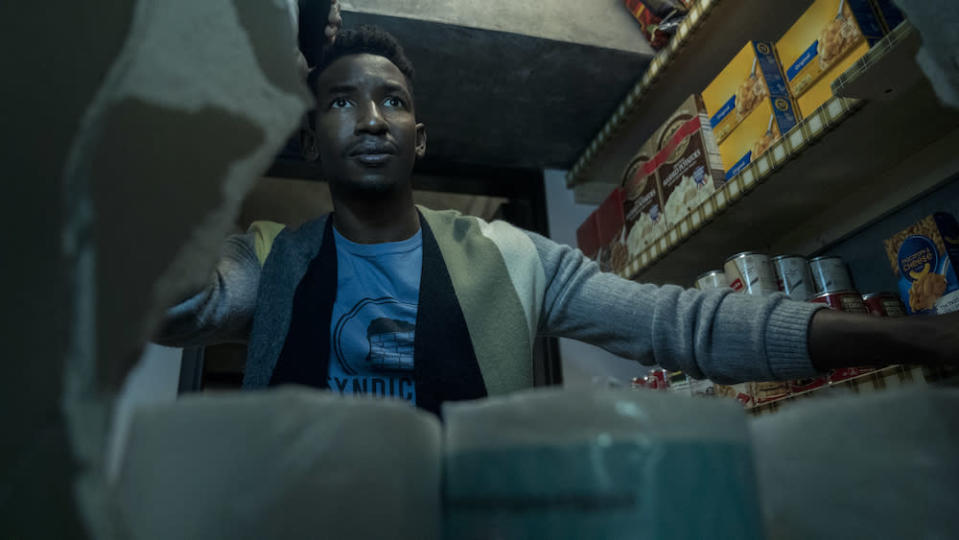
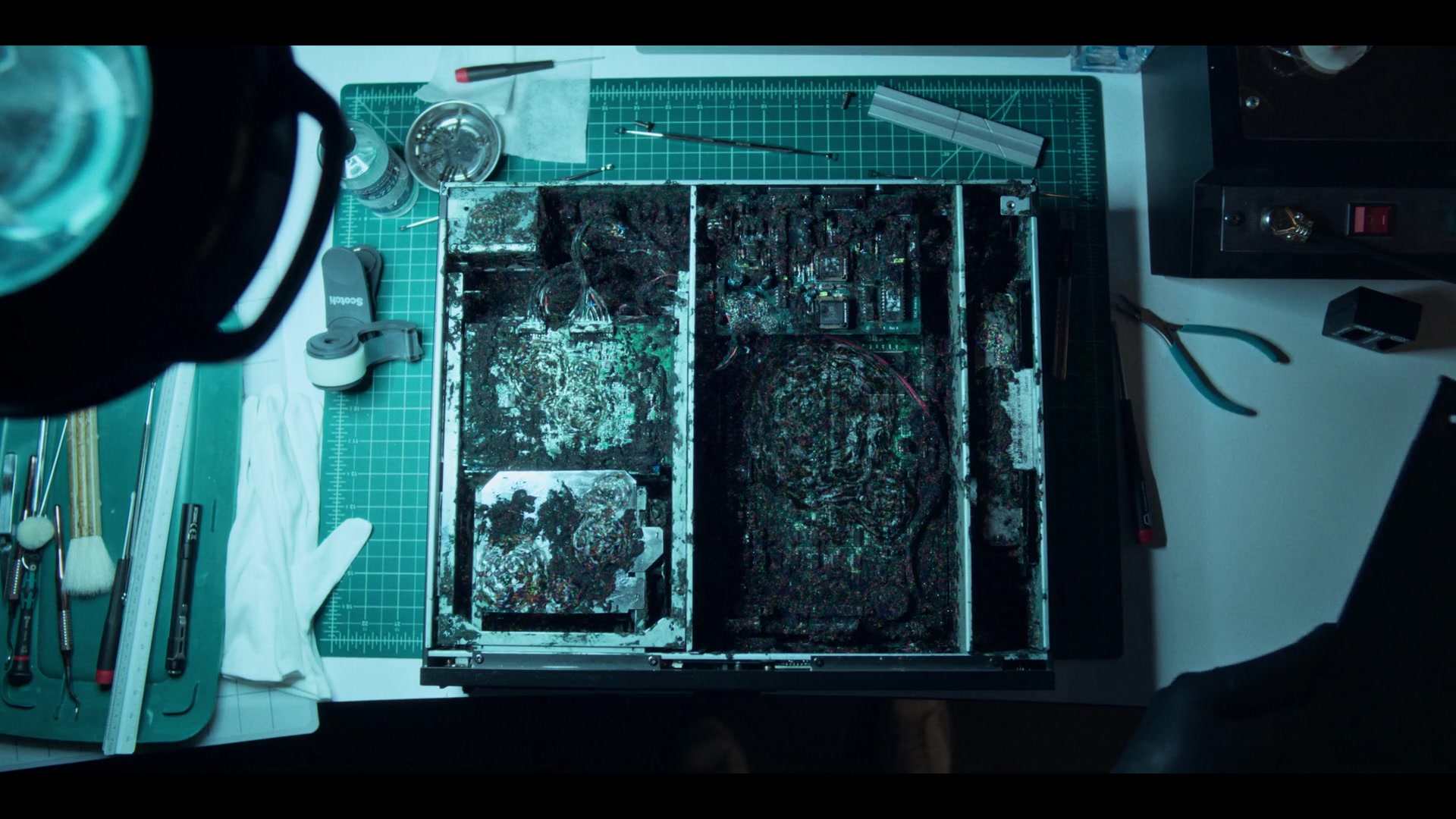
Its premise follows the recruitment of Dan Turner (Mamadoudou Athie) as an electronic media conservator tasked with restoring fire-damaged videotapes shot by missing film maker Melody Pendras (Dina Shihabi).
The show encompasses numerous elements of the Urban Wyrd. Apparently the term Urban Wyrd has caused confusion amongst some people, so it may be worthwhile to briefly explain the concept again here. The Urban Wyrd designation was created and first contemplated by author & film-maker Adam Scovell on his Celluloid Wickerman website and was developed /investigated further in the pair of multi-contributor Folk Horror Revival: Urban Wyrd books published by Wyrd Harvest Press. The Urban Wyrd is not ‘folk horror in a city’ though elements may sometimes be shared, and it was in reference and relationship to folk horror that the discussion first arose.
Urban Wyrd is not a genre, but a mode that relates to the incidence of the Uncanny, the Weird and the Eerie with specific relationship to the built-up environment, particular buildings, liminal edge-lands (such as motorway motels, service stations and sometimes suburbia) and/or to technology (including analogue and outdated forms).
The Urban Wyrd is frequently to be found where concepts such as Hauntology and Psychogeography occur on film, literature, music and art (both in the original academic remit of these subjects and in the development of their pop-cultural aesthetic). The Urban Wyrd mode may therefore be applicable to narratives and/or imagery featuring haunted houses, uncanny urban geography & architecture (including transport stations and underpasses etc.) as well as haunted media (photography, digital, video etc) and also to supernatural, folkloric and/or occult excursions/infiltration into the modern world. Psychological relationships to the environment or technology may also be a factor. Concepts of time are also frequently a consideration.
(As with Folk Horror), ambience, aesthetic and that certain ineffable something that you may struggle to verbalise but know when you see, hear or feel it may also be apparent in items featuring modes of Urban Wyrd. The concept of the Urban Wyrd is not a strict label or manifesto but more-so a feature or features that can be used to associate different films or media that share these similar themes, aesthetics or elements. Although it can be a topic for academic study, the designation of Urban Wyrd can and should be more widely and generally used as a handy way for people who like one film or book or song or artwork using the motifs described to find others featuring them that they may also enjoy. Many of these elements just mentioned can be found in Archive 81.
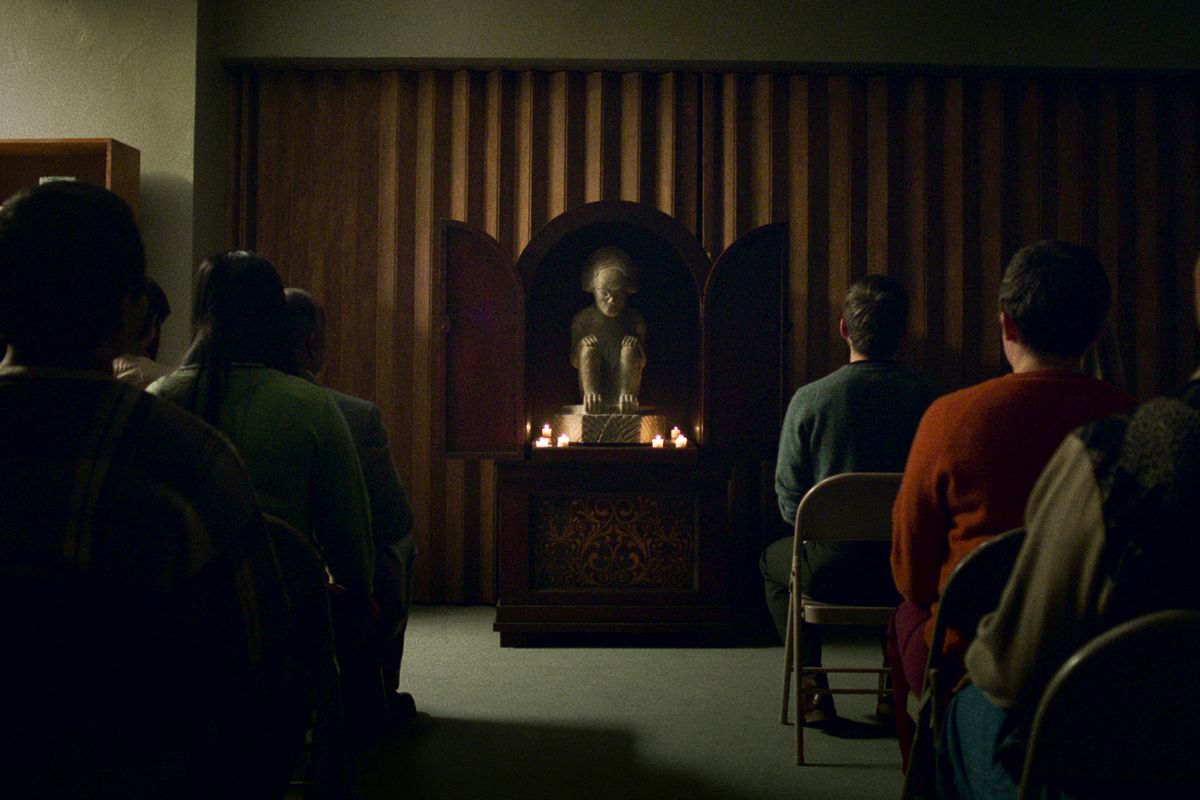
Without giving too many spoilers away, a resume of Article 81 follows. Dan is employed by a company named LMG to go to a remote complex to repair and restore a quantity of damaged video tapes filmed by Melody Pendras – a young woman who went missing in the 1990s following a fire at the Visser building, an apartment block built on the foundations (and history) of a former mansion belonging to the enigmatic Vos family. Melody is drawn there on a tip-off that her birth mother who abandoned her as a baby was a resident there. Family history plays a role within this drama which follows several different narratives apparently separated by time but united by people and place. As Dan delves further into his work he discovers a link to his own family and realises his task is far more than just being a regular job.
The show flits between found-footage and several story-lines occurring at different periods of time and also dream-narratives. The footage itself and its strange qualities is reminiscent of Koji Suzuki’s ‘Ringu’ (adapted to film in 1998 by Hideo Nakata and remade in 2002 by Gore Verbinski as ‘The Ring’) and whilst being quite a creature in its own right, Archive 81 wears its inspirations and influences on its sleeve. Rather than being derivative though a further meta narrative is added to the mix giving another layer for viewers and fans to mull over. We see references to movies as diverse as ‘Solaris’, ‘Night of the Living Dead’, ‘Ministry of Fear’ and even ‘The Secret of Nimh’. Stephen King’s 1977 novel ‘The Shining’ is referenced and similarities can be drawn between the show and Stanley Kubrick’s 1980 cinematic reworking of King’s book. The Visser Apartment/ Vos Mansion bears similarity with ‘The Shining”s Overlook hotel with its winding corridors, dark history, art-deco soirees and the feeling that the building is haunted not simply by the people that died there but by its own brooding character. Association can also be drawn to Ira Levin’s 1967 novel / Roman Polanski’s 1968 film ‘Rosemary’s Baby’ with its mysterious apartment neighbours and occult ritual occurrences. Indeed there are elements of Polanski’s other Apartment Trilogy films ‘Repulsion’ (1965) and ‘The Tenant’ (1976) to be found in Archive 81’s make-up also.
There are also non-film associations that can be found in Archive 81 which will be of interest to those curious in the different aspects of the Urban Wyrd mode and also in wider aspects of the occult and paranormal outside of fiction. The inclusion of Spirit Photography and Psychic Art works on both an aesthetic and narrative level. The name of the art group as Spirit Receivers and the examples of much the art shown seems strongly to allude to the book ‘World Receivers‘ which details the works of Georgiana Houghton. Hilma Af Klint and Emma Kunz – three artists of the 20th Century whose paintings were conducted through spiritual mediumship. (Another good book on that subject is Not Without My Ghosts and for Spirit Photography an excellent book is The Perfect Medium: Photography and the Occult).
In reference to pop-Hauntology (ie. that form associated to examples of popular culture as explored by Mark Fisher rather than the original political-philosophy form devised by Jacques Derrida) Archive 81 features strongly there both in aesthetic and topics covered. The attention to analogue technology, the literal ghost in the machine and genii loci – spirits of place; brings to mind ‘Ringu’ as mentioned previously, but also Nigel Kneale and Peter Sasdy’s 1972 TV play ‘The Stone Tape’ and the Electronic Voice Phenomenon {EVP} experimental studies pioneered by Friedrich Jürgenson, Hans Bender and Konstantin Raudive) have a strong hauntological quality as does the element of the movement of time that occurs within the unfolding tale. This is continued in the sound design brilliantly crafted by composer Ben Salisbury and Geoff Barrow (one of the geniuses behind the Excellent Trip-Hop outfit Portishead). The combination of atmospheric music, drone and other aural invocations and evocations helps to induce a sense of unsettling perception – almost to the verge of inducing anxiety in the viewer (I myself have found myself ear-worming the prayer-song); this attention to sound likens Archive 81 to other films with significant Urban Wyrd content such as ‘Sinister’ and ‘Berberian Sound Studio’ (which also share the themes of uncanny elements within the actual media of film and video), and also to the works of David Lynch. The stilted slow dialogue also is reminiscent of the cinema of David Lynch and some of Stanley Kubrick’s work (‘The Shining’ and ‘Eyes Wide Shut’) however at times it does heighten the awareness of it being acted and therein lies a question as to how well the show was cast. There is another point however that lots of viewers have seemed to take issue with and that is the season’s finale. Again without giving away Spoilers, I personally don’t have a problem if that is how the show ends totally, although I do have a question /issue as to one of the character’s actions which culminated in that conclusion. The ending however does allow potential for the narrative to resume and develop further if Netflix decide to green light another season.
All in all, I enjoyed the series, it ticked numerous other interest boxes of mine and I was impressed by its techniques aimed to unsettle. Aesthetically I liked it, though for some of the special effects I personally would have opted for a more Less is More approach and it has inspired me to give the original Podcast a listen.
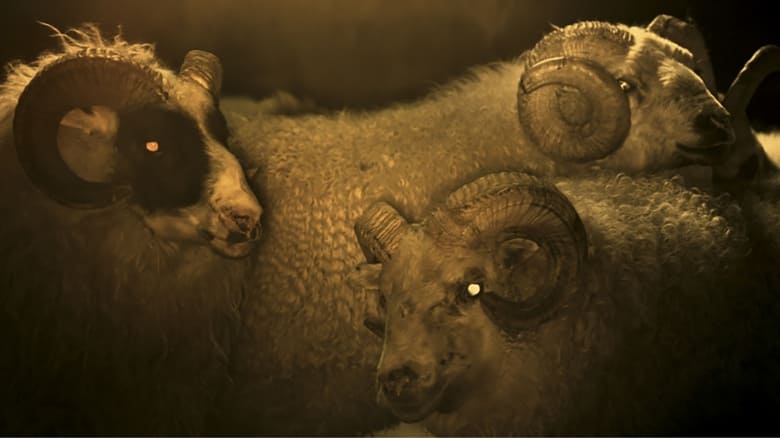
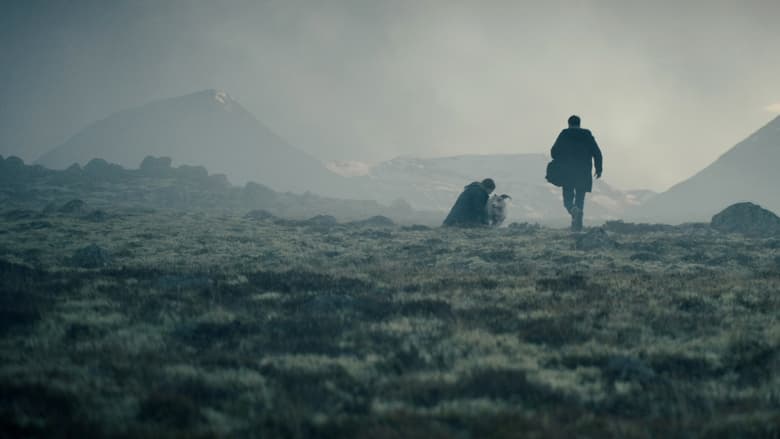
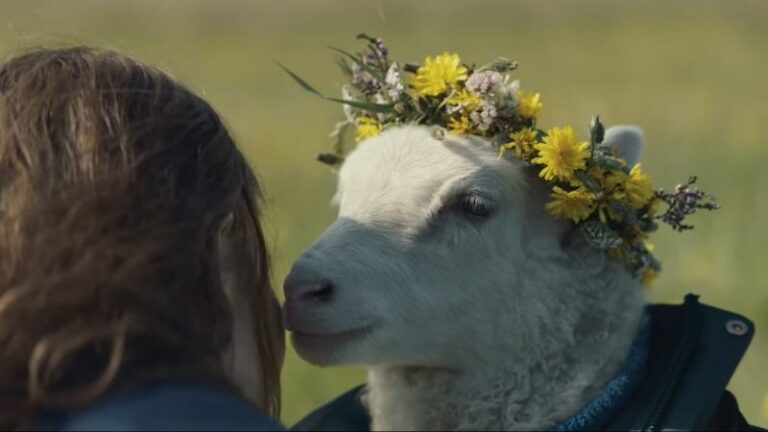
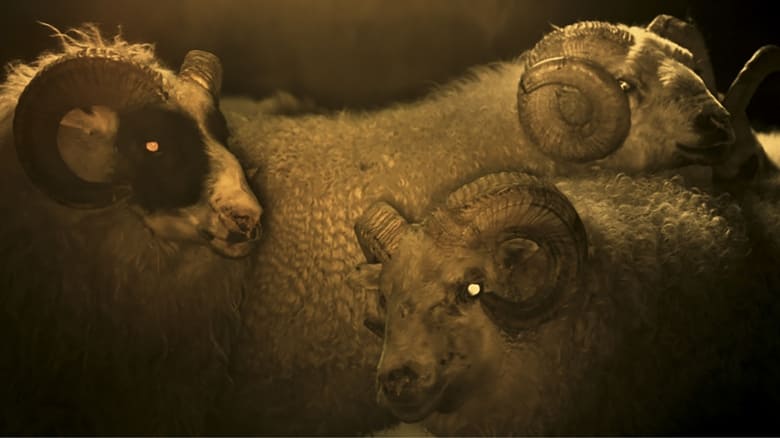
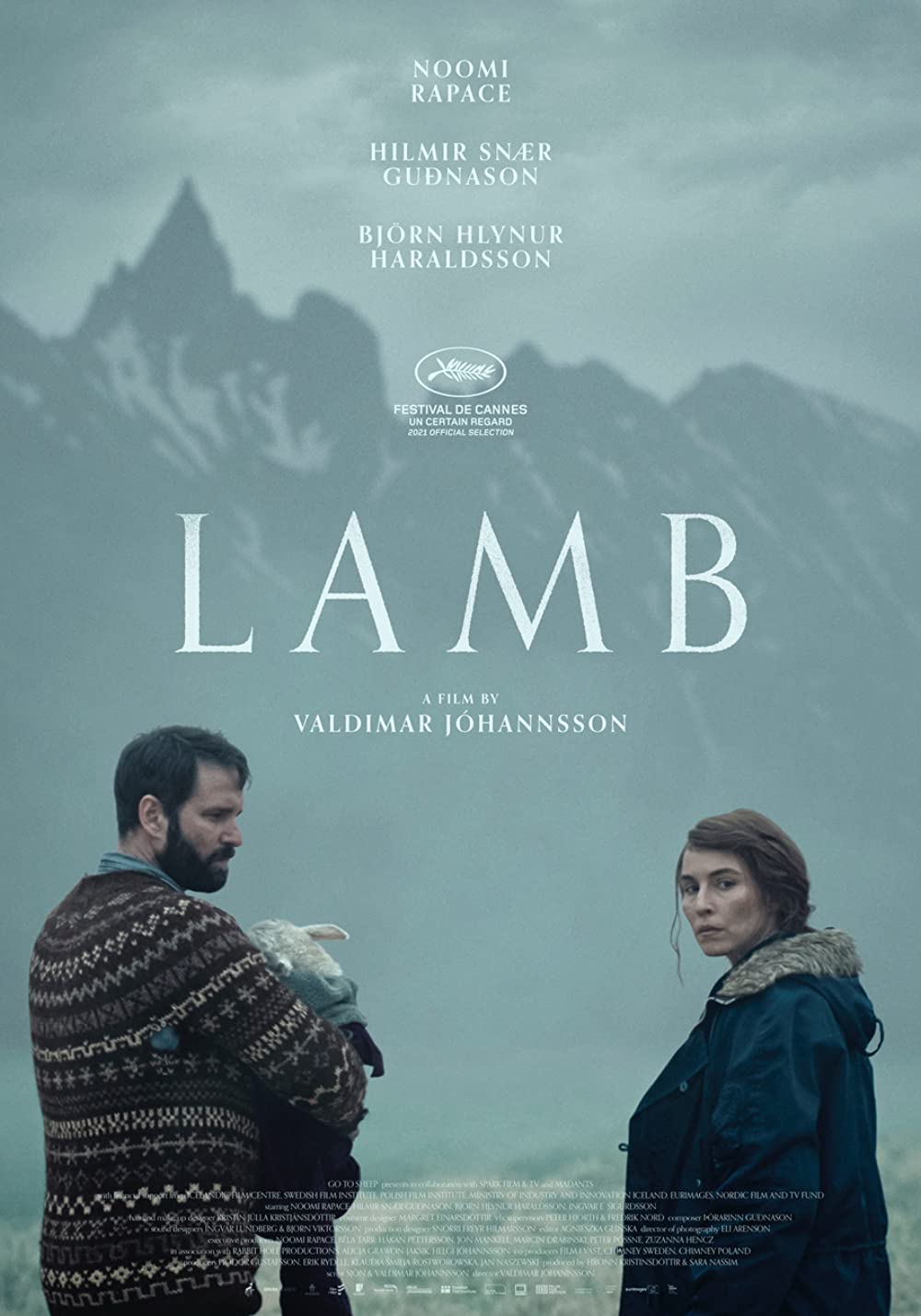
I must confess that I watched Valdimar Jóhannsson’s Lamb (Dýrið) whilst having a goblet or two of Absinthe, but had I viewed it tea-total, I don’t think it would have been any less strange!! I don’t want to give away too much of the film but the basic premise is that a farming couple, Maria and Ingvar (played by Noomi Rapace and Hilmir Snær Guðnason) living on a remote sheep-holding in Iceland discover that one of their animals has given birth to a very peculiar offspring. They develop a deep attachment to this progeny and it becomes like a child of their own. This strange scene of domestic bliss is strained by the arrival of Pétur (Björn Hlynur Haraldsson) the brother of Ingvar and, so it would seem, a previous lover of Maria, (or at the very least someone who would very much like that to be the case). But it transpires that he is not the only visitor to the isolated farm.
Lamb is slow to the point of being glacial. That is not a problem for me as I really like slow-burn movies and here it really suits both the plot and the setting. The desolate beauty of the Icelandic landscape seems to lend itself to atmospheric, introspective drama and the photography in the film is bleakly beautiful.
As with other A24 films that dwell in ‘folk horroresque’ fields, I can see that Lamb may prove to be a ‘Marmite’ movie that would provoke a divisive response between viewers ( I myself am of the camp that loves the current output of Robert Eggers but have little regard for the films of Ari Aster, which are very popular with some; but one person’s poison is another person’s meat.) Regarding Lamb I could see why some viewers would not like it, but I personally thought it was an unusual tale delivered well, with hints of a fairy-tale like narrative to it. It is worth noting though for viewers who have a sensitivity to animal death in film, that there are two animal deaths depicted in the film, one of which, the first has a specific narrative role but the latter is arguably unnecessary but serves as one of the film’s actual few ‘horror’ moments. For the most part Lamb does not play out as a ‘horror’ film as such but as a domestic drama (albeit it a very strange one) but its conclusion returns it firmly into a horror fold.
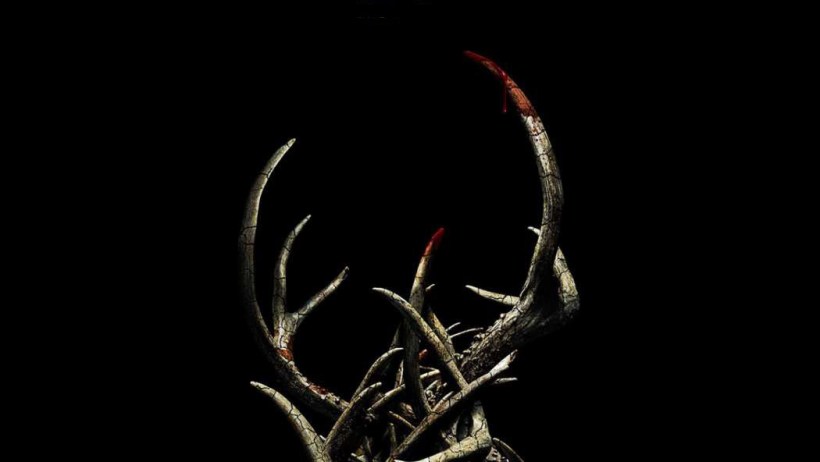
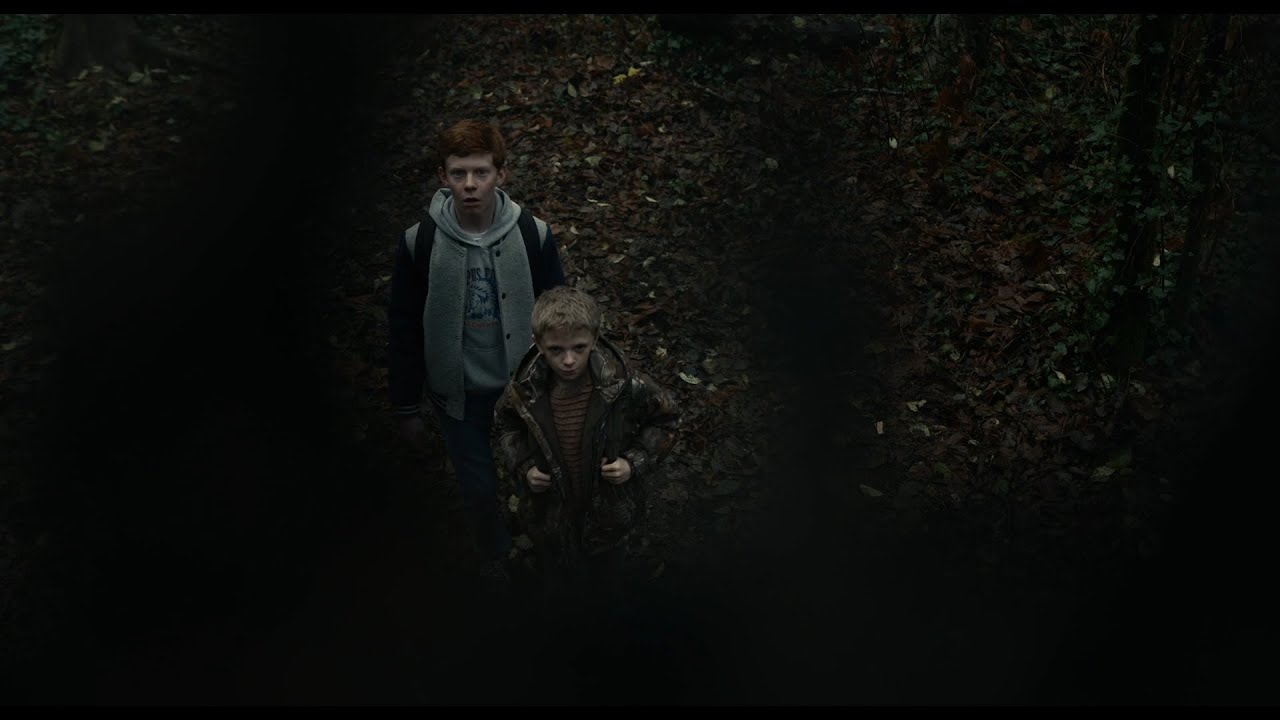
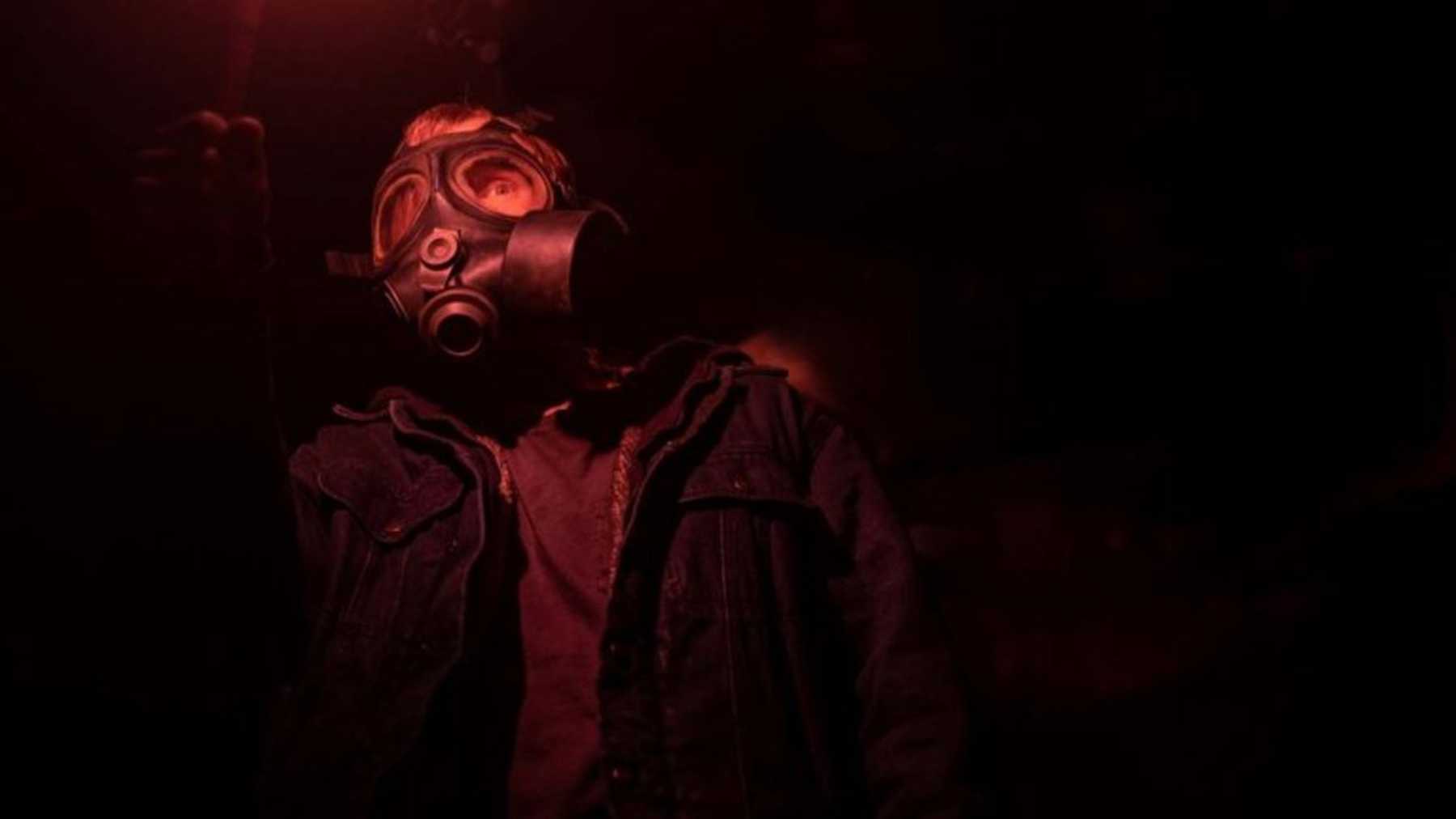
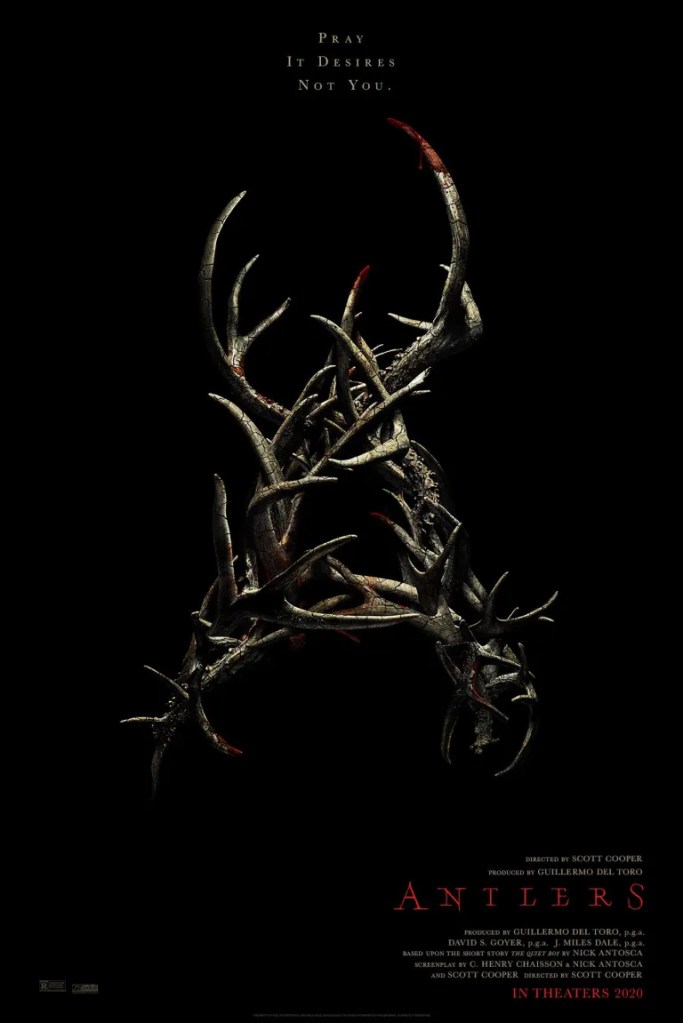
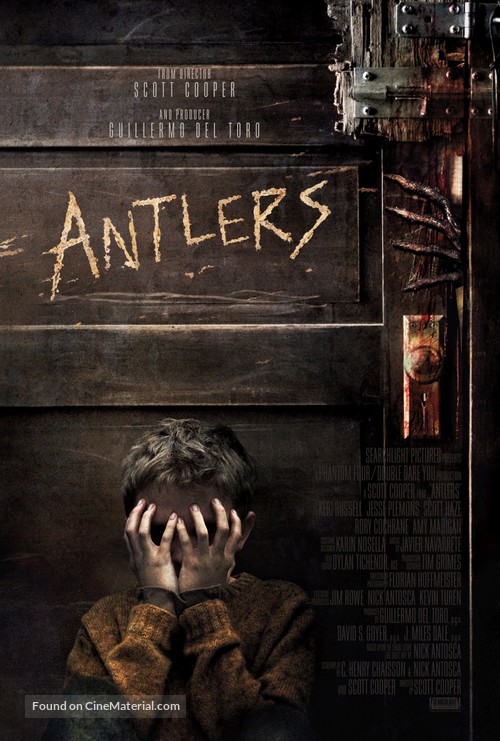
Antlers (2021), directed by Scott Cooper and based on the short story ‘The Quiet Boy’ by Nick Antosca, has in its promotion highlighted the production role of Guillermo del Toro, to whose films Antlers shares some similarities but shows some differences. Like a number of del Toro’s movies the principal backstory concentrates on children growing up in difficult circumstances, but the delivery here is darker and more desolate than del Toro’s presentations. That for me personally is not a problem, I like bleak movies. Another difference is that even though there is potential there for it, Antlers does not really share del Toro’s sympathy for monsters. Again personally I have no problem with that, but had the film been longer I would have liked to have seen more indication of the character of Frank Weaver (Scott Haze) and his relationship with his children prior to the strange and brutal circumstances that befell them.
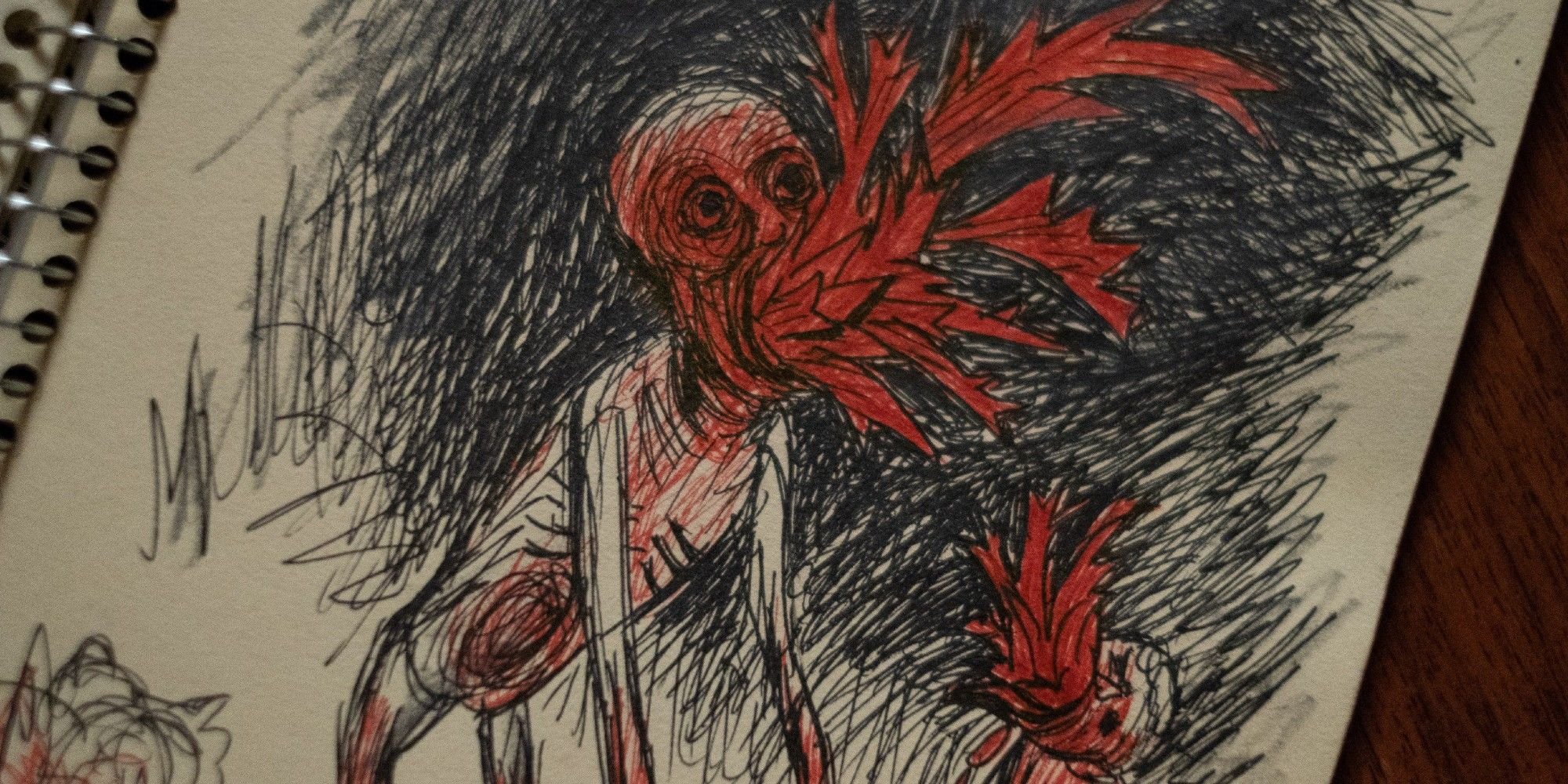
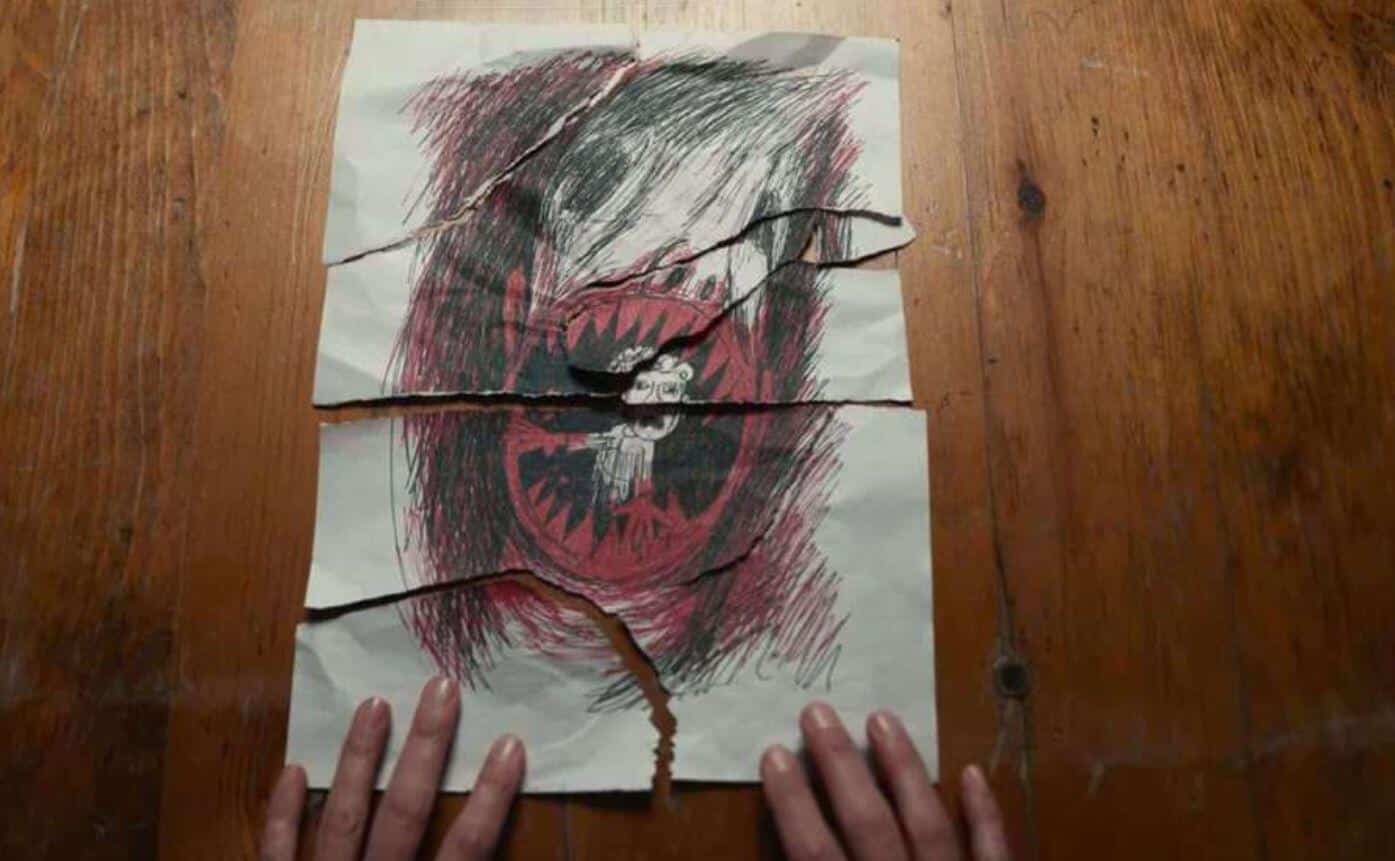
Frank Weaver, a single father following the death of his wife, supports his family by brewing and selling Methamphetamine in a town in Oregon that has been beset by social and economic difficulties (actually filmed in beautiful British Columbia). Whilst in an abandoned mine that he uses as a lab, he encounters a very strange and very dangerous creature. His colleague and his son Aiden (Sawyer Jones) are both also attacked, his drug partner being killed outright. Following the assault, Frank and Aiden begin to sicken and grow increasingly feral. Locked into a room, they are cared for by another son Lucas (Jeremy T. Thomas) who brings food to them, which in the case of the father often consists of roadkill. Dealing with being a young home carer to his father and sibling in the weirdest and direst of circumstances, as well as coping with the grief of losing his mother, has a noticeable effect on the child. He is overly thin and his clothing is threadbare. Small, quiet, insular, poor and unconventional, Lucas is sadly the target of bullying. This concerns his new teacher Julia Meadows (Keri Russell) who has returned to the town where she grew up, sharing her childhood home with her brother Paul Meadows (Jesse Plemons) following the death of her father. A victim of childhood abuse herself at the hands of her father (her mother dying whilst Julia and Paul were still children) upon seeing the character and condition of Lucas as well as his grisly drawings, fears that the boy may be a victim of abuse at home. The school principal (Amy Madigan) pops around the child’s home to assess the situation and that is when hell breaks loose.
The delivery of the film situates itself between a slow-burn social realism horror and a more mainstream creature-feature, which doesn’t in this instance for me completely work. The horror SFX are fairly visceral and delivered well enough but they seem somehow a bit out of place. I would have preferred more of the gore and violence to have been implied rather than shown, but the literal nature of the beast in this film is bloody so a proportion of viewers may have felt that to remove this component would dull the film. Again, because of treading two stylistic paths it could perhaps be felt that not enough characterisation was given to certain roles, situations and backstories. The amount of attention given to Julia and Paul’s own childhood trauma and grief feels perhaps underrepresented but film has a limited timescale generally and the time allocated for the overall narrative is enough where Antlers is concerned; if this film were any longer it would be too long. This is not because it is a bad film that I wanted to end as soon as possible, but because the horror aspect of it that dominated the final third played out following familiar tropes in a more conventional horror film manner and in that sense did not offer anything really that has not been seen before.
Because the story is based on the lore of the Wendigo of some Native North American peoples, but has been made by predominantly non-native creators and cast there is the risk of potential exploitation / appropriation and of colonial-hangover misrepresentations of the ‘Other’. Although some viewers / readers may feel generally weary and wary of sociopolitical considerations in film-making and reviews, if as a creative you are inspired to write about and film an aspect of another culture, whether for fiction or documentary purposes, I believe there is a duty of being sensitive, respectful and factually correct. (Personally as an artist who frequently works with the folklore and legends of varied cultures, I don’t believe that non-sacred lore is necessarily off-limits to representation by someone of a different society or ethnicity nor that mythic representation should be racially segregated at all, but I do believe that it is important that appropriate attention is given to the beliefs and considerations of other people and that no exploitation occurs.)
I watched Antlers with my girlfriend Erin, who has Mi’kmaq ancestry and who holds an interest in Wendigo mythology, and I was curious to see what her opinion of the film would be. There is the matter that the main protagonists are all white, with the only First Nation character, Warren Stokes (Graham Greene) seemingly only being there to give exposition to the police and school teacher regarding Wendigo lore upon seeing the child’s drawings and the medicine protection put up in the tunnel meth lab. The main family in this film could have been Native American, but if them alone, a risk there would be a negative representation as the family were socially troubled and the father (though perhaps by necessity to provide for his family) was a criminal. To have all the cast Native American could’ve been a possibility but that would remove the discovery and shock element of the supernatural invading regular life for the Wendigo concept would likely have already been familiar to all concerned. However, due to the relevance of native belief to the film’s core it would have been good to see a stronger First Nation role and presence. Although the Wendigo is a spirit, it is not a sacred figure as such so the film does not demonise a god or religious tenet. The Wendigo myth though is more than just a fireside bogey man story for it represents a Taboo – a forbidden practice – namely that of cannibalism. In times of famine some Native American tribes would hold a ceremony to remind and warn of the prohibition and spiritual danger of anthropophagy.
For Erin, the meteorological setting of the film was brought into question, for winter is seen more as the time of starvation and would have befit the film better. Set at the dirty end of autumn, Jack o’ Lanterns still on display rather than Christmas decorations, there is a chill in the air and damp a plenty, which does certainly add to the bleak atmosphere, but a wintry setting would perhaps represent desperate hunger more. The social realist aspect of the plight of the afflicted family with Lucas’ emaciated condition and desperation to find food for his increasingly ravenous family does symbolically relate to the myth as perhaps does the father’s production of methamphetamine- a drug that can diminish appetite replacing it with a craving addiction and in the cases of prolonged addiction lead to the emaciation of the user as if they were being devoured from inside by a possessing spirit.
Wendigo by Andy Paciorek from Spirits of the Season: Portraits of the Winter Otherworld by Dr Bob Curran & Andy Paciorek
The physical appearance of the Wendigo is a debated point. Warren Stokes’ description of it in the film does state that it can take different forms. This applies also according to the old lore. In some cases it humanoid but very wizened and gaunt, in other tales it is seen as a gigantic figure and in others more animal than man. The antlers which give the film its name and one of the strongest individualistic representations of the Wendigo are not always to be found in the older myths. For Erin and many though, the antlers are an integral factor in the form and nature of the Wendigo. Its representation in the film is done well enough and the final transformation from human form into that of the monster is a distinctive element of the movie, though I myself am undecided whther it revealed too much and that less would be more or whether it is needed for the film to make a distinctive stamp on the cinematic genre.
In conclusion, I think I liked Antlers but did not love it. Further viewings may endear it to me more or possibly leave me colder. It promised more than it delivered, that there was something not quite fulfilling about it but perhaps that is the way it should be, like a Wendigo hunger that cannot be satiated and always a craving for more.


















 Folk Horror Revival & Urban Wyrd Project ⨘